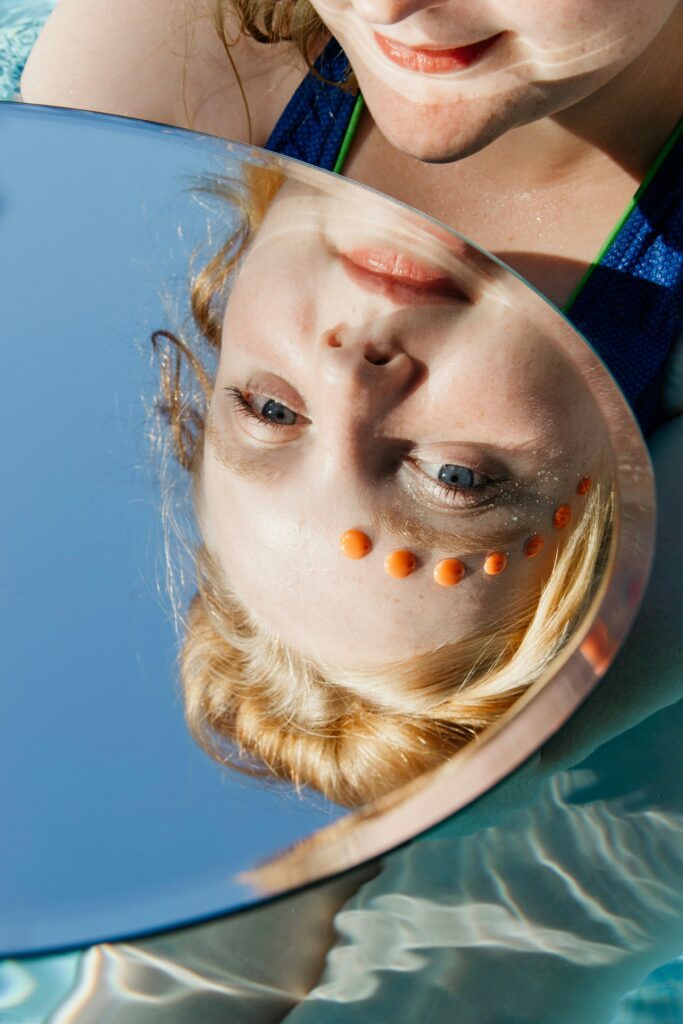

Wandering, Wondering

Yuvoice Duet: Read another inspiring story about rediscovering life with Autism here.

Imagine being lost in a large bookstore when you were little. You are surrounded by pictures, puzzles, book covers, and other unfamiliar things. It’s a strange place, where so many stories live, including magic, mystery, and science. This array was what caught your attention when your parents were only there to buy some paper. After a while, you lose sight of your parents or they lose sight of you. You think for a moment, about what to do and run around; the place seems so significant to you. After thinking for a while you give up the fight and wait by the entrance.

You weren’t afraid. Not really. The colorful and beautiful things around you were fighting for your attention. You didn’t think then — how could you? — about how long it’s been since you’d been lost and how your parents must be worried. You stood calmly by the guard, thinking about which dinosaurs you would draw when you got home.

You knew they’d find you. 

This moment meant little to me then but it was very near and dear to my mother. It was one of the earliest moments when she was astonished at what I could do and what was going on in my head. But, now, I wonder what it really is.

Then & now

Years ago, when I was young, I was diagnosed with Autism Spectrum Disorder, a condition I barely understood then. 

It is the early 2010s, and things are very different now. I’m more confident and appreciate what it means to myself and others around me. The world I see out there isn’t much clearer than the world of the bookstore. I’m still caught up in the wonder of it all with all the same questions in mind. When I first found out about my diagnosis, I felt like it was a superpower that made me special and set me apart from the crowd. I had a name for what made me better at school and different from the other kids. I had the luxury of looking at it with fondness.

(Image courtesy of Mikhail Nilov via Pexels)

But things are different now

The closer I get to the real world, the more distinct it becomes. I have been living in the Philippines with my superpower, aka Autism Spectrum Disorder (ASD), and have realized that my life was supported by a privilege that protected me from the real world. 

I grew up wealthy. My parents supported me when I acted up at school. They kept me away from the harshness meant for the little miscreant that others might have seen me as. Now, much of that wealth is gone. As I grew up and went to college, my superpower started to feel different in my hands. I met some people who were more successful and popular, and great with studies, and a few who were not. These people showed me more of the truth. I had never met anyone who revealed their struggles with bullying, society, and familial issues before, and that enlightened me to just how much my parents had protected me since I was little.

Now, I also understand how much my mother struggled to get the required care for my condition and how scarce therapy centers are. I’m a grown-up, and don’t need as much care anymore; I have an excellent social life with my classmates, and can easily make friends. But when I do need it, I hear stories repeated in various places, and all of them remind me of how hard it is to get care for ASD in general in my country.

Revisiting the bookstore

When I visited that bookstore as an adult, my mother did not mind. Why would she? Of course, she remembered the story I shared above; it was just that the present was more important. The interiors were changed. The bookstore had been remodeled; the shelves were shorter and the place was more spacious, so it was much harder for a child to get lost now. It was bigger, certainly. The colors and wonders were still there for the adults looking around. All the stories and adventures promised on those beautiful covers were still there. If I had more money, perhaps I could buy one someday. If I had more time, I could have browsed and looked at them all.

This place was the same as I remembered it, even after the changes. I walked past the guard at the entrance and into the aisles with my family to pick up some stationery. My mother knew we could finish this and make time for the trip home. I wanted to spend some more time there, but I knew I couldn’t. With our finances and changing schedules in flux, I knew better than that. I am a grown-up now and no longer have the luxury of getting lost here.
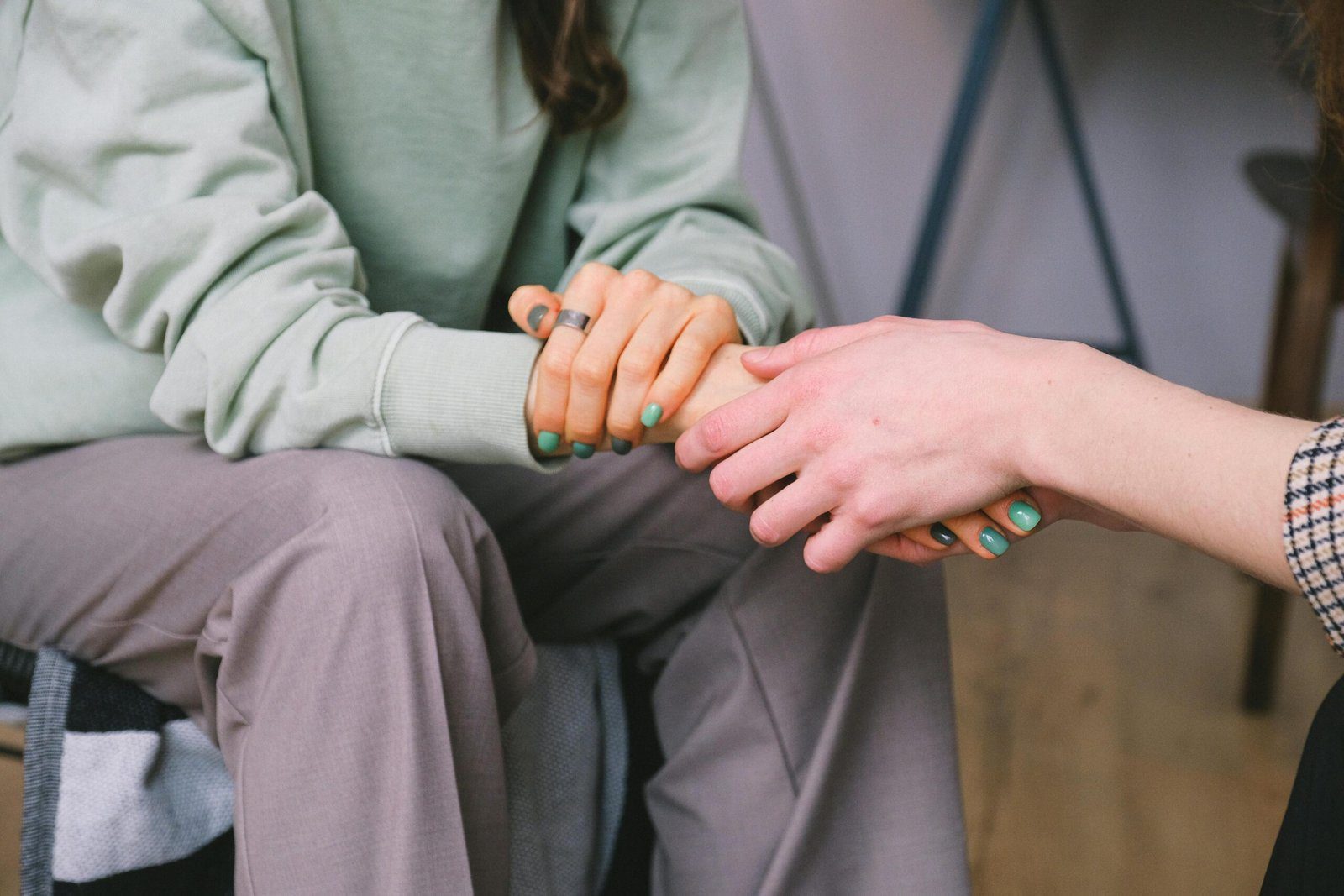

A Diagnosis

There was something off; I knew it. I couldn’t quite name it. But it was deeper, darker than what had previously bothered me. 

I was diagnosed with depression at fifteen and generalized anxiety disorder at seventeen. Depression, being familiar to me, seemed like a well-worn jacket weighing me down. Anxiety seemed like a scarf, too tight, wrapped around my throat, restricting my breathing. 

I learned how to manage and to wear them. But this… this was different.

The story behind my diagnosis

For several months, at the end of my freshman year of college and into my sophomore year, I was plagued by misery. I was nineteen and in an abusive relationship that was making me question everything; who I was, my place in the world, my purpose, and my destiny. I started exhibiting troubling symptoms — symptoms that were more extreme than I had experienced before. 

I wasn’t sleeping. I was like a zombie, wandering through the days and nights, lost in the fog of my mind. I was losing my sense of time; hours would pass in a blink, and I could not remember how I had moved from point A to point B. I felt an overwhelming sense of hopelessness. 

I was numb, frozen. 

Some days, I was agitated, jittery, and unable to stop myself from moving. I needed to act, to jump headfirst into whatever I could — projects, games, or adventures. I needed distractions. I needed action. I desired constant motion, my mind racing along with my heart. It was like I was running a marathon and couldn’t stop. 

My depression was unlike anything I had experienced in my young life. It overshadowed my every waking thought, leaving me helpless and weak, lost and confused. I would vacillate wildly from barely moving, eating, and breathing, to being so wired and alert that I couldn’t focus. Either way, I wasn’t functioning. 

It was obvious to anyone who saw or talked to me that something was wrong. I was so unlike myself; it was shocking. I was transforming into some other-worldly version of myself, the opposite of the person I was, a photo negative of the girl I once knew. It was frightening, unsettling, and frustrating. 

(Image courtesy of Ron Lach via Pexels)

The revelation 

It all ended in a burning, blistering, ugly way one night. 

It was late at night and dark. We were somewhere in Boston, outside a liquor store. The boy I was seeing revealed his hand: he had been cheating. All my suffering, all the back and forth, all the mind games, it was all in vain. I started to implode. I cried, I screamed, I fought. I was shattered. 

All I could think about was death. I had been teetering on the brink of suicide for the better part of six months at that point, but now it had become all-consuming. I was ready to end it all. I wanted the suffering to stop, hard, fast, and cold. 

I had a vague notion of a plan, but he stopped me. He wrestled me into the car, drove me back to the college campus, and left me alone to lick my wounds. 

The next morning I was still reeling from the aftershocks, still contemplating ending it all.

But I had survived the night, and that had to count for something. So, instead, I chose to take a leave of absence and headed home. 

I found comfort in the embrace of my family and sought answers from my medical providers to understand what was wrong with me. 

During a session with my provider, she asked direct and unusual questions. Then, she had me fill out a questionnaire. I was as honest as I could, even though I wasn’t entirely sure what I was filling out. I handed it to her; she examined it briefly and then revealed what was on her mind.

The new diagnosis 

A diagnosis that we had somehow missed during my years in talk therapy with her. It took exacerbated circumstances to reveal the more extreme symptoms, but it was clear that I didn’t just have depression. 

I had bipolar disorder. 

Specifically, bipolar II. It is characterized by a severe depressive episode, feelings of hopelessness or intense sadness, coupled with a period of mania and elevated or irritable mood. 

A pendulum of emotions. 

At first, I felt empty. Bipolar was a scary word, a word that felt foreign, unfamiliar. I knew nothing about it. It was bitter in my mouth. The weight of it seemed overwhelming. I tried to wear it on and understood how it fit. It was a little too big, too cumbersome, too heavy. 

But then I tried to sit with it. I considered it. There was comfort in at least having a term for what I had been experiencing. 

Power is in knowing and in having a treatment path. We were going to change my medicine, reach out to my therapist, and work on bipolar-focused treatment instead of just depression. I wasn’t going to be left in the dark with the weight of this new diagnosis. I had a way forward. 

Though the treatment took some time, I did notice improvements. My moods didn’t swing so wildly; my sadness was not as deep, and my mania was not as high. I was becoming more even-keeled and returning to my old self, the self I could recognize in the mirror, the one I loved. 

I kept my diagnosis a secret for a long time. I knew that there was a stigma around being bipolar; I feared people would just assume I was “crazy”. But, as I understood my own experience with it and what living with bipolar actually looked like, I found myself shedding my shame. 

It’s been ten years now of living with this diagnosis. Ten years of treatment. Ten years of understanding how to manage emotions that sometimes feel unmanageable. 

I have accepted my diagnosis with love and understanding, and now I treat myself gently

Having better knowledge of my mind is a blessing. I do not shy away from it and don’t use it as an excuse. It is a part of me, and I have learned to live with it, wear it, move with it, and embrace it. 

(Image courtesy of  Julia Kuzenkov via Pexels)