Can a National Dialogue Revive a Faltering Democracy in South Africa?

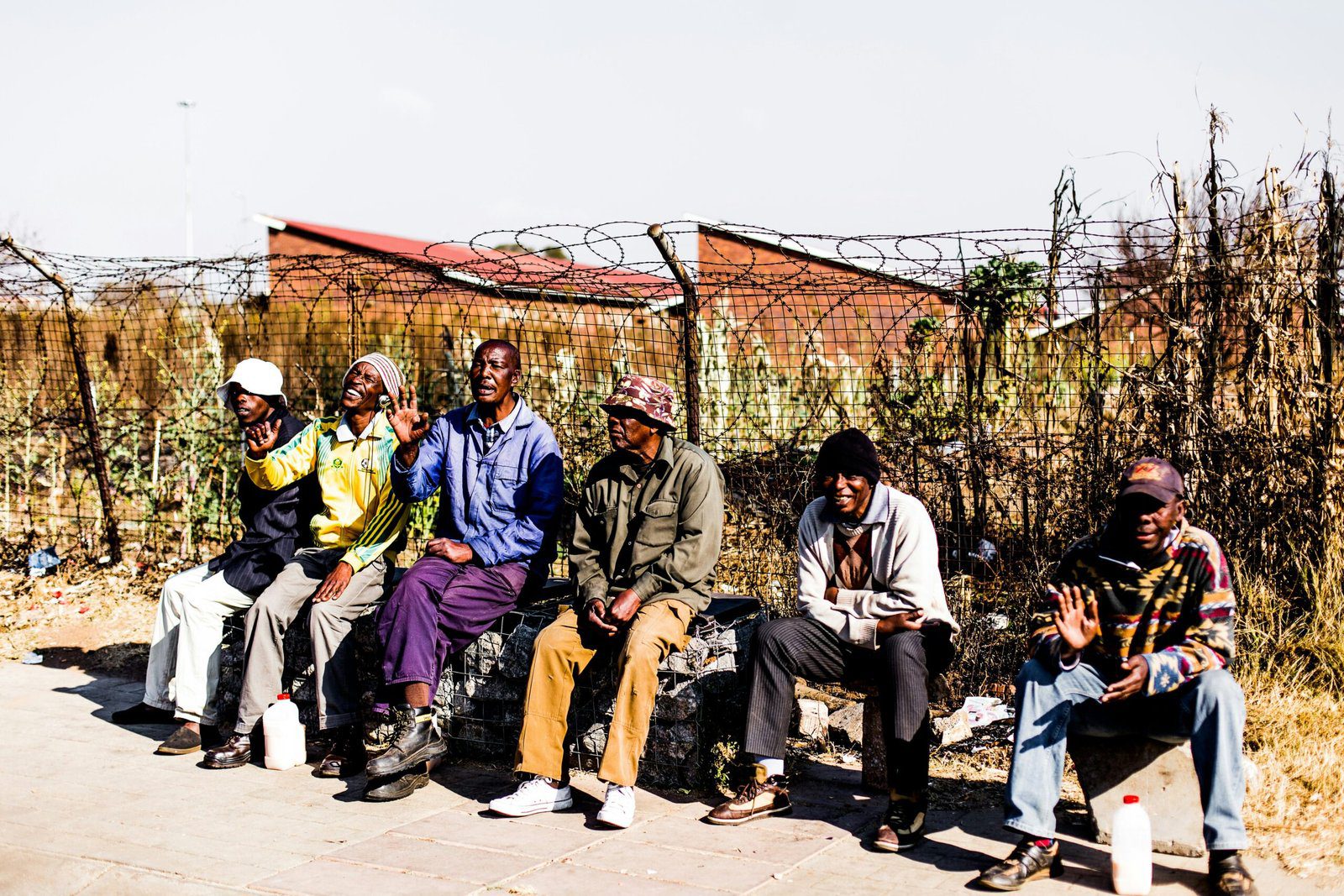
Over three decades into democracy, South Africa finds itself in a moment of deep uncertainty. While the right to vote, speak freely, and live in a constitutionally protected society has been achieved, the social and economic promises of 1994 remain painfully out of reach for millions.

Against this backdrop, the government has launched a new National Dialogue framed as a platform to reset the country’s course. But with youth unemployment at 62.4% and public trust in institutions steadily declining, many are asking: is this a meaningful effort to heal a fractured society, or just another elite driven exercise in political theatre?

South Africa’s socio-economic indicators paint a sobering picture. Unemployment remains stubbornly high at 32.9%, and when including discouraged work seekers, the expanded unemployment rate climbs to 43.1%. 

Poverty, too, is pervasive. According to the World Bank, nearly 63% of South Africans live below the upper-middle-income poverty line of  $6.85 per day. Meanwhile, inequality remains among the worst globally, with a Gini coefficient of approximately 0.63 in 2023 thus reflecting extreme disparities in wealth and access. Load shedding, crime, gender-based violence, and dysfunctional service delivery continue to plague communities.

Announced by President Cyril Ramaphosa on 10 June 2025, the National Dialogue aims to bring South Africans together across race, class, and geography to discuss the country’s future and rebuild a sense of shared purpose. It draws inspiration from the Truth and Reconciliation Commission (TRC) in the mid 1990s and is being led by an Eminent Persons Group, including figures like former judge Edwin Cameron, peace activist Ela Gandhi, and Rugby captain Siya Kolisi. The dialogue is expected to unfold in phases, beginning with a national convention in August and continuing into 2026. Its stated focus areas include poverty reduction, youth development, crime prevention, and restoring institutional trust.

But critics warn the effort risks being another “talk shop” disconnected from the realities of ordinary South Africans. Columnists like Malaika Mahlatsi and Ivo Vegter have labelled the dialogue a “costly distraction” with a projected R700 million (40 million USD)  budget though the Presidency insists this is not yet final. It is worth questioning the value of large scale consultations in a country already beset by service delivery failures.

South Africans are not suffering from a lack of ideas. We are suffering from a lack of political will and accountability,” Mahlatsi wrote. “Dialogues have become tranquilizers to pacify the rage of the governed.”

While the Eminent Persons Group features high-profile leaders, it lacks direct representation from unemployed youth, informal workers, or residents of rural and township communities. 

South Africa’s young people are not apathetic, they’re disillusioned. Years of corruption scandals, broken promises, and economic exclusion have eroded confidence in democratic institutions. But many are still hungry for change if they are given real space to lead. That means shifting the dialogue from polished stages in Pretoria to community halls in Khayelitsha, Giyani, Umlazi, and Mahikeng. It means integrating student unions, youth NGOs, and civic movements into the agenda-setting process, not just inviting them as spectators.

Importantly, the outcomes of the dialogue must be linked to tangible action: job creation schemes, basic income support, land and housing reform, and improved access to services. Without clear commitments and timelines, this process risks deepening cynicism.

South Africa’s democracy is 31 years old. But for many, especially the youth, its institutions feel distant and its benefits unequally distributed. The National Dialogue could be an opportunity to reset, reconnect, and reignite participation. But that will only happen if it centres real people, acknowledges hard truths, and delivers more than just words.

What’s needed now is not another blueprint or committee, but bold political will, grassroots inclusion, and honest reckoning with the failures of the past three decades. Because if democracy is to survive the next 30 years, it cannot simply be inherited. It must be rebuilt by the many, not the few.


When Distance Tests Love

Sweethearts across the miles

On a very sunny and boring afternoon, I got a text from a strange number that simply said Hello. I replied out of bored curiosity, and the stranger introduced herself as Amaka. Amaka was my seatmate in primary school, who apparently has always had a crush on me since then. She told me she searched for me all through her high school years and found my contact information when we were entering university. This whole conversation was the beginning of a new world for me.

Amaka is a beautiful girl, naturally endowed with an amazing body that would make anyone’s jaws drop. Her melanin skin radiates as the sun touches it  — oh, what a beautiful sight! A brown-skin woman with all the flair of an African Queen. Her smile could heal a broken heart, make everyone’s day, and even encourage me to keep going. She has the mind and soul of our ancestors, she speaks with confidence and stands tall in stormy times. How could I resist such a person? I tell you confidentially that this woman was my soulmate.

So our love story begins…

We got to talking. She remains in our hometown where she is awaiting a letter of admission from her chosen university. I, on the other hand, was working long hours day and night in a different town a ways away, making a whole lot of money while I was still young. Just like in the fairytales, we spoke at length every time we possibly could, day or night. Falling in love with her was the easiest thing I’ve ever experienced. Within that first week, I was entirely ensnared. I started sending out presents and buying her gifts. 

She was my anchor after a very long day at work and encouraged me when I was feeling lost. We gossiped about everything. 

As with any person, I had some cold days. Days where you feel off, days where you’re really out of your zone and need a hug, days where it feels like the world is heavy on your shoulders and all you need is a kiss and a long cuddle. 

I trust you

This was an issue we worked on, and I was shocked about the response I was given. Amaka told me that I could have a side piece who would be there for the cold days. All she asked was that I always came back to her. I wasn’t comfortable with it because that’s not right, but I believe “I trust you” carries a greater commitment than “I love you.” Love cannot exist without trust, after all. Even if love doesn’t work that way, I understood she was willing to sacrifice part of herself by sharing me with other girls. In actuality, she has a part of me all to herself. 

A  meeting with fireworks

So after a few months went by, I traveled to meet the love of my life. It was one of the best memories I have ever had and I still wish that day could be repeated. I went to visit her at her apartment the next morning and she looked even more beautiful in person than in pictures or on Facetime. I walked calmly towards her smiling with my imaginary fireworks shooting in my chest with excitement. I hugged her with all the joy in my heart and, oh my goodness, she smelt like angels ought to smell -– a perfect woman. I was welcomed with a warm kiss and, honestly speaking, it blew my mind and made me blush.

Amaka invited me in to eat dinner with her, which was a perfectly prepared Jollof rice with Goat meat. Damn, she really knows how to cook! As that saying goes, “A way to a man’s heart is through his stomach,” she paved her way right in with concrete. We spent the whole day together and it was great. We had a lot of fun together and created everlasting memories. 

Of course, the fairytale had to end and I traveled back to work after two weeks. After a while, I even had to move to a more distant town than where I used to live, increasing the ever-so-long distance between my soulmate and me. Despite my toxic trait creeping in where I avoid my issues until I must resolve them, she remained my ever-steady soulmate. Every time I had an episode, she would patiently wait for me to return. I haven’t had anyone love me that deeply before. Regardless of my faults, Amaka was determined to be mine and always waited for me no matter how many times I left. 

As life moves on without labels

Fast forward two years down the line, during which we haven’t physically seen each other in person as life had other plans for us. We weren’t able to have conversations as often as usual, and the distance made everything seem to drag by slowly without each other.  We decided to be lovers without a label. Yeah, you read that right – lovers without a label. She wasn’t my girlfriend by name, but was totally in love with me and the same went for me. 

We couldn’t tie down each other’s wings as time passed on with life taking us in different directions. 

We still speak and text like lovers.  

I know she might be waiting on it like me.

“Babygirl, so you know, this isn’t the end yet.”

A girl holding the hands of an older woman from behind.
(Image courtesy of Antonio DiCaterina via Unsplash)

Idaho Falls celebrates Juneteenth holiday through Musical Festivities

Idaho Falls celebrated the national holiday Juneteenth with a host of commemorative events designed to recognize one of the most important milestones in American history. June 19th remains a significant date, marking the day in 1865 when slavery was officially abolished in Galveston, Texas. Across the country, enslaved people were granted their freedom and claimed their right to emancipation. That legacy is honored today by many Americans, including Idahoans who seek to share history and narrative through one of the most meaningful channels of communication: music.

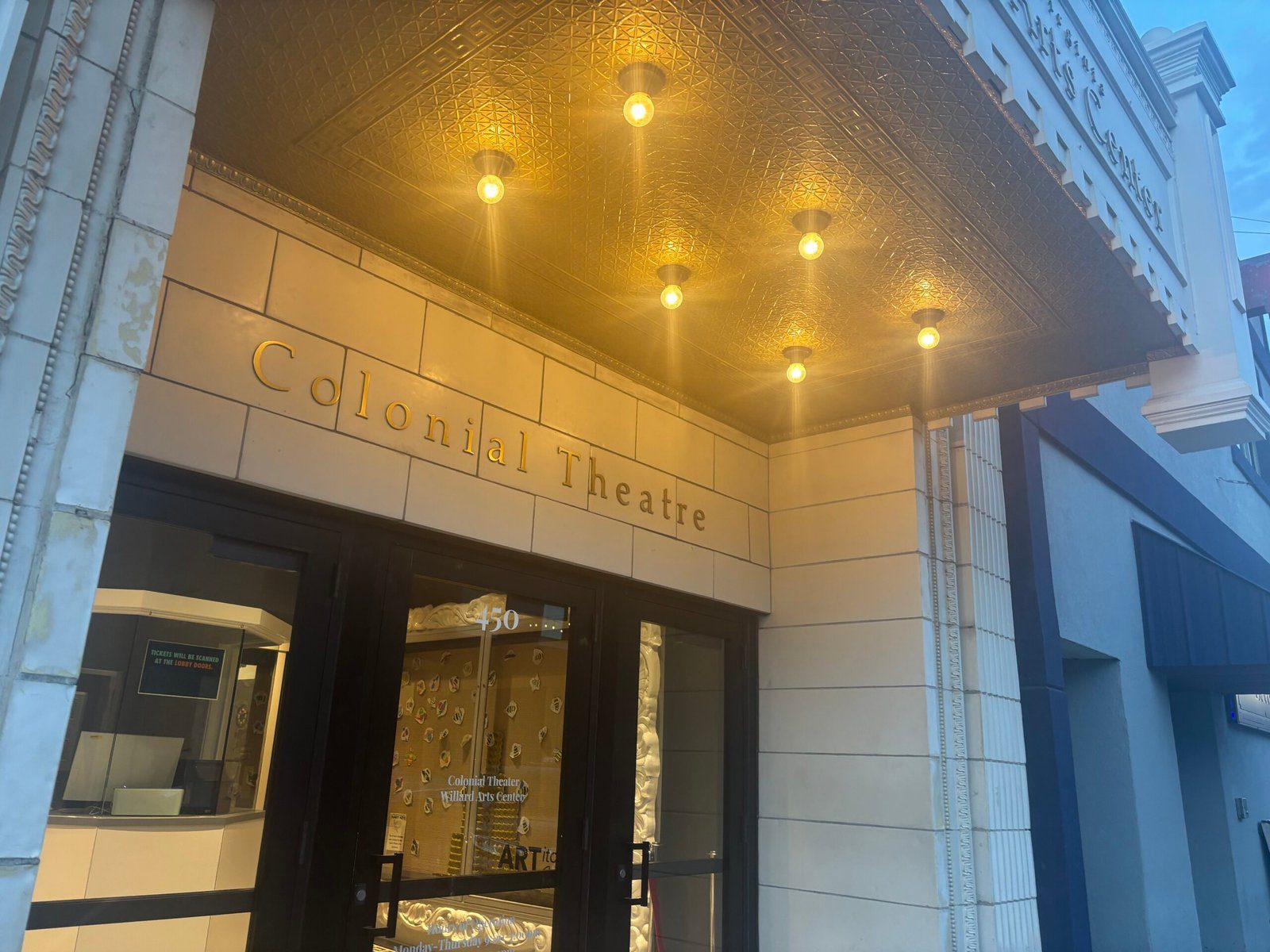
On June 14th, Idaho Falls held its second annual Juneteenth CommUNITY Heritage Music Festival, followed by Juneteenth: Night at The Colonial on June 19th. Both events celebrated rich cultural history and the ongoing fight for equality through a wide variety of music genres.

The music festival, a free public event at the Riverwalk Bandstand, featured live music by the Eastern Idaho Jazz Society. Families and individuals browsed community booths in partnership with the Idaho Falls Farmers Market. Opening remarks were delivered by Idaho Falls Mayor Rebecca Casper, who read the city’s official Juneteenth Proclamation. The event ran from 9:00 AM to 1:00 PM MDT and saw strong turnout from local residents. 

Chloe Doucette, a member of the organizing committee, reflected on the success of the event, “It was wonderful. We had lots of presence from booths representing different organizations within the East Idaho community that help share stories of our culture and showcase diverse perspectives.”

On June 19th, the Colonial House in downtown Idaho Falls hosted a memorable evening of musical performances and historical storytelling in honor of Juneteenth. The event began at 7:00 PM with opening remarks from one of the main performers and coordinators, Mosy Moran, who told the audience, “Tonight is an expression of freedom. It’s an expression of everything that America is meant to be—an expression of where we have been and where we can go.”

Performer and Coordinator Mosy Moran giving a statement at the Colonial House Juneteenth event.

The audience was then taken on an aural journey through decades of music, spanning symphonic, ragtime, jazz, blues, Motown soul, and modern hip hop. Musical performances included renditions of “What a Wonderful World” by Louis Armstrong, “Mustang Sally” by Wilson Pickett, and “I Feel Good” by James Brown, all performed by the Eastern Idaho Jazz Society. The Idaho Falls Symphony offered a violin and piano duet featuring ragtime classics such as “Graceful Ghost Rag,” “Saint James Infirmary,” and “Summertime.” Each piece was introduced with a short explanation of its historical significance and cultural impact.

The Eastern Idaho Jazz society playing at the Colonial House.

Midway through the event, a local group of young students known as the Freedom Readers presented a brief history of Juneteenth. They read firsthand accounts from African American citizens who had lived through enslavement, along with passages about the Emancipation Proclamation, the American Civil War, and the landmark day of June 19th, 1865. The students also highlighted the activism of Opal Lee, the “Grandmother of Juneteenth,” who campaigned tirelessly to make the holiday a national observance.

Young students known as the, “Freedom Readers” speak of the history of Juneteenth.

The evening concluded with a performance by the local band Mosy and The Heartthrobs, who played classics like “I Believe to My Soul” by Ray Charles and a stirring mashup of “A Change is Gonna Come” by Sam Cooke and “Alright”by Kendrick Lamar. Lead singer Mosy Moran spoke between sets about his passion for music and its unifying power: “Music unites everybody. It’s an expression. People relate to that expression. The more music you have in your life, the more you can understand somebody.” As Juneteenth continues to be celebrated nationwide, events like those in Idaho Falls at the Heritage Music Festival and the Colonial House demonstrate the power of retelling history and sharing rich music. 

Gay Brazilian Father Fired After Requesting Parental Leave Gets International Attention

A Brazilian gay father’s fight against workplace discrimination is making history in Argentina, with a groundbreaking case now before the Superior Court of Justice of the City of Buenos Aires.

Leonardo Hatanaka, who worked for Genzyme Argentina SA, a subsidiary of the Sanofi Group, was fired just 12 days after informing their employer in April 2023 that they would be a father via surrogate. Their son, Matteo, was born in Buenos Aires on May 5, 2023. Later that same month, on May 31, Hatanaka was fired again — this time after formally requesting 180 days of parental leave, a benefit supposedly available under the company’s diversity and inclusion policy.

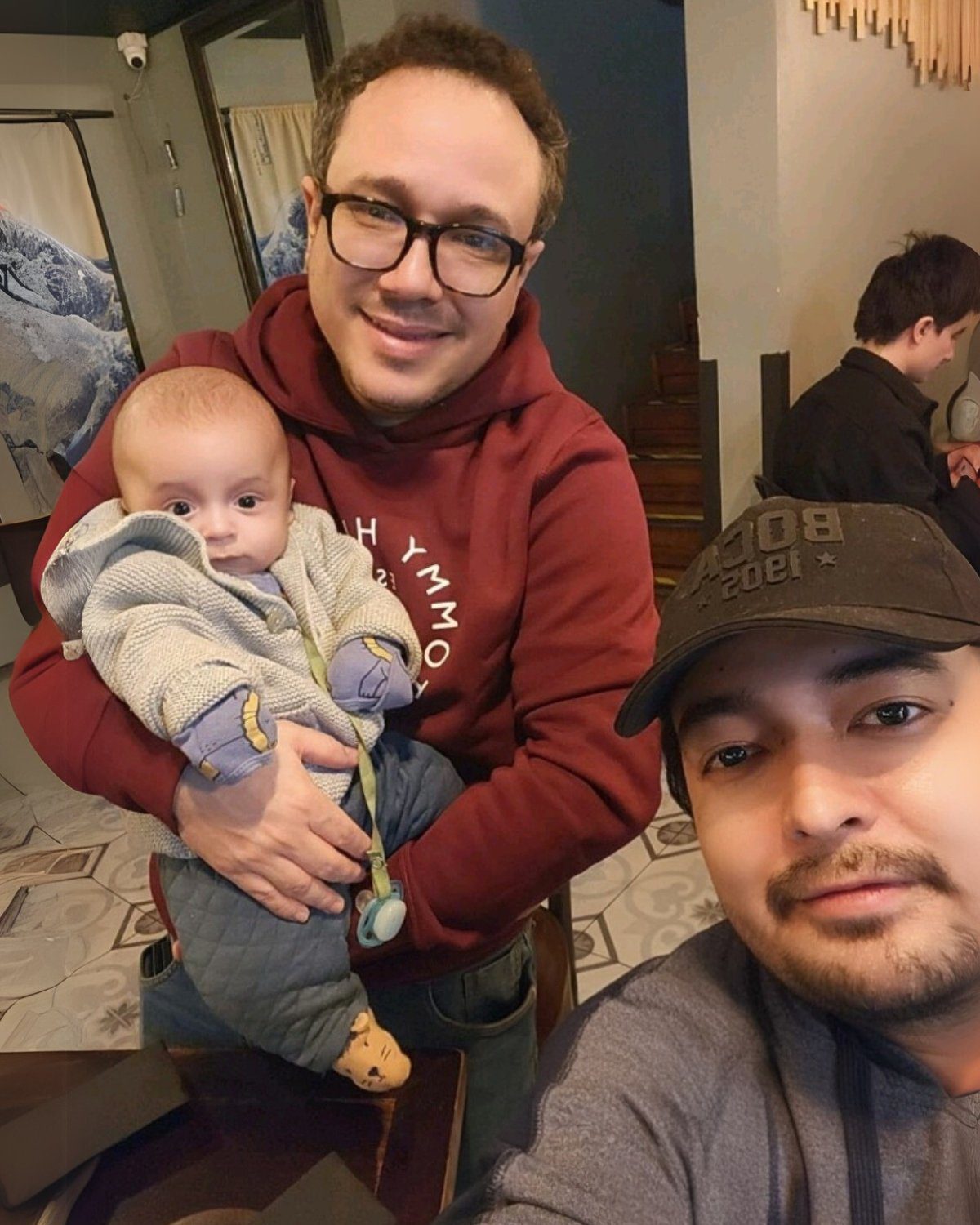
Leonardo Hatanaka with their son, Matteo

According to Hatanaka, the dismissal directly contradicted the company’s public commitments to inclusive policies and equal rights for LGBTQIA+ families. 

“I am speaking with my heart to my son — to be visible for him in the future, that we fought for him existing,” says Hatanaka

The case has since been recognized as a clear instance of workplace discrimination by two separate Argentine state agencies. In November 2023, the National Institute Against Discrimination, Xenophobia and Racism (INADI) ruled that the dismissal was based on sexual orientation and gender identity. A second ruling in 2024 by the General Directorate of Coexistence in Diversity under the Buenos Aires city government confirmed the act as institutional discrimination.

Despite these rulings, Sanofi Group has not acknowledged responsibility or offered compensation for the family. Legal efforts to have Hatanaka reinstated initially succeeded through a lower court injunction, but this was overturned by the National Labor Appeals Chamber. Their legal team has since appealed to the Superior Court of Justice of the City of Buenos Aires, which accepted the case on May 14, 2025, signaling that it will proceed to a substantive review.

This marks the first time a discriminatory dismissal involving an LGBTQIA+ parent has reached the city’s highest judicial body.

The case has drawn widespread attention and support from civil society groups including FALGBT+ (Argentina’s Federation of LGBTQIA+ Associations), SOS Homophobie (France), and Mães da Resistência (Brazil). It has also been officially cited in the latest United Nations report on discrimination based on sexual orientation and gender identity.

Matteo, whose parent was dismissed from their job shortly after he was born.

Hatanaka added, “Put it simply, pride is no longer just about visibility; it’s about never having to hide again out of fear of existing.

As Pride Month continues, Hatanaka’s message to their son is gaining global resonance: that every child deserves parents who are protected, recognised, and treated equally — regardless of who they are.

Family of Origin

I was a twentysomething, twentysomething. Lost and wayward, yet somehow granted the occasional tentpoles of good people to guide me along the way. I was nudged by one of those people at the time to go work for a rehabilitation center. I was raised in an alcoholic home and, like many who come from such beginnings, memory is a blur to me. A roof beam here, an adult’s face there, maybe a friend’s house. But the older I’ve gotten, the more I can see how things were.

The adults aren’t my parents, the roof beam doesn’t belong to a place I recognize, and the friend’s house isn’t really a friend’s. I was shifted around a lot. I was the youngest of my family and because of this, I was kept away from the disaster zone. Like many, I’m sure, I was left with a lot of questions.

I knew the “how” and I knew the “why,” but not the “what” exactly. What is the profile of a person? What is in the architecture of a person who loses their motherhood for the bottle? It’s a fall from grace that many don’t want to know exists. Women, I know, have described motherhood as something “sacred.” What exactly is the making of a supposed transgression?

While it originally brought some amusement to tell people that I was interning at a rehab, it would turn out to be an incredibly rich, spiritually nourishing experience. Moreover, this voluntary engagement would soon turn into employment. At the start, my placement was once a week and each day was illuminating. Shadowing the therapy team, I was sitting in on group therapy sessions, handovers, and supporting clients during their stay.

There’s a prevalent cultural misconception about what a rehab is and what exactly it does. These places don’t and can’t fix people, neither do they heal or get rid of addiction. In clinical terms, twenty-eight days is hardly a pocket of time at all. What a rehab can do and what I’ve witnessed it do, is bust denial. It can give appropriate interventions in the correct environment to assure that there are no illusions about the scale of the problem. A rehab can give a person abstinence and the tools to uphold it. It can show the way for a lasting sobriety. It is entirely up to the individual if they want to take it beyond their stay; the choice can only be made by them.

Across the months, there would be clients passing through for twenty-eight-day stays, or longer. Treated as a collective, they would be known as the “community” by the therapy team. Within a month it became clear I was in the right place. Each community passing through included at least one woman in her forties who had become alcoholic. More curiously, father, brother, lover, son… they all had a significant “Oliver” in their lives. So who were they?

They were clearly people giving their all. Perhaps too much, they were all remarkably hard on themselves. They were all either the only girl in the family, or the youngest, having a profound sense of being the runt of the litter. They were all from homes where doing one’s best was required and yet having one’s feelings acknowledged was seldom. They were all from formative environments where anxiety could be felt in the air. They were all able to speak of a mother or father, sometimes both, that they just couldn’t reach.

(Image courtesy of Bùi Hoàng Long via Pexels)

From school rebellion, to university freedom, to home life and domesticity, each was profoundly affected by their actions letting down others. Each understood their drinking habits but hadn’t realized the extent of this pervasive spiritual anesthetic. Each one of these women felt unseen or unheard as perennial perfectionists with sewer-bound self-worth. Something had to give.

Yet I look at these themes and can’t help but figure… it’s no cosmic curse. It’s not a smiting from the Almighty. To be sure: some had a genetic predisposition, a family disease, but some didn’t. The women in question were remarkably warm, provincial, and familiar figures. You can picture them loading up their shopping in a supermarket car park. Or waiting and chatting with fellow parents at the school gates. Maybe catching a coffee with friends, prams and/or little monsters in tow. Perhaps finding an oh-so-rare moment to themselves at a nearby salon. These women aren’t anomalies; they’re all around us everyday.

Transgression or falling? I’m not so sure. Addiction has an eerie ability to breed denial and minimization. From what I’ve seen, it’s a playing-out of matters we can’t control, a hard turn of misfortune, a flicker of fate away. 

Death Toll from South Africa’s Eastern Cape Floods Rises to 88 Amid Rescue Struggles

In the early hours of Tuesday morning, June 10th, the town of Mthatha and its surrounding villages in South Africa’s impoverished Eastern Cape province were plunged into chaos. Torrential rains triggered flash floods that tore through homes, collapsed roads, and swept away vehicles, claiming nearly a hundred lives, that number expected to rise.

For residents, the destruction was swift and merciless. Families awoke to the sound of rushing water and crumbling structures as the Mthatha River burst its banks. Makeshift homes and formal houses alike were no match for the sheer force of nature.

“We were not ready,” said one local councillor, his voice heavy with emotion. “We had no early warning, no time to evacuate. Many of the people who died were still sleeping.”

A Rescue Operation “Paralysed” by Resource Shortages

Authorities have acknowledged that rescue efforts in the crucial first hours were severely hampered by a lack of resources and coordination. “We were paralyzed,” said a senior provincial official who requested anonymity. “We didn’t have the air support, the boats, the manpower. It took hours—too many hours—before we could even begin to reach those in need.”

Over the following days, teams composed of the South African Police Service (SAPS), Department of Health, Gift of the Givers, and the South African National Defence Force (SANDF) were deployed. Efforts intensified over the weekend, with aerial searches locating bodies in and around Mthatha Dam and along submerged rivers.

Gift of the Givers’ search and rescue head, Ahmed Bham, said their collaboration with SAPS air support proved pivotal. “On Saturday, while hovering over the Mthatha Dam, we spotted anomalies in the water. Our diver confirmed that we had found three more bodies. We are now combing both riverbanks with boats and K9 units.”

The Toll on Families and Infrastructure

Entire families are among the dead. On Friday, President Cyril Ramaphosa visited the region to offer condolences and view the destruction firsthand. At the collapsed Efata Bridge, a taxi carrying schoolchildren was washed away. At least six learners, a driver, and a conductor died in the incident. Several passengers remain unaccounted for.

“I saw mothers crying in silence,” said President Ramaphosa. “This is not just a natural disaster. It is a humanitarian crisis that exposes the vulnerabilities of the most marginalized in our society.”

Beyond the loss of life, the human toll continues. More than 456 people have reported losing identification documents. Others are displaced entirely, their homes reduced to rubble. Many are sheltering in schools, churches, or with relatives in less-affected areas.

Mobilising Support Amid Widespread Grief

The provincial government, in partnership with relief agencies, is coordinating a multi-pronged humanitarian response. This includes:

  • Burial support in collaboration with funeral service provider AVBOB, covering body storage, funeral arrangements, and transport.
  • Grocery hampers from Interlink Express for affected families.
  • R5,000 in assistance from the Department of Education for families of deceased learners.
  • Mobile Home Affairs units deployed to Butterworth and Mthatha to issue temporary IDs and birth certificates.

So far, assistance has been provided for 26 burials, with many more expected in the coming days.

“This is not just about bodies,” said Athlenda Mathe, SAPS national spokesperson. “We are dealing with trauma, dislocation, and a deep sense of loss. The disaster teams are working around the clock, not just to retrieve the missing, but to comfort the living.”

A Climate Warning in Plain Sight

This disaster is a stark reminder of South Africa’s increasing vulnerability to climate-induced extreme weather events. The Eastern Cape, one of the poorest provinces, is already battling fragile infrastructure, chronic underdevelopment, and service delivery failures. Climate scientists have warned that the region—already grappling with alternating droughts and floods—will see more erratic rainfall and flash flooding in the coming years.

“This isn’t just an environmental event,” said a climate researcher at the University of Fort Hare. “It’s a justice issue. Poorer communities are bearing the brunt of climate change without the resources to adapt.”

A Region in Mourning, A Country on Alert

As floodwaters recede, the Eastern Cape is left to count the cost—emotional, physical, and economic. Roads, water systems, schools, and hospitals have all suffered damage. Local municipalities have declared disaster zones, unlocking emergency funds and support.

Still, for many residents, recovery feels a long way off.

Standing amid the debris of what was once her home, a grieving mother who lost two children to the flood said, “They say help is coming. But nothing will bring back what I lost.”

Breaking the Tether: My Writer’s Journey

I’d like to tell you the story of a young boy named Wylie Sowden.

The beginning of the story

Wylie was brought into the world on a cold October morning — a scraggly-haired, wimpish boy, full of innocence, promise, and curiosity. He was an artist to his core with an imagination to move mountains. He had a good heart. Back then, he couldn’t have known how much he was about to suffer.

When Wylie is 16, his brother, Michael, drowns off the coast of Marin County. Devastated, Wylie convinces himself that he was responsible for it. He was there when it happened. He could have done something, but he was too afraid. The guilt swallows him whole. In his grief, Wylie becomes self-destructive. He sacrifices his own happiness for the sake of repentance, leading him into several perilous scenarios…

One day, Wylie wakes up to find himself stranded in an abandoned parking garage he doesn’t recognize — a mysterious voice in his head telling him to complete various tasks… Wait. No, scratch that. Way too heady.

(Image courtesy of Two Dreamers via Pexels)

One day, Wylie wakes up with the ability to blink people out of existence with his eyes. Well, how does that remotely relate to anything?

One day, Wylie wakes up tied to a chair in a basement, slowly uncovering a tight-knit conspiracy between a family of mafia brothers, a shapeshifting reporter, and a psychopathic casino owner. WHO are all these CHARACTERS?

One day, Wylie wakes up. Yep. In juvenile detention. Sure. He confronts embodied representations of the five stages of – Yeah, no, absolutely not.

One day… Wylie wakes up… and Michael returns as an amorphous, faceless ghost, attached to Wylie’s hip by a tether. Hey… A ghostly, incorporeal tether… That could work. How better to show off Wylie’s unending guilt and the bond between brothers than a literal representation of said bond? A tether.

Tethered to indecision

(Image courtesy of Reafon Gates via Pexels)

I had 10 months to write the screenplay for “Tether” in the year I completed my Master’s degree. I had about fifteen, sixteen, seventeen different narratives, squashed into a turmoil of indecision, fighting for attention. My first draft was completed two weeks before the final submission deadline. That’s… insane.

Wylie and Michael had existed from the beginning. The brotherly relationship and the themes of grief and acceptance were at its core. Still, I found myself unable to bring a single draft to completion, uncertainty eating away the months like wildfire. To this day, I’ve wondered how this happened. Did I dislike the ideas I was creating? Hardly. Did I doubt they would make a good story? Not necessarily. On reflection, my indecision was spurned by something entirely different.

From the outset of any scriptwriting degree, you will be taught about the three-act structure and all its variations. The hero’s journey, the relationships between archetypes, the importance of fatal flaws, wants and needs, genre conventions, plotting, pace, and so on. The so-called “master tools” of storytelling — the structure.

I urge you to disregard all these things. Absorb them, internalize them. Discard them.

Structure and flow fighting for attention

You may often hear the first pass of a script referred to as the “vomit draft.” A writer is encouraged to write continuously, effectively vomiting their ideas onto the page. Get their unrefined marble on the plinth before they start to carve it, so to speak. While this sounds good on paper, the execution can be daunting and there’s a reason for that:

Structure interrupts the flow.

Of course, structure is vital, especially later on in the process. It must be introduced to refine a story. But in the early stages, it’s a serious roadblock that threatens individuality, especially for creatives. Any official scriptwriting resource will teach you to write “properly,” enforcing a systematic standard for what makes a “good” story. The inciting incident must happen by page 10, and the turning point by page 30. We must know all our major characters and their motivations before disrupting the equilibrium. The protagonist must confront their flaws and choose values over desires, yadda yadda yadda. All these techniques are tried and tested. They work. They’re commercial. Surely they will aid a writer looking to craft their first smash hit?

Let go for the first draft

Here’s the uncomfortable truth: any idea that you propose for a project is highly unlikely to translate into a final product. Never get too attached to ideas. In the end, I was too attached to Wylie. He had two ghosts haunting him: Michael, tethered to his hip, pulling him around, fueling his pain, and then me… tethered to his hip, pulling him around, fueling his pain. I determined that his journey had to make sense and have merit when a plethora of narratives presented themselves as alternatives. Any one of these ideas could have provided a diving board into a different conflict, a different protagonist, a different world.

I didn’t finish a single one of them.

I couldn’t make them fit inside the structural conventions I was being fed throughout the course. I ruled them out, thinking they were too conceptual, too convoluted. I was making excuses for starting over. I thought that I was making efficient decisions for the merit of the story.

In reality, the journey of bringing a vomit draft to completion will reveal what your story is meant to be. You must allow yourself to fail so that ideas can evolve and change.

This is not exclusive to screenwriting. Novelists, playwrights, poets, comedians, actors, artists, dancers — all creatives are bound by the conventions of structure. A level of detachment is healthy and inspiring in the early stages of emerging work.

The discipline of imperfection

Any writer worth their salt should practice a discipline of imperfection. Get comfortable with terrible writing. Develop fully drawn characters that are destined for the chopping block. Build wonders and erect dreams, knowing they’ll come crashing down. A good friend of mine once said that “there’s no good writing, only rewriting” and this could not be more fundamental. Your project will always be improving but a full page is more motivating than a blank one.

Never let the idea of the best be the enemy of the better.

Finally, an ending

Wylie’s story ends on the beach where it began, confronting the site of Michael’s death. Still tethered to his brother’s ghost, Wylie strides into the waves and imagines one of his drawings descending from the sky – a life-size illustration of Voyager 1. He knows that Michael’s greatest love was space. The idea of exploring the cosmos. Now, he can give Michael a chance. The ghost boards the spacecraft, soaring up into the stars. The tether pulls tighter and tighter until finally… it snaps.

Untethered

I cried, writing those final scenes. The moment of breaking the tether was very meaningful to me. It was a form of acceptance, much like Wylie’s. I had concluded a project of massive scale while still acknowledging and accepting its imperfections, wishing goodbye to ideas abandoned along the way. Finally, I knew that Wylie had a form of happiness. 

After everything that I’d put him through, he deserved that.

He deserved an ending.

(Image courtesy of Seymasungr via Pexels)

The writer’s journey is different for everyone. Some prefer to plot every minute detail before setting pen to paper. Others prefer to dive in headfirst, improvise, and let the words unleash themselves. Inevitably, structure must be enforced in the end. But never shy away from chaos. Leave yourself room for wonder. Shut off the conscious brain, if just for a moment, for I firmly believe that everyone has a meaningful story to reveal.

You just might not be aware of it.

FIFA Club World Cup: The Land of Opportunity

Despite early doubts, the FIFA Club World Cup has gone ahead as planned and quickly gained traction across the football world in its opening week.

Hosted in 11 cities in the United States as a preview for next year’s main event, the 2026 World Cup, the tournament offers a huge opportunity for clubs to make history by claiming the title of the first ever world champion under this new format.

The reformed structure brings together 32 of the best teams from every corner of the globe, including reigning champions and top performers from continental competitions over the past four years.

In the past, the Club World Cup was a single match between the Champions League and Copa Libertadores winners, the #1 side from Europe and South America, traditionally the two strongest confederations. It later evolved into a mini tournament with seven teams. Now the spotlight expands to 32 teams, the same number as the World Cup itself.

¡Let The Ball Roll!

From June 14 to July 13, the eyes of the football world are on American soil. It was none other than Inter Miami that kicked off the tournament. The Herons, led by the one and only Lionel Messi, hosted the multi-time champions Al-Ahly from Egypt.

Despite the goalless draw, the match proved highly entertaining, with each side dominating a half and both goalkeepers shining to keep clean sheets. The Argentine GOAT had his chances — striking the post once and forcing a late long-range effort that rattled the crossbar.

Lionel Messi battles for possession with Marwan Attia during the tournament’s opening match. (Getty Images Sport via GOAL.com)

Round 1: A Strong Start

Bayern and Juventus made their intentions clear with emphatic 10-0 and 5-0 victories over Auckland City and Al-Ain respectively. The difference in quality between the sides was obvious on the pitch. 

Current Champions League holders Paris Saint-Germain also impressed, thrashing the always competitive Atlético Madrid 4-0. The French giants continue to show why they are the best team in the world, having dominated Inter 5-0 in the final to claim their first-ever European trophy less than a month ago.

Inter, meanwhile, struggled in their opening match as Monterrey held them to a 1-1 draw. The goal for the Mexican side came from the timeless Spanish defender Sergio Ramos, with his classic bullet header.

“Happy with the point but maybe we lacked personality, calmness on the ball, and build-up from the start. Now we have to recover well and think about the next match,” Ramos said after the game.

Al-Hilal surprised many by holding the mighty Real Madrid to a 1-1 draw, with Moroccan goalkeeper Yassine Bounou coming up clutch by saving a last-minute penalty from Federico Valverde. Mamelodi Sundowns caught everyone off guard with a strong and delightful performance, edging Ulsan 1-0.

Chelsea defeated Los Angeles FC 2-0 with a goal in each half, while fellow Premier League side Manchester City secured an identical result against Wydad. In an eventful match — halted by adverse weather conditions — RB Salzburg beat Pachuca 2-1.

South American Sides Make Their Presence Felt

The first three matches mentioned above were the only ones with a clear gap in the final score. The rest were tight, entertaining battles — even the goalless draw between FC Porto and Palmeiras.

Fittingly, O Verdão were the first South American team to appear in the tournament. They went head-to-head with Portuguese giants Porto and were unlucky not to win, thanks to a brilliant display by goalkeeper Cláudio Ramos, who deservedly earned the Superior Player of the Match award.

Fluminense managed to dominate Borussia Dortmund, with their Colombian winger Jhon Arias creating havoc in several sequences of the game. They may feel the goalless draw fell short of what they deserved, with Swiss goalkeeper Gregor Kobel producing a heroic double save.

Botafogo edged Seattle Sounders 2-1, while Flamengo comfortably dispatched Esperance 2-0. Two wins for the Brazilian sides, who remain unbeaten across four matches — strong performances that underline the quality of the Brasileirão.

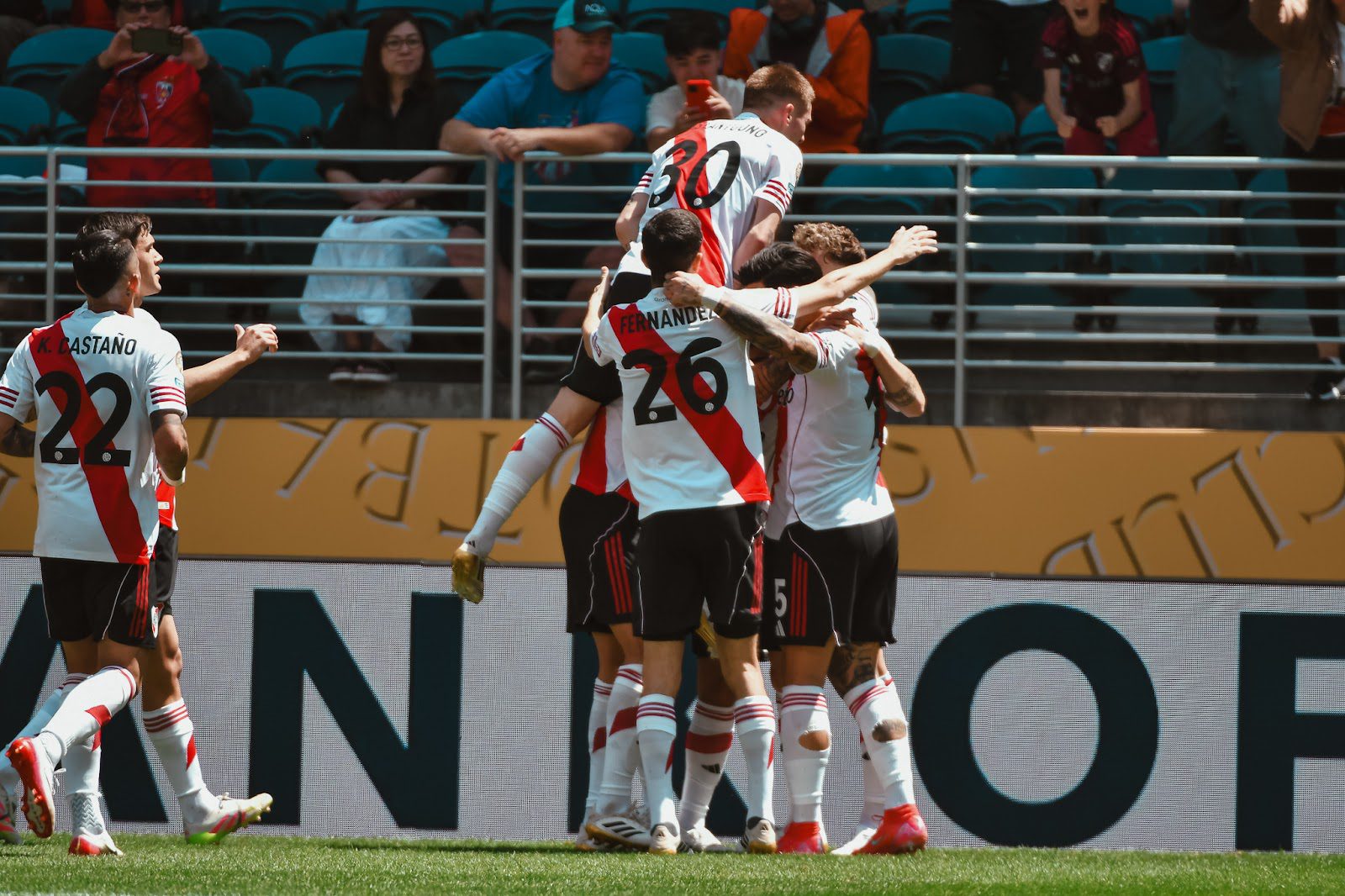
Their Argentine counterparts also delivered. As expected, giants River Plate and Boca Juniors did not disappoint. Los Millonarios showed control and composure to defeat Japan’s Urawa Reds 3-1, while Los Xeneizes were left frustrated after a 2-2 draw with Benfica. Boca had gone 2-0 up, but goals from Di María and Otamendi — both Argentines, coincidentally — sealed the final result.

River Plate players celebrate the 1-0  goal courtesy of Facundo Colidio. (River Plater X account)

These results show that CONMEBOL sides are stronger than ever. Despite external challenges, the region’s endless production of talent ensures South American football remains fiercely competitive.

Not to Miss Out

Round 2 is approaching fast and will decide the fate of many teams. The standout clash sees Paris Saint-Germain facing Botafogo — champions of the two strongest confederations — in a matchup that recalls the spirit of the former Intercontinental Cup. Chelsea vs Flamengo and Bayern Munich vs Boca Juniors offer similarly historic appeal.

Giants Inter and Real Madrid will also look to return to winning ways against Urawa Reds and Pachuca, respectively. 

If you haven’t tuned in to the Club World Cup yet, now is the time — these matches promise plenty of drama and excitement.

Franco Nuñez

Franco Nuñez is a communicator and sports journalist with a passion for running and swimming.

No Kings Rally Draws 1,400 in Idaho: A Protest Movement in Red America

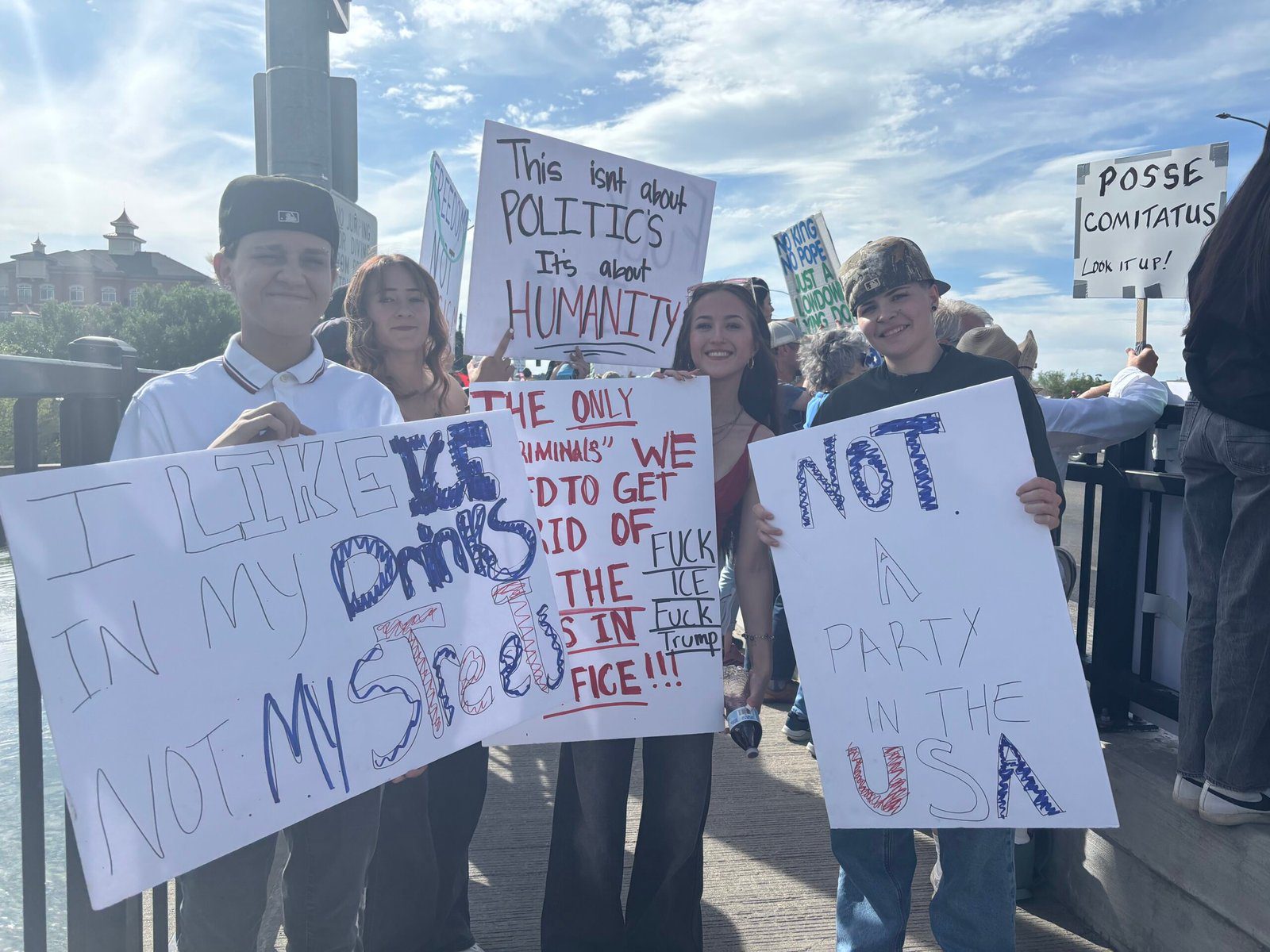
On June 14th, a large crowd of Idaho residents held their No Kings Rally in Bonneville County, Idaho Falls. The event took place on Broadway Avenue near the Japanese Friendship Gardens. Protesters began to gather around 4 PM MDT with signs and flags, chanting the phrase “No More Kings” as they stood on both sides of the bridge overlooking the Snake River.

Cities across the United States participated in No Kings Day, a movement that has now become one of the largest protests against a president in U.S. history. No Kings Day was a nationwide act of demurral, organized by the 50501 movement to oppose the actions of the Trump administration, which many Americans have observed to be autocratic or resembling the rule of a king. It was expected that many of these protests would be held in cities in more Democratic-leaning states—like Philadelphia, Atlanta, and New York—but what do rallies look like in predominantly red or Republican states?

Idaho Residents protesting at No Kings Rally by Gracie Leavitt

Idaho Residents protesting at No Kings Rally by Gracie Leavitt

This rally had more than 1,400 individuals present to share their voices. The event was planned a month in advance, set to occur on both Trump’s 79th birthday and the U.S. Army’s 250th Anniversary Parade. 

One of the main coordinators of the event and Idaho resident, Miranda Armenta, spoke about her personal motivation to help facilitate the event and her experience with activism:“What prompted me was the blatant misinformation the Trump administration is spreading. Convincing Americans we aren’t a democracy. Convincing Americans and those here [that they] aren’t allowed due process. Convincing America rallies and protests are just riots that are well funded. All these conclusions are wrong about us, and I want to battle the misinformation with education.”

Armenta said she began advocating during the 2016 Trump administration—a common sentiment shared by some of the Idahoans present. 

One of the participants, Kris Burnham, expressed that her frustration began early on: “I’ve been frustrated with Trump since his first presidency. I feel like the things that are happening in the United States are so egregious that we have to take any time and chance we can to come out and let our voices be heard. We need people to know this isn’t right; this isn’t normal. There’s this continual stream of lies that are going out to a lot of people, and I feel like events like this have to happen to let people know that it’s not the truth. That’s why I’m here.”

Idaho resident Kris Burnham advocating at the No Kings Rally by Gracie Leavitt

Though all the protesters present were advocating for the same cause, many had specific issues they highlighted through their decorated signs and banners. Some of these included information about reproductive rights, LGBTQIA+ rights, and environmental awareness. One of the younger protesters, Gavin McClain, said he was there specifically advocating for trans rights. Annette Harker, a resident of Idaho, was trying to spread awareness of local opportunities by offering documents for nonpartisan voter registration, ballot initiatives, volunteer opportunities, and more.

Idaho residents displaying their signs at No Kings Rally by Gracie Leavitt

Idaho residents displaying their signs at No Kings Rally by Gracie Leavitt

The protest lasted for two hours, ending around 6 PM MDT. It was, overall, a peaceful event that encountered little resistance from counter-protesters—an event that reflected many others across the nation in both Republican and Democratic states, united for a common cause.

Burnout Isn’t Just for the Boardroom

Overwhelmed

Ever reached that point in life exhausted with whatever you are doing and wishing you could just let it be and leave? It may be yardwork, caregiving, or working in an office with job overload. But the first time I felt the weight of the word burnout wasn’t in a boardroom, but in school. Let me tell you a bit about my own burnout story.

It all started when I enrolled at a university in Kenya for my undergraduate course in biological science. Everything went well at first: getting used to the new environment, meeting new friends, and trying out new things. The first and second years passed; then, I reached my third year. At first, I did not notice what was happening inside me. I could feel a sudden increase of pressure, anger building up, the need to make money to survive on campus, and the stress of doing ‘fun’ activities like hanging out with my friends. Of course, the hangouts were not so­­­­­­­­­­­­­­­­­­­­­­­­­­­­­­­­­­­­­­ proper­.

Things at the university were very much contrary to my expectations. In my first year, I knew I was doing additional courses provided by the university because, as my seniors told me, it was laying the foundation. For instance, why were microbiologists learning about angiosperm and gymnosperm taxonomy in detail? They told me that by the third year, I would then start taking fewer units, and they’d only be related to my program. This turned out to be a lie; the number of units never decreased. Instead, many more units that I felt were unnecessary were added. In addition to these, there was the hands-on part of the program — called practicums. Most of the time these practicums were scheduled on weekends. Imagine having to attend boring lectures throughout the week, and then on the weekend when you are expecting to rest, you are required to do a practicum on a mouse’s anatomy or “the park grass experiment” to measure the biomass of grass.

When it came to class, I started feeling overwhelmed by the lectures and the assignments that were given. I could just miss classes intentionally, do assignments shallowly, and never bother to follow up on my academics. My friends were experiencing the same stress, so I felt comforted by their misery at the very least.

However, I had no option but to follow the university’s curriculum. To be sure, I was not the only one who was passing through this hectic system of learning. With resilience, I managed to clear my undergraduate stretch with first-class honors. I was also among the graduates who were able to win a scholarship grant from the university to further my studies at the university of my choice abroad. My hard work and dedication had at least and at last paid off.

A new dawn this was. I was happy that I could focus on my academics, and since it was a new environment, it would be an added advantage for me to socialize with new cultures and people. I managed to enroll in one of the best universities in Israel that offered a master’s degree in biological sciences — Tel Aviv University! Little did I know that this was the point where I would awaken all the pressure giants I had faced and thought I had shrugged off my shoulders back in Nairobi.

I started feeling weak. I lost my appetite, insomnia kicked in, and I began to procrastinate. I could postpone my research, write papers, and even attend lectures. Yet every time I tried to write a paper, I would wonder if I had done the correct thing as required. Would it be listed in the presentation panel? I felt lonely most of the time since most of my friends were not with me. At the same time, I had to look for extra money for my upkeep; the money provided by the scholarship could not cover all my needs. 

Let’s not even talk about the practicum that sent us researching  under the scorching sun of the Arava desert. 

Funnily, those who were around me at that time could not see this and instead applauded me for how I looked focused and serious. But deep down, I was going through a lot. Overwhelmed. The environment there was so much different from what I was used to in Kenya — the food, the climate, the language, and the fact that I was in one of the best universities in Israel. I was doing a work-study at the same time I had to submit my thesis for review, all while I had to attend conferences to maintain my scholarship. It was hectic, and not in a good way.

Weight a minute

Slowly, I gained weight. I was surprised when suddenly my clothes could not fit me anymore. The stress took its toll in other ways, too; I began to miss out on the activities that I enjoyed doing. Most of the time, I found myself outdated with what was trending around the world. I lost my enthusiasm for watching the news as I felt the information didn’t add any value to my life — and instead increased my burdens.

Whenever I turned on my TV or used social media, I felt disgusted. I did not know what to watch. I felt like everything was working against me. From my research, my social life, my private life, and even work-study — which was my primary source of livelihood. It hit hard when my procrastination intensified. I kept postponing everything, and most of the time, I felt trapped in the last-minute rush. 

I seemed to have a lot of problems that I needed solved immediately. The weight was beginning to exceed my limits, so I decided to share my experiences with a local friend. He had also been experiencing similar stress, but for him, he managed to cope with it and overcome it. It was at this moment that I realized what I was going through was burnout, and it was this mental, physical, and emotional exhaustion that made me feel like things were not aligning as they should. My friend recommended I start listening to and reading about matters of mental health. 

Calling out the burnout turned out to help

During this time, I came across a quote that stuck with me. According to a study from  the psychologist Demerouti (2024), ‘’While research trends offer valuable insights into burnout causes and effects, it is crucial to move beyond mere statistics and engage in open discussions about this issue.’’ I embraced Demerouti’s perspective of finding a solution to stress and burnout because it helped me in the end.

With time, I began to embrace my struggles and follow what the resources were suggesting. Through this lens, I developed a greater appreciation for my surroundings. Who knew that I would fall in love with the Israeli moshav (cooperative farming community,) and desert settlements, or that I would complete my research right in this region? Even Covid happening during my thesis presentation felt bearable. 

(Image courtesy of Anthony Cantin via Unsplash)

A brown mushroom growing out of a tree log.

The angiosperm and gymnosperm I despised in my undergraduate class finally made sense. I began exercising, fasting, reconnecting with nature, taking deep breaths, and walking on the beautiful Tel Aviv beaches, even the Arava. I began to appreciate myself for how far I had come and everything I had accomplished. The whole time I had been harsh on myself, and I was not even aware. I managed to complete my Master’s program and return to Kenya. 

Ever since, I decided to always appreciate myself and everything around me; I would let worrying be the least of my problems, and this new perspective was all thanks to my friend in Israel. So, thank you to that individual. 

You helped me overcome my own burnout by seeing and saying it.