When the World Stopped, I Kept Going

I sat in my bedroom, recovering from the flu, not knowing what would happen later that day. It was March 12, 2020.

I had planned to return to school the next day. Two text messages received in the afternoon changed that plan. The first was from a classmate, sharing that our teacher said that we wouldn’t have school the next day or the following Monday. A bit confused, I guessed it was due to the flu going around. A few hours later, my boyfriend texted, informing me that he heard about school being canceled for the next two weeks. Later, he sent an update. School will be canceled for the rest of the school year due to the virus, COVID-19.

Anxiety kicked in, and I blamed myself for the school closing even though there had been no confirmed cases in my county. I was worried that others would hold me accountable, thinking that maybe they believed that I was the reason school was canceled. Based on my symptoms – a cold made worse by asthma – my tendency to internalize things led me to rumination. Would my peers suppose that my absence and being sick could be COVID? Would they think I caused our school to shut down?

A blue face mask next to a bottle of hand sanitizer.
(Image courtesy of Tai’s Captures via Unsplash.)

Unwelcome changes

I would soon have more things about which to worry.

A few days after the schools in our state closed, my grandmother’s assisted living facility stopped allowing any visitors per the state’s COVID guidelines. Two weeks later, the facility’s staff began allowing residents’ families to speak to them through the window. My mother, aunt, and I held up signs outside, showing our support to grandma Hud. In April, however, we lost Hud to an accident that occurred at the facility. My heart felt like it had been slowly ripped from my chest. Hud meant everything to me, a constant source of support in my life.

I was already mourning the loss of my grandfather, Grampy, when Hud passed away. Grampy had passed five months earlier from stage 4 brain cancer. Navigating this grief through a pandemic and as a high school student was agonizing, but I numbed myself to the pain. I was confined with my parents in our home, and the only way that I got through it was because of my friends, my boyfriend, and the Nintendo game Animal Crossing: New Horizons. It gave me something to focus on, as well as a sense of control. It distracted me and was calming. It was a temporary, and much needed, escape.

Depression, dissociation, and emotional survival

Around May, I was in a free cosmetology program. The instructor was a hair stylist who attempted to teach the class over Zoom, but it wasn’t the same as in-person schooling. My parents didn’t want to be used as models, so I resorted to practicing cutting hair on my Pug, Luna. She wasn’t a very good client. Focusing on the course became more challenging with all of the changes I faced.
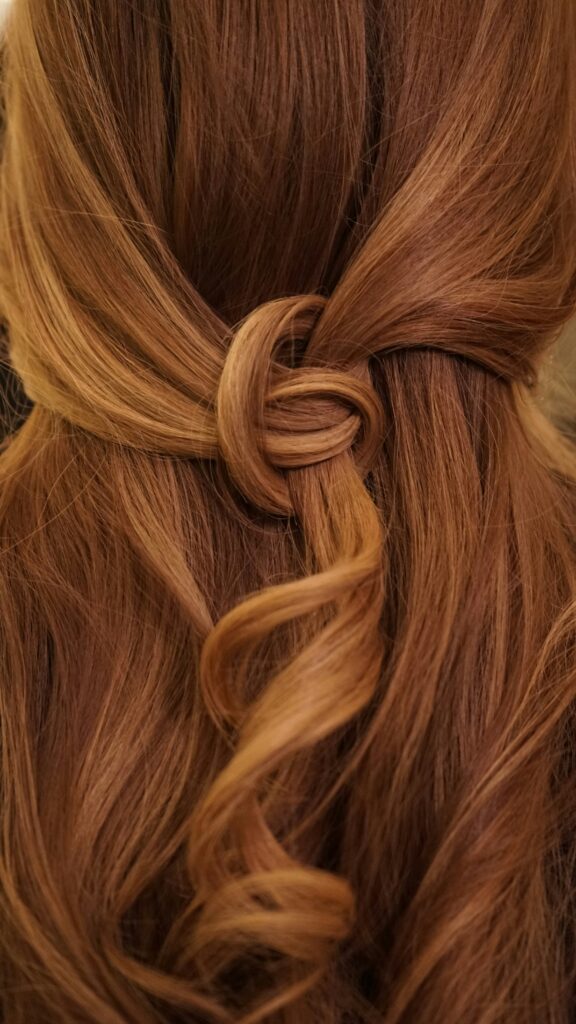
Parisian-style braid on a woman with ginger hair.
(Image courtesy of jagadshd via Unsplash.)

A few months before the pandemic began, I had begun to have episodes in cosmetology classes where I would lose track of time and couldn’t focus. I didn’t think much of it at first. Maybe there was just too much of my mind, too many things to worry about. There were several times in class where I thought only a short time had passed, but it had actually been 20 minutes. I tried to snap out of it, but the dissociative spells consumed me. I wouldn’t measure out the right amount of heat protection spray to use with flat irons. I’d begin the task of flat ironing a mannequin’s hair and then dissociate in the middle of it. There were a few times where I ended up leaving the iron on the countertop and didn’t finish the task. 

Each time, I’d feel like I was on a lazy river, slowly swaying back and forth, feeling the ripples of reality touch my feet. My mind was blank, occasionally punctuated by sadness and grief. I didn’t understand what was going on, and it worried me.

There was no internal script during these moments, which was rare for me. For as long as I can recall, my mind has raced with thoughts that I cannot contain. My brain is a hamster that is spinning rapidly on a wheel to nowhere. I was unaware that I was dissociating in front of others, and what the cause of it was. I would later learn that I was developing PTSD from abuse (inflicted by an ex-partner). 

Being away from friends and others due to the pandemic worsened these experiences. Despite having my parents and dogs around, I longed for more social connection. The lack of social support led to more and more dissociative spells, and I withdrew myself from others even more as a result.

A difficult, but right, decision

Before COVID, I was already struggling to keep up with my classmates in terms of technique and efficiency. Because of how the virtual schooling and isolation impacted my ability to learn, I found it difficult to keep up with my peers. I hadn’t taken into consideration that my hand-eye coordination skills weren’t very strong, and the inability to practice in person with a teacher meant I fell behind even more. Several people in my class were able to perfect their techniques soon after it was demonstrated to them. A lot of them were being considered for internships for the following year, while I could barely get everything on my list accomplished in one class period. In a time when I should have been able to receive extra emotional support from my grandparents, I couldn’t. 

The grief consumed me, and I moved into survival mode. The lack of socialization and support gave me more time to reflect on whether cosmetology was right for me. As time went on, I became less convinced that it was. Eventually, I decided to drop out of the free program. 

It was a difficult decision, but I knew that it was the best outcome for me. That choice allowed me to spend more time with my boyfriend during our senior year, where hybrid learning meant that we attended school in person three out of five days a week. The additional social interaction supported my wellbeing and helped me feel better about the decision to drop the course. If I had chosen to remain in cosmetology, I would have had one or two days on the main campus and the rest at the technical center, and I wouldn’t have been able to interact with my friends or boyfriend as often. 

Feeling a sense of support and familiarity was essential, particularly when socialization was rare, and learning was mostly independent. Thinking back to this time, I cannot see myself staying in a field that I didn’t truly enjoy. Although my choice to drop the course led to attending college — and student loan debt — the knowledge I gained and the networking connections I built more than made up for what I might have gained had I continued with cosmetology.

These events, like everything in our lives, are all interconnected, a web expanding outward in hundreds of directions. Our trajectory changes as we adapt to different circumstances, events. I learned it was okay to not know what I wanted to pursue or to switch even though I didn’t know what the outcome would be. I reminded myself that I had an abundance of time to find the right answer for me, and that’s led me to where I am today. 

And from where I’m sitting, I’m pretty happy with those choices.
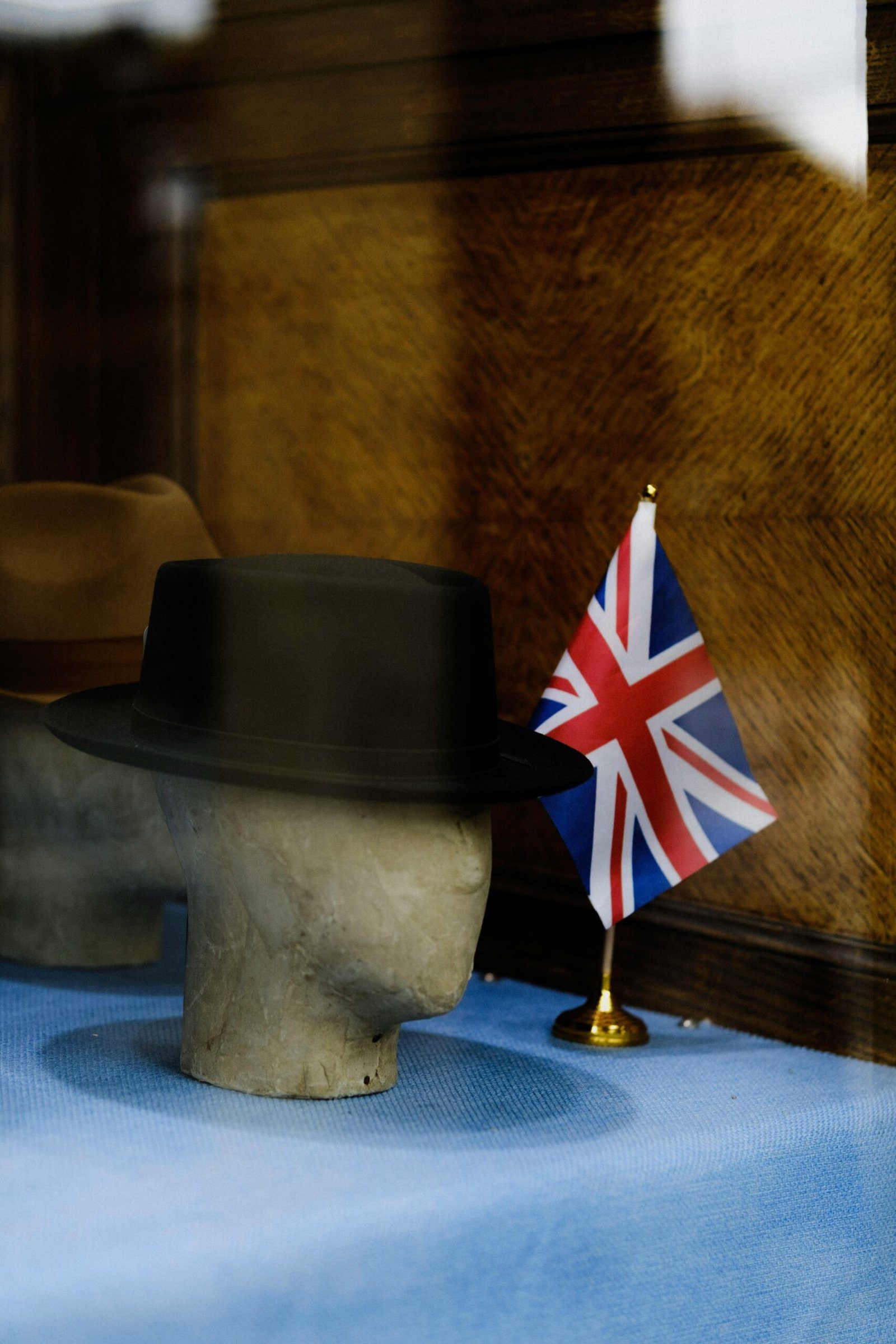
Me: The Kenyan Father, and the British Father

Dreams of opportunity

“I finally get out of this frustrating country and explore!’’ 

It’s not that I lack patriotism for my country, but honestly, that is how I felt when I finally secured my visa to the United Kingdom.  What could be more exciting for someone like me from a “Third World” country like Kenya than securing an opportunity to live and work among the citizens of Great Britain? 

My destination? Oxfordshire, a far cry from Nairobi City, the alleged capital of Africa. I am heading to a whole new world of hope. 

Migrating to the UK was like a golden opportunity for my family and me, and for my daughter specifically, since I believed she would be able to get a top-tier education, better social amenities, and, of course, get to interact with a different cultural community. At least, that is what I thought. Little did I know that all that awaited me was but exhaustion and stress from relocating and missing my family, my friends, and the warm tropical weather back home. In fact, by the time I landed in the UK, I immediately found myself appreciating the climate and weather back home in Nairobi.

Migrating from expectation to exhaustion

(Image courtesy of Alexander Dummer via Pexels)

I convinced myself that it was just a matter of time before I’d get used to this cold weather. At least this seemed to be the least of my problems. But in reality, things were difficult, more so since I was an immigrant and I was not used to life here. I was navigating an unfamiliar environment. I had to look for a school for my young daughter, get a mortgage, and, of course, settle into my new job. It was at this point that it hit me — I now had a caretaking role to fulfill. 

I got my daughter into a primary school, but here, things were very different. For instance, once you enroll your child in a school in Kenya, they become the responsibility of the school; you are not obligated to pick up your child from school because the school bus would drop them right at their estate. Then, typically, the maid would go and pick them up if the drop-off point happened to be far from your house. If the school is in a rural setting or the child is old enough, they are free to walk back home without fear of jeopardy, since even strangers can act as carers. But here in the UK, it was a different story.

First of all, the language barrier was a heavy stone to roll, especially for my daughter, who was used to a creole of Swahili and English. However, in the UK, there was only English with a strong British accent. It was a challenge for her. Then, the environment was like a monster to her. Often, she would catch flu due to the cold climate here – unlike in Kenya, where the warm climate is easier on the immune system. 

The pressure of caregiving started weighing on my shoulders. I was the primary caregiver here. You see, a benefit to living in Kenya is that there was a network (family, friends, neighbors) who helped hold everything together. But here I was alone with just my immediate family. We lacked other support to lean on.

(Image courtesy of Franco Debartolo via Unsplash)

Back to my daughter and her school routine. Daily, I had to wake up at 6:00 a.m. to get sorted for work and at the same time prepare my daughter for school, as she was supposed to report to school at 8:30 a.m. Furthermore, I had to make sure that her breakfast was ready before 7:00 a.m. and also pack her lunch, all before I even thought about my own day. 

Back in Kenya, this was never a problem, as her nanny took care of this. But here in the UK, hiring a nanny is very expensive. Because children cannot be left alone, everything was for her mother and me to do.

As if that was not enough, I also had to pick her up from school. School ends at 3:15 p.m., which is an hour and forty-five minutes early, given that my work day ends at 5 p.m. There are school clubs, but there is a fee to participate. If you want to coordinate home drop-off with the school, it is double the price of picking her up by yourself.

My caregiving role does not end here. After school is the most exhausting part. When we get home, I have to help her with her homework and any projects she may have. All this I do, and at the same time, I have to keep up with my job. The school encourages registering children for weekend clubs, and this, too, requires a parent’s presence and extra expense.

Other school-related tasks include: being up to date with school news, attending the parent-teacher meetings, talent shows, and exhibitions that are sometimes scheduled on workdays. In order to accommodate all of these activities, I have to build them into my work schedule. With school trips, I have to plan properly so that she can also enjoy herself as the other students do, and not feel left out. At times, I felt overwhelmed by these responsibilities, and wished I could return home. Seriously, why did no one tell me about what’s involved in transitioning from the Kenyan school system to the UK one?

Transition and growth

(Image courtesy of Ryan Stefan via Unsplash)

Eventually, with repetition, my daughter and I adjusted to her new schedule and academic requirements and soon, some of the responsibilities, like picking her up from school, were reduced because she could come home by herself. The parenting culture clash I experienced was not just about changing and securing greener pastures and a better living environment for my family, especially for an immigrant. It entailed much more than that. This process taught me how to be present for my family and what kind of a caregiver, teacher, cultural guide, and loving parent a school-age child needs. 

Living in a foreign environment, I felt like every interaction and activity that contributed to my adaptation to the new culture robbed me of my strength emotionally, physically, and mentally. I was confronted with customs that nobody ever told me about. In my role as a parent, I felt like my burnout was an endless tunnel and that I would never see the light. But gradually, I learned to work my way through it until I finally reached the other side.

Indeed, sometimes, to survive, you just have to be present, even when everything around you feels overwhelming.

Burnout Isn’t Just for the Boardroom

Overwhelmed

Ever reached that point in life exhausted with whatever you are doing and wishing you could just let it be and leave? It may be yardwork, caregiving, or working in an office with job overload. But the first time I felt the weight of the word burnout wasn’t in a boardroom, but in school. Let me tell you a bit about my own burnout story.

It all started when I enrolled at a university in Kenya for my undergraduate course in biological science. Everything went well at first: getting used to the new environment, meeting new friends, and trying out new things. The first and second years passed; then, I reached my third year. At first, I did not notice what was happening inside me. I could feel a sudden increase of pressure, anger building up, the need to make money to survive on campus, and the stress of doing ‘fun’ activities like hanging out with my friends. Of course, the hangouts were not so­­­­­­­­­­­­­­­­­­­­­­­­­­­­­­­­­­­­­­ proper­.

Things at the university were very much contrary to my expectations. In my first year, I knew I was doing additional courses provided by the university because, as my seniors told me, it was laying the foundation. For instance, why were microbiologists learning about angiosperm and gymnosperm taxonomy in detail? They told me that by the third year, I would then start taking fewer units, and they’d only be related to my program. This turned out to be a lie; the number of units never decreased. Instead, many more units that I felt were unnecessary were added. In addition to these, there was the hands-on part of the program — called practicums. Most of the time these practicums were scheduled on weekends. Imagine having to attend boring lectures throughout the week, and then on the weekend when you are expecting to rest, you are required to do a practicum on a mouse’s anatomy or “the park grass experiment” to measure the biomass of grass.

When it came to class, I started feeling overwhelmed by the lectures and the assignments that were given. I could just miss classes intentionally, do assignments shallowly, and never bother to follow up on my academics. My friends were experiencing the same stress, so I felt comforted by their misery at the very least.

However, I had no option but to follow the university’s curriculum. To be sure, I was not the only one who was passing through this hectic system of learning. With resilience, I managed to clear my undergraduate stretch with first-class honors. I was also among the graduates who were able to win a scholarship grant from the university to further my studies at the university of my choice abroad. My hard work and dedication had at least and at last paid off.

A new dawn this was. I was happy that I could focus on my academics, and since it was a new environment, it would be an added advantage for me to socialize with new cultures and people. I managed to enroll in one of the best universities in Israel that offered a master’s degree in biological sciences — Tel Aviv University! Little did I know that this was the point where I would awaken all the pressure giants I had faced and thought I had shrugged off my shoulders back in Nairobi.

I started feeling weak. I lost my appetite, insomnia kicked in, and I began to procrastinate. I could postpone my research, write papers, and even attend lectures. Yet every time I tried to write a paper, I would wonder if I had done the correct thing as required. Would it be listed in the presentation panel? I felt lonely most of the time since most of my friends were not with me. At the same time, I had to look for extra money for my upkeep; the money provided by the scholarship could not cover all my needs. 

Let’s not even talk about the practicum that sent us researching  under the scorching sun of the Arava desert. 

Funnily, those who were around me at that time could not see this and instead applauded me for how I looked focused and serious. But deep down, I was going through a lot. Overwhelmed. The environment there was so much different from what I was used to in Kenya — the food, the climate, the language, and the fact that I was in one of the best universities in Israel. I was doing a work-study at the same time I had to submit my thesis for review, all while I had to attend conferences to maintain my scholarship. It was hectic, and not in a good way.

Weight a minute

Slowly, I gained weight. I was surprised when suddenly my clothes could not fit me anymore. The stress took its toll in other ways, too; I began to miss out on the activities that I enjoyed doing. Most of the time, I found myself outdated with what was trending around the world. I lost my enthusiasm for watching the news as I felt the information didn’t add any value to my life — and instead increased my burdens.

Whenever I turned on my TV or used social media, I felt disgusted. I did not know what to watch. I felt like everything was working against me. From my research, my social life, my private life, and even work-study — which was my primary source of livelihood. It hit hard when my procrastination intensified. I kept postponing everything, and most of the time, I felt trapped in the last-minute rush. 

I seemed to have a lot of problems that I needed solved immediately. The weight was beginning to exceed my limits, so I decided to share my experiences with a local friend. He had also been experiencing similar stress, but for him, he managed to cope with it and overcome it. It was at this moment that I realized what I was going through was burnout, and it was this mental, physical, and emotional exhaustion that made me feel like things were not aligning as they should. My friend recommended I start listening to and reading about matters of mental health. 

Calling out the burnout turned out to help

During this time, I came across a quote that stuck with me. According to a study from  the psychologist Demerouti (2024), ‘’While research trends offer valuable insights into burnout causes and effects, it is crucial to move beyond mere statistics and engage in open discussions about this issue.’’ I embraced Demerouti’s perspective of finding a solution to stress and burnout because it helped me in the end.

With time, I began to embrace my struggles and follow what the resources were suggesting. Through this lens, I developed a greater appreciation for my surroundings. Who knew that I would fall in love with the Israeli moshav (cooperative farming community,) and desert settlements, or that I would complete my research right in this region? Even Covid happening during my thesis presentation felt bearable. 

(Image courtesy of Anthony Cantin via Unsplash)

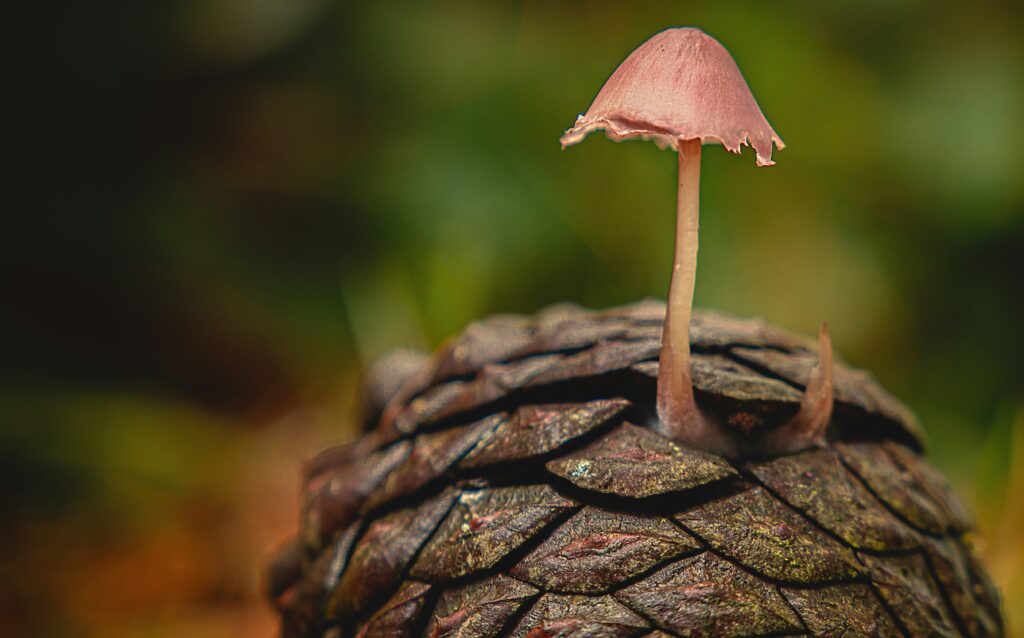
A brown mushroom growing out of a tree log.

The angiosperm and gymnosperm I despised in my undergraduate class finally made sense. I began exercising, fasting, reconnecting with nature, taking deep breaths, and walking on the beautiful Tel Aviv beaches, even the Arava. I began to appreciate myself for how far I had come and everything I had accomplished. The whole time I had been harsh on myself, and I was not even aware. I managed to complete my Master’s program and return to Kenya. 

Ever since, I decided to always appreciate myself and everything around me; I would let worrying be the least of my problems, and this new perspective was all thanks to my friend in Israel. So, thank you to that individual. 

You helped me overcome my own burnout by seeing and saying it.

A Hāfu in Japan

Two passports. Two last names. Two identities. From a very early age, my life has been characterized by how I am half-American and half-Japanese. In elementary school, my mom tried to teach me Japanese by putting me in a “Japanese as a Second Language School (JASL)” on Sundays. Being a child, of course, I was very averse to going to more school on the weekend.

In middle school, we moved to Tokyo, Japan, for two years for my mom’s work. I ended up going to the ‘American School in Japan (ASIJ)’ to take 6th and 7th grade. 

Blame it on anime!

However, I only decided I wanted to actively interact with and learn the language years later, in the middle of high school, all spurred on by watching just a few minutes of anime, something I ironically had never done before, despite all my exposure to Japanese culture up to that point. 

Suddenly, all my past experiences became missed opportunities. Suddenly, I wished I had been more open to the JASL lessons taught to me at Princeton University. Suddenly, I wished I had soaked up more of the Japanese that was all around me in Tokyo and ASIJ, which had both American and Japanese students alike. 

From sophomore year onward, I finally began to expose myself to Japan and Japanese-oriented programs. I put myself in a Japanese summer camp, a JASL summer school at Harvard, and as I went on to college, I got into a joint-degree program that would offer me two years in both an American university and a Japanese (Ritsumeikan University) college. Unlike my earlier experience of living in Japan for a couple of years, this time, I actually had a thirst for learning Japanese, and that experience and desire was what made all the difference in feeling that I was truly experiencing Japan.

Being in different phases of my life (11-13 years old vs. 20-22 years old) and the context that defined them was the main difference of living in Japan as a half (ハーフ Hāfu) individual. In middle school I was indifferent to both Japanese itself and learning the language, whereas in college, I actively wanted to learn Japanese and ended up going to a school that would better immerse me in its culture and people. 

While before I was made to go there because of my mom’s work, this time, I went of my own volition, meaning that I was more open to absorbing what Japan had to offer me. While I previously attended an American school that was filled with a majority of international students, Ritsumeikan was a Japanese university first and foremost, meaning that most of the school had students who didn’t even know English (I was in the international department, which had the only classes that were taught in English and were full of foreign students). 

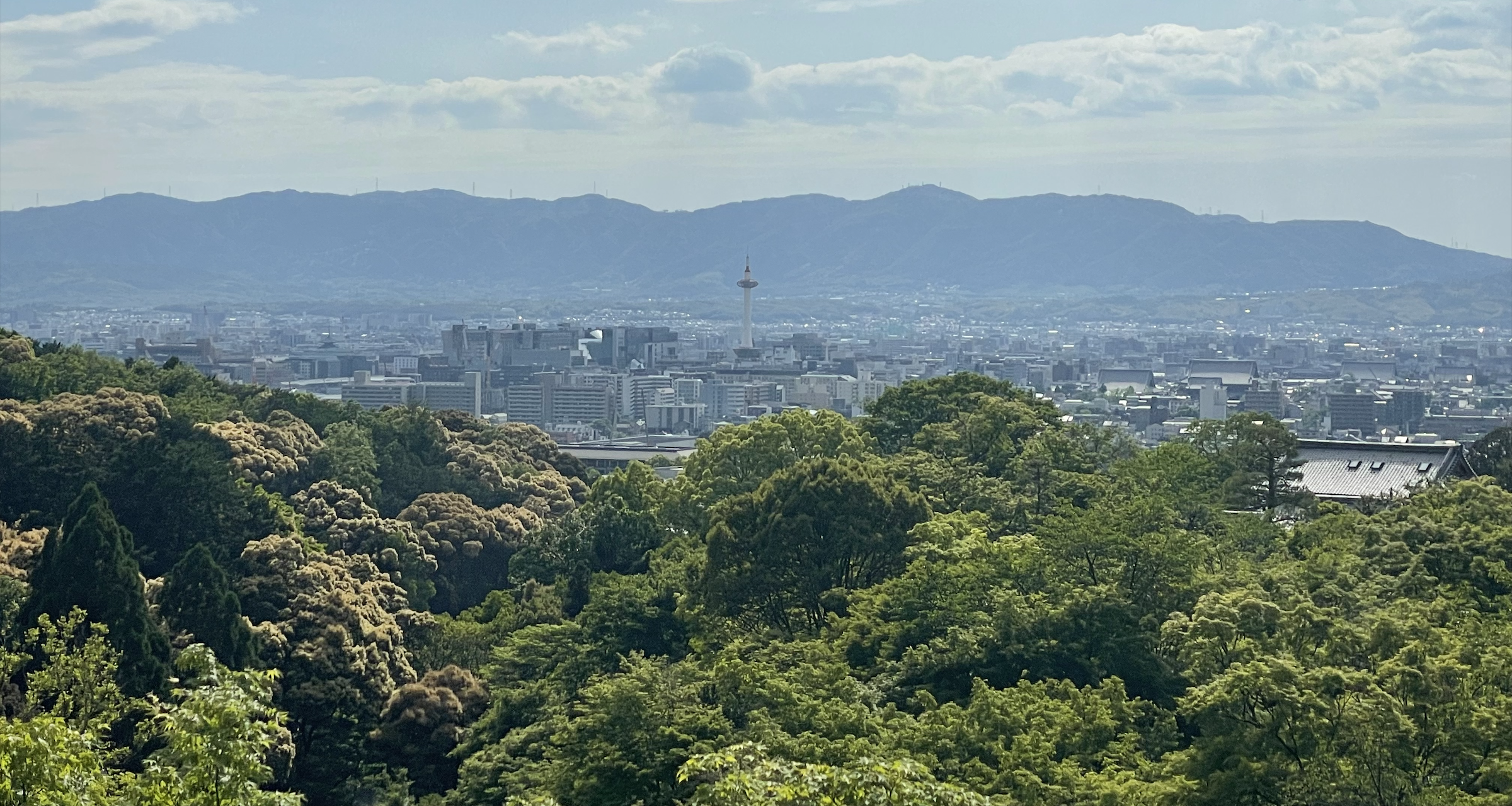
The places in Japan I went to differed too. Tokyo is a modern city with many international influences and people, and was where I went to ASIJ. Kyoto, where I went to Ritsumeikan University, is far more traditional. Living in Kyoto gave me a whole new perspective on what it meant to live in Japan. Although I had technically lived in Japan before as a “half person”, this experience was like night and day. I don’t even remember it too well; it gave me a much more valuable experience of what it was like living in a different country. 

Tokyo versus Kyoto

To start with, the city of Kyoto was so different from Tokyo, where I had lived before. It is not as big as the Capital and is far more spread out, which feels a lot less like an actual city since there are an abundance of rural areas (the dorm I lived in was in one such area). To get to the most popular part of the actual city meant taking an almost hour-long bus ride. Even the buildings were not “allowed”to be too tall due to the designation of Scenic Areas dating back to 1930. However, this was not to Kyoto’s detriment. In fact, it actually made Kyoto feel more quaint and intimate, along with showing that even in a place filled with suburbia, you could still get pretty much anywhere easily with a very punctual and connected bus system. When I was living in America, in rural New Jersey, it was and did not feel nearly this connected. 

There are many other differences though that made living there challenging. Tokyo can be likened to New York in many ways, with its tall buildings and seemingly never-ending expanse thanks to its many prefectures and wards. As the country’s capital, it makes sense that it is the city that comes to mind when thinking of Japan and it’s hardly surprising that  many international visitors end up making it their home. Kyoto, on the other hand, has far fewer foreigners, which does have its downsides. 

While this homogeneity allows you to experience a more traditional Japanese way of life, it also means that many people are not as exposed to foreigners, and living in Kyoto as one was not always easy. Some Japanese people are not as familiar with international ideas and diverse lifestyles, being more traditional and conservative.  This outlook meant that living as a half-person in Kyoto was challenging for me, as it isn’t always the best setting for nurturing your sense of identity as a Japanese person.

Our pet peeves

Many of my experiences as a foreign student in Japan resonate with the experiences of others in similar situations. We’re irritated by some mostly small microaggressions and situations that may last for only a few seconds, but as they add up, it becomes obvious that they are indicative of a much bigger problem. 

For example, a woman once stared at me the entire time she was on the bus I was traveling on, even after she got off it! Another time, I was told to quiet down by the bus driver, even though there was a large group of Japanese students sitting right across from me, being far noisier. People occasionally asked to take a picture with me.

Although I am sure none of these people harbored ill will, I still think it shows how foreigners are seen by some as more of a sideshow, far outside the Japanese in-group, and not to be treated as equals.

Seeing as how I don’t remember any of this stuff happening my first time around living in Japan in Tokyo, I think it was mainly a Kyoto experience, a setting where I never saw more than a few pairs of foreigners on any modes of transport at any given time. 

My language and looks cramp my acceptance 

But there are other reasons why I don’t seamlessly blend in. Because I only decided to start learning Japanese in high school instead of when I was much younger, it means that I am still not fully fluent in the language. 

I don’t look fully Japanese either, and have been told by some that they didn’t even realize I was anything but Caucasian. Seeing as how I lived in America for all my life, I told myself that Americans couldn’t tell I was part-Japanese because they hadn’t been exposed to what Japanese people look like. However, many people in Japan couldn’t see past the foreign side of me either. 

When I order food or anything really from a restaurant or shop, the person behind the counter immediately starts talking to me in English, even if I initiate or respond in Japanese. A lot of people who have only known me for a few seconds are surprised that I know more than a few Japanese words like mountain (yama) or river (kawa), and even more shocked that I know how to write such words in kanji.

However, I am not fluent in Japanese, and I admit to an occasional feeling of dread when others are proven right, and I am no longer able to understand everything they say. Sometimes, I just want to tell them that simply because I don’t understand everything in Japanese doesn’t mean I don’t understand the word for ‘here’ (ここ koko) or even the word for ‘Japan’ itself (日本 nihon). 

Many Japanese people assume that I don’t know any Japanese because of how I look, and when I show that I do, it’s mind-blowing. Even worse, when I say I don’t, it’s to be expected. 

Even after I returned from Japan, I still maintain my identity as a Japanese person, but my time in Kyoto was eye-opening for me. It really taught me a lot about what it was like to live in a more traditional part of Japan. I was surprised at how different the two cities of Tokyo and Kyoto are. If I had to choose between the two, I think I would ultimately opt for Tokyo. Kyoto is somewhere I recommend as a place to visit for a few days, but I think that Tokyo is a city that is better to live in, at least for foreigners. If I were to settle  in Kyoto, I don’t think I would feel completely comfortable with my Japanese identity as a hāfu, and would continue to feel like a foreigner in what is technically my own country. 

Thanaka: The Beauty Standard of Myanmar

When a foreigner sets foot in the land of Myanmar, one of the questions I’ve heard is  “What is the yellow paste on the cheeks of young women?”

Well, it is “thanaka,” which can only be found in Myanmar. 

To kindergarten with thanaka on my face  

The first time I wore thanaka on my cheeks was when I went to kindergarten. It was actually one of my earliest memories. Back then, I didn’t care if I looked good or bad. I just let my mother do whatever she wanted with my appearance on my first day of school.

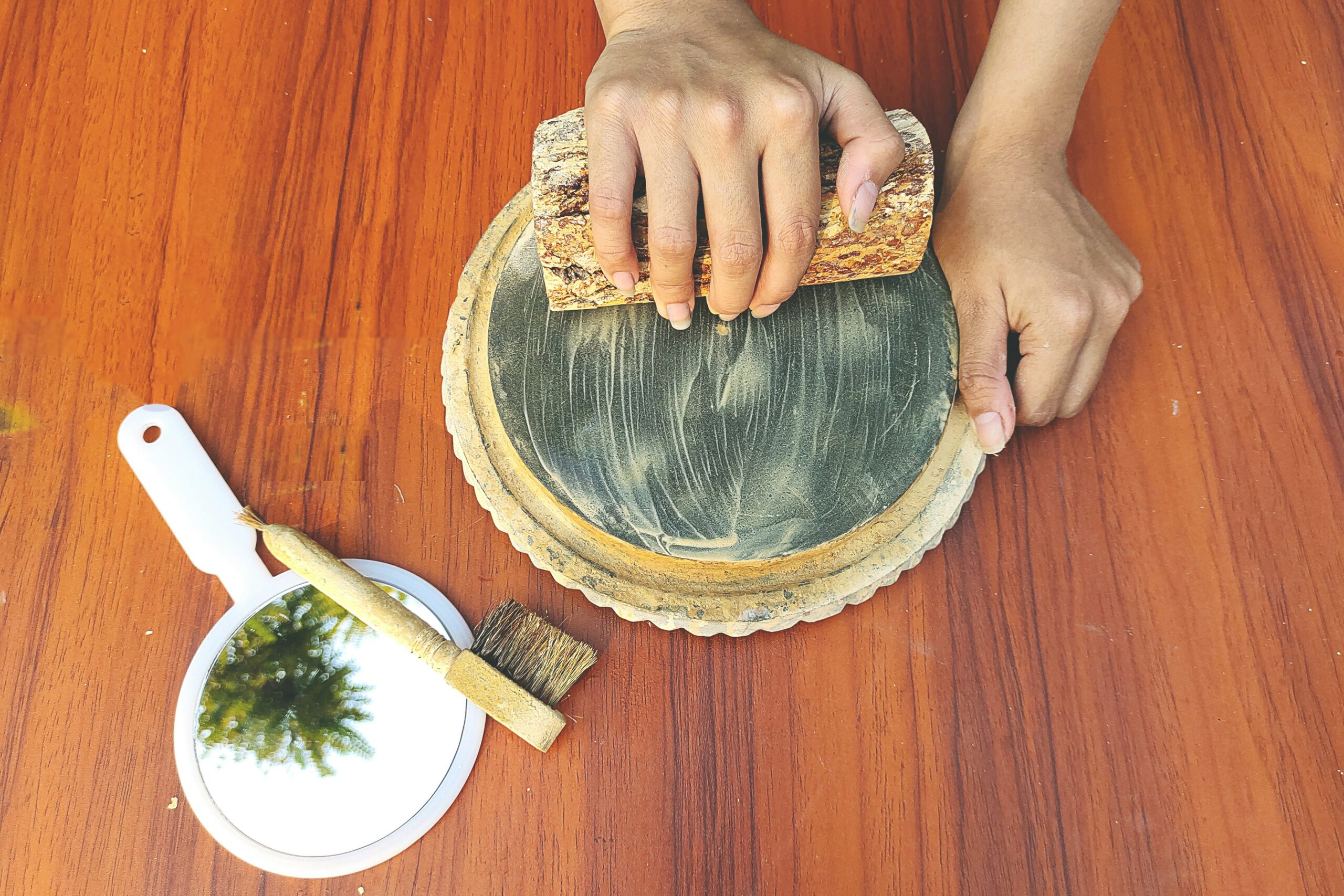
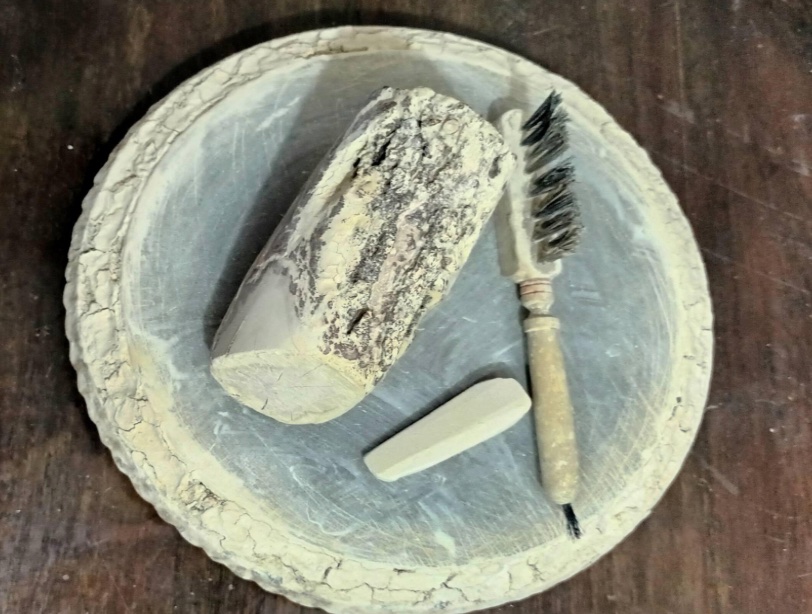
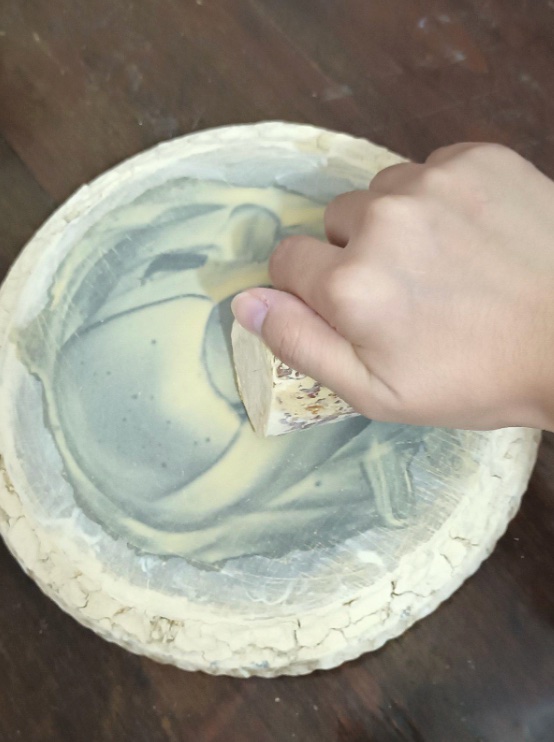
I can vaguely recall some facts, though. I remember how I sat still in front of a large mirror as my mom grinded a piece of tree bark that was bigger than the size of my small arm against a flat, heavy stone that had been wet with water. The magic took place after grinding for about two minutes; pure water was used, but after grinding, there was the yellow paste. Mom rubbed the yellow paste on the flat stone with her hand and put it on my cheeks, drawing oval forms to achieve an egg shape. That was it. There were no complaints from me, and I just happily went to school.

Tools required to make thanaka.
(Image courtesy of Johana Htwe)

Peer pressure raised its ugly head 

As I reached puberty, I started caring about how I looked. This means that I applied thanaka by myself and never let my mom help me because I realized how silly I looked when my mom put the yellow paste on my face. It was as if she was using her five fingers to paint an ugly sketch, with my face as a sketch paper. The result was like those markings on a tiger’s face. 

During high school, I wore thanaka every day, and so did my peers. I wore a simple shape made using thanaka by putting the yellow paste all over my face and using a brush to draw lines carefully. My friends wore particular shapes such as a rectangle or leaf. The reason I wore thanaka 365 days a year, even when I was sick, was simply because my mom would convince me I needed to. 

A Burmese lady must not start her day with a bare face,” she would say. “Thanaka will keep your skin cool and brighten your face. Thanaka is good for your skin health.” 

I do believe in these mantras. However, there was a period when I assumed thanaka was so cheap that it was used only by people who were considered poor. Personally, I consider the word “cheap” to mean not being able to blend in with classmates and teachers in this context. 

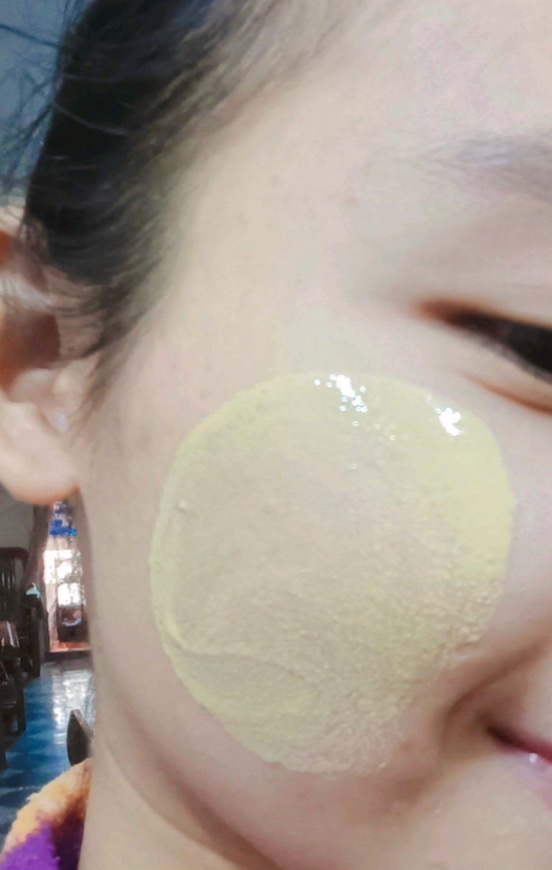
A person wearing thanaka on their cheek.
(Image courtesy of Johana Htwe)

On my university campus, a bunch of gorgeous ladies were part of my surroundings. Their beauty was reinforced by international beauty brands. As for me, who grew up with little knowledge of cosmetics from other countries, I felt like I was the least beautiful girl in the university. I can still remember some comments from my friends. 

“There is thanaka on your eyebrows,” they’d say in between their laughs.

“Your thanaka looks funny on you,” they’d sometimes say, assuming a serious tone. Still, it was as if they were suppressing their laughter.

“Your thanaka is soaked with sweat.”

“There are only some spots of thanaka on your face and it doesn’t look good.” 

“Thanaka is so cheap.” 

“I’m too lazy to do the grinding part.” 

I didn’t defend myself back then. I thought maybe they were right. 

So I changed my style. I began to use foundation, blushes, and lipsticks that were recommended by my friends. I couldn’t pronounce the brand names, but they were probably made in Korea and Thailand. I spent my monthly pocket money on them instead of enjoying my favorite pork stick in Tutt-pi restaurant.

I thought my appearance changed for the better with the help of these cosmetics. I told myself that even if I didn’t attract the attention of boys, if I looked good in the eyes of female classmates, I would at least not be judged. That was until one moment when I looked at myself in the mirror one afternoon.

Using international beauty products, though expensive and made of rare ingredients, didn’t turn out well for me in the long run. I looked good with makeup in the morning but not in the afternoon and evening; I usually got soaked with too much sweat. Myanmar has very hot weather and the heat is especially unbearable in the afternoons. As a result, my face would get oily at noon and my skin wouldn’t react well to chemical ingredients. 

At the end of the day, pimples and acne appeared on my forehead, cheeks, and even around my neck. I covered them by wearing an even thicker foundation and more makeup. No matter how hard I tried, the result was that the more I wore, the more pimples and acne appeared on my face. In the end, I had no option but to stop using makeup.

Welcoming thanaka back into my life 

Although I stopped using foundation and other makeup, I began to use thanaka again since I was not comfortable with a bare face. That was also due to my mom’s nagging about how thanaka could heal those pimples. She had no proof, of course. It was just the power of a mother that convinced me. If I were to become the president of a thanaka company, I would give the lead position of marketing department director to my mom! She was that good. 

In this case, my mom was right. After using thanaka, the result was quite impressive. 

A hand making thanaka.
(Image courtesy of Johana Htwe)

Thanaka kept my skin cool when the weather was too hot, so I didn’t feel the burning heat under my skin like I did with makeup. That might be because thanaka is made using water and the bark of a thanaka tree, which has to be nurtured for more than 30 years. The naturalness must have protected my skin from the extreme heat. 

Also, whenever I sweat a lot, I would rinse thanaka off using water only. There was no need for a cleansing chemical liquid. This means there was no chemical reaction and thus, no more new acne. It took some time for the acne to disappear. As far as I remember, my remedy for acne is to forget about it, stay happy and healthy, never ever let myself be sleep deprived, and last but not least, to sleep wearing thanaka. It’s like wearing a Korean face mask.

Of course, even without acne, my face still has some oily pimples. I think it is just a hormonal matter and totally natural. To me, it is better to live naturally than to choose products containing synthetic chemicals to conceal whatever people think is ugly. After all, there are always side effects and most of the time, it is not worth spending heavily on chemical products. 

Thanaka is a Myanmar tradition 

Myanmar is a country with a hot and arid climate. That’s the reason why thanaka is still popular here. Thanaka protects the skin from the burning sunlight. To be frank, whenever I see a girl wearing thick makeup in very hot local weather, I just want to say, “Stop using makeup all the time. International brands are produced according to the standards of the host country. In the worst-case scenario, you could face an outbreak of acne because of chemical ingredients when you use those products in Myanmar. Besides, they might not protect you from sunlight, causing your skin to turn a sunburned shade due to damaging UV rays.”

In Western countries, sunburned, tanned skin is often considered beautiful. But in Myanmar, most young people, both girls and boys, want to have a fair and pale complexion. That is why most Burmese girls, many of my friends among them, are turning their attention to whitening creams when they reach adulthood. They think that the thanaka that they used to wear will no longer help them stand out.

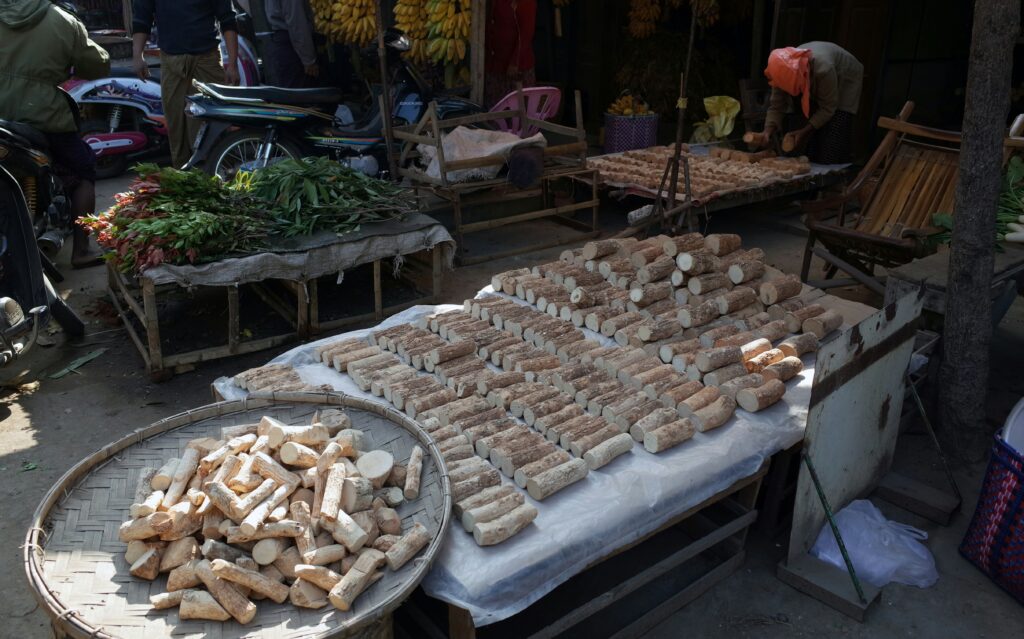
A market in Myanmar.
(Image courtesy of Kentaro Komada via Unsplash)

There is also another reason why some Burmese women, especially young girls, are not interested in thanaka as much as before. It is the attitude that “only peasants wear thanaka.”

Even in my family, my sister always complains that only street vendors and working class people wear thanaka. The way she and my friends say that as if they are better than people from working society has always angered me. In fact, thanaka is Myanmar’s unique, traditional product that has existed for a long time, no matter who wears it or how much it costs. It is a shame that my sister and my friends, who were born and raised in Myanmar, somehow use thanaka to discriminate against people rather than seeing it as something to be proud of.

According to my mom, the makeup trend had already invaded Myanmar in her youth. These days, not only women, but also men and children wear thanaka. 

On the streets of Myanmar, it is quite common to see children, regardless of their gender, wearing thanaka in various shapes, mostly with the yellow paste on the forehead, nose, and both cheeks whenever they go to school. Young men seldom wear thanaka, but I must say I always smile since I find a man cute and friendly when I see thanaka on his face. It is as if a man with thanaka is honest, kind, and generous, which I bet are the qualities of an ideal man for the majority of girls.

As for young women, they are quite careful when drawing shapes with thanaka on their faces, so as not to look funny. Being able to create beautiful thanaka shapes equally on both cheeks is a talent, and that talent can even make a village girl elegant, and full of pride and charm. 

If one visits Burmese villages, it is even easier to see thanaka. For village people, thanaka is their sole daily beauty product. Besides, makeup is not the best choice for those who work under the sun from morning until night, looking after their crops, animals, and farms. Thanaka is the only natural product that can protect them from burning sunlight. 

In my opinion, it is quite unacceptable to price what others consider precious according to their personal preference. My opinion is always diametrically opposed to that of girls who only think that a set of cosmetics can make them elegant and fit into the crowd, thus looking down on others who don’t do so. 

I know that the beauty of a woman can be highlighted by using some makeup tools, but I also want to say that the sight of a village girl wearing thanaka while farming can be equally as eye-catching and convey the sense of true beauty. 

In a nutshell, thanaka is for everyone and can be found anywhere in Myanmar. I want to say that I feel happy seeing a person wearing thanaka proudly without a care. I can sense innocence, a humble mind, and a particular connection with them. 

As long as I live in Myanmar, I don’t think I will ever lose my love for thanaka. In the morning, I start my day after applying thanaka on my face, arms, and legs. Before I go to bed, I do the same. 

Although I don’t want to admit it, I don’t have a talent for creating amazingly symmetrical thanaka shapes most of the time. Nevertheless, the shapes are not important. To me, the feeling of its cool texture and the many skin benefits that I get from thanaka are qualities that are too precious to convince me to replace it with international brands.