
Small is Beautiful: DECOIN of Ecuador

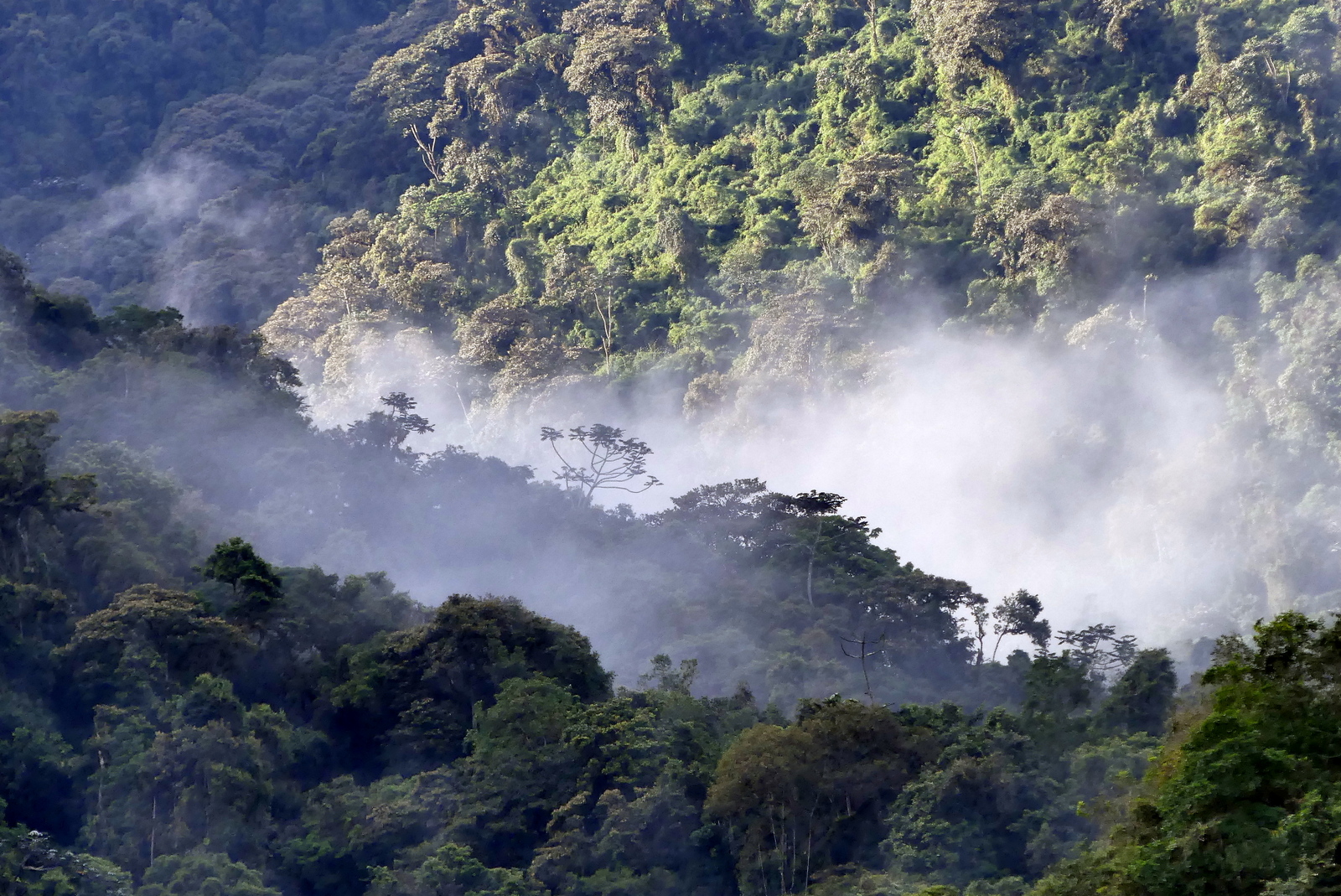
In the Ecuadorian Tropical Cloud Forest, where wax palms sit high above the canopy, wreathed in mist above great green mountains, there lives a creature the size of your thumb.

The Intag Resistance Rocket frog or Ectopoglossus sp nov., a species new to categorization, was first documented in 2019, three years after the discovery of the thought-to-be extinct Longnose Harlequin frog (Atelopus longirostris). The name of the former was chosen after an international contest to name the species. 

Because Leonardo DiCaprio has posted several tweets supporting the conservation of the region, people started to call the Longnose Harlequin frog (“rediscovered” there in 2016) after him, aka the “DiCaprio frog.” The Harlequin frog, first described in 1868 by Edward Drinker Cope, was rediscovered in March 2016 by researchers in the Junín area of Ecuador’s Imbabura province.

Giving rare frogs names after celebrities isn’t new; a similar honor was given to James Cameron in 2012, when a Venezuelan frog was named after him. Do you need to be a big-name A-Lister just to be able to save Earth’s creatures great and small? As DECOIN’s story tells us, you do not have to be.

Worlds away from Pandora

In the mountainous cloud forests of Intag in Ecuador, DECOIN (Defensa y Conservación Ecológica de Intag), led by Carlos Zorrilla, is its own kind of “Cameronian” story. Socioeconomic conditions in the Andes echo James Cameron’s blockbuster series, “Avatar”: mining corporations, the deployment of paramilitaries used to harass a native population, and a struggle for the soul of the land. Only here, there are no space aliens or denizens of a planet connected through a hive mind. 

If Cameron, who visited the Arara tribe in Brazil in 2010 to support indigenous communities protesting the construction of a dam, were to make another movie about real people fighting against mining, I would hope such a film would feature those in the Intag region, like Zorrilla, Sylvia Selger, and their colleagues at DECOIN.

The path of resistance

Founded in 1995, DECOIN is a grassroots organization that aims to protect biodiversity in Intag by, among many other things, establishing community-owned watershed reserves. In doing so, it provides locals with safe drinking water and, in some cases, sustainable alternatives to mining in the Intag-Cotacachi-Imbabura region.

They are a non-corporate entity that resists destruction brought by large mining corporations and empowers locals to protect their own water supply and biodiversity. In the “Avatar” films, the hero Jake Sully adopts the local customs of the Na’vi to help them keep their land. DECOIN uses a similar tactic: giving the locals back what is theirs. It isn’t always filled with Hollywood explosions, thankfully, but it is deeply strategic.

In Zorrilla’s “manual of resistance”⁠, the primary tactic against mining corporations is simple: protect your land. He wrote the manual “so communities know what to expect when mining or petroleum companies show up at their door.” He tells me that he wanted to “give some ideas as to what to do about it.” Zorrilla’s manual has been translated into several languages so as to reach a broad audience. You can find the manual in the link in this paragraph or download it from the miningwatch.ca website. (It is written for activists, so the language might be strong. Please be advised.) Select “publications,” and search for “protecting your community” (with quotes). The supplement is available there as well.

As the manual describes: “The company will often attempt to buy … key properties. They may offer high prices for land to win over residents and to weaken the resistance. Sometimes they will buy land gradually… Or they might try to rent the land for many years… they can just pick up and leave when they’re done without having to clean up”.

To counter this, Zorrilla and his team pioneered what he calls “the most successful conservation measure”: buying up the land and giving it to the communities. “Not for us to protect,” Zorrilla told me in our interview, “but for the communities and local governments. Since they have more at stake, that’s where they get their water.”
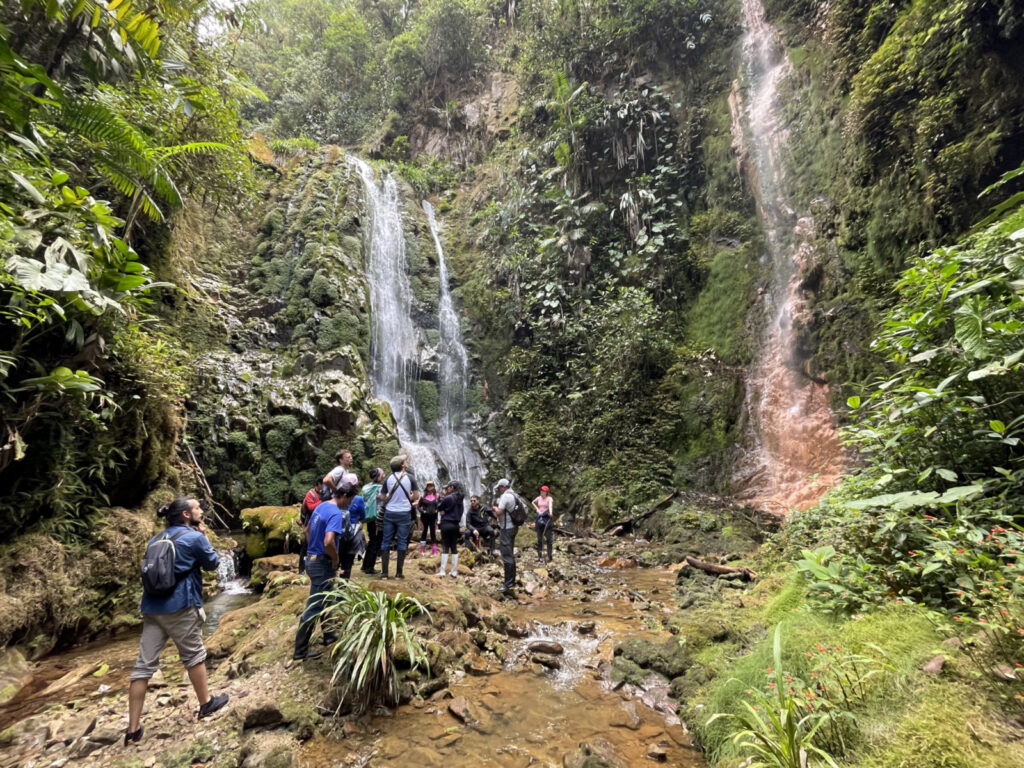
A group of people standing in front of two waterfalls in the forest.
(Image courtesy of Carlos Zorrilla, DECOIN)

Though the world often focuses on the vastness of the Amazon, the cloud forest of Intag is a niche area of even higher density. Sylvia Selger explained the biological math during our talk: “The cloud forest is a tropical mountain cloud forest. These forests are known for being very, very diverse. They have more endangered species per square kilometer than the Amazon.” Because these forests are islands in the sky, evolution has created life forms found nowhere else.

In the cloud forest, Intag’s Resistance Rocket frog is a legal giant. In 2008, Ecuador became the first country in the world to enshrine the Rights of Nature in its constitution. This shifted the legal landscape from nature being “property” to nature being a “subject” with the right to exist, persist, and regenerate. “In my eyes, the Rights of Nature is, in essence, a momentous shift of paradigm, from an anthropocentric way of experiencing the world, to an ecocentric vision, in which other species and elements of nature have equal standing in the courts,” says Carlos Zorrilla.

By proving that mining activities would inevitably impact species like the Longnose Harlequin frog and Intag’s Resistance Rocket frog, DECOIN provided the scientific testimony to the courts that the resilient inteños — the people of Intag — needed to halt the mining projects. For the comuneros (community landowners), these aren’t just scientific data points; they are the neighbors with whom they share water.

Small is beautiful

DECOIN’s resilience through staying lean is genuinely inspiring. Many other environmental organizations survive by receiving CSR or ESG funding and are tied to corporate interests. DECOIN survives by staying focused locally, no frills.

In his own words, Carlos told me that “Small is beautiful.” This philosophy protects the movement. When the government harasses him to advance the agenda of mining companies, they find that DECOIN has no major funds and cannot be traced to an illicit agenda. “We are not an NGO,” Mr. Zorrilla explains. “We are a grassroots organization. Unlike some of the big NGOs in the big cities that visit the sites they support, driving big expensive SUVs, our organization does not own a vehicle. Most of our members only travel by bus, and our office, which we only open one day a week, is tiny.”

His colleague Sylvia Selger says that DECOIN has “almost zero overhead.” Both she and Zorrilla “don’t get a salary from DECOIN, and we are paying one worker a wage.”

When I asked if they have a Patreon, they both told me they do not. They rely on a network of trusted friends and partners to source funds when their community needs it, so there is complete transparency and trust in a tight-knit group. Carlos tells me, “This establishes us as a reliable partner. If a community needs urgent funding, we’re able to give it to them without having to go through all the horrible paperwork that most organizations are forced to do. This is more important these days, since the government passed legislation to go after NGOs that oppose mining projects. So, we don’t really, we’re fine. Very small, very few people, and we are from the area, people know us, and we can have a quick response to threats.”

“We want to keep it that way. Small is beautiful. In this case, small is beautiful.”

Small does not mean powerless, as history in Intag has shown. Even as something as small as a frog can be major proof for the case of nature’s rights, smallness was also not an obstacle for the United Nations Development Programme to grant DECOIN the prestigious Equator Prize in 2017.I hope that as long as DECOIN stays “small,” the small things like the Resistance Rocket frog and the people of Intag (inteños and inteñas) have a chance. ⁠


For more information about DECOIN and its impact, visit their website here⁠.Carlos Zorrilla also recommends that people watch more documentaries about DECOIN’s struggle in Intag on YouTube, including this Mongabay one.
No Kings Rally Draws 1,400 in Idaho: A Protest Movement in Red America

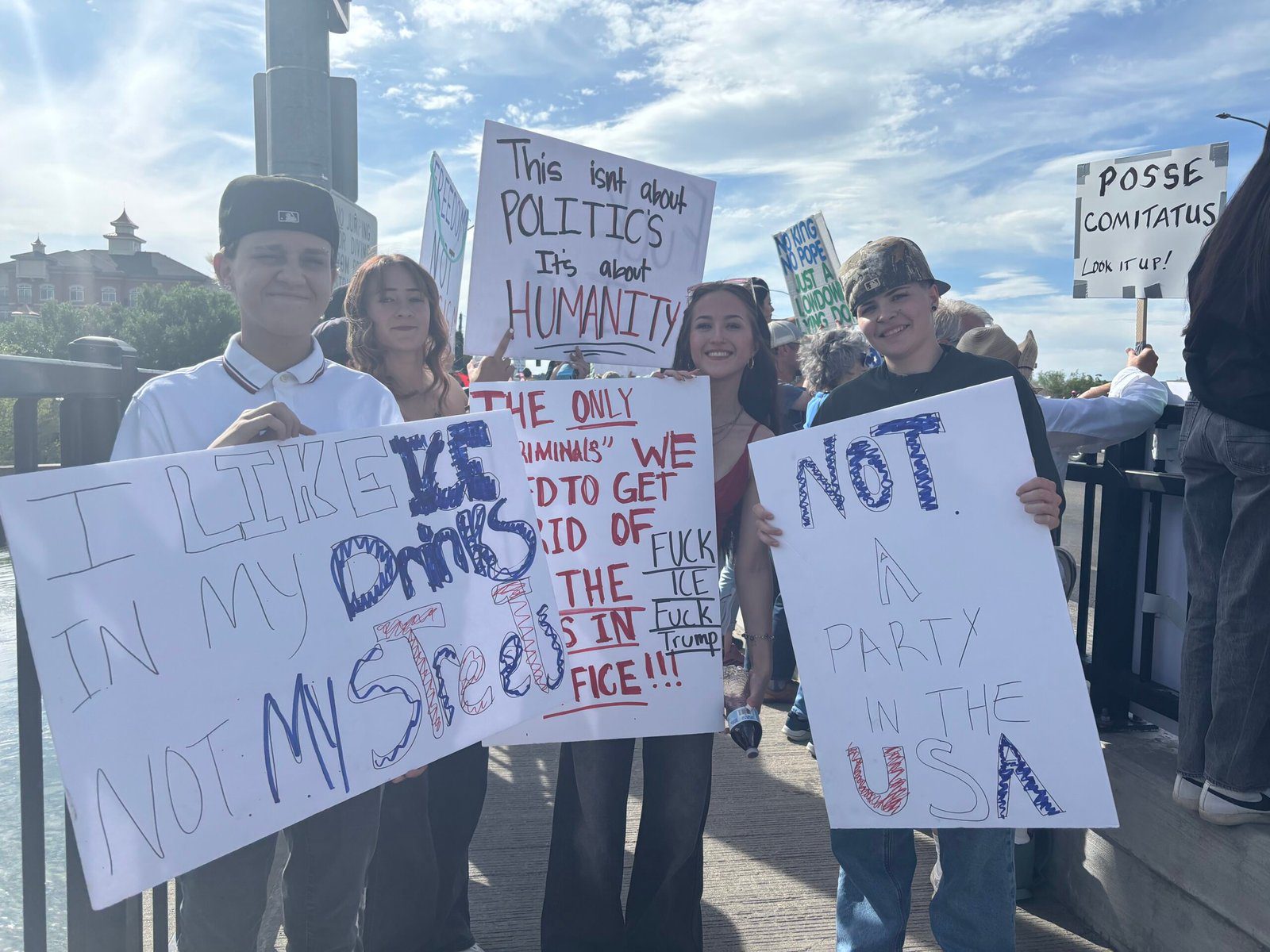
On June 14th, a large crowd of Idaho residents held their No Kings Rally in Bonneville County, Idaho Falls. The event took place on Broadway Avenue near the Japanese Friendship Gardens. Protesters began to gather around 4 PM MDT with signs and flags, chanting the phrase “No More Kings” as they stood on both sides of the bridge overlooking the Snake River.

Cities across the United States participated in No Kings Day, a movement that has now become one of the largest protests against a president in U.S. history. No Kings Day was a nationwide act of demurral, organized by the 50501 movement to oppose the actions of the Trump administration, which many Americans have observed to be autocratic or resembling the rule of a king. It was expected that many of these protests would be held in cities in more Democratic-leaning states—like Philadelphia, Atlanta, and New York—but what do rallies look like in predominantly red or Republican states?

Idaho Residents protesting at No Kings Rally by Gracie Leavitt

Idaho Residents protesting at No Kings Rally by Gracie Leavitt

This rally had more than 1,400 individuals present to share their voices. The event was planned a month in advance, set to occur on both Trump’s 79th birthday and the U.S. Army’s 250th Anniversary Parade. 

One of the main coordinators of the event and Idaho resident, Miranda Armenta, spoke about her personal motivation to help facilitate the event and her experience with activism:“What prompted me was the blatant misinformation the Trump administration is spreading. Convincing Americans we aren’t a democracy. Convincing Americans and those here [that they] aren’t allowed due process. Convincing America rallies and protests are just riots that are well funded. All these conclusions are wrong about us, and I want to battle the misinformation with education.”

Armenta said she began advocating during the 2016 Trump administration—a common sentiment shared by some of the Idahoans present. 

One of the participants, Kris Burnham, expressed that her frustration began early on: “I’ve been frustrated with Trump since his first presidency. I feel like the things that are happening in the United States are so egregious that we have to take any time and chance we can to come out and let our voices be heard. We need people to know this isn’t right; this isn’t normal. There’s this continual stream of lies that are going out to a lot of people, and I feel like events like this have to happen to let people know that it’s not the truth. That’s why I’m here.”

Idaho resident Kris Burnham advocating at the No Kings Rally by Gracie Leavitt

Though all the protesters present were advocating for the same cause, many had specific issues they highlighted through their decorated signs and banners. Some of these included information about reproductive rights, LGBTQIA+ rights, and environmental awareness. One of the younger protesters, Gavin McClain, said he was there specifically advocating for trans rights. Annette Harker, a resident of Idaho, was trying to spread awareness of local opportunities by offering documents for nonpartisan voter registration, ballot initiatives, volunteer opportunities, and more.

Idaho residents displaying their signs at No Kings Rally by Gracie Leavitt

Idaho residents displaying their signs at No Kings Rally by Gracie Leavitt

The protest lasted for two hours, ending around 6 PM MDT. It was, overall, a peaceful event that encountered little resistance from counter-protesters—an event that reflected many others across the nation in both Republican and Democratic states, united for a common cause.

Not Playing the Game: The Bitter Cost of My Youthful Resistance

In my 20 plus years of existence, I have learned two important lessons: (1) if you want to succeed, you have to play the game. (2) I am not good at playing the game.

My life started out in the usual way, for a boy from a lower-middle class family in a Pakistani village. I grew up going to the village school and dreaming of joining the army. I never gave too much thought about the purpose of school or an education — I, like many of my classmates, never planned to study past the fifth or sixth grade. 

But fate stepped in when I was accepted to the school run by my father’s employer. This company school was an entirely different world: there were large classrooms and playgrounds — and the language of study was English. For me, that was a major hurdle since I had only been taught in Urdu. 

I was a good student, though. I worked hard, mastered English, and kept progressing in my studies. It wasn’t until I entered fifth grade that I started to question what I was being taught. In Pakistan, students in the fifth and sixth grades already have a firm understanding of politics and the country’s political parties. My loyalty lay with former Prime Minister Imran Khan, who was gaining ground against Pakistan’s two-party system.  

He mostly talked about changing the corrupt system and motivating youngsters to join his struggle. I was very much fascinated by his battle and political moves. This fascination strengthened the rebellious feeling that was taking root inside me.

I started to adopt a policy of applying the knowledge learned from theories and books. When I began this implementation of the knowledge I had learned from books in my practical life, I started to question my teachers for being very different in how they teach and what they do. I was criticized and disciplined. Often that meant I missed classes. 

These punishments didn’t demoralize me; instead they made me stand firmer in my beliefs and committed to raising my voice against the education system in Pakistan. I started to ask teachers questions when their words contradicted their acts.

By this time, I was in eighth grade — a pivotal moment in the Pakistani system — as schooling changes from general education to specialized tracks. 

I was not interested in my choices: computer science or biology. I wanted to study the arts but that was not allowed, in part because private schools in Pakistan compete for students. Children’s scores in popular and challenging subjects, like the sciences, are a critical part of attracting parents and new pupils. 

(Image courtesy of Roman Mager via Unsplash) 

I opted for biology, even though I was not interested in it, and passed my eighth grade exams with flying colors. I was poised for success! Except I didn’t agree with the way the school system divided ninth graders according to their exam scores. Basically, the system divides children into two groups: the “average” group — kids who can pass the national exam but are unlikely to get top scores without a lot of tutoring and support — and the “strong” group: the chosen ones the school believes can achieve national ranking scores with enough attention and guidance. 

I protested this division. Even at that age, I understood it was fundamentally unfair to give one group of children more resources when all the kids would benefit from more education. Why should a child’s future be sacrificed so a school can pour its resources into a chosen few?

I refused to follow the rules for exam preparations: I firmly believed — and still believe — scores should be given based on the value of your response, not the formatting or tricks you use to present your answers. As the exam date grew closer, the school coordinator even called my father to plead with him to convince me to follow their rules and get a good score. The message was, in short, the answers don’t matter: exam graders want to see how you format your responses, not the value of your words. 

I was shocked to hear that, and instead of acting upon my coordinator’s advice, I continued my rebellious policy of just writing the answers without proper presentation. I used to say I never studied for marks; I studied to learn and use the knowledge I have learned daily. That was the point of being educated. My teachers, however, believed you can only succeed by being a part of this system. Admissions to prestigious universities and jobs in Pakistan are always given to those who have good grades.

In short, I could not get good grades in 9th and 10th classes and was strictly criticized for not following my teacher’s instructions and for not bribing the exam monitor. So, I could not secure admission to top colleges like my other classmates, who also acted upon their teacher’s advice and compensated the exam monitor.

Once I finished 10th grade, however,  I realized I could still shift from the biological sciences to engineering or computer sciences for 11th and 12th grade, known as college or higher secondary education in Pakistan. So, with no additional preparation, I jumped to engineering. But, unfortunately, my experience there was the same: if I didn’t play the game, I couldn’t get the grades I needed to succeed. 

(Image courtesy of Nathan Dumlao via Unsplash)

I still dreamed of joining the army, so after I graduated, I went to an academy in Lahore to prepare for the military exam. There, retired army personnel coached us on how to behave in interviews and tests. There was a Catch-22, however:  I needed to prepare for the exams, but the military would not accept anyone who prepared because the point of the exams was to assess a potential soldier’s natural abilities and talents. My instructors told me directly to lie to the interviewer and say, when asked, that I had not received any coaching.

But I thought, why should I start my new career by lying? In short, due to my decision to tell the truth, I was shut out of the military and my lifelong dream was crushed. 

Instead, I was admitted to the food science and technology department at university and decided to get my bachelor’s degree in this field so I could continue my education. I did not like the field and did not fully understand which jobs I could get with this specialty. With little guidance and my usual critical eye toward the education system, I struggled to do well and ended up graduating with average grades.

Now, I am sitting in my bedroom writing this story, thinking about my mistakes. I don’t want a master’s degree in my field and, after almost 24 years of life, I finally understand my true calling was not engineering, the military, or biology. My passion is literature and the social sciences: international relations, regional studies, and other similar subjects best fit me. I realized this after every opportunity has gone, and now there are limited chances that I can find a master’s program in any of those fields with my current degree. 

Today, I realize that if I had followed the flow and kept all these rebellious thoughts to myself until the day when I would have had some power to change the typical education process in Pakistan, it would have been a much better way to make amendments and improvements in the society and system.

Instead, however, I just kept resisting, and my resistance as a child and young adult was useless. It deprived me of every opportunity, like attending an excellent, reputable college and studying the subject of my interest and choice. I could not analyze my interests and chose only the fields that were not my cup of tea.

So, in the end, Pakistani schools taught me an important lesson: resistance at the wrong time and age is useless. If you have to change the system, just be a part of the system until the day you reach the stage when your decisions or resistance will matter. We resist at the wrong time, and this ill-timed resistance has wasted many of the talented voices that were intentionally interested in bringing a positive change in the system. Instead, it is too late when we finally realize we have resisted at the wrong moments.

It is my hope that, by reading this, other young people will learn from my mistakes and understand that there is a time for every expression of resistance and every voice to be raised. If you want to change the system, work hard to obtain a position where your words may have some power to bring about the change you desire.