Brazilian Music Icon Milton Nascimento Awarded Honorary Doctorate

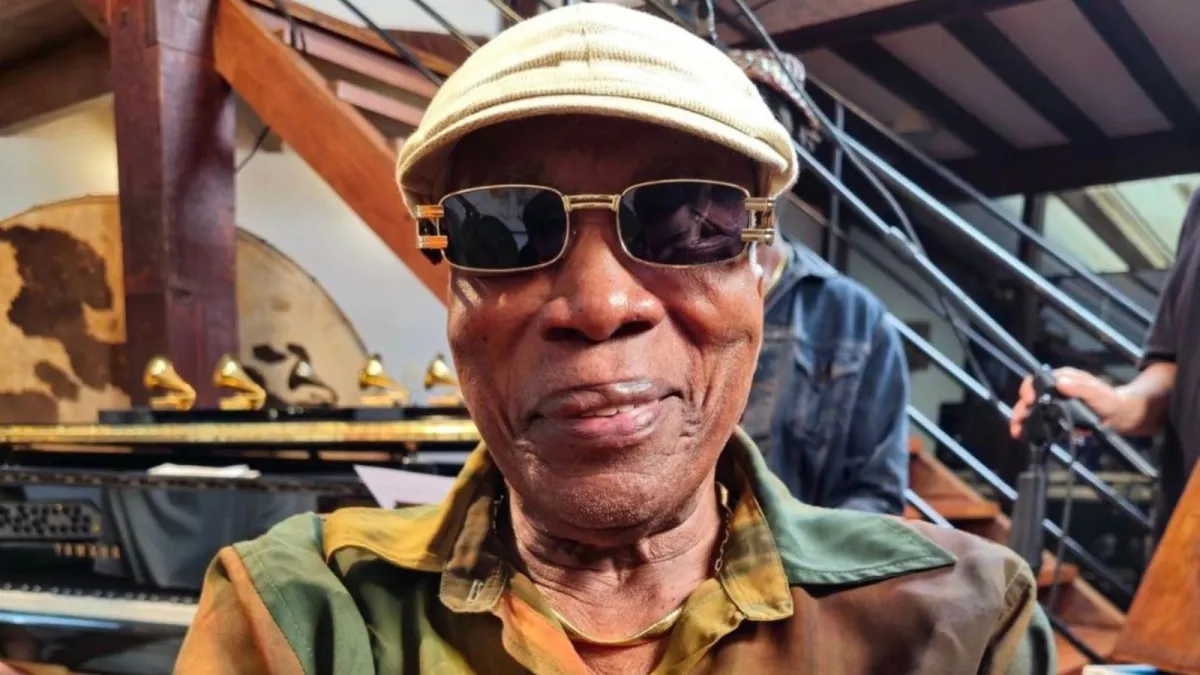
In December 2025, Brazilian singer and songwriter Milton Nascimento once again received the title of Doctor Honoris Causa. In April of the same year, he had already received the same distinction from the University of Campinas (Unicamp). As one of the greatest names in Brazilian popular music, the recognition highlights the impact of his artistic work on the country.

The title of Doctor Honoris Causa is one of the highest honors that can be granted by universities and seeks to recognize exceptional individuals who have contributed directly to society, without the requirement of having completed an academic degree.

In addition to Milton Nascimento, emblematic figures such as Meryl Streep and Pelé have also been honored with the title of Doctor Honoris Causa.

In December, the Oswaldo Cruz Foundation (Fiocruz), the largest biomedical research institution in Latin America, awarded the honorary title to the artist. One week later, the Federal University of Minas Gerais (UFMG) also granted him the same distinction. The events brought together academic authorities, researchers, and representatives from the cultural field.

With an approach focused on an expanded concept of health, Fiocruz emphasized during the ceremony the deep dialogue between art, culture, and health:

“One of the questions that always comes up is what a musician has to do with Fiocruz. The answer lies in our understanding of health, which includes social determinants and recognizes culture as a foundational element. Milton is not only an artistic icon; he is a reference for political engagement and the defense of social causes,” said Cristiana Brito, director of Fiocruz Minas, in her speech.

The award recognizes the artistic trajectory of Bituca, the nickname by which he is widely known, as an example of the use of art to confront social injustices. Throughout his musical career, the Minas Gerais-born musician has addressed diverse themes such as resistance, denunciation, and the affirmation of Black identity.

Speaking to The Sentinel, historian and professor at the State University of Minas Gerais, João Teófilo, highlighted the importance of the title:

“Milton Nascimento is one of the most important figures in Brazilian culture born in the 20th century. I dare say he is the greatest living artist in the country. His work presents a level of sophistication widely recognized by both musicians and scholars, in Brazil and abroad,” he stated.

“Brazilian music and culture would not be the same without the presence of an artist of Milton’s magnitude, whose influence crosses generations and borders. In this sense, the title of Doctor Honoris Causa is not only an individual tribute, but an institutional recognition of the centrality of his work to the understanding of Brazilian culture,” Teófilo concluded.

Having been recently diagnosed with Lewy body dementia (LBD), the artist was unable to attend the ceremony, and the award was received by his friend, musical partner and conductor, Wilson Lopes.

“Milton is an artist of immense greatness, not only musically, but humanly as well,” Lopes emphasized during the event.

Cultural Impact

During the period of the Brazilian military dictatorship, from 1964 to 1985, Milton Nascimento was one of the targets of censorship. His resistance to the system can be seen in several works, but especially in his album Milagre dos Peixes, released in 1973.

The album’s title criticizes the so-called “economic miracle” promoted by the dictatorship. At the time, the regime used television and radio to sell a narrative of a country in development, ignoring the aggressions and censorship imposed by the military.

Several tracks from the album had their lyrics banned or subjected to cuts that compromised their integrity. However, the singer decided not to exclude them, but rather to change the proposal. As a result, the censored songs were given vocalizations, screams, and other sound effects. According to accounts from the period, the idea was to express, through experimentation, everything that the dictatorship prevented him from singing.

The album liner notes made the censorship even more evident. In the credits, even the songs composed only of vocalizations still included the songwriter’s name. This way, his audience would know that, despite the experimental nature of the track, there had originally been a composition there.

In response to his resistance, not only the artist but also members of his family reportedly faced persecution during the dictatorship. As a result, he had to distance himself from his then-girlfriend and his adopted son for an indefinite period, losing contact for years.

Beyond the dictatorial period, Bituca explored throughout his discography themes related to racial inequality, the celebration of Black identity, and the valorization of women. Songs such as “Morro Velho,” “Maria, Maria,” and “Lágrimas do Sul (For Winnie Mandela)” are examples of this.

Also speaking to The Sentinel, João Teófilo, who researches themes related to the military dictatorship, culture, and memory, emphasized the musician’s importance beyond the Brazilian dictatorial period:

“Although Milton consolidated himself as an artist mainly in the 1970s, in the midst of the dictatorial regime, his work is not limited to the issues of that period. He is an artist who thinks about Brazil ‘from within,’ the deep Brazil, addressing structural themes such as Black identity, racism, Latin America, social inequalities, and Indigenous issues, among many others,” Teófilo noted.

Another major highlight of his career is his defense of Brazil’s Indigenous peoples. “Amor de Índio,” “Os Povos,” and “Yanomami e Nós (Pacto de Vida)” are some of his works that reflect on justice and the appreciation of nature and those who live in it.

“Milton is a political and engaged artist, even though, like any long trajectory, his career presents occasional contradictions. What stands out, however, is the fact that he has placed his work at the service of causes he believes in, combining aesthetics with social commitment. Thus, more than a virtuoso or a musical genius, Milton Nascimento is a sensitive interpreter of Brazil, someone who, in dialogue with various partners, has helped — and continues to help — think about and understand the country in its tensions, wounds, and possibilities,” Teófilo concluded.

Samson in Retrograde

My name is Jordan, and I am a music addict

The other day, someone asked me to list five albums I couldn’t live without. At some point, in some future soul-baring discourse, I may reveal my other four, but for present purposes, let me tell you about one: David Crosby’s 1971 LP If I Could Only Remember My Name

For someone whose cultural frames of reference, creative ideals, and hippy sensibilities throw me at least fifty years out of step, I’m painfully aware that the next decade presents a likelihood that most — if not all — of my heroes will hear their boarding call to the Pearly Gates from the comfortable seats of their Mortal Departure Lounges, to board their final flight. 

Crosby died and I revived

I’ve been lucky, so far, in prolonging the inevitable. I took a quiet moment to mourn Christine McVie. But the only passing that has truly rocked me was David Crosby’s. The relentless rebel. The progenitor of uniquely uncommercial music and mindful challenges to mindless authority. All the way to the end, he sang musical messages of tolerance which, for most people, went out with the invention of the Espresso Martini and the box-office debut of Wall Street. Despite generational attempts to crush the utopian dream, it lives on in some circles.

The dream didn’t die. Not entirely. In certain corners, mine included, it still lives. 

You see, for me David Crosby represents the eternal rebel — authenticity in the face of fakery, creation over stagnation, reinvention, and the recovery of winning the final battle against the toxic trappings of wealth, power, and propaganda. He lives on as the spirit of something I came frighteningly close to losing: my love of music. 

Almost cut my hair, it happened just the other day.
It was getting kinda long, I could’ve said it was in my way. 
But I didn’t and I wonder why. 
I feel like letting my freak flag fly. 
Yes, I feel like I owe it to someone.
— David Crosby, “Almost Cut My Hair (Deja Vu, 1970)

Okay, I cut my hair

Unlike Croz, I did cut my hair.

My unforgivable act of conformism.  

As I packed to fly the nest to university, I visualized the in-flight movie of my own life: a first-class law degree it held and the soaring promise of a lifetime in the “Eight-Miles-High echelon of champagne society. I made an inspired decision: my music and peace-loving persona could not co-exist with my professional ambitions. I had to choose between the circle and the square — I chose the square. 

A suit, a desk, and the slow death of sound

Photo of a long-haired man high above the water on a wakeboard.
(Image courtesy of Abi Greer via Pexels)

My record collection was incarcerated in cardboard, as my listening habits migrated from concept albums to podcasts by CEOs. My guitars and case stared at me from strait-jacketed corners of city apartment rooms, taunting reminders of what I used to be and how far I’ve come. 

Just as the meaning of R&B changed unrecognizably, somewhere — from The Yardbirds to Destiny’s Child — the quiff coif was no longer a symbol of rock and roll defiance. It was the head furniture of a corporate “Yes Man.” My resplendent mane was cut, and with each lost lock, a door slammed on my former self. I left myself behind.

I soon learned that the only thing more miserable than being confined to a desk was its hi-fi electronic appendages beaming surround-sound, direct-injection stress. Fifteen hours a day doing so as a suited and booted, short-haired automaton. Deadlines screaming in stereo. 

Without my daily dose of musical medicine, I was trapped in a loveless marriage to a career, with no visible emergency exit. 

Passion suppressed… 

Personality eroded…

TOTAL SHUTDOWN. 

Coming home to the sound of myself

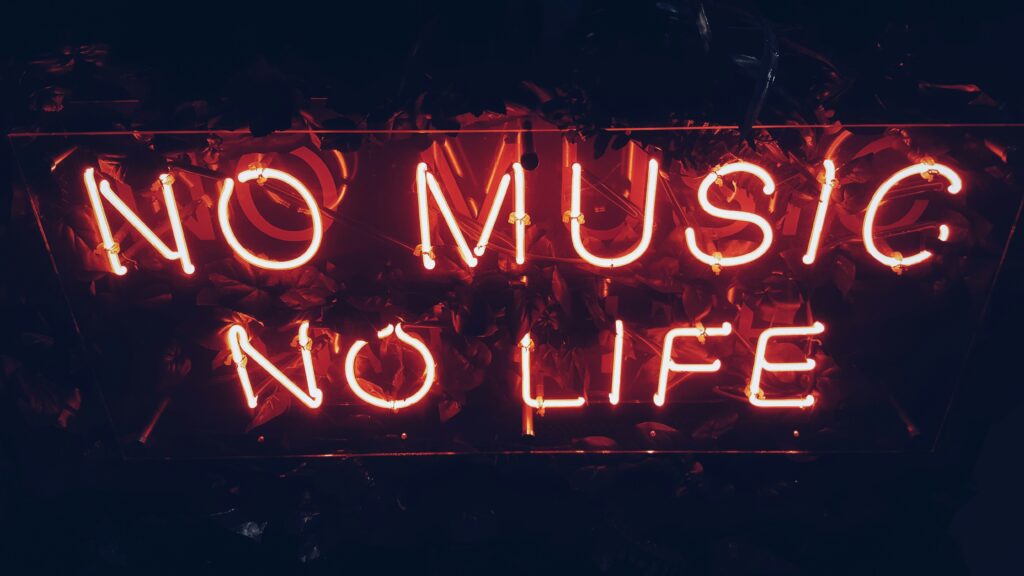
Photo of a red “No music, no life”  neon sign.
(Image courtesy of Simon Noh via Unsplash)

But music has a way of calling you home.

“Why don’t you get back into your music?” 

Sage advice from the reliable co-pilot of my life’s course… 

Sometimes rebellions are small:

Foregoing a business lunch to raid the dusty local record racks.

A slow reintroduction of my favorite sounds to my rusty ears.

Perusing the Lonely Hearts’ Musicians columns for prospective band members.

The uniform started to dissolve. Tie pin swapped for a CND brooch. Gold watch alchemically transformed into a wristful of beads. I scribbled lyrics and chord progressions on the back pages of a legal pad fast filling from the front with to-do lists and financial targets. I was writing songs for the first time in years when I should’ve been working. 

But I was working: doing my real work. And all the while, my hair was regrowing. Past the ears, the collar, the shoulders. Like Samson-in-retrograde.  

Moonlight as a tightrope walker?

Why is it that we reject our passions for professional success? Why can’t a stockbroker also be a record-breaker? A politician, a part-time poet? 

Why can’t an art-loving banker be an artisanal baker? Or a teacher moonlight as a tightrope walker? Why can’t a lawyer be a longhair? With each inch of regrowth, how much did my intelligence recede? Did my legal advice lose its luster? 

No. Those abandoned guitars weren’t telling me what I’d escaped, but what I’d lost. I can combine my profession with my passion, and I should. I owed it to myself.  

Recapturing my love of music was the easiest thing I’ve ever done, because it was what was supposed to happen all along. As I type these words, I’m spinning my copy of David Crosby’s If I Could Only Remember My Name. Its first song: “Music Is Love.”

Idaho Falls celebrates Juneteenth holiday through Musical Festivities

Idaho Falls celebrated the national holiday Juneteenth with a host of commemorative events designed to recognize one of the most important milestones in American history. June 19th remains a significant date, marking the day in 1865 when slavery was officially abolished in Galveston, Texas. Across the country, enslaved people were granted their freedom and claimed their right to emancipation. That legacy is honored today by many Americans, including Idahoans who seek to share history and narrative through one of the most meaningful channels of communication: music.

On June 14th, Idaho Falls held its second annual Juneteenth CommUNITY Heritage Music Festival, followed by Juneteenth: Night at The Colonial on June 19th. Both events celebrated rich cultural history and the ongoing fight for equality through a wide variety of music genres.

The music festival, a free public event at the Riverwalk Bandstand, featured live music by the Eastern Idaho Jazz Society. Families and individuals browsed community booths in partnership with the Idaho Falls Farmers Market. Opening remarks were delivered by Idaho Falls Mayor Rebecca Casper, who read the city’s official Juneteenth Proclamation. The event ran from 9:00 AM to 1:00 PM MDT and saw strong turnout from local residents. 

Chloe Doucette, a member of the organizing committee, reflected on the success of the event, “It was wonderful. We had lots of presence from booths representing different organizations within the East Idaho community that help share stories of our culture and showcase diverse perspectives.”

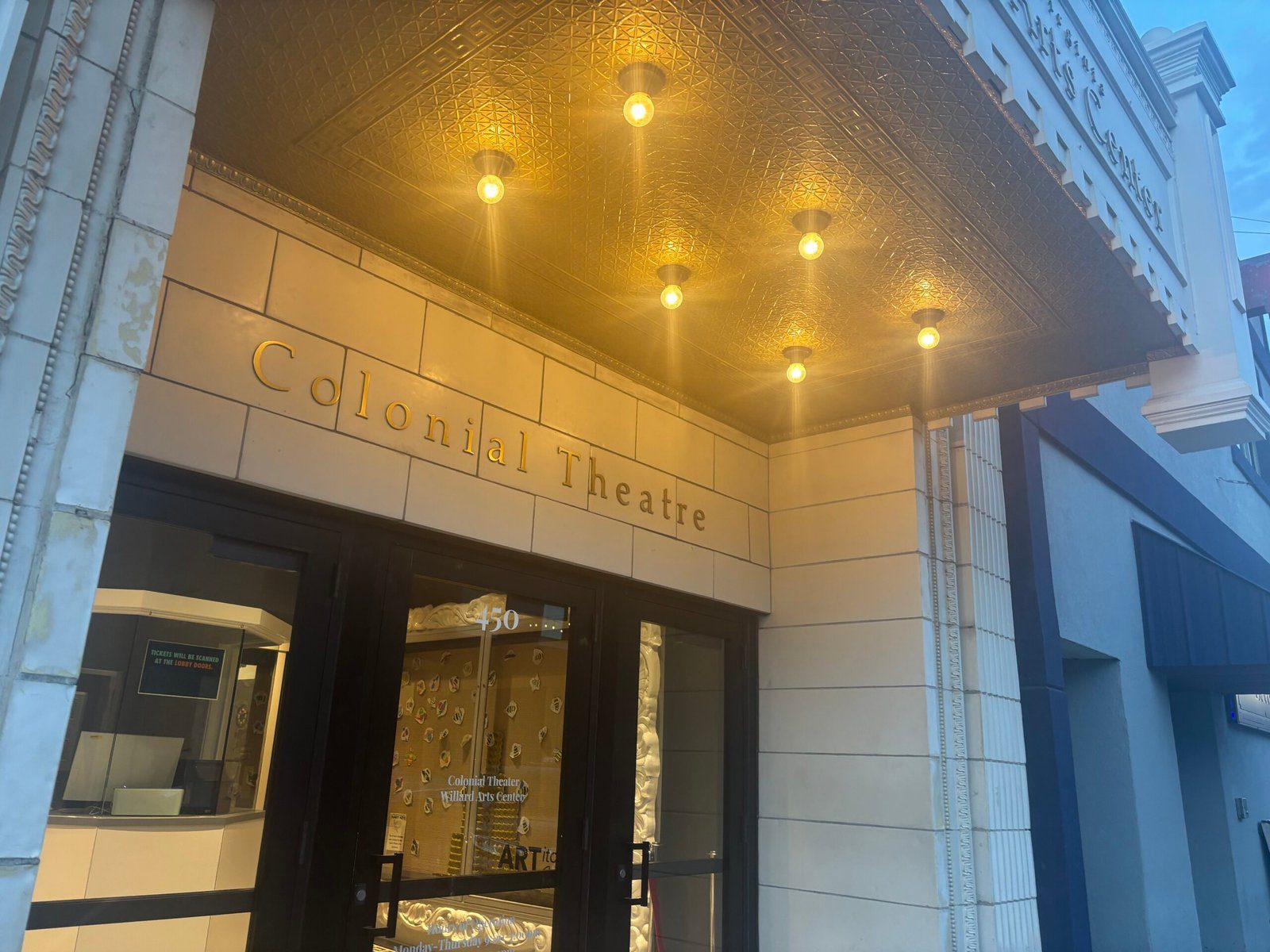
On June 19th, the Colonial House in downtown Idaho Falls hosted a memorable evening of musical performances and historical storytelling in honor of Juneteenth. The event began at 7:00 PM with opening remarks from one of the main performers and coordinators, Mosy Moran, who told the audience, “Tonight is an expression of freedom. It’s an expression of everything that America is meant to be—an expression of where we have been and where we can go.”

Performer and Coordinator Mosy Moran giving a statement at the Colonial House Juneteenth event.

The audience was then taken on an aural journey through decades of music, spanning symphonic, ragtime, jazz, blues, Motown soul, and modern hip hop. Musical performances included renditions of “What a Wonderful World” by Louis Armstrong, “Mustang Sally” by Wilson Pickett, and “I Feel Good” by James Brown, all performed by the Eastern Idaho Jazz Society. The Idaho Falls Symphony offered a violin and piano duet featuring ragtime classics such as “Graceful Ghost Rag,” “Saint James Infirmary,” and “Summertime.” Each piece was introduced with a short explanation of its historical significance and cultural impact.

The Eastern Idaho Jazz society playing at the Colonial House.

Midway through the event, a local group of young students known as the Freedom Readers presented a brief history of Juneteenth. They read firsthand accounts from African American citizens who had lived through enslavement, along with passages about the Emancipation Proclamation, the American Civil War, and the landmark day of June 19th, 1865. The students also highlighted the activism of Opal Lee, the “Grandmother of Juneteenth,” who campaigned tirelessly to make the holiday a national observance.

Young students known as the, “Freedom Readers” speak of the history of Juneteenth.

The evening concluded with a performance by the local band Mosy and The Heartthrobs, who played classics like “I Believe to My Soul” by Ray Charles and a stirring mashup of “A Change is Gonna Come” by Sam Cooke and “Alright”by Kendrick Lamar. Lead singer Mosy Moran spoke between sets about his passion for music and its unifying power: “Music unites everybody. It’s an expression. People relate to that expression. The more music you have in your life, the more you can understand somebody.” As Juneteenth continues to be celebrated nationwide, events like those in Idaho Falls at the Heritage Music Festival and the Colonial House demonstrate the power of retelling history and sharing rich music.