
A Macchiato with Ennui

I order two coffees as the rain thrashes slick against the streets outside – a black ground for myself and a macchiato with ten… ten espresso shots for my friend. Now, I’ve never tried a macchiato, let alone one designed to make your brain implode like this one. I don’t think too hard about the different types, whether to steam or foam the milk, which volcanic rocks the coffee beans were barbecued on, et cetera. Coffee is coffee as far as I’m concerned, a necessity to make it through the day… but this, this is beyond necessity. 

The young ponytailed barista can’t help shooting me a bemused, cautionary glance as she hands over the second of the steaming mugs. “Wednesdays, am I right?” I attempt to chuckle amiably, feeling a cringe winding down my spine. God, suck it up, man.

Caffeine grenades in hand, I tiptoe back to the corner booth where my friend is slumped, quietly existing. Well, I say friend… We’ve barely spoken since I stumbled upon him in that dark alleyway, lying flat on his back behind a stinking skip bin. I remember feeling a certain… morbid curiosity. I mean, you’d know what I was talking about if you were able to see him. He’s a tough nut to crack, that’s for sure – he was unresponsive for the first three days I visited. So, on the fourth day that week (which now must have been at least a month ago), I invited him for coffee. To my pleasant surprise, he inclined his head – which may have been an affirmative gesture, or… actually, he might have been shielding his eyes from the sun. Still… here he is. Better late than never, I suppose.

My friend rolls his head at the bitter stench wafting across the table, stretching his pallid fingers around the scalding ceramic. Taking a sip, his eyes close momentarily as if drifting into a wistful slumber… then he whacks the table with his fist. “Wowza! Coffee’s a rarity where I’m from,” he remarks, setting the mug aside (I’ll realise later that this is the first and only time he touches it). “The buzz reminds me that I’m alive.”

His natural name, whatever that means, is Annuien Inodiare. Is that Latin? Late Middle Ages French or Anglo-Saxon, perhaps? Either way, his preferred name is Ennui.

At first glance, it would appear that some form of prehistoric wild animal had slunk into this Mean Bean on Fifth Street. Fortunately, I appear to be the only person capable of seeing Ennui… all ten feet of him. Unkempt, unwashed hair tousles down his pockmarked face, which is prone to yawning every ten seconds or so. Mousey fabric covers his prodigious shoulders, stitched into a makeshift cloak which billows as if constantly being swept up by some invisible draught. “That’s just the Tide,” he dismisses. “It’s like a cosmetic effect for immortal beings. Can’t get rid of it. A bit of a nuisance, really.”

His voice is grating in a way I can’t fathom and yet… comfortingly familiar. Listless? It’s like a dull drone, accented with tedium. A voice that clearly takes great effort to form, emerging on the wave of a sigh. At this point, I haven’t pried too deeply into his background. I mean, he’s clearly not of this world (and I’m handling that fact with remarkable composure). With the name and his characteristics… I fear I’ve bumped into a modern-day god or deity or… immortal being? I’ll choose my questions very wisely.

“So you clearly don’t look… I mean, with the height and all… this…” I gesture pathetically in his direction, deciding I might never open my mouth again. What the hell was that?

“Eh, I look more impressive than I actually am and that’s… not a high bar.” Ennui trills his lips, glimpsing around the coffee shop with the interest of a sulking preteen. “You probably think I’m a mess. Can hardly blame you. The others have told me I’m nothing but an ‘unfortunate byproduct’ anyway. None of ‘em want me around.”

“The others?” I query, taking a sip of my own coffee. Ennui yawns for the thirtieth time.

“The cardinal emotions,” he tuts. “You know, my extended family. From what I’ve heard, they’re making real change out there, Rage and Fear and… Joy. Ugh, Joy. Sometimes I think he’s trying way too hard. Don’t you find it exhausting to be that happy all the time? Come on, man… Why bother when it’s easier to feel nothing at all?”

“Yeah…” Damn, he’s got me there. I know I’ve been guilty of that mindset from time to time. “But what are you doing here? You know… on Earth, I guess. Do all the other emotions have… bodies?”

“Not typically.” Ennui grins slightly. “You know, I’d pay good money to see that. How you mortals do it, all these loose, fleshy parts… I’ve grown fond of them myself, but I know a few divas up there who’d have some choice opinions. No, I’ve been… let’s say I’ve been given a time out. The others don’t want me messing up their big, progressive plans, but… I don’t know. I get bored, man! I’m bored, and I’m tired all the time, and that starts impacting you mortals when I try to hang out with the guys up top, all ethereal and… wibbly-wobbly and whatever. I just get in the way. They sent me down here, saying it could cure me, which is cute.” 

It’s at this moment that I start to wonder whether I might be dreaming. I pinch the soft flesh of my thigh under the table. Ow… 

Well. Worth a shot. I turn back to my coffee. “So… why can I see you when no-one else can?” 

Ennui chuckles, then. That’s progress. “Don’t think you’re special. I’ve got, like, a million Samaritans quacking at me right now. There’s a form of me here for anyone feeling the same way that I do. People just like you!”

I can’t help feeling stung by this accusation. “I’m not some kind of defeatist. Ennui, that’s… a feeling of worthlessness, right? Like, everything is meaningless?”

“Ah, no, that’s Nihil,” Ennui reassures. “Bloody Nihil… Trust me, none of us go near that one. He’s always off somewhere dark and unpleasant, brooding, making everyone miserable. Luckily for us, his utter disbelief in humanity by definition affects a small percentage of it. Me, I just have lapses. I come and go, that’s why I’m a bit of a wanderer right now. I don’t feel defeated, I’m just… waiting for something that I find exciting to come along. And trust me, that can take forever.”

“But that’s such a lacking feeling,” I pipe up. “The best thing we can do is just… just get on with our lives as they are and stay on track.”

Ennui leans back against the faux-leather. “Do you really believe that?”

I hesitate, pursing my lips. Do I? Truthfully, with the consulting firm giving me grief on a daily basis, it’s been harder to stay motivated in the evenings. I’ve stopped writing, I can barely set aside any brain space for learning guitar… But that’s just life, isn’t it? “We can’t just wake up one day and decide that everything’s going to change. It’s impractical, and… and it takes an insane amount of willpower to follow through, you know?”

“Nah, I fully agree with you. Way too much effort, to be honest. I’m far too disorganised to be that kind of advocate – you should meet Muse, though. She’s an absolute hoot.” Ennui links his fingers, sloping his massive body over the puny square table. “I’ve never wanted to be a saint but I’m no villain either. I’m indifferent to any of that. See, the others think I’m some productivity-killer, but I disagree. The way I see it… I’m your reminder that life is transitory and beautiful, and that moments of true fulfilment should be cherished above anything else.” 

“That’s… one way of looking at it, I guess.”

“Did that sound good? I’ve been practicing.” Ennui stands then, his hulking body creaking like an old wooden ship tipping through icy waters. “Cheers for the macchiato. That’s a brain fog decimator right there. I’ll remember that feeling for a long time.”

“Will I see you again?” I ask, my voice rattling with unexpected hope. God, I’m pathetic.

“No, I somehow doubt you will, but listen… This has cheered me right up, so thanks. Genuinely.” He trudges through the coffee shop, stopping by the door with a barely perceptible tilt of his head. “Hah! Look at all these people – they think you’ve been talking to yourself for twenty minutes.” Then he’s gone, fading into the argentine mist of diminishing rainfall.

Cadence: I Got Rhythm

Life and career in a funk? Find your rhythm or change it up

Self-improvement?

It was a dark and stormy night, but let me say something first. 

I struggle with procrastination a lot, as you see. I can stay in a rut for ages, and there are times when I just want to give up when I find my life and work pointless. Some self-improvement gurus online say we should change our routine and do more self-care. Others say we should try something new or practice Ikigai, the Japanese art of finding one’s purpose in life. I cringe at how people talk about Ikigai outside of Japan. I lived there for six years, and no local I met ever talked about it. It’s all just hype, unless you read from Ken Mogi’s book exclusively. Anything else is just Western productivity bro hack-speak that totally misses the point. Ikigai is about finding satisfaction in the little things, rather than figuring out what you are good at and what the world needs. Those Venn diagram representations you see online are nothing more than poor attempts by management writers to turn us into more productive robots.

I read about staying motivated at work from the internet, like most of us do, I’m sure. The blogs I read all say similar things: we need to find purpose at work, change our attitude toward our job, or find something more meaningful. I am all for these things, but my squabble comes from noticing that people still leave meaningful jobs anyway. Take, for instance, the people who work in social impact or for the not-for-profit sector. Their jobs do not pay very well but they are considered meaningful in the sense they do good for other people and the reward for it is intrinsic. High feel-good factor over monetary value. No one does charity to become rich themselves. Now, I think these motivation problems are important because businesses cannot run efficiently without people who want to work there. 

This insight came about during an outdoor dinner on a stormy night in a water village in my home country.

Dinner on stilts

The evening rain accompanied us steadily on the evening of January 29th, 2025 while driving towards a restaurant for dinner. My EduTech boss and I were in the car driving our CEO and COO from their hotel near the Brunei International Airport to Kota Batu, a historical area in our capital city of Bandar Seri Begawan. Kota Batu used to be the ancient capital of our country and is now home to museums and a section of the Water Village, a national tourist attraction and traditional residential area. Our colleague who recommended the restaurant to us that night wanted to share some traditional Bruneian hospitality to our seniors, by way of doing this.

When we exited the car, we boarded a wooden walkway to get to the diner, as it was in the area of the Bruneian Water Village, the site of the old capital. The Brunei River lapped against the wooden stilts beneath us, iridescent from the light of lanterns and fluorescent lamps that lit the restaurant verandah. 

That  CTO got rhythm

The smell of barbequed meat skewers, which we call satay in our local language of Malay hung around the air, whetting our appetites. We settled at our reserved table and got into a conversation about business and our plans for the company. One thing that stood out to me during the conversation was how our C-Suite (minus one) spoke about the CTO, who was absent. They credited him with the success of the business, as a master of a flow called “cadence”. 

I had always known cadence in poetry and music — the rise and fall of the arc of a melody, the measured rhythm of words. But here, on this stilt house turned restaurant, against the backdrop of a lighting-filled sky with gentle evening rain, I learned something new about cadence in business. Or life. 

Nearby, fishermen cast their nets into the river, guided by their flashlights and their fishing instincts. As they worked, my mind caught onto the idea of a kind of rhythm in business workflows. Just as village fishermen knew where to cast their nets and the time to cast them without the aid of sonar onboard a modern fishing vessel, modern business pros know how to optimize their routines when they work. Our CTO was on top of things, like knowing how to handle customer complaints or feedback, the marketing, or even just how to make a website work using his tech wizardry. All this, his peers said, came down to his cadence or workflow. They praised his time management skills, his ability to take naps when he wants, and his overall mastery of his daily schedule. 

He was like the encyclopedic entry of cadence itself. 

I caught on to this idea quickly through their introduction. This tale brought the joy of discovering a word anew, one that was in my vocabulary, unused, picked up somewhere in the course of my studies, but only usable for work through business jargon. 

I thought of Mogi’s ikigai, which emphasized that life’s purpose and happiness go hand in hand. Mogi, a neuroscientist, said “Ikigai starts from very small things, like just having a cup of coffee.”

Embracing routine

Aligning purpose with habit is also found in this philosophy of ikigai, which is like a spectrum for embracing purpose in work, play, and life in general. Productivity or management writers like to express this concept in Venn diagrams, which get it wrong, as they are more the idea of aligning purpose with passion for the sake of a productive workflow. Ikigai, for Mogi, starts with gratitude rather than the expressed purpose of improving personal efficiency or effectiveness. Which also makes it distinct from cadence. Yet, how they are similar is that Ikigai-like cadence embraces routine. 

There is a kind of rhythm or harmony in the flow of life and work, much like the way the fisherman is connected to working with nature. It gives the confidence to fish in the middle of the rain or even a light storm, because he knows his catch is always there. 

As my company bosses and colleagues stepped outside into the damp night, the rain stopped. And then, suddenly, the sky above Bandar Seri Begawan erupted in light — bursts of gold and crimson, crackling fire against the murky river. The fireworks signaled the arrival of Chinese New Year in our Malay Capital, their shimmering reflections rippling across the water. 

I stood there captivated as we posed for a group picture.  

Rhythm. Movement. Repetition. Turning Point. Result. It wasn’t just poetry or business — it was life itself. 

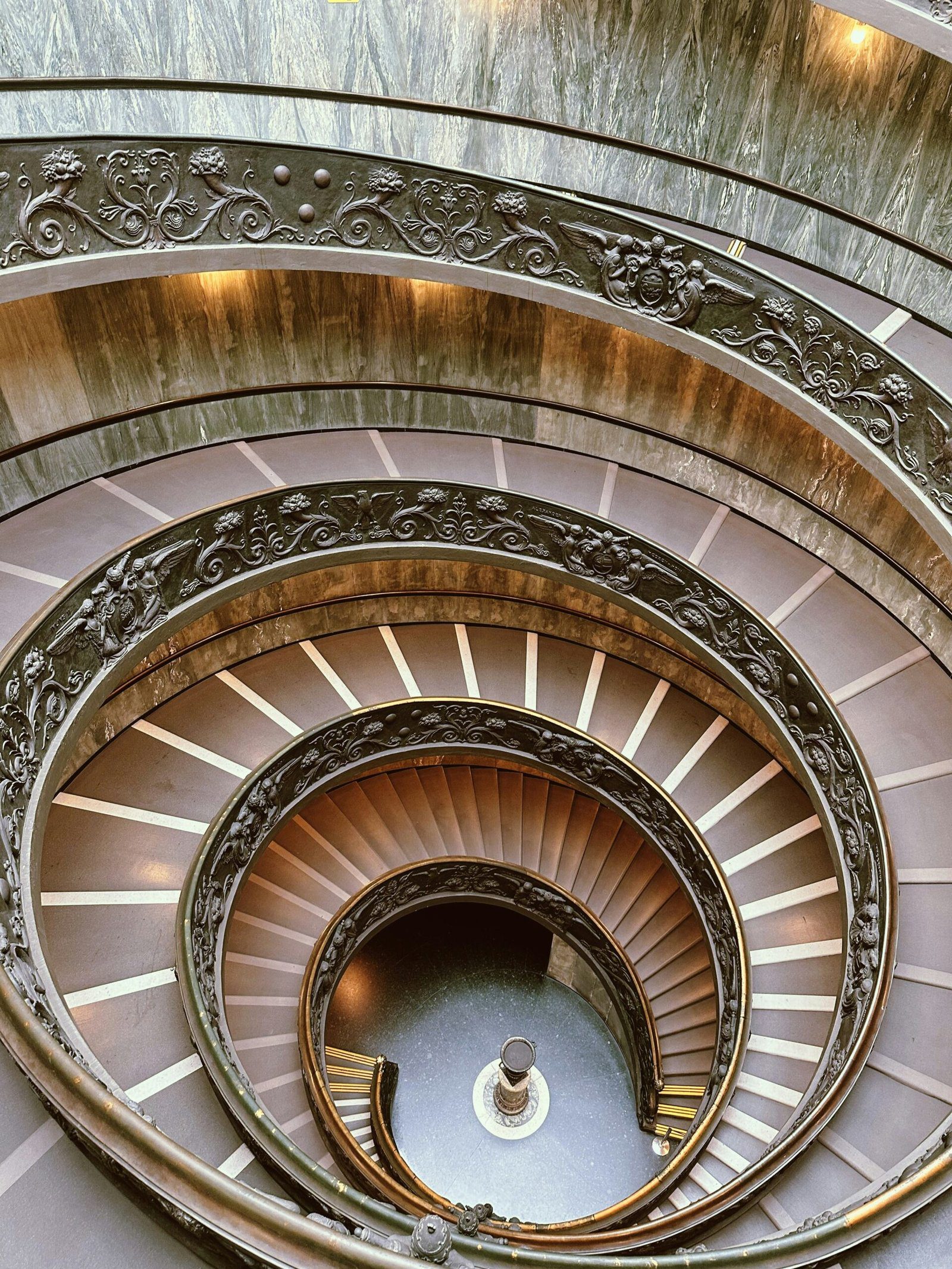
Rhythmic pattern in skylight view of circular stained glass Bolkiah Mosque, Bandar Seri Begawan, Brunei
(Image courtesy of Hung Li via Unsplash)

Breaking the Tether: My Writer’s Journey

I’d like to tell you the story of a young boy named Wylie Sowden.

The beginning of the story

Wylie was brought into the world on a cold October morning — a scraggly-haired, wimpish boy, full of innocence, promise, and curiosity. He was an artist to his core with an imagination to move mountains. He had a good heart. Back then, he couldn’t have known how much he was about to suffer.

When Wylie is 16, his brother, Michael, drowns off the coast of Marin County. Devastated, Wylie convinces himself that he was responsible for it. He was there when it happened. He could have done something, but he was too afraid. The guilt swallows him whole. In his grief, Wylie becomes self-destructive. He sacrifices his own happiness for the sake of repentance, leading him into several perilous scenarios…

One day, Wylie wakes up to find himself stranded in an abandoned parking garage he doesn’t recognize — a mysterious voice in his head telling him to complete various tasks… Wait. No, scratch that. Way too heady.

(Image courtesy of Two Dreamers via Pexels)

One day, Wylie wakes up with the ability to blink people out of existence with his eyes. Well, how does that remotely relate to anything?

One day, Wylie wakes up tied to a chair in a basement, slowly uncovering a tight-knit conspiracy between a family of mafia brothers, a shapeshifting reporter, and a psychopathic casino owner. WHO are all these CHARACTERS?

One day, Wylie wakes up. Yep. In juvenile detention. Sure. He confronts embodied representations of the five stages of – Yeah, no, absolutely not.

One day… Wylie wakes up… and Michael returns as an amorphous, faceless ghost, attached to Wylie’s hip by a tether. Hey… A ghostly, incorporeal tether… That could work. How better to show off Wylie’s unending guilt and the bond between brothers than a literal representation of said bond? A tether.

Tethered to indecision

(Image courtesy of Reafon Gates via Pexels)

I had 10 months to write the screenplay for “Tether” in the year I completed my Master’s degree. I had about fifteen, sixteen, seventeen different narratives, squashed into a turmoil of indecision, fighting for attention. My first draft was completed two weeks before the final submission deadline. That’s… insane.

Wylie and Michael had existed from the beginning. The brotherly relationship and the themes of grief and acceptance were at its core. Still, I found myself unable to bring a single draft to completion, uncertainty eating away the months like wildfire. To this day, I’ve wondered how this happened. Did I dislike the ideas I was creating? Hardly. Did I doubt they would make a good story? Not necessarily. On reflection, my indecision was spurned by something entirely different.

From the outset of any scriptwriting degree, you will be taught about the three-act structure and all its variations. The hero’s journey, the relationships between archetypes, the importance of fatal flaws, wants and needs, genre conventions, plotting, pace, and so on. The so-called “master tools” of storytelling — the structure.

I urge you to disregard all these things. Absorb them, internalize them. Discard them.

Structure and flow fighting for attention

You may often hear the first pass of a script referred to as the “vomit draft.” A writer is encouraged to write continuously, effectively vomiting their ideas onto the page. Get their unrefined marble on the plinth before they start to carve it, so to speak. While this sounds good on paper, the execution can be daunting and there’s a reason for that:

Structure interrupts the flow.

Of course, structure is vital, especially later on in the process. It must be introduced to refine a story. But in the early stages, it’s a serious roadblock that threatens individuality, especially for creatives. Any official scriptwriting resource will teach you to write “properly,” enforcing a systematic standard for what makes a “good” story. The inciting incident must happen by page 10, and the turning point by page 30. We must know all our major characters and their motivations before disrupting the equilibrium. The protagonist must confront their flaws and choose values over desires, yadda yadda yadda. All these techniques are tried and tested. They work. They’re commercial. Surely they will aid a writer looking to craft their first smash hit?

Let go for the first draft

Here’s the uncomfortable truth: any idea that you propose for a project is highly unlikely to translate into a final product. Never get too attached to ideas. In the end, I was too attached to Wylie. He had two ghosts haunting him: Michael, tethered to his hip, pulling him around, fueling his pain, and then me… tethered to his hip, pulling him around, fueling his pain. I determined that his journey had to make sense and have merit when a plethora of narratives presented themselves as alternatives. Any one of these ideas could have provided a diving board into a different conflict, a different protagonist, a different world.

I didn’t finish a single one of them.

I couldn’t make them fit inside the structural conventions I was being fed throughout the course. I ruled them out, thinking they were too conceptual, too convoluted. I was making excuses for starting over. I thought that I was making efficient decisions for the merit of the story.

In reality, the journey of bringing a vomit draft to completion will reveal what your story is meant to be. You must allow yourself to fail so that ideas can evolve and change.

This is not exclusive to screenwriting. Novelists, playwrights, poets, comedians, actors, artists, dancers — all creatives are bound by the conventions of structure. A level of detachment is healthy and inspiring in the early stages of emerging work.

The discipline of imperfection

Any writer worth their salt should practice a discipline of imperfection. Get comfortable with terrible writing. Develop fully drawn characters that are destined for the chopping block. Build wonders and erect dreams, knowing they’ll come crashing down. A good friend of mine once said that “there’s no good writing, only rewriting” and this could not be more fundamental. Your project will always be improving but a full page is more motivating than a blank one.

Never let the idea of the best be the enemy of the better.

Finally, an ending

Wylie’s story ends on the beach where it began, confronting the site of Michael’s death. Still tethered to his brother’s ghost, Wylie strides into the waves and imagines one of his drawings descending from the sky – a life-size illustration of Voyager 1. He knows that Michael’s greatest love was space. The idea of exploring the cosmos. Now, he can give Michael a chance. The ghost boards the spacecraft, soaring up into the stars. The tether pulls tighter and tighter until finally… it snaps.

Untethered

I cried, writing those final scenes. The moment of breaking the tether was very meaningful to me. It was a form of acceptance, much like Wylie’s. I had concluded a project of massive scale while still acknowledging and accepting its imperfections, wishing goodbye to ideas abandoned along the way. Finally, I knew that Wylie had a form of happiness. 

After everything that I’d put him through, he deserved that.

He deserved an ending.

(Image courtesy of Seymasungr via Pexels)

The writer’s journey is different for everyone. Some prefer to plot every minute detail before setting pen to paper. Others prefer to dive in headfirst, improvise, and let the words unleash themselves. Inevitably, structure must be enforced in the end. But never shy away from chaos. Leave yourself room for wonder. Shut off the conscious brain, if just for a moment, for I firmly believe that everyone has a meaningful story to reveal.

You just might not be aware of it.