
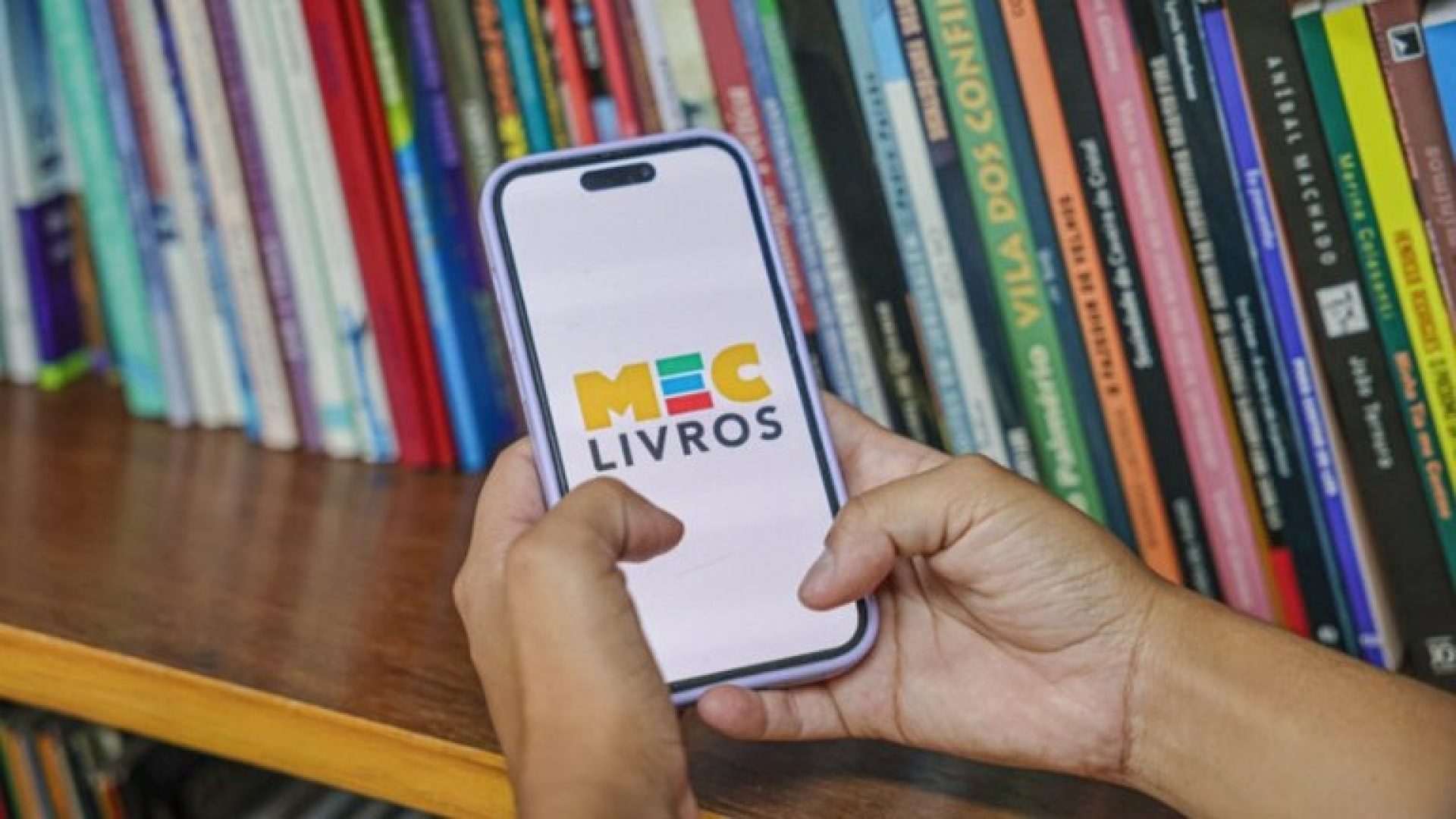
MEC Livros: new government platform brings free digital library to Brazilians

On April 5, 2026, Brazil’s federal Ministry of Education (MEC) launched a free digital library featuring a wide range of books. The initiative aims to democratize access to reading for all citizens.

What is MEC Livros?

It is a public, free digital platform offering about 8,000 books, both national and international. The library includes classics, bestsellers, new releases, and various literary genres, aimed at students, teachers, and general readers.

For university student João Pedro Oliveira, MEC Livros revives a culture that has been fading by bringing readers closer to the traditional library experience.

“It’s a wonderful proposal… What’s most interesting, in my view, is that it imitates a library. I think that’s a culture that has been largely lost nowadays.”

The student also highlights the variety of the catalog as a strong point, noting that it can attract different reader profiles.

In a country where access to books is still shaped by economic inequalities, public initiatives to encourage reading become essential for forming new readers. 

The platform’s launch comes at a concerning moment for reading in Brazil. Data from Retratos da Leitura no Brasil, one of the country’s main national surveys on reading habits, conducted by Fundação Itaú — a private foundation linked to one of Brazil’s largest financial institutions — between April and July 2024, indicate that only 47% of the population is considered readers, while 53% had not read a single book in the three months prior to the study.

Additionally, the country has been experiencing a decline in the number of readers in recent years, highlighting an increasing distance between the population and reading habits. This context is directly linked to structural factors such as social inequality and the high cost of books, which limit access, especially for low-income communities.

This difficulty is also reflected in the daily lives of young readers. João Pedro reports that limited access directly hindered his development as a reader, particularly in engaging with Brazilian authors.

“The biggest impact is my lack of reading Brazilian literature. I’ve always tried not to download pirated books, so among everything I’ve read, only a small portion is national literature.”

In contrast to this scenario, Rio de Janeiro’s recognition as UNESCO’s World Book Capital in 2025 — an annual title granted by the organization to cities that promote reading and access to books — reinforces the importance of projects that encourage reading and expand access to literature. 

The city was chosen for its commitment to promoting literature and improving accessibility for all citizens, intensifying discussions about how factors like high book prices and limited access influence low reading rates in the country.

The digital format also stands out as a key advantage of the platform. By gathering thousands of works in an environment accessible via mobile phones, MEC Livros expands opportunities for engaging with reading in everyday life.

“It’s on our phones, something we use very frequently. That makes a huge impact,” João Pedro says.

According to the student, the impact of reading goes beyond the immediate habit:

“It’s something quiet and long-term… The more you read, the more you realize how far your mind can go.”

In this way, platforms like MEC Livros emerge as a way to bring the population closer to the literary world through the democratization of knowledge and digital inclusion on a national scale.
Can a National Dialogue Revive a Faltering Democracy in South Africa?

Over three decades into democracy, South Africa finds itself in a moment of deep uncertainty. While the right to vote, speak freely, and live in a constitutionally protected society has been achieved, the social and economic promises of 1994 remain painfully out of reach for millions.

Against this backdrop, the government has launched a new National Dialogue framed as a platform to reset the country’s course. But with youth unemployment at 62.4% and public trust in institutions steadily declining, many are asking: is this a meaningful effort to heal a fractured society, or just another elite driven exercise in political theatre?

South Africa’s socio-economic indicators paint a sobering picture. Unemployment remains stubbornly high at 32.9%, and when including discouraged work seekers, the expanded unemployment rate climbs to 43.1%. 

Poverty, too, is pervasive. According to the World Bank, nearly 63% of South Africans live below the upper-middle-income poverty line of  $6.85 per day. Meanwhile, inequality remains among the worst globally, with a Gini coefficient of approximately 0.63 in 2023 thus reflecting extreme disparities in wealth and access. Load shedding, crime, gender-based violence, and dysfunctional service delivery continue to plague communities.

Announced by President Cyril Ramaphosa on 10 June 2025, the National Dialogue aims to bring South Africans together across race, class, and geography to discuss the country’s future and rebuild a sense of shared purpose. It draws inspiration from the Truth and Reconciliation Commission (TRC) in the mid 1990s and is being led by an Eminent Persons Group, including figures like former judge Edwin Cameron, peace activist Ela Gandhi, and Rugby captain Siya Kolisi. The dialogue is expected to unfold in phases, beginning with a national convention in August and continuing into 2026. Its stated focus areas include poverty reduction, youth development, crime prevention, and restoring institutional trust.

But critics warn the effort risks being another “talk shop” disconnected from the realities of ordinary South Africans. Columnists like Malaika Mahlatsi and Ivo Vegter have labelled the dialogue a “costly distraction” with a projected R700 million (40 million USD)  budget though the Presidency insists this is not yet final. It is worth questioning the value of large scale consultations in a country already beset by service delivery failures.

South Africans are not suffering from a lack of ideas. We are suffering from a lack of political will and accountability,” Mahlatsi wrote. “Dialogues have become tranquilizers to pacify the rage of the governed.”

While the Eminent Persons Group features high-profile leaders, it lacks direct representation from unemployed youth, informal workers, or residents of rural and township communities. 

South Africa’s young people are not apathetic, they’re disillusioned. Years of corruption scandals, broken promises, and economic exclusion have eroded confidence in democratic institutions. But many are still hungry for change if they are given real space to lead. That means shifting the dialogue from polished stages in Pretoria to community halls in Khayelitsha, Giyani, Umlazi, and Mahikeng. It means integrating student unions, youth NGOs, and civic movements into the agenda-setting process, not just inviting them as spectators.

Importantly, the outcomes of the dialogue must be linked to tangible action: job creation schemes, basic income support, land and housing reform, and improved access to services. Without clear commitments and timelines, this process risks deepening cynicism.

South Africa’s democracy is 31 years old. But for many, especially the youth, its institutions feel distant and its benefits unequally distributed. The National Dialogue could be an opportunity to reset, reconnect, and reignite participation. But that will only happen if it centres real people, acknowledges hard truths, and delivers more than just words.

What’s needed now is not another blueprint or committee, but bold political will, grassroots inclusion, and honest reckoning with the failures of the past three decades. Because if democracy is to survive the next 30 years, it cannot simply be inherited. It must be rebuilt by the many, not the few.