The recent abduction of a teenager has led to the uncovering of several gruesome crimes committed or aided by a popular traditional doctor in Enugu State, South-East Nigeria. Graphic videos from the home of the accused and testimonies of eyewitnesses confirm years of suspicion among locals.
The native doctor, popularly known as Ezeani or “E dey play, e dey show”, has been identified as Levi Onyeka Obieze, and these disturbing incidents took place in Umuojor, a village in Ezeagu Local Government Area of Enugu State.
On Monday, 26th May, 2025, a 13-year old girl identified as Ukamaka Okonkwo was allegedly abducted by two men on her way to the farm with her father. The suspects were driving by on a motorcycle when they pretended that their vehicle had developed a fault and asked her father for assistance. Amid the distraction, she was taken away on the motorcycle.
In her video testimony, Ukamaka recounts: ‘We went to bring some firewood for making garri, and then they came up, asking my dad for a machete to repair their machine [motorcycle]. My dad then gave them his machete. They shifted their machine and then grabbed me…’
Upon realizing that his teenage daughter had been abducted, the young girl’s father alerted local vigilante groups, who began a search for her. Several villagers that evening reportedly heard loud cries coming from a nearby bush. Further investigation by the vigilante group led to the compound of a well known traditionalist.
High Chief Levi Onyeka Obieze allegedly tried to restrict the vigilantes from gaining access onto his property, to no avail, and then fled the premises shortly after. The cries of the abducted girl were traced to a pit in this compound around 3:15am on Tuesday, 27th May, as the rest of her testimony confirms:
‘They gagged me and tied my legs up… They kept me in a corner, dug the ground… They covered the hole, I started shouting, and the security officers came and brought me out.’
Other decomposing bodies were found in soakaway pits underneath the building upon further investigation, including that of a man and another of a pregnant woman. This follows reports of missing community members, including a young student of CSS Umana.
According to the police spokesman, the victims’ remains were found in a concrete-sealed pit beneath an unfinished building used by the suspect as a shrine. They were recently murdered and buried, or buried alive, as part of rituals. The suspect is known for his lavish lifestyle and has “worked” for many clients.
In the wake of this terrifying and disturbing news, enraged youths of Umuojor community stormed the building, captured photo and video evidence of several decomposing bodies found in soakaway pits and burned down the suspect’s shrine, fleet of cars and parts of his house.
That same day, on the orders of Enugu State Governor Dr. Peter Mbah and in congruence with Enugu State laws, the building was also demolished. A number of native doctors from Ezeagu LGA took to streets the next day in a protest, denouncing Ezeani as one of them.
The Public Relations Officer of the Enugu State Police Command, SP Daniel Ndukwe, later identified three suspects in the teenager’s abduction as Ejike Odinwankpa, 38, Onyedikachi Nweze Ilo, 36, and Uche Kingsley Agumba, 33.
On Thursday, 29th May, the wanted native doctor was apprehended at the Nigerian Immigration Service in Lagos on his way out of the country. He was caught during a stop and search operation at the border between Nigeria and Benin Republic while attempting to flee.
The suspect’s identity was confirmed at the Seme border, where he denied the allegations and dismissed them as a political issue. He allegedly tried to bribe an NIS official, Ugochukwu Orji, but the prudent man turned him in. This arrest has been confirmed by NIS Public Relations Officer ACI Akinsola Alabi.
Ugochukwu has been praised and rewarded for his uprightness and unwillingness to be swayed by a gift of ten million naira and an iPhone with lives on the line. He has been reportedly gifted the sum of one million naira by politician Ugwumba Uche Nwosu to this effect.
In a statement on Sunday, 1st June, Enugu State’s Commissioner fir Children, Gender Affairs and Social Development, Ngozi Enih, revealed that the state governor has offered a scholarship to the rescued 13-year-old which would see her from her present class up until she concludes her university education.
This comes in addition to moving her to a rehabilitation facility to assist her in overcoming the trauma she faced at the hands of the ritualist. Levi O. Obieze, who is currently in the custody of the Lagos State Police Command, is set to be transferred to Enugu to face trial.
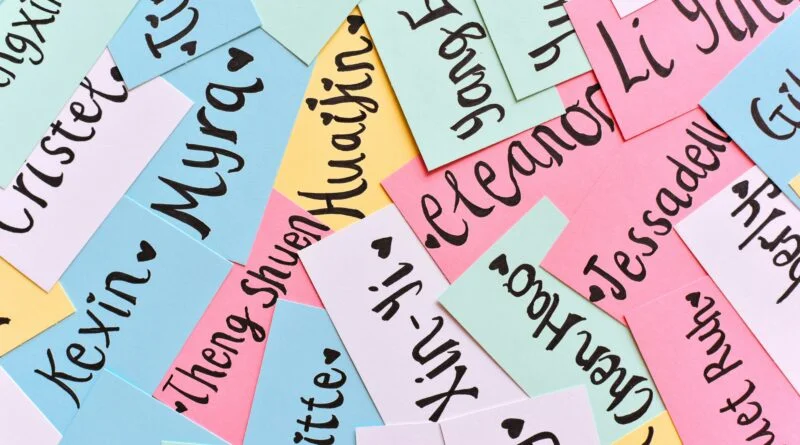
If you could choose your own name, who would you be? A name is important, it’s an identity. Or is it just an identity badge?
A signpost to wear for the people you meet, a label to shout when they see you in the street. A medal of honor or of something to come: Colonel, Professor, Intern, or Bum. A word that announces you into a room, a nom de guerre or nom de plume. Or perhaps a nickname for behind closed doors: an “I’ll let you use mine, if you let me use yours.
An insult, a put-down, a dredging of the past: something you can’t escape which will always outlast Any title bestowed by Queen or by King, or a surname change from an engagement ring. “He’s a DICK!” “She’s a BITCH!” They’re the HEAD CHEF at the Ritz?” A show of possession, origin or control, a transient position or your life’s greatest role: …
She’s his editor; he’s my dad; I’m his husband from Islamabad. The honorary letters in your signature block, the title you use when you visit the doctor. A caricature or a show of respect: ‘Mr. Never Was’ / ‘Mrs. Hasn’t Happened Yet’… Or a stage-bound creation for fortune and fame. Go on, tell me: what’s in a name?
To my friends. I’ll always be Kebab Wrist, and it’s my own fault.
They all had nicknames. I was desperate for one. Not least because the last day of school was looming and with it our deadline to design Leavers’ Shirts, displaying our nicknames for the ages. And so on a drunken night belonging to one of those halcyon days, when a piece of kebab flopped over a polystyrene tray and came to rest its greasy warmth on the undercarriage of my left wrist, I proclaimed: “FROM THIS MOMENT, I SHALL BE KEBAB WRIST!”
The shirt was printed, posted, and worn…and the rest is history.
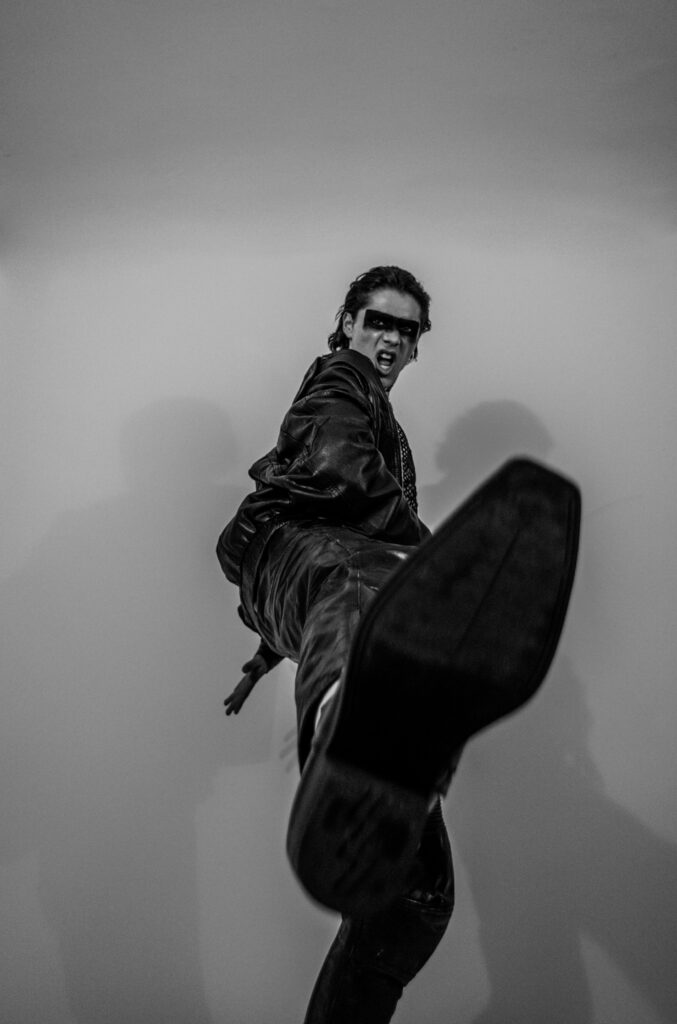
Kebab Wrist hasn’t aged well: I’m 5 years vegetarian, and this reminder of one’s carnivorous past is triggering. But it’s not the name that interests me; it’s the character behind the name. Where Jordan Frazer is mercurial, ever-searching for answers he’ll probably never find, Kebab Wrist is consistently animated and authoritative. Where Jordan Frazer will pop a tummy Gaviscon before a heady Bloody Mary, Kebab Wrist drinks now, worries later. If Jordan Frazer is fast becoming all elbow-patches, Armagnac, and wingback recliners, Kebab Wrist is a leather-clad, tequila-soaked stage-dive. And any time we get the gang back together, I transform into Kebab Wrist, like a civilian into a superhero.
At home, I’m someone else entirely. To my wife, I’m Jordie. Occasionally Muffin. Sometimes I’m Pancake, but only when she’s prepared to be Buttercup. Pet names are a relationship’s rite of passage. And when I’m at home, I’m cute. To be honest, I think that I’m Muffin or Pancake just so she’ll let me go out and be Kebab Wrist. And I think she allows me that privilege so Kebab Wrist doesn’t infiltrate the sanctity of our marriage. That’s fair enough; I wouldn’t want that bastard in my house either.
Nicknames allow us to live our gang fantasies: harmless tokens of eras we’ve defined; insignias of exclusive clubs that turn away newcomers to protect our human connections of friendship and love. Nicknames are great until they’re not…
‘Jordo’
At work, I was Jordo. This wasn’t a name I invented. It was allocated by colleagues.
For a while, I thought a work persona proposed a healthy separatism: as long as I knew when I was being Jordo, it would prevent him from contaminating who I really was. I decided this Jordo character would allow me to preserve my ‘true self’: the Jordan at home, with his old-vinyl collection and recipe for rice pudding.
But Jordo started to take over. It was frightening: that with a tiny change of name came an entire personality swing. Jordo threw his weight around. He signed off emails, ”KindRegards, Jordo.” He used hefty-but-meaningless terminology like ‘let’s circle-back‘ for an ‘executive summary’ and ‘what’s the ask?’ I found myself excusing rude behavior because it was Jordo and ‘that’s just what he was like’ as the character in the suit I had to play as part of my role in the Great Game of Life. It wasn’t me, not the real me.
But it got worse. I decided I was much too important to write the full Kind Regards and so my signoff was reduced to “KRs, Jordo.” I adopted passive-aggression as standard in any communication I sent zingers like “As you know if you read my previous email…” It all came to a head one Saturday morning when my wife asked me to look over a grocery list she’d written out so I could add anything. I asked her if she’d “Leave the draft on my desk with a sticky note labeled JORDO TO REVIEW.”
IT WAS A SATURDAY AND I WAS AT HOME. What a dick…
I’d spent so long thinking Kebab Wrist was the disruptive element to keep on the perimeter that I’d handed Jordo the door keys and all the alarm codes, unaware of the danger he posed. I allowed the streams to cross. I allowed Jordan to become a ghost. And I was busted.
Beware the fake ID
Imagine if you started a job and were assigned an entirely different name. That alongside your ‘Desktop Postural Assessment’ you were given a name badge that said Nigel Coltrice or Jonquille Cornflowers. You wouldn’t wear it — it’s not your name!
But each morning, as I Double-Windsored my tie, snapped shut my cufflinks, and transformed into Jordo, that’s exactly what I did. And the sad part is that I suspect it’s what everyone was doing. It wasn’t until I decided to quit to pursue my creative passions that I could have honest conversations with some of those colleagues. Masks fell that I didn’t know were being worn. I suppose it came from insecurity, surface knowledge that everyone was everyone else’s competitor in one way or another. If not directly, then eventually.
My own name
Now, I value the autonomy of choosing my own name. It is my most immediate expression of identity. It projects how I see myself and allows me to evaluate whether that projection pleases me. Using different names in different arenas can be healthy: compartmentalizing personality traits to emphasize or suppress depending on the task at hand. It promotes the oft-quoted but rarely practiced mantra ‘Work/Life Balance’, reserving my authentic self for my loved ones at home. It lets me cut loose and recapture the abandon of youth with my oldest friends. And I think it protects artistic integrity of my work: I use a pseudonym when I’m writing my column as “The Millennial Anxiety Uncle,” and I adopt a larger-than-life Rockstar persona when I’m onstage.
Most importantly, my wife’s got Jordan back.
But I’m staying hypervigilant of my mental health so that this doesn’t devolve into a dissociative disorder. I won’t be conforming to the traits of characters invented for me by others. And where my characters are my own inventions for these purposes, I’ll be watching them carefully.
Someone from NYC recently asked me what life was like in the South, declaring they could hear my “Southern drawl.” Well, Miss, I’m from a state that isn’t part of the South, nor has it ever been. Speech issues aside, I was born and raised in Kansas, the first free state in the Union.
You see, the Kansan is confident but humble, eager but patient, optimistic but grounded. And there are levels of Kansan, I must surely declare with this post. There is the native Kansan, born and raised, who likely in their youth visited the state capitol building in Topeka where they witnessed John Steuart Curry’s vision of John Brown.
This type of historically aware, compassionate Kansan witnessed the passion in Brown’s eyes, the righteous fury that he conjured, and perhaps felt the urge to make a difference in the world. Over years of education in the first free state, this type would hopefully learn to express their beliefs in more socially tolerable manners than Mr. Brown.
Another type of Kansan is the New Local. They were not born here but moved here, either by election as an adult or late in their rearing; they have lived here long enough that they are part of the community. Maybe they have been to the capitol, they may have heard of John Brown, they may have a thought or two on Kansas’s blood, and they may even know Kansas is the first free state.
Often, however, these folks moved here simply for the cheaper cost of living. A dollar goes further in Kansas than in most any other states. They often love the life they find, should they possess a life which frees them up to pursue their interests. Money helps, too.
There is one other type, of the available plethora of Kansans, which I hope to address; The Interloper. This type of Kansan may be Native or Local, or may simply be passing through. But they do not get it. Whether born and raised here or newly arrived, sometimes the propaganda of the First Free State falls upon deaf ears. The cause, any cause, is not to be addressed to this type of Kansan.
Afforded the opportunity to visit or reside in the First Free State, I’ve seen the Interlopers snicker at our ‘backward ways.’ They know better than The Native what Kansas means in the grand scheme, and they spend time preaching such nonsense to The Local. These folks are free to have their opinion, and frankly I will have a word or two with them out of courtesy, but we shall never see eye to eye.
I may be a white, cis, hetero-normative male with a savior complex, but these labels only validate my label of Kansan: I am merely a product of my environment. My Kansan beliefs align with my country’s founding vision of life, liberty, and the pursuit of happiness. I believe a human’s life must liberally pursue whatever allows for them to be happy in a manner as free from hazard to said vision as a society can allow.
But the Kansan can critically push the envelope in terms of what a society can allow. Following Mr. Brown’s campaign, we then had the prohibitionist hatchet of one Carrie Nation, followed further still by a rather progressive women’s suffrage movement, on up to the more modern subject of public education, specifically with regard to segregation in the groundbreaking Brown v. Board of Education Supreme Court decision.
Of course, this revolutionary history of Kansas is old news to us natives; the Locals will surely come to hear the tales only for the Interlopers to swing in and play devil’s advocate about what this state truly means. We are a heartland flyover state in the bible belt after all, and we have a litany of activities wherein one could argue against the effort; please see Westboro Baptists, Acid King, Timothy McVeigh, Dennis Rader, and honestly, Truman Capote’s whole act.
So why would anyone want to live in the most-southern northern state in the Union? Seems like something is always going on around here, especially on slow days. We catch an occasional college football game or basketball game, we drink at a rather alarming rate, and by God do we love freedom.
Freedom to drive our trucks, hunt our bucks, and ideally be left the fuck alone.
But there are other types of freedom to which the Kansan in general is rather newly exposed. For many, both within and without Kansas, this freedom embodies itself in money.
Koch Industries, for example, is a homegrown genuine political monolith, on top of manufacturing most every plastic or paper product in this country. This one Kansas corporation has all the money they need to buy political offices, or whole parties. You know, fuck you money.
And so this article is addressed to the notion of Kansan upon which I was raised: The Free Stater. The Free Stater likely moved here for political purposes when the state was merely a territory, rather than any perceivable economic advantage. The Free Stater put their money where their mouth was, and then some. The Free Stater believed life, liberty, and the pursuit of happiness were meant for all of humanity and they mobilized to such effect.
Ideal thinking, surely, but without an ideal which we are to pursue, we are lost in the wake of time. Being lacking of purpose or dispossessed of the ability to think plainly will not get you far in my home state. Our governor, for example, is a fine example of Democratic ideals, while our Attorney General is certainly Republican.
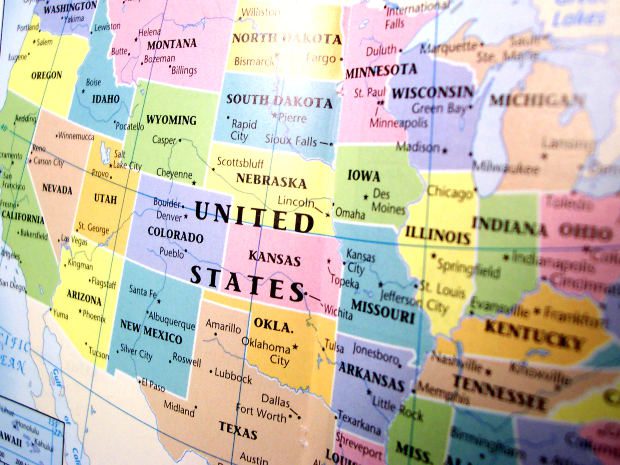
(Image courtesy of lorettaflame via Morgufile)
So pull out a map of North America the next time you wonder where Kansas is located. You will find the geographic center of the 48 continental states located within Kansas’s borders, a mere stone’s throw from Lebanon, a small town in Smith County, Kansas. You will find such significant historical markers of the deeds committed on Kansas soil if you travel our highways that you will wonder how there is anyone left standing here to fight. And so you will see a fight started here, and it continues here, centered in the heart of democracy.
Realism is focused on the awareness of immediate possibilities and acts based on certainty and what is probable.
Idealism is focused on hope and then considering the possibility is always there, even if unlikely.
Idealism is a motivating force necessary to cross the hard days. Realism keeps us grounded in the hard facts, and it creates the firm conviction that, with reasonable efforts, anything can become possible.
Finding that balance is the hard part. I hope that someone’s desire can be implemented or adjusted somewhere between the grounded reality and the perfect outcome.
Imagine
Imagination is the circle of thoughts we love to breathe in, no matter the philosophy. This thought circle can be the comfort zone where we find peace and tranquility, healthy doses for the mind’s stability. A stable mind is necessary to live life truly, rather than going through the motions and spending hours, days, weeks, months, and years till death. I should know.
Imagination holds a powerful place in my life, shaping how I work and plan. I often begin by germinating an obsession — a goal that may initially seem impractical, unattainable. I continually water this obsession, to thrive and drive me forward.
Don’t call me “unrealistic,” but the idealistic approach lets me chase what seems impossible, and it defines my mindset.
This approach often leads to what I call a rebellious mindset. It strengthens my determination to stick to my goals against all odds. While not all dreams achieved through this idealism come to fruition, I still find that this process builds resilience. This resistance to external pressures fosters a personality that is difficult to sway, making me less susceptible to compromising on fundamental rights, freedom of speech, or injustice.
In Pakistan, where societal and institutional pressures often push individuals to conform to the old narratives, my idealistic mindset allows me to challenge these norms. I resist the go-with-the-flow mentality that dominates our local culture. This resistance, born of my imagination-driven idealism, makes me a person who cannot easily be managed, whether by those in power or within social circles.
Don’t elbow me
From an early age, I had a dream of joining the armed forces. Normally after 12th grade, we can apply to join. I was declared medically unfit due to the carrying angle of my elbow, the angle between the forearm and arm when the arm is extended. The excessive angle may lead to a person’s inability to carry weight, so I was declared temporarily unfit as carrying heavy bulky weights is quite normal in the armed forces. I was shattered.
(Image courtesy of shraga kopstein via Unsplash)
I had waited for many years for the day I could apply to the armed forces. I went to the Combined Military Hospital Lahore to get advice about the treatment of this angle issue. The senior surgeon of their orthopedics department was a brigadier rank officer and only affirmed what I had already heard — I was medically unfit for service.
“It is impossible to force this elbow angle in position, as it is by birth and not changeable,” he said very clearly, “There is no option for you.”
I was coming down the stairs, and the word “impossible” was ringing in my ears on repeat. Before coming back, the doctor just wrote TRY CHIN-UPS on my prescription slip and also told me that there is almost a zero percent chance of effective results from chin-up exercise.
I just kept the words “impossible” and “0% chance” in my mind as I started doing chin-ups, and started to play hockey by keeping the stick near my elbow (another technique recommended by a physical instructor.) I continued to work on this routine for almost eight months without rest. I spent all day on the ground, almost entirely on running, chin-ups, and hockey.
During this time, even my mother and father advised me to stop as “it” is a natural condition and not curable. In their words, “You must focus on any other profession.” My friends used to mock me by calling my hard work a futile effort.
All of these opposing forces played a vital role in making me resistant to all opinions and steadfast in my wish to work at getting the carrying angle decreased to the normal range. My two main motivations were to prove all the people’s opinions wrong, and imagining the moment when I would be declared medically fit for the armed forces.
After eight or nine months, I reapplied, and was declared medically fit … by the senior orthopedic surgeon of CMH Lahore. This senior orthopedic surgeon was sitting on the same chair where I was advised by his fellow surgeon that I had no chance of getting this carrying angle cured. I believe this imaginative and rebellious approach gives me the courage to stand firmly for what I believe is right and just, no matter the challenges.
However, a question I mainly consider is why imagination is a person’s only source of peace.
Just turn the tables
Shift your intention towards the thinking philosophy of a person. A person creates a private boundary and wants to allow only those people in whom they love. Possibilities exist that things happen according to a person’s will. Or never happen at all.
The fact is that a person only wants to live with the people or things of their choice or with those whom they love. When life is working out and everything is flowing smoothly, they don’t need to live in their imagination when their reality is already according to their wish. Likewise, if the opposite is true and nothing in their life fits the narrative they want, a person will always prefer fantasy.
Preferring imagination when reality doesn’t meet their desires also resonates deeply with my life. There have been times when my circumstances didn’t align with my narrative of how things should be. During such times, I relied on imagination not as an escape, but as a tool to redefine my path and rekindle hope.
Take this scenario: a man wants to marry a woman, but she does not want to be his wife. It is very common for Pakistani youth to feel affection for someone without reciprocation. This reality will upset the man, just as it would anyone else in the world who experiences that kind of rejection. To avoid facing it, some men will develop a fantasy world around them, where everything is according to their wishes, and imagine that woman as his wife. Mental stability is so vital that a person can spend his whole life sitting on a beach if there’s peace there.
So, when this love-sick man feels comfortable in that specific zone where everything is according to his arrangement, he may never broaden his circle to accept reality, because reality is painful and upsets his mental stability.
Keep turning
Now comes the other side of the story. Suppose a woman whom he wants to marry becomes his wife. Here the reality is beautiful, so the man does not need to imagine it. He can be with a woman he wanted to marry.
This example highlights that choosing a path of imagination is not always necessary. We all want to choose a way that follows mental stability, happiness, and our desired direction, traveling only with those we want to travel with. This path can be imaginative if the day does not unfold following our desires. On the other hand, it can be realistic if the year serves our demand.
People who live in fantasy think that if life does not progress according to their thoughts, they should develop a forest of ideas and continue to roam, reconciling disparate elements, and accommodating setbacks, under the varying shades of thought.
Grief from losing loved ones or precious things is only natural; otherwise, how could you really consider it love? This might be true, but being consumed by grief can also cause severe damage to relationships around that person.
I often imagine the moment when I will leave this world, and the people I’ve helped will speak to themselves or others, saying, “This was the man who supported us when we needed it most.” That thought motivates me deeply, as I hope my legacy will live on; not through fame, but through gratitude in the hearts of those I’ve touched.
Can imagination harm you?
Imagination is so immersive, but too much of anything makes a person unaware of their surroundings as they get lost within themselves. If they go too deep or too often into the workings of their own mind, they risk losing interest in the present, in their responsibilities, and in dear ones; a disconnect.
A person’s happiness may rely on sadness; the sadder, the more content. The repetitive thoughts of the desired life give only temporary relief, but when this bubble of imagination pops, the pain becomes enjoyable as it closes the circle.
Imagination is deeply embedded in my life. I often imagine scenarios and ideals, not about myself per se but about the circumstances I want to create. Like joining the armed forces, when that path didn’t materialize, I redirected my imagination toward contributing to society in other meaningful ways.
I now aspire to be a “hidden treasure” — a person who works silently to help others without seeking recognition. I have been fortunate to help people in small ways, such as paying tuition fees for needy students, assisting patients with medical expenses, or supporting families in distress. Without publicizing them, true kindness lies in remaining behind the scenes.
I would say that my idealism has sometimes led to frustration when reality doesn’t align with my vision. However, I see these moments as opportunities for growth and adaptation. Instead of being overwhelmed, I channel my energy into finding alternative ways to move closer to my goals.
Our demands from fantasizer and associated consequences
We mostly think those suffering from an imaginative trauma must return to life and be normal like others. Easy for us to say, but much more difficult to actually do practically. Our continuous demand forces them to develop a facade.
When that person becomes fed up with acting, watch for extreme behavioral changes like powerful flashbacks, regret, and open exposure to whatever that person is covering.
Extreme realistic or extreme idealistic?
What creates a problem for most of us is that we are either highly realistic or highly idealistic.
For example, a hardworking and talented worker wants a certain job. She goes with a practical approach that the company’s standards are too high for her and decides against applying for that specific job. She is thinking only in black and white. This is a highly realistic approach if something is complex. Many others cannot meet the high standards, so she thinks she also could not.
On the other hand, a 45-year-old artisan applies for a job with selection criteria that anticipates a 20-year-old, but the artisan is so motivated and has a firm belief that they are the best candidate, the best worker. That is a highly idealistic approach that has something less to do with the reality that everyone else experiences.
Both of these approaches are extreme yet correctable, and that correction lies in creating a balance.
I consider myself more idealistic than realistic, and I tend to stay firmly focused on my goals despite external challenges. For example, recently in Pakistan, the weather has turned extremely cold — a rare occurrence in a country accustomed to heat. While many people find it difficult to engage in physical activities during such weather, I have maintained a daily routine of running for 10 kilometers early in the morning before sunrise, even when the sun is scarcely visible these days. Yet, I persist because I idealize the sense of accomplishment and discipline it brings me. This is how I strike a balance between realism and idealism: I acknowledge the challenges but push through by focusing on the rewards they offer.
In the balance
Idealism and realism are two poles of magnets that repel. Balance is impossible because the idealistic and realistic approaches are linked to the person’s desires. How can human beings suppose something against their will? This unacceptability of the possibilities that reality and idealism bring along leads to the challenge of creating a balance.
How can we force the balance? Who doesn’t lose the forest for the trees?
It is actually the struggle to create a balance between idealistic and realistic perspectives that makes us human; a work in progress, but not forced.
Finding that balance is the hard part. Can you imagine?
On April 22, 2025, a terrorist attack in Pahalgam, Jammu and Kashmir, killed 26 civilians, including a Nepali national. Indian authorities attributed the attack to Pakistan-based groups Lashkar-e-Taiba and Jaish-e-Mohammed. The incident triggered diplomatic fallout — including visa suspensions and expulsions of Pakistani officials — and raised tensions along the Line of Control. In the weeks that followed, India launched a targeted military strike, Operation Sindoor, while intermittent ceasefire violations and public anxiety shaped the national mood.
April 22: The Attack in Pahalgam
A devastating terror attack in the pilgrimage town of Pahalgam, Kashmir, left 26 civilians dead, including a Nepali national. Indian authorities swiftly blamed Pakistan-based militant outfits Lashkar-e-Taiba and Jaish-e-Mohammed, triggering a nationwide outcry.
That same evening, hashtags like #NoMoreTalks and #JusticeForPahalgam surged across social media. The online outrage quickly turned into policy, as India expelled Pakistani officials and suspended visas, heightening tensions at the Line of Control (LoC).
April 24 – May 6: Between Diplomacy and Drum Beats
Over the following two weeks, India toggled between backchannel diplomacy and visible military preparations. The uncertainty rippled through everyday life, especially in Punjab, Rajasthan, and Jammu & Kashmir.
In an interview with HT City, a Delhi University student said,
“Everyone’s tense. My roommate’s brother is posted at the LoC. She barely sleeps.”
A Reddit user from Rajasthan noted,
“My flight from Jodhpur to Indore (college) was cancelled. Other than that, I haven’t noticed much.”
Meanwhile, media speculation mounted. By May 6, several outlets reported signs of imminent retaliation.
May 7: Operation Sindoor
At dawn on May 7, India launched Operation Sindoor — a brief, precise strike targeting nine suspected terrorist bases in Pakistan-occupied Kashmir (PoK) and nearby regions. The 22-minute operation, carried out using drones and airstrikes, was designed to demonstrate capability without appearing escalatory.
Internationally, the strike drew mixed reactions. While countries like France and Israel backed India’s right to self-defence, others — including China and the United Nations — urged restraint and called for immediate dialogue between the two nuclear neighbours.
Prime Minister Narendra Modi, in a statement reported by the Times of India, declared,
“In response to the attacks… our forces destroyed nine of the biggest terrorist bases within just 22 minutes.”
Later that day, Defence Minister Rajnath Singh emphasized that any future engagement with Pakistan would focus solely on PoK:
“If we talk to Pakistan, it will only be on PoK. Nothing else,” he said, as quoted by Times of India.
May 10: Ceasefire or Brief Pause?
Three days later, global diplomatic pressure appeared to yield results — a ceasefire was announced. But within hours, reports emerged of fresh shelling along the LoC, leading to civilian casualties. Among the victims was Mariyam, a young girl from Poonch.
Her father, Javid Iqbal, told The Times of India:
“She died in my arms.”
India accused Pakistan of violating the agreement. A Defence Ministry statement confirmed retaliatory strikes, framed as limited to counter-fire zones.
Public Reactions: Stress, Silence, and Screens
While the official tone remained measured, the public mood was volatile. Students — particularly those from military families or border areas — demanded exam delays. Delhi University’s student union set up a helpline for those struggling with stress.
A student leader told Times Now,
“The administration must account for the stress and uncertainty students are facing.”
Online sentiment ranged from frustration to resignation. A viral comment summed up the ambivalence:
“Wanted you to capture Pakistan. But we will take the ceasefire if it means our jawans are safe.”
May 13 and Beyond: Calm, With Questions
By May 13, hostilities had largely quieted. Yet the fragility of the peace remained apparent. Analysts warned that without structural dialogue or credible deterrence, future provocations could again ignite a larger conflict.
As The Atlantic Council observed,
“Without credible deterrence and sustained diplomacy, any peace remains fragile.”
Final Thoughts
This crisis was not just about foreign policy or military retaliation. For students in Delhi, families in Kashmir, and travelers grounded in Rajasthan, it was a lived experience — shaped by fear, grief, and constant refreshes of the news.
What comes next is uncertain. But for now, calm — however uneasy — holds.
Depression is a fickle thing. Becoming depressed is not easily predictable. The best days can be immediately followed by the worst. Still, there are behavior management patterns that can help mitigate its effects. For example, I know that I get very insecure if I use too much energy.
Confused about emotions
The path that I am on now is long and twisted. At the beginning of this journey, I knew almost nothing about depression, nor did I believe that what I was feeling was depression. I felt like I was exaggerating my emotions or faking it. I didn’t want to believe the changes I was undergoing. Even though my family recognized it and I had a therapist, I still didn’t completely believe I was depressed.
It’s common for depressed people to feel like they are either tricking everyone into thinking they have depression or finding some other way of feeling like an imposter.
My depression made me feel like I was ripped from society and I had to fight.
Fight to connect.
Fight to connect with myself.
Fight to connect with myself in bits.
An effort made, even a little—
Strand by strand, I’m pulling myself back.
Support systems
I was privileged enough that my depression was not ignored by those around me, and they shared what they noticed. I was lucky enough to get a good therapist on my first try. This luck was due to the fact that my therapist was found as a result of my parents’ effort. My therapist was lovely. She helped me work through things I was hiding while I invalidated myself.
I was very anxious in the months before university. My therapist was great at helping me through my anxieties and making plans with me to make the transition to campus easier.
The things that worried me about school were the academic workload and the fact that I would have to be more independent than I had ever been before. University was in a different city, away from the one I had lived in my entire childhood. I was anxious. Though a meal plan solved the problem of setting aside time to cook, I needed to budget my time and energy like never before. My first year at university was made easier thanks to the support systems I had, like my therapist and loved ones.
My new and old friends were key to making my first year a good one. My old friends made me feel supported. My new friends made me feel welcome. Having a community was important, and being a part of one allowed me to grow during my first year.
(Image courtesy of Mikhail Nilov via Pexels)
My two biggest roadblocks when it comes to succeeding academically are motivation and depressive episodes. Because of this, academic accommodations were another boon that helped me succeed during my first year of university. The school administrators understood that I needed some extra help. I am able to take my tests and exams in a different building than other students so I am not distracted. I also get extra time to finish my papers. Additionally, I get extensions when turning in assignments and can miss a few classes without repercussions. These accommodations take pressure off me to perform my best when I’m at my lowest.
Boosting myself
Self-motivation is something I’ve struggled with for years. Being unmotivated is definitely a difficult mindset to have. There is no one solution for overcoming it. It’s also not something that I can just force myself through.
There are a few things that I do to fight the absence of productivity that comes with a lack of motivation: I sit with other people as they do their work, I put on timers to count down the time I have left to work, and I have my accommodations. Often, I have to ask for help.
Learning to ask for help has been hard but at the same time, very rewarding. When I ask for help, I almost always receive it. But asking for help also requires vulnerability, something that is not easy to confront. Part of the process of trusting others is to trust them enough to let them in. Getting to be that much closer to those around me was amazing, and I wouldn’t trade it for anything.
(Image courtesy of energepic.com via Pexels)
Sometimes it’s a matter of time before my depression gets in the way of my productivity. Sometimes nothing works and I have to wait until the depressive wave ebbs. Sometimes it feels like there is an elephant on my chest and the effort to get its weight off is not worth making.
When these moments happen, I need to remember that it will leave if I don’t let it push me deeper into the ground.
Depressive episodes pass.
Assignments get done.
Time keeps ticking and everything keeps moving on.
Every university experience is different, but I think every student needs to be patient with themselves because we are all growing. A degree may not be everything, but mental health is. Approaching difficult tasks may be scary, but there are many ways to handle the hard things in life.
I can be depressed and in university. You can struggle and find the parts of life that are worth living for.
Crystal Palace pulled off a miracle by winning their first-ever major title. To say the odds were against them would be an understatement. But that’s the magic of football, the unthinkable can always happen. On their third attempt, they finally had the last laugh.
As expected in the preview, Manchester City dominated the opening 15 minutes of the match, controlling possession and showing their usual sharpness of the multiple Premier League champions. But Crystal Palace never panicked, they stayed patient and stuck to their original plan.
And it paid off in the 16th minute, when Eberechi Eze met a low cross from Daniel Muñoz with a first-time finish. Jean-Philippe Mateta’s brilliance in holding up a long ball and playing a one-two with Kamada, who released the speedy Colombian fullback into space. A remarkable counter-attack move on display, one to be studied in academies.
The Crystal Palace supporters exploded with joy. Austrian coach Oliver Glasner had boldly declared in a press conference after their previous encounter, a 5–2 loss: “If we meet again, you can’t play in this system because we will solve it.” He proved to be a man of his word.
The stars delivered
From that moment, the Eagles grew into the match and even had a second-half goal disallowed for a marginal offside. In the meantime, Dean Henderson turned into a giant between the sticks, producing several crucial saves to preserve the lead — including a penalty stop against Egyptian forward Omar Marmoush.
The Palace backline showed remarkable resilience and bravery, especially Daniel Muñoz and Chris Richards. Muñoz, rewarded with a new contract until 2028 last month, locked down his flank with flair and consistently posed a threat going forward. Richards, the American centre-back, was a rock in defense, completing 12 clearances and winning 5 out of 7 duels.
The late introduction of Claudio Echeverri brought some threat to the Sky Blues, however, Henderson’s presence proved too much, as he kept his clean sheet with more crucial stops.
A date with history
Crystal Palace showed their credentials with a convincing 3-0 win against Aston Villa in the semifinals, making a strong statement against a team that competed fiercely against Champions League finalist Paris Saint-Germain.
They were ready; missing out today was not an option — and they did not. It was their third shot at glory, having fallen short in both previous finals against Manchester United (1990 and 2016).
This time, they were led by Eberechi Eze. The 26-year-old attacking midfielder took charge, scoring the only goal of the afternoon. He continued his impressive streak of goals in the tournament, having scored in both the quarterfinals and semifinals. Undoubtedly, the star of the competition. “This is special, this is what dreams are made of. Who would have thought we could do it?” he told ITV.
Eberechi Eze scored the decisive FA Cup goal. (Photo via AP)
In doing so, he carried on the legacy of past icons like Wilfried Zaha. Back in 2016, he was just 10 minutes away from success before Lingard’s late goal shattered their hopes. The Ivorian had been fundamental for the South London club over the years, and helped the club maintain Premier League status when the squad was not as strong as it is today.
The mastermind behind
Oliver Glasner is the key figure behind the success. The Austrian coach arrived in February last year and instantly improved the team and players. Despite losing a vital player in Michael Olise, who joined Bayern Munich for around €60 million last July, Glasner fought back with the addition of the talented Ismaila Sarr.
He proved crucial in transforming Jean-Philippe Mateta into a complete centre forward. The striker’s numbers speak for themselves: 14 league goals, several decisive moments and a call-up to the France national team for the Olympics last summer.
This title added another glorious chapter to his managerial career. He became the first Austrian coach to ever win the FA Cup, earning a place in history. Three years ago, he led Eintracht Frankfurt to Europa League glory, beating Rangers 5-4 on penalties after a 1-1 draw in regular time. In the previous stages, he beat teams like Real Betis, West Ham and giants FC Barcelona — a winner in every sense.
The reactions
At times during the coach’s tenure, there were moments of tension and doubt after a short streak of poor results. However, the decision to keep the manager proved to be the right one. “We stuck by the manager because he’s an elite manager,” said Steve Parish, co-owner and chairman of Crystal Palace, in an interview with Sky Sports after the match.
Jean-Philippe Mateta was one of the key players in this success. He went from being a solid striker to one of the finest attackers in the league. “You know, we played against one of the best teams in the world and scored early in the game. To defend our goal for nearly 100 minutes, this is fantastic. I don’t have words to describe,” he revealed to Optus Sport.
Luke Weaser-Seychell, a content creator who goes by the name Luke Talks Palace on his YouTube channel, described the historic triumph as the greatest moment in the club’s history. “We are witnessing the peak of Crystal Palace at this current time, European football at Selhurst Park and away, amazing to see.” He emphasized just how special this moment is, something Palace fans never thought they’d witness in their lifetimes.
A worldwide passion
Mike, a die-hard CPFC fan from Alabama in the United States, reflected on the club’s success: “Winning that trophy was a real full circle moment for our supporters.”
He described it as a “very different feeling (for Palace fans), because we’ve devoted so much of our lives toward supporting this club despite knowing we might never see us lift a trophy”.
Mike recalls his first connection to the club back in the mid-2010s, when he first started watching the Premier League. “What really got me hooked on Palace was the atmosphere at Selhurst Park and the passionate fanbase. Then, I started watching more and more games and was attracted to the style of football the club played at the time, led by Wilfried Zaha and Yannick Bolasie”.
A perfect balance between two mavericks and other players, perhaps less talented, but real hard workers. “It felt like the club represented South London really well,” he explained.
The long-awaited trip to Selhurst became a reality two years ago. “I finally made it to Selhurst in May 2023, and have been back twice since. I can honestly say a few people I’ve met through Palace are genuine friends of mine, and I cherish those relationships.”
The passion extends online too, as he has formed a real bond with fellow CPFC fans through Twitter. “The community I began forming here (X) made Palace even more worth my time,” he explained.
What’s next for the Eagles
Now the responsibility falls on those in charge to build on this success. Key players like Eze, Mateta, and Muñoz will definitely attract interest from bigger clubs this summer. If Palace hope to continue their rise, they must keep them and add fresh talent.
Securing their first-ever major trophy and a spot in next season’s Europa League, the smiles at Wembley belonged to Crystal Palace. They fully deserve to celebrate this historic moment.
“Why me?” I asked no one in particular. It only added insult to the already open wound.
It was not a genetically inherited trait. I knew this because I had researched my family, having read a book on genetics in grade 6, and no one in my family tree had the disorder.
Drying my tears, I reviewed what happened that day. The day before, the Religious Education teacher had asked us to memorize John 3:16. I already knew it. I never missed church and the Sabbath School.
“Kelvin! Stand up and recite John 3:16!” Mr. Jack’s authoritative voice commanded. Confidently, I rose from my desk, which I guess was trying to win an award for being too noisy.
“For Go…o…o…d so lo…ve…d…” I began. I had not finished the final section of my recitation before everyone burst into laughter except Mr. Jack and me.
I realized that being a new student was not going to be as much fun as I had anticipated. I guess they thought I did not know the verse because of my hesitation. So thought Mr. Jack, who stared at me with cold unblinking eyes, flexing the water pipe on his hands.
All I remember about the following few minutes that seemed to last a decade is the pain that tormented my back as Mr. Jack applied his best technique to ensure I never forgot.
“How will you pass your High School entry exam?” he challenged as he continued to make me count the number of strokes he expertly laid on my back.
The school had no option. Whatever it took, we had to pass, not only because of our own good but also to put the school’s name among the ‘mighty’ primary schools in Nyandarua County.
He did not understand my speech impediment. My fear of being laughed at and being misunderstood drove me to withdraw from people and triggered the next problem – making new friends in my new school. My friends at home understood me, but this was not the case at Saint Peter’s Academy.
Getting to eloquent
It was not long before it dawned on me that if I did not face the darkness growing inside me, I was never going to be embraced for who I was.
I started reading novels aloud at the deserted soccer field rather than the mind reading I had been accustomed to. Though I took more than thrice the time I would spend normally, it was a valiant effort. I could now do a few words without a stammer. No hesitation.
The few words became a sentence before I joined High School. Classmates would complain about my slow reading pace when I volunteered to read articles in class. I remember two students mumbling that a certain person was to fall asleep if I read a Swahili article the teacher had asked me to recite.
Though discouraged by many of my classmates in grade 9, I still began to develop eloquence as I read aloud. By grade 10, I volunteered to deliver a trip report on the assembly ground, which I did at a rather moderate pace.
Bit by bit, I improved and struggled against myself.
I was not done yet. Trip reporting became my thing for more than a dozen trips I attended thereafter. No one dared to steal that activity from me.