Brazilian football club Flamengo advances UN partnership and calls for symbolic recognition of its global fanbase

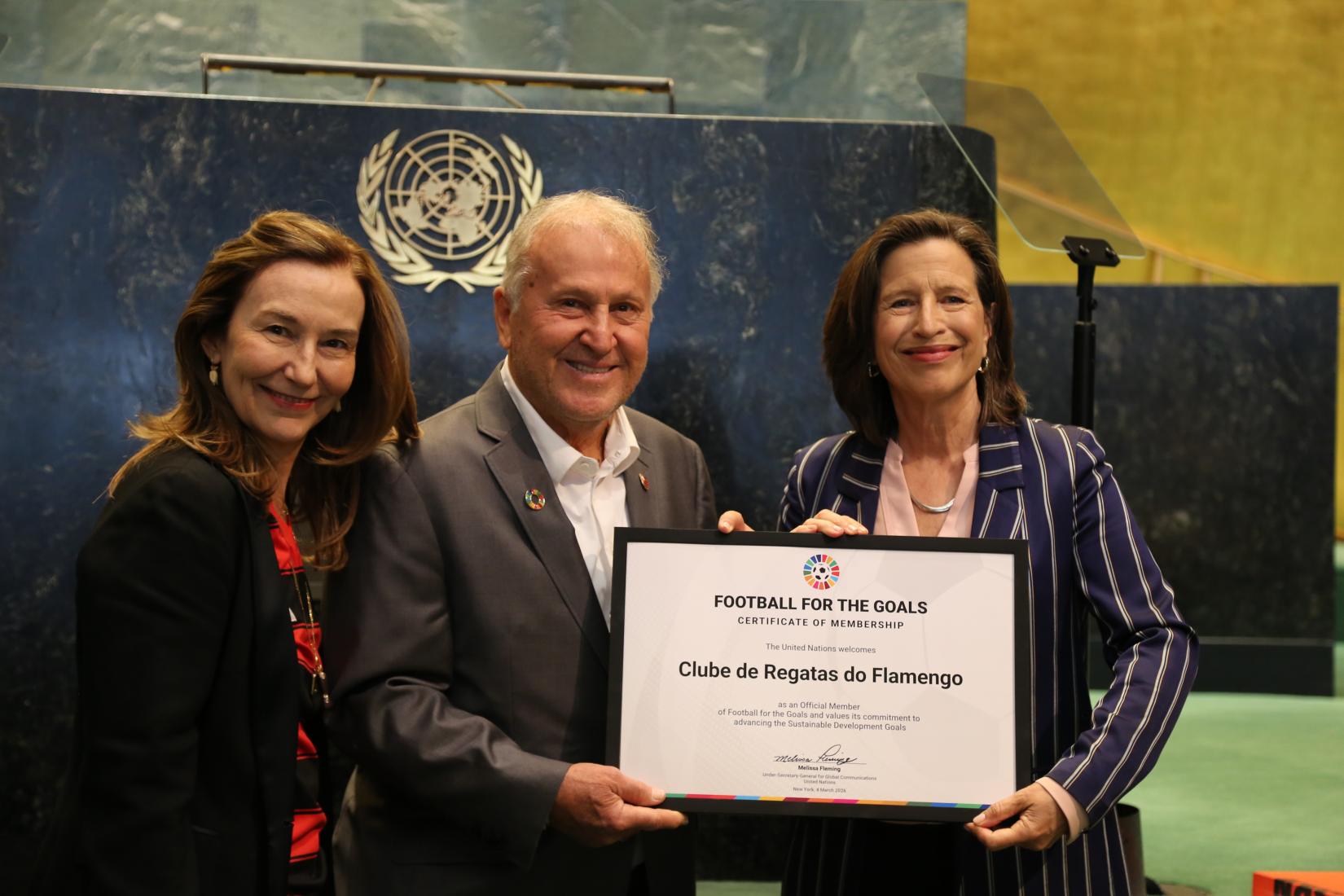
On Tuesday, April 13, the United Nations met with Brazilian football club Clube de Regatas do Flamengo, based in Rio de Janeiro and one of the country’s most widely supported teams. The meeting took place to formalize the club’s participation in the “Football for the Goals” program, a United Nations initiative that seeks to use the reach of sport to promote human rights, environmental issues, and social transformation in alignment with the Sustainable Development Goals (SDGs).

Representing the club and its supporters, Flamengo legend Zico, a former Brazilian international widely regarded as one of the country’s greatest players, was received by the UN Under-Secretary-General for Global Communications, Melissa Fleming. 

During the meeting, the former player presented the organization’s headquarters in New York with a publication highlighting the club’s social initiatives and reinforcing its commitment as a cultural force in Brazil, as well as its support for the UN’s Sustainable Development Goals (SDGs).

“Flamengo’s participation reinforces the potential of football as a powerful platform for social mobilization. By bringing in one of the world’s most influential clubs, we strengthen a movement that connects the passion for the game with the need to build a more just and sustainable world,” Fleming said during the occasion.

The Brazilian club presented projects aligned with the global agenda, including initiatives focused on addressing social inequality, promoting health, and combating racism. The club reaffirmed that its participation in the program seeks to expand the use of its cultural impact as a tool for social mobilization capable of generating tangible change in society.

Almir Silva, a Flamengo supporter for more than fifty years, told The Sentinel that the team’s international recognition marks a significant shift for its fanbase. “We have always been a massive group, and seeing the strength of our supporters extend to other countries and causes beyond football is remarkable.”

Campaign for recognition as a “Symbolic Cultural Nation”

The club’s participation in the “Football for the Goals” program comes amid a campaign led by Flamengo seeking symbolic recognition of its supporters as a “transnational cultural nation.” The concept refers to a group that shares culture, traditions, identity, and values, but is not limited by geographic territory or state sovereignty.

Such recognition has not previously been granted to a sports-related fanbase. If approved by relevant international bodies, the proposal would represent an unprecedented step, marking the first time a football fan community would receive this type of symbolic recognition.

In September 2025, Clube de Regatas do Flamengo launched an international initiative presenting a document to the United Nations advocating for the symbolic recognition of the so-called “Rubro-Negro Nation,” a reference to the club’s red-and-black colors. The proposal aims to highlight the sociocultural phenomenon represented by one of the largest sports communities in the world, with its own traditions, chants, history, and values.

The resolution would not aim to confer political status or territorial sovereignty, but rather to formally recognize the sociocultural phenomenon represented by Flamengo’s supporters. The club emphasizes that its fans are present not only throughout Brazil but also in several countries around the world.

“If we were a country, we would have the 36th largest population in the world. We are more than 45 million people united by the same flag, the same culture, and the same feeling that spans generations. Flamengo is not just a club—it is a nation,” said Zico during the 2025 campaign.

If accepted, the club argues that the resolution could set a precedent for other global communities formed around sports fanbases or cultural movements to be considered in international forums.

Global impact

The scale of Clube de Regatas do Flamengo’s fanbase helps explain why the club has drawn the attention of the United Nations for initiatives such as “Football for the Goals,” which seek to use sport as a tool for social mobilization.

In recent years, the club’s influence has expanded far beyond Rio de Janeiro, reaching audiences in other countries. International broadcasts and major sporting events have further increased Flamengo’s visibility.

One example is the club’s participation in the FIFA Club World Cup in 2025, which brought together teams from around the world, including Chelsea FC and FC Bayern Munich.

Founded in 1895, Clube de Regatas do Flamengo began as a rowing club before becoming one of the most prominent forces in South American football. Over the years, it has won national and international titles alongside legends such as Zico, Júnior, Romário, and more recently Gabriel Barbosa.

Today, it stands as one of the most successful clubs in South American football, having won three Copa Libertadores titles over its history.

The club’s participation in the “Football for the Goals” program is expected to expand the reach of social initiatives linked to sport, generating positive impacts for communities in Brazil and around the world.
Brazilian Film “Gugu’s World” Takes Grand Prix at Berlinale’s Youth Section

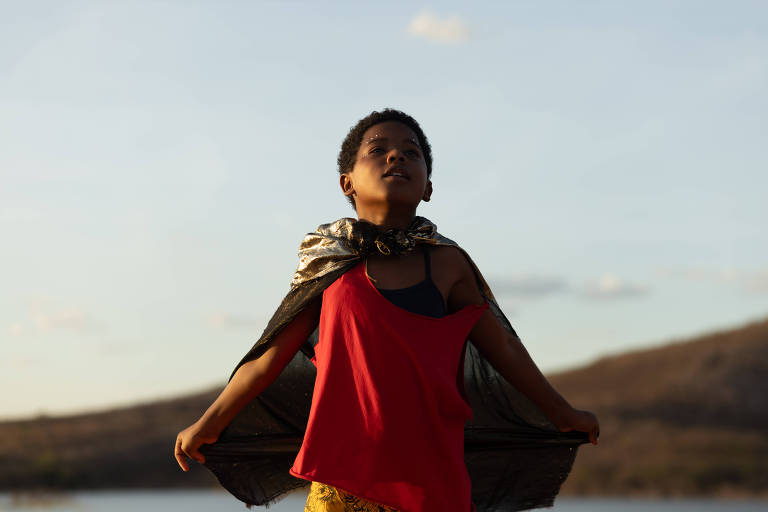
The Brazilian film “Gugu’s World”, winner of the Grand Prix in the Generation Kplus section of the Berlin International Film Festival (Berlinale) in 2026, follows the story of an eleven-year-old queer boy who dreams of becoming a soccer player while facing the progression of his grandmother’s Alzheimer’s disease.

“It’s not a movie that labels itself only as LGBT. It’s a movie that anyone can connect with. Beyond questions of identity, it also deals with memory and family relationships,” says André Araújo, the film’s screenwriter.

The drama conceived by André Araújo and directed by Allan Deberton follows the life of Gugu. Raised lovingly and freely by his grandmother, Dilma, their relationship of care seems to reverse when the progression of Alzheimer’s begins to weigh on her. Afraid that he may have to live with his father – who does not understand him as he is – Gugu tries to hide from everyone what is happening.

The film stars Yuri Gomes, Teca Pereira and Lázaro Ramos, one of Brazil’s most prominent actors, who attended the Academy Awards accompanying his long-time partner Wagner Moura, a 2026 Oscar nominee. The cast also includes names such as Carlos Francisco and Georgina Castro.

Among the film’s critical responses, many highlight Gugu’s singular and determined personality. In an exclusive interview with The Sentinel, screenwriter André Araújo discussed the construction of the character:

“Gugu moves between genders. He isn’t simply a ‘gay kid,’” André emphasizes. “At the same time that he’s a sensitive child who likes to wear makeup, dress up, wear colorful clothes, dance, and express himself through clothing, music, and dance, he also expresses himself through soccer. His dream is to become a soccer player, which is a masculinized space where someone like him normally doesn’t have a place.”

Awards in Berlin

The Berlin International Film Festival (Berlinale) took place between February 12 and 22. The film was screened in the Generation Kplus section, a segment dedicated to works that explore narratives about growing up and coming of age for young audiences.

After its screening, “Gugu’s World” received a warm reception and took home two awards. The Grand Prix of the International Jury was granted by a jury dedicated to selecting the best feature film addressing the world of children and youth. The second award was the Crystal Bear, decided by a vote of the children’s jury.

“The audience applauded the film standing for eight minutes, and people came up to talk to us about how deeply the film touched them […] A man around 60 years old came up to me and said, ‘Look, I really saw myself in that boy, because I was a feminine child, a gay kid,’” André recounts.

Among viewers, the relationship between Gugu and Dilma was also warmly received. André Araújo described their relationship using the term “arenga,” a Brazilian expression from the state of Ceará that refers to a form of love expressed through playful bickering. “It’s their way of saying ‘I love you,’” André concluded.

Film critic Natália Bocanera attended the screening during the Berlin showcase and told The Sentinel about her experience:

“I believe the most striking point in Gugu’s World is the beautiful relationship built between grandmother and grandson and the freedom with which they express themselves. The idea of bringing together extremes carries with it the expectation of conflict and confrontation. However, Gugu and his grandmother Dilma never repel each other; instead, they complement one another to the point that together they radiate such a strong light that all we want is not to look away from their existence,” she concludes.

Natália also highlighted Lázaro Ramos’s performance, emphasizing how powerful it is to see him portray a role so different from his usual ones: that of a father who oppresses his son, struggles to connect with him, and yet still carries the complexity of loving him in some way, bringing the character closer to the reality of many Brazilian families.

The backlands and Alzheimer’s

During the interview, André Araújo also revealed the connection between the film’s narrative and the Brazilian sertão (the semi-arid backlands of northeastern Brazil), a setting that plays an important role in the story.

According to Araújo, the idea for the project emerged after encountering the former town of São Rafael, in the state of Rio Grande do Norte in northeastern Brazil, which is now submerged beneath a dam. The landscapes and the stories of local residents revealed that the impacts extend beyond the physical, reaching symbolic and subjective dimensions of people’s lives.

From this, André began to see the place as a space of memory. The city that is visible only when the water level of the dam drops became a metaphor for Alzheimer’s disease.

“You see a reservoir dry up and, little by little, the old city starts to emerge. Alzheimer’s is a similar process: as the disease progresses, something remains, and that something that remains is often very small. It’s no longer the memory, no longer the everyday recollections, but a trace of who that person once was.”

The relationship between Gugu and Dilma is directly affected by the disease’s progression, and a central part of the film is the coming-of-age that grows out of that experience.

“There comes a moment when he has to take care of his grandmother. He becomes adult-like. He switches roles with this woman: the one who should be caring for him becomes the one cared for by him.”

“Gugu’s World” currently has no scheduled release date in Brazilian theaters or on streaming platforms. International distribution has also not yet been confirmed.

The Timestamp That Changed the Way I Practice Journalism

On November 5th, 2021, Brazil was gripped by breaking news. 

A small aircraft had crashed in the countryside of Minas Gerais. On board was Marília Mendonça, one of the country’s most beloved singers — a young artist whose voice had become the soundtrack of heartbreak for millions. Within minutes, headlines multiplied, major outlets began reporting that she had survived, citing information from her press office. Relief spread quickly across social media and television broadcasts.

In the newsroom, I did what journalists are trained to do in moments of confusion: I went back to the primary source. The official note from the Fire Department included a precise timestamp for the crash. I read it once. I read it again. And something didn’t fit.

I compared it with the time the statement was released and considered the geography of the region. The reported time of the crash and the geography of the region made it nearly impossible for any official medical confirmation to have happened that quickly. There simply hadn’t been enough time.

The location was remote. Rescue operations would have required travel, on-site assessment, and official confirmation procedures.

It wasn’t a dramatic realization. It was quiet, mathematical. 

The timeline did not add up. There simply had not been enough time for anyone to responsibly confirm survival. There was no way the information circulating could already be confirmed. Based on logistics, distance, and the sequence of events, the optimistic reports circulating at that moment were, at best, premature.

I faced an uncomfortable dilemma. Like millions of Brazilians, I was not emotionally detached from the story. Marília’s music had been part of my daily life. I was also a fan. Her songs had played in my headphones, at parties, during long nights of writing. That day, I wasn’t just an editor. I was someone refreshing my phone like everyone else, hoping the earlier reports were true. I wanted the early reports to be true. But journalism is not guided by desire; it is guided by verification. Journalism has no space for hope.

And in that small gap between minutes, I understood something before anyone said it out loud. I didn’t feel triumphant. I felt cold. 

 If I was right, the country would move from relief to mourning.

Instead of repeating what other outlets were publishing, I chose to write a cautious article questioning the timeline and emphasizing the lack of confirmed information from emergency authorities. The piece did not speculate. It did not declare an outcome. It simply highlighted the inconsistencies between the official timestamps and the claims being disseminated. I knew I would be the only one swimming against the current, to push against this national hope. And still, uncomfortable as it was, I knew it was necessary.

Shortly afterward, the confirmation came: she had not survived.

The article became the most accessed in the history of our publication, surpassing 1.2 million unique views in less than three hours. It marked a significant growth moment for the site and consolidated our credibility in high-sensitivity coverage. In business terms, it was a turning point.

But my personal turning point had occurred earlier while examining that timestamp. That was the moment I understood, with unsettling clarity, what journalism really asks of you. It asks you to doubt relief. To slow down when the world accelerates. To risk being the cautious voice in a room eager for good news. And sometimes, it asks you to be right in ways you wish you weren’t.

Some believe professional maturity in journalism is about speed, sharp analysis, and competitive positioning. That afternoon clarified something more fundamental: responsibility often means resisting collective momentum. It also taught me that professional instinct and personal grief can coexist in the same body. I wrote through a lump in my throat. I updated headlines while processing my own sadness.

In breaking news environments, especially during emotionally charged events, the pressure to publish quickly can overshadow the discipline of verification. The easy choice would have been to replicate what larger outlets were reporting. The harder choice was to pause, analyze the data, and risk being temporarily out of sync with the national narrative.

Looking back, that was my Eureka moment. Not the confirmation itself, and not the record-breaking traffic, but the quiet realization that accuracy sometimes requires standing apart from the crowd — even when the crowd includes respected newsrooms.

That day permanently reshaped how I approach crisis coverage. Speed matters. Reach matters. But neither outweighs the ethical obligation to interrogate information, especially when hope is involved. Journalism is about being right for the right reasons — even when being right carries the weight of grief.

I have covered many stories since. None have carried that same quiet, irreversible click.

A timestamp. A calculation. A country holding its breath.

And the moment I knew.

Image of empty airplane seats in greyscale.
Image courtesy of Alejandro Anzola on Unsplash

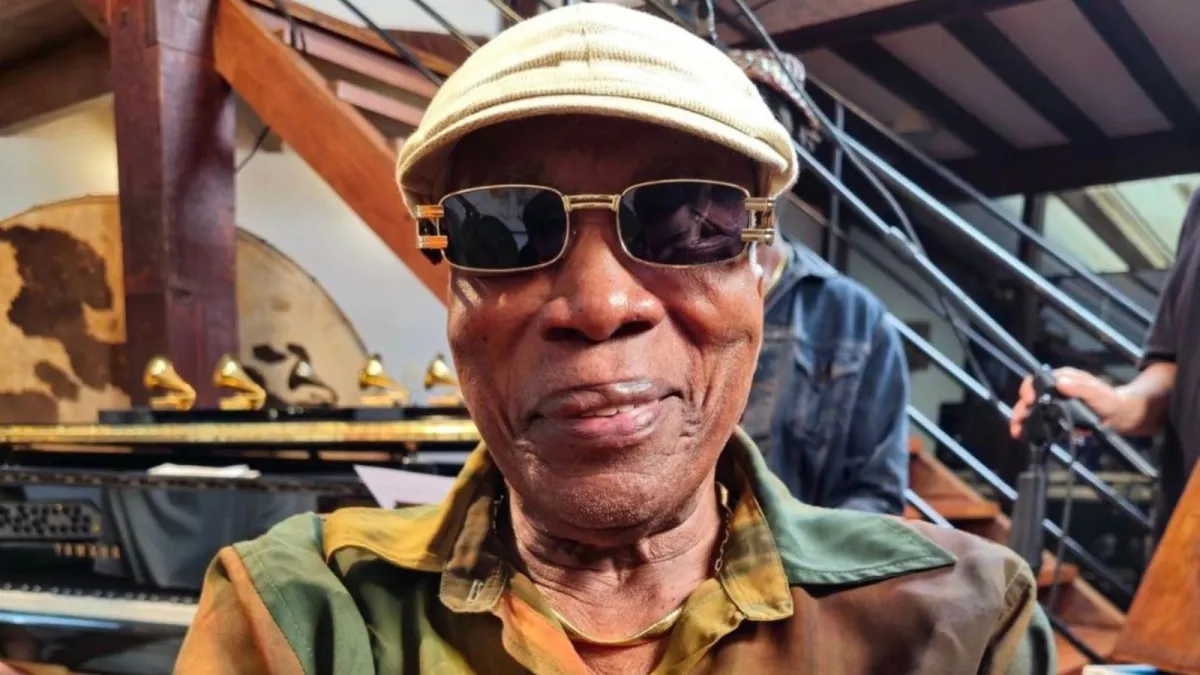
Brazilian Music Icon Milton Nascimento Awarded Honorary Doctorate

In December 2025, Brazilian singer and songwriter Milton Nascimento once again received the title of Doctor Honoris Causa. In April of the same year, he had already received the same distinction from the University of Campinas (Unicamp). As one of the greatest names in Brazilian popular music, the recognition highlights the impact of his artistic work on the country.

The title of Doctor Honoris Causa is one of the highest honors that can be granted by universities and seeks to recognize exceptional individuals who have contributed directly to society, without the requirement of having completed an academic degree.

In addition to Milton Nascimento, emblematic figures such as Meryl Streep and Pelé have also been honored with the title of Doctor Honoris Causa.

In December, the Oswaldo Cruz Foundation (Fiocruz), the largest biomedical research institution in Latin America, awarded the honorary title to the artist. One week later, the Federal University of Minas Gerais (UFMG) also granted him the same distinction. The events brought together academic authorities, researchers, and representatives from the cultural field.

With an approach focused on an expanded concept of health, Fiocruz emphasized during the ceremony the deep dialogue between art, culture, and health:

“One of the questions that always comes up is what a musician has to do with Fiocruz. The answer lies in our understanding of health, which includes social determinants and recognizes culture as a foundational element. Milton is not only an artistic icon; he is a reference for political engagement and the defense of social causes,” said Cristiana Brito, director of Fiocruz Minas, in her speech.

The award recognizes the artistic trajectory of Bituca, the nickname by which he is widely known, as an example of the use of art to confront social injustices. Throughout his musical career, the Minas Gerais-born musician has addressed diverse themes such as resistance, denunciation, and the affirmation of Black identity.

Speaking to The Sentinel, historian and professor at the State University of Minas Gerais, João Teófilo, highlighted the importance of the title:

“Milton Nascimento is one of the most important figures in Brazilian culture born in the 20th century. I dare say he is the greatest living artist in the country. His work presents a level of sophistication widely recognized by both musicians and scholars, in Brazil and abroad,” he stated.

“Brazilian music and culture would not be the same without the presence of an artist of Milton’s magnitude, whose influence crosses generations and borders. In this sense, the title of Doctor Honoris Causa is not only an individual tribute, but an institutional recognition of the centrality of his work to the understanding of Brazilian culture,” Teófilo concluded.

Having been recently diagnosed with Lewy body dementia (LBD), the artist was unable to attend the ceremony, and the award was received by his friend, musical partner and conductor, Wilson Lopes.

“Milton is an artist of immense greatness, not only musically, but humanly as well,” Lopes emphasized during the event.

Cultural Impact

During the period of the Brazilian military dictatorship, from 1964 to 1985, Milton Nascimento was one of the targets of censorship. His resistance to the system can be seen in several works, but especially in his album Milagre dos Peixes, released in 1973.

The album’s title criticizes the so-called “economic miracle” promoted by the dictatorship. At the time, the regime used television and radio to sell a narrative of a country in development, ignoring the aggressions and censorship imposed by the military.

Several tracks from the album had their lyrics banned or subjected to cuts that compromised their integrity. However, the singer decided not to exclude them, but rather to change the proposal. As a result, the censored songs were given vocalizations, screams, and other sound effects. According to accounts from the period, the idea was to express, through experimentation, everything that the dictatorship prevented him from singing.

The album liner notes made the censorship even more evident. In the credits, even the songs composed only of vocalizations still included the songwriter’s name. This way, his audience would know that, despite the experimental nature of the track, there had originally been a composition there.

In response to his resistance, not only the artist but also members of his family reportedly faced persecution during the dictatorship. As a result, he had to distance himself from his then-girlfriend and his adopted son for an indefinite period, losing contact for years.

Beyond the dictatorial period, Bituca explored throughout his discography themes related to racial inequality, the celebration of Black identity, and the valorization of women. Songs such as “Morro Velho,” “Maria, Maria,” and “Lágrimas do Sul (For Winnie Mandela)” are examples of this.

Also speaking to The Sentinel, João Teófilo, who researches themes related to the military dictatorship, culture, and memory, emphasized the musician’s importance beyond the Brazilian dictatorial period:

“Although Milton consolidated himself as an artist mainly in the 1970s, in the midst of the dictatorial regime, his work is not limited to the issues of that period. He is an artist who thinks about Brazil ‘from within,’ the deep Brazil, addressing structural themes such as Black identity, racism, Latin America, social inequalities, and Indigenous issues, among many others,” Teófilo noted.

Another major highlight of his career is his defense of Brazil’s Indigenous peoples. “Amor de Índio,” “Os Povos,” and “Yanomami e Nós (Pacto de Vida)” are some of his works that reflect on justice and the appreciation of nature and those who live in it.

“Milton is a political and engaged artist, even though, like any long trajectory, his career presents occasional contradictions. What stands out, however, is the fact that he has placed his work at the service of causes he believes in, combining aesthetics with social commitment. Thus, more than a virtuoso or a musical genius, Milton Nascimento is a sensitive interpreter of Brazil, someone who, in dialogue with various partners, has helped — and continues to help — think about and understand the country in its tensions, wounds, and possibilities,” Teófilo concluded.

Replica of the Statue of Liberty Collapses During Strong Winds in Brazil

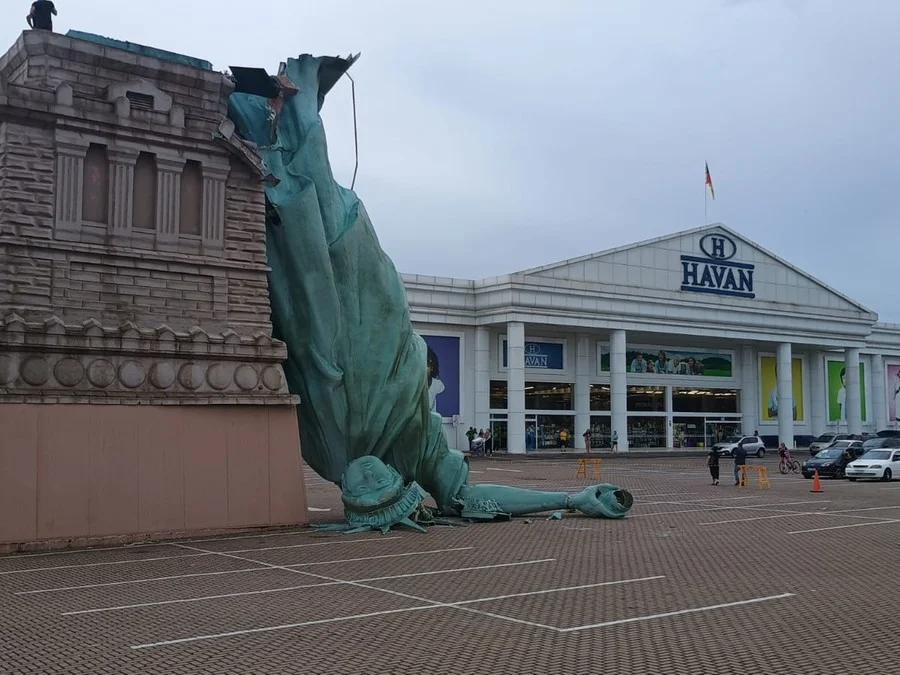
A replica of the Statue of Liberty, a symbol of the Havan retail chain in Brazil, collapsed during a severe storm in the state of Rio Grande do Sul on December 15. At the time of the incident, Civil Defense had issued a red alert for the region, with winds forecast to reach up to 90 km/h. Despite the impact, no one was injured.

The red alert issued by Civil Defense represents the highest level of severity, indicating an imminent risk to people’s lives. It is activated only in cases of extreme phenomena, such as heavy rain and strong winds, as well as flooding, requiring immediate action from authorities and citizens to ensure collective safety and survival.

The replicas of the U.S. monument, installed in front of the company’s stores, have become more than a commercial strategy, turning into a true Brazilian cultural icon. With more than 70 units across the country, these sculptures draw attention due to their scale and repetition, becoming easily recognizable urban landmarks embedded in the public imagination.

Images circulating on social media show the structure lying on the ground after the intense windstorm that hit the state. The episode occurred amid a scenario of climate instability, marked by wind gusts above the seasonal average.

In an official statement, Havan said that the company’s top priority is the safety of customers and employees. The retail chain also stated that all of its statues have an Anotação de Responsabilidade Técnica (ART), a document certifying that a qualified professional supervised the construction. According to the company, a thorough inspection will be carried out to determine the causes of the collapse.

“There were no injuries or damage to third parties. The area was immediately isolated, following all safety protocols, and the company’s construction team is expected to begin work in the coming hours to remove the structure,” the statement said.

Brazil’s National Institute of Meteorology placed the southern region under an orange alert, forecasting strong winds, hailstorms, power outages, and possible flooding.

According to geography professor Júlia Góes, in an interview with The Sentinel, the weather conditions are the result of the formation of an extratropical cyclone, a phenomenon caused by pressure differences between two distinct air masses.

The fall of the statue, although it caused no casualties, highlights the risks associated with intense meteorological events and brings renewed attention and level of preparation of the debate on urban safety and for catastrophic events, which are becoming increasingly common in today’s climate scenario.

Climate Issues in Brazil

Even after the cyclone passed, weather conditions in the region remained unstable, with heavy rainfall and strong winds. In recent days, tragedies have occurred in other parts of the country, revealing a broader pattern of atmospheric variation driven by global warming.

In the south, climate-related events have caused approximately six deaths and hundreds of injuries. In addition, other storms have been intensifying in the Southeast, especially in the state of São Paulo, resulting in power outages, fallen trees, and disruptions to essential daily services.

Mega Police Operation in Rio Raises Concerns Over Public Safety

On October 28, 2025, the city of Rio de Janeiro, Brazil, was the scene of the deadliest police operation in the state’s history. The state government reported the deaths of 117 civilians, classified as “neutralized opponents,” and four police officers.

According to the state government, the objective of the operation was to apprehend members and leaders of the criminal faction known as Comando Vermelho (CV), associated with drug trafficking not only in the state of Rio de Janeiro but also in other states across the country.

The so-called “Operation Containment” took place in the Alemão and Penha complex of favelas, located in the North Zone of the city of Rio de Janeiro, and mobilized around 2,500 military and civil police officers, with the use of helicopters, armored vehicles, and support from special units. The operation reportedly lasted about 15 hours.

The final outcome of the action resulted in the arrest of 99 people—17 through the execution of court warrants and 82 caught in the act. Authorities also seized 122 weapons, including 96 assault rifles, 25 pistols, and one revolver, in addition to explosives and large-caliber ammunition.

In a public statement released by Amnesty International Brazil, dozens of human rights organizations in Brazil questioned the proportionality of the operation given the level of lethality recorded.

“There are no elements [in the operation] that effectively reduce the power of criminal factions in the territories. On the contrary, these actions deepen insecurity and fear, instill panic, disrupt the daily lives of thousands of families, prevent children from going to school, and impose terror as an expression of state power. Death cannot be treated as public policy.”

Impacts on the Community

The operation began at 6 a.m. on Tuesday, without prior evacuation warnings, and affected around 26 communities within the Alemão and Penha complexes. On the same day, the city entered level 2 of the risk system adopted by the Rio de Janeiro City Hall, requiring constant monitoring by the Civil Defense.

The city was immediately affected, most intensely in the areas where the operation unfolded. According to residents, the atmosphere resembled urban warfare, with intense gunfire, barricades, and widespread panic. Several public services were suspended, including schools and public transportation.

The administrator of the page “Pega Visão RJ,” who chose not to disclose his name, spoke exclusively to The Sentinel about his experience as a resident of the Penha complex and as the manager of a website that shares information about police operations in Rio de Janeiro’s favelas.

“Because I live here and didn’t go to work that day, for obvious reasons, I focused on passing information to residents and everyone else through social media,” he said. “There were many gunshots, arrests, police movements, deaths… People who live here are always afraid to go out on the street, apprehensive, and scared of stray bullets.”

He also admitted that he does not notice any reduction in crime levels after police raids like this. “Nothing changes; the police leave and everything goes back to normal.”

After the armed confrontation on the 28th, the removal of bodies was largely carried out by residents. Young people and even children took part in searching for and removing the bodies.

This occurred due to one of the strategies adopted by the Special Police Operations Battalion (BOPE), which involved entering through a forested area connecting the Alemão and Penha complexes, known as Serra da Misericórdia. This region had been identified by police as an escape route for criminals.

This area, known as the “BOPE wall,” was where most of the victims were later found. However, the military forces did not request the isolation of the site for forensic investigation, forcing residents to witness the violent scene in order to collect the bodies.

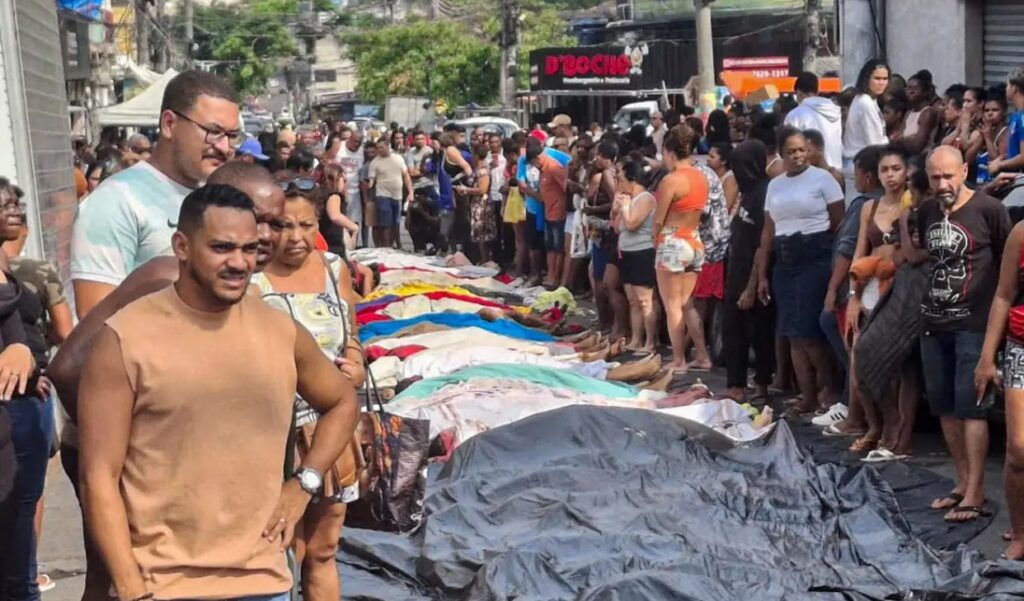
BODIES LINED UP AFTER THE POLICE OPERATION IN RIO DE JANEIRO. (PHOTO: EUSÉBIO GOMES)

After more than 50 bodies were removed, residents transported them to “Praça São Lucas,” in the Penha Complex, where they were lined up so that family members and friends could identify them. During this process, the victims’ clothing was removed, leaving only underwear. Residents said the measure was taken to facilitate identification, including through tattoos.

The police strongly criticized the removal of the clothing, claiming that most of the bodies were wearing camouflage clothing, vests, and operational boots associated with combat, and that some were carrying ammunition, drugs, and cell phones in their pockets.

However, this narrative cannot be verified due to the absence of an official request for the collection of the bodies. This also compromised the possibility of a more detailed forensic analysis of the circumstances under which the deaths occurred at that location, which was isolated from other areas.

Following the removal of the bodies from the forest, reports and complaints regarding the high lethality of the operation increased. In the days that followed, residents and relatives of the victims took to the streets to protest, defending the right to due process without execution, in a country where there is no death penalty.

One of the most emblematic cases was that of 19-year-old Yago Ravel Rodrigues. The young man was found in the forest with his head hanging from a tree and was identified by his parents at the Legal Medical Institute (IML), with his body separated from his head.

In an interview with the newspaper Estadão, a family member who preferred not to be identified said: “We are not outraged because Ravel died—of course it hurts. We are outraged by the way it happened. If it were a shootout, we would understand; it’s a confrontation. Ravel was decapitated and placed in a tree. He was put there like a trophy.”

The family claims that the young man had joined the Comando Vermelho street gang about two months earlier, drawn by the financial promises offered by criminal factions to poor youth. “Ravel was dazzled by a life that people from the outskirts see. We’re not used to seeing lawyers or architects. We’re used to seeing ostentation,” the family member reported.

The governor of Rio de Janeiro, Cláudio Castro, said he considers it impossible that the decapitation was carried out by police officers involved in the operation and stated that the Civil Police are investigating the episode. “No one believes that a police officer cut off the bandit’s head. I believe the criminals themselves decapitated him to shift the blame onto the State,” he declared.

”The Secret Agent” and the memory of the dictatorship: Brazilian cinema wins the Golden Globes and revisits an authoritarian past

The victory of “The Secret Agent”  in the Best Non-English Language Film category at the 2026 Golden Globes consolidates a recent movement in Brazilian cinema that has turned its gaze toward the country’s past, investing in narratives that address historical memory and criticize the silencing imposed by the regime.

All eyes are now on the Oscars, where the film is nominated for best picture and best international feature, among other awards. 

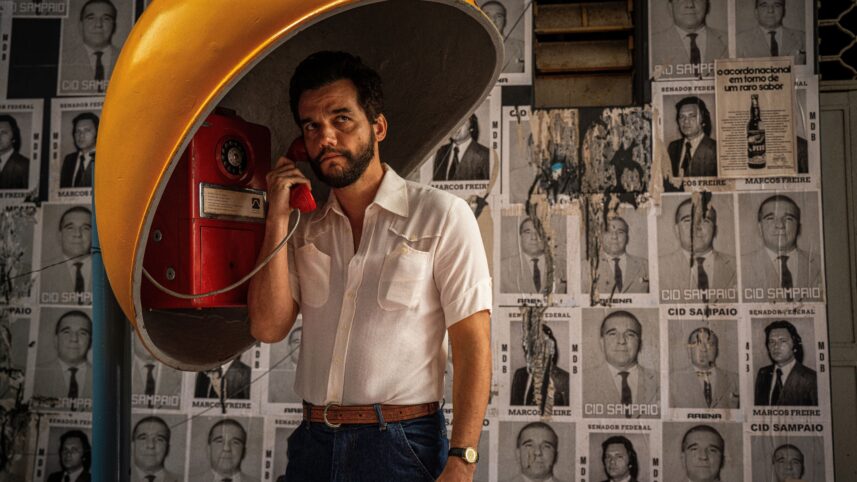
Starring Wagner Moura, who also won the Golden Globe for Best Actor in a Drama and is nominated for this year’s Academy Award in the same category, the film stands out both for its international recognition and for its symbolic power in telling a story set during Brazil’s military dictatorship.

Set in a time of repression, censorship, and human rights violations, “The Secret Agent”  engages with a wound that remains open in Brazilian society. Even after 40 years, its marks continue to manifest themselves in institutional politics, in public discourse, and in the way society itself relativizes or denies the crimes committed by the state during that period.

The film’s consecration at an international award ceremony such as the Golden Globes extends this debate beyond Brazil’s borders. In addition to it’s Golden Globe win, “The Secret Agent”  was nominated for four Academy Awards: Best International Feature Film, Best Actor, Best Original Screenplay, and Best Production. By recognizing a work that addresses repression and the regime’s various surveillance mechanisms, the film industry validates the relevance of telling these stories as a way to contribute to memory and the construction of democracy around the world.

The film’s recognition directly dialogues with the recent impact of “I’m Still Here”, which gained prominence the previous year by portraying the same historical period through family memory and the scars left by censorship. That film strongly contributed to the rise of a new public debate about the dictatorship and, alongside “The Secret Agent”, highlights how authoritarian pasts are still poorly understood by large segments of society, not only in Brazil, but across several Latin American countries.

Julia Ramos, a historian and professor at the Federal University of Rio de Janeiro, states that the production of historical films is essential for fostering complex debates among mass audiences through simple and accessible language.

“In the Brazilian case, films about the military dictatorship take on even greater importance. The country went through a post-dictatorship process marked by political projects that encouraged forgetting, the idea of ‘turning the page,’ erasing the past, and moving on. This silencing directly contributed to the fact that, today, there are still sectors of society that relativize the violence of the period, defend the dictatorship, or simply do not understand what it truly represented.”

Unlike many works that revisit the dictatorship through intimate family memory and mourning, “The Secret Agent” chooses to expose the structural mechanisms of repression, showing how surveillance and control became normalized practices in everyday life at the time. This narrative choice directly confronts the historical erasure that marked Brazil’s post-dictatorship period. According to the final report of the National Truth Commission, released in 2014, at least 434 people were killed or disappeared between 1964 and 1985, a figure that highlights the systematic violence of the regime and reinforces the need for narratives that critically revisit this past.

Federal Prosecutors Give Brazil 45 Days to Fix Nation’s Digital Accessibility

In September, the Federal Prosecutor’s Office (MPF) demanded that the federal government regulate Article 63 of Brazilian law within 45 days, aiming to increase digital accessibility. Ten years after the law was enacted, the provision has never been regulated, which prevents the establishment of mandatory standards and penalties for those who fail to comply.

A survey by the Brazilian Institute of Geography and Statistics (IBGE) revealed that only 3% of the country’s websites are considered accessible. Data like this shows that companies’ negligence toward this legal requirement remains a persistent issue, one that not only excludes part of the population but also overlooks its competitive market implications.

Given this scenario, it is essential to understand what digital accessibility is: the creation of environments, platforms, and content that can be used by anyone, regardless of physical, sensory, cognitive, or social conditions. This includes compatibility with screen readers, color contrast, image descriptions, captions, keyboard navigation, and sign language resources.

The most widely adopted international reference is the WCAG (Web Content Accessibility Guidelines), which defines the standards that websites and apps must follow. By regulating Article 63, Brazil intends to finally establish similar parameters.

Who is most affected?

With the advancement of the internet, it has become increasingly common for essential public services to be digitalized. Over a 30-year period, the digital evolution has been extraordinary . Today, it is possible to pay bills from anywhere in the world, without going to a bank or waiting in line. This shift is seen as positive, as it speeds up tasks and makes mobility more practical.

However, the central question remains: is this convenience accessible to everyone?

Recent IBGE data shows that 20.5 million Brazilians are still considered digitally excluded because they do not use the internet. These individuals are primarily older adults, people with disabilities, and people with low education or income levels. Democratizing this access is essential so that internet use does not become a privilege, as the online world is now central to research, leisure, creativity, and bureaucracy.

The lack of digital accessibility directly affects citizens’ lives. Failures in apps and digital domains cause many Brazilians to miss out on benefits and lose important deadlines because they cannot complete basic steps on digital platforms. In many cases, people must give up their autonomy and rely on others, exposing them to vulnerabilities that could have been avoided with more inclusive design.

This situation became evident in 2025, when the Federal Prosecutor’s Office investigated the accessibility of Brazil’s main government website, https://gov.br, and deemed that the platform’s facial recognition step was not accessible enough for visually impaired individuals.. Even after the addition of features such as a voice assistant and extended validation time, the service was still not considered adequate by the MPF.

In an exclusive interview with Yuvoice, Joyce Rocha shared her digital experience as an autistic woman. The accessibility specialist highlighted that companies’ disregard for digital inclusion largely stems from the ableism embedded in society, which seeks to undermine the independence of people with disabilities.

“This belief comes very much from ableism. Many think there is no need for such services, assuming these individuals depend on ‘third parties’. […] They are condemned to be seen only as vulnerable.”

Joyce also stresses the importance of sensitivity during the creation of these resources. With the rise of artificial intelligence and the automation of accessibility by many companies, Rocha believes that much of the design’s human sensitivity is lost during product transcription, directly affecting user experience.

Future outlook

The expansion of accessibility and the tightening of regulations are not limited to Brazil, but are happening worldwide. In June 2025, the European Accessibility Act (EAA) came into force, establishing mandatory legal requirements aimed at eliminating technological barriers and ensuring equal access to digital services.

In the United States, the ADA (Americans with Disabilities Act) has for years established legal accountability for companies that fail to ensure accessibility in their products and services.

With the growing enforcement of digital inclusion, companies are prioritising not only the inclusive aspect but also in the pursuit of market competitiveness. One example is Microsoft, which, in response to regulatory developments, redesigned its products and documentation in advance to implement new inclusive features. The company’s approach shows that accessibility is not only a matter of rights but also of market strategy, where those who adapt quickly gain an advantage.

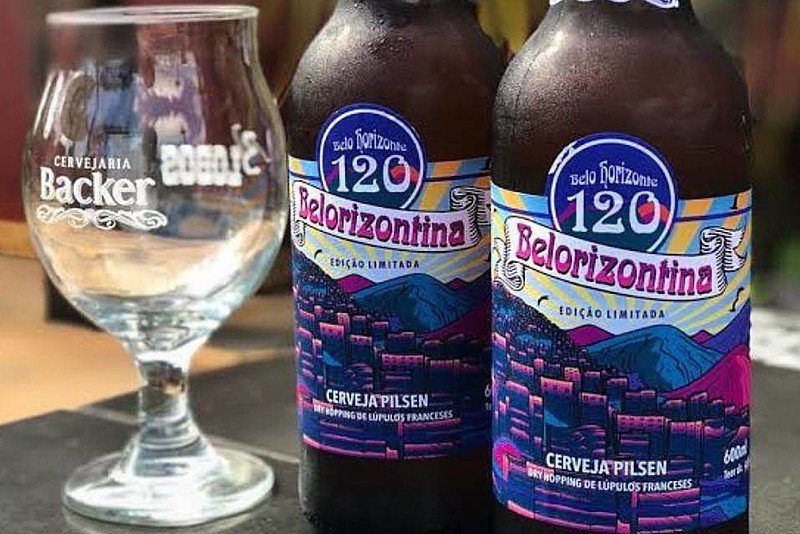
Five Years After Backer Beer Contamination, All Defendants Acquitted for Lack of Evidence

Five years after the discovery that beers from the Brazilian brand Backer were contaminated, an incident which caused the deaths of ten consumers and left 19 others with permanent injuries, all defendants have been acquitted due to insufficient evidence.

The decision was issued by the 2nd Criminal Court of Belo Horizonte on November 4, 2025. The justification was that there was not enough proof to hold any of the accused personally responsible. According to Judge Alexandre Magno de Resende Oliveira, the complaint filed by the Public Prosecutor’s Office failed to demonstrate “who, individually, acted or omitted themselves in a criminal manner.”

Background

The case began in January 2020, when several people were hospitalized in the Brazilian state of Minas Gerais with symptoms such as kidney failure, blindness, and neurological disorders. Investigations revealed that all victims had consumed beverages produced by Backer Brewery, based in Belo Horizonte.

Reports from the Civil Police and Anvisa (Brazil’s National Health Surveillance Agency) confirmed the presence of the toxic substances diethylene glycol and monoethylene glycol, both commonly used as antifreeze. According to the investigation, the contamination resulted from a manufacturing defect caused by a leak in the cooling system that allowed toxic fluid to mix with the beer.

At least ten deaths and 19 severe injuries were confirmed. Consumption of the contaminated beers led to permanent sequelae, including vision loss and neurological damage.

At the time, the Minas Gerais Public Prosecutor’s Office (MPMG) charged ten individuals linked to Cervejaria Três Lobos, the company that owns the Backer brand, with manslaughter, bodily harm, and crimes against consumer relations. The defendants included company partners, directors, and production and maintenance technicians.

Initially, the owners were accused of having knowingly taken the risk of contamination by keeping the factory operational despite technical failures. However, two of them were acquitted after evidence showed they had no management authority within the company. The third partner, responsible only for marketing, was also acquitted for having no direct involvement with product manufacturing.

Regarding the six engineers and technicians, the judge concluded that all were subordinate employees without decision-making power over the industrial process. The court also noted that responsibility for the refrigeration system lay with the technical supervisor, who had since passed away, and the industrial operations manager, who was not charged.

The tenth defendant, accused of perjury for allegedly lying about a label replacement at a supplier, was also acquitted under the principle of reasonable doubt, due to lack of concrete evidence.

In summary, the court found no individualized evidence of criminal negligence that could justify a conviction, even though the episode was acknowledged as a systemic failure within the company.

Aftermath and Civil Liabilities

Despite the criminal acquittal, Cervejaria Três Lobos still faces civil obligations. In July 2023, the MPMG reached a compensation agreement with Backer to provide financial reparations to the victims and their families. The deal stipulates payments of R$ 500,000 per victim and R$ 150,000 per immediate family member for material and moral damages.

So far, no victim has received payment, as Backer is undergoing judicial recovery (similar to bankruptcy protection), delaying compensation. The company maintains that the contamination was accidental and denies ever using toxic substances intentionally in its brewing process.

The acquittal has shocked victims and their families, who remain without compensation or accountability for the tragedy. Speaking to O Estado de Minas, Mirza Quintão Utsch, daughter of victim Antônio Márcio Quintão de Freitas, who died after drinking Backer beer on New Year’s Eve 2020, said:

“It’s extreme negligence to have a leaking tank, poison so many people, and not be held responsible for it.”

Despite the verdict, the Public Prosecutor’s Office announced it is considering an appeal to the Minas Gerais Court of Justice (TJMG). If accepted, the acquittal could be upheld or partially overturned, leading to a new trial. Until a final conviction is reached, all defendants remain free.

Former President and Brazilian Generals Arrested for Attempted Coup for the First Time in Brazilian History

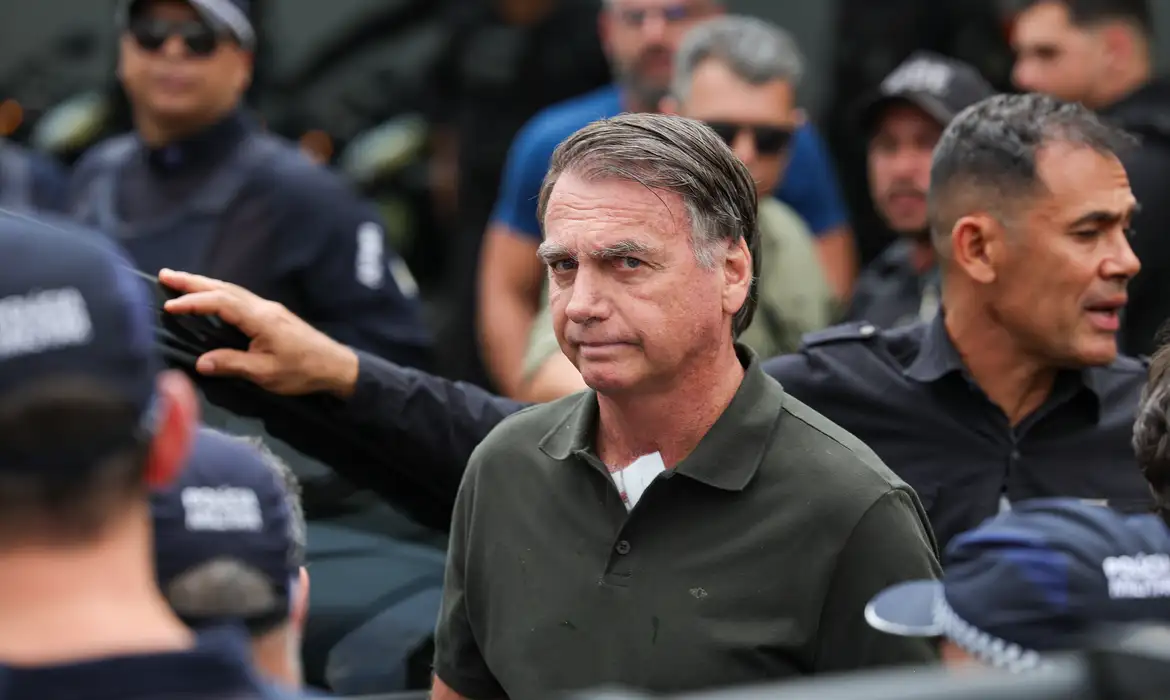
The former President of Brazil, Jair Messias Bolsonaro, has been definitively sentenced to 27 years in prison by the Supreme Federal Court on the afternoon of this Wednesday (25), in Brasília, the Federal Capital ( where the military resided). There, the former parliamentarian and retired captain of the Brazilian Army will initially be held in a Federal Police superintendent’s office., There are no further appeals available for the defendants in this case.

Former President Jair Bolsonaro had already been preventively arrested by the Brazilian Federal Police at sunrise last Saturday, November 22, at his residence in a luxury condominium in the capital of Brazil, Brasília. The former president attempted to tamper with the electronic ankle bracelet that monitored him, using a welding iron, which led to his preventive arrest and the subsequent suspension of the house arrest he had been serving since August 2025, due to the alleged escape risk. Until then, the convicted could appeal the conviction in the process, but the deadline ended this Tuesday.

In addition to the former president, Generals Augusto Heleno and Paulo Sérgio Nogueira, participants in the former Bolsonaro government, will also begin serving their definitive sentences (21 and 19 years, respectively) in a military barracks. Admiral Almir Garnier will be held in a military radio station of the Brazilian Navy. General Braga Neto, who ran for vice president in the 2022 elections, had already been in preventive custody for 11 months in a barracks in Rio de Janeiro, where he will remain. Former Minister of Justice Anderson Torres, who is not military, will go to the Papuda prison in Brasília.

The definitive arrest order was issued by Minister Alexandre de Moraes, the rapporteur of the judicial process that had already sentenced former President Jair Bolsonaro and others involved in an attempted coup at the end of 2022. At that time, Bolsonaro and the other convicted did not accept the electoral results of that year, which indicated the victory of the current president Luiz Inácio Lula da Silva and the unelection of thenPresident Jair Bolsonaro. It was the first time in Brazilian political history that a sitting president was unable to be re-elected to continue government. 

It is also the first time in Brazilian history that military personnel have been convicted for attempted coups. Brazilian historians point to up to nine coups since the end of the Brazilian monarchy. It should be noted that, whilst there is controversy among scholars regarding the counting of coups against the Republic, no fewer than nine coups have been cited.. In the 136 years since the abolishment of the monarchy, seven coups were successful, each with varying degrees of military participation.

In recent interviews with The Washington Post, three researchers paid attention to the unprecedented nature of the punishment of Brazilian military personnel. According to historian Lilia Schwarcz from the University of São Paulo, “Brazil carries two pacts of silence: the silence about slavery and the violence it produced, and the silence about the military. That’s why this case is so symbolic.” Carlos Fico, a professor at the Federal University of Rio de Janeiro, emphasized the aforementioned numerical issue concerning historical coups and, despite the high number, the absence of punishment: “For decades, I have studied more than 12 coups and coup attempts, and all resulted in impunity or amnesty. This time will be different…” Finally, political scientist Matias Spektor from FGV (Getúlio Vargas Foundation) points out the seriousness of the leniency against public officials who have the right to use weapons: “The country has never imprisoned anyone who had access to state weaponry. This is revolutionary.”