107 Degrees in D.C.

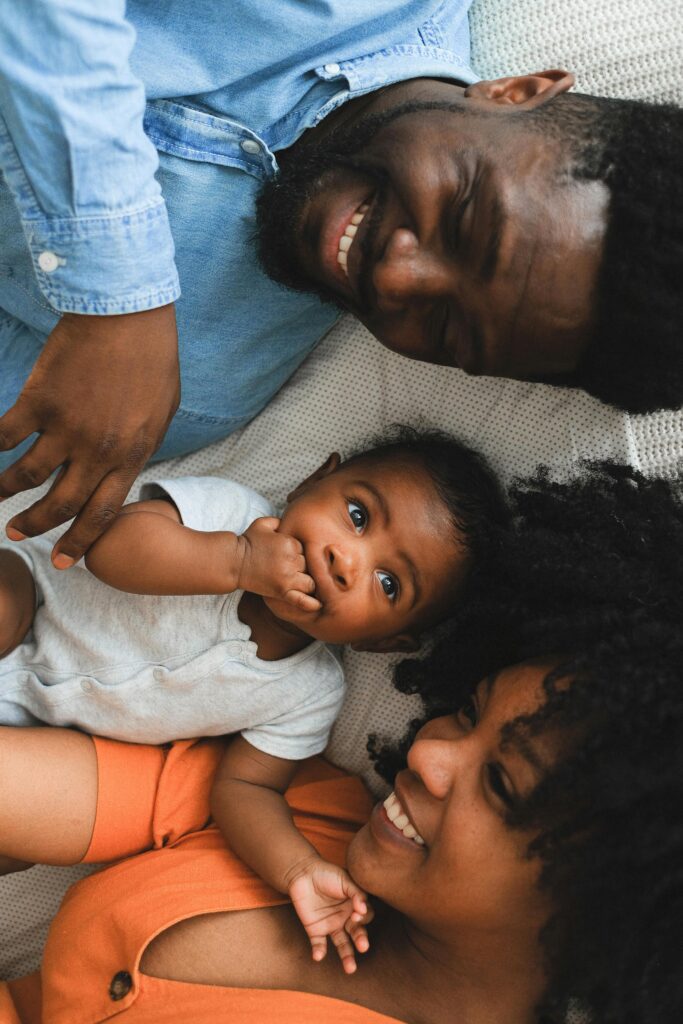
They breathe steadily, rhythmically,

Against my chest, 

As the world melts;

Their eyelashes graze my chin–

Two sets of petals–

Rosy as the day flowers, ablaze

In rivulets and revolts,

Conflicts that cause

The pain we never hope

To hold in our arms,

Like we do these twin

Babes, swaddled in

The mirth and murk

Our world breathes–

The sun, she burns

Our eyes in honey.

Of Monsters and Motherhood

Amongst humanities graduate students, especially literature students, there is a joke that grad school will kill one’s passion for reading. I always thought that I would be impervious to such a curse – that no matter what my Hispanic Literature programs threw at me, my love of reading would remain unscathed. I chose to study literature because, like most people who do the same, I loved reading from an early age. Further, I loved dissecting passages and plots, analyzing character motivations, and connecting works of fiction to larger societal themes. To a certain degree, I was right about my passion being steadfast in the face of the stresses of advanced academic training. There are numerous books from many different countries and eras that piqued my interest beyond them being required reading.  

However, the greatest book in the world cannot fix the fatigue that a bloated reading schedule causes. I knew what I was getting into, of course, but knowing really doesn’t matter after having to read hundreds upon hundreds of pages of say, Garcilaso de la Vega or Gonzalo Fernández de Oviedo (real ones know!), as I had to do during my Colonial Latin American Literature survey course. For six years, I often felt as though I had one eye on a PDF and one eye on the clock, mentally calculating how long it took to read one page and estimating how quickly I could finish a book before moving on to the next one. However, In early 2021, I found myself free of the constraints of reading under pressure, as I had passed my preliminary exams for my doctoral degree the semester before. 

Turning the page

With my attention now solely focused on crafting my dissertation and teaching Spanish language classes, I had won back something that had been missing during my time taking courses: an eensy, teensy bit of free time. Unfortunately for me, I had also been recently diagnosed with allergic asthma, so some of this free time was spent, once or twice a week, in my allergist’s office, on the receiving end of histamine shots that would (hopefully) reduce the severity of my allergies, while also not inducing anaphylaxis.

In that sterile and uninspiring room, far from the creaky, imposing library shelves I had been dwarfed by for so long, the pressure to read for the purposes of writing papers and bolstering class discussions melted away. Accompanied only by my ancient iPad, loaded with the Libby app, I would spend hours waiting in that office, interrupted intermittently by my doctor checking my airways and the injection site on my arm. At my fingertips was what seemed like an unending catalogue of books whose publications I had missed for the last six years. What’s more, I soon discovered something about me that I never expected: I loved reading horror fiction.

All my life I have hated horror movies. I have only seen one, The Strangers (2008), and even that was against my will. The Halloween of my fourteenth year saw me crowding into my friend’s basement with the rest of our social group, which consisted of teens who were not scaredy-cats like me. Due to a combination of peer pressure and shaky confidence, I agreed to watch the aforementioned horror flick while thinking, “Maybe it won’t be so bad.”

Boy, was I wrong. 

Despite my rejection of slasher films, I wouldn’t consider myself an overly  sensitive person, but my anxious personality is not well-suited to the anticipation and gore of the horror genre. There are some days I refuse to watch even an episode of The X-Files as twilight approaches. So to have been, suddenly, breathlessly waiting for books to come off hold that featured content aimed to terrify was very surprising to me, though I embraced it all the same.

My reading reawakening that began beneath the stale, fluorescent lights in a random medical building in north-central Indiana led to a years-long obsession of reading (when I wasn’t writing my dissertation, of course) anything horror- or thriller-adjacent that I could get my hands on. I devoured litfic that centered around body and/or psychological horror, crimes being committed, anything that boasted showcasing the darker sides of humanity.

I didn’t exclusively read horror and thrillers, but I found myself gravitating back toward such works, desperate for the illusion of control while living in a political landscape that was (and still is) trending anti-woman. In these fictional worlds, women could act on their impulses– something we’re very rarely allowed to do in reality. They may be committing crimes, sure, but aren’t we, as women, allowed a little rage when we’re losing our rights to medical care? Can’t we cheer for women doing exactly as they wish when there are those who wish to take away our rights to vote, to divorce, to be employed? Sadly, to everything there is a season, and it seems as though my time voyeuristically consuming women’s rights and wrongs through fiction has come to a possible end. 

A lone light illuminates an old bookcase.
(Image courtesy of Engin Akyurt via Pexels)

Plot twist

After the birth of my daughter, my anxiety has gone into overdrive in an effort, evolutionarily and biologically, I suppose, to try to maintain my family unit within a small, protective bubble and keep the horrors of the world away. The terror that originally had no effect on me when reading horror is now wholly felt, as if I were back in the eighth grade, in my friend’s basement, watching Liv Tyler and Scott Speedman get stalked and terrorized by three weirdos in masks.

I noticed this change when I was finally able to read Monstrilio by Gerardo Sámano Córdova, a book about a woman mourning the loss of her child to such a degree that she turns a piece of his body into a sentient monster. I read, maybe, 10 percent of the book when panic began to overtake me. What if I lost my daughter? In our world, sadly devoid of magical realism, I wouldn’t be able to manifest such a creature. I would have nothing. Plenty of parents around the globe have obviously experienced loss, so I would not be special. But, such a fact does not eliminate the disquietude that this concept produces. I returned the book almost immediately. Then, very recently, a similar thing happened while I was reading the beginning pages of The Lamb by Lucy Rose. 

I had read books describing cannibalism before and, while the idea personally disgusts me, I was able to push past this revulsion to see how these gruesome tales proceeded. Now, my response was so visceral, so palpably felt, that not even a can of Vernors ginger ale could remedy my nausea.

Both books had been hyped up on Bookstagram (a community with which, like BookTok, I have many issues but ultimately can’t quit) for months, as certain accounts received advanced reading copies and therefore raved about how good they were before library-using plebs like me could gain access to them. I was so excited to read them, but, this enthusiasm, and the state of my emotional moods, were in direct opposition.  

The militant feminist in me (which, let’s be honest, is most of my personality) is begging me to push through. She, to be frank, doesn’t even think it’s appropriate to confess that motherhood has caused any change. I should be able to engage in the things I enjoy, instead of letting possible internalized patriarchal ideals – that dictate that mothers’ lives should revolve around their children; that they should spend every single second of every single hour of every single day thinking about their children and their needs; that they are not complete people now, but accessories to the new generation – win. Whatever individuality I can eke out, says this feminist, should be celebrated and pursued doggedly.

Cliffhanger?

Unfortunately, overriding my brain is easier said than done. I find that I miss the previous catharsis I relished while reading; I have no outlet for my frustrations. Also, a small part of me fears that, with this change in taste, I’m no longer cool. Is this how the process from eclectic individual to lame parent starts?

Maybe I’ll return to Monstrilio and The Lamb in the future, when I’m more practiced at divorcing reading and my anxieties. Maybe it’s finally time to give Marcel Proust’s In Search of Lost Time a try? Maybe I’ll exclusively read nonfiction until I’m 90. The specifics of my reading habits were different at 10, 17, 25, and will continue to vary at 32, 46, 54, and so on.

I find myself back at square one, in a place akin to where I was in 2021, wanting to read but not sure where that desire will take me. Still, I have progressed before and will again. And, I should emphasize, I’m ultimately grateful that my lifelong passion for reading remains in spite of the hiccups detailed here, and that I have passed that passion on to my daughter, who demands a reading of Frog and Toad Are Friends at least once a day.

For now, I suppose the horror books on my to-be-read list must wait patiently  in their dark corners. But, as the current total of this list, according to my profile on The Storygraph, is 3,308 books, there’s plenty to read in the meantime. 

Ana, Miguel and Life on Hard Mode

Ana met her husband in an infamous Brazilian chatroom, exactly the kind of meet-cute that defines the best love tales of the 21st century.

She was bored. His nickname was DJ_German. The conversation lasted just a few minutes. She was about to log off when he dropped his phone number. No drama, no pushiness.

“I thought… there’s no way I’m calling a stranger! But the next day, I had nothing better to do and thought… why not?” she recalls. So, on a random Sunday in the early 2000s, she called.

They talked for two hours. By Wednesday, they were meeting up at a mall in Curitiba, Paraná, Brazil. “It was love at first sight,” she says, and it doesn’t sound like an exaggeration. Twenty-one years have gone by. They got married. Had a child. They’ve been together ever since.

Their son’s name is Miguel. It’s for him, and for herself, that Ana, with the courage of someone who has broken down in public before, is now trying to find her place in the world again.

***

Her connection to gaming began long before motherhood. Even before her husband, Leandro. Ana used to play with her sister, her parents, and the whole family together.

“The whole family was addicted. Games brought us together in the living room. When it got late, my sister and I would go to bed, and my parents would stay up all night playing,” she remembers.

Back in the ’90s, her dad – an illustrator – was in charge of drawing maps for Phantasy Star (Sega, 1987), level by level, forest by forest, maze by maze. That memory is still vivid in her mind.

During the interview, Ana gets emotional and tears up just trying to remember the name of a long-lost Master System 3 cartridge.

“I missed it so much! I spent years trying to remember the name of that game. I looked everywhere and never found it. The memory is still so alive. The next day, my parents would tell us everything they had unlocked or achieved.”

Now approaching 40, Ana admits she still loves games but hardly plays. “My dream is to have a decent computer so I can play again,” she confesses.

Her favorite genre? “Silly games,” she says. “I like to relax, you know? Nothing stressful. My Steam profile makes it very clear.” The bio of her steam profile reads: “Yes, I play children’s games!”

Maybe it’s her way of resisting a world that demands too much.

She still treasures her second Game Boy (the first was stolen). She also owned an Atari and a Nintendo 64, alongside the Master System 3. She remembers clearly which titles she had for each console: “I couldn’t afford many games, so I lost count of how many times I replayed the ones I had.”

“Back in the 64 days, I loved Super Mario and Legend of Zelda. On Master System, I played Prince of Persia, Sonic, Super Monaco. Atari was easy… River Raid, Enduro, Pac-Man.”

Leandro’s Super Nintendo is still safely stored away. Every now and then, they still play a match or two. When asked if the vintage console could be sold for a high price, Ana is firm, “Whether it’s worth money or not, we’re not selling it.” The sentimental value means more.

Super Miguel World

The only game Leandro has ever liked and still does is Super Mario World. That’s where the idea came from: Miguel’s first birthday party would be themed after the world’s most famous plumber.

Not a coincidence at all: the boy fell in love with games even before he could speak, around age 3, starting with educational titles. Slowly, without any pressure, games became shelter, language, connection. With the world. With his parents. With himself.

***

“When I stopped the treatment, I got pregnant. My little one was born in 2017,” she says.

When she got pregnant with Miguel, Ana was working at a major telecom company. But just imagining someone else witnessing her son’s first steps while she was away made everything lose its meaning. She asked to quit. And she did.

“I was doing really well there. My pregnancy went smoothly… but during my seven years at the company, I saw many colleagues have babies, go on maternity leave, and return to work. Everything as it’s ‘supposed to be’. When my turn came, I couldn’t get used to the idea of my long-awaited baby spending all day with ‘strangers’ who’d then give me a report at the end of the day: ‘Oh, today he took a step, discovered something new, learned a game … while I was out chasing professional success’,” she explains.

“To me, it just wasn’t a fair trade. So when I came back from maternity leave, I said I wanted to quit. Quit to take care of myself, of him, and to chase my dreams.”

Contrary to what society often preaches, the postpartum period was far from a fairytale. After Miguel was born, he cried nonstop for three months, refusing to be held, and showing no clear signs of what was wrong. His mother ended up submerged in a sea of postpartum depression, resistance to help, and overwhelming guilt.

“I wasn’t sleeping. No one knew why he cried so much… he wouldn’t let anyone hold him. As he got a bit older, he became very selective with food, had intense crying fits… he’d have a meltdown anytime we went somewhere with unfamiliar people. He took a long time to start walking, and he didn’t accept physical contact,” she recalls.

It was a shock. Pure exhaustion. A desperate attempt to understand. No answers. The official diagnosis came only when he was two, after a frustrating journey through doctors’ offices unwilling to confirm what she already knew deep down: “my son is autistic.”

The Autism Spectrum Disorder (ASD) diagnosis finally came from the most expensive child neurologist in town. With it, a strange sense of relief. Relief in being able to name the chaos. To look back and think: “it wasn’t just in my head. It wasn’t my fault. It wasn’t a failure”.

Even so, Ana still feels guilty for how she handled the early years of motherhood.

“For me, the postpartum period was the worst time of my life. I felt like the worst mother in the world and not just that, I felt like the worst person. That’s why I’m completely against romanticizing motherhood.”

“Picture me, deep in postpartum depression, wanting to disappear off the face of the Earth, going through all of that. I did one of the worst things I could’ve done just to get a little peace… I’d leave him watching cartoons on TV, because it kept him distracted. That’s how he started saying random English words before even learning to speak Portuguese,” Ana explains.

Today, Miguel is 8 years old. He’s a sweet, well-mannered, brilliant child. He talks about astronomy with the vocabulary of a scientist and loves logic games. Among his favorite titles, a pattern emerges: puzzles.

“He’s an absolute sweetheart, polite and super smart. He loves studying English and has a hyperfocus¹ on games and astronomy. He used to be obsessed with human anatomy and physiology too, but that’s faded a bit. His dream is to work at NASA,” says his doting mom.

Like almost every kid his age in 2025, Miguel is also obsessed with the ever-polarizing Roblox. “That’s where he says he has ‘friends’,” Ana points out.

“He also loves Minecraft. He plays on his super tablet. And whenever he gets access to a computer, he enjoys games like Human Fall Flat, Portal… total little nerd. He dreams of having a Nintendo Switch.”

Of course, not everything has to be educational. Miguel also adores games with darker themes: Poppy Playtime, Garten of Banban, Five Nights at Freddy’s, and Bendy and the Ink Machine.

That fascination might just be in his genes. “I’m also drawn to darker themes, and some of my favorite games are Little Nightmares, Rain World, Cult of the Lamb, Limbo, Inside… I love them, love them, love them!” Ana confesses.

They’re dark yet safe worlds, almost like playable metaphors for the restlessness she struggles to say out loud.

Miguel doesn’t have regular access to video games, but that doesn’t stop him from playing. He watches YouTube videos. Lots of them. He knows where to find hidden items, the bugs, the shortcuts, the alternate endings. He watches so much that, when he finally gets a chance to play, it’s like he’s already beaten the game three times.

“He kills it, just from watching other people play so much. It’s fun to watch,” she says, laughing. It’s like he’s been training all along, just waiting for someone to hit Start.

When Ana mentions her son’s love for logic games, there’s a quiet pride in her voice. The same kind of awe she feels remembering the maps her father used to draw during the Phantasy Star days.

Only now, it’s Miguel who draws the maps. And the world – even if digital – finally starts to make sense. For him, games aren’t just entertainment, they’re a language. They’re a safe ground.

“We can see there’s a very positive side to it, too. He learns a lot, his English is great, he has quick thinking and strong logical reasoning.”

***

In the family’s daily life, games have become a shared language. A point of contact. An improvised form of therapy. Miguel plays, and his mother observes. She sees so much of her son in her husband, who also received an “unofficial diagnosis” of autism after being observed by a psychologist who simply said, “I have no doubts.”

“I had my suspicions, because he was very different from everyone else. When the psychologist said it, we just accepted it, it was so clear. But since we don’t have the ‘paperwork,’ he doesn’t present himself as autistic. Especially because, after so many years adapting and trying to be ‘normal,’ it doesn’t really impact his life or come across to others.”

Ana also started looking at herself differently and began to wonder a while ago. A preliminary test showed a “very high likelihood of being on the spectrum.” She wants to investigate further, but money is tight at the moment.

“After that test, I started to question a lot of things, but the cheapest evaluation costs around R$ 1,500. My father has high abilities², and I’m pretty much a copy of him,” she shares.

In fact, “there is an undeniable genetic component in autism,” explains pediatric neurologist José Salomão Schwartzman in an interview with the renowned Brazilian Dr. Drauzio Varella.

Scientific research has increasingly focused on genetic predisposition, and evidence suggests that genetic factors may explain up to 90% of autism spectrum development.

Reset

Ana speaks with passion. And at length. She describes herself as “chatty, all over the place, chaos.” But the moment the conversation shifts to voice (when she has to get on a call instead of typing), her body freezes. Anxiety kicks in. Panic. The fear of crying. The fear of shutting down.

The fear of being seen as “too fragile” for the job market as she searches for a way back into the corporate world after nearly 10 years away. When, in reality, she’s just tired of trying to fit into expectations that never once tried to fit her.

“I keep thinking: how am I supposed to get a job like this? I feel like some kind of wild animal. I go for an interview, a call… I’ll probably start crying halfway through. They’ll just say, ‘please leave’.”

“I don’t even know what weighs more, the gap in my résumé, which I’ve tried to fill every possible way just to be seen, my age, or the outdated experience. There’s no certificate that can cover that hole,” she confides. The hole of having stepped away. Of choosing to care. Of doing what so many romanticize in captions but reject in real life.

With a degree in Marketing and a postgraduate diploma in Business Management, Ana dreams of working in areas related to diversity, inclusion, ESG, and purpose-driven projects. She loves to create, to think about branding and identity, to build presentations, to make things meaningful and colorful.

“I’ve done a bit of everything in this life. I’ve run my own business, had a tattoo studio, sold Swiss chocolate, and worked as a tattoo artist. I had a family-owned semi-jewelry business, where I handled all the marketing. I worked for over 10 years at a multinational as a marketing analyst and project analyst,” she lists, showing the richness of her experience.

She even has her own version of hyperfocus: a dream of working at O Boticário (one of Brazil’s largest beauty conglomerates). “I really admire how they focus on people. It makes your eyes light up, you know? Makes you want to be a part of it.”

Deep down, Ana just wants to be seen. To be heard. “I even told a girl who works there, ‘If I could just talk to someone, just get an interview, I think they’d hire me.’ Because, honestly, if people knew how much love I pour into my work, the passion I have for what I do, the way I go all in… you know?”

Despite her résumé, experience, and drive, still hasn’t been called, not even for an interview.

“I don’t think my résumé is bad, or weak, even with the career gap, which I think I explained really well. But, still, I can’t land an interview. I just don’t know what’s wrong with my résumé,” she admits, “I feel pretty lost.”

***

Today, Ana barely plays video games, but laughs as she admits there’s “a dormant gamer inside me, just waiting for the right moment to wake up.”

“Since I’m not a big fan of mobile games, I don’t spend too much time playing. And the few that run on the computer I have right now are more for distraction, so it ends up being a positive thing,” she explains.

For now, she plays what she can. It helps her unwind. Distracts. Relaxes. Disconnects. But she knows that, with the right adventure, she wouldn’t sleep just to beat the game. “If I had the right hardware, I know I’d push past all limits.”

Sometimes, that’s what care looks like too: care for herself, for her time, for whatever energy is left after taking care of the whole world.

The story of Ana, Leandro and Miguel is a starting point, but it also opens space for us to reflect on the role of video games in contemporary childhood, especially when it comes to neurodivergent kids.

Autism at play

Ana doesn’t play much these days. Miguel plays a lot. But between them, there’s a kind of invisible thread, made of pixels, building blocks, and mental maps. If you pay close attention, you’ll notice: even without a controller in her hands, she’s still playing.

For children on the autism spectrum, like Miguel, the structured and rule-based environment of video games can be particularly beneficial. Games offer a safe space for social interaction, where expectations are explicit and communication can be more direct, reducing social anxiety.

The reward system reinforces positive behavior, and the visual and interactive nature of games can be a powerful channel for learning, adapting to different cognitive styles.

Yes, video games offer a field of possibility for autistic individuals. This isn’t naive optimism, it’s a growing consensus among professionals in health, education, and technology. Games bring joy, expand knowledge, contribute to emotional well-being, and create alternative paths for socialization, especially for children and teens who often experience isolation in the physical world.

Many end up learning English without realizing it. They practice reading, logic, motor skills, and problem-solving. Some games even function as natural blockers for intrusive thoughts. Others help develop cognitive and even physical skills, like the so-called exergames.

Immersion has its value too. Hyperfocus – a common trait among people on the spectrum – finds fertile ground in games, where the overstimulation of real life gives way to predictable rules, clear objectives, and immediate rewards. Some kids literally grow up between stages and quests.

That said, the very element that enchants can also disconnect. Excessive use raises concerns and, in some cases, leads to further isolation. It’s important to set boundaries and ensure screen time doesn’t replace essential experiences, like physical play, in-person connection, or body movement.

Miguel, for instance, sometimes goes overboard. He falls asleep thinking about games. Wakes up talking about them. Ana and Leandro, always attentive, notice when it’s time to gently pull the thread back into the real world.

“We’re very aware of this and try to involve him in other activities. The downside is that when he exceeds his limit and spends too much time on screens, he starts to live inside the game. He dreams he’s in the games, and all his conversations revolve around that. That’s when the alarm goes off for us,” Ana says.

The key lies in balance and, most importantly, in guidance. With the right support, games can be therapeutic tools, educational resources, and even starting points for real friendships.

Ana’s experience, seeing games as a bridge of connection with her autistic son, is far from unique. When played with purpose, ethics, and care, they are more than entertainment, they are opportunity, inclusion, and future.

Ana still dreams of a “decent computer,” of getting a job at O Boticário, and of reentering the professional world. Miguel dreams of working for NASA and getting a Switch. Somewhere in between – between drawings, maps, and difficult levels – they keep playing in their own way.

The console may still be missing. The job. The opening. But it doesn’t matter. Ana and Miguel already know how to play as a team.

Me: The Kenyan Father, and the British Father

Dreams of opportunity

“I finally get out of this frustrating country and explore!’’ 

It’s not that I lack patriotism for my country, but honestly, that is how I felt when I finally secured my visa to the United Kingdom.  What could be more exciting for someone like me from a “Third World” country like Kenya than securing an opportunity to live and work among the citizens of Great Britain? 

My destination? Oxfordshire, a far cry from Nairobi City, the alleged capital of Africa. I am heading to a whole new world of hope. 

Migrating to the UK was like a golden opportunity for my family and me, and for my daughter specifically, since I believed she would be able to get a top-tier education, better social amenities, and, of course, get to interact with a different cultural community. At least, that is what I thought. Little did I know that all that awaited me was but exhaustion and stress from relocating and missing my family, my friends, and the warm tropical weather back home. In fact, by the time I landed in the UK, I immediately found myself appreciating the climate and weather back home in Nairobi.

Migrating from expectation to exhaustion

(Image courtesy of Alexander Dummer via Pexels)

I convinced myself that it was just a matter of time before I’d get used to this cold weather. At least this seemed to be the least of my problems. But in reality, things were difficult, more so since I was an immigrant and I was not used to life here. I was navigating an unfamiliar environment. I had to look for a school for my young daughter, get a mortgage, and, of course, settle into my new job. It was at this point that it hit me — I now had a caretaking role to fulfill. 

I got my daughter into a primary school, but here, things were very different. For instance, once you enroll your child in a school in Kenya, they become the responsibility of the school; you are not obligated to pick up your child from school because the school bus would drop them right at their estate. Then, typically, the maid would go and pick them up if the drop-off point happened to be far from your house. If the school is in a rural setting or the child is old enough, they are free to walk back home without fear of jeopardy, since even strangers can act as carers. But here in the UK, it was a different story.

First of all, the language barrier was a heavy stone to roll, especially for my daughter, who was used to a creole of Swahili and English. However, in the UK, there was only English with a strong British accent. It was a challenge for her. Then, the environment was like a monster to her. Often, she would catch flu due to the cold climate here – unlike in Kenya, where the warm climate is easier on the immune system. 

The pressure of caregiving started weighing on my shoulders. I was the primary caregiver here. You see, a benefit to living in Kenya is that there was a network (family, friends, neighbors) who helped hold everything together. But here I was alone with just my immediate family. We lacked other support to lean on.

(Image courtesy of Franco Debartolo via Unsplash)

Back to my daughter and her school routine. Daily, I had to wake up at 6:00 a.m. to get sorted for work and at the same time prepare my daughter for school, as she was supposed to report to school at 8:30 a.m. Furthermore, I had to make sure that her breakfast was ready before 7:00 a.m. and also pack her lunch, all before I even thought about my own day. 

Back in Kenya, this was never a problem, as her nanny took care of this. But here in the UK, hiring a nanny is very expensive. Because children cannot be left alone, everything was for her mother and me to do.

As if that was not enough, I also had to pick her up from school. School ends at 3:15 p.m., which is an hour and forty-five minutes early, given that my work day ends at 5 p.m. There are school clubs, but there is a fee to participate. If you want to coordinate home drop-off with the school, it is double the price of picking her up by yourself.

My caregiving role does not end here. After school is the most exhausting part. When we get home, I have to help her with her homework and any projects she may have. All this I do, and at the same time, I have to keep up with my job. The school encourages registering children for weekend clubs, and this, too, requires a parent’s presence and extra expense.

Other school-related tasks include: being up to date with school news, attending the parent-teacher meetings, talent shows, and exhibitions that are sometimes scheduled on workdays. In order to accommodate all of these activities, I have to build them into my work schedule. With school trips, I have to plan properly so that she can also enjoy herself as the other students do, and not feel left out. At times, I felt overwhelmed by these responsibilities, and wished I could return home. Seriously, why did no one tell me about what’s involved in transitioning from the Kenyan school system to the UK one?

Transition and growth

(Image courtesy of Ryan Stefan via Unsplash)

Eventually, with repetition, my daughter and I adjusted to her new schedule and academic requirements and soon, some of the responsibilities, like picking her up from school, were reduced because she could come home by herself. The parenting culture clash I experienced was not just about changing and securing greener pastures and a better living environment for my family, especially for an immigrant. It entailed much more than that. This process taught me how to be present for my family and what kind of a caregiver, teacher, cultural guide, and loving parent a school-age child needs. 

Living in a foreign environment, I felt like every interaction and activity that contributed to my adaptation to the new culture robbed me of my strength emotionally, physically, and mentally. I was confronted with customs that nobody ever told me about. In my role as a parent, I felt like my burnout was an endless tunnel and that I would never see the light. But gradually, I learned to work my way through it until I finally reached the other side.

Indeed, sometimes, to survive, you just have to be present, even when everything around you feels overwhelming.

The 11th Commandment – Don’t Rush Childhood

What is that one thing you wanted as a child? 

I bet you eagerly wanted to be an adult. Being an adult meant doing whatever you wanted to do. Why can’t you do the things adults do? Why is the answer always “no” whenever you ask for a cool toy, snack, or game? This question I often asked myself, and finally when I was six years old, I was able to come up with an answer. 

It involved alcohol, peppermints, and command mints, as I heard them called. 

***

Give me that beer

During the Christmas season of 1999, my parents threw a big party at our place. Many adults and kids showed up. When it was time to eat and drink, I noticed something that would bother me. My parents would serve adults beer and kids sodas. As a child, this is what I observed at all our parties. Finally, I had enough and decided that I would also drink beer with the adults.

(Image courtesy of Daniel Kandie via Unsplash)

This commandment continued at all our parties we threw as the months and years passed. 

Finally, I had enough and decided that I would also drink beer with the adults. Of course, I knew my parents wouldn’t allow it, so I needed to do it without them noticing. I hatched a plan. 

Once another event gathered everyone and my parents went into the kitchen, I seized my chance. I approached a man drinking beer and asked him for a sip. I couldn’t believe it, he agreed. 

I regretted it almost immediately. The beer was so bitter that I ran out of the living room and locked myself in the room; I think I may have cried, too. 

Lessons from the beer

For kids:

Generally, adults are better equipped to handle tough issues. Maturity and life experience aside, adults have different preferences and tolerance from kids. 

I. Do honor the differences of age and respect them. 

Generally, adults are better equipped to handle tough issues. A good example is how they are able to willingly drink beer despite its bitterness. You would think they would stop at the first sip but yet they keep going. 

I took one sip myself and couldn’t handle the taste at all. 

II. Do not take the name adult in vain by rushing to be just like adults, even with something simple like alcohol. 

You can’t handle the tough things that adults do in the first place. Your brains just aren’t developed enough to shoulder the hardships of life any more than a foal is developed enough to carry a human rider. Did you notice you don’t usually work, pay taxes, or drive?

For adults:

Can you imagine what would have happened if I drank a bottle instead of taking only a sip? It wouldn’t have taken long for me at all to become inebriated, considering my small size and that I was underweight. My parents would have punished me either by scolding me or … the belt. 

III. Do not allow kids to consume beer, for reasons besides its bitter taste. 

It could have even affected my future as well if my parents weren’t strict, and ignored me instead.  

IV. Do not enable kids in bad habits. 

If I ignored the taste in my desperation to be like the adults, I could develop an addiction at that age and would constantly do whatever I could to get a beer.

***

Give me those sweets

Drinking wasn’t the only adult thing I wanted to do when I was a child. 

(Image courtesy of Eric Prouzet via Unsplash)

I wanted to be a shopkeeper for one reason only: the sweets. As a kid, I was always fascinated by how those workers could be surrounded by so many sweets and not eat them. At the time, I didn’t realize that the reason was that shopkeepers needed to make money by selling their sweets, not eating their profits.

Since I was excited about this career path, I told my mother that I wanted to be a shopkeeper when I grew up. Mind you, I previously told her I wanted to be a lecturer. Understandably, she was confused and irritated. Why would I want to be a shopkeeper anyway? She didn’t ask me in words. 

V. Do honor the shopkeeper and all career choices.

Of course, there is nothing wrong with being a shopkeeper, considering we need their services. However, my mother thought that this dream was not allowing me to realize my full potential. I met this reaction with frustration. Why couldn’t she accept that I wanted to be a shopkeeper? 

However, as an adult, I have since realized I don’t want to run a shop due to how challenging the role is. It was not as simple as it appeared to me in the past. Shopkeepers must have strong inventory management skills to strike a balance between overstocking or understocking their shelves, controlling expenses, and monitoring cash flow. A huge part of their job is customer service. Their stock is dependent on their customers and supply and demand, not just candy they can snack on themselves. I still wonder. 

Lessons from the sweets

For adults:

Sometimes kids can be shallow as they simply don’t know any better. When asking them what they want to be when they grow up, listen carefully. 

VI. Do not kill their imagination. Be sure to ask about their preferred career path in easy terms of things they enjoy doing and what could help make them a good living. Typically, kids don’t understand the challenges that are prevalent in that job and instead focus only on the advantages. 

Imposing a career on your child, it is a mistake to say, “You want to be a shopkeeper? Why can’t you be a doctor instead?” By framing it this way, you are already pressuring your child down a specific career path, a path they may have no interest in. Instead, find out why your child loves the career they want to pursue. 

VII. Do explain exactly what chores that job actually does. 

If their reasons seem shallow or ridiculous, work to redirect their dreams. 

For kids:

At the end of the day, growing up is inevitable. You might want to rush into adulthood because it appears fun, but adulthood comes also with many expenses and responsibilities. 

VIII. Do, as a kid, keep the privilege of not having to think about paying for anything. Overall, you may be desperate to grow up. 

Right now, I struggle to pay rent every month. 

***

This is now a single pic: 

(Image courtesy of Anna Shvets via Pexels)

Give me the car keys

IX. Do describe the challenges of adulthood along with all the advantages of childhood. 

However, also be careful to convey life in a way that doesn’t demonize adulthood to the extent that discourages them from wanting to grow older at all. 

X. Do let your child enjoy their youth without coveting adulthood. Teach them lessons big and small as they grow.  Let them learn to handle adult responsibilities with confidence.  

(Image courtesy of Jon Haley via Unsplash)

Misery Loves Company

“People who are hurting tend to hurt other people,” my mom says while holding me close and listening to me cry about the day’s events.

“Why?” I ask in between sobs.

“Because they are just unhappy with their own lives and feel miserable, they choose to make other people feel bad about themselves. It’s a vicious cycle, and misery loves company.”

It took me many years to fully understand what my mom was saying in those moments of desperation and utter sadness when I was a teenager. I fully understood the impact of her words and the lesson she was trying to teach me only in my late twenties while living alone. 

The takeaway is to take everything people say with a grain of salt because their opinions will not matter in ten years. They are irrelevant.

Misery does, in fact, love company, and due to the ever-changing economy, rising cost of living, unemployment, the pandemic, and advancements in technology, it has become so much easier to spread hate worldwide. 

How I respond to haters

Most people don’t even bat an eyelash when throwing insults at strangers on the internet. I have noticed that many are angry, hateful, and very ignorant of their own biases. They often judge people without a second thought, based on their profile picture and the content on their page.

Whenever people insult me on Instagram for commenting and leaving an opinion on a post, I try to tackle their hate, judgment, and ignorance with kindness and compassion. I raise awareness of why some people are overweight or prefer to surround themselves with cats rather than people.

People don’t care to understand the struggles of other people. I have noticed supervisors do the same thing and discriminate against an employee when it is illegal to do so in the working environment, but that doesn’t stop them from finding ways to make an employee feel crappy.

So when these types of situations and circumstances occur, I try to reframe the negativity by pointing out how cruel they are by saying, “God bless your hateful, ignorant, and miserable soul.” Then, I proceed by letting them know about how certain health conditions can impact a person’s looks by affecting their weight and skin in a variety of different ways, such as taking mental health medications,  having a vitamin deficiency,  an autoimmune disorder, or a hormone imbalance such as a thyroid condition. 

I ask them to educate themselves further on this topic before automatically spewing their hate toward people they don’t know on the internet. Usually, when I respond to these types of offensive comments with kindness and awareness, many people end up not responding, which leads me to think that, perhaps, they will think twice before choosing violence and responding to someone’s opinion with mean comments the next time.

Our responsibility

Everyone we meet in life is fighting an unknown battle, one we know nothing about. We must do better as a society if we wish to have any hope for future generations. We must consider what type of example we are setting for our children by exhibiting bullying behavior towards strangers. 

It all starts at home, with the example set by the children’s family members

They come into this world already knowing how to love, and unfortunately, it is ultimately the people we surround ourselves with who choose to teach us how to hate, based on how the world treats us as individuals.

On Autism with My Son, Waiting for the Train

Together, down a level
he’s overly tense-
Among the “normal people”
with their loud staring silence…

A huge smile on his face
he leans into the track
It’s my only weakness
and I hold him back

He’s laughing for years
Jumps, spins, flaps his hands
tasting the tears
only he understands

Reciting words
breathless and dragged
Before he explodes
however, I’d plead

Help ME Please

Always we huddle
forever in anticipation
looking down the tunnel
for the next one

Being a Mom in the Era of Mass Shootings

One Saturday in August 2019, parents, grandparents, and children were shopping for school supplies at an El Paso Walmart when they came face to face with a gunman set on taking as many Brown lives as possible. While this was happening, I was at Walmart in El Paso, buying school supplies for my son. I just happened to be at a different Walmart in town on that fateful day. 

I spent the rest of the day watching the news and video clips online. I cried a lot. I attended a vigil at a high school football stadium. I was shaking. I felt the kind of fear you have that’s not for yourself, but for your child, who is smaller and more helpless. My son was with his father that day and although I received a text that they were ok, it wasn’t enough. I needed to hold my baby, to hug him and kiss him. I needed that as a mom. It was the first time I ever realized that I needed that reassurance because I had never experienced a moment like this. 

My son is my first child, and he was four years old at the time of the shooting. I was still very much new to parenting. I didn’t know it at the time, but I was experiencing parental anxiety triggered by the mass shooting. I had intense worry and emotion that my son was not safe. These fears were irrational, and although I knew he was safe, I felt otherwise.

After the Walmart shooting, I sought therapy, and it helped immensely. I was offered helpful ways to cope with my worries. Now, I make use of tools that I know will reduce my anxiety. My favorite calming activities include listening to my vinyl records, baking, reading fiction, exercising outdoors, and taking my son to community events. I usually have a good stretch of time before the next mass shooting.

Parental anxiety is a normal reaction to something as upsetting as a mass shooting. But considering that mass shootings occur so often in the U.S. they are now part of our culture, this is a reaction that can recur frequently. Now, when a mass shooting occurs, especially if it is one that involves children, a school, or a place I frequent with my son (like a store), I feel this intense worry again and the need to keep him safe. I recognize the fear and I work toward improving my mental health, identifying rational or irrational fears, and using coping mechanisms to reduce my parental anxiety. But sadly, mass shootings are the norm and the cycle of events for parents can look something like this:

cycle showing the progression of what happens to parents after a mass shooting event. Text reads: Mass shooting occurs; Parental anxiety triggered; Coping mechanisms and safety measures.
(Image provided by author)

A Community Shaken 

When a tragedy like a mass shooting happens to your own town, it changes you. It changes everybody. I should say that El Paso is not like other cities. To say we are close-knit is an understatement. The people here speak to their neighbors, confide in strangers, and support each other. This is not the kind of city where you can meet someone at the mall and then never see them again in your life. I have had pharmacy techs speak to me like they’re my sisters, panaderia workers regard me as a daughter, and grocery checkout people tell me about their day and genuinely ask me about mine. This city truly does have a “small town feel.” 

On weekends we go to local festivals or Farmers’ Markets. In the mornings and evenings, we walk dogs in our neighborhoods and greet our neighbors. Our kids make lemonade stands and sell chocolates door-to-door. Carolers come to your door at Christmas. If your dog runs out the door, a neighbor will bring him in, so he is safe. We take care of each other, and we care for each other. This is what it means to be an El Pasoan. 

This is the kind of community that quells your anxiety. When a heinous act like a mass shooting happens, it leaves an impact. For days after the shooting, there were reports of people, especially elderly people, being afraid to go in grocery stores. They waited outside and even asked workers to get items for them. Years later, I still cannot step foot in the Walmart where the shooting occurred. 

Among the victims were friends of my coworkers. One was going to be a guest at my coworker’s upcoming wedding. Also killed was my husband’s former bus driver. A family was broken when two parents shielded their baby boy, saving his life but losing theirs. This was our community. People we knew, saw, and remembered. 

The victims of Uvalde, mostly children, lost their lives in May, 2022. Every time a shooting happens, I hope that will be the last shooting. But in hoping and praying, every time a shooting happens, I will also act. First, I must take care of myself and my family. I cannot be a good mother to my son if I am suffering and not taking care of my own mental health. In doing so, I make sure my family feels healthy and secure. Then I take care of my community, doing everything I can to make positive change. 

I vote, I march, I prepare. 

This is what it means to be a mother in the era of mass shootings.  

Image of a woman at a protest. She has her back turned to the camera, and she’s raising her left hand, which is shaped as the peace sign.
(Image courtesy of AJ Colores on Unsplash)