Land Dispute Leaves Six Dead, Including Pregnant Woman

A renewed outbreak of violence in a decades-old land dispute between two communities in Ebonyi State, South-East Nigeria, has resulted in the death of at least six individuals, including a pregnant woman and her unborn child, as confirmed by local authorities.

The involved communities are the Ndukwe Amasiri Community in Afikpo Local Government Area and Idima Autonomous Community in Edda LGA, specifically the people of Okporojo Idima. Over the years, related disputes have led to the destruction of lives and properties worth millions of naira.

On Saturday, 5th April, 2025, Okporojo community was attacked by assailants allegedly from the neighbouring Amasiri community. Among the deceased are a pregnant woman and her unborn child and one Abagha Chukwu, a native of Afikpo who resided in Okporojo until his ill-fated death.

Several pleas have been raised by members of both communities to the state governor Francis Nwifuru, urging him to step in and mediate an amicable resolution of the long-standing land dispute. Although the previous administration of Ebonyi State set up a committee to look into the feud, peace continues to elude the opposing communities.

Chima Ekumankama, who is the current Chairman of Edda Local Government Area, has confirmed the killing of four persons at Okporojo Idima, saying he visited the bereaved community and witnessed the harm done to it. He also praised the efforts of the Ebonyi State Government to ensure peace and normality by deploying security personnel into the disputed area.

The President General of Idima Edda Community also issued remarks to journalists confirming the attack. Comrade Nkama Okoro Agha expressed strong disapproval of the onslaught, recalling a previous incident on 6th February 2023 resulting in the death of innocents and the kidnap of three farmers whose whereabouts are unknown to date.

This 2023 attack was also exacted on Okorojo by suspected Amasiri natives. The President General added his voice to other appeals to the state governor for a more lasting resolution of the land dispute.

Another community leader weighed in on the unfortunate events. Hon. Imo Samuel Oduko, who sits as Chair of the Okporojo Development Union, maintained that the land in conflict belonged to the Okporojo people of Idima Edda, who hired Amasiri farm hands that settled in the area and began fighting their lessors over their rightful estate.

The Chairman of Afikpo LGA, Timothy Nwachi, stressed the unpleasantness of the resumption of hostilities between the two communities and confirmed the presence of security officials to quell the unrest in the area. He also urged the Amasiri people to remain calm while awaiting the government’s decision regarding the conflict.

Another voice spoke out on behalf of the Amasiri people. Maduabuchi Idam, a civil rights lawyer and Amasiri local, petitioned the heads of several security agencies within Ebonyi State over brutality and aggression against his community.

His petition is titled “Re-Emergence of Military Invasion, Brutality, and Aggression Reign Freely Against My Community, Amasiri” and contains complaints regarding the military intervention that followed the renewed clash between the neighbouring communities.

Idam asserted that Amasiri was a peaceful party which had since sought to quash the quarrels in spite of irritation from the Oso Edda community. According to him, on Friday, 11th April, 2025, the Ebonyi State Commissioner of Police set up a peace committee to that effect in Abakaliki, which several Amasiri stakeholders attended.

However, their neighbours refused to take part in the meeting and alternatively attacked some Amasiri natives. He also made mention of the insecurity currently faced by the people of Amasiri on the Okigwe-Afikpo highway, along which Oso Edda natives allegedly waylay and identify commuters identified with Amasiri.

All this goes on without the intervention of the Ebonyi State Government, whom he calls on to take action. He protested military action in his community, which he said involved the destruction of properties, arrests and sporadic shooting in Amasiri while ignoring the neighbouring Edda people.

He petitioned the Commandant of Nkwegu Military Cantonment in Abakaliki, which the military personnel were reportedly deployed from, and the Chief of Defence Staff, naming the Edda people as aggressors who intended to illegitimately lay claim to Amasiri ancestral land.

Calling on fellow Nigerians to join him in denouncing the actions of these security agencies, he insisted that the people of Amasiri have remained peaceful and attended meetings in hopes of resolving the decades-long conflict. He described the military activity in Amasiri as “unlawful, … unwarranted, illegal [and] unprovoked.”

Canada’s Election Results and Global Implications

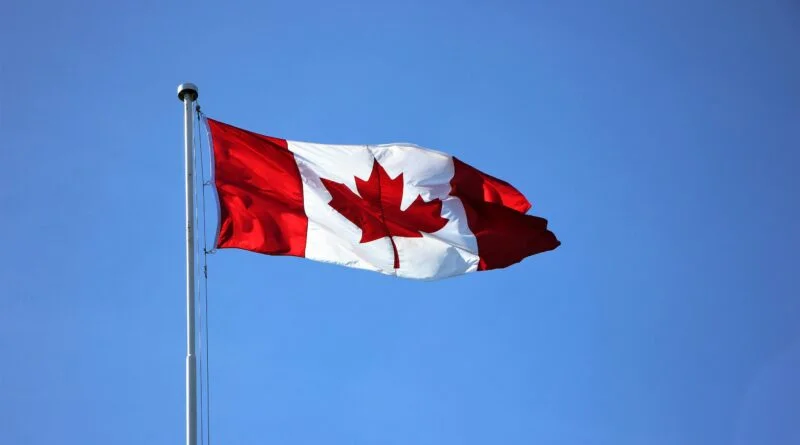
OTTAWA, April 30, 2025 — In a dramatic political shift, Mark Carney’s Liberal Party secured a fourth consecutive term in Canada’s federal election on April 28, winning 169 seats in the 343-seat House of Commons. Although falling just short of a majority, this outcome marks a significant comeback for the Liberals, who had been trailing in polls earlier this year. Carney’s victory is attributed to his firm stance against U.S. President Donald Trump’s aggressive trade policies and rhetoric, which resonated with Canadian voters concerned about national sovereignty. ​

The election was heavily influenced by escalating tensions with the United States, particularly President Trump’s imposition of sweeping tariffs on Canadian goods and provocative suggestions about annexing Canada. These actions sparked a surge in Canadian nationalism, leading to widespread boycotts of American products and a rallying cry for sovereignty. ​

Carney, a former central banker with no prior elected experience, positioned himself as a steady alternative to the populist rhetoric of Conservative leader Pierre Poilievre, who closely aligned with Trump’s policies. Poilievre’s failure to distance himself from Trump’s aggressive stance contributed to his party’s defeat and his own loss of a long-held parliamentary seat. ​

In his victory speech, Carney declared, “The old relationship with the U.S. is over,” signaling a shift toward a more assertive Canadian foreign policy. He emphasized the need to reduce economic reliance on the U.S. and explore deeper trade ties with Europe and Asia. ​

The election results have significant implications for global relations and trade. Canada’s move to diversify its trade partnerships may impact North American supply chains and economic dynamics. While U.S. Trade Representative Jamieson Greer expressed willingness to work with Carney’s government, the path forward remains uncertain amid ongoing trade disputes. ​

Carney’s leadership marks a new chapter in Canada’s approach to international relations, with a focus on asserting national sovereignty and redefining its role on the global stage. As Canada navigates this transition, the world will be watching to see how these changes influence the broader geopolitical landscape.​

Trump’s First 100 Days: Aggressive Overhauls and Mounting Controversy

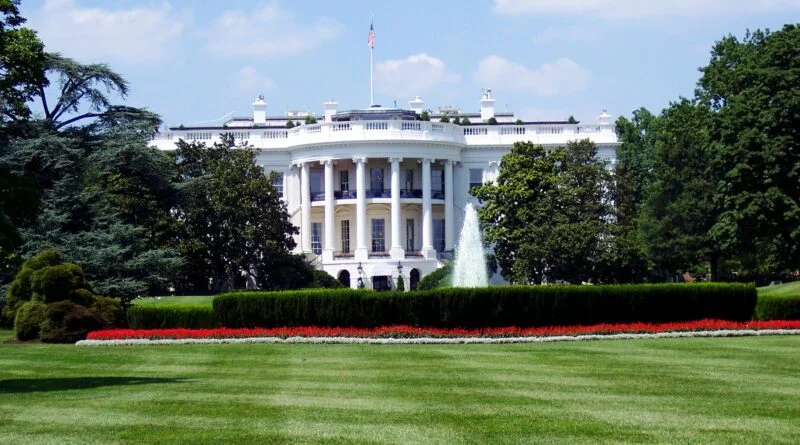
WASHINGTON; April 30, 2025 — President Donald Trump’s return to the White House has been marked by sweeping policy shifts, economic turbulence, and intensified immigration enforcement, drawing both fervent support and sharp criticism during his first 100 days in office.​

Economic Policies and Tariffs

On April 2, Trump announced significant tariffs on imports, leading to a 0.3% contraction in the U.S. economy for the first quarter of 2025—the first such decline in three years. The Commerce Department attributed this downturn to a surge in imports ahead of the tariffs and reduced government spending.

Despite the economic contraction, Trump defended his tariff strategy, stating that while American consumers might face higher prices, the long-term benefits would outweigh the short-term costs . Critics, however, likened the approach to the Smoot-Hawley Tariff Act of 1930, warning of potential long-term economic harm.

Immigration Enforcement Intensified

Trump’s administration has aggressively expanded immigration enforcement. Executive Order 14159, signed on January 20, intensified measures against undocumented immigrants, including expedited removals and penalties for non-compliance.

The administration also broadened the 287(g) program, enabling local law enforcement to act as immigration agents. Over 370 agreements have been signed, tripling the program’s size and raising concerns about potential civil rights violations.

In a controversial move, Trump invoked the Alien Enemies Act to deport Venezuelan nationals suspected of gang affiliations to El Salvador. Legal challenges ensued, with courts scrutinizing the constitutionality of such actions.

Institutional Restructuring and Governance

The administration has undertaken significant restructuring of federal agencies. Notably, Elon Musk was appointed to lead a new “Department of Government Efficiency,” tasked with streamlining federal operations. This initiative has led to mass firings and overhauls, drawing criticism for its rapid implementation and lack of transparency.

Additionally, the administration has targeted higher education institutions, threatening funding cuts and imposing new regulations, actions that have sparked widespread protests and legal challenges.

Public Response and Approval Ratings

Public reaction to Trump’s policies has been polarized. While supporters praise his decisive actions, opponents have organized nationwide protests, notably the “Hands Off” demonstrations opposing immigration policies and institutional changes. Trump’s approval ratings have declined amid these controversies.

As President Trump concludes his first 100 days, the nation remains deeply divided over the direction of his administration, with significant implications for the future political landscape.​

Rubio Shutters Disinformation Office, Alleges Censorship of Americans

WASHINGTON (The Sentinel by Yuvoice) April 16, 2025 — Secretary of State Marco Rubio announced Wednesday the closure of the State Department’s office for countering foreign disinformation, alleging it had crossed a constitutional line by censoring Americans.

The office, known as the Global Engagement Center (GEC) and more recently rebranded as the Bureau of Counter Foreign Information Manipulation and Interference (R/FIMI), was created to identify and counter foreign propaganda campaigns by adversaries such as Russia, China and Iran.

Rubio, who took office as Secretary of State in January, said the bureau had “spent millions of dollars to actively silence and censor the voices of Americans they were supposed to be serving.” He called the effort “inconceivable” in a free society.

The closure follows growing criticism from conservative lawmakers and figures who claim the bureau targeted domestic media and social media accounts, particularly those critical of U.S. foreign policy. Elon Musk, in 2023, called the center “the worst offender” of government censorship.

Rubio did not provide specific evidence that the bureau directly censored Americans. Former officials defended the office’s work, saying its mission was to expose and counter foreign influence operations—not to monitor or suppress U.S. citizens.

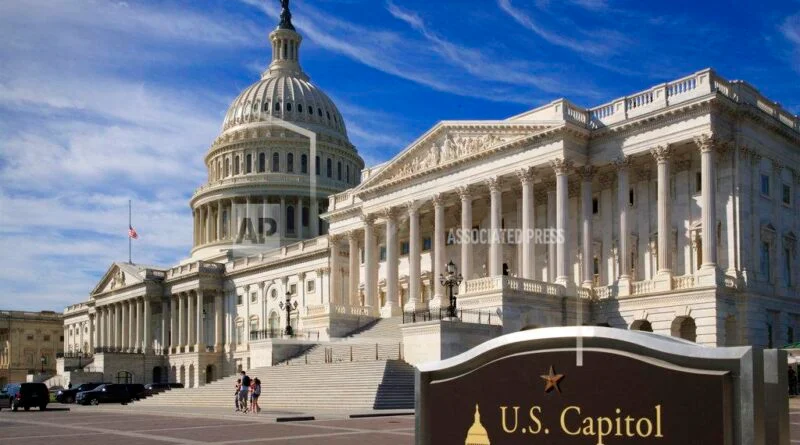
Democratic and some Republican lawmakers warned the closure could weaken U.S. efforts to combat digital influence operations by foreign adversaries. “This is the exact wrong time to abandon the field,” Sen. Chris Murphy, D-Conn., said in a statement.

The decision underscores a broader political divide over how to confront foreign disinformation without infringing on civil liberties. While critics see the bureau as overreaching, supporters argue that dismantling it leaves the U.S. more vulnerable to coordinated manipulation campaigns.

The State Department said remaining disinformation monitoring functions will be reassigned, but did not provide details.

Ricky Vazquez

The Trump Election and Its Impact on People of Color: A Personal Reflection

The continuation of Donald Trump’s presidency through 2028 stirs a spectrum of emotions and carries profound implications, particularly for people of color, especially Black individuals, whose identity is deeply tied to the visible markers of our skin and physical features. While I cannot claim to speak for everyone, I can share my personal experience and the weight that my racial identity brings to these elections for me and my son. 

By the end of Trump’s second term, my son will be 12 years old, just beginning to grasp the significance of elections and their impact on his future in a country often celebrated as the “Land of the Free.” For now, his understanding is simple: he recognizes the choice between Kamala Harris, the historic first woman of color to serve as Vice President, and Donald Trump, the former president seeking to shape the nation’s trajectory for another term. Through his innocent yet perceptive lens, he sees a race of “red versus blue,” with the “red wave” sweeping the country in an unprecedented manner as depicted on the “magic wall” of CNN or Fox News. Despite his limited understanding of terms like “collegiate delegates,” he intuitively senses the gravity of the moment, recognizing that the decisions made in these elections will ripple across his generation’s future. The outcome, etched in vivid red across the map, seemed inevitable, a stark reminder of the forces at play and the challenges that persist.

This election was unlike any other in my lifetime. As a Black man, a father, and someone who grew up under vastly different circumstances from most Americans or those privileged to live in the so-called Western world, the stakes felt deeply personal. As a university professor with a deep understanding of the dynamics of politics, elections, and leadership — and their socioeconomic and political impacts, particularly in a global superpower like the United States — I frequently encourage my students to embrace their civic duty to vote. Living in a mature democracy where every vote counts is an extraordinary privilege, one that is far from guaranteed in many parts of the world. 

For immigrants, especially those of us referred to as “people of color,” voting represents not only an opportunity but a stark contrast to the autocratic systems we fled. In the countries many of us came from, leadership was often imposed by autocrats backed by foreign patrons, leaving no room for public participation. When we found ourselves in refugee camps, the notion of democracy and leadership deteriorated further — life there rendered us landless, rightless, lawless, and alien, with no voice in shaping our future. To now witness and participate in a democratic process in the United States highlights the profound privilege of voting and underscores the right to take part in public affairs, a cornerstone of democratic governance. For those of us who have lived without such rights, this privilege carries immense responsibility and meaning.

Growing up without the privilege of voting

My journey to the United States, like that of many immigrants, was marked by immense challenges and deep traumas. I survived the horrors of conflict, traversing the perilous Congolese jungle where life-threatening dangers lurked and rivers ran red with the blood of loved ones, victims of Western-backed rebels hunting us like guinea pigs. Enduring starvation in refugee camps across Africa, I lost almost everything, including my sense of safety and, at times, nearly my own life. 

These harrowing experiences left indelible scars, yet they also serve as powerful reminders of the transformative power of democratic institutions, good governance, and patriotic leadership. When some of us finally reached the shores of the so-called “Land of the Free,” a nation celebrated as a beacon of democracy, we struggled to fully embrace the privilege of voting and the miracles brought by these democratic institutions. This struggle stemmed from the fact that the institutions we had known, though labeled “democratic” on paper and in the media, were a façade — nothing more than tools of oppression. In our homelands, elections were hollow rituals, with nothing functional or fair about the process. For many of us, learning to trust and participate in true democracy has been as much a journey as the one that brought us to this nation.

The reasons for immigrant voter apathy are deeply rooted in the political realities of the countries many have fled. For immigrants, particularly those from nations ruled by entrenched dictators, voting often feels futile. In these countries, elections are routinely manipulated to secure the survival of local autocrats while safeguarding the interests of imperialist powers that installed or continue to support them. Nations such as Uganda, Rwanda, Equatorial Guinea, Gabon, Cameroon, and Eritrea exemplify this, with leaders clinging to power for decades despite the charade of expensive, Western-funded elections that mock democratic values. These systems breed profound disillusionment: casting a vote only to see the same dictator emerge victorious, delivering hollow promises, conditions people to believe their voices hold no power. 

When immigrants arrive in democratic nations like the United States, this ingrained skepticism persists, compounded by the absence of civic education tailored to first-time immigrant voters. Without resources to help them understand their electoral rights and the broader significance of voting, many struggle to embrace participation in a system that feels foreign. Having never witnessed the tangible benefits of elections in their homelands, they carry a sense of “electoral apathy,” which often extends to limiting their political engagement in their new home, therefore lacking their involvement in shaping the political future of their communities.

Even in the United States, where democracy is robust and celebrated, past traumas among new immigrants continue to cast a long shadow. Many of us struggle to trust the process or feel motivated to participate, carrying a persistent belief that our voices and our ballots do not truly matter. Adjusting to life in a new land comes with a cascade of challenges: a new culture, unfamiliar people, a different political system, and a completely redefined way of life. These profound changes often leave us feeling disconnected, relegating ourselves to the label of “others” — a term society imposes and we unconsciously accept. This detachment leads many to believe that civic duties, like voting, are better left to those perceived as “more American,” while we focus on survival: ensuring our children succeed in school and juggling multiple low-wage jobs to make ends meet. 

Only a fortunate few, equipped with education and exposure to concepts like governance, transparency, leadership, accountability, and the functioning of democratic institutions, truly understand the immense value of the right to vote. Yet, even among this group, lingering prejudices and past fears often hinder full participation. However, this year I made a deliberate choice to overcome those barriers and participate in what felt like a historic election. There was a palpable sense that its outcome would profoundly shape the nation’s future. It required a different mindset, a renewed sense of responsibility, and a commitment to engage in ways many of us never had before.

Why this election felt different to me and many other U.S. citizens

In my view, this election felt uniquely different, not only to those of new immigrant backgrounds or communities of color but also to the broader population across the United States and even globally. For me, it stood out for several reasons, each of which added layers of complexity to the decision-making processes for many voters. These complexities included:

  1. A historic return: For the second time in U.S. history, a former president sought to return to office just four years after being voted out by the same electorate. Donald Trump’s campaign generated an intensity surpassing even his initial run.
  2. Representation at the highest level: Vice President Kamala Harris represented a groundbreaking candidacy. As a woman of African and Asian heritage, her potential ascent to the presidency would mark the first female president of color in U.S. history. This milestone deeply resonated with many communities seeking representation and equity in leadership roles.
  3. Geopolitical challenges: This election unfolded against the backdrop of unprecedented global conflicts that directly impacted the United States.  For me, these conflicts created a sense of urgency to elect leaders capable of navigating complex international dynamics.
  4. Domestic issues: At home, I believe, two critical issues dominated voter concerns: U.S. households’ financial struggles and immigration and border security. Rising energy prices and unaffordable food costs led voters like myself to question the administration’s ability to address these challenges. Meanwhile, there was growing concern among some about prioritizing undocumented newcomers during an economic crisis when many citizens were struggling to make ends meet. 
  5. Divisive campaign priorities: Issues such as abortion rights, social justice, and foreign policy felt disconnected from the immediate concerns of many Americans like me; the defining issues of this election were the rising cost of living and the economic uncertainties impacting daily life — not ideological concerns.

I believe that this election was a convergence of historic milestones, global conflicts, and urgent domestic challenges. The stakes felt higher than ever, leaving a profound and lasting impression.

Wrestling with my decision

As an independent voter, I found myself deeply torn between competing priorities. On one hand, I was inspired by the historic nature of Kamala Harris’s candidacy and the ideals she represented, such as social justice, human rights, socioeconomic equality, and the groundbreaking significance of being the first woman of color to hold her position. However, I couldn’t ignore the pressing economic struggles my family and millions of others were enduring. From the campaigns, it seemed there was little hope for a promising future under her leadership to address the issues people like me — and millions of Americans — were facing.

On the other hand, there was a candidate whose rhetoric, intentionally or unintentionally, emboldened those who seemed to harbor animosity toward people like me or others who looked like me. Yet, despite this, his message offered a glimmer of hope that the socioeconomic issues affecting millions of Americans, including my own, might be addressed, and that tomorrow could hold better prospects. I spent weeks deliberating, carefully weighing the pros and cons of each candidate, trying to reconcile the historic and ideological with the immediate and tangible challenges before casting my vote as I considered a host of factors:

  • Could Trump bring the Russia-Ukraine conflict to a peaceful resolution?
  • Would his policies address the economic challenges at home?
  • Was Harris the right leader to navigate the complexities of domestic and global issues?
  • How would either candidate impact my values as a conservative Christian, my son’s education, and the social justice issues I care about?

Ultimately, the economic realities of inflation and border security carried the most weight for me. When I cast my vote, I did so knowing that my decision would have long-term implications, not just for me but for my son and millions of others who looked like him as well.

The fallout of my decision

Voting for Trump was a decision I did not take lightly, fully aware of the social and racial tensions his presidency might reignite. My fears became reality within days of the election results. A friend in Texas received text messages telling him and his family to “get ready to pick cotton.” In Columbus, Ohio, neo-Nazi marchers paraded through the streets, waving swastika flags, chanting racial slurs, and even carrying or wearing crosses — an especially troubling sight for me as a Christian. Having worshiped in churches around the world, particularly in the Western world, I have observed a perplexing contradiction: some of the most overtly racist individuals are also deeply religious. This contradiction clashes with the God my mother taught me about, the God I worship — a God of love, diversity, and inclusion, who created all people in His image. It is deeply disheartening to see His name invoked to justify hatred, especially against people whom both faith and science affirm were the first to walk this planet. 

A sense of regret set in as I wondered whether I had made the right decision, but I recognized that regardless of my vote, millions of others felt similarly — that a shift was necessary to challenge Democrats who seemed to take certain voters’ support for granted. It was a way to send a message that no political party owns anyone’s allegiance and that their values should not be imposed on those who have historically voted with them.

This election underscored the socioeconomic and political complexities of being a person of color in America, forcing me and others who are classified as “other” to confront the intersection of our identities, values, and civic responsibilities as voters. It highlighted the difficult balancing act of prioritizing what matters most to us while grappling with the tensions and unnecessary scrutiny tied to our identity. It served as a reminder of both the privilege of living in a democracy and the unique weight our skin color carries when making political decisions. 

While others may take such decisions for granted, I must carefully consider how my choice will affect not only the political landscape but also how my identity will be perceived and treated as a result. Despite these challenges, I remain hopeful — hopeful that our nation can find common ground, that leaders will address pressing issues without rhetoric that harms those viewed as “others,” and that everyone will feel valued as human beings rather than being judged by their skin color, geography, or demographics. I also hold onto the hope that those who perpetuate racial hatred and xenophobia will reread their holy texts and recognize that while human systems of injustice may suggest otherwise, God is a deity who delights in diversity and inclusion.


Donkey Voting Down Under

Donkey voting with a ‘democracy sausage’

Voting is a fundamental democratic right, allowing citizens to have a say in how their country is governed. But what if it’s mandatory? 

In Australia, as I discovered when I moved there, the voting process is compulsory, aiming to ensure that every eligible voter has the opportunity to cast their ballot and the opportunity to enjoy hot dogs at the polling booth. Normally called a sausage sizzle in Aussie slang, it becomes democracy sausage come election time. 

Within the great Aussie democratic system, I realized, lies the phenomenon of “donkey voting,” a term that might be unfamiliar to many, especially to first-time voters and outsiders like me. 

First of all, let me explain the hee-haw. Numbered voting is required in preferential voting, where voters rank candidates in order of preference or priority. A donkey vote occurs when a voter marks their ballot paper in numerical order from top to bottom without considering the candidates’ policies or merits. 

For example, if the candidates are listed as A, B, C, D, and E, a donkey voter would spitefully mark them 1, 2, 3, 4, and 5 respectively. It is also a donkey vote if it goes the other way around. This type of voting shows up in preferential voting systems, like the one used in Australia,.

It doesn’t count as a sincere vote though, and is more of an act of protest. Voting like this also shows that you have not used any intellectual horsepower to think through your ballot choices. This stubborn act is called donkey voting for a few reasons. 

Number crunching

Now here is why this type of mischief might happen at the polls Down Under for you numbers people: 

1. Lack of interest or knowledge: Some voters might not have enough information about the candidates or might be indifferent to the outcome of the election. As a result, they simply mark the ballot in the order the names appear. Make voting compulsory and people will find a way to half-ass it. Hence it’s dissed as a donkey vote.

2. Protest vote: A donkey vote can be a form of silent, but black and white protest against the political system or the available candidates. It’s a way for voters to show their dissatisfaction with the checklist or the choices without spoiling their ballot. The vote counts, and this one hurts. 

3. In a country where 26 million people reside, having 111,015 people vote sequentially may not seem high enough for concern. Just read this article for more numbers: 

Grazing on democracy’s green grass

As someone who has never voted before, as I am not from much of a democracy, the concept of donkey voting is both intriguing and concerning. I am from an absolute monarchy where brain drain is common and people want to go somewhere more developed where they have freedom. The grass is always greener, somewhere, but do we really have to share it with jackasses? 

I think personally, not voting properly is subverting democracy, turning it assways. There is more to it than that though sometimes. 

While donkey voting is not illegal in Australia, it raises ethical questions about the integrity of the voting process. Critics argue that it undermines the principle of informed voting, where each vote should reflect a considered choice. 

I had always assumed that every vote cast in an election was a deliberate and thoughtful choice. The idea that some people might vote in numerical order instead of preference raises questions about the true representation of the electorate’s will. Who is in the electorate though, I wonder? 

If I was a voter, I would feel a sense of responsibility to ensure that my vote counts in a meaningful way. This means taking the time to research the candidates and their policies, understanding the issues at stake, and making informed voting choices. Donkey voting, in contrast, seems to invalidate this important civic duty. Or could you use it as a form of effective protest? Not as a student during student union elections, I don’t think. 

I remember hearing about it between 2012-2016 in my formative university years as a first time ever voter of any kind. Students do not need to vote during their student union elections although it is a wasted opportunity if one does not learn the basics of the democratic process then. Oh come on now, don’t be such a neigh-sayer and tell me you scoff at the idea. Why I chose to even engage leads me to think that better voter engagement, at the personal or relational level, can improve voter confidence. 

Furthermore, the prevalence of donkey votes underscores the need for better voter engagement. First-time voters, in particular, could benefit from resources that explain the voting process, the significance of preferential voting, and how to make an informed choice. 

Additionally, efforts to increase voter engagement, such as candidate forums and accessible information about political platforms, could help reduce the incidence of donkey voting where mandatory voting means you can’t vote with your feet and protest by not voting at all. 

Passive-aggressive, maybe just aggressive?

I sometimes think that voting this way in protest is probably valid when no one wants to give you a voice in the first place. In case no one represents you, why not express your disagreement and mock the process in a passive-aggressive way? 

In compulsory voting, you need to vote or pay a fine. If you do not want to vote but also want to avoid paying a fine, you can just cast your ballot but not indicate a clear preference in protest. 

In the case of the indigenous Australian population, that might turn out to be a full-on silent treatment.

No wonder, since 60 percent of Australians have recently voted to not give Indigenous Australians their voice. Imagine not letting your host speak at all during a party you crashed;. where is the propriety in that? Reconciliation may indeed be dead, as the 2023 Australian Indigenous Voice referendum showed, and only time will tell if donkey or linear voting will increase along with informal votes. Compulsory voting has its flaws after all. Who can convince 

people to vote democratically in a system they wouldn’t design as the rules of the representational game don’t let them play and win? Not given a voice? Then they won’t give their voice. 

Can the great Australian experiment be saved from going further south? That’s an article for another day so I don’t have to half-ass it. Or maybe ask the original custodians of the land.

What a Difference! I Voted In India and the USA

My experience voting in these two countries seems so similar. Electronic voting machines and ballot boxes — covered enough to make it a perfect secret ballot, all set up on school premises. There are similarities in election propaganda, the campaigns, the rallies, and the voters have to be 18 years or older. Yet they are so different. India elects every five years, and the US every four.

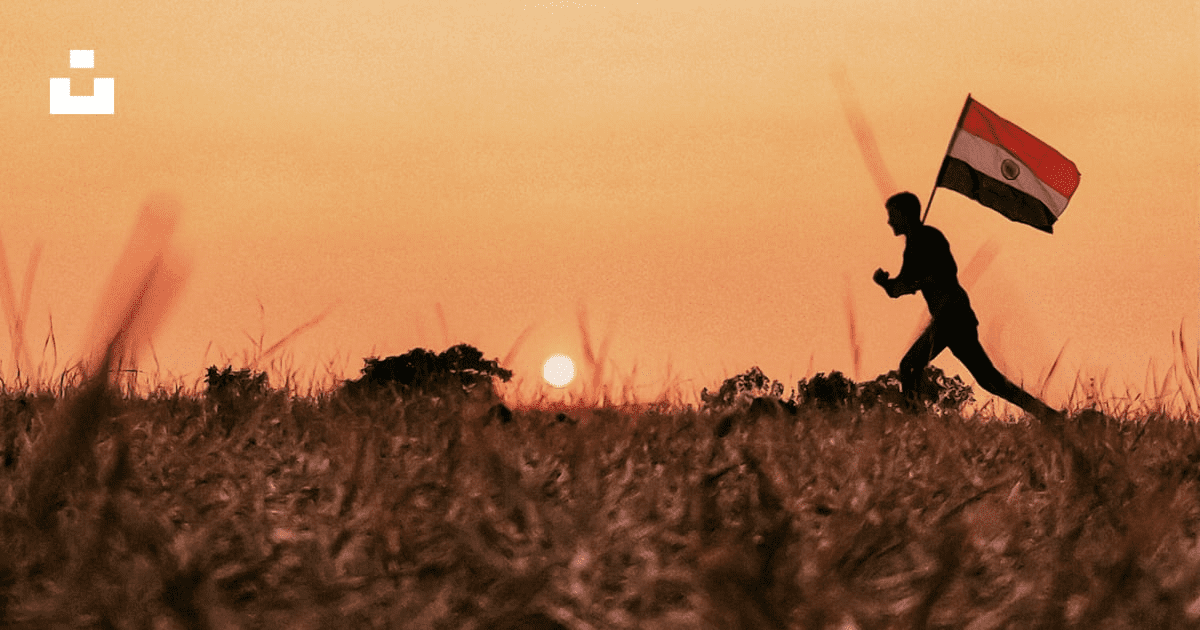
Indian elections have a unique flavor, a sort of tanginess


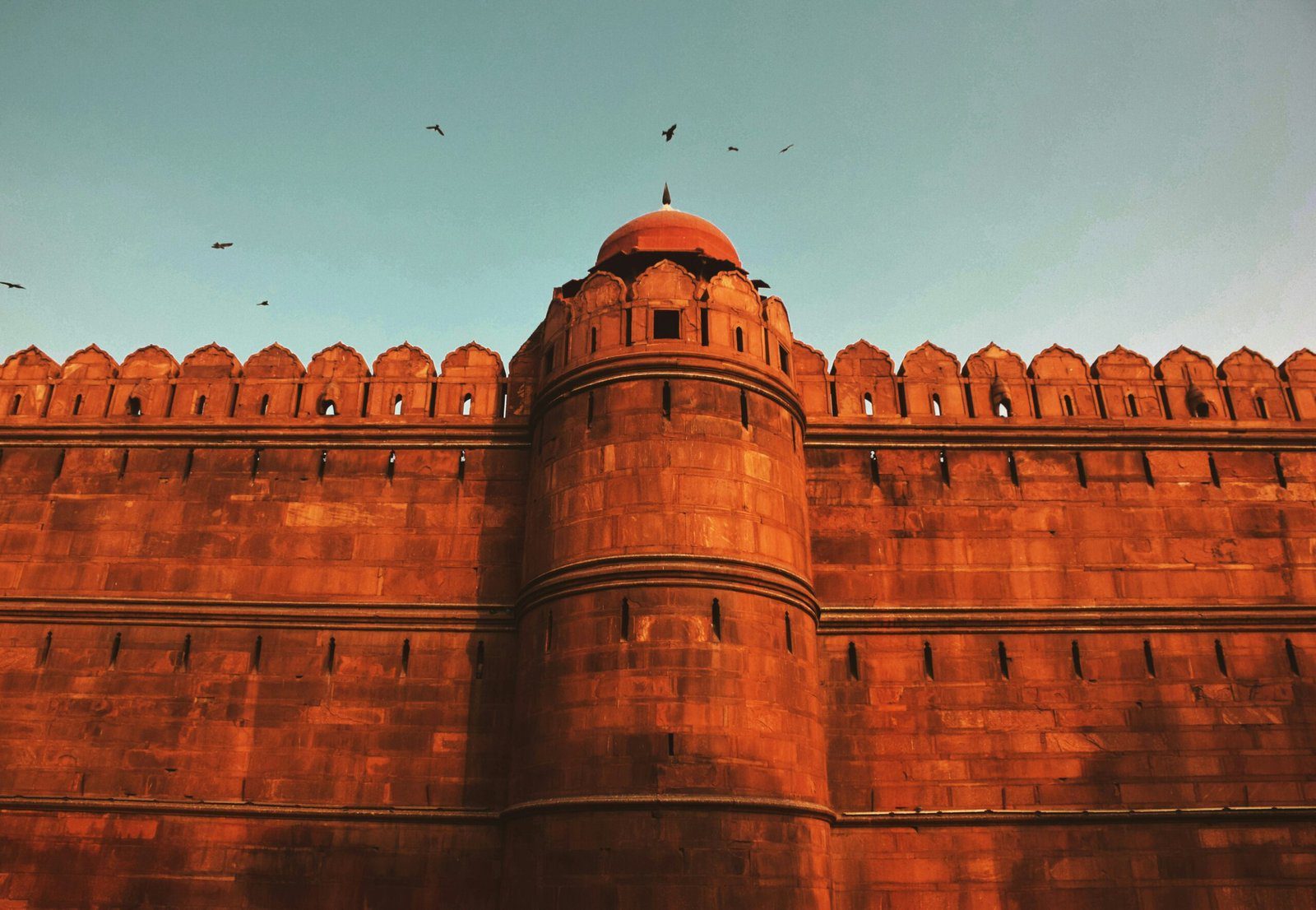
(Photo courtesy of Shreshth Gupta via Unsplash)

Indian elections bring with them more movement than others; they are like carnivals: processions and massive campaign rallies with loud music and rhyming party slogans in Bollywood mashups. Overloaded vehicles of all kinds — bicycles, autorickshaws, cars, and bikes zoom in now and then through the streets — all calling loudly for votes. Life-size campaign banners used to influence voters are what bring in election fervor. Everything is a campaign board — the electric poles, tree trunks, public vehicles, walls, and roads decorated with posters and banners are everywhere. The door-to-door campaigns extend a personal touch. Talking to the candidates made me feel special, stirring in me, the 18-year-old first-time voter, a sense of responsibility— a feeling of “I should vote” and “I am old enough to make decisions.”

It was election day, and I was finally at the polling booth at a school, ready to cast my vote. 7:00 am to 6:00 pm is generally the polling window in India. I thought it would be a simple process, but my confidence shattered once I saw the voting machine in front of me. Where? Who?  I had done my homework, but the long list of symbols with just the candidate’s names beside it made me nervous. After a few seconds of blank, I gathered myself up and voted (thankfully for the right candidate). Voting in the largest democracy with some seven recognized national parties, around 57 recognized state parties, and numerous other notable registered unrecognized parties — the ballot pages sometimes get long and puzzling. 


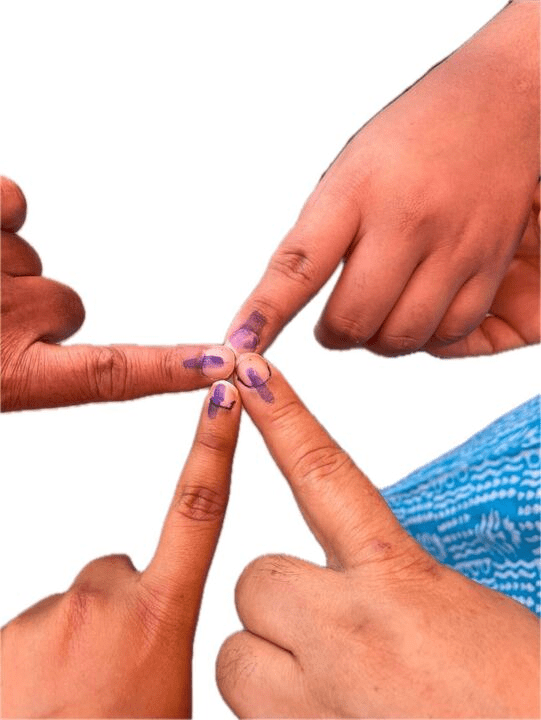
(Photo courtesy of Tripti Mund)

Post-voting indelible ink is used to prevent duplication and fraud in voting. That little drop on the left index finger is a statement of pride, of doing the democratic duty.  It is not mandatory to vote in India, but I take pride in the fact that I voted in all the elections that took place when I was there. 

The year I moved to the US, presidential debates had already begun. For me, it was, with other things, an acculturation of the election process.  I felt the US elections were so calm, which made me miss the volume of Indian elections.  

In the race for 543 seats, the Netajis (male politicians) and the Netrijis (female politicians) campaign standing in an open-top vehicle. Always with a namaskar (folded hands for greeting) and their head almost buried in marigold garlands. Close to elections, dresses in ethnic undertones stand out. Men dressed in kurtas and women in sarees. Heated-up speeches in open grounds from over-decorated stages, almost as tall as a house — visibility to the public is key. Screaming voices, high pitch with long pauses, and stress on every word, I could not find that in the US. 

Lunchbreak voting!

Here, candidates’ speeches and rallies are mostly town halls or debates between just two parties, the Democrats and the Republicans, which are interesting and decent, like TED talks.  

It was election Tuesday, and my US-citizen husband left home a little early. I thought it would take not more than an hour or two for him to be back home. At almost noon, I called him to find he was in the office. Working? This never happens in India! Election day is a holiday to vote or not. Yes, this is how it is in the US: manage time and your civic duties between work. 

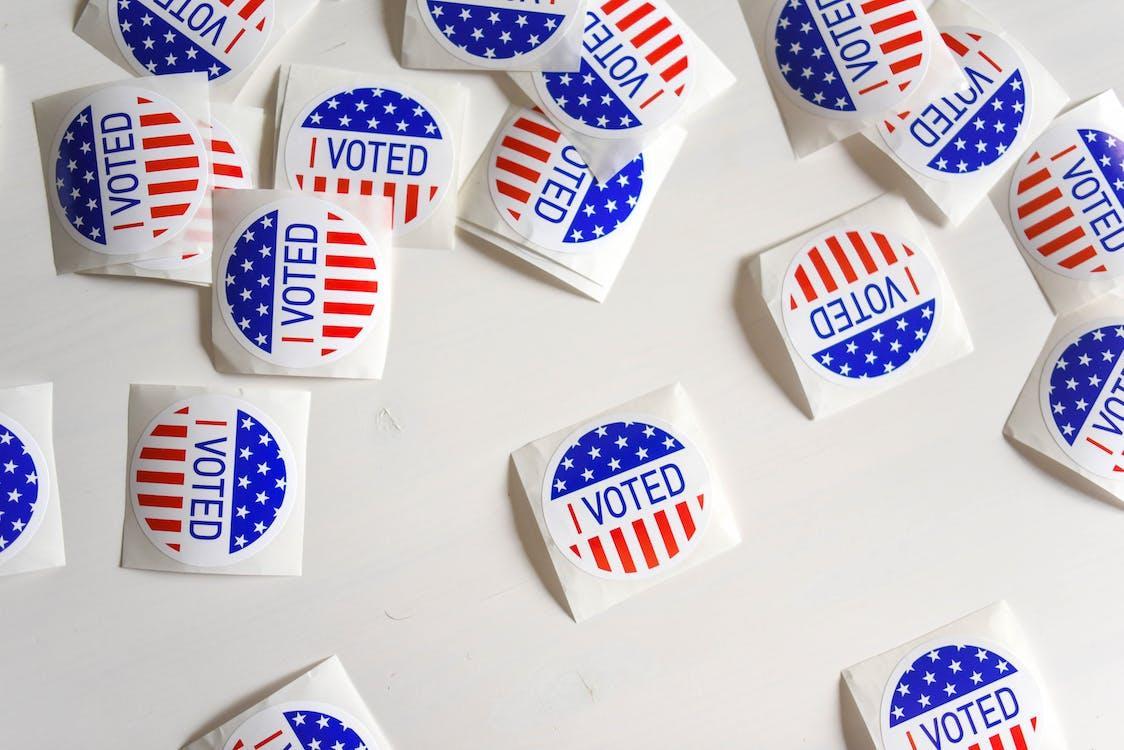
Free Stickers with I voted inscription and flag of USA Stock Photo

(Photo Courtesy of Element5 Digital via Pexels)

The Tuesday after the first Monday in November is designated  US election day. This was a culture shock for me. I came from a land where election dates are released two to three months before elections, from a democracy that never votes on one fixed day. Voting dates vary from state to state, even district to district. 

No voter ID card, just your driving license for proof of identity. No indelible ink, just an “I Voted” sticker. Once, we took our first-grader to see the voting process, and it is so different from India. 

Protests close to the elections are very common in both countries. While in the US, they start after office hours and end before 9:00 or 10:00 pm, India crawls to a standstill, with protests impacting daily life from dawn to dusk. I called them holiday perks. 

Flowers, scented flyers, crowds, and traffic jams surround elections. In my teens, I collected the scented flyers and carefully placed them between the pages of my books. They made my bag smell good. When a party wins you can see Holi and Diwali in the streets. What an extravaganza! 

As a citizen of the USA now, I always vote. Here, Tuesday night’s 9:00 pm election debates bring the election fun — both primary and presidential, followed by the television analysis. The debates stir the election mood. I find the primary debates more interesting: candidates of the same party trying to claim their candidature on national television, wow, so much energy! Indian parties hold their primary debates behind closed doors. We just get to know the contesting candidate. The post-debate analysis is animated. At my home, too, we hold parties where we hotly debate election topics.2024 is all elections and elections, and both democracies are out again, fastening their belts. India for its Lok Sabha polls and the USA for its presidential elections. While my family dinner table hosts discussions on Indian bhashans (speeches) and American debates…