Overwhelm: That Need to Do Too Much

Overwhelm

I’ve been in a slump lately. I haven’t felt particularly down or anything. My social life is as buoyant as it can be. I have a steady job which I enjoy working. I’m lucky enough to have a roof over my head, and my sleep schedule, while shaky, is taking a turn for the better. I’m admittedly a chronic snacker, though the comfort mostly surmounts the shame.

What I really feel is overwhelm. Not burnout or anxiety. Rather, I feel now that, in looking forward to a potential creative career, I will be unable to complete all the many projects that I desire to work on. There’s not enough time. I feel that comes with malaise, especially if, like me, you haven’t settled into a proper routine yet.

It’s ironic that this article has taken me so long to write. The fear of abundant possibilities and wasting time are facets I’ve wanted to talk about for a while. They’re somewhat destructive spirals I have challenged repeatedly in post-university life. I don’t necessarily need to make any choices right now, but the pressure still bubbles, pushing me to commit to something. Often, this disables me from getting anything done, leading to other issues such as procrastination, burnout, low energy and so on.

To confront this overwhelm, I decided to reflect on all the various careers I thought I might inhabit as I was growing up. I hope this allows me to make some sense of the indecisions I now face.

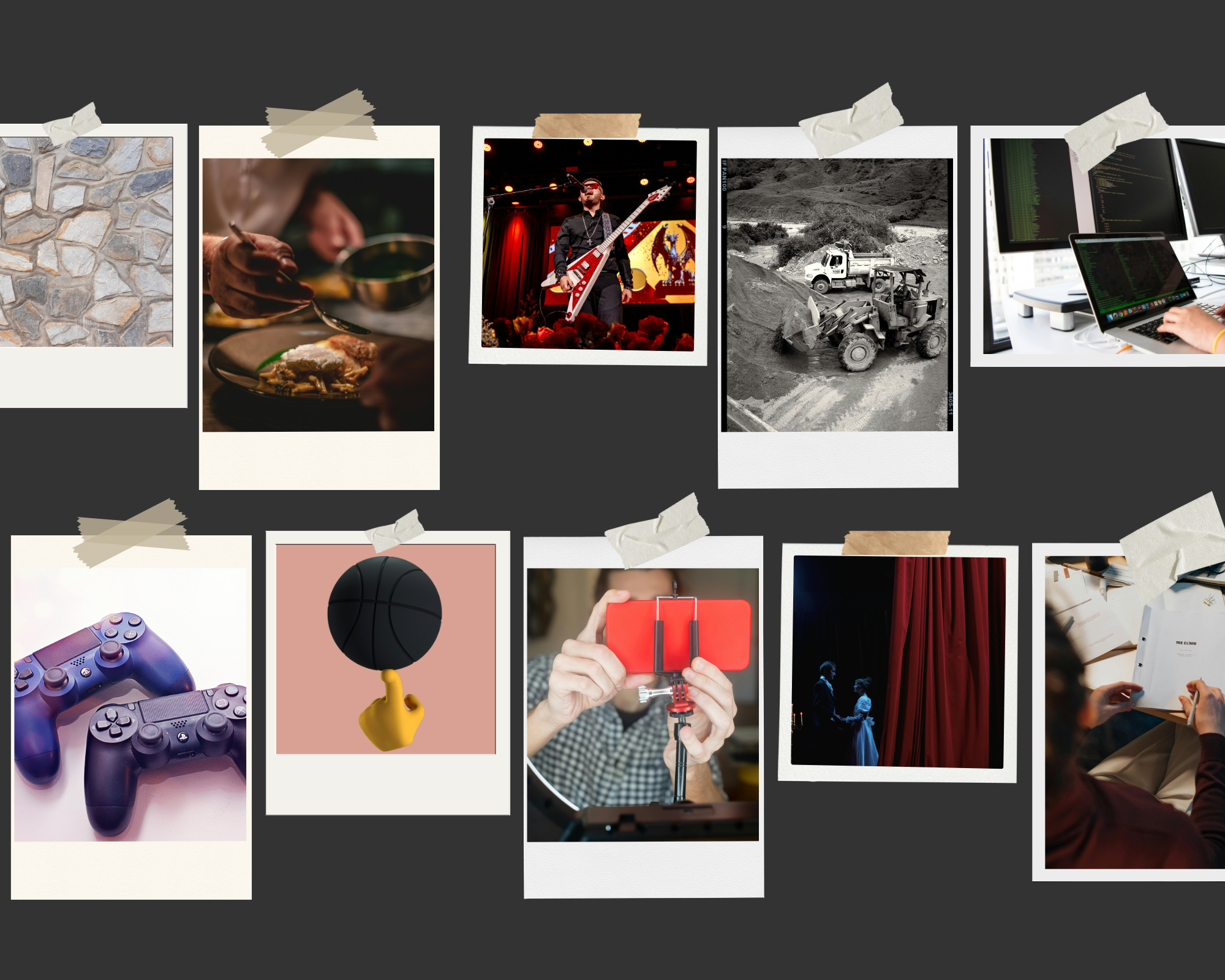
Intercontinental Marble Run Designer

Really, it was rather simple to execute. My role would have involved designing interconnected networks of tunnels and rails all around the globe to transport marbles in and out of countries at a moment’s notice. Never mind the logistics or the actual demand for these contraptions – post-toddler me truly believed it was an occupation of studied importance. My parents never understood the vision.

Rockstar

This was around the time I was first getting into music, so I suppose this role should come with a caveat: Rockstar, who looks like Alice Cooper. I owned five of his albums. The makeup never seemed like much of a stretch to me.

World-Class Chef

Following the first time I tried cheesy pasta, which is literally just pasta… and cheese, I demanded that my Mum make it for me three nights in a row. All thoughts of eggy bread and chicken, and broccoli were flung from the window as I raced to learn how to prepare such a complicated dish. I thought I was set. Turns out, most competent restaurant dishes actually have three ingredients. Sometimes more.

Hole Digger and River Maker

One section of my childhood garden was basically woodland, dominated by a large willow tree as a centrepiece. I discovered the earth underfoot was soft enough to dig into for several feet, which spawned many a weary afternoon with the shovel. I would create trenches and position the hose to run water through them, ruminating on how I could one day terraform the planet while the rest of the garden flooded.

Secondary school came, distracting me with subjects I barely wanted to learn until I was finally able to specialise. Thus began my renaissance of career planning, the Game Designer era.

Coder for Video Games

The “do this and do that” doodah. The minute I jumped into computing lessons, I realised how boring coding could be. This passion faded.

Animator for Video Games

I grew up with Disney and DreamWorks and loved playing video games like Minecraft and Undertale. Sometimes I drew pixel art, sometimes I launched into full-blown Blender modelling. I discovered that animation could be just as boggling as the machine language itself, though pixel art and animated media/games have become the major loves in my adult life. I owe a lot to this period.

Composer for Video Games

Video game music fascinated me, and it still does (my playlist of game music once had over 2,000 downloaded tracks and took over five full days to play through the entire collection). By this point, I’d been transcribing lots of my favourite tracks onto a notation program called MuseScore, but I’d never actually made an original track of my own. Little did I know I ignited a spark and composed half of a video game soundtrack during my second year of university — one of the many things I have lying around, waiting to be finished.

I started to comprehend that each of my passions was creative in nature — marked by desire for visibility, recognition and legacy. With university fast approaching, I had to find a simple solution to fall into, one that I could jump into and start earning from immediately. I know!

YouTuber

The Gen Z-vetted choice! I made the decision overnight — I could avoid going onto further education, I could work from home, and I could become a millionaire in under a year. All my parents had to do was invest £2,000 into professional equipment to assist my dream in coming alive. Naturally, my ego was slammed (thanks Mum) in just one evening — I believe there was an almighty tantrum and one accusation of “you’ve ruined my life” involved, which I’m not exactly proud of. Thankfully, this was a short phase.

Stage Actor

It was bound to happen. I’d been acting all my life, so this just made sense. I took Drama and Theatre Studies at Royal Holloway, University of London. Got involved with student companies and improv societies… I started living for the thrill of performance families. Nothing beats the feeling of acting onstage for me. Sadly, the life of a struggling actor was not something I felt fully committed to, so I decided to specialise in something I could achieve from anywhere.

Screenwriter for Film and TV

Having written some, maybe four or five plays by this point, I knew I had an affinity for writing. My Mum is a copywriter and novelist, so this ran in the blood. I took a punt with my master’s and expanded my portfolio into more structured visual media— screenplays and televised drama.

Flashing forward, I now have two polished screenplays under my belt. I feel more confident with this form of output than ever. Still, I found myself drifting back to playwriting, procrastinating with music composition, designing pixel art, editing videos, acting in odd productions… All the things I thought I’d left behind! And with that, an idea started to blossom.

Game Designer

There it is again! Only this time, I could do everything at once. I had the knowledge to construct engaging narratives. I’d long been polishing my composing abilities. With a minimal approach, I could pump out sprites and game assets in an art style that suited me… and with the help of some enthusiastic Udemy courses, I was miraculously beginning to enjoy coding too! All the elements were in place… but I still couldn’t bring myself to commit fully to this resurgence. Don’t get me wrong, I am going to release a video game one day, but something else is becoming clear.

Kind of Like An Everything Writer

I write short stories every week. I write for The Sentinel. I freelance with chatbots, training AI models. I’m planning a fantasy novel. I run my plays and short films through scratch theatre nights. I submit to competitions and initiatives as often as I can. Every project that drives me, everything I’ve learned, revolves around words. I feel confident working with words. I know that something will present an opportunity if I keep working on and honing myself.   

It’s okay not to have everything figured out. It’s okay to experiment. This can be an intimidating place, especially when the competition for careers is so high, but it’s healthy to be curious and to explore different interests if you have space to do so. 

Repetition is exhausting – invest in yourself. You’re not “unfocused”, you’re versatile. You’re human. One day, the dreams and ambitions you once had may feel like a distant memory when newfound purpose takes your life in directions you might never have imagined.

All that being said, I did visit the “House of Marbles” glass-working museum in Devon recently, and I found it very difficult to leave.

Is it Me, or Are We All “Stacking Grinds”?

All time must now be quality time

Ah, the grind. The 40-plus hours a week of earning my keep whilst trying to keep soul and sanity intact. There’s not much I can add to the endless commentary on this reality. What interests me most on this topic is that contemporary living seems to be centered around the grind on top of the grind. Or should I say, the grinds on top of the grind. The stacked grind, if you will. It’s as though our increased reliance on machinery and automated processes has changed our expectations of ourselves — that we, too, should have a certain level of productivity at all times. Ever productive, ever optimal. 

Sustainable, optimal, valuable. Execution, success, failure. This language is the perfect fit for operating businesses, quarterly board meetings, and machines. It’s far from a healthy or perfect fit for people, though. Machines were only ever brought to society to bring results. Unfortunately, not only are we not machines, the results of our productivity are rarely as important to us as the process of being busy itself is. Aren’t we all about the process, the journey? The results and the destination aren’t ever that relevant. Maybe that’s how this obsession with the grind came to be; we wanted to chase that high of being productive at all costs, at all times. Is this grind stacking a result of industrial brainwashing? Are we collectively turning ourselves into mass machinery, becoming something we were never meant to be? 

Optimally

I’m trying to work out what optimal means for myself, and I’m looking around at my peers. What I’m observing is curious. Those in the deepest of grinds, chasing work, gym, social, vocational, and status goals seem the furthest from happiness. The people closest in my life, who have the best slice of happiness, are doing quite the opposite. 

These people are far from gym rats: padded, not iron board flat, and far from worried about how photogenic they are. Selfies and social accounts aren’t really these people’s deal; they are more concerned about school catchment areas than their waistlines. They don’t ask for much, money is responsibly watched over, not idolized with a giddy dream of more. Despite the lack of striving, thriving, “optimal;” they appear to have what all those chasing optimal don’t have — a noticeable degree of contentment and peace with themselves and their lives, which I admire.

The stacked grind is insane, and yet, it’s normal for many. 

I’m writing this as I attempt it on my own. I’ve got the 40-hour a week job, the 3–4 workouts a week, the clean diet, the regular social hangouts, and as the author of this piece — wouldn’t you know — my vocation, my calling, my “side hustle” is writing.

Grinding to a… burnout?

I’d be lying if I told you I don’t wake up some Saturday mornings and feel… flattened. I’m still a young man (relatively… my twenties have been and gone; toll the bell, please) and yeah, I’m tired. It would also be dishonest of me to tell you I’m not after “optimal.” And, frankly, it would be dishonest of me to tell you I know what optimal means for myself. When I look around and see my peers after the same thing — this elusive idea of optimal — they appear equally bewildered at the input-to-reward ratio of grind stacking. 

Ha, there I go again, talking in ratios. Machine, much?

With all of this stacking and pushing for optimization in our lives, am I the only one who  foresees the inevitable outcome — burnout?

This contemporary burnout culture worries me, and maybe because I’ve experienced it myself. An utter internal flatlining was my burnout. Unable and uninterested in relating to much and full of fear. Thanks to the travelling I was soon to do, I did get months off work to recoup. What really shook me was my genuine anxiety over returning to work when the time inevitably came. 

People more disciplined, educated, and capable than me have burned out. Lawyers, doctors, nurses — all professions admirable but a likely disaster in these hands — sidelined and flattened through overexertion. Burnout is not specific to geography. I’ve seen burnouts in Australia, New Zealand, the UK, the U.S., and Norway. We’ve never had more provincial safety or material comfort. In some sense, we’ve never had it so good. 

Maybe it’s because we’re expecting and wanting more than ever before. Previous times had people working longer, harder hours with less to aid them, and yet burnout was not in their lexicon. 

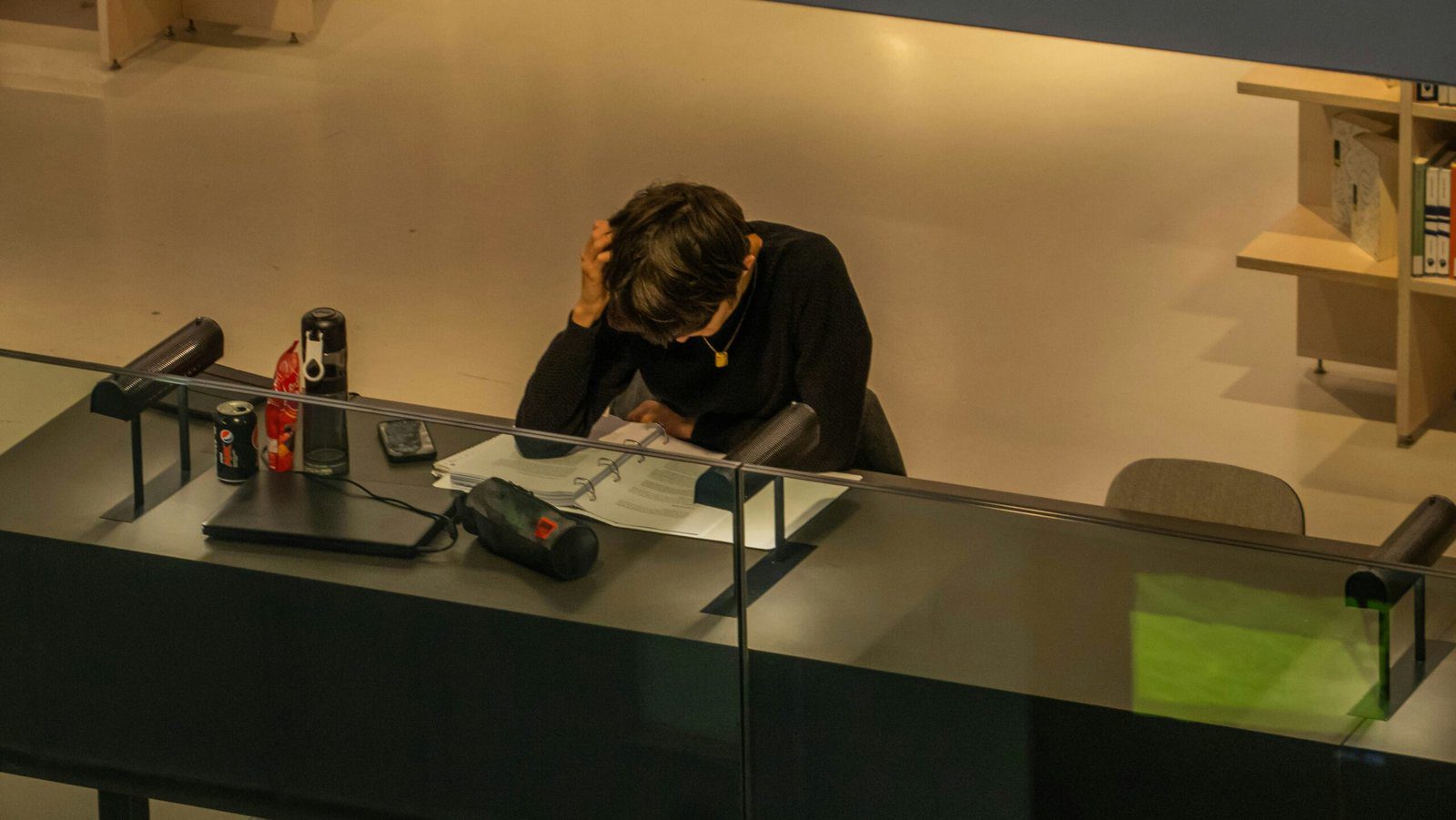
Image of a person holding their head in their hands in a cluttered space.
(Image courtesy Christian Erfurt on Unsplash)

Will the grind measure up?

When our elders look back, they don’t regret what they have done — they regret what they didn’t do. In this respect, we might consider more stacking. However, the free spirit in me very much wants to savor the juice of life. While I can, when I can, go for all of it, the good stuff. A very best attempt to squeeze out every last drop.

I’m observing the struggle of the grind and not its raving success. There are surely people who can and do hit the robot groove: up at 5, supplements, exercise, work, date night, and a chartered flight the following morning. For the select few who do not find their mortal limits screaming at them in this process, I applaud them.

Yet it is the tenor of our grind-into-burnout culture that unsettles me. A Buddhist proverb says, “Each of you is perfect the way you are, and yet, you can use a little improvement.” 

I feel our current culture emphasizes the last part of that phrase — with scant regard for the first.

Me: The Kenyan Father, and the British Father

Dreams of opportunity

“I finally get out of this frustrating country and explore!’’ 

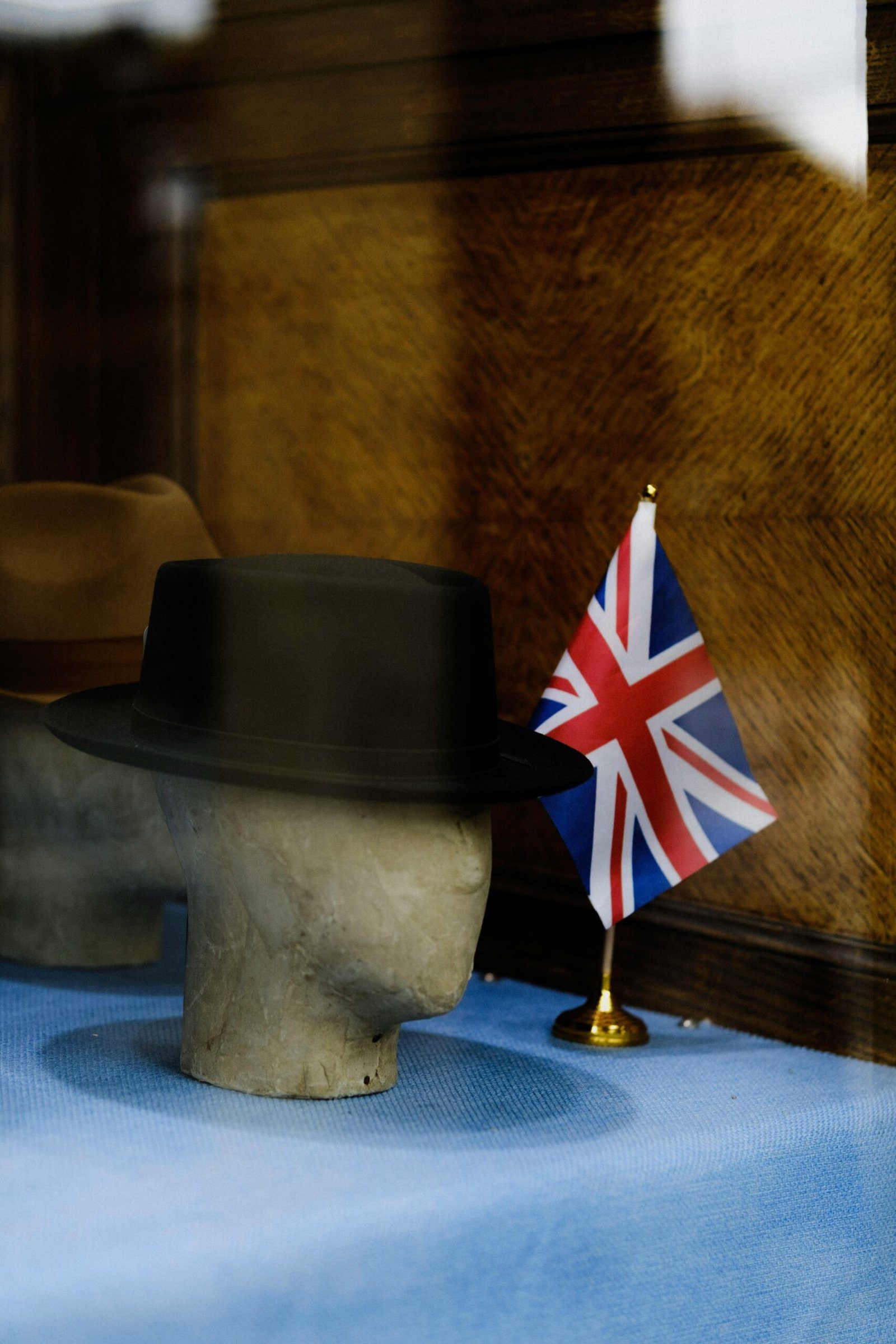
It’s not that I lack patriotism for my country, but honestly, that is how I felt when I finally secured my visa to the United Kingdom.  What could be more exciting for someone like me from a “Third World” country like Kenya than securing an opportunity to live and work among the citizens of Great Britain? 

My destination? Oxfordshire, a far cry from Nairobi City, the alleged capital of Africa. I am heading to a whole new world of hope. 

Migrating to the UK was like a golden opportunity for my family and me, and for my daughter specifically, since I believed she would be able to get a top-tier education, better social amenities, and, of course, get to interact with a different cultural community. At least, that is what I thought. Little did I know that all that awaited me was but exhaustion and stress from relocating and missing my family, my friends, and the warm tropical weather back home. In fact, by the time I landed in the UK, I immediately found myself appreciating the climate and weather back home in Nairobi.

Migrating from expectation to exhaustion

(Image courtesy of Alexander Dummer via Pexels)

I convinced myself that it was just a matter of time before I’d get used to this cold weather. At least this seemed to be the least of my problems. But in reality, things were difficult, more so since I was an immigrant and I was not used to life here. I was navigating an unfamiliar environment. I had to look for a school for my young daughter, get a mortgage, and, of course, settle into my new job. It was at this point that it hit me — I now had a caretaking role to fulfill. 

I got my daughter into a primary school, but here, things were very different. For instance, once you enroll your child in a school in Kenya, they become the responsibility of the school; you are not obligated to pick up your child from school because the school bus would drop them right at their estate. Then, typically, the maid would go and pick them up if the drop-off point happened to be far from your house. If the school is in a rural setting or the child is old enough, they are free to walk back home without fear of jeopardy, since even strangers can act as carers. But here in the UK, it was a different story.

First of all, the language barrier was a heavy stone to roll, especially for my daughter, who was used to a creole of Swahili and English. However, in the UK, there was only English with a strong British accent. It was a challenge for her. Then, the environment was like a monster to her. Often, she would catch flu due to the cold climate here – unlike in Kenya, where the warm climate is easier on the immune system. 

The pressure of caregiving started weighing on my shoulders. I was the primary caregiver here. You see, a benefit to living in Kenya is that there was a network (family, friends, neighbors) who helped hold everything together. But here I was alone with just my immediate family. We lacked other support to lean on.

(Image courtesy of Franco Debartolo via Unsplash)

Back to my daughter and her school routine. Daily, I had to wake up at 6:00 a.m. to get sorted for work and at the same time prepare my daughter for school, as she was supposed to report to school at 8:30 a.m. Furthermore, I had to make sure that her breakfast was ready before 7:00 a.m. and also pack her lunch, all before I even thought about my own day. 

Back in Kenya, this was never a problem, as her nanny took care of this. But here in the UK, hiring a nanny is very expensive. Because children cannot be left alone, everything was for her mother and me to do.

As if that was not enough, I also had to pick her up from school. School ends at 3:15 p.m., which is an hour and forty-five minutes early, given that my work day ends at 5 p.m. There are school clubs, but there is a fee to participate. If you want to coordinate home drop-off with the school, it is double the price of picking her up by yourself.

My caregiving role does not end here. After school is the most exhausting part. When we get home, I have to help her with her homework and any projects she may have. All this I do, and at the same time, I have to keep up with my job. The school encourages registering children for weekend clubs, and this, too, requires a parent’s presence and extra expense.

Other school-related tasks include: being up to date with school news, attending the parent-teacher meetings, talent shows, and exhibitions that are sometimes scheduled on workdays. In order to accommodate all of these activities, I have to build them into my work schedule. With school trips, I have to plan properly so that she can also enjoy herself as the other students do, and not feel left out. At times, I felt overwhelmed by these responsibilities, and wished I could return home. Seriously, why did no one tell me about what’s involved in transitioning from the Kenyan school system to the UK one?

Transition and growth

(Image courtesy of Ryan Stefan via Unsplash)

Eventually, with repetition, my daughter and I adjusted to her new schedule and academic requirements and soon, some of the responsibilities, like picking her up from school, were reduced because she could come home by herself. The parenting culture clash I experienced was not just about changing and securing greener pastures and a better living environment for my family, especially for an immigrant. It entailed much more than that. This process taught me how to be present for my family and what kind of a caregiver, teacher, cultural guide, and loving parent a school-age child needs. 

Living in a foreign environment, I felt like every interaction and activity that contributed to my adaptation to the new culture robbed me of my strength emotionally, physically, and mentally. I was confronted with customs that nobody ever told me about. In my role as a parent, I felt like my burnout was an endless tunnel and that I would never see the light. But gradually, I learned to work my way through it until I finally reached the other side.

Indeed, sometimes, to survive, you just have to be present, even when everything around you feels overwhelming.