The New Nomad Generation: In Search of Freedom and Adventure on the Road

For many, the concept of home is no longer limited to a fixed address. Today, a new wave of travelers, the nomads, are trading the security of conventional life for the road, the sea, and the unexpected. They are proof that it’s possible to build a meaningful life on the move, with technology serving as their anchor and the pursuit of freedom as their true destination.

The philosophy of life on the road is nothing new. In Jack Kerouac’s 1957 novel “On the Road”, the American author celebrates the itinerant life as the ultimate search for freedom. 

He argued that adventure and spontaneity were more valuable than comfort and security, writing: “Better to sleep in an uncomfortable bed free, than sleep in a comfortable bed unfree.” 

Today, this same philosophy echoes in a more connected world. If, in the past, a nomadic life was synonymous with uncertainty, technology has transformed the journey by making it much more viable and practical.

Brazilian Nomads

The stories of new nomads are unique, but technology is a common thread that connects them.

One example is Aline Sena, a 54-year-old Brazilian communicator and digital influencer. In 2017, she traded a 400-square-meter house for a sailboat of just 27 feet (about 8 meters), where she began to live with her then-husband.

Aline, who already worked with video production, adapted her profession to the new setting.

Her main source of income became a YouTube documentary project, #SAL, about people who live on the sea. It became one of the largest channels in that niche.

The change brought challenges, such as the lack of space and a new notion of comfort. For Aline, living on the boat meant adapting to elements that were previously controllable.

“I had to give up physical comfort as I knew it. If it starts to rain in an apartment, I just close the window, but on the boat water can get in in many ways,” she explains. The instability of the sea can even make it difficult to work on the computer.

Despite the difficulties, the rewards outweigh the sacrifices. The simplicity and freedom of the nomadic lifestyle brought a new meaning to her relationships.

For Aline, the biggest change was the connection with nature. “Living on a boat for four years changed my perception, my way of being in the world. Looking at that immensity on the horizon, seeing the movement of the water… we are nature and often forget that.”

Today, Aline continues to live a nomadic life, but she has adapted her career to the new times: she works with remote digital consulting, helping people and companies develop online projects and communication strategies.

@nomadeali, as she is known on social media, combines her experience in content production with the knowledge acquired while living around the world, showing that it’s possible to unite freedom, technology, and profession anywhere.
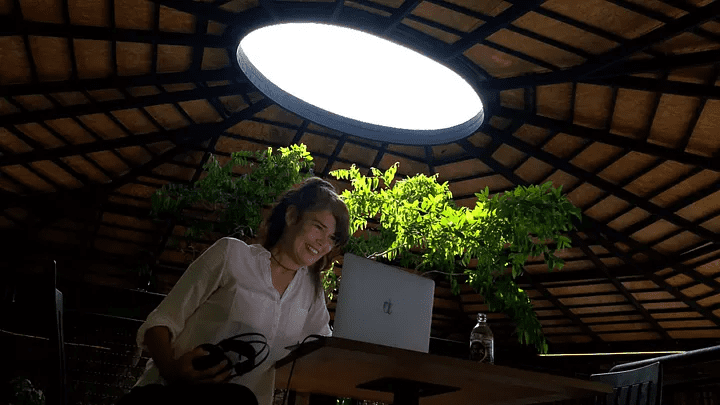
Aline working remotely. (Courtesy of Instagram @nomade_ali)

Another inspiring story is that of Larissa Silva, a young woman from the state of Goiás, Brazil. 

After moving to Ilhabela (an island on the coast of São Paulo, another Brazilian state) for a job that didn’t work out, she found herself lost but with a strong desire to travel.

Larissa found a solution through the Worldpackers app, which connects travelers to volunteer opportunities in hostels in exchange for accommodation and food.

Larissa began to do volunteer work, supplementing her income with small jobs at kiosks and selling polaroid photos on the beach, which allowed her to continue her journey. For her, the big lesson is the “freedom to choose.”

This freedom is not just geographical, but also the ability to adapt her routine and be more authentic, without being stuck in an office or fixed location.

“The fact that I can stay in places longer, not just for a week’s vacation, brings other perceptions. I learned to appreciate a beautiful sunny day, but also a rainy day, a cold day, because I’m not in a hurry. I can see the beauty in everything because I’m on my own time.”

Nomear o documento com com o nome da historia
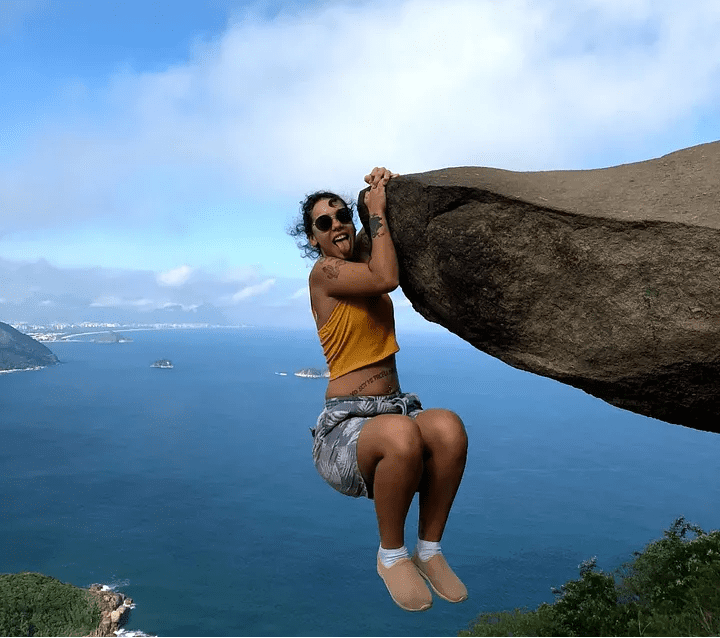
Larissa in Rio de Janeiro. (Courtesy of Instagram @nerdistraida)

Technology and Connection on the Road

Modern nomadic life is driven by technology. With laptops and smartphones, travelers can work remotely, plan itineraries, and keep in touch with family and friends. 

The internet also allows them to connect with each other, creating supportive communities and sharing tips and stories.

These communities flourish on social networks like Facebook and Instagram. There are hundreds of YouTube channels about nomadic life, covering everything from trailer trips to backpacking and volunteering.

 These seemingly simple contents create a strong sense of belonging and support. One example is the Worldpackers Community on Facebook, created so that travelers and hosts can exchange information, tips, and experiences about volunteer projects.

The group’s description is clear about its purpose: “We are here to give support and help in this rich exchange between you.” For many travelers, the group becomes a starting point or a safe harbor during their journey. It’s a space where they can seek advice, share challenges, and celebrate victories, finding a support network that understands the lifestyle they have chosen.

In addition to social media, apps like the aforementioned Worldpackers, Couchsurfing (which connects travelers to locals willing to offer a place to sleep for free), and Airbnb (for short-term rentals) make it easier to find affordable accommodation and connect with local people.
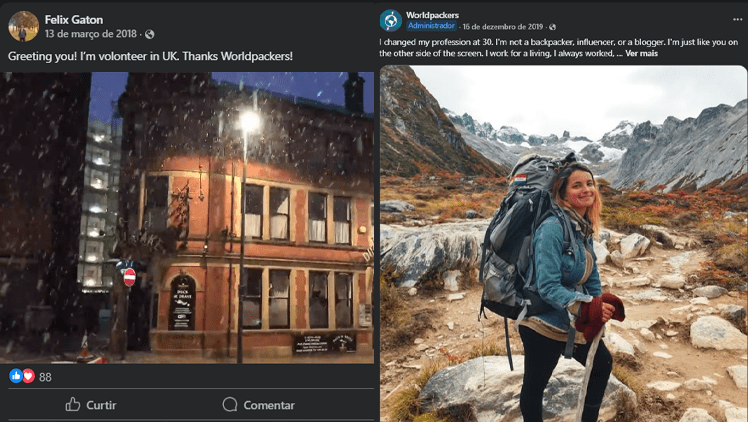
Reports in the Worldpackers group. (Screenshot/Facebook)

Simplicity and Notes on Detachment

Nomadism requires a re-evaluation of what is truly important. For many travelers, the search is for a simpler life aligned with their values. Therefore, the stories of nomads are also stories of detachment, where material possessions lose value in favor of experiences and freedom.

Aline Sena, for example, tells of the difficulty she had in selling her car: “It took me a long time to sell my car when I was on the boat. I didn’t need it anymore, but I had a hard time imagining myself without a car, because my worth was tied to that object. Then I realized there was no problem selling it, since I could take a bus or rent a car when I needed to.”

The ownership of the car, a symbol of status and stability for many, was a mental obstacle to true freedom.

The story of Jesse Koz, who sold everything he had to travel, also reinforces this idea.

He summarized his decision in his book: “Deep down, despite the material achievements, I wasn’t happy. […] In two weeks, I had detached myself from everything I had acquired in seven years. All I had left was Shurastey, the Beetle, and a few changes of clothes. It was more than enough.”

Jesse traveled the Americas alongside his Volkswagen Beetle, Dodongo, and his dog, Shurastey, becoming a symbol of freedom and simplicity for thousands of people who followed his journey through his Instagram and YouTube channel.

Unfortunately, his journey was cut short in 2022 when he and the dog died in a car accident in the United States. Still, his story continues to inspire travelers.
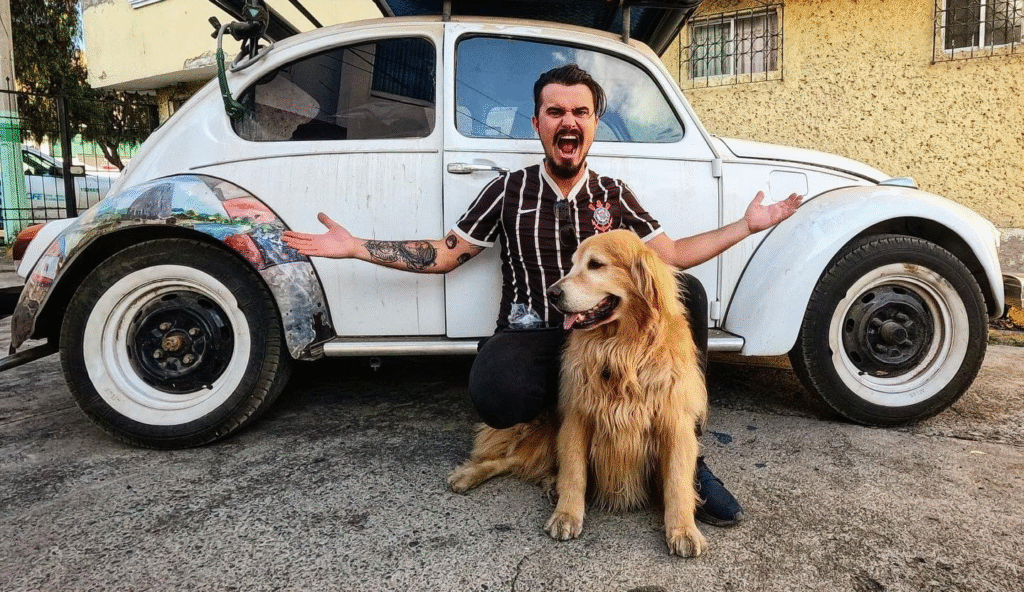
Jesse Koz and Shurastey (from Instagram @jessekoz)

The Parallel with the Global Housing Price Bubble

The rise of the digital nomadic lifestyle coincides with a global phenomenon: the accelerated inflation of property and rental prices. For the new generation, buying their own home or paying exorbitant rents can seem like a distant and financially unsustainable dream. In this scenario, nomadism emerges as an attractive alternative.

 Instead of allocating most of their income to a fixed address, people use that money to travel, often to places with a lower cost of living. In Brazil, this reality is clearly manifested.

 Data from the FipeZAP Index show that the appreciation of residential properties has exceeded official inflation in the last 12 months: the index accumulated a high of 7.04%, while inflation was 5.10%. 

This trend is especially visible in the country’s largest cities, including capitals that concentrate important economic and cultural activities. 

The average price per square meter in Brazilian cities with a high cost of living, such as Florianópolis (12,519 reais per square meter), São Paulo (11,721 reais per square meter), and Curitiba (11,381 reais per square meter), highlights the challenge of maintaining a fixed residence.

For the new nomadic generation, security is no longer tied to having a fixed address, but rather to the flexibility and adaptability that life on the road offers.

The phenomenon, therefore, is both a quest for personal freedom and a reaction to the economic pressures of a real estate market that no longer meets their needs.
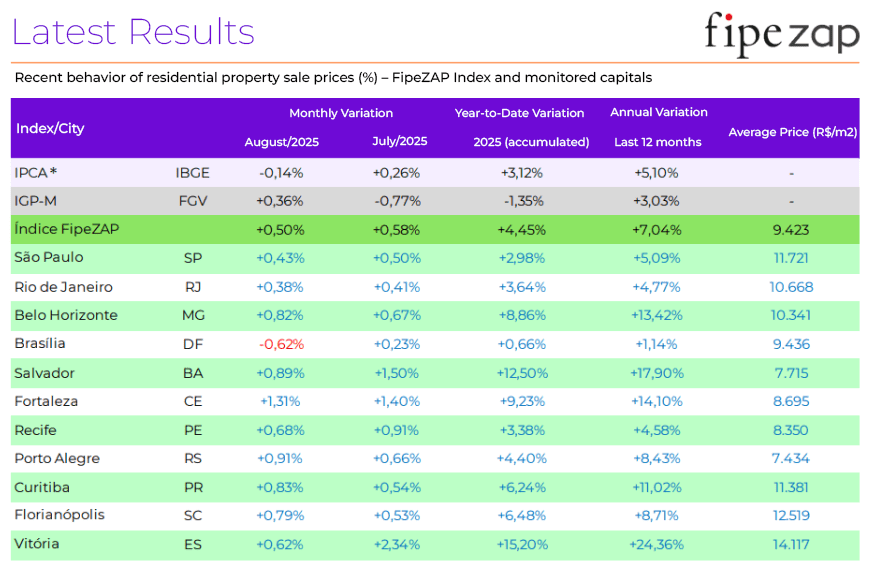
Source: FipeZAP Index, IBGE and FGV/IBRE

And for whom is nomadism?

The nomadic life is an incredible adventure, but it requires certain sacrifices and is certainly not for everyone. Giving up the stability and comfort of conventional life requires a good dose of planning and willingness.

For Larissa, what really matters is the will: “It’s not about being a certain age or having a certain thing. Of course, some characteristics make it easier, like not having children and being able to work remotely. But, in the end, it’s about how much your desire aligns with your willingness to let go.”

Aline Sena adds that this life is easier for those who have autonomy and don’t feel tied to one place by social or professional bonds. “If the person doesn’t have so much need for ties and commitments to just one place, it’s easier. If your life is full of strings, it’s difficult to reconcile.”

She also reinforces that the possibility of working online greatly facilitates the journey, as it eliminates the daily worry about subsistence.

Despite the demands, the nomadic community is incredibly diverse. It includes solo travelers, couples, entire families, recent graduates, professionals seeking new opportunities, and retirees.

The important thing, according to them, is to be prepared for changes and challenges and, above all, to forge your own path, without basing it only on the experience of others.

For those thinking of becoming a nomad, Larissa has one last piece of advice: “Planning is essential. I did some things without planning, and they were much harder. Routine is important; having a plan for things is too. I ran away from routine for a long time, but today I see that it’s important. The difference is that I can change my routine at any time.”
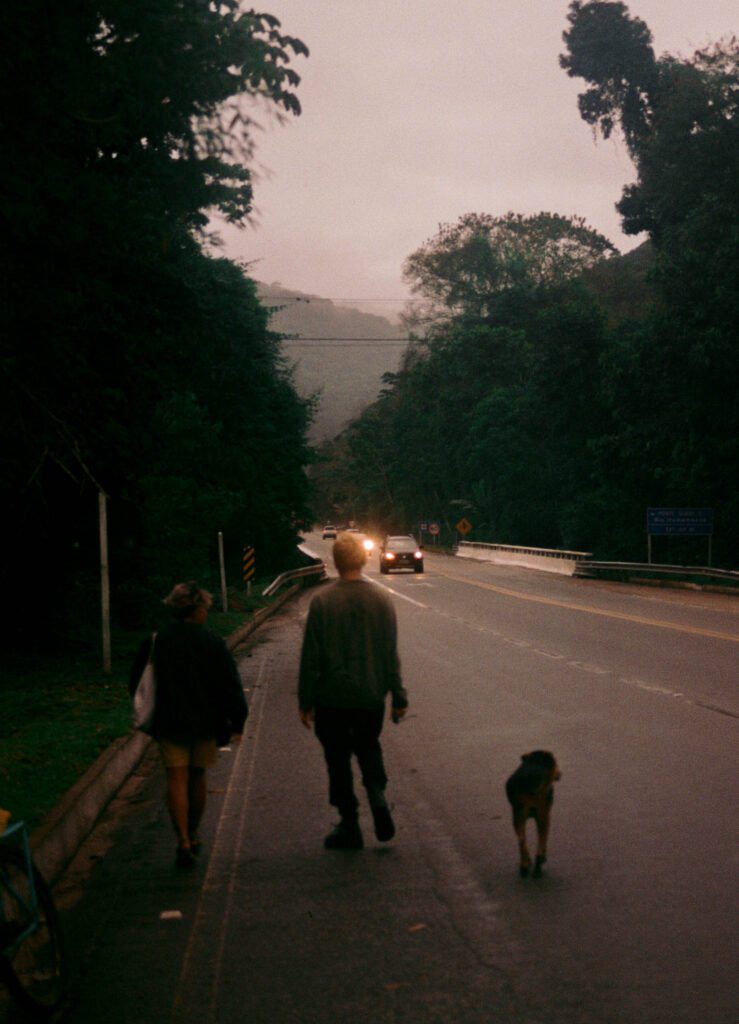
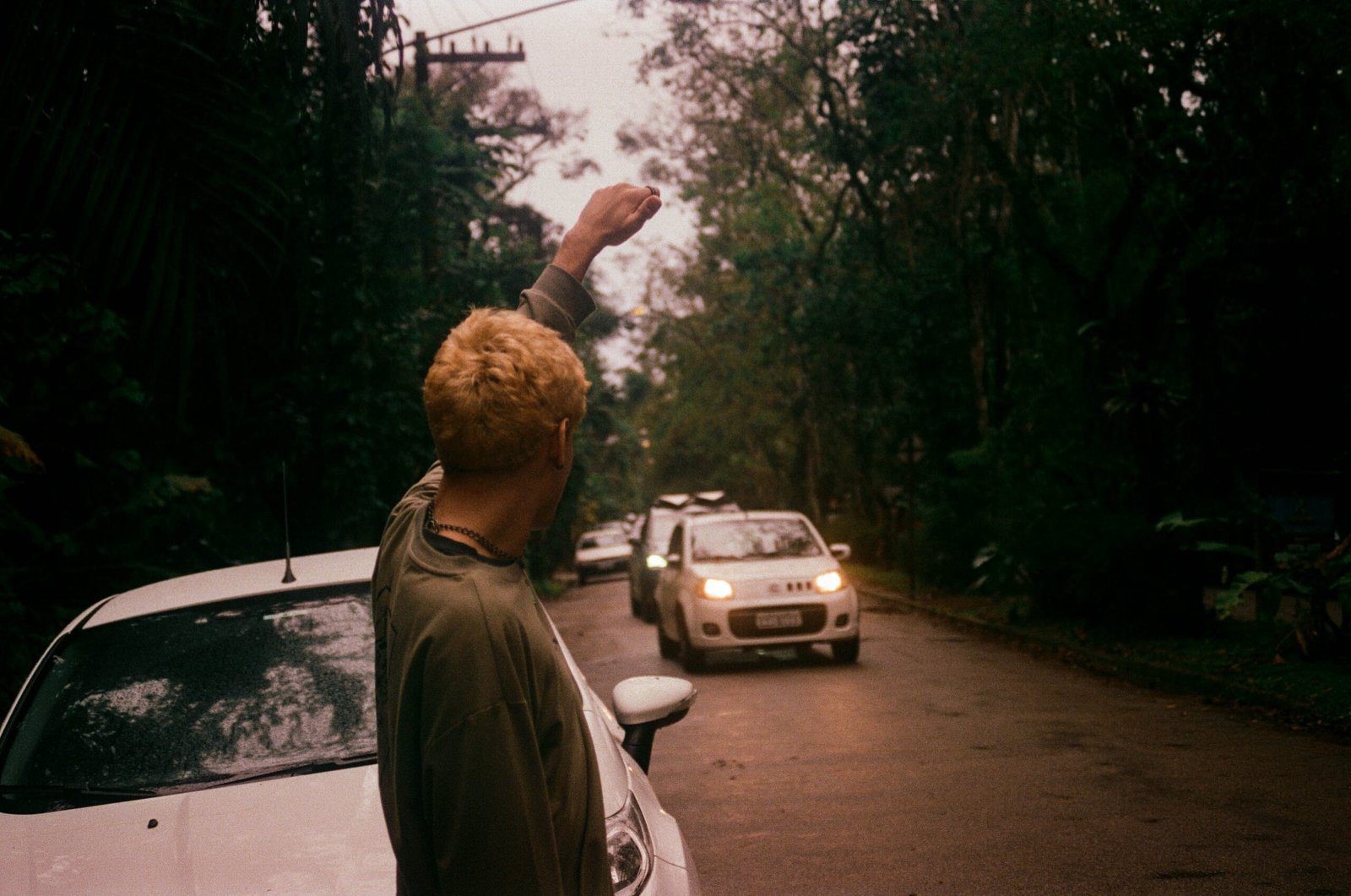
Two travelers and a dog on the side of the road in Ubatuba, 2021. (Photo: Eduardo Álvares)

Rosehip Time

I grew up drinking rosehip tea with people I knew but couldn’t see. My grandparents, Giszela and Moric, laughed about the good times they had shared with cherished relatives and friends, beckoning them into our conversations, and so into my memories. 

I knew about their slo-mo holidays in the Tatra Mountains between Slovakia and Poland, and that ice skating on frozen lakes was pure joy. I could tell anyone about the time my great grandfather, a headmaster at a Jewish school, chose his daughter, my grandmother, to accompany him to the mayor’s ball, an event far out of his comfort zone. But most of all, I felt the lack of prescience of these “invisibles.” My grandparents once grasped that it was time to quit everything that was familiar to them, fast. But they always regretted failing to persuade significant others to share their flight response to what they saw unfolding around them, just before the family’s halcyon days sunsetted and crashed in the wreckage of The War.

Cherries rule!

We were in London, but actually, in the alternate universe of my grandparents’ home, we were always somewhere else. Speaking something else. Hungarian, Czech, Slovak, German, Yiddish, Russian, and French words whizzed past our watchful faces. We listened as we tickled the legs of hapless visitors under the dining room table. 

These lower limbs belonged to a thick-accented coterie of relatives and friends just passing the time together on slow afternoons. Most of them, my father too, sashayed between languages, the silver-lining skill of many a refugee. And these came from a region where borders had moved like chess pieces for centuries. 

The walls of the forever corridor in my grandparents’ home were decorated with antique maps of the Holy Land and plenty of framed embroidery. These sewn pastoral motifs must have stolen acres of time from their creators, people I could see and those I couldn’t, I thought.  My grandmother, for one, the educator’s daughter, who had dabbled in teaching movement, writing, and sewing to small children at her father’s school, but had let her brilliant mind lie fallow.  She was known affectionately as Anutzi, mother in Hungarian. 

(Image courtesy of Tycho Atsma via Unsplash)

But we felt at home breathing in the paprika-scented dishes, and nibbling on thinly-sliced radishes, always parked on the table. And, of course, we loved the cherries that were everyone’s favorite. We waited for the cherry liquor chocolates in shiny wrappers and the preserved sour cherries in painted jars often brought back by visitors to the Old Country, but especially for the fresh cherries, whose pairs made perfect earrings.

(Image courtesy of Nika Benedictova via Unsplash)

Once, when we bumped into each other on the avenue by his apartment building, my excited grandfather, his eyes twinkling, sang to me about his bounty of delicious purple cherries; the precious package dangling from his Zimmer frame walker. 

Drawing back the Iron Curtain 

Sometimes, visitors who had remained behind the mysterious Iron Curtain where these languages still bloomed, and who were only dipping their toes in “The Free World,” joined us for chamomile or rosehip tea. They talked about their bleak days under Soviet rule. More than once, these wishful defectors flirted with the idea of escaping to the West and abandoning their families, right in front of us.

But there were plenty of other émigrés who had resettled locally, decades earlier, or who had fled from communism more recently, like my relative Serena, whom we never saw without the plaster covering the number branded on her arm that she had kept hidden since The War. We could count on them to bring their own and very present invisibles along to tea. It didn’t matter that these lost loved ones were long dead, or if we were confused and a little frightened. 

On rare rain-free days, these guests and their shadows met up at Mitteleuropa-style coffee shops with names like Louis. They had sprung up between the usual London retail chains, to serve our “resident aliens” anchoring in the familiar setting. Their windows dazzled with creamy patisserie delicacies that I have only ever seen since in Budapest. 

We hurried out of the London cold and into their womb-like interiors for yet more tea at the tiny tables where our grandparents’ invisibles were ever-present. 

Sidestepping trauma?

Never was the missed presence of these yearned-for people more apparent than at the end of a sentence. A long sigh, eyes locked sideways, held by a memory, lips contorted into bittersweet smiles. We heard of the quintet of my grandmother’s siblings whose lives were snuffed out before they hit middle age. If we ever dared ask, we received the standard it-was-The-War response and knew better than to interrupt the trancing storyteller.

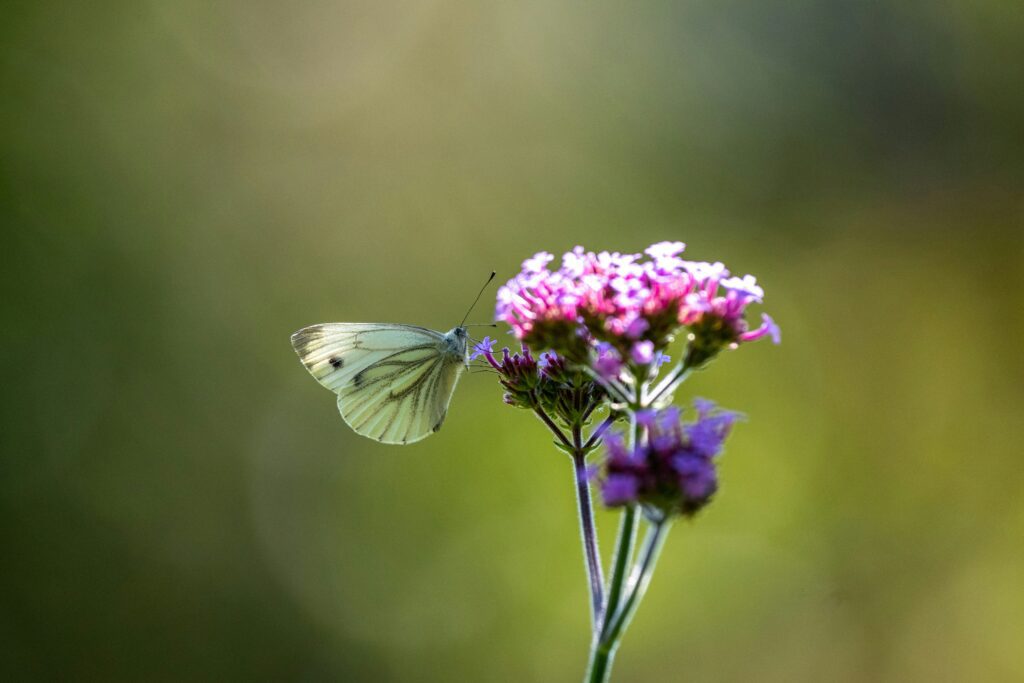
A counsellor once shared with me that to overcome trauma, you should revisit it like a butterfly. Land on it, but only momentarily, and then return for a little longer, before flying off to happier recollections. But instant tears, heaving chests after a bout of sobbing, and constant retellings, all signify work still to be done.

(Image courtesy of Leon S via Unsplash)

As Giszela and Moric aged, they just couldn’t fly away. Instead, they were sucked deeper into their unsettling memories, condemned to relive the rupture from loved ones on constant repeat. Why, my grandmother lamented over and over to us, did she not deceive her dentist brother and tell him that he was guaranteed work in London, offering a white lie that could have saved him, instead of just sending him banknotes hidden in books?

Ah Sándor, if only I had told you that I’d found you work here.

Towards the end of their lives, the past and present began fusing in strange new narratives, powered by the will to regain control over time and history. My grandfather, a natural-born businessman since his apprenticeship in pre-war Frankfurt, asked my mother what he should “do” about the Dalai Lama! 

My grandmother, delirious from illness, reassured me as I held her delicate hand, not to worry. Aputzi (my grandfather, father in Hungarian), would ensure that we were all buried very soon. This is a scary thing to hear when you’re a teenager, but not so strange when you remember that this rite of death was denied to many of our family’s extinguished personalities.

It was only in the 1980s, after my father died prematurely from a haunting sadness, my mother said, before we learned the truth. My grandparents followed soon after our father. That’s when we, his daughters, discovered what none of them had ever told us: Our grandparents were actually my father’s aunt and uncle.

They had left for Switzerland and then England in the dawn days of WWII, rushing my father away to safety, at the same time wrenching him from his younger parents, Eszter and Max, our real grandparents, whose lives would be brutally snuffed out in The War. But not before his beloved mother, knowing that they were doomed, wrote my father letters overflowing with love and pain.

(Image courtesy of Lena Tolmacheva via Unsplash)

UNESCO honors Rio de Janeiro as World Book Capital

Rio de Janeiro, Brazil, was designated UNESCO’s World Book Capital for 2025. It is the first Portuguese-speaking city to receive this prestigious title.

This choice is not only symbolic. Besides recognizing the cultural potential of Brazil, it also seeks to reposition the reading as a space of leisure, community, and dialogue. 

As the World Book Capital, Rio de Janeiro will host numerous events. Including book fairs and literary festivals, to foster cultural exchange and encourage access to knowledge.

The Brazilian city is therefore focusing on ways to encourage reading beyond book sales. One example of this is the ‘Rio’s 2025 Book Biennial’, featuring soirées, lectures and immersive activities.

Why was Rio de Janeiro chosen?

  • Commitment to reading: the city demonstrated a strong commitment to promoting literacy and making books accessible to all citizens. 
  • Rich literary heritage: Rio boasts famous writers like Machado de Assis and Clarice Lispector, contributing to its literary significance. 
  • Cultural hub: the city has a vibrant cultural scene, including renowned libraries like the Portuguese Royal Reading Room and the National Library Foundation. 

On September 16, the event Esquenta Jabuti took place in celebration of the title of World Book Capital. 

Writer and event moderator Henrique Rodrigues shared with Yuvoice his thoughts on the importance of this recognition, reaffirming how this title, granted by UNESCO, is significant for the city because it highlights the broader culture of Rio de Janeiro. 

At the same time, it is also relevant as a possibility for the creation of more effective public policies.

“It is necessary to have more everyday yeah activities, those small-scale initiatives that, over time, make a real difference in shaping readers.”

Rodrigues argues that sporadic events are mainly aimed at selling books and stimulating the market, but that once the buzz fades, the incentive for reading is lost.

“It’s as if books and reading were only talked about when there’s an event, when it should be the other way around. […] The event needs to be the culmination of something that happens all the time. That’s why I believe this title for the city can open the door to more regular programming that truly makes a difference in Rio’s schools and communities,” he stated.

The World Book Capital program

The initiative by UNESCO aims to recognize cities that champion reading and books. 

Each year since 2001, from April 23rd (World Book Day), the chosen city undertakes a year-long program of activities to encourage literacy and cultural exchange. 

Cities like Strasbourg (France, 2024), Accra (Ghana, 2023) and Guadalajara (México, 2022) have also held this title.

Does literature still foster social connection in the digital age?

It turns out that, in Brazil, more than half the population does not read frequently. According to the survey ‘Portraits of Reading’ (2024), around 53% of the people in the country haven’t read any kind of book – digital or printed – of any genre in the three months prior to the survey.

The numbers are alarming, since the total number of non-readers has surpassed the number of readers. Facing this scenario, a question remains: what has been done to stimulate the habit of reading?

Despite the statistics, young people and adults found time to read in their busy routines. Even if surrounded by countless stimuli from social media, literature fulfills its role not only of study or entertainment, but also of socialization in the lives of individuals. 

The urban scene, marked by people with smartphones in hand, might suggest that books are being left aside. But would that be the absolute truth or just a collective impression? 

This perception is not entirely confirmed: in-person and digital initiatives show that reading still takes a relevant place in the life of a portion of the population.

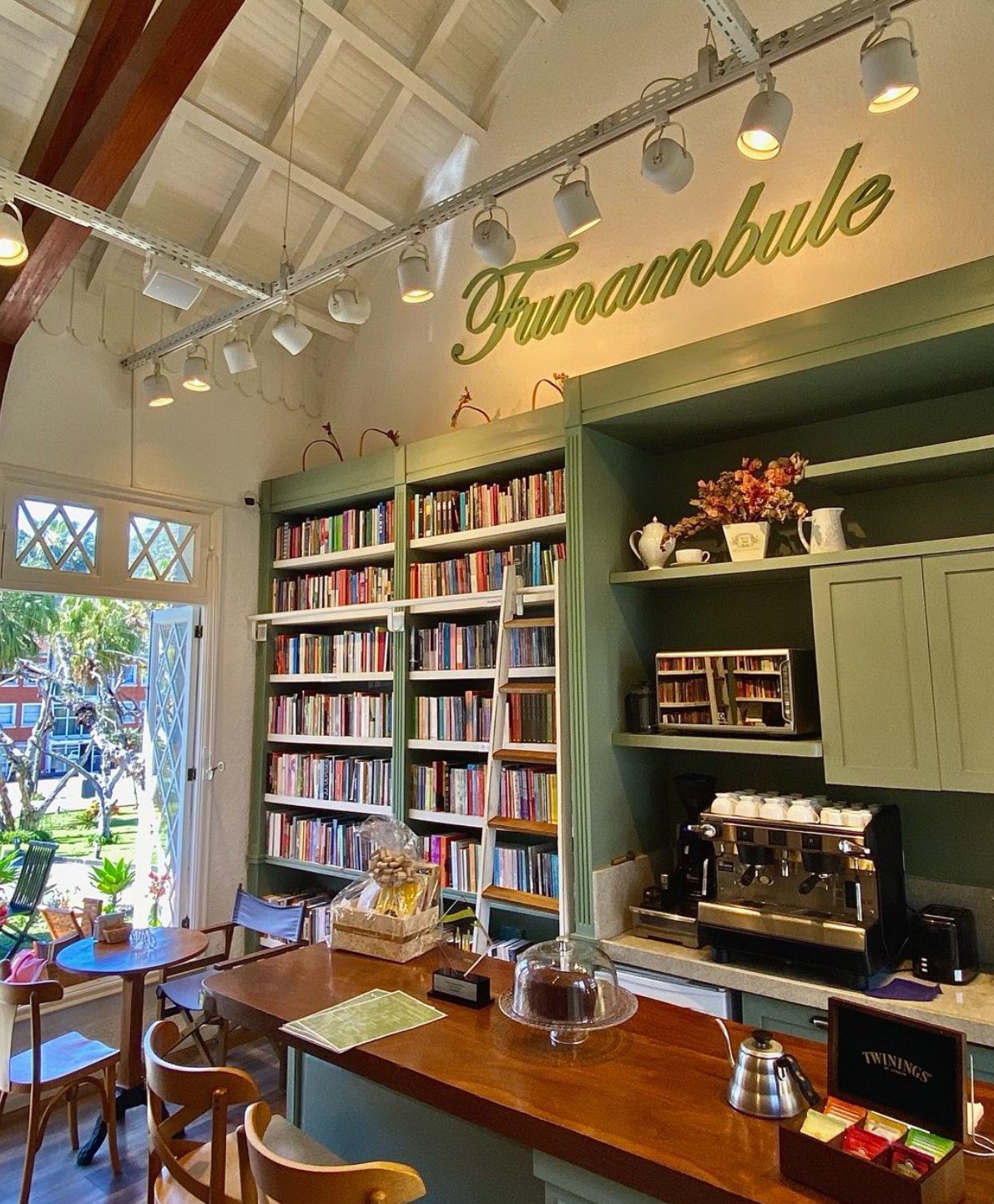
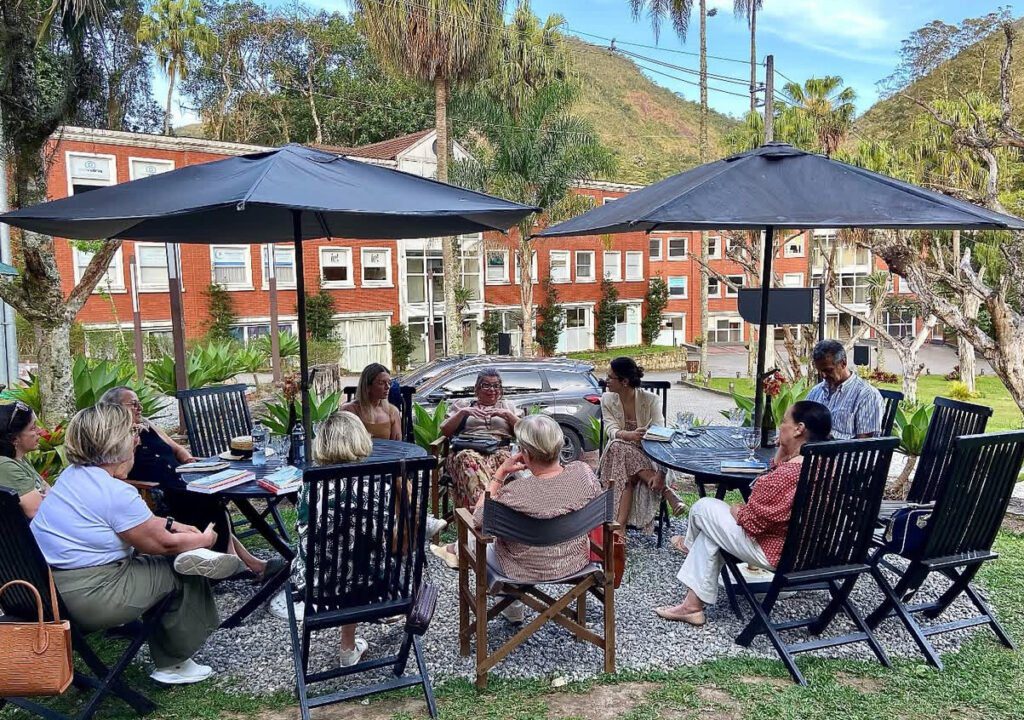
Group of readers at the Funambule Library – Photo by @livraria_funambule via Instagram.

In the Highland Region of Rio de Janeiro, a small library became a space and symbol of literary interaction.

Between shelves, cakes and coffee, the ‘Funambule Petrópolis’ established itself as a meeting spot to avid readers of the city. Through monthly meetings, diversified groups of children and adults come together to discuss their chosen reading. 

In an exclusive interview with Yuvoice, Hebert Rodrigo, Funambule’s founder, shared his vision of the importance of spaces that encourage this habit.

“Many people who come here to the bookstore have just moved, and they’ve found here, among the books and reading groups, an excuse to meet new people and build new relationships. […] It’s inspiring to see how members connect beyond literature, creating bonds.”

Reading continues to play its timeless role of opening the door to visit new worlds. It combines entertainment with reflection on the reality of our daily lives, awakening creativity, hope, and curiosity.

And in practice, its effects go beyond the individual sphere. Socialization through literature is not merely a byproduct.

In the point of view of Hebert, those places open space to people to explore things they haven’t done before, encouraging them to take risks. 

It is a third space of freedom where they can express themselves without commitment, spontaneously. Something you don’t normally find in the other two pillars of life, which are family and work.

When discussing books in groups, people not only share their interpretations, but also practice empathy, listening, and building ties of belonging.

To Hebert, reading made with the objective of sharing carries a different meaning than individual reading.

“You think more about your reading, develop your ideas further before sharing. It’s an enriching experience”.

This creates a space that encourages not only reading, but also critical thinking, discussion, and respectful exchange.

Reading and the Internet 

Nowadays, more environments that encourage the habit of reading are needed. In this sense, the internet is not the enemy.

Social media also plays a fundamental role in this process. Platforms like TikTok, Twitch, Reddit, and YouTube have become virtual meeting places where readers, especially younger ones, share ideas, create connections, and participate in live streams to collectively comment on works.

One example is the digital book club created by Brazilian influencer Maria Clara Quirino [@readingwithma] on Instagram, WhatsApp, and Meet. 

The group brings together more than 400 participants in monthly virtual meetings, with collective readings conducted via video calls and subsequent discussions, which seek to comment and discuss the main ideas read.

It is clear that literature in Brazil still lacks the incentive to strengthen its cultural power. Despite this, reading still finds ways to reestablish itself in a predominantly digital age. 

Therefore, in-person or digital projects are fundamental tools to expand access to books and reverse the worrying situation revealed by the research.

 Four AM

(Music is titled “Instructions for Living a Life”, courtesy of Savfk)

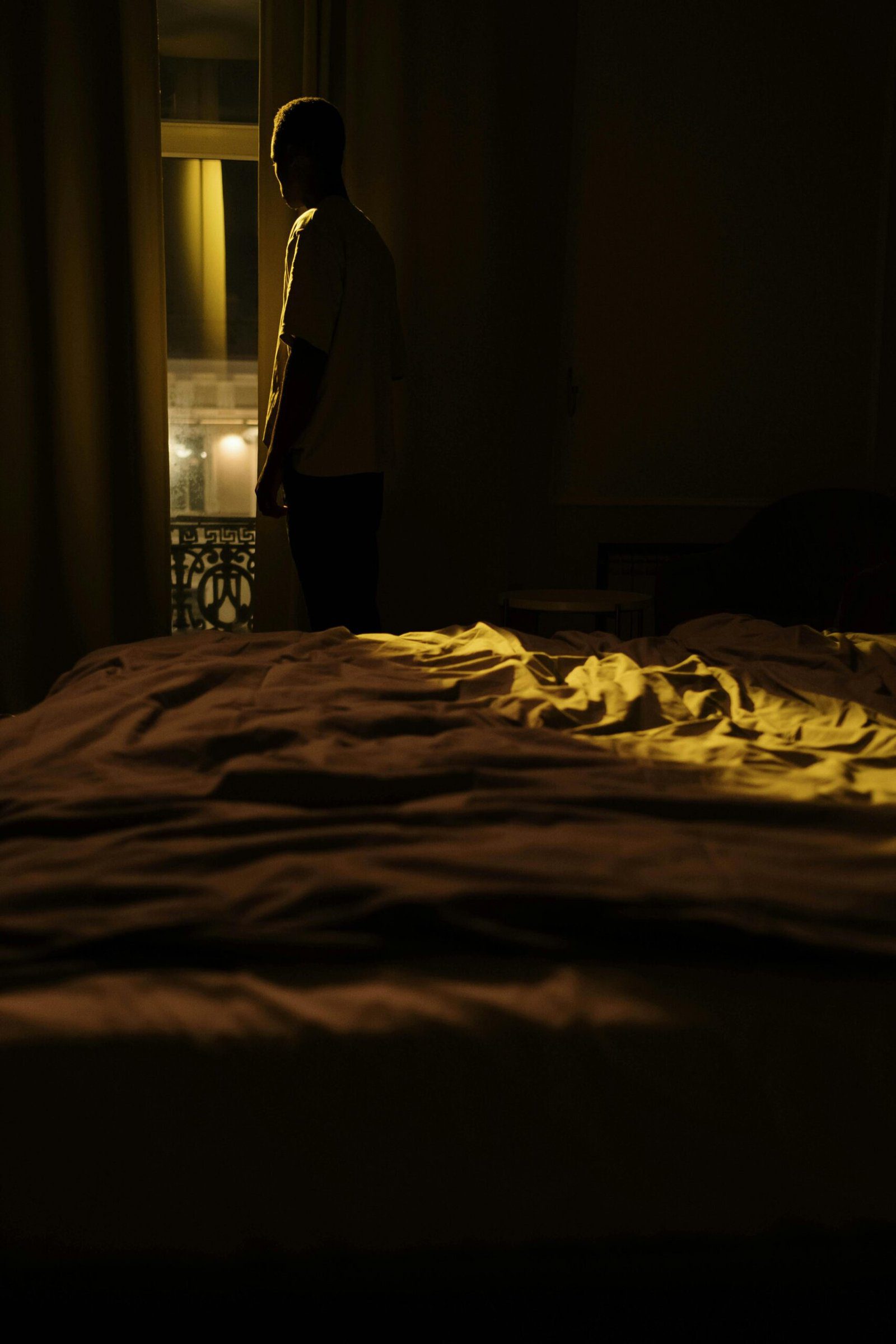
It’s 4 AM, I’m awake again.
What have I left undone?
Whoever said my life should be
Always on the run?

I push and pull to get more done.
With barely time to knot my tie.
Turn around, the day is gone;
Left me at a loss to end…

By a rhyme.

I want to do it all in the minutes I have.
Read those books, write someone else’s memoir.
Show the patience of the Parent of the Times.
Pat myself on the back for anything I finish at all

By day’s end, even dishes or my bath.

And nighttime, I look back to see how little got done,
How much I have left to do.

Mostly, I see, in the middle of the night,
All the really big things I passed right over—
Something spiritual, generous, a mitzvah? —
And forgot to do; so they didn’t get done.

By anyone.

And tomorrow is not just another day.
It’s the dawn when everything has to be done.By me

No-One Left to Prick

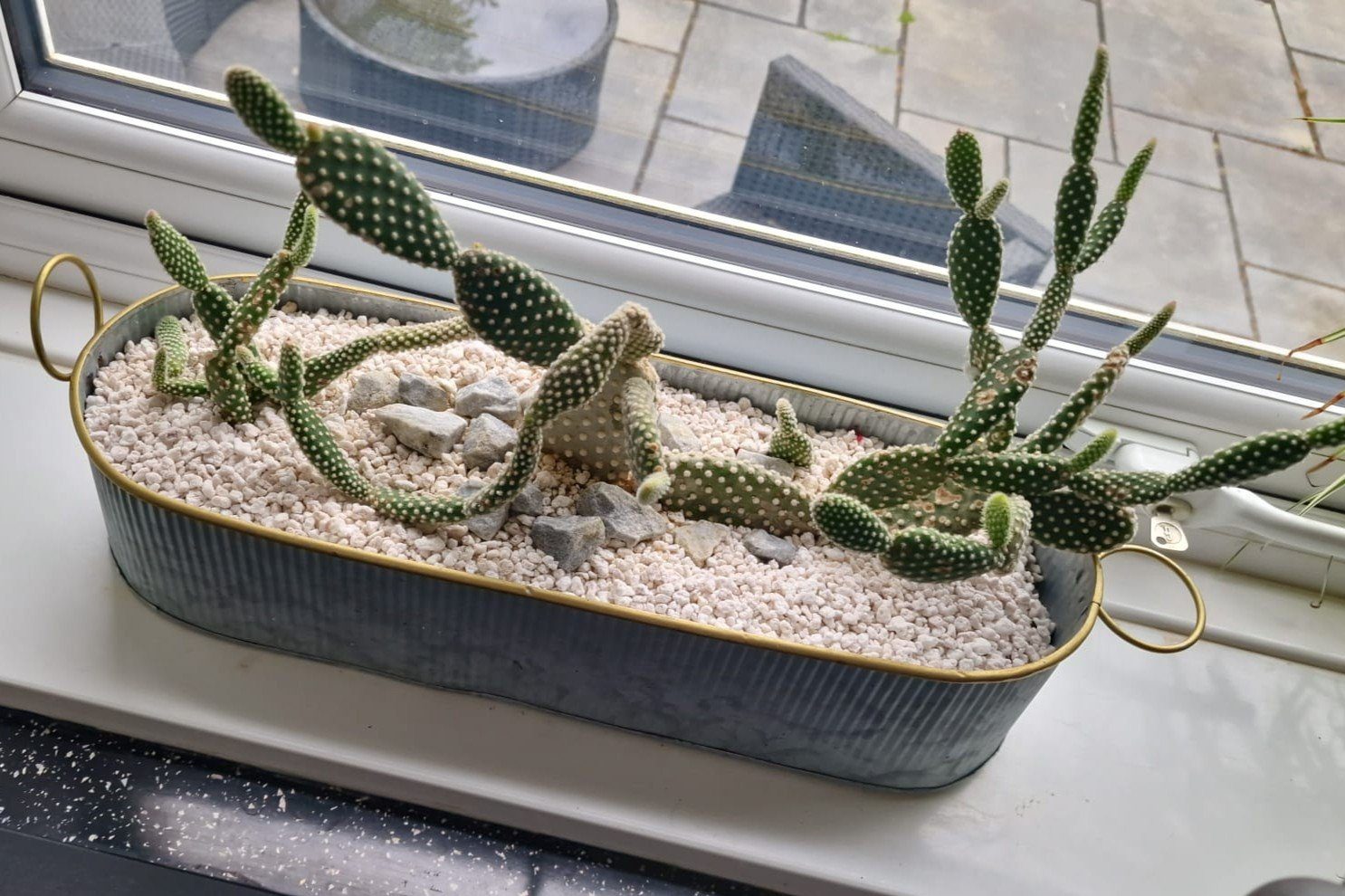
Ah, the steady cactus, a proud and prickly thing…
Nowhere else have I seen such a stubborn specimen.
She could wrestle chill or flame, withstand the harshest gale.
Even then, she’ll bounce right back and live to tell the tale.

She squats upon a windowsill, her spines pinching the sky.
Her pot’s been twice replaced while languid days have lumbered by.
And nothing ever changes much for her tidy, simple life –
Nothing but the view; concrete buildings, growing rife.

I think of arid climates, scorching suns and rainless slaughter –
The tribulations hard endured for the slightest hint of water.
And how the cactus came to be, evolving in dessication…
Now, we could learn a thing or two from cacti’s acclimation.

The air is growing tighter now, to view it in reflection.
A climate spurred by passing cars and brooding insurrection.
One day soon, it may be that the desert starts to spread –
Leaving nature weeding through the cracks left in our stead.

Ah, the steady cactus, I find solace in her power –
A stranger in our choking land of progress by the hour.
In the end, I’m sure my cactus will find some way to stick –
A monument of conservation… with no-one left to prick.

Brazil’s Supreme Court Sentences Former President Bolsonaro to 27 Years for Coup Plot

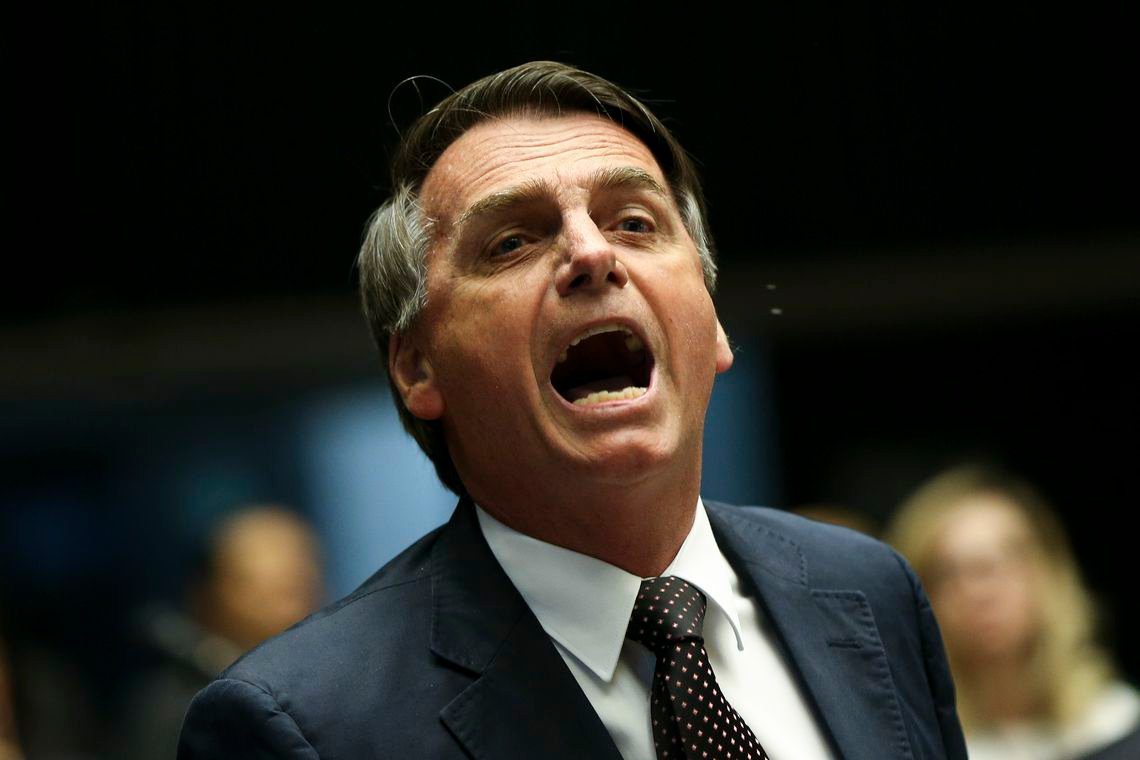
Last week, Brazil’s Supreme Court delivered a historic ruling: former president Jair Bolsonaro, 70, was sentenced to 27 years and three months in prison for plotting a coup d’état after losing the 2022 election.

The court found Bolsonaro guilty of leading a conspiracy that sought to overturn the democratic process. Plans included dissolving the Supreme Court, disbanding institutions, and even assassinating then president-elect Luiz Inácio Lula da Silva before he could take office. 

Bolsonaro has denied orchestrating a coup, insisting he only sought “constitutional alternatives” to remain in power.

A First in Brazilian History

Brazil has experienced at least 15 coups or coup attempts since the monarchy fell in 1889. This is the first time a leader accused of organizing one has been criminally convicted. 

Alongside Bolsonaro, seven high-ranking allies were also sentenced, including his vice-presidential candidate, his former defense minister, and senior military commanders.

Justice Cármen Lúcia, whose decisive vote sealed the conviction, underscored the court’s message: “In Brazil this has one name only: a coup d’état.”

The sentencing marks a watershed moment for Latin America’s largest democracy. Bolsonaro, often compared to other far-right populist leaders worldwide, energized a movement that reshaped Brazilian politics over the last decade. 

His imprisonment leaves that movement without a clear leader ahead of the 2026 elections.

Public reactions have been mixed. While progressive groups celebrated the decision as a defense of democratic institutions, Bolsonaro’s supporters organized protests, framing the trial as political persecution. 

Polls conducted during the trial showed the country nearly split: about half of Brazilians agreed he should go to prison, while a large minority opposed it.

The case has also stirred international debate. Reports indicate that former U.S. President Donald Trump pressured Brazil to drop the prosecution, threatening steep tariffs. 

The conviction now risks straining relations further, as Bolsonaro’s defense team pushes for him to serve his sentence under house arrest due to health concerns.

“No Amnesty” Movement

Brazilian congresswoman Dandara Tonantzin, a rising voice in the country’s progressive wing, told Yuvoice the conviction was a long-overdue step: “This is a victory for all who defended democracy tooth and nail. There can be no amnesty for those who attempted to silence the ballot box with force.”

Her remarks highlight a growing demand that Bolsonaro’s privileges as a former president (including taxpayer-funded security and staff) be revoked.

She also highlighted the symbolism of Justice Cármen Lúcia casting the decisive vote: “It is not by chance that it was a woman from Minas Gerais who stood firm. Bolsonaro once called the birth of his daughter a ‘weak moment,’ yet now he has been stopped by the strength of a woman’s hands: delicate, but firm.”

For Dandara, the ruling is also a historical reckoning: “What happened was not an exaggeration, not a theory, it was a crime against democracy. Justice being served is an essential step to ensure that never again will anyone attempt to shut down the will of the people with force.”

What’s Next?

Bolsonaro’s lawyers are expected to file appeals, which may delay his imprisonment. The timeline for where and how he will serve his sentence – whether in a federal facility, under house arrest, or elsewhere – remains uncertain. 

Meanwhile, political allies are floating a controversial bill to grant him amnesty, though legal experts say such a move would likely be unconstitutional.

Still, the ruling is already shaping Brazil’s political future. Bolsonaro is now banned from running for office until 2060, effectively ending his electoral career. 

For a country still scarred by past authoritarian regimes, the decision signals both accountability and an attempt to strengthen democratic resilience.

The conviction of Jair Bolsonaro resonates far beyond Brazil. It is a reminder that democratic institutions, however imperfect, can hold even the most powerful figures accountable. 

In a time when democracies worldwide are tested by misinformation, authoritarian pressures, and weakened trust, Brazil’s verdict may stand as a precedent and a warning.

Mate Gelado Vendors: A Living Heritage of Rio’s Beaches

Amidst the white sands of beaches of the famous city of Rio de Janeiro (Brazil), the soothing sound of the waves is broken by sellers advertising the product that became part of the city’s cultural Carioca heritage in 2012, or rather, it is the vendors themselves who represent this wealth. Carioca is the term for people born in the city of Rio de Janeiro, and they love enjoying cold mate at beach, an old habit completely dependent on traditional sellers, truly beach long walkers. 

A cold drink is  perfect at beach , since in Rio de Janeiro  the climate is predominantly hot, with temperatures that almost always approach 30°C, but in the summer, they easily exceed 40°C. The beach is frequented by residents and tourists as it is an inexpensive , since it´s completely free. 

The landscape is filled with a constant stream of vendors selling a variety of products, from swimwear and sunscreen to food and drinks. Among them, one stands out so much that its vendors have been recognized by the municipality as Cultural Heritage of the city of Rio de Janeiro.

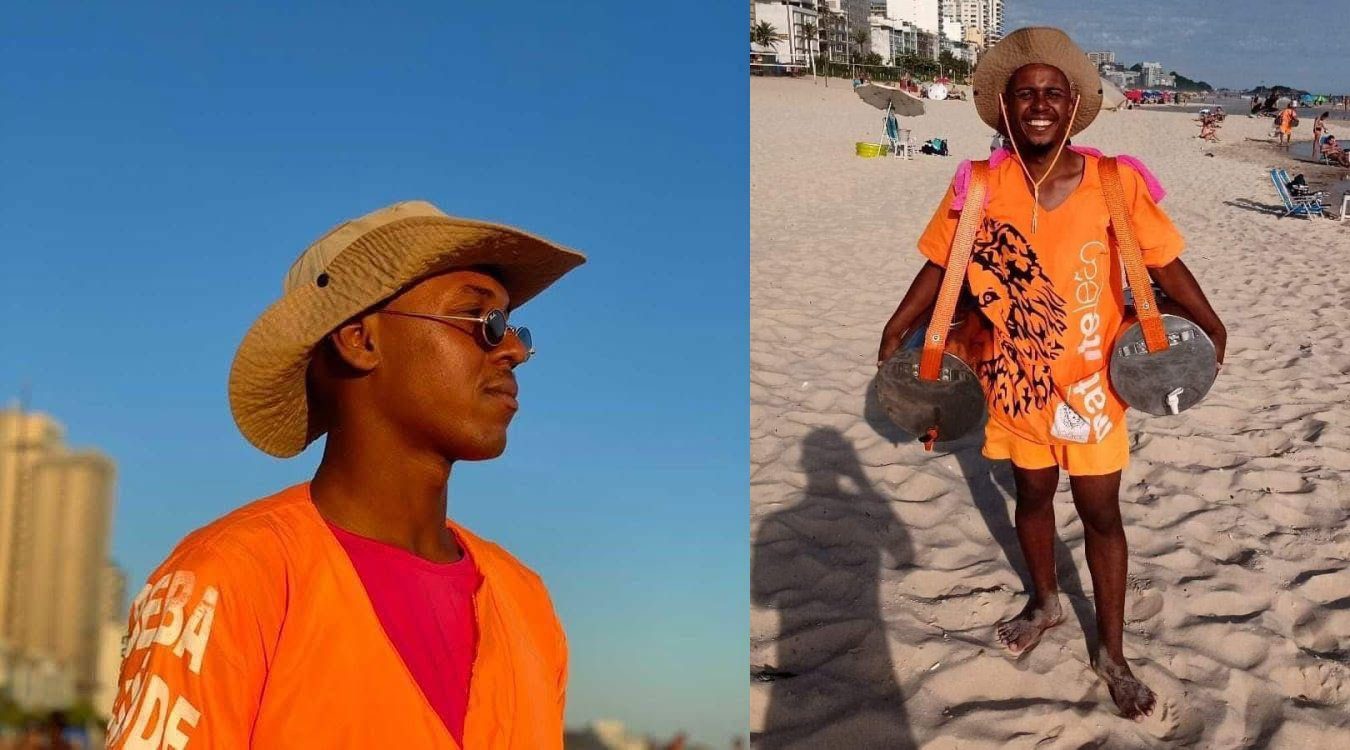
Wearing bright orange clothing, men and women walk for miles along the seafront of Brazil’s most famous city.

As they walk, they use their voices to announce their presence. On their shoulders, straps support shiny steel barrels. Inside the containers are liters of a refreshing drink that beachgoers have decided to associate with their stroll: mate.

Yerba mate

Originating far away from the well-known scenery of Copacabana and other beaches, an American plant gives rise to the drink. The indigenous people who inhabited what is now Brazil before the arrival of the Portuguese colonizers already drank tea made from the leaves of the “yerba mate” plant.

After industrial processing, the chopped leaves are packaged in a pumpkin-colored box, which cariocas easily associate with a certain brand. Just put the leaves in hot water, and in minutes, you get a dark and delicious infusion. After adding sugar (or not!), just drink it, preferably very cold.

The mateiros

The famous beaches of the Marvelous City drive an important economic engine. Families depend on the capital that is raised there. Beach vendors licensed by the municipalities sell food, drinks, coconut water, and rent beach chairs and tents. Beachgoers, in turn, benefit from these services.

The day has not yet dawned, and fans cool giant pots of mate, which have been resting since the herb was boiled at 11 p.m. the night before. It is three in the morning in distant Anchieta, 40 km from Leblon beach.

Gabriel Lourenço , a 28-year-old bachelor, is getting ready for his seventh day of work in a seven-day week. It is a sunny Sunday, and he expects to earn as much in two days over the weekend as he needs to work for twenty days in a month as an operational assistant in a factory.

All to contribute to the household budget and pay for what he calls a luxury: “eating at the mall once a month.” Gabriel defines himself as a “homebody.” The son of a single mother, has two brothers, as his sister has passed away. Part of the money he earns from selling mate on the beach will be given  to his mother.

While many beachgoers are still asleep, a car with his coworkers heads toward the beach under the scorching sun of Rio de Janeiro. Each of them carries the “mother mixture” which, after being diluted with ice water, will fill the barrels. There will be several trips back and forth on the sand, carrying two barrels, weighing a total of approximately 40 kg, from 10 a.m. to 5 p.m.

It has been like this for three years, says the former bricklayer’s assistant, who has also worked at McDonald’s. “I like selling,” he adds, feeling better rewarded financially with informal work than with a “formal job.”

“I used to wear the classic pumpkin-colored uniform, but today I work for ‘Bigode’s mate,’ who wears different clothes,” explains Gabriel.

Customers call him by raising their arms or through a WhatsApp group that brings them together and informs them which vendors are nearby.

From a tap attached to a barrel, like the ones we have in our gardens at home, a dark, cold, sugar-free liquid pours out. Or as Gabriel says: “It will be sweetened with lemon,” he says, if that makes any sense.

Mixing it with fruit juices is a hit: lemon, passion fruit, and, more recently, alcoholic beverages. It is mate, heritage, and tradition being reinvented right there on the beach, in the sand. We can´t imagine the next creation for this 2026 summer. 

Counter Culture

You must visit Alcatraz,” they said. 

There’s something quite perverse about lusting over the ghostly remains of a prison, I think. Especially one within swimming distance of the beating heart of America. 

San Francisco. Electric jazz, 24-hour diners, and Mexicana coursed through the city’s veins like the pulsating neon lifeblood of the twentieth century’s best estimate of freedom. Alcatraz stands sentinel, a mirror image of the Other Coast’s optimistic monument to Liberty. The island’s incarcerated vantage point shrinks the cityscape to a postcard as if, all at once, it could be lit by a single car headlight, driven deep into the night by some imaginary Film Noir Private Eye looking for an excuse to let off steam in a bar that no longer exists. The bay water lies still, mocking the failures of the Psychedelic Era, their twelve-string guitar refrains ringing out endless echoes in the cavernous brains of the 21st-century acid casualties, which we’re told by the Travel Agents, Presidents, and Uncompromising Capitalists, wait for us on every street corner. 

The Fillmore isn’t what it used to be” / “Don’t go to The Tenderloin at night” / “Wear your backpack on your front” / “Keep a hand on your wallet and the other on your G-U-N” / “Stick to the tourist hotspots” / “Try the artisan bread at Pier 39” /  “Go see the sea lions” / “Listen to the Ocean” / “Don’t make eye contact with those weirdos on the trolleys, that’s how they get you” / “The Golden Gate Bridge has a gift shop and a café” / “There’s a Macy’s right there in Union Square… and a Rolex store” / “What’s in a margarita again? It sounds Mexican to me… Have a bourbon instead” / “SOUVENIRS SOUVENIRS SOUVENIRS!

San Francisco. It all starts here. The Summer. The Pacific. California. The Gold Rush. America and its Dream. Peace & Love. America and its Nightmare

The Pinecrest Diner 

If I’d been at home in England, walking into whatever the British equivalent of the American Diner is, hearing there was only seating at the counter would’ve been enough to spin me back out onto the street, searching for refuge in the nearest Starbucks. 

But the high stools at The Pinecrest — San Francisco’s 24-hour Diner, est. 1969 — seemed to shout, “COME ON DOWN!” Their polished, heavy silver bases caught the early sun and shot it back out across the booths, illuminating families, couples, and solo patrons of all nationalities and heritages, like a melting pot mirror ball. The air was white with powdered sugar, it was black with caffeine.  

At this time, in the morning in a place like this, you catch the tail end of the night-owls: the ones still running on the fumes of yesterday. You also get the early-birds as well: the cops, the tourists, the business eliteties tucked into shirts to fend off the maple syrup deluge that’s burned them before. That’s the beauty of it — the American Diner. It’s timeless. Or, rather, it’s all times all at once. All times for all people. The Great American Cliché. But it’s only a cliché because it’s true. 

No easy-listening-FM-classic-rock-radio-background-music. The Pinecrest plays the real American soundtrack: the sheer VOLUME of ongoing operation. Grill sizzle. Cutlery scrape on Formica table top. Cash register ejecting to the rhythm of fugitive coins longing to escape its drawer. All cogs working toward their highest purpose, as the servers, high on well-deserved tips, slalom the course of tables and chairs, delivering the goods and clearing the remains. Pancakes, Waffles, French Toast, and Pie. My oh my.   

There’s something extremely satisfying about seeing the same thing on repeat over and over again. It has a calming effect on me. From my counter perch, shoulder to shoulder with the multi-coloured world, watching the uniformed rows of puddles settle into perfect plate-sized pancakes, I found peace. Peace without quiet. Flip, Flip, Service! Butter, Syrup. More coffee? Don’t mind if I do! I lost all sense of time as everything seemed to be happening around me. I was probably only in there an hour, but as the greased machine of unfussy fare churned like the changing seasons I could easily have lost a year. A city day in the City By The Bay. Did I mention it all starts here?  

Tommy’s Mexican Restaurant 

The unassuming facade of Tommy’s Mexican Restaurant — The World’s Best Tequila Bar, est.1965 —  gave way to a vision of The Real American Hero. Haloed by the stained-glass lightshow of a million reflections through a thousand tequila bottles, the bartender juiced lime after lime for the long afternoon ahead. There’s something extremely satisfying about seeing the same thing on repeat over and over again. It has a calming effect on me.

With a white towel across his shoulder, he was ready to mop the myriad problems of his patrons. He tossed the ringed-out lime husks onto an ever growing pile, a daily art installation: a monument to the Margarita. 

“Tommy’s Mexican Restaurant: where one arrives for a drink and leaves as a friend.” 

We’ll see about that, I thought to myself. 

If I’d been back home, in the British equivalent of the family-owned-and-internationally-lauded-drinking-institution, an invitation of “would you like to sit at the bar?” would have me back on the street faster than you could complain about the weather. But the complimentary platter of chips and salsa seemed to be waiting just for me, as if I was always supposed to be here, now. Take a seat, forget the outside world.  

The Hero wasn’t just any bartender. He was Julio Bermejo, the actual inventor of the actual ‘Tommy’s Margarita,’ which was my favourite drink in the world. Here I was alone with him, learning about agave, cocktail ratios, optimum ice dilution, the city and its country, life and its maladies. I sampled hundreds of dollars worth of tequila — stuff I’d never get in England — without charge. 

A cop walked in and  joined me. He bought me a shot of mezcal, and another shot, and another shot. Bang! Bang! Bang! Someone was shot last night, right outside the Rolex store in Union Square, he said. Out here, where THEY told me not to go, it was safe. I was probably in there for about four hours, but it disappeared like a flash.

A wide shot of The Golden Gate Bridge in San Francisco, California. The weather is slightly cloudy and the water beneath the bridge is a mix of different blues, due to the current. At the left of the bridge are some cliffs. In the distance, the city skyline is visible.
(Image courtesy of Maarten van den Heuvel via Unsplash)

Escape From Alcatraz

These two anecdotes are from the same day. The gap between them was bridged by walking on an actual bridge. The big red one. Its metal emerged from the hanging fog at regular intervals like futuristic robots rising from prehistoric land. There’s something extremely satisfying about seeing the same thing on repeat over and over again. It has a calming effect on me. Pausing at what I guessed was halfway, I could make out Alcatraz. Framed by the bridge, it looked imprisoned itself. Apparently, he’s thinking of re-opening it. Somewhere to put the immigrants, I suppose…  

As I stood from my barstool, I understood why food and drink is a fine way to see a city: everybody gets hungry, everybody gets thirsty. The Pinecrest and Tommy’s were different in many ways. One purposely faceless and fast while the other is deliberately familiar and slow. One’s sprawling menu racing to keep pace with its clientele while the other’s expertly-measured commitment to its craft teaches us the beauty of Mexico and its delights. What unites them is this: unlike the landmarks and the tourist traps, they’re both necessary

Both could easily sink into the commercial comfort of nostalgia, but neither does. They’re not relics. They’re relevant reminders of the value in communication & connection, meeting new people & learning their cultures, social diversity & tolerance & hope & all those other essential ingredients in the freedom we apparently seek. Both preserve the individuality of a city, a state, and a country under threat from its own leadership. They’re what San Francisco needs to be, for all of us, forever. 

I said goodbye to my new friends — the celebrity and cop — and wobbled my way into Golden Gate Park. The late sun shone in splinters as the last meditative ounce of mezcal took hold. My mind was clear of all thoughts except one: a seat at the counter is always a good idea. 

Where Are You, Mom?

I don’t know what I hear–
I think they’re fireworks.
I don’t know what I see.
They look like fireflies in the sky.
I don’t know what we’re celebrating.
I only see people running.

The shooting stars.
I’ve seen them closer than ever, Mom.
I can’t touch them because they explode and disappear
like magic before my eyes.

It all seems like a circus.
I think I’m part of the event too.
I’ve never been to one, but
I thought the animals were different.
No one smiles, they just cry, Mom.

There are no stars,
But the night shines.
There’s no moon,
But the silence is a scream.
There are no people.
Their shadows haunt me…

I’m scared, Mom.

I’m alone.
Searching for your skin in the roots,
Searching for your voice in the bombs,
Searching for your steps among the rubble
Searching for your body among ghosts.

Where are you, Mom?

It’s dark…
The fireworks aren’t over yet.
But the game is, almost, Mom… you won.
The game of hide-and-seek
I don’t want to play anymore.
I don’t want any more bombs and toy guns.

Come out, Mom!

Where are you…?
Come back, Mom.

I call your name and you don’t answer.
I give up, Mom.
Come out,
I don’t want to play anymore.

You won, Mom.
You won….

A Backpack, A Lifeline

Helping vulnerable kids in Victoria

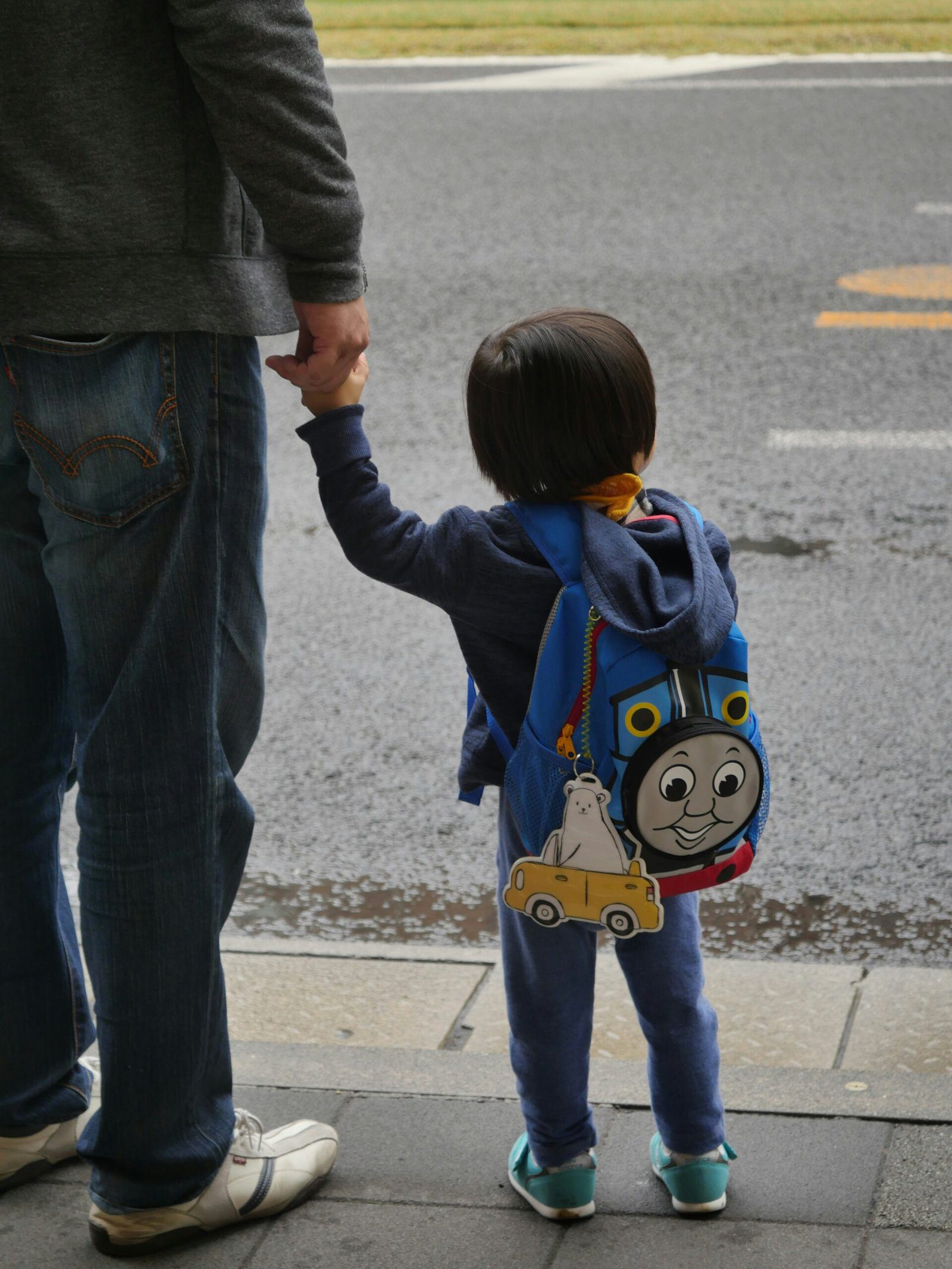
What started as a simple wish nearly a decade ago has delivered 50,000 backpacks to foster children across the state of Victoria, Australia. But the real story of Backpacks 4 VIC Kids is not a simple number on a spreadsheet—it’s about standing up for some of the most vulnerable kids in local communities. 

Many orphans we read about in fiction could have benefited from foster care — say, Harry Potter? We may be aware there are vulnerable children in our neighborhoods, but most of us probably have never thought about taking in a foster child or how the system even works. 

In 2014, Sally Beard of Victoria, Australia, had a realization: if children are being suddenly removed from unsafe homes, why are they arriving with nothing? No toothbrush. No clean clothes. Nothing to comfort them. Beard had been a foster parent herself, and she had some money she wanted to donate to charity. So she asked Christina of Backpacks 4 Aussie Kids for advice and spoke to others in local foster care organizations and from child protective services.

“I had to make sure there were no other competing organizations,” Beard said. “Every single person said yes, please do this, let us know when we can place an order!”

As a former foster parent, Sally knew too well that these kids often arrive with no other belongings than the clothes on their back. Backpacks 4 VIC Kids began in her home in November 2014 and stayed there until mid-2016, when growing demand moved it into a commercial space in Cranbourne, a Melbourne suburb. As the need continued to grow, the organization later relocated to a larger facility in Cranbourne West. 

The entire operation runs on community support with the help of a handful of full-time staff. First through fundraising, sponsorships, donations, and grant funding. Then through the work of an army of volunteers who help gather, help, and distribute the packs. 

Their first big order came from the community health and home care organization Life Without Barriers in April 2015, which expected approximately 700 packs in five months. Instead, it snowballed from there to mean over 47,000 packs in ten years. 

Backpacks 4 Vic Kids aid grew to see more than $10 million AUD in donations  ($6.5 million USD) spread over the ten years that Sally’s group has been in operation. Deliveries were all free of charge to children in emergency accommodation, foster care, or crisis. 

What’s in a backpack?

Each pack is filled with age-appropriate clothing, toiletries, books, torches (flashlights), blankets, comfort items, and more. The backpacks contain things kids need for the first day of school, things they need for their new lives, and fun things like toys. There are a variety of packs.

  • My Essentials Packs — Quality backpacks and nappy bags for displaced babies, children, and youth (clothing sizes 0000 – youth 18) in Victoria, New South Wales, and Tasmania. Children may be homeless, entering out-of-home care or emergency accommodation.
  • Christmas Gift Pack — Age-appropriate gifts of books, toys, activities, and other gifts along with stocking stuffers, all delivered in lovingly handmade Santa sacks.
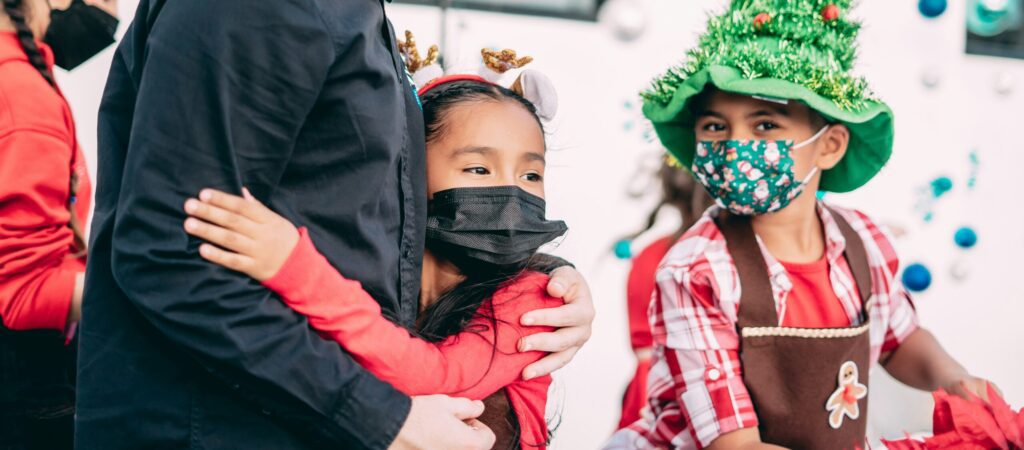
A young man in his twenties smiles as he receives a warm hug from a young girl wearing a festive holiday headpiece and face mask. A boy wearing a hat fashioned like a Christmas tree stands nearby looking at the camera (also masked).
(Image courtesy of Claudia Raya via Unsplash)

The kits are distributed through foster and kinship caregivers, case managers, and child protection officers. Many of these child welfare professionals keep the packs stocked on-site for emergency use within 24–48 hours.

Packs remain free of charge.  While Sally and her crew considered pricing them at $5 to recover costs, they feared it would be a barrier to care. Instead, they rely on community donations and sponsored packs, which come with a tag that lets a child know someone cared. The tag mentions the name of a donor as a gesture of gratitude.

The hidden heroes: kinship carers

Foster parents/caregivers are often called foster carers in Australia and the UK. Backpacks 4 Vic Kids calls them kinship carers. They often need additional support

According to Sally, there are more than 56,000 children in home care across Australia, and kinship carers—often grandparents or extended family—are the invisible backbone of the system. Many are approaching retirement age. Some never planned to become full-time caregivers, but stepped in out of love and necessity. These carers often go without support, and their stories rarely make headlines. But they are the reason many children stay connected to family and culture.

“Kinship carers don’t always get a choice,” Sally says. “They just do it because of family.” Often as seen in film and literature, foster children move in to a close living relative first, and their blood relation will agree to take them in because of their familial obligations.

One such story? Sally’s niece, who came to live with her and completed her Victorian Certificate of Education (VCE) after a year and a half of stability. The VCE serves as the main secondary school certificate in Victoria, Australia, equivalent to a high school diploma.

Kinship carers are the rare kind of people who would open up their homes to anyone who needs it, and remember they are usually older people. In an aging society like Australia’s, they sacrifice a lot of time and resources; so some material support will surely make an impact to aid the children placed in the wizened yet tender hands of the foster care system, the hidden side of foster care in the land down under. 

To be a champion

From a lounge room to a shared garage to a commercial unit and now a 120,000 square meter space and small warehouse, Backpacks 4 VIC Kids has grown because the need remains.

But growth comes at a cost, literally. The charity now carries $800,000 AUD in annual expenditures, including rent, staff, and production. Though distribution surpasses $3.6 million AUD a year, the nonprofit is operating at a loss. Paid staff have been cut by 30 percent just to keep things going.

Support their mission. Let’s keep this story going for the next 10 years — and for every child who deserves more than just the burden on their backs. 

 As the late Rita F. Pierson, an accomplished educator and Ted Talk speaker said:

“Every child deserves a championan adult who will never give up on them, who understands the power of connection, and insists that they become the best they can possibly be.” 

A grandmother hugs her granddaughter lovingly on a cold night. She is a kinship carer, and her granddaughter stares at the camera warmly.
(Image courtesy of cottonbro studio via Pexels)