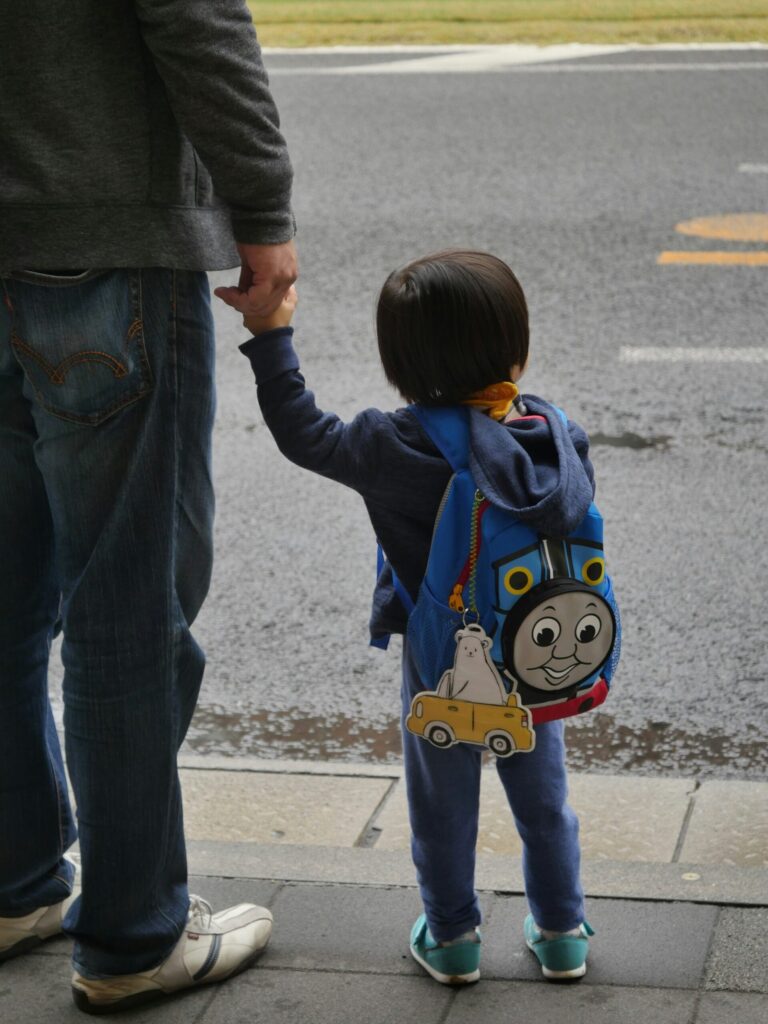
(Image courtesy of Juju_ a_la_bougeotte via Unsplash)
Helping vulnerable kids in Victoria
What started as a simple wish nearly a decade ago has delivered 50,000 backpacks to foster children across the state of Victoria, Australia. But the real story of Backpacks 4 VIC Kids is not a simple number on a spreadsheet—it’s about standing up for some of the most vulnerable kids in local communities.
Many orphans we read about in fiction could have benefited from foster care — say, Harry Potter? We may be aware there are vulnerable children in our neighborhoods, but most of us probably have never thought about taking in a foster child or how the system even works.
In 2014, Sally Beard of Victoria, Australia, had a realization: if children are being suddenly removed from unsafe homes, why are they arriving with nothing? No toothbrush. No clean clothes. Nothing to comfort them. Beard had been a foster parent herself, and she had some money she wanted to donate to charity. So she asked Christina of Backpacks 4 Aussie Kids for advice and spoke to others in local foster care organizations and from child protective services.
“I had to make sure there were no other competing organizations,” Beard said. “Every single person said yes, please do this, let us know when we can place an order!”
As a former foster parent, Sally knew too well that these kids often arrive with no other belongings than the clothes on their back. Backpacks 4 VIC Kids began in her home in November 2014 and stayed there until mid-2016, when growing demand moved it into a commercial space in Cranbourne, a Melbourne suburb. As the need continued to grow, the organization later relocated to a larger facility in Cranbourne West.
Subscribe to The Superhero Brief!
Free access to the CEO's newsletter.
The views expressed in this newsletter are those of the CEO and do not necessarily reflect the views of the organization.
The entire operation runs on community support with the help of a handful of full-time staff. First through fundraising, sponsorships, donations, and grant funding. Then through the work of an army of volunteers who help gather, help, and distribute the packs.
Their first big order came from the community health and home care organization Life Without Barriers in April 2015, which expected approximately 700 packs in five months. Instead, it snowballed from there to mean over 47,000 packs in ten years.
Backpacks 4 Vic Kids aid grew to see more than $10 million AUD in donations ($6.5 million USD) spread over the ten years that Sally’s group has been in operation. Deliveries were all free of charge to children in emergency accommodation, foster care, or crisis.
What’s in a backpack?
Each pack is filled with age-appropriate clothing, toiletries, books, torches (flashlights), blankets, comfort items, and more. The backpacks contain things kids need for the first day of school, things they need for their new lives, and fun things like toys. There are a variety of packs.
My Essentials Packs — Quality backpacks and nappy bags for displaced babies, children, and youth (clothing sizes 0000 – youth 18) in Victoria, New South Wales, and Tasmania. Children may be homeless, entering out-of-home care or emergency accommodation.
Christmas Gift Pack — Age-appropriate gifts of books, toys, activities, and other gifts along with stocking stuffers, all delivered in lovingly handmade Santa sacks.
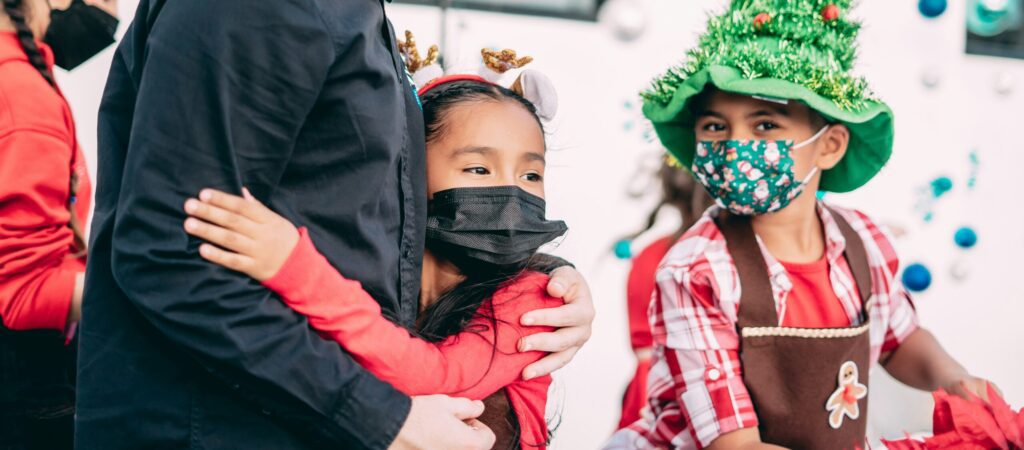
(Image courtesy of Claudia Raya via Unsplash)
The kits are distributed through foster and kinship caregivers, case managers, and child protection officers. Many of these child welfare professionals keep the packs stocked on-site for emergency use within 24–48 hours.
Packs remain free of charge. While Sally and her crew considered pricing them at $5 to recover costs, they feared it would be a barrier to care. Instead, they rely on community donations and sponsored packs, which come with a tag that lets a child know someone cared. The tag mentions the name of a donor as a gesture of gratitude.
The hidden heroes: kinship carers
Foster parents/caregivers are often called foster carers in Australia and the UK. Backpacks 4 Vic Kids calls them kinship carers. They often need additional support.
According to Sally, there are more than 56,000 children in home care across Australia, and kinship carers—often grandparents or extended family—are the invisible backbone of the system. Many are approaching retirement age. Some never planned to become full-time caregivers, but stepped in out of love and necessity. These carers often go without support, and their stories rarely make headlines. But they are the reason many children stay connected to family and culture.
“Kinship carers don’t always get a choice,” Sally says. “They just do it because of family.” Often as seen in film and literature, foster children move in to a close living relative first, and their blood relation will agree to take them in because of their familial obligations.
One such story? Sally’s niece, who came to live with her and completed her Victorian Certificate of Education (VCE) after a year and a half of stability. The VCE serves as the main secondary school certificate in Victoria, Australia, equivalent to a high school diploma.
Kinship carers are the rare kind of people who would open up their homes to anyone who needs it, and remember they are usually older people. In an aging society like Australia’s, they sacrifice a lot of time and resources; so some material support will surely make an impact to aid the children placed in the wizened yet tender hands of the foster care system, the hidden side of foster care in the land down under.
To be a champion
From a lounge room to a shared garage to a commercial unit and now a 120,000 square meter space and small warehouse, Backpacks 4 VIC Kids has grown because the need remains.
But growth comes at a cost, literally. The charity now carries $800,000 AUD in annual expenditures, including rent, staff, and production. Though distribution surpasses $3.6 million AUD a year, the nonprofit is operating at a loss. Paid staff have been cut by 30 percent just to keep things going.
Support their mission. Let’s keep this story going for the next 10 years — and for every child who deserves more than just the burden on their backs.
As the late Rita F. Pierson, an accomplished educator and Ted Talk speaker said:
“Every child deserves a champion—an adult who will never give up on them, who understands the power of connection, and insists that they become the best they can possibly be.”
Danial is a literature graduate seeking to write more. He is from a small Southeast Asian country called Brunei. He graduated in Australia and was a teacher in Japan for six years



Comments
Be the first to share your thoughts!
We value diverse perspectives and respectful debate.