UNESCO honors Rio de Janeiro as World Book Capital
By Ana Lívia Vale
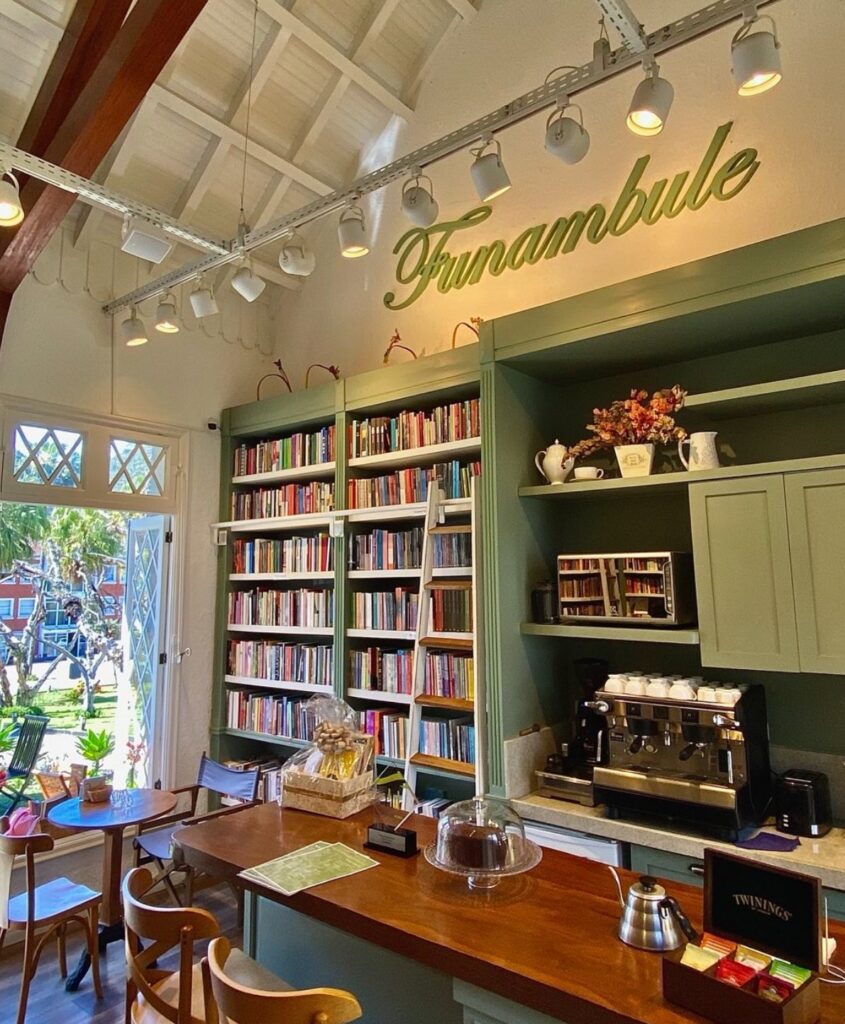
The inside of the Funambule Library and book club - Photo by @livraria_funambule via Instagram.
Rio de Janeiro, Brazil, was designated UNESCO’s World Book Capital for 2025. It is the first Portuguese-speaking city to receive this prestigious title.
This choice is not only symbolic. Besides recognizing the cultural potential of Brazil, it also seeks to reposition the reading as a space of leisure, community, and dialogue.
As the World Book Capital, Rio de Janeiro will host numerous events. Including book fairs and literary festivals, to foster cultural exchange and encourage access to knowledge.
The Brazilian city is therefore focusing on ways to encourage reading beyond book sales. One example of this is the ‘Rio’s 2025 Book Biennial’, featuring soirées, lectures and immersive activities.
Why was Rio de Janeiro chosen?
Commitment to reading: the city demonstrated a strong commitment to promoting literacy and making books accessible to all citizens.
Rich literary heritage: Rio boasts famous writers like Machado de Assis and Clarice Lispector, contributing to its literary significance.
Cultural hub: the city has a vibrant cultural scene, including renowned libraries like the Portuguese Royal Reading Room and the National Library Foundation.
On September 16, the event Esquenta Jabuti took place in celebration of the title of World Book Capital.
Writer and event moderator Henrique Rodrigues shared with Yuvoice his thoughts on the importance of this recognition, reaffirming how this title, granted by UNESCO, is significant for the city because it highlights the broader culture of Rio de Janeiro.
Subscribe to The Superhero Brief!
Free access to the CEO's newsletter.
The views expressed in this newsletter are those of the CEO and do not necessarily reflect the views of the organization.
At the same time, it is also relevant as a possibility for the creation of more effective public policies.
“It is necessary to have more everyday yeah activities, those small-scale initiatives that, over time, make a real difference in shaping readers.”
Rodrigues argues that sporadic events are mainly aimed at selling books and stimulating the market, but that once the buzz fades, the incentive for reading is lost.
“It’s as if books and reading were only talked about when there’s an event, when it should be the other way around. […] The event needs to be the culmination of something that happens all the time. That’s why I believe this title for the city can open the door to more regular programming that truly makes a difference in Rio’s schools and communities,” he stated.
The World Book Capital program
The initiative by UNESCO aims to recognize cities that champion reading and books.
Each year since 2001, from April 23rd (World Book Day), the chosen city undertakes a year-long program of activities to encourage literacy and cultural exchange.
Cities like Strasbourg (France, 2024), Accra (Ghana, 2023) and Guadalajara (México, 2022) have also held this title.
Does literature still foster social connection in the digital age?
It turns out that, in Brazil, more than half the population does not read frequently. According to the survey ‘Portraits of Reading’ (2024), around 53% of the people in the country haven’t read any kind of book – digital or printed – of any genre in the three months prior to the survey.
The numbers are alarming, since the total number of non-readers has surpassed the number of readers. Facing this scenario, a question remains: what has been done to stimulate the habit of reading?
Despite the statistics, young people and adults found time to read in their busy routines. Even if surrounded by countless stimuli from social media, literature fulfills its role not only of study or entertainment, but also of socialization in the lives of individuals.
The urban scene, marked by people with smartphones in hand, might suggest that books are being left aside. But would that be the absolute truth or just a collective impression?
This perception is not entirely confirmed: in-person and digital initiatives show that reading still takes a relevant place in the life of a portion of the population.
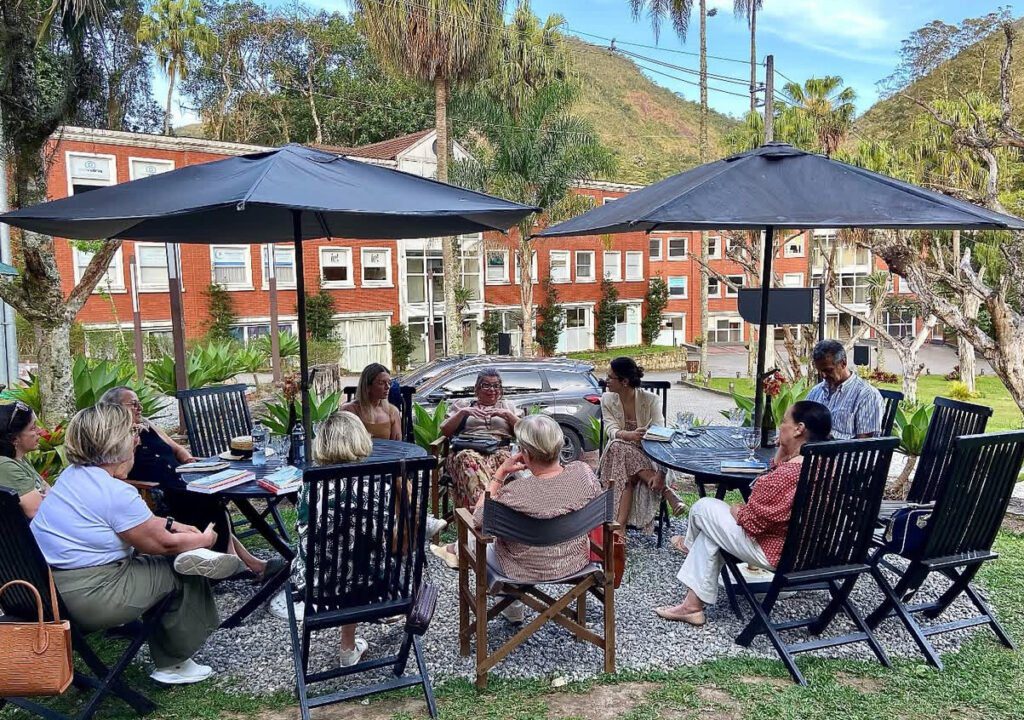
Group of readers at the Funambule Library – Photo by @livraria_funambule via Instagram.
In the Highland Region of Rio de Janeiro, a small library became a space and symbol of literary interaction.
Between shelves, cakes and coffee, the ‘Funambule Petrópolis’ established itself as a meeting spot to avid readers of the city. Through monthly meetings, diversified groups of children and adults come together to discuss their chosen reading.
In an exclusive interview with Yuvoice, Hebert Rodrigo, Funambule’s founder, shared his vision of the importance of spaces that encourage this habit.
“Many people who come here to the bookstore have just moved, and they’ve found here, among the books and reading groups, an excuse to meet new people and build new relationships. […] It’s inspiring to see how members connect beyond literature, creating bonds.”
Reading continues to play its timeless role of opening the door to visit new worlds. It combines entertainment with reflection on the reality of our daily lives, awakening creativity, hope, and curiosity.
And in practice, its effects go beyond the individual sphere. Socialization through literature is not merely a byproduct.
In the point of view of Hebert, those places open space to people to explore things they haven’t done before, encouraging them to take risks.
It is a third space of freedom where they can express themselves without commitment, spontaneously. Something you don’t normally find in the other two pillars of life, which are family and work.
When discussing books in groups, people not only share their interpretations, but also practice empathy, listening, and building ties of belonging.
To Hebert, reading made with the objective of sharing carries a different meaning than individual reading.
“You think more about your reading, develop your ideas further before sharing. It’s an enriching experience”.
This creates a space that encourages not only reading, but also critical thinking, discussion, and respectful exchange.
Reading and the Internet
Nowadays, more environments that encourage the habit of reading are needed. In this sense, the internet is not the enemy.
Social media also plays a fundamental role in this process. Platforms like TikTok, Twitch, Reddit, and YouTube have become virtual meeting places where readers, especially younger ones, share ideas, create connections, and participate in live streams to collectively comment on works.
One example is the digital book club created by Brazilian influencer Maria Clara Quirino [@readingwithma] on Instagram, WhatsApp, and Meet.
The group brings together more than 400 participants in monthly virtual meetings, with collective readings conducted via video calls and subsequent discussions, which seek to comment and discuss the main ideas read.
It is clear that literature in Brazil still lacks the incentive to strengthen its cultural power. Despite this, reading still finds ways to reestablish itself in a predominantly digital age.
Therefore, in-person or digital projects are fundamental tools to expand access to books and reverse the worrying situation revealed by the research.


Comments
Be the first to share your thoughts!
We value diverse perspectives and respectful debate.