The New Nomad Generation: In Search of Freedom and Adventure on the Road
By Eduardo Álvares
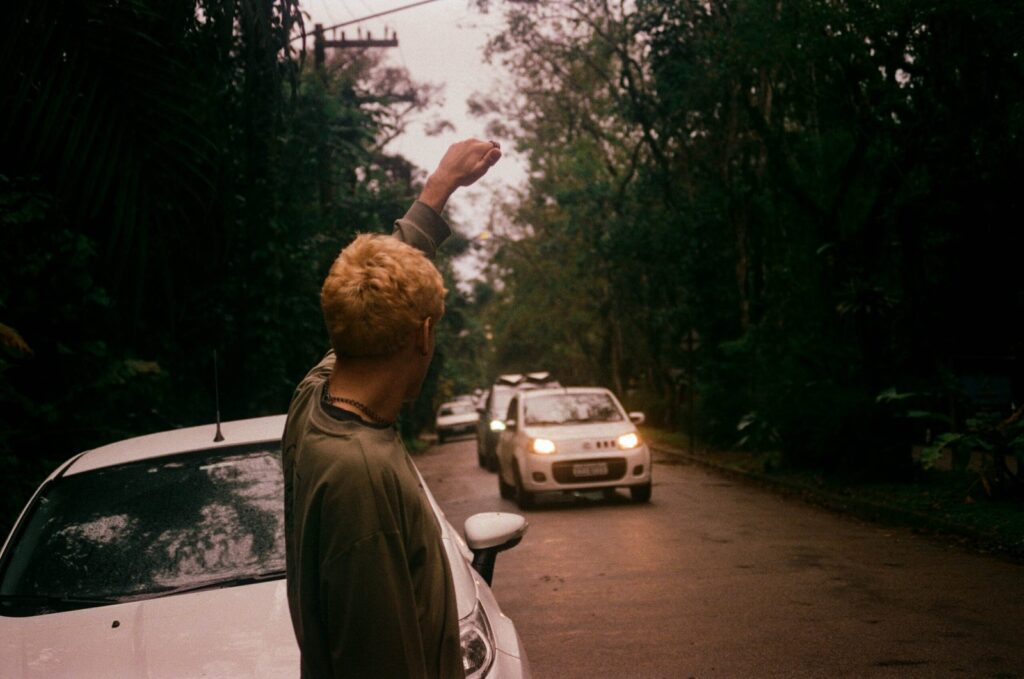
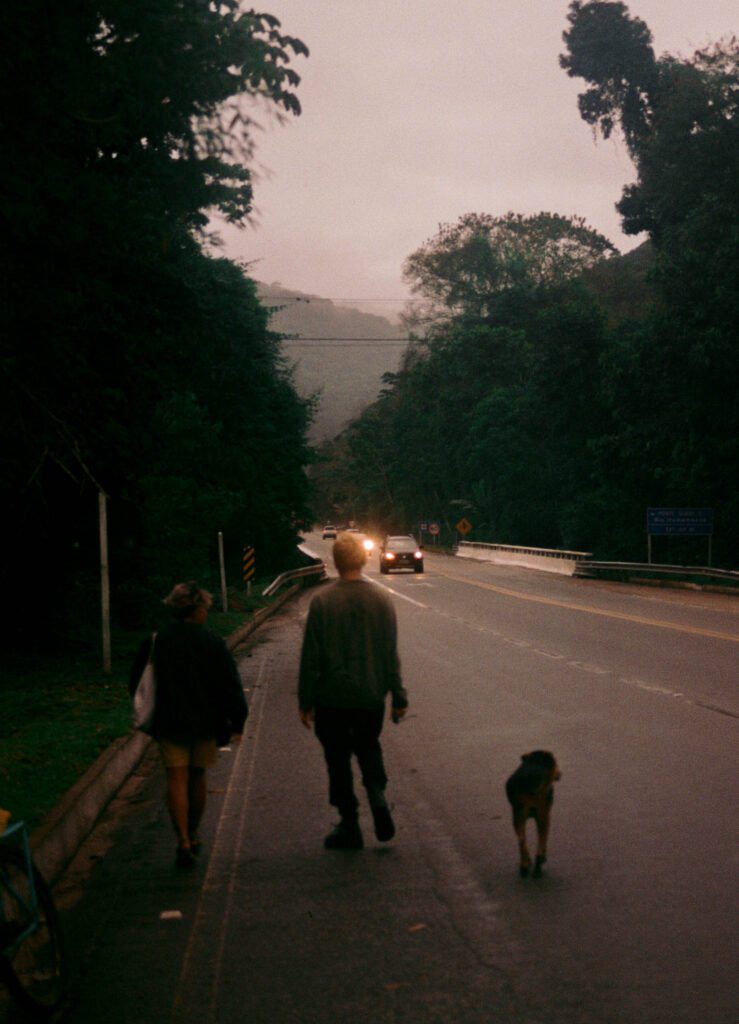
Traveler hitchhiking in Ubatuba, 2021. (Photo: Eduardo Álvares)
For many, the concept of home is no longer limited to a fixed address. Today, a new wave of travelers, the nomads, are trading the security of conventional life for the road, the sea, and the unexpected. They are proof that it’s possible to build a meaningful life on the move, with technology serving as their anchor and the pursuit of freedom as their true destination.
The philosophy of life on the road is nothing new. In Jack Kerouac’s 1957 novel “On the Road”, the American author celebrates the itinerant life as the ultimate search for freedom.
He argued that adventure and spontaneity were more valuable than comfort and security, writing: “Better to sleep in an uncomfortable bed free, than sleep in a comfortable bed unfree.”
Today, this same philosophy echoes in a more connected world. If, in the past, a nomadic life was synonymous with uncertainty, technology has transformed the journey by making it much more viable and practical.
Brazilian Nomads The stories of new nomads are unique, but technology is a common thread that connects them.
One example is Aline Sena, a 54-year-old Brazilian communicator and digital influencer. In 2017, she traded a 400-square-meter house for a sailboat of just 27 feet (about 8 meters), where she began to live with her then-husband.
Aline, who already worked with video production, adapted her profession to the new setting.
Her main source of income became a YouTube documentary project, #SAL, about people who live on the sea. It became one of the largest channels in that niche.
Subscribe to The Superhero Brief!
Free access to the CEO's newsletter.
The views expressed in this newsletter are those of the CEO and do not necessarily reflect the views of the organization.
The change brought challenges, such as the lack of space and a new notion of comfort. For Aline, living on the boat meant adapting to elements that were previously controllable.
“I had to give up physical comfort as I knew it. If it starts to rain in an apartment, I just close the window, but on the boat water can get in in many ways,” she explains. The instability of the sea can even make it difficult to work on the computer.
Despite the difficulties, the rewards outweigh the sacrifices. The simplicity and freedom of the nomadic lifestyle brought a new meaning to her relationships.
For Aline, the biggest change was the connection with nature. “Living on a boat for four years changed my perception, my way of being in the world. Looking at that immensity on the horizon, seeing the movement of the water… we are nature and often forget that.”
Today, Aline continues to live a nomadic life, but she has adapted her career to the new times: she works with remote digital consulting, helping people and companies develop online projects and communication strategies.
@nomadeali, as she is known on social media, combines her experience in content production with the knowledge acquired while living around the world, showing that it’s possible to unite freedom, technology, and profession anywhere.
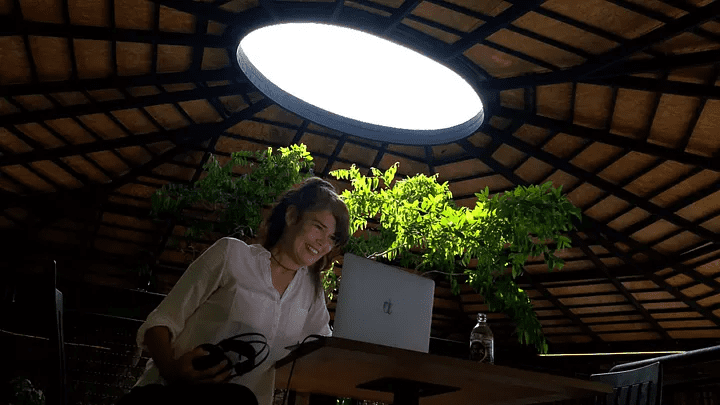
Aline working remotely. (Courtesy of Instagram @nomade_ali)
Another inspiring story is that of Larissa Silva, a young woman from the state of Goiás, Brazil.
After moving to Ilhabela (an island on the coast of São Paulo, another Brazilian state) for a job that didn’t work out, she found herself lost but with a strong desire to travel.
Larissa found a solution through the Worldpackers app, which connects travelers to volunteer opportunities in hostels in exchange for accommodation and food.
Larissa began to do volunteer work, supplementing her income with small jobs at kiosks and selling polaroid photos on the beach, which allowed her to continue her journey. For her, the big lesson is the “freedom to choose.”
This freedom is not just geographical, but also the ability to adapt her routine and be more authentic, without being stuck in an office or fixed location.
“The fact that I can stay in places longer, not just for a week’s vacation, brings other perceptions. I learned to appreciate a beautiful sunny day, but also a rainy day, a cold day, because I’m not in a hurry. I can see the beauty in everything because I’m on my own time.”
Nomear o documento com com o nome da historia
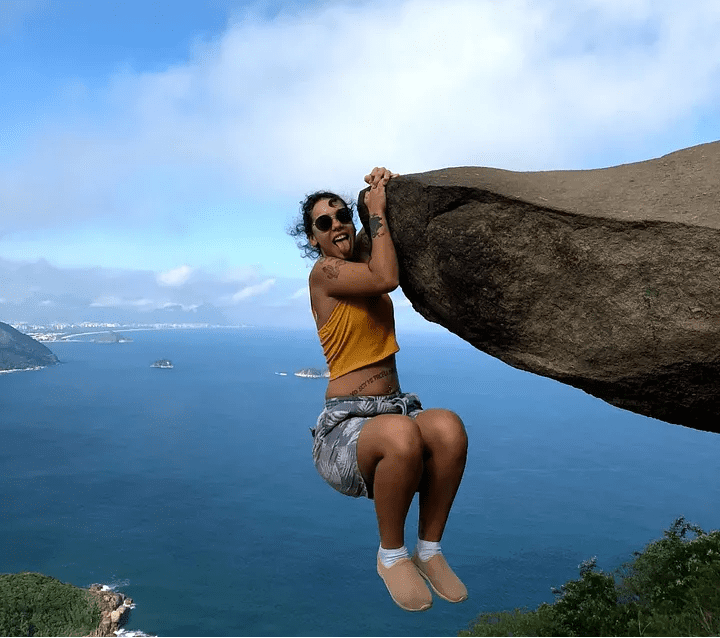
Larissa in Rio de Janeiro. (Courtesy of Instagram @nerdistraida)
Technology and Connection on the Road
Modern nomadic life is driven by technology. With laptops and smartphones, travelers can work remotely, plan itineraries, and keep in touch with family and friends.
The internet also allows them to connect with each other, creating supportive communities and sharing tips and stories.
These communities flourish on social networks like Facebook and Instagram. There are hundreds of YouTube channels about nomadic life, covering everything from trailer trips to backpacking and volunteering.
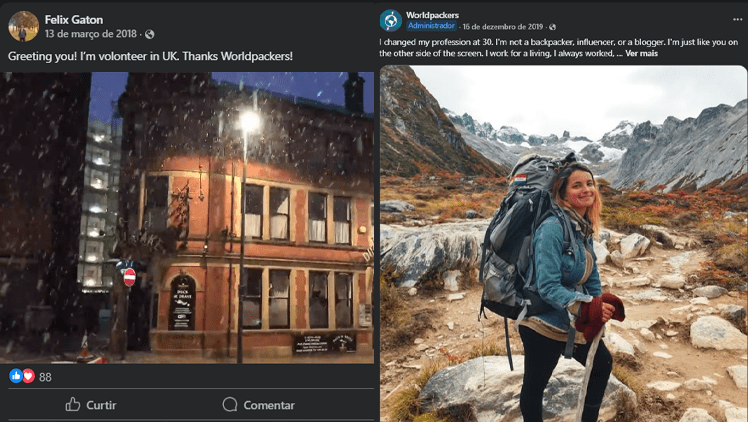
These seemingly simple contents create a strong sense of belonging and support. One example is the Worldpackers Community on Facebook, created so that travelers and hosts can exchange information, tips, and experiences about volunteer projects.
The group’s description is clear about its purpose: “We are here to give support and help in this rich exchange between you.” For many travelers, the group becomes a starting point or a safe harbor during their journey. It’s a space where they can seek advice, share challenges, and celebrate victories, finding a support network that understands the lifestyle they have chosen.
In addition to social media, apps like the aforementioned Worldpackers, Couchsurfing (which connects travelers to locals willing to offer a place to sleep for free), and Airbnb (for short-term rentals) make it easier to find affordable accommodation and connect with local people.
Reports in the Worldpackers group. (Screenshot/Facebook)
Simplicity and Notes on Detachment Nomadism requires a re-evaluation of what is truly important. For many travelers, the search is for a simpler life aligned with their values. Therefore, the stories of nomads are also stories of detachment, where material possessions lose value in favor of experiences and freedom.
Aline Sena, for example, tells of the difficulty she had in selling her car: “It took me a long time to sell my car when I was on the boat. I didn’t need it anymore, but I had a hard time imagining myself without a car, because my worth was tied to that object. Then I realized there was no problem selling it, since I could take a bus or rent a car when I needed to.”
The ownership of the car, a symbol of status and stability for many, was a mental obstacle to true freedom.
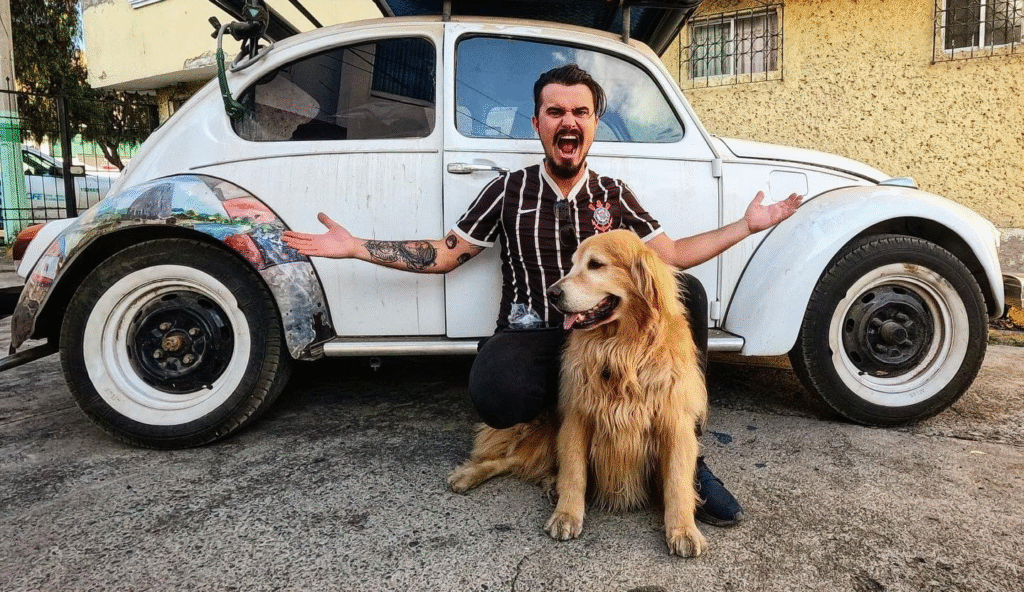
The story of Jesse Koz, who sold everything he had to travel, also reinforces this idea.
He summarized his decision in his book: “Deep down, despite the material achievements, I wasn’t happy. […] In two weeks, I had detached myself from everything I had acquired in seven years. All I had left was Shurastey, the Beetle, and a few changes of clothes. It was more than enough.”
Jesse traveled the Americas alongside his Volkswagen Beetle, Dodongo, and his dog, Shurastey, becoming a symbol of freedom and simplicity for thousands of people who followed his journey through his Instagram and YouTube channel.
Unfortunately, his journey was cut short in 2022 when he and the dog died in a car accident in the United States. Still, his story continues to inspire travelers.
Jesse Koz and Shurastey (from Instagram @jessekoz)
The Parallel with the Global Housing Price Bubble
The rise of the digital nomadic lifestyle coincides with a global phenomenon: the accelerated inflation of property and rental prices. For the new generation, buying their own home or paying exorbitant rents can seem like a distant and financially unsustainable dream. In this scenario, nomadism emerges as an attractive alternative.
Instead of allocating most of their income to a fixed address, people use that money to travel, often to places with a lower cost of living. In Brazil, this reality is clearly manifested.
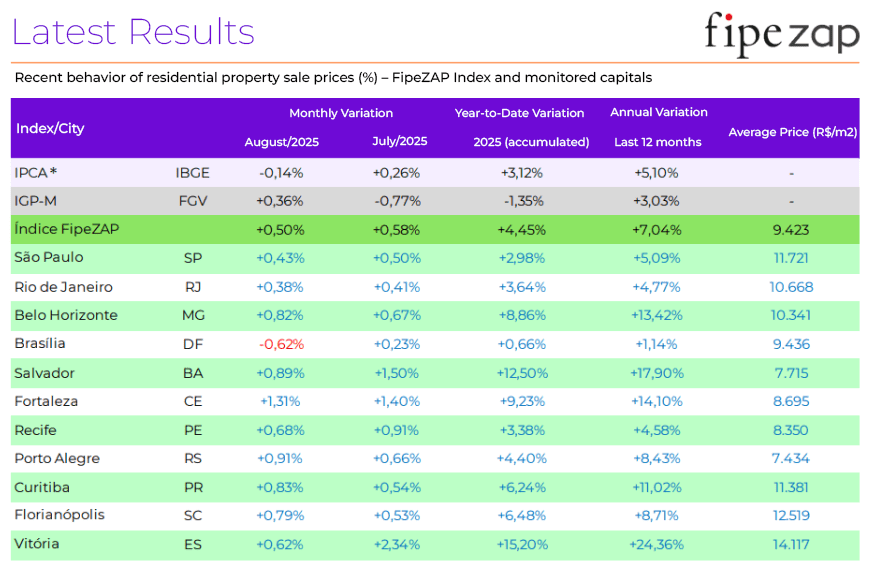
Data from the FipeZAP Index show that the appreciation of residential properties has exceeded official inflation in the last 12 months: the index accumulated a high of 7.04%, while inflation was 5.10%.
This trend is especially visible in the country’s largest cities, including capitals that concentrate important economic and cultural activities.
The average price per square meter in Brazilian cities with a high cost of living, such as Florianópolis (12,519 reais per square meter), São Paulo (11,721 reais per square meter), and Curitiba (11,381 reais per square meter), highlights the challenge of maintaining a fixed residence.
For the new nomadic generation, security is no longer tied to having a fixed address, but rather to the flexibility and adaptability that life on the road offers.
The phenomenon, therefore, is both a quest for personal freedom and a reaction to the economic pressures of a real estate market that no longer meets their needs.
Source: FipeZAP Index, IBGE and FGV/IBRE
And for whom is nomadism?
The nomadic life is an incredible adventure, but it requires certain sacrifices and is certainly not for everyone. Giving up the stability and comfort of conventional life requires a good dose of planning and willingness.
For Larissa, what really matters is the will: “It’s not about being a certain age or having a certain thing. Of course, some characteristics make it easier, like not having children and being able to work remotely. But, in the end, it’s about how much your desire aligns with your willingness to let go.”
Aline Sena adds that this life is easier for those who have autonomy and don’t feel tied to one place by social or professional bonds. “If the person doesn’t have so much need for ties and commitments to just one place, it’s easier. If your life is full of strings, it’s difficult to reconcile.”
She also reinforces that the possibility of working online greatly facilitates the journey, as it eliminates the daily worry about subsistence.
Despite the demands, the nomadic community is incredibly diverse. It includes solo travelers, couples, entire families, recent graduates, professionals seeking new opportunities, and retirees.
The important thing, according to them, is to be prepared for changes and challenges and, above all, to forge your own path, without basing it only on the experience of others.
For those thinking of becoming a nomad, Larissa has one last piece of advice: “Planning is essential. I did some things without planning, and they were much harder. Routine is important; having a plan for things is too. I ran away from routine for a long time, but today I see that it’s important. The difference is that I can change my routine at any time.”
Two travelers and a dog on the side of the road in Ubatuba, 2021. (Photo: Eduardo Álvares)
Eduardo Álvares is a journalism student at UNESP, exploring stories about culture and society with a focus on how communities express and transform themselves. Alongside his writing, he also works with photography and video to tell stories in diverse formats.


Comments
Be the first to share your thoughts!
We value diverse perspectives and respectful debate.