I know it’s hard to tell But I’m really wishing you well; Even packed a bit of lunch for you And you can go to — .
Don’t hesitate on my behalf Cause I’m no longer part of your staff. If I never hear from you, it’s just too soon, And it doesn’t even hurt when I laugh.
If I’m wrong, I’ll sing a different song. Parting now is such sweet sorrow. And yet moving on.
So long.
Look, we’ve come this far And shared a special star. But don’t look back for any final wave Just get your mess in your car.
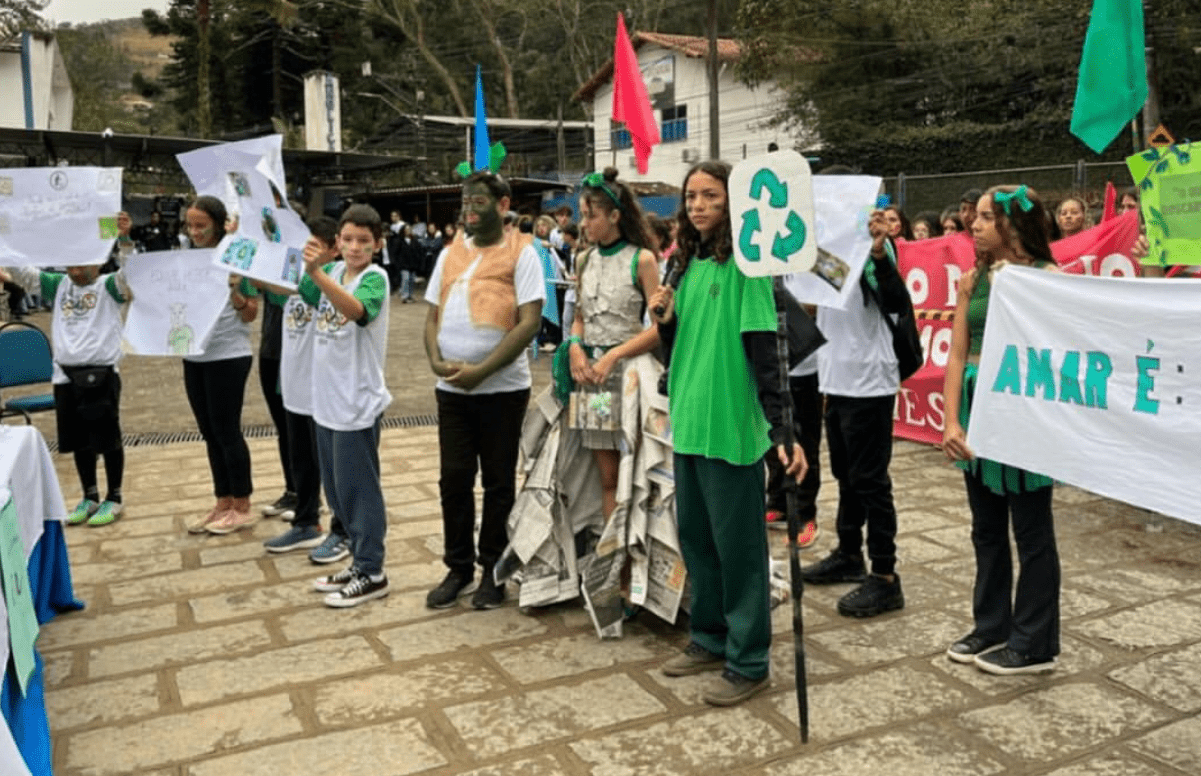
In Rio de Janeiro, public school students are leading the fight against the climate crisis.
Between 2020 and 2024, the initiative EVA Brasil brought environmental education into public and rural classrooms across the state-and its impact is already reaching local policymakers.
Less than a year after EVA’s pioneering work concluded, Brazil has become a focal point in discussions on sustainability in schools. In 2025, climate change, biodiversity protection, and disaster prevention were added to Brazil’s basic education curriculum, marking a major step in environmental education.
The initiative aims to involve all schools in the country in projects centered on environmental justice, encouraging young people to participate and learn from one another throughout this journey.
With a new school year underway, EVA’s legacy offers lessons on how youth-led education projects can shape policy.
In 2024, EVA’s work reached the City Council of Petrópolis (Rio de Janeiro, Brazil). Through the project, students collectively created thematic committees and drafted proposals for the city’s Climate Adaptation Plan. These proposals were formally submitted, documented, and filed with local authorities.
The initiative involved community outreach and debates in participating schools, in partnership with the wider community. The process included mapping environmental risks and identifying preventive measures against disasters.
The impact of the program goes beyond classrooms, focusing on students’ intellectual development. The team promotes teacher training and introduces activities on climate adaptation and sustainability, strengthening both the school environment and the community at large.
This movement highlights the urgency of applying socio-environmental education into civic formation, so that society, from its very foundation, understands the consequences of its actions on the planet.
The project’s experience shows how socio-environmental education can prepare new generations to face an increasingly evident climate crisis in Brazil. It is crucial to remember that young people will be among the groups most affected by decisions made today, reinforcing the need for initiatives that give them voice and a space to act.
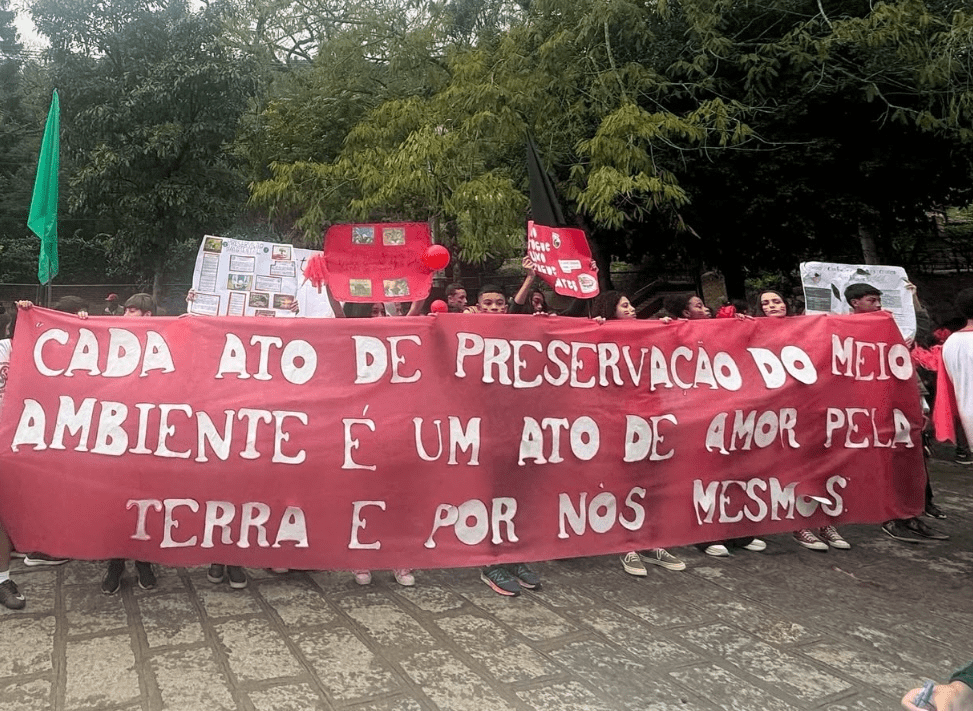
Young students hold a sign that reads, in portuguese: “Each act of environmental preservation is an act of love for the earth and for ourselves.” Photo by @parolesocioambiental, via Instagram.
Impact
In an interview with Yuvoice, Denise Fonseca, Eva director, emphasized the importance of youth engagement.
“Young people, especially teenagers, are by nature restless and eager for change. This is part of this stage of life, when they assert their existence, reclaim their identity, and present the new self they are building from their own experiences. Their worldview gradually differs from that of their elders. Not just to question, but to propose paths forward. Formal education directly impacts the youth community: it brings newness into the family sphere and opens space for transformation”.
The role of young people is crucial, she says. “They have this ability to spread ideas. Change begins within their own social circles”.
When informed and encouraged, young people cease to be mere spectators and become more participatory, able to understand climate shifts, question unsustainable models, and contribute to solutions for a greener future.
A survey conducted by EVA members showed that more than 60% of families reported adopting more careful environmental practices, such as waste separation, water quality monitoring, water and energy consumption control, and awareness around fire prevention.
The project, however, did not receive government support during its four years of operation and relied on donations to stay afloat, which made it harder to improve and sustain its activities.
Despite these challenges, the Eva team continued fighting for broader recognition throughout its duration, and the project officially concluded its field work at the end of 2024, having laid the groundwork to potentially expand its impact to other schools facing similar vulnerabilities.
Initiatives like this gain even more relevance in today’s global and national landscape. While EVA’s impact is seen at the family and community level, Rio de Janeiro’s environmental progress is also reflected on a broader scale.
The state has stood out. According to MapBiomas research, between 1984 and 2023, it was the only state in the country to record growth in forested areas. This progress is directly linked to Atlantic Forest restoration efforts – a biome that covers the state of Rio de Janeiro – and to the work of NGOs and local organizations.
Consistent environmental policies have also proven effective in restoring native forests and soils.
Still, these gains are not enough to neutralize the impacts of other environmental dilemmas. Brazil continues to face severe challenges such as deforestation and ecosystem degradation, issues that demand urgent action.
It is clear, therefore, that young people must be brought together and encouraged to understand the full scale of the climate and environmental crises affecting the world.
Only through an educated and empowered generation can Brazil hope to confront its climate future.
I broke down in tears at the pharmacy this morning.
I cost too much to live.
I was only $20 off. My car payment of $150 went through the night before. I thought I was in the clear. I had not calculated, however, that I would need to hold an extra $20 in my account to cover my prescriptions.
My medication costs a lot in terms of other people’s money — and my time — just to secure them. I then go to the extra effort of taking them, so as to not waste other people’s money; it would be one thing if I were footing the bill for these meds and didn’t take them, but when someone else is paying for them? Unacceptable.
Second, I take them so as not to spiral into the chaos that is my unmedicated medical condition (insanity) — thus not wasting my time by visiting a mental institution (again). It would also cost more money for that additional visit. And it is already expensive to live: rent, utilities, cell phone bill, gas for the car, rent of the car…. And that’s if you’re normal… but, “no one is normal,” right?
“It is ok to not be ok.” Right?
If you say so.
Life is certainly expensive either way. In addition to the federal government backing the mission that is “Justin’s Life,” my parents give me money to make up for the difference between being a have and a have-not. They provide me with $1,400 or so a month, on top of the $1,500 or so a month I earn by being disabled (what a moral conundrum in and of itself, I must add). With that money, I earn the right to live at the poverty line.
The emotional price
I can provide you with a balanced account from this morning alone. The costs were high — high enough for me to cry as the pharmacists dispensed my medications and politely removed items I could not afford to buy if I wanted to afford my medications. Mouthwash. It upsets me to think that my breath smells, but it makes me feel worse to wake up in a mental institution. So, there is the first emotional cost decision — be unhygienic so it keeps you out of a mental institution or worse. So I cried.
As a 40-year-old, 6’3” white male in Manhattan, Kansas, I am sure I created an awkward situation for the attending pharmacists. They are just trying to do their job in the midst of my existential crisis. I would love to thrive or at least have clean breath, but I have to focus on surviving.
If it costs a lot of money to be disabled, I apologize to the economy.
But I never met an economy that rewarded me for having emotions so powerful they have to be sedated and subdued with prescription medications. So, how much is my emotional labor worth at this moment? I am breaking down, apologizing for not having enough money to pay for what I need, and these two pharmacists are not paid enough to deal with my shit. So, did I make an emotional deposit with the pharmacists or a withdrawal?
(Image courtesy of Indigite Cruel on Unsplash)
The moral price
That is where the moral costs come into play. Were we in Sparta, my baby body would have disintegrated long ago because I was born dead, and thus I would have no value to add. But I was born in America, baby! No concern for the umbilical cord strangling my oxygen supply; they just forced an oxygen tube down my throat and up my butt to bring me to life, according to some. According to those still living, I was born happy and healthy. Either way, according to the federal government, I am permanently disabled. But I was born in America, baby, so I have the rights of Life, Liberty, and the Pursuit of Happiness.
Healthcare, however, does not fall under the auspices of those rights.
I gotta fight for those rights every second. A moral dilemma: be an economic burden on the economy by existing or take your chances without the support structure that allows you to survive. A further moral dilemma is believing you are meant to thrive while knowing it takes much more than your emotional budget just to survive.
The intellectual price
My IQ is high as fuck. Too high, really. According to a former psychiatrist, I connect too many dots… that is a nice way of saying I am paranoid, delusional, and insane. But then again, everything is connected, right? From my left nut to my right brain to the end of the cosmos, everything is connected by the reality of energy alone. That is a good-enough stretch for my intellect to admit, in my opinion, that this morning I cried by design.
What if I spent the money my family gives me to survive on a business that could make me independently wealthy? Then all my problems would be solved. But as a real one once said, “Mo money, mo problems.” That is the smartest thing I have ever heard, and I say that as someone who has seen what happens when people get the wealth they worked toward. I have enough problems as it is.
And so the economy did what it was designed to do — take labor from me in return for goods and services. The labor, however, was in the form of financial, emotional, moral, and intellectual production; my family came through for me financially, as they always do. I merely had to invest the emotional, moral, and intellectual labor. To survive.
The other day, someone asked me to list five albums I couldn’t live without. At some point, in some future soul-baring discourse, I may reveal my other four, but for present purposes, let me tell you about one: David Crosby’s 1971 LP If I Could Only Remember My Name.
For someone whose cultural frames of reference, creative ideals, and hippy sensibilities throw me at least fifty years out of step, I’m painfully aware that the next decade presents a likelihood that most — if not all — of my heroes will hear their boarding call to the Pearly Gates from the comfortable seats of their Mortal Departure Lounges, to board their final flight.
Crosby died and I revived
I’ve been lucky, so far, in prolonging the inevitable. I took a quiet moment to mourn Christine McVie. But the only passing that has truly rocked me was David Crosby’s. The relentless rebel. The progenitor of uniquely uncommercial music and mindful challenges to mindless authority. All the way to the end, he sang musical messages of tolerance which, for most people, went out with the invention of the Espresso Martini and the box-office debut of Wall Street. Despite generational attempts to crush the utopian dream, it lives on in some circles.
The dream didn’t die. Not entirely. In certain corners, mine included, it still lives.
You see, for me David Crosby represents the eternal rebel — authenticity in the face of fakery, creation over stagnation, reinvention, and the recovery of winning the final battle against the toxic trappings of wealth, power, and propaganda. He lives on as the spirit of something I came frighteningly close to losing: my love of music.
Almost cut my hair, it happened just the other day. It was getting kinda long, I could’ve said it was in my way. But I didn’t and I wonder why. I feel like letting my freak flag fly. Yes, I feel like I owe it to someone. — David Crosby, “Almost Cut My Hair” (Deja Vu, 1970)
Okay, I cut my hair
Unlike Croz, I did cut my hair.
My unforgivable act of conformism.
As I packed to fly the nest to university, I visualized the in-flight movie of my own life: a first-class law degree it held and the soaring promise of a lifetime in the “Eight-Miles-High” echelon of champagne society. I made an inspired decision: my music and peace-loving persona could not co-exist with my professional ambitions. I had to choose between the circle and the square — I chose the square.
A suit, a desk, and the slow death of sound
(Image courtesy of Abi Greer via Pexels)
My record collection was incarcerated in cardboard, as my listening habits migrated from concept albums to podcasts by CEOs. My guitars and case stared at me from strait-jacketed corners of city apartment rooms, taunting reminders of what I used to be and how far I’ve come.
Just as the meaning of R&B changed unrecognizably, somewhere — from The Yardbirds to Destiny’s Child — the quiff coif was no longer a symbol of rock and roll defiance. It was the head furniture of a corporate “Yes Man.” My resplendent mane was cut, and with each lost lock, a door slammed on my former self. I left myself behind.
I soon learned that the only thing more miserable than being confined to a desk was its hi-fi electronic appendages beaming surround-sound, direct-injection stress. Fifteen hours a day doing so as a suited and booted, short-haired automaton. Deadlines screaming in stereo.
Without my daily dose of musical medicine, I was trapped in a loveless marriage to a career, with no visible emergency exit.
Passion suppressed…
Personality eroded…
TOTAL SHUTDOWN.
Coming home to the sound of myself
(Image courtesy of Simon Noh via Unsplash)
But music has a way of calling you home.
“Why don’t you get back into your music?”
Sage advice from the reliable co-pilot of my life’s course…
Sometimes rebellions are small:
Foregoing a business lunch to raid the dusty local record racks.
A slow reintroduction of my favorite sounds to my rusty ears.
Perusing the Lonely Hearts’ Musicians columns for prospective band members.
The uniform started to dissolve. Tie pin swapped for a CND brooch. Gold watch alchemically transformed into a wristful of beads. I scribbled lyrics and chord progressions on the back pages of a legal pad fast filling from the front with to-do lists and financial targets. I was writing songs for the first time in years when I should’ve been working.
But I was working: doing my real work. And all the while, my hair was regrowing. Past the ears, the collar, the shoulders. Like Samson-in-retrograde.
Moonlight as a tightrope walker?
Why is it that we reject our passions for professional success? Why can’t a stockbroker also be a record-breaker? A politician, a part-time poet?
Why can’t an art-loving banker be an artisanal baker? Or a teacher moonlight as a tightrope walker? Why can’t a lawyer be a longhair? With each inch of regrowth, how much did my intelligence recede? Did my legal advice lose its luster?
No. Those abandoned guitars weren’t telling me what I’d escaped, but what I’d lost. I can combine my profession with my passion, and I should. I owed it to myself.
Recapturing my love of music was the easiest thing I’ve ever done, because it was what was supposed to happen all along. As I type these words, I’m spinning my copy of David Crosby’s If I Could Only Remember My Name. Its first song: “Music Is Love.”
Twelve Nigerian miners in the Central African Republic (CAR), whom the Nigerian government rescued last month, have recounted the horrible ordeal they endured while working for their Chinese employers.
Last month, the attention of the Nigerians in the Diaspora Commission (NIDCOM) was drawn to a viral video of some miners who had been left stranded in the forest by their employers after nearly two years of hard labour.
The commission, with the help of the Ministry of Foreign Affairs, the National Emergency Management Agency (NEMA), Immigration, and the CAR ambassador in Bangui, quickly intervened in the matter and ensured that the miners were safely evacuated from the deserted location.
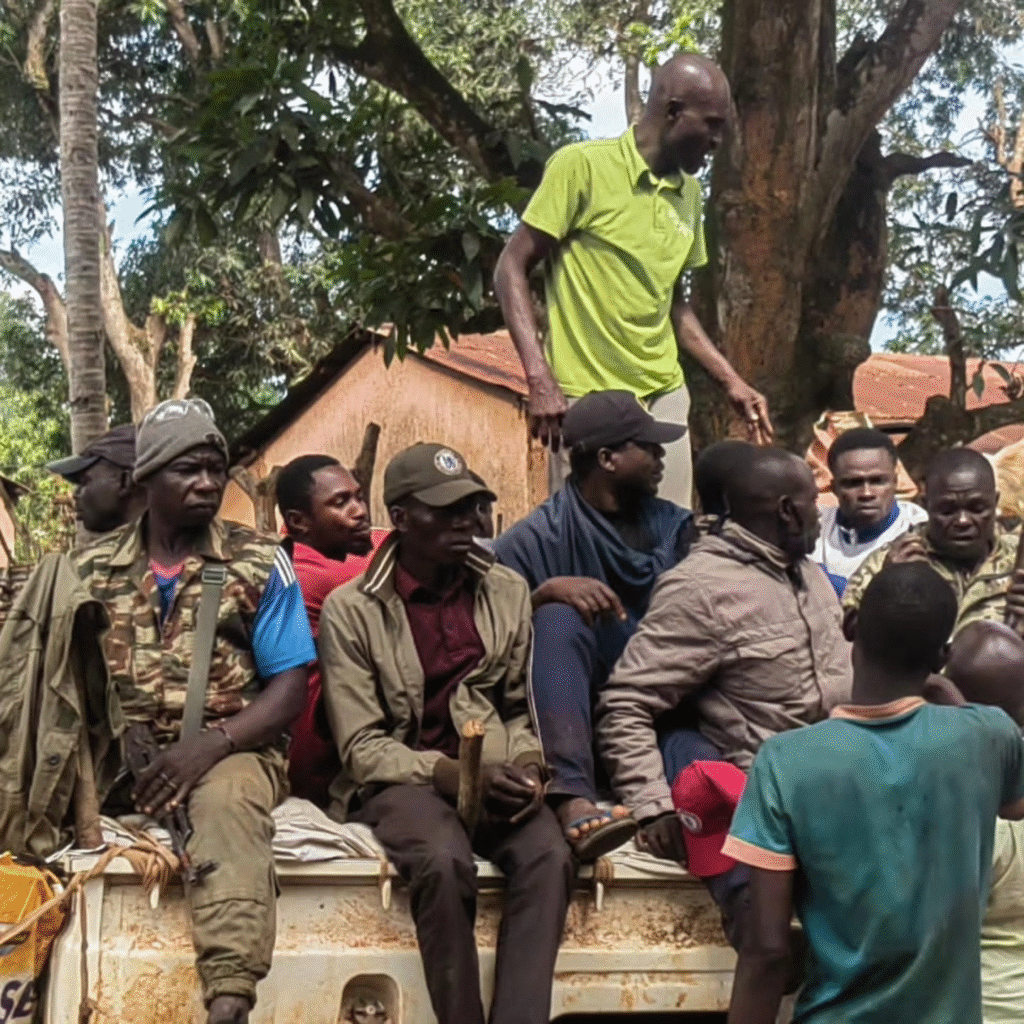
The Nigerian Miners Being Evacuated From the Forest (Photo by Ministry of Foreign Affairs, Nigeria Via Facebook)
Nearly one month after their rescue, the miners have returned to Nigeria and have recounted the horrid experiences they endured during their 20 months of work. In addition to being abandoned in the forest with no pay for 11 months, the miners also detailed the abuse they were forced to deal with.
One of the rescued miners, Igorigo Freeborn, said, “We were homosexually abused by our Chinese employers in CAR. I am not ashamed to say it. I want other people to learn from it. We were treated badly there, but thank God for sparing our lives to tell the stories today.”
He also went on to express gratitude for their rescue, stating,” I want to thank President Bola Ahmed Tinubu, the Minister of Foreign Affairs, the Nigerian Ambassador in Bangui, NIDCOM, NEMA, Immigration, and all other agencies that helped us.”
Freeborn, who was speaking on behalf of the miners, pleaded with the Federal Government to help them pursue justice on the matter.
During a scheduled visit with the miners at the NIDCOM office in Abuja, the chairman of the commission, Hon. Abike Dabiri-Erewa, assured the men that the commission and other relevant agencies would follow up to ensure that the injustice is properly addressed and redress obtained.
Chairman of NIDCOM, Hon. Abike Dabiri-Erewa (Photo by Spotlight Nigeria)
As a form of rehabilitation, the workers were offered cash donations by NIDCOM and Perchstone and Graeys law firm, to enable them to support their families and rebuild their lives in Nigeria.
Hon. Dabiri-Erewa equally pleaded with corporate organizations in Nigeria to show support for the miners by providing them with job opportunities that would contribute to their rehabilitation efforts.
Speaking on how to curb these problems and stop other Nigerians from falling victim to such situations, the chairman urged the miners to join the commission’s advocacy campaigns against irregular migration by leveraging their experiences to warn others of the dangers.
The Chinese Embassy in Nigeria has also shown its readiness to address the issue, saying, “We have also just noted the relevant reports and attach great importance to this matter. We will immediately commence an investigation.”
Ah, the grind. The 40-plus hours a week of earning my keep whilst trying to keep soul and sanity intact. There’s not much I can add to the endless commentary on this reality. What interests me most on this topic is that contemporary living seems to be centered around the grind on top of the grind. Or should I say, the grinds on top of the grind. The stacked grind, if you will. It’s as though our increased reliance on machinery and automated processes has changed our expectations of ourselves — that we, too, should have a certain level of productivity at all times. Ever productive, ever optimal.
Sustainable, optimal, valuable. Execution, success, failure. This language is the perfect fit for operating businesses, quarterly board meetings, and machines. It’s far from a healthy or perfect fit for people, though. Machines were only ever brought to society to bring results. Unfortunately, not only are we not machines, the results of our productivity are rarely as important to us as the process of being busy itself is. Aren’t we all about the process, the journey? The results and the destination aren’t ever that relevant. Maybe that’s how this obsession with the grind came to be; we wanted to chase that high of being productive at all costs, at all times. Is this grind stacking a result of industrial brainwashing? Are we collectively turning ourselves into mass machinery, becoming something we were never meant to be?
Optimally
I’m trying to work out what optimal means for myself, and I’m looking around at my peers. What I’m observing is curious. Those in the deepest of grinds, chasing work, gym, social, vocational, and status goals seem the furthest from happiness. The people closest in my life, who have the best slice of happiness, are doing quite the opposite.
These people are far from gym rats: padded, not iron board flat, and far from worried about how photogenic they are. Selfies and social accounts aren’t really these people’s deal; they are more concerned about school catchment areas than their waistlines. They don’t ask for much, money is responsibly watched over, not idolized with a giddy dream of more. Despite the lack of striving, thriving, “optimal;” they appear to have what all those chasing optimal don’t have — a noticeable degree of contentment and peace with themselves and their lives, which I admire.
The stacked grind is insane, and yet, it’s normal for many.
I’m writing this as I attempt it on my own. I’ve got the 40-hour a week job, the 3–4 workouts a week, the clean diet, the regular social hangouts, and as the author of this piece — wouldn’t you know — my vocation, my calling, my “side hustle” is writing.
Grinding to a… burnout?
I’d be lying if I told you I don’t wake up some Saturday mornings and feel… flattened. I’m still a young man (relatively… my twenties have been and gone; toll the bell, please) and yeah, I’m tired. It would also be dishonest of me to tell you I’m not after “optimal.” And, frankly, it would be dishonest of me to tell you I know what optimal means for myself. When I look around and see my peers after the same thing — this elusive idea of optimal — they appear equally bewildered at the input-to-reward ratio of grind stacking.
Ha, there I go again, talking in ratios. Machine, much?
With all of this stacking and pushing for optimization in our lives, am I the only one who foresees the inevitable outcome — burnout?
This contemporary burnout culture worries me, and maybe because I’ve experienced it myself. An utter internal flatlining was my burnout. Unable and uninterested in relating to much and full of fear. Thanks to the travelling I was soon to do, I did get months off work to recoup. What really shook me was my genuine anxiety over returning to work when the time inevitably came.
People more disciplined, educated, and capable than me have burned out. Lawyers, doctors, nurses — all professions admirable but a likely disaster in these hands — sidelined and flattened through overexertion. Burnout is not specific to geography. I’ve seen burnouts in Australia, New Zealand, the UK, the U.S., and Norway. We’ve never had more provincial safety or material comfort. In some sense, we’ve never had it so good.
Maybe it’s because we’re expecting and wanting more than ever before. Previous times had people working longer, harder hours with less to aid them, and yet burnout was not in their lexicon.
(Image courtesy Christian Erfurt on Unsplash)
Will the grind measure up?
When our elders look back, they don’t regret what they have done — they regret what they didn’t do. In this respect, we might consider more stacking. However, the free spirit in me very much wants to savor the juice of life. While I can, when I can, go for all of it, the good stuff. A very best attempt to squeeze out every last drop.
I’m observing the struggle of the grind and not its raving success. There are surely people who can and do hit the robot groove: up at 5, supplements, exercise, work, date night, and a chartered flight the following morning. For the select few who do not find their mortal limits screaming at them in this process, I applaud them.
Yet it is the tenor of our grind-into-burnout culture that unsettles me. A Buddhist proverb says, “Each of you is perfect the way you are, and yet, you can use a little improvement.”
I feel our current culture emphasizes the last part of that phrase — with scant regard for the first.
When the referee blew the final whistle, it became reality. Chelsea FC, once again, defied the odds to become the first club ever to conquer the brand-new FIFA Club World Cup, hosted in the United States. A unique edition with the 32 best teams on the planet, it proved a success both on the pitch and financially for FIFA, ahead of next year’s major event.
For Chelsea FC, defeating clear favourites Paris Saint-Germain with relative ease – a first-half brace from Cole Palmer (22’, 30’) and another strike from João Pedro (43’) – was a statement to the world: they are back.
Cole Palmer and his already trademark ‘cold’ celebration. He scored twice in the final. (Chelsea FC website)
Previous difficulties
“There is a light at the end of every tunnel” – a famous quote that fits the club’s last three years’ story perfectly. After the UK government forced the club’s sale, ownership moved from Roman Abramovich to a consortium called BlueCo, led by American businessman Todd Boehly.
In the meantime, the club’s appeal faded and results collapsed. Graham Potter, Bruno Saltor, Frank Lampard and Mauricio Pochettino all took turns in the dugout, but none had it easy. External circumstances didn’t help either.
Chelsea finished 12th in the 2022-23 Premier League season, then “recovered” to 6th the following year. With no European competition in between and lacklustre results on the pitch, it felt like a downward spiral until Enzo Maresca was announced as head coach in May 2024.
Italian mister in charge
That proved a turning point and, perhaps, one of the savviest decisions in the club’s recent history. The former Leicester City coach restored a winning mentality and a bold, attractive style of play. As a result, Chelsea clinched a top-four spot (while becoming the youngest Premier League side ever at 24 years and 36 days) and lifted the Conference League trophy after a 4-1 win over Real Betis in the final.
Enzo Maresca collected several trophies as a player and now is doing it as a coach. (NBC Sports)
With that emotional boost, they headed to the United States for the inaugural Club World Cup.
A 3-1 defeat to Flamengo in the second group stage game, a weather-delayed four-hour encounter against Benfica, back-to-back wins over Brazilian sides thanks to mid-tournament signing João Pedro, and a sensational performance in the final against the Champions League holders – it was a wild month. They won silverware, gained experience and proved they could be serial winners again.
“I’m very happy especially for them [players] because they deserve this moment. At the end of the day you can give a detailed plan to your players, but they need to execute it and they did that so well,” Maresca told the club’s official channel after the final.
A special mention goes to Willie Isa, added to the backroom staff as player support and development officer. The former Wigan Warriors centre played a vital role in the squad’s mentality shift. This Chelsea side isn’t just tactically well-drilled, they run tirelessly and press smartly like lions. Much of that hunger should be credited to Isa.
Willie Isa’s winning mentality proved key for the Chelsea turnaround. (LoveRugbyLeague.com)
Fan insight
The success is a signal of hope for the future and shows how the club has managed to return to the good old ways. Nathalia Tavares, a communicator and avid football fan, travelled to the United States and witnessed the tournament first-hand.
“It was great to see Chelsea acting like they knew they could win it, which eventually happened. Not only will Chelsea wear that badge for 4 years, but they come into this season with a lot of confidence in where they are heading, so much different than it has been for the past 5 years or so” she explained.
Maybe the initial loss against Flamengo ended up being a blessing in disguise, as the team avoided the big favourite Paris SG until the final match — rather than facing them in a knockout phase. “I guess there was a big expectation of Chelsea topping the group which would mean a harder path, but it didn’t happen, so the title became more tangible” Tavares stated.
“It’s very clear how the mentality has shifted ever since the Fulham away game,” explains Gabriel Fraga, a lifelong Chelsea fan from Rio de Janeiro, Brazil. In that match, Chelsea kept their Champions League hopes alive after a quick late turnaround — thanks to goals from Tyrique George and Pedro Neto.
Pedro Neto’s dramatic winner against Fulham has been named our Men’s Goal of the Season for 2024/25! 👏 pic.twitter.com/L6inxbg5tA
Since his arrival last year, Pedro Neto keeps proving decisive when it matters most.
Another detail Fraga pointed out was how smart and prepared the new coach is. “Maresca’s system has evolved,” he added. And yes, as seen in the games against Flamengo and in the final, the Italian coach is not afraid to shake things up depending on the opponent.
New season ahead
Only three weeks after lifting the trophy in the USA, the Blues returned for a short preseason, and they did it in style. They beat Bayer Leverkusen 2-0 and AC Milan 4-1, both matches played at the tempo of world champions. Fans at Stamford Bridge also got a first look at the club’s new signings.
Estêvão Willian, the Brazilian prodigy, made his long-awaited debut and immediately impressed. A goal and a penalty-won assist across two games, plus flashes of pure quality play, had the crowd cheering loudly. At just 18, he’s already pushing for a starting spot and, if he keeps this up, it won’t take long.
“We punished him for scoring against us,” joked Maresca. As a reminder, Estêvão scored one of the tournament’s best goals for Palmeiras in the Club World Cup (ironically against Chelsea).
João Pedro (23), Jorrel Hato (19), Jamie Bynoe-Gittens (21), Liam Delap (22), Darío Essugo (20) and Aarón Anselmino (20) also made their home debuts. All are under 23, a clear sign of the club’s long-term vision.
No more blue days
After losing the Carabao Cup final to Liverpool in February 2024, former player and pundit Gary Neville branded Chelsea “a blue billion-pound bottlejob.”
The joke spread quickly across media and social platforms, but Todd Boehly’s plan stayed on course. Backed by sporting directors Paul Winstanley and Laurence Stewart, less than two years later the project is paying off.
As the trophies keep filling the Stamford Bridge cabinet, the standards get higher. Tavares acknowledges this clearly: “My expectations for the season are the best possible. Returning to the UCL is huge already, but I feel like Chelsea can push in the PL and do better in the national cups — although I don’t think they should be a priority as they’ve been in the past years”.
Back in business, Chelsea kicked off their Premier League campaign with seven points out of nine. After a goalless home draw against Crystal Palace, they responded with back-to-back wins — a 5-1 thrashing of West Ham and a solid 2-0 victory over Fulham. They may not be title favorites, but they’ve already shown their credentials.
Before the transfer window closed, Chelsea secured the signing of Alejandro Garnacho from Manchester United. The 21-year-old winger finally landed at Stamford Bridge and will be available for Maresca right after the international break. Fellow Argentine attacker Facundo Buonanotte also joined on a season-long loan from Brighton.
Alejandro Garnacho will wear #49 and is expected to make an instant impact. (CFC Pics on Twitter)
Chelsea are back where they belong and this feels like just the beginning of a new era of success at Stamford Bridge.
“Are you just going to stand there without saying anything?”
That was what someone in the crowd blurted out when I stood on the stage, frozen for over three minutes, trying so hard to remember the opening lines of my speech. Sadly, I couldn’t. Embarrassed was an understatement. I can’t even describe how I felt.
The hall suddenly felt cold — so cold that my body started shaking. At that moment, I wished I had the superpower to disappear. Every student laughed — except my best friend and my tutors. Maybe I wasn’t prepared enough. Or maybe the sight of the crowd scared the words right out of my mouth.
I had no choice but to step down — embarrassed, regretful, and wishing I never got on that stage in the first place. Of course, I cried an entire ocean.
It was our end-of-the-year party back in high school, and from that day on, it felt like every student — except my best friend — became my enemy. Hours passed. Days passed. But I couldn’t get what happened out of my head. It kept replaying in my mind every time I was alone.
(Image courtesy of D S Stories via Pexels)
On second thought, face your fears
Seven months later, I was given another chance to speak. And this time, I was ready. Ready to show them what I could really do. But getting there wasn’t easy. It came with a lot of practice and change to a “Can Do” mindset. I spent weeks watching my teachers closely — how they spoke, their body language, their pauses, their tone. I took it so seriously. I studied them like you’d think I was contesting for a national prize, or the president was going to be in the audience.
Still, I failed. A lot while I was practicing. I would skip lines, forget my words, and even go completely blank during practice. But I never gave up. I never did.
If someone once said “Winners never quit, and quitters never win,” well, I wanted to win. I wanted to earn back my respect. I wanted to silence every mocking laugh. So I could not quit.
Yes, first impressions matter — but second impressions? They can change everything.
I would call my parents, siblings, and even the workers at home to sit and watch me practice. They gave me honest feedback, and I took every correction seriously.
Slowly, bit by bit, things began to change. I stopped skipping my lines. I didn’t go blank anymore. And the biggest change: my mindset. Before, I had a fixed mindset. I was too focused on proving myself to others instead of becoming better for myself. I wanted validation more than real growth.
But then, everything shifted.
I began to focus on myself, becoming the best version of myself. I became more comfortable in my own skin. Yes, I started loving myself and wanting better for myself. And that’s when the real change started. My speeches flowed naturally. I now spoke with confidence.
My parents and siblings clapped — genuinely. They told me where I could improve. I listened and applied their feedback.
Then another opportunity came. It was our end-of-the-year party again. But this time, nobody was selected, we were asked to volunteer to speak, and anyone who did would be given a chance to speak… I didn’t even hesitate. I raised my hand. And I was lucky enough to get a chance.
As the day approached, I studied, prayed, and practiced. A lot, I mean, a lot. I stumbled many times. I was also tempted to step down. Fear still crept in me.
“Are you sure you can do this, huh?”
“Should I fake being sick?”
“Should I run away on that day?”
“What if I mess up again?”
But deep inside, I kept hearing this quiet voice: “You can do it.” That little voice pushed me to keep going. I heard everything but listened only to “You can do it.”
(Image courtesy of Alfo Medeiros via Pexels)
Ditched my fears forever
Finally, the day came. I mounted the stage. My heart raced the moment I saw the crowd. I was afraid and my hands began to shake — that old fear. This time, I didn’t let it stop me.
I took a deep breath, looked around, and began. I started with: “Good morning ladies and gentlemen…”
And I kept going, line after line, word after word, until the very last word. I didn’t skip a single line. I spoke not perfectly, but confidently. That made all the difference. I owned that stage, the stage was mine. My speech ends and…
The auditorium was echoing with claps. It was loud; everybody was clapping. My overjoyed eyes saw some of my tutors standing while clapping. I saw my best friend crying. She was proud of me.
I got off the stage with teary eyes. This time it was tears of joy and pride. “Did I just do that?” I kept asking myself over and over again. My tutors and friends came over to me, appreciating me for my performance. One of them, who had laughed at my first speech, came over and said, “I never thought you could pull that off. Bravo.” I replied with a smile, “This is just the beginning.”
That night I was overjoyed, I didn’t remember to eat dinner. I just sat replaying the video on my phone, again, and again, and again.
That was the day, it dawned on me —
My voice matters.
And do you know the sweetest part? Your voice matters too.
Amid emotional collapse and the overwhelming sense of invisibility that runs through so many women’s lives, a simple idea reignited Bruna de Ornelas’s purpose: to create a space where women could truly meet, both themselves and each other.
That’s how the Girl Talk Club was born: an alternative community weaving together care, learning, and belonging in the heart of São Paulo, Brazil.
Through in-person gatherings, conversation circles, creative clubs, and emotionally safe English workshops, the project has become a refuge for creative, intense women who don’t fit into the traditional corporate mold.
Bruna, who holds a degree in International Business and teaches English to adults, went through a deep depressive episode after facing homophobic abuse in the condo where she lived with her wife and young daughter.
Without institutional support and carrying a history of harassment, she decided to build, from scratch, a new way of inhabiting the world and helping other women do the same.
“I could only go back to teaching if I truly believed I was capable of delivering my best work. But I couldn’t return to teaching in the same way. I needed a life project. A legacy. A love letter to myself and to my students,” she wrote in a letter published on Girl Talk’s social media.
Since then, the club has brought women together for free events, expanding the conversation around identity, voice, and autonomy in a city where many feel alone, even when surrounded by people.
The community also became a space for collective English learning, using collaborative formats that break away from traditional rigidity and center listening, vulnerability, and exchange.
Among Girl Talk’s initiatives are:
Open picnics for women, with conversations about career, creativity, and emotional support;
Writing and artistic expression workshops, inspired by artists like Geloy Concepcion;
Secret subscription-based clubs for more complex activities in smaller groups (reading, cinema, art, letter-writing, and business);
Thematic workshops and circles with guests discussing self-esteem, communication, and life transitions;
Online and in-person events on topics like “creative vulnerability,” “girl-owned business,” and “nonconforming professional identity.”
Today, Bruna leads the project alongside other women and is already preparing to expand into new educational formats while keeping the essence intact: no one needs to perform perfection to learn or to belong.
Girl Talk defines itself as a “space of subversive care,” created by women who are tired of bending to external expectations.
In contrast to toxic positivity and performative success, the club embraces the risk of deep listening and the courage to reappear.
English Classes for Adults
As an English teacher beyond the Girl Talk Club, Bruna describes her approach as decolonial and gender-conscious. To her, teaching a language is more than grammar and conversation, it’s about repositioning women in the world.
“We go after this knowledge and then feel ashamed to use it. Because those born with access look at us sideways. And that applies to everything: English, art, education. What I offer is more than a class, it’s a reclamation of belonging. The average student believes they don’t deserve to learn English. That’s not procrastination. It’s historic. It’s structural. It’s healing work,” she says.
Bruna explains that her teaching questions who gets access to knowledge and how that access is perceived by society.
“It’s not well seen when we learn later in life. The system values those born inside of it. But we belong at the table too. We just need to craft new utensils.”
Currently, Bruna offers both individual and group classes, shared mostly through communities and organic networks. Her focus is to keep the space intimate, safe, and collaborative without resorting to the performance of self-promotion.