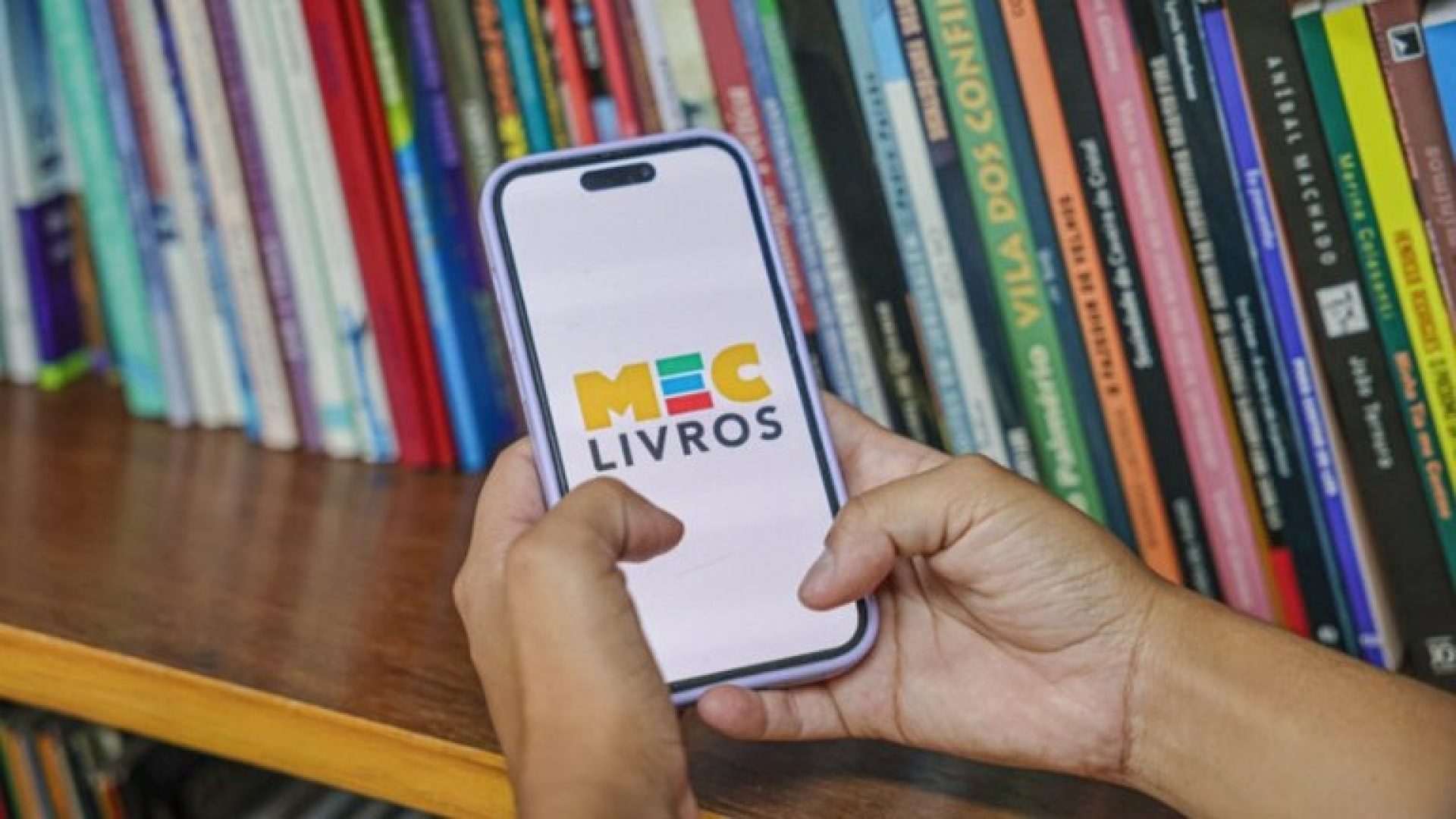
On April 5, 2026, Brazil’s federal Ministry of Education (MEC) launched a free digital library featuring a wide range of books. The initiative aims to democratize access to reading for all citizens.
What is MEC Livros?
It is a public, free digital platform offering about 8,000 books, both national and international. The library includes classics, bestsellers, new releases, and various literary genres, aimed at students, teachers, and general readers.
For university student João Pedro Oliveira, MEC Livros revives a culture that has been fading by bringing readers closer to the traditional library experience.
“It’s a wonderful proposal… What’s most interesting, in my view, is that it imitates a library. I think that’s a culture that has been largely lost nowadays.”
The student also highlights the variety of the catalog as a strong point, noting that it can attract different reader profiles.
In a country where access to books is still shaped by economic inequalities, public initiatives to encourage reading become essential for forming new readers.
Additionally, the country has been experiencing a decline in the number of readers in recent years, highlighting an increasing distance between the population and reading habits. This context is directly linked to structural factors such as social inequality and the high cost of books, which limit access, especially for low-income communities.
This difficulty is also reflected in the daily lives of young readers. João Pedro reports that limited access directly hindered his development as a reader, particularly in engaging with Brazilian authors.
“The biggest impact is my lack of reading Brazilian literature. I’ve always tried not to download pirated books, so among everything I’ve read, only a small portion is national literature.”
In contrast to this scenario, Rio de Janeiro’s recognition as UNESCO’s World Book Capital in 2025 — an annual title granted by the organization to cities that promote reading and access to books — reinforces the importance of projects that encourage reading and expand access to literature.
The city was chosen for its commitment to promoting literature and improving accessibility for all citizens, intensifying discussions about how factors like high book prices and limited access influence low reading rates in the country.
The digital format also stands out as a key advantage of the platform. By gathering thousands of works in an environment accessible via mobile phones, MEC Livros expands opportunities for engaging with reading in everyday life.
“It’s on our phones, something we use very frequently. That makes a huge impact,” João Pedro says.
According to the student, the impact of reading goes beyond the immediate habit:
“It’s something quiet and long-term… The more you read, the more you realize how far your mind can go.”
In this way, platforms like MEC Livros emerge as a way to bring the population closer to the literary world through the democratization of knowledge and digital inclusion on a national scale.
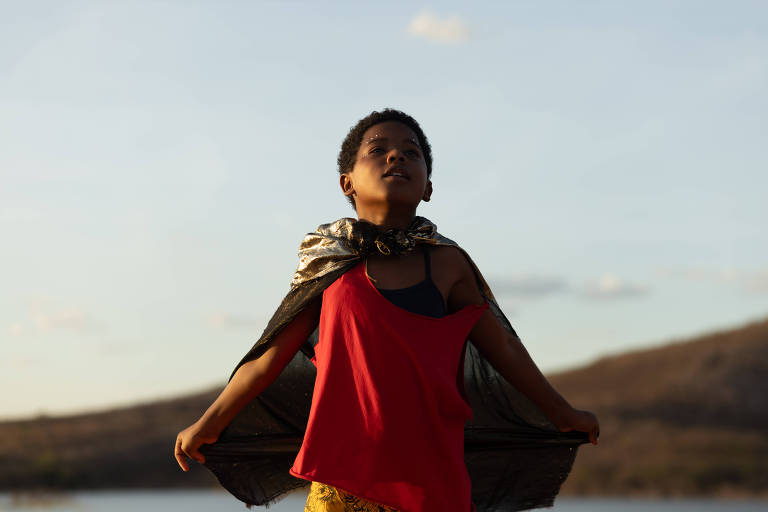
The Brazilian film “Gugu’s World”, winner of the Grand Prix in the Generation Kplus section of the Berlin International Film Festival (Berlinale) in 2026, follows the story of an eleven-year-old queer boy who dreams of becoming a soccer player while facing the progression of his grandmother’s Alzheimer’s disease.
“It’s not a movie that labels itself only as LGBT. It’s a movie that anyone can connect with. Beyond questions of identity, it also deals with memory and family relationships,” says André Araújo, the film’s screenwriter.
The drama conceived by André Araújo and directed by Allan Deberton follows the life of Gugu. Raised lovingly and freely by his grandmother, Dilma, their relationship of care seems to reverse when the progression of Alzheimer’s begins to weigh on her. Afraid that he may have to live with his father – who does not understand him as he is – Gugu tries to hide from everyone what is happening.
The film stars Yuri Gomes, Teca Pereira and Lázaro Ramos, one of Brazil’s most prominent actors, who attended the Academy Awards accompanying his long-time partner Wagner Moura, a 2026 Oscar nominee. The cast also includes names such as Carlos Francisco and Georgina Castro.
Among the film’s critical responses, many highlight Gugu’s singular and determined personality. In an exclusive interview with The Sentinel, screenwriter André Araújo discussed the construction of the character:
“Gugu moves between genders. He isn’t simply a ‘gay kid,’” André emphasizes. “At the same time that he’s a sensitive child who likes to wear makeup, dress up, wear colorful clothes, dance, and express himself through clothing, music, and dance, he also expresses himself through soccer. His dream is to become a soccer player, which is a masculinized space where someone like him normally doesn’t have a place.”
Awards in Berlin
The Berlin International Film Festival (Berlinale) took place between February 12 and 22. The film was screened in the Generation Kplus section, a segment dedicated to works that explore narratives about growing up and coming of age for young audiences.
After its screening, “Gugu’s World” received a warm reception and took home two awards. The Grand Prix of the International Jury was granted by a jury dedicated to selecting the best feature film addressing the world of children and youth. The second award was the Crystal Bear, decided by a vote of the children’s jury.
“The audience applauded the film standing for eight minutes, and people came up to talk to us about how deeply the film touched them […] A man around 60 years old came up to me and said, ‘Look, I really saw myself in that boy, because I was a feminine child, a gay kid,’” André recounts.
Among viewers, the relationship between Gugu and Dilma was also warmly received. André Araújo described their relationship using the term “arenga,” a Brazilian expression from the state of Ceará that refers to a form of love expressed through playful bickering. “It’s their way of saying ‘I love you,’” André concluded.
Film critic Natália Bocanera attended the screening during the Berlin showcase and told The Sentinel about her experience:
“I believe the most striking point in Gugu’s World is the beautiful relationship built between grandmother and grandson and the freedom with which they express themselves. The idea of bringing together extremes carries with it the expectation of conflict and confrontation. However, Gugu and his grandmother Dilma never repel each other; instead, they complement one another to the point that together they radiate such a strong light that all we want is not to look away from their existence,” she concludes.
Natália also highlighted Lázaro Ramos’s performance, emphasizing how powerful it is to see him portray a role so different from his usual ones: that of a father who oppresses his son, struggles to connect with him, and yet still carries the complexity of loving him in some way, bringing the character closer to the reality of many Brazilian families.
The backlands and Alzheimer’s
During the interview, André Araújo also revealed the connection between the film’s narrative and the Brazilian sertão (the semi-arid backlands of northeastern Brazil), a setting that plays an important role in the story.
According to Araújo, the idea for the project emerged after encountering the former town of São Rafael, in the state of Rio Grande do Norte in northeastern Brazil, which is now submerged beneath a dam. The landscapes and the stories of local residents revealed that the impacts extend beyond the physical, reaching symbolic and subjective dimensions of people’s lives.
From this, André began to see the place as a space of memory. The city that is visible only when the water level of the dam drops became a metaphor for Alzheimer’s disease.
“You see a reservoir dry up and, little by little, the old city starts to emerge. Alzheimer’s is a similar process: as the disease progresses, something remains, and that something that remains is often very small. It’s no longer the memory, no longer the everyday recollections, but a trace of who that person once was.”
The relationship between Gugu and Dilma is directly affected by the disease’s progression, and a central part of the film is the coming-of-age that grows out of that experience.
“There comes a moment when he has to take care of his grandmother. He becomes adult-like. He switches roles with this woman: the one who should be caring for him becomes the one cared for by him.”
“Gugu’s World” currently has no scheduled release date in Brazilian theaters or on streaming platforms. International distribution has also not yet been confirmed.
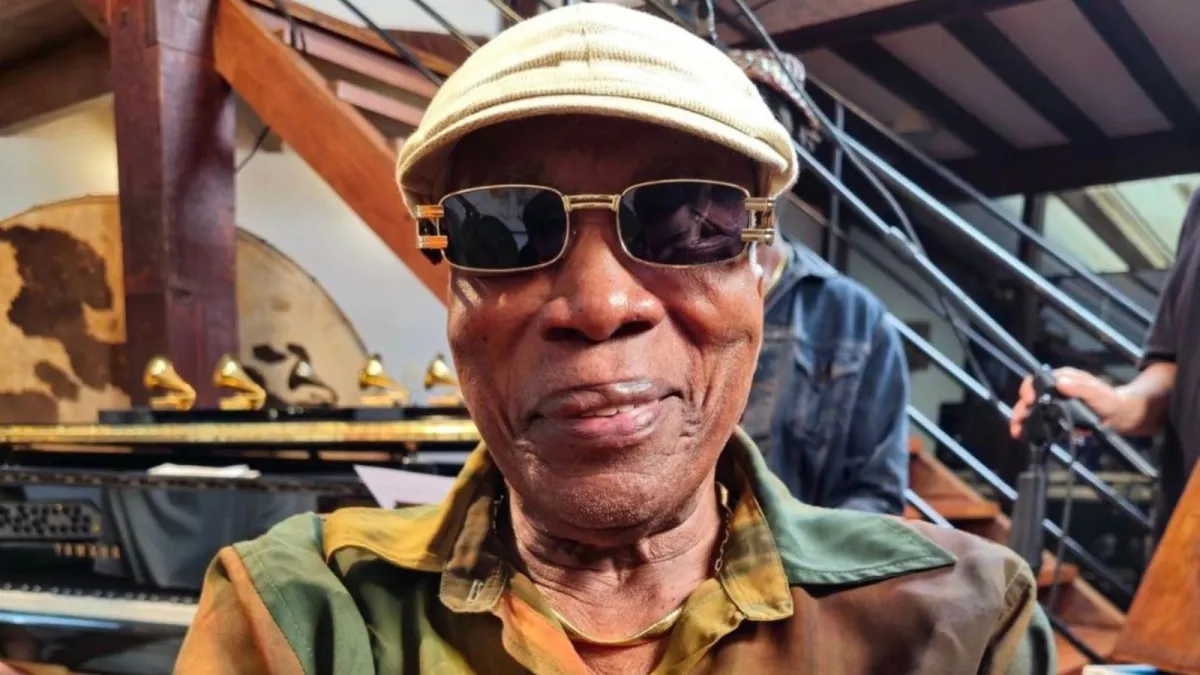
In December 2025, Brazilian singer and songwriter Milton Nascimento once again received the title of Doctor Honoris Causa. In April of the same year, he had already received the same distinction from the University of Campinas (Unicamp). As one of the greatest names in Brazilian popular music, the recognition highlights the impact of his artistic work on the country.
The title of Doctor Honoris Causa is one of the highest honors that can be granted by universities and seeks to recognize exceptional individuals who have contributed directly to society, without the requirement of having completed an academic degree.
In addition to Milton Nascimento, emblematic figures such as Meryl Streep and Pelé have also been honored with the title of Doctor Honoris Causa.
In December, the Oswaldo Cruz Foundation (Fiocruz), the largest biomedical research institution in Latin America, awarded the honorary title to the artist. One week later, the Federal University of Minas Gerais (UFMG) also granted him the same distinction. The events brought together academic authorities, researchers, and representatives from the cultural field.
With an approach focused on an expanded concept of health, Fiocruz emphasized during the ceremony the deep dialogue between art, culture, and health:
“One of the questions that always comes up is what a musician has to do with Fiocruz. The answer lies in our understanding of health, which includes social determinants and recognizes culture as a foundational element. Milton is not only an artistic icon; he is a reference for political engagement and the defense of social causes,” said Cristiana Brito, director of Fiocruz Minas, in her speech.
The award recognizes the artistic trajectory of Bituca, the nickname by which he is widely known, as an example of the use of art to confront social injustices. Throughout his musical career, the Minas Gerais-born musician has addressed diverse themes such as resistance, denunciation, and the affirmation of Black identity.
Speaking to The Sentinel, historian and professor at the State University of Minas Gerais, João Teófilo, highlighted the importance of the title:
“Milton Nascimento is one of the most important figures in Brazilian culture born in the 20th century. I dare say he is the greatest living artist in the country. His work presents a level of sophistication widely recognized by both musicians and scholars, in Brazil and abroad,” he stated.
“Brazilian music and culture would not be the same without the presence of an artist of Milton’s magnitude, whose influence crosses generations and borders. In this sense, the title of Doctor Honoris Causa is not only an individual tribute, but an institutional recognition of the centrality of his work to the understanding of Brazilian culture,” Teófilo concluded.
Having been recently diagnosed with Lewy body dementia (LBD), the artist was unable to attend the ceremony, and the award was received by his friend, musical partner and conductor, Wilson Lopes.
“Milton is an artist of immense greatness, not only musically, but humanly as well,” Lopes emphasized during the event.
Cultural Impact
During the period of the Brazilian military dictatorship, from 1964 to 1985, Milton Nascimento was one of the targets of censorship. His resistance to the system can be seen in several works, but especially in his album Milagre dos Peixes, released in 1973.
The album’s title criticizes the so-called “economic miracle” promoted by the dictatorship. At the time, the regime used television and radio to sell a narrative of a country in development, ignoring the aggressions and censorship imposed by the military.
Several tracks from the album had their lyrics banned or subjected to cuts that compromised their integrity. However, the singer decided not to exclude them, but rather to change the proposal. As a result, the censored songs were given vocalizations, screams, and other sound effects. According to accounts from the period, the idea was to express, through experimentation, everything that the dictatorship prevented him from singing.
The album liner notes made the censorship even more evident. In the credits, even the songs composed only of vocalizations still included the songwriter’s name. This way, his audience would know that, despite the experimental nature of the track, there had originally been a composition there.
In response to his resistance, not only the artist but also members of his family reportedly faced persecution during the dictatorship. As a result, he had to distance himself from his then-girlfriend and his adopted son for an indefinite period, losing contact for years.
Beyond the dictatorial period, Bituca explored throughout his discography themes related to racial inequality, the celebration of Black identity, and the valorization of women. Songs such as “Morro Velho,” “Maria, Maria,” and “Lágrimas do Sul (For Winnie Mandela)” are examples of this.
Also speaking to The Sentinel, João Teófilo, who researches themes related to the military dictatorship, culture, and memory, emphasized the musician’s importance beyond the Brazilian dictatorial period:
“Although Milton consolidated himself as an artist mainly in the 1970s, in the midst of the dictatorial regime, his work is not limited to the issues of that period. He is an artist who thinks about Brazil ‘from within,’ the deep Brazil, addressing structural themes such as Black identity, racism, Latin America, social inequalities, and Indigenous issues, among many others,” Teófilo noted.
Another major highlight of his career is his defense of Brazil’s Indigenous peoples. “Amor de Índio,” “Os Povos,” and “Yanomami e Nós (Pacto de Vida)” are some of his works that reflect on justice and the appreciation of nature and those who live in it.
“Milton is a political and engaged artist, even though, like any long trajectory, his career presents occasional contradictions. What stands out, however, is the fact that he has placed his work at the service of causes he believes in, combining aesthetics with social commitment. Thus, more than a virtuoso or a musical genius, Milton Nascimento is a sensitive interpreter of Brazil, someone who, in dialogue with various partners, has helped — and continues to help — think about and understand the country in its tensions, wounds, and possibilities,” Teófilo concluded.
2019. Caicó, in the sertão of Rio Grande do Norte, Brazil. The sertão (semi-arid backlands) is Brazil’s harsh and poetic hinterland—a land of cracked earth, faith, and endurance, where time moves slowly and people survive between drought and devotion. It’s a vast, dry region marked by small rural communities, strong traditions, and a history of resilience amid social inequality.
A team of filmmakers sets out under scorching heat—temperatures never below 32°C even in winter—in search of extras for the film Bacurau. They head toward neighboring Parelhas, to the district of Cobra, 25 km from the city of 63,000 inhabitants chosen as the filming location.
They decide to stop at a house for a snack. A voice breaks the silence:
— Good evening!
The phrase echoed with such force that the filmmakers said:
— That’s it! No need for casting tests. That’s the voice I need. She’s hired.
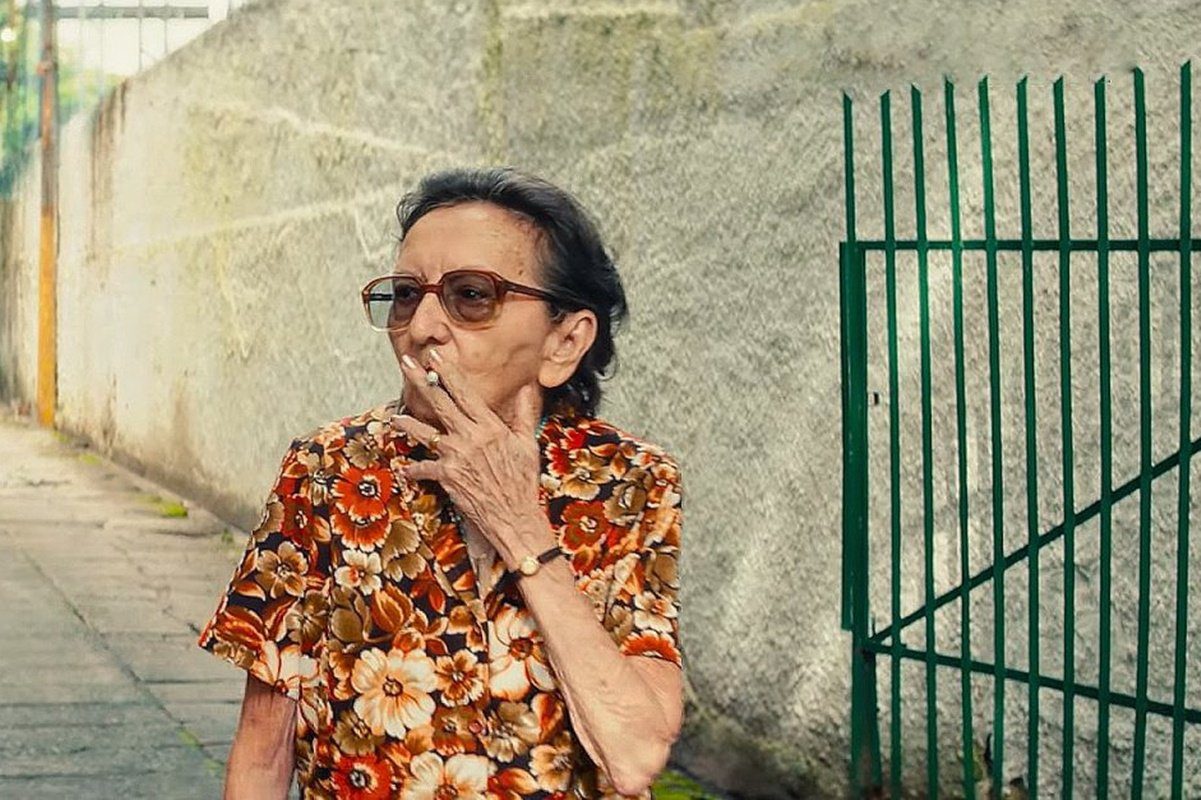
And that’s how rug artisan Tânia Maria, now 78 years old, became an extra in the drama directed by Pernambuco born Kleber Mendonça Filho. Little did she know she was beginning a journey toward the world’s most prestigious film award—the Oscars—which she admits: “I don’t even know what that is.”
To reach the filming set in the neighboring city, the newly hired actress had to travel by bus for an hour every day. During one lunch break, Kleber and casting director Leonardo Lacca (Leo) invited her to join them and co-director Juliano Dornelles at their table.
— Tell us a bit about your life.
Once again, Tânia’s words enchanted the team. She was later invited to act in a documentary-fiction hybrid about “Seu Cavalcanti,” Leo’s grandfather. Juliano didn’t waste time either and invited Tânia to act in Delegado, which recently wrapped filming and is set to premiere in 2026.
The youngest of five siblings (only one sister is still alive), the artisan is a single mother. Today, she lives with her daughter, granddaughter, and great-granddaughter in Cobra, a district of Parelhas, 240 km from Natal (capital of Rio Grande do Norte).
But it wasn’t always like this. Long before fame, she made wedding dresses—and not just dresses.
— I made all the clothes for a wedding. I made an entire wedding. Dresses for flower girls, bridesmaids, mothers of the brides. I just didn’t make jackets for the men. I lived in the brides’ homes for months. I lived in Natal, João Pessoa. I took my little daughter with me.
She explains why she left her career as a seamstress:
— I also made many uniforms for bus drivers and fare collectors, but 20 years ago I decided to change. Brides were too much work—they needed fittings and dress trials. So I started making rugs from used sofa fabrics. Today my daughter helps me. I want to make films, but I don’t plan to stop making rugs. I sell them wholesale to stores in Parelhas.
Welcoming Spirit
In the film O Agente Secreto, officially Brazil’s submission for Best International Feature Film at the 2026 Oscars, Tânia plays Sebastiana, who rents apartments in Recife (capital of Pernambuco Province) to the character Marcelo, played by internationally acclaimed actor Wagner Moura (Narcos, Mr. & Mrs. Smith, Civil War).
— I’m welcoming, just like Sebastiana. I welcome everyone into my home.
In an interview with Brazilian site C7nema in May 2025, director Kleber Mendonça Filho described Sebastiana’s refugee shelter as a “bunker of affection.”
Sebastiana smokes, but Tânia quit.
— You know I didn’t go to France with the film because I couldn’t handle the flight without smoking? I used to smoke two packs a day, but I quit. The film will be shown in Natal and São Paulo, and I’ll go by plane.
In fact, the plane took the first resident in Parelhas’ history to visit the Palácio da Alvorada, the official residence of Brazil’s president. Not just to visit—Tânia watched the film in a private session with President Luiz Inácio Lula da Silva and First Lady Janja Lula da Silva.
— Lula shouted and patted my back every time my character appeared. He’s a simple man, you know? Lula is “sweet.” And Janja—don’t even get me started. I’m grateful to Kleber, Juliano, and Leo for all of this.
At the end of the film, the president asked Tânia: “What do you need?”
— Films!, said the septuagenarian with an energetic voice, also over the phone in an exclusive interview with The Sentinel byYuvoice. She surely repeated the line with the same authenticity she used with the president.
She said the president agreed:
— There will be lots of films!
Neighbors had told Tânia to ask for paved roads and a soccer field. But she said she doesn’t drive and doesn’t play soccer—so she asked for opportunities in acting.
And she’s already getting them. Tânia is currently starring in Seu Cavalcanti, will premiere O Agente Secreto in Brazil on November 6, Delegado in 2026, Yellow Cake (already presented at Cannes’ Marché du Film 2025 and filmed in Picuí, Paraíba), and Almeidinha (shot in Caicó and Chile).
Full of Mystery
O Agente Secreto has no clear synopsis on film sites. The directors’ interviews are evasive. The official trailer is inconclusive.
The director says he doesn’t like labeling his films with adjectives. So the atmosphere of mystery isn’t limited to the film. Tânia lets slip a detail about her character’s political alignment—but quickly regrets it.
— You’re not going to publish that, right? They’ll get mad at me!
How could anyone ignore the request of someone so kind, simple, and authentic—still new to dealing with journalists?
I ask: what’s it like seeing Brazil’s Northeast on the world’s screens? Seeing Pernambuco and Northeastern actors rising to such success, even being considered for Oscar nominations?
— It still hasn’t sunk in!
Tânia reveals that Marcelo, Wagner Moura’s character, searches for his son in Pernambuco but doesn’t find him—or his documents.
— You’ve seen the film, right?
— No, Dona Tânia, not yet.
Unfazed, she doesn’t offer any more clues about the plot. Since I couldn’t uncover any secrets, I turn to reality.
— You were in your twenties during the start of Brazil’s military dictatorship. Do you remember what the country was like?
— Yes. Back then we didn’t have electricity. TVs were only near big cities. We got the news from Voz do Brasil on the radio.
— Could you tell what was happening in the country?
— Not really, but we knew something strange was going on. My own father had to hide in the swamp because of political alignment—he was on the run.
We reached the end of the conversation (which she called a “lecture”), and the actress didn’t reveal the political content of O Agente Secreto or any other spoiler .
The film takes place in 1977, when Brazil still had eight more years under a regime that didn’t honor democratic rights and duties, led by General Ernesto Geisel, the second-to-last general to govern Brazil.
Want more details? Dona Tânia won’t tell us… We’ll just have to wait eagerly for the premiere.
There’s something quite perverse about lusting over the ghostly remains of a prison, I think. Especially one within swimming distance of the beating heart of America.
San Francisco. Electric jazz, 24-hour diners, and Mexicana coursed through the city’s veins like the pulsating neon lifeblood of the twentieth century’s best estimate of freedom. Alcatraz stands sentinel, a mirror image of the Other Coast’s optimistic monument to Liberty. The island’s incarcerated vantage point shrinks the cityscape to a postcard as if, all at once, it could be lit by a single car headlight, driven deep into the night by some imaginary Film Noir Private Eye looking for an excuse to let off steam in a bar that no longer exists. The bay water lies still, mocking the failures of the Psychedelic Era, their twelve-string guitar refrains ringing out endless echoes in the cavernous brains of the 21st-century acid casualties, which we’re told by the Travel Agents, Presidents, and Uncompromising Capitalists, wait for us on every street corner.
“The Fillmore isn’t what it used to be” / “Don’t go to The Tenderloin at night” / “Wear your backpack on your front” / “Keep a hand on your wallet and the other on your G-U-N” / “Stick to the tourist hotspots” / “Try the artisan bread at Pier 39” / “Go see the sea lions” / “Listen tothe Ocean” / “Don’t make eye contact with those weirdos on the trolleys, that’s how they get you” / “The Golden Gate Bridge has a gift shop and a café” / “There’s a Macy’s right there in Union Square… and a Rolex store” / “What’s in a margarita again? It sounds Mexican to me… Have a bourbon instead” / “SOUVENIRS SOUVENIRS SOUVENIRS!”
San Francisco. It all starts here. The Summer. The Pacific. California. The Gold Rush. America and its Dream. Peace & Love. America and its Nightmare.
The Pinecrest Diner
If I’d been at home in England, walking into whatever the British equivalent of the American Diner is, hearing there was only seating at the counter would’ve been enough to spin me back out onto the street, searching for refuge in the nearest Starbucks.
But the high stools at The Pinecrest — San Francisco’s 24-hour Diner, est. 1969 — seemed to shout, “COME ON DOWN!” Their polished, heavy silver bases caught the early sun and shot it back out across the booths, illuminating families, couples, and solo patrons of all nationalities and heritages, like a melting pot mirror ball. The air was white with powdered sugar, it was black with caffeine.
At this time, in the morning in a place like this, you catch the tail end of the night-owls: the ones still running on the fumes of yesterday. You also get the early-birds as well: the cops, the tourists, the business elite — ties tucked into shirts to fend off the maple syrup deluge that’s burned them before. That’s the beauty of it — the American Diner. It’s timeless. Or, rather, it’s all times all at once. All times for all people. The Great American Cliché. But it’s only a cliché because it’s true.
No easy-listening-FM-classic-rock-radio-background-music. The Pinecrest plays the real American soundtrack: the sheer VOLUME of ongoing operation. Grill sizzle. Cutlery scrape on Formica table top. Cash register ejecting to the rhythm of fugitive coins longing to escape its drawer. All cogs working toward their highest purpose, as the servers, high on well-deserved tips, slalom the course of tables and chairs, delivering the goods and clearing the remains. Pancakes, Waffles, French Toast, and Pie. My oh my.
There’s something extremely satisfying about seeing the same thing on repeat over and over again. It has a calming effect on me. From my counter perch, shoulder to shoulder with the multi-coloured world, watching the uniformed rows of puddles settle into perfect plate-sized pancakes, I found peace. Peace without quiet. Flip, Flip, Service! Butter, Syrup. More coffee? Don’t mind if I do! I lost all sense of time as everything seemed to be happening around me. I was probably only in there an hour, but as the greased machine of unfussy fare churned like the changing seasons I could easily have lost a year. A city day in the City By The Bay. Did I mention it all starts here?
Tommy’s Mexican Restaurant
The unassuming facade of Tommy’s Mexican Restaurant — The World’s Best Tequila Bar, est.1965 — gave way to a vision of The Real American Hero. Haloed by the stained-glass lightshow of a million reflections through a thousand tequila bottles, the bartender juiced lime after lime for the long afternoon ahead. There’s something extremely satisfying about seeing the same thing on repeat over and over again. It has a calming effect on me.
With a white towel across his shoulder, he was ready to mop the myriad problems of his patrons. He tossed the ringed-out lime husks onto an ever growing pile, a daily art installation: a monument to the Margarita.
“Tommy’s Mexican Restaurant: where one arrives for a drink and leaves as a friend.”
We’ll see about that, I thought to myself.
If I’d been back home, in the British equivalent of the family-owned-and-internationally-lauded-drinking-institution, an invitation of “would you like to sit at the bar?” would have me back on the street faster than you could complain about the weather. But the complimentary platter of chips and salsa seemed to be waiting just for me, as if I was always supposed to be here, now. Take a seat, forget the outside world.
The Hero wasn’t just any bartender. He was Julio Bermejo, the actual inventor of the actual ‘Tommy’s Margarita,’ which was my favourite drink in the world. Here I was alone with him, learning about agave, cocktail ratios, optimum ice dilution, the city and its country, life and its maladies. I sampled hundreds of dollars worth of tequila — stuff I’d never get in England — without charge.
A cop walked in and joined me. He bought me a shot of mezcal, and another shot, and another shot. Bang! Bang! Bang! Someone was shot last night, right outside the Rolex store in Union Square, he said. Out here, where THEY told me not to go, it was safe. I was probably in there for about four hours, but it disappeared like a flash.
(Image courtesy of Maarten van den Heuvel via Unsplash)
Escape From Alcatraz
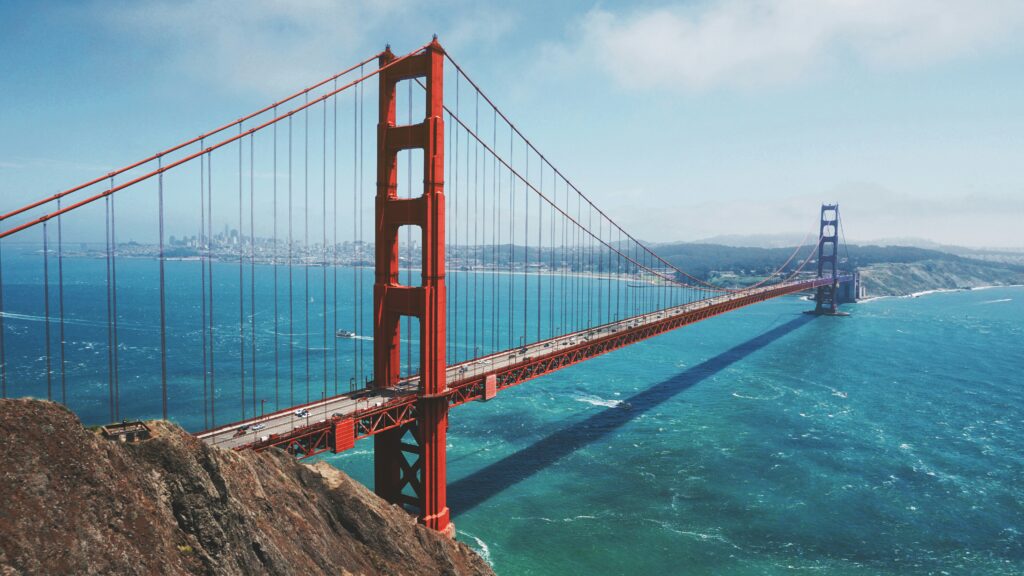
These two anecdotes are from the same day. The gap between them was bridged by walking on an actual bridge. The big red one. Its metal emerged from the hanging fog at regular intervals like futuristic robots rising from prehistoric land. There’s something extremely satisfying about seeing the same thing on repeat over and over again. It has a calming effect on me. Pausing at what I guessed was halfway, I could make out Alcatraz. Framed by the bridge, it looked imprisoned itself. Apparently, he’s thinking of re-opening it. Somewhere to put the immigrants, I suppose…
As I stood from my barstool, I understood why food and drink is a fine way to see a city: everybody gets hungry, everybody gets thirsty. The Pinecrest and Tommy’s were different in many ways. One purposely faceless and fast while the other is deliberately familiar and slow. One’s sprawling menu racing to keep pace with its clientele while the other’s expertly-measured commitment to its craft teaches us the beauty of Mexico and its delights. What unites them is this: unlike the landmarks and the tourist traps, they’re both necessary.
Both could easily sink into the commercial comfort of nostalgia, but neither does. They’re not relics. They’re relevant reminders of the value in communication & connection, meeting new people & learning their cultures, social diversity & tolerance & hope & all those other essential ingredients in the freedom we apparently seek. Both preserve the individuality of a city, a state, and a country under threat from its own leadership. They’re what San Francisco needs to be, for all of us, forever.
I said goodbye to my new friends — the celebrity and cop — and wobbled my way into Golden Gate Park. The late sun shone in splinters as the last meditative ounce of mezcal took hold. My mind was clear of all thoughts except one: a seat at the counter is always a good idea.
Six letters, six minutes. C-L-O-S-E-D at 8:00pm. It’s now 8:06pm.
I stare at the bold black letters in front of the weathered “J. Hara’s General Store” with a bit of torturous disbelief. My stomach grumbles and I feel my husband’s thinly veiled displeasure radiating off his person like a heat wave. I turn to him and state, “Well now what?”
Grumble, grumble. “I don’t know, honey. I’m just as surprised as you are,” my husband says.
“I know right? It’s a Saturday evening. How can things close at 8 o’clock at night?!”
“Big Island really does things differently from O’ahu.”
I nod in agreement. “Well,” I suggest, “I guess we can try to drive back further into town. Do you want to grab Taco Bell?”
My husband, Jess, ponders my inquiry for a few moments while kicking a rock on the pavement below. I begin to shiver from the evening air while I likewise scan our surroundings.
Currently we’re standing in front of a locally owned market and general store boasting its historical status with old, wooden siding and some sepia tone photos on its outer cork advertisement board. To our left is a gravel parking lot, and to our right is a closed cafe and a small gas station. Other than a few lampposts dotted here or there, the cool, white moonlight shining down is the only illumination we have.
J. Hara’s General Store is the closest to our weekend getaway…a mere 40-minute drive away. Neither my husband nor I really want to keep driving, but we’re too hungry to go back to our campsite without something to eat. We have spent the whole day hiking the Volcanoes National Park and, in our excitement, we have neglected to eat anything beyond trail mix for the better half of the day. So, we hop back into our rental Jeep long past the sunset on Pele’s playground and decide to drive North until we find somewhere to eat.
And now here we are. But we’re six minutes too late.
Perhaps noticing my sudden goosebumps or feeling the cool breeze himself, Jess recommends we head back to our vehicle to try and look up something else on Yelp. Up until a few miles down the road, we have had no phone service, thus the time discrepancy with the restaurant. Agreeing, we begin to walk to the Jeep, chatting about our day all the while, when the young couple at a gas pump catches my eye.
Other than the not-so-amenable employee closing up, my husband and I, and the couple, the parking lot is empty. Typically, I mind my own business, yet I can’t help but notice that the man has been fiddling with the gas pump for the entire time Jess and I have been there. It clearly has an “OUT OF ORDER” bag over its handle, so I can’t understand why he would be trying to use it.
They look young, and seem stylish; the man sporting a boy band singer haircut and monochrome black ensemble and the woman, with her profile poking out of the top of the red Mustang convertible, is pretty enough to be an actress. He continues to call out to his female companion, with increasing frustration when suddenly it clicks.
He’s speaking Korean!
(Image courtesy of Kang So-eun via Pixabay)
Many years before I wound up at this gas station in Kurtistown, Hawai’i, I spent many nights in Monterey, California at a little place called the Defense Language Institute (DLI), the United States military’s premier language learning academy. For sixteen arduous months, I spent upwards of seven hours a day, five days a week learning my assigned language of Korean to become a linguist in the US Navy.
Frankly, the experience was very difficult for me. Although my aptitude was great, and I had not much trouble with the actual Korean learning process, many of the emotional, physical, and spiritual aspects and consequences of my Korean course were back-breaking. The rigorous military-school work balance, homesickness, youth, poor self-esteem, and even just the blunt, and seemingly callus treatment from our native Korean instructors often wore me down.
I can see now how these experiences shaped me and helped me become a much stronger version of myself today, but at the time, I was often melancholy and filled with angst.
I channeled my feelings into despising the Korean language for being required to learn it. I didn’t want it to come to me easily; I wanted to fail and start something new in the Navy, but my fear at what the military would do to me were I to quit at such an advanced stage forced me to continue to perform well academically.
Essentially, I had shown my potential in a difficult course with a low retention rate. Were I to fail, my superiors might know I was doing so purposefully and reassign me a terrible job in the Navy. Like painting ships for twelve hours a day. Needless to say, when I finally graduated from DLI, I was excited to move on and my first duty station was…well, you guessed it, Seoul, South Korea.
Many aspects of living in Korea were very enjoyable, like the cuisine, shopping for cheap skin care and beauty, all activities I enjoyed, though I was not a huge fan of the culture itself. Being a foreigner, even one who spoke Korean fluently, didn’t exactly help me feel at home. The homogeneity of the society only succeeded in making me feel like a fish out of water, no matter how hard I tried to swim.
My time there, luckily, was short, lasting only about four months before I was reassigned to Hawai’i. I’ve more or less been here ever since, though I left the military about a year ago. Nevertheless, my relationship with the Korean language and Korean culture has always been one of contention for me, with me rarely speaking Korean to this day.
Do I speak Korean or not?
So it is, on this June evening in the middle of seemingly nowhere on a verdant, tropical rock in the middle of the sea, that a young Korean gentleman and lady are in need of help, and, if you believe in it, divine intervention sends a Korean linguist their way.
As my husband and I approach the door of our rental car, I feel a mixture of anxiety and apprehension enter my gut. Should I help them? No, they’ll figure it out. But they’ve been stuck there for a while already. But what if I try to help and I mess up? Will they understand me? No, I should just let it go.
Then, I think, “What if they were me?”
I feel myself walking toward the pair as if my feet had a mind of their own. Even if I am shy and my past experiences make me wary, I am going to help these people if it is the last thing I ever do.
After all, especially having come up the way, I know there is nowhere else to get gas but another ten miles north or so into Hilo proper. What if they can’t make it back that far? No, we will Korean our way through this together.
“Hwaiting!” (Pronounced more like high ting, the marker is similar to “Let’s go” or “Do your best.”)
I approach the man meekly, but then energetically surge into Korean, like we’d known each other our entire lives, though much more politely, I hope. He is definitely surprised, but I can see the relief on his face. I explain, “Ee-go-noon an-twey-yo” (It doesn’t work), and that he has to use a different one, that these other pumps have 89 or 93 octane, depending on what the Mustang needs.
His girlfriend/wife even steps out of the car to say thank you, as they are clearly getting very flustered, having never been to the US and are not completely versed in English, signage, and the like. Before we part ways, we even bow to one another as is customary in Korean culture, though rare in Western ones. In spite of my initial fear, I am able to help people in need. This holds a special meaning for me.
As we walk back to our Jeep, Jess says, “Nicely done, babe! I’ve never actually heard you speak Korean before. You seem really good.”
I reflect for a moment on his words. At DLI, our teachers enforced humility. Even the top student was not good enough. In Korea, I never felt good enough either, being a boulder in a world of pebbles. In my heart, I often struggle with worthiness, too.
But tonight, I look at my husband proudly and smirk, “You’re right. I’m actually kind of a pro.” Lesson learned.
I had never traveled internationally or spoken any language other than English. Yet somehow, something so seemingly impossible became real. I was about to step out of my comfort zone and personally experience a giant leap of a trip outside of just pictures or videos on the internet.
Last September, I left my five children for twenty days, crossing the 2,800 miles from North America into South America, but I found myself in Peru. My friend Ana, a native Spanish speaker from Mexico, grabbed my hand before we exited Lima airport, telling me, “Don’t talk to anybody, and stay right behind me.” Her take, not mine, but she was Latina, so I didn’t argue.
The doors slid open and a sea of faces — clustered close together and vying for attention — called out, voice upon voice, begging to take someone, anyone, any place they could possibly want to go. Ana already had a taxi driver waiting for us, her name written on a board he was holding, standing just outside the swarm. She held me close behind her until we were loading our bags in the trunk.
I sat silently in the back while Ana and our driver chatted. Apparently, the driver asked where I was from. Upon hearing the States, he responded with “Oh, so that’s why your friend doesn’t talk?”
Rules of the road
The road had no rules. Lanes meant nothing. Other vehicles meant nothing. Horns meant nothing unless you were the one honking, which meant you were serious.
Our ride and every Peruvian ride we took from then on was a series of “We’re not gonna make it” action movie scenes. The cars maneuvered the way motorbikes do, weaving through the small in-betweens. The bikes, and there were many, carried up to three people at times.
Doorways to other worlds
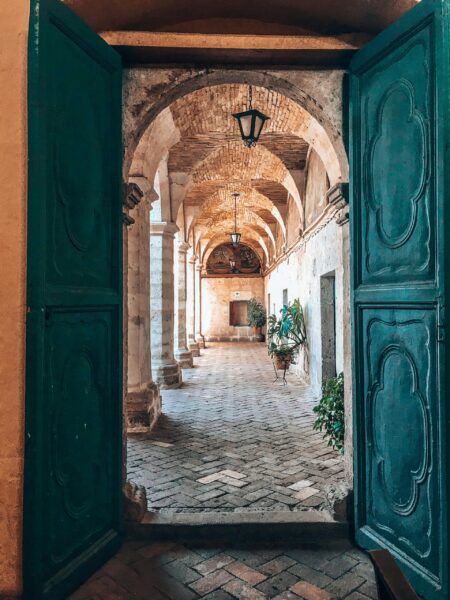
Our hotel entrance was a doorway stuck between all the other buildings and so simple that I glossed over it every time we returned to lay our heads down. That could have been because a doorway does not speak the same way that a door does.
(Image courtesy of the writer)
A doorway is but a hole, a near emptiness, a thing which may be crossed. But the Peruvian doors are entryways, mystical, unknown, and bursting with the knowledge that an entire life unlike your own exists just beyond.
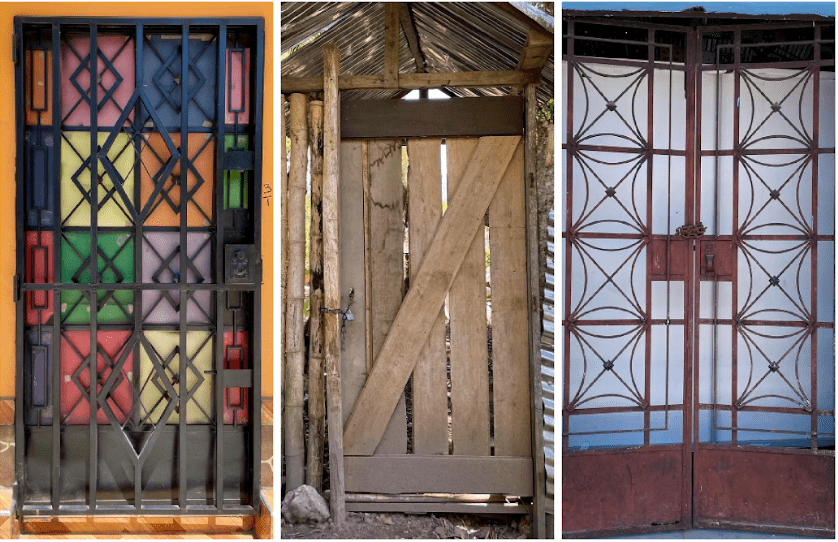
They are made of color, of gated iron, of broken down wood, of stories. Doors became my obsession. If the drivers of Peru were number one on our “ways to die” list, the act of getting a photograph of a specific door was a close second with how dangerous getting to some of them ending up becoming.
(Image courtesy of Rod Long via Unsplash)
Cathedrals, shanties, museums, and houses had elaborate doors kept safe behind bars whereas some others were left open and easily accessible. Bikes were left to lean around everywhere we looked. One open door, the one to church, required payment to enter. The closed ones — with their lion heads forever keeping their iron rings prisoner — were the most telling.
Closed doors and grated windows were sometimes guarded by the police, all of whom were more than welcoming when I asked to get a picture of them. They said I could join them, or sent me across the street to go beyond a gate there to get a picture with their other police officer friend. The doors told stories.
Transported to the beautiful unfamiliar
The people told stories, too. The architecture. The murals. The mist that forever kept the city of Lima the same gray as the inside of a cloud: light and dreamy.
Ana and I walked and walked our first three days, before we moved deeper into the city. Among the people, it was easy to feel like the distance from home wasn’t quite so great. It was a crowded city like any other, where people had little dogs wearing sweaters and booties. We were by the ocean, which felt foreign enough for gleeful excitement, but not enough to feel transported.
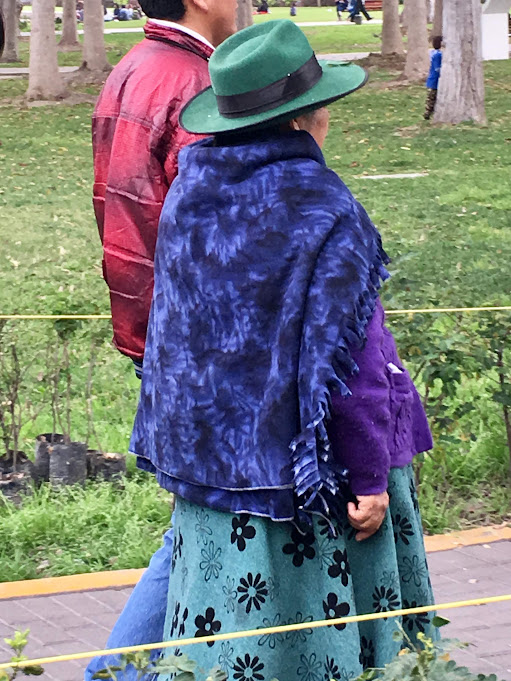
That enchantment happened when we came across the first woman dressed in traditional Peruvian layered Inca clothing. Rich jewel-toned colors and knit patterns wrapped her, and a baby was swaddled against her chest as she walked while selling homemade chocolates. She was petite and beautiful. Gentle like a doe.
(Image courtesy of Yosef Baskin)
Ana spoke with her while I looked on admiringly. Her woven basket of chocolates was just a bit too large for her to reach across its diameter. The chocolates were wrapped in paper with bright stripes of blue and orange. Their tops were cut into strips, erupting from them like a little carnival.
Ana, who is allergic to chocolate, gave her some small change. A blue bundle left the basket as she turned and asked if I wanted the peanut butter chocolate. I gave her my coins. An orange carnival tent came in exchange. I gestured and asked in English if I could see her baby. Shyly, she pulled part of her colorful wrap aside.
I was stunned by the baby’s beauty — its unknown power that all babies possess — but even more so by his sheer size: to think that he came from his mother’s small frame, and that he was still only seven months old!
That was the moment. The moment that felt like thousands of miles away. The moment when a stranger became a life and a place became a home. The moment that even my best imagination could not come close to comparing to. Peru was just a few thousands of miles away from home, different but similar, and knowing that made it feel surreal. The ground we walked upon, the air we walked through, and the mist-covered mountains that seemed to float in the sky, were always there, yet always out of reach.
So many wonders we will never forget
We ate plenty of food – mostly good, some not. We had a spontaneous paragliding adventure, but that wasn’t nearly as terrifying as the drive to the beach without a seat belt. We were overwhelmed by the marketplace on our “gift getting” day. We spent a day in the plaza and burned our tongues on the best churros ever. During all of these experiences, every single person was kind.
We spent three days in Lima, every second of them filled, and each one with a story of its own. After those three days, we next made our way across the Andes by plane and up the next mountain by car. We traveled deep into the jungle towards Moyobamba – a place where we would train to become certified yoga teachers.
(Image courtesy of the writer)
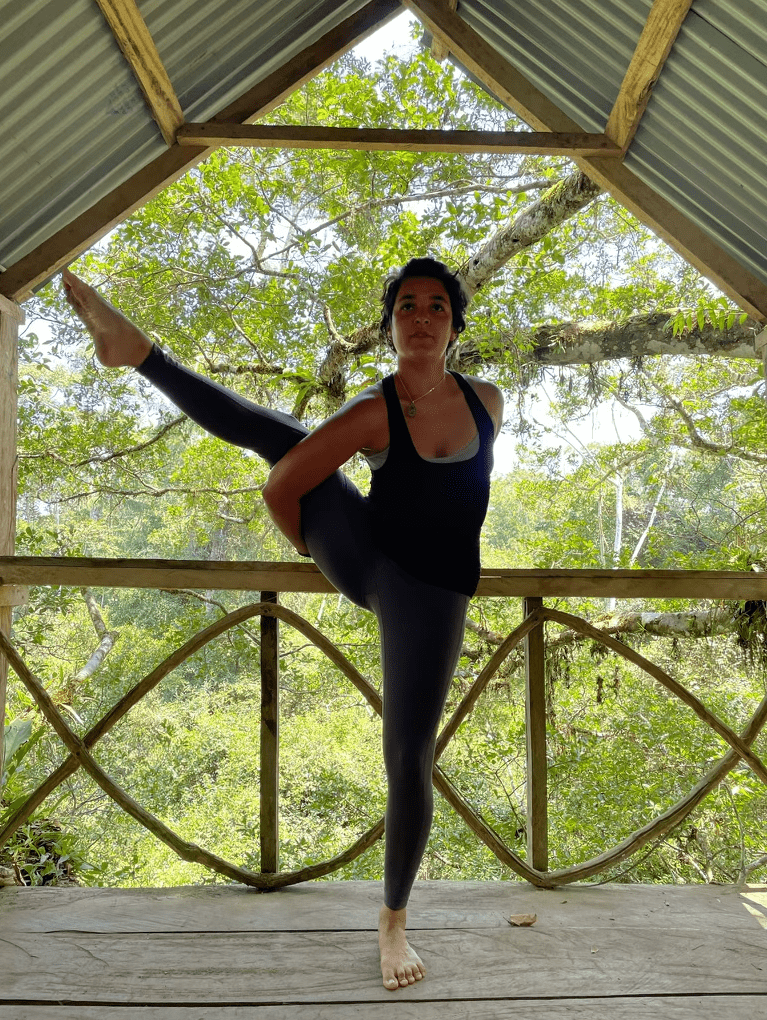
In Moyobamba, we spent fourteen days nestled alongside the river at the Kantu Lodge. Thirteen people – nine students and four teachers – got together every day from 5:45 am to 10:00 pm.
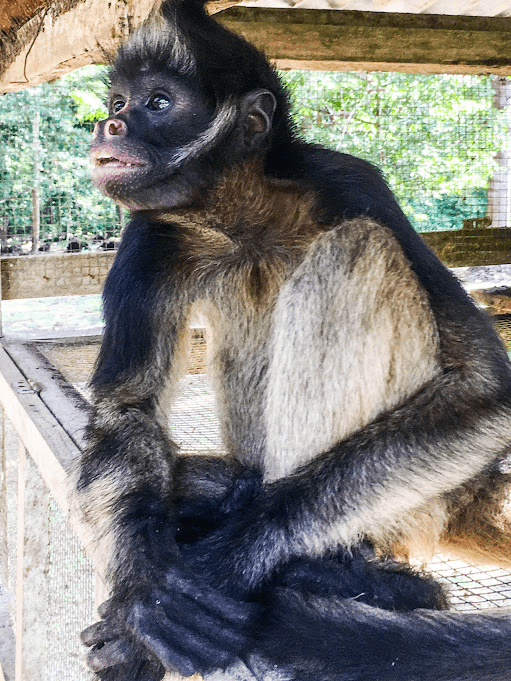
There were also the adorable black spider monkeys with tails as long as their bodies that swung from the trees just outside the shala (a shaded, open pavilion, from the Sanskrit term for adobe) where we practiced. The local butterflies were the size of both my hands together and flew lazily about, their sky-blue iridescence unreal in their authenticity.
We hand-washed clothes in the bathroom sink and hung them out to dry with the hope it wouldn’t rain. Except for the single day of a continuous 12-hour downpour, our clothes stayed relatively clean. We shooed tarantulas, huntsman, and every other spider from our bedrooms, the shala, and the girls who screamed at every insect that came near them.
(Image of Amazonian Spider Monkey orphan courtesy of Yosef Baskin)
We did yoga with the children on the streets who happily ran around barefoot —
some no older than four, asking us “Yoga? Yoga!”
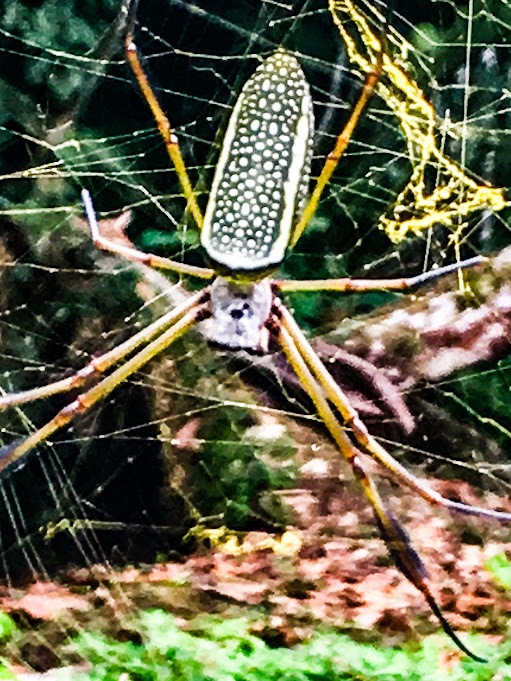
(Image of Peruvian Golden Spider courtesy of Yosef Baskin)
We traveled misty rivers, drank cacao, and visited a remote region filled with medicinal plants run by indigenous women, and to swim in the waters there. We saw hummingbirds and huge, ruddy brown birds with reddish eyes, looking in as they watched us from behind glass. We feasted on 42 total different vegetarian dishes served at every meal. We danced while thunderclouds rolled above us or while a fire crackled between us. We sang loudly from the balcony and along the paths.
But most importantly, we laughed. We laughed with hearts who knew what it was to really laugh. We left as certified yoga teachers, but that piece of paper holds within it stories of adventures I never thought possible and that were truer than ink can describe. It holds a piece of the world that really does exist, so far, far away from home.
A family of six that would pile into a fire-engine red 1985 Chevy van, a vehicle that could easily hold a family of six. However, we would always load the van with all kinds of toys and goodies, so I imagined it looked like Santa’s sleigh, filled with as much joy and happiness as he delivered on Christmas Eve.
This is something that my family would do every December for as long as I can remember. A strong family, with beliefs our parents would instill in us and to one day show our future family.
Meet the crew
Our crew of four kids was made up of serious, silly, and sometimes not-so-well-behaved kids. There was my youngest brother, who could not have been older than eight years at the time. He was a chubby child with curly hair that had more waves than the ocean. I remember all my aunts would comment how it was the look their hairdresser should mimic.
Next was me, a doe-eyed kid with thin, long wavy hair and glasses to finish off my innocent look. Then there was my older brother, a lanky child who would constantly be outgrowing his clothes because of how tall he was getting at that time. The oldest among us was my sister, who stood at 5 foot nothing, with the longest black, spiral shaped hair of anyone we knew except for my mother. While she looked like a little girl that wouldn’t hurt a fly, to us, she was the guardian of the bunch. She was like a second mother to us boys.
My mother was no taller than my sister, but the respect she demanded from us kids was that of French wrestler Andre the Giant . My father was the tallest man I had ever seen back then, towering over us like Dwayne Johson does to Kevin Hart (compare heights of 6’5”/196cm with 5’2”/157cm). He looked like a Mexican version of Mufi Hannemann, former Mayor of Honolulu, if Mufi had a thick black mustache.
This is the family that would show me what it means to be la familia.
Memories of our journeys
Family trips were some of the fondest memories I could remember. While it felt like we would travel for what seemed like days, it was only about 12 hours. The long hours were not the reason for the fond memories, but how we came together as a family to make the trip the most memorable.
We would laugh at each other telling jokes, play card games, and make lonches de aguacate. These avocado sandwicheswere not some mediocre meal that anyone could prepare. No, this was left to mi madre, who could make a simple aguacate y jamon con queso lonche (adding ham with sliced cheese) look like the best meal you would have ever had in your entire life.
My mother would tell us how much of her heart was in making meals for us on the road. It was so important to us that our mother would make the lonches,that when my father wanted to stop at a restaurant to eat, we all would object, “No. Just buy what mom needs.”
Some of the best jokes told on this trip were, in the opinion of my older brother, “So funny you could laugh so hard that you may laugh your head off.” He would say knock, knock and everyone in the van would have to respond, because if we did not, all anyone would hear for the next century was him nonstop saying, “Knock! Knock! Knock, knock!” Do you see how annoying this was? Nails on a chalkboard. The joke would finally end with, “Well, you made me so mad that I forgot what it was.”
My older sister was the one who, in her mind, had shuffled the deck of the cards in a manner that would put a Vegas dealer to shame. She would grasp half the cards in the right hand and the other half in the left, then she would bring the cards together to shuffle them and mix the two decks into one. She would finish off her shuffle with a tap of the deck on the cooler that we were all treating as a luxurious green table from the MGM. I never thought it was weird that, as a child, I knew how to play poker. The stakes were high back then, where we all had our one sock that was filled with marbles to place a bet with.
The scenery would change so much as we traveled south. As we traveled, we would see mighty chunks of rock rise all over the land. To be able to witness mountains that stood with such firm, vertical, gravity-defying peaks was always something to admire.
So many times we would have to travel on a road that hugged the mountain and our van would hug the road just as tight as a child hugs their mom after the first day of school. Just as the mountains came, so did the landscape of the desert. The desert was full of sand, flat, crumbing rock, sandstone, and cacti that looked like it was leaning over searching for water.
The family reunion
(Image courtesy of Andrik Langfield via Unsplash)
Many of these trips would take us to our family in a little village on the outskirts of Durango, Mexico.
Our arrival at the village my parents grew up in was always something that brought a smile to me and my siblings. The entrance to the village was not very noticeable, but we knew that we had arrived when we had passed the only building that everyone got their hielo (ice) from. This building from the outside looked like it was built with adobe clay. It was as long as my little eyes could see. There was always a line of gente (people) to get their hielo.
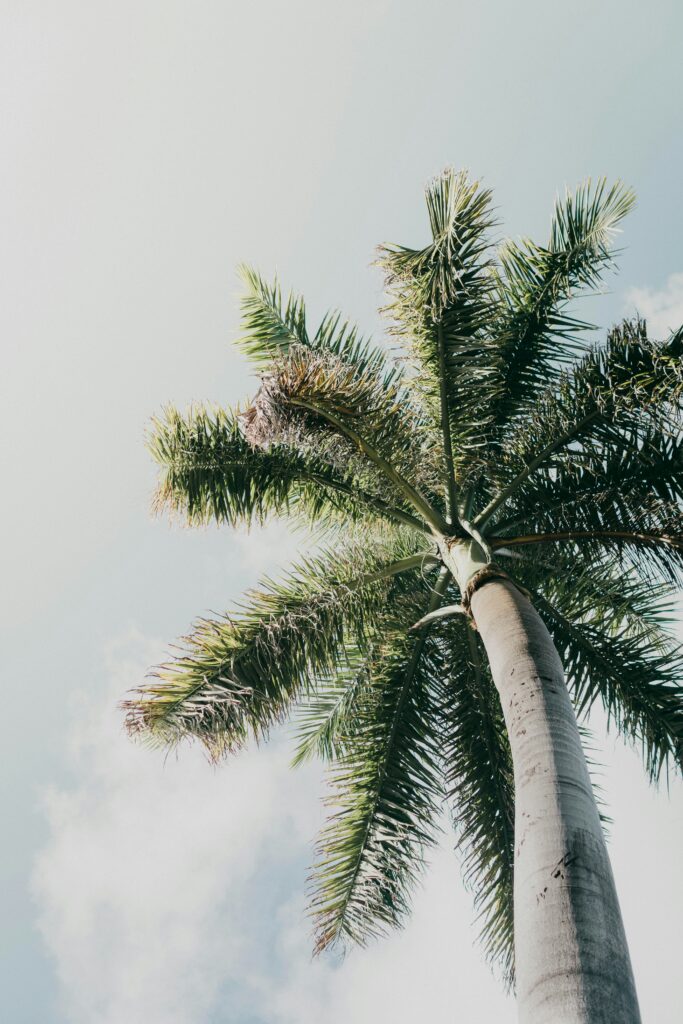
Next would be the road to my grandparents’ house. Believe it or not, there was a La Palma landmark very well known to us. That palm tree was as tall as the Eiffel Tower and would tower over all the houses on that block. My grandparents’ house was in sight from there and we could see the metal french-style door, which changed colors according to which color my abuelita (granny) felt like at the time. It was a fun guessing game to see what it would be every time we visited.
The nights in the village were actually brisk and always made the senses feel so much better, as it was the season of Christmas. Coming from a desert-like environment to a colder environment made us embrace the jackets our parents would make us wear, running around with our Parka jackets with our breath visible in the air and our noses as red as a reindeer. All this did not matter to anyone, as we would spend all day and all night in the courtyard of my abuelo’s house.
My abuelita’s is a 5-bedroom home that at max capacity could hold maybe four families, but we squeezed in and made room where we could lay down. Being able to enjoy this time with our extended family was the greatest time in our life. Our family was as large as could be, with 20 primos y primas (cousins), not including my family and 10 tíos y tías (uncles and aunts).
Family festivities
Every year was a family reunion with a party that would top the last, with the slaughtering of a goat so that we could enjoy a feast. The party was an epic scene, as it would start in the morning with Abuelita making breakfast for everyone. The adults would be having their cafecito con pan dulce (espresso with sweet buns) and us kids would be eating pan dulce with abuelita’s hot chocolate.
(Image courtesy of David Guerrero via Unsplash)
Mariachi con la familia
With festivities comes music, of course. Since my father’s family is extremely musical, there would always be music playing in the background so everyone could sing along. My father’s brothers and sister would start singing like a Mariachi concert. It did not matter that the adults were singing ‘til the roosters crowed. It was always a delight to hear so much music coming from the courtyard.
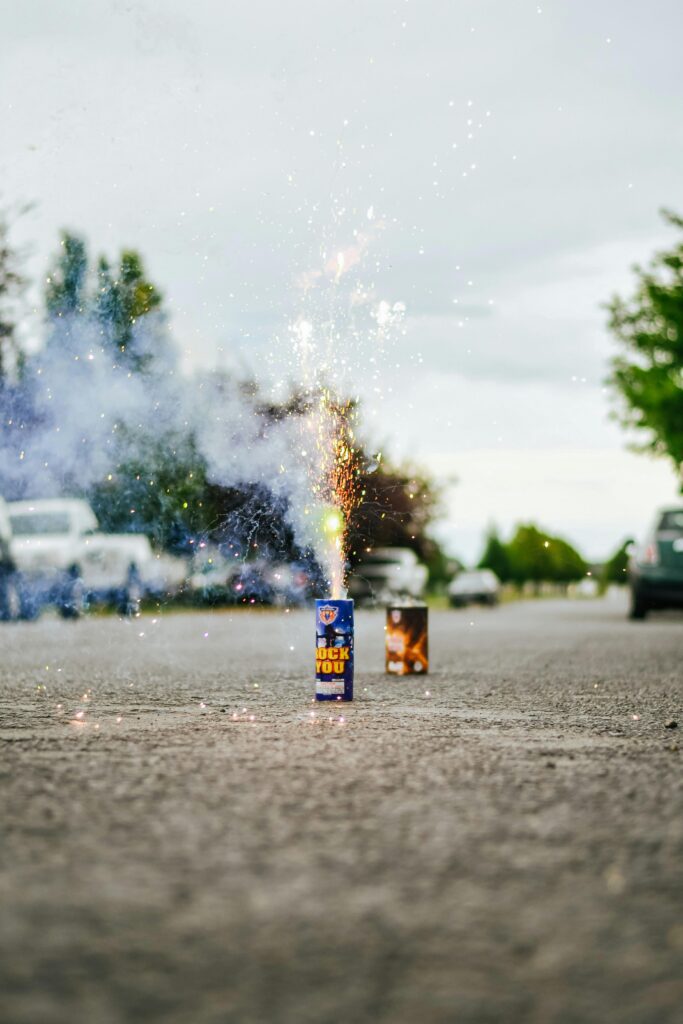
The laughter would continue with the younger siblings. My cousins and I had spent all day buying up all the fireworks we could gather from the corner stores. Each firework had a distinct shape and size. There was one we called La Palomita, it was the size of a pigeon. Not only was the size something to marvel at but, when La Palomita would go off, the paper that was holding what we believed to be gunpowder would fly everywhere like if a bird had just been struck.
These times ensured great bonds were created and treasured. There was so much to enjoy, so much time — and so little time. These memories are the building blocks for what my belief in family is. La Familia is something that you have to work on. Not only with your immediate family, but with all your distant relatives. This will always be the strongest value that anyone can instill in their children.
It’s all in the reflections. This account is one of my fondly revisited ones, a space for self-discovery and conscience.
Aah, I’m exhausted! It was half past two on a Delhi late August summer afternoon in 2021 when I was attending one of my tutorial classes at my college. These sessions were calming ones where we would think about life and sort of relax through such reflections. In the hustle and bustle of assignments and deadlines, I sometimes lost the excitement of these sessions as a result.
So, this circle of informal questions quickly shifted to me, and I, at that moment, was completely baffled by the line of questioning. Seeing this, the teacher asked, “What’s the most striking difference between your place and here?”
Without even thinking, I quickly answered, “Infrastructure and maybe nothing else.” It might have been the most absurd answer she’d ever heard, but it was thankfully enough as the class dispersed, and I was left with a question.
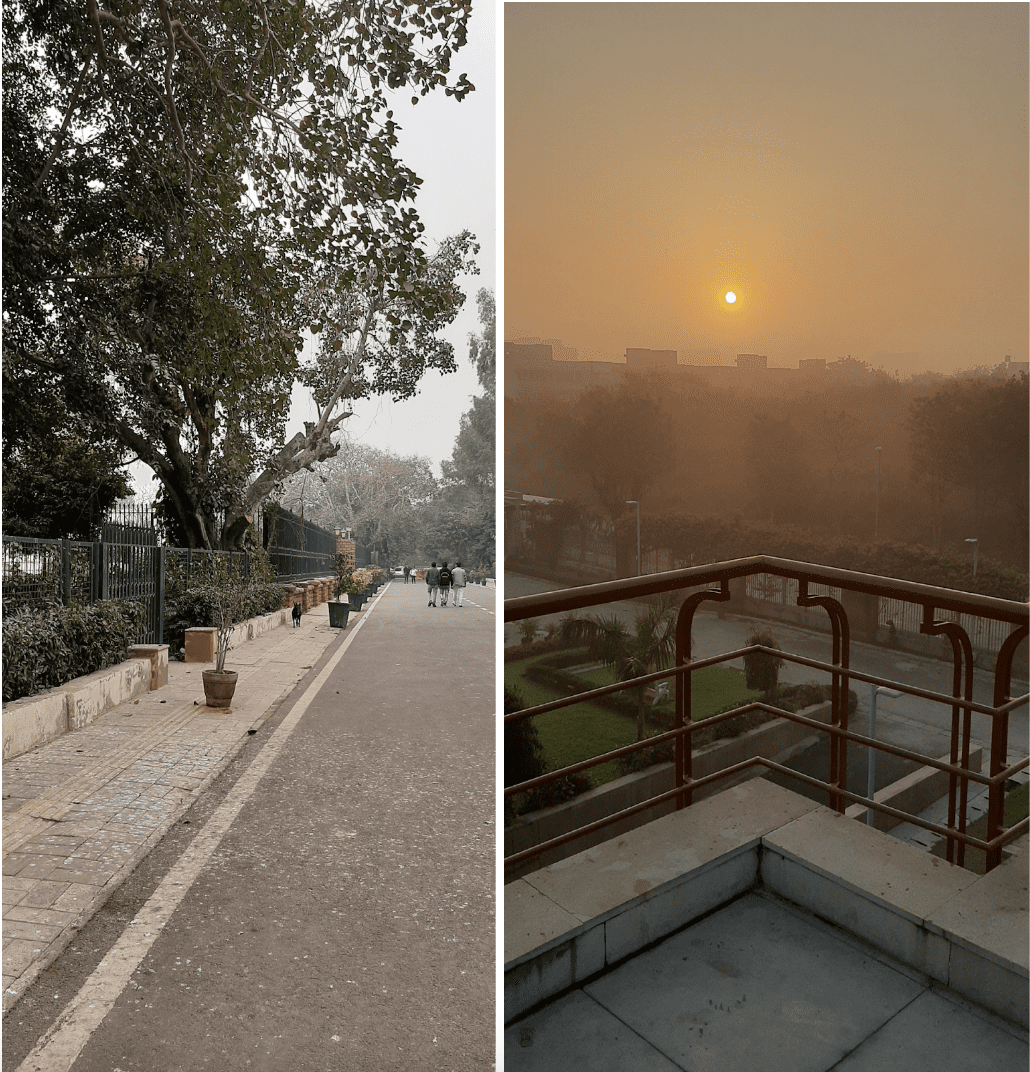
It was probably regret that crawled up on me, so much that I could hardly think of anything else beyond that question whenever I would travel through my place and Delhi. Like a sense of being lost in observation. Being someone who always loved to observe the uncanniness in their surroundings, it made me more aware of the circumstances, the nuances of communication, gestures and the degree of proximity.
Okay, so let me quickly peel away the layers of silence and say it out loud that there indeed is an array of differences in the regions. To begin with, Assam, the eastern state, is a rainbow of warm-hearted people belonging to distinctive ethnicities; some of them have inhabited these lands and some have flocked in during the past two centuries. Now, they are coming to Delhi, the land that kindled hopes in millions of aspirants to finally hit a milestone in their career. It’s also ethnically diverse and inhabited by the majority of these aspiring populations.
How can I not express the most striking reason for my discontent, which is that the food of the Eastern States, this palace of rice, undoubtedly has my heart? Well, Delhi has its own variance in serving comfort foods, but what made me kinda sick within the two months of my initial stay in Delhi was the resilient roti culture. Still, I countered it over time and developed a fondness for some traditional North Indian dishes like “kadhi chawal” and the very tender thin “rumali roti.”
On the streets, I see an abundance of greenery and, hiding in it, stories of penance and sometimes grief. This landscape sustains tales of livelihoods where every day is a struggle to make ends meet. Still, the lands do not align with the competition to tread upon the lives of one another. It is implicitly integrated into the idea of being that, in every way, there is a placid display of diversity.
The settlers of my eastern homeland preserve a simple but magnificent culture where one can find fresh vegetable markets and brightly blue skies. One that caters for its people in “kaah” (the bell metal used to make utensils), “muga” (muga silk), and that greets one with the “gamusa,” (a woven scarf with distinct embroidery patterns.). Enchanting wall carvings and fantastically lit elaborate markets make Delhi in itself the most vibrant capital of the world to experience life and people in. The street corners are animated with students and doorways to the metro are full of hawkers and a brigade of auto drivers who are ready to even take one “to the moon.”
It is only in the humanities and liberal arts that we capitalise on the idea of learning and thinking, cultivating skills for empathetic understanding. It is in exploring these phases of my journey that I started considering things that are seldom asked. But as I should say, they do hold relevance as they become significant throughout the experiences, and give more context to someone’s story.
All in all, it was a contrasting vision that was important to help me touch the nodes of reality, somewhere where there was not only a beginning but also closure. Feeling at home, reclining to all the familiar essence of it, needs imagination. And this is one that has now become very intricately intertwined with the idea of both places. Maybe the shared idea of belongingness rents this “liking” space in my heart. Now, even though I have no permanent residence to establish here, I trust that the familiarity of the region keeps home in a close embrace.
Now that my experiences have handed me a platter full of unique exposures, I regard this as an invaluable archive of memories. These memories will stay and colour new horizons of thought and provide me with a deeper contrasting tapestry of insights. In retrospect, to my response, our professor, I would say, “Ah how embarrassing!”
Voting is a fundamental democratic right, allowing citizens to have a say in how their country is governed. But what if it’s mandatory?
In Australia, as I discovered when I moved there, the voting process is compulsory, aiming to ensure that every eligible voter has the opportunity to cast their ballot and the opportunity to enjoy hot dogs at the polling booth. Normally called a sausage sizzle in Aussie slang, it becomes democracy sausage come election time.
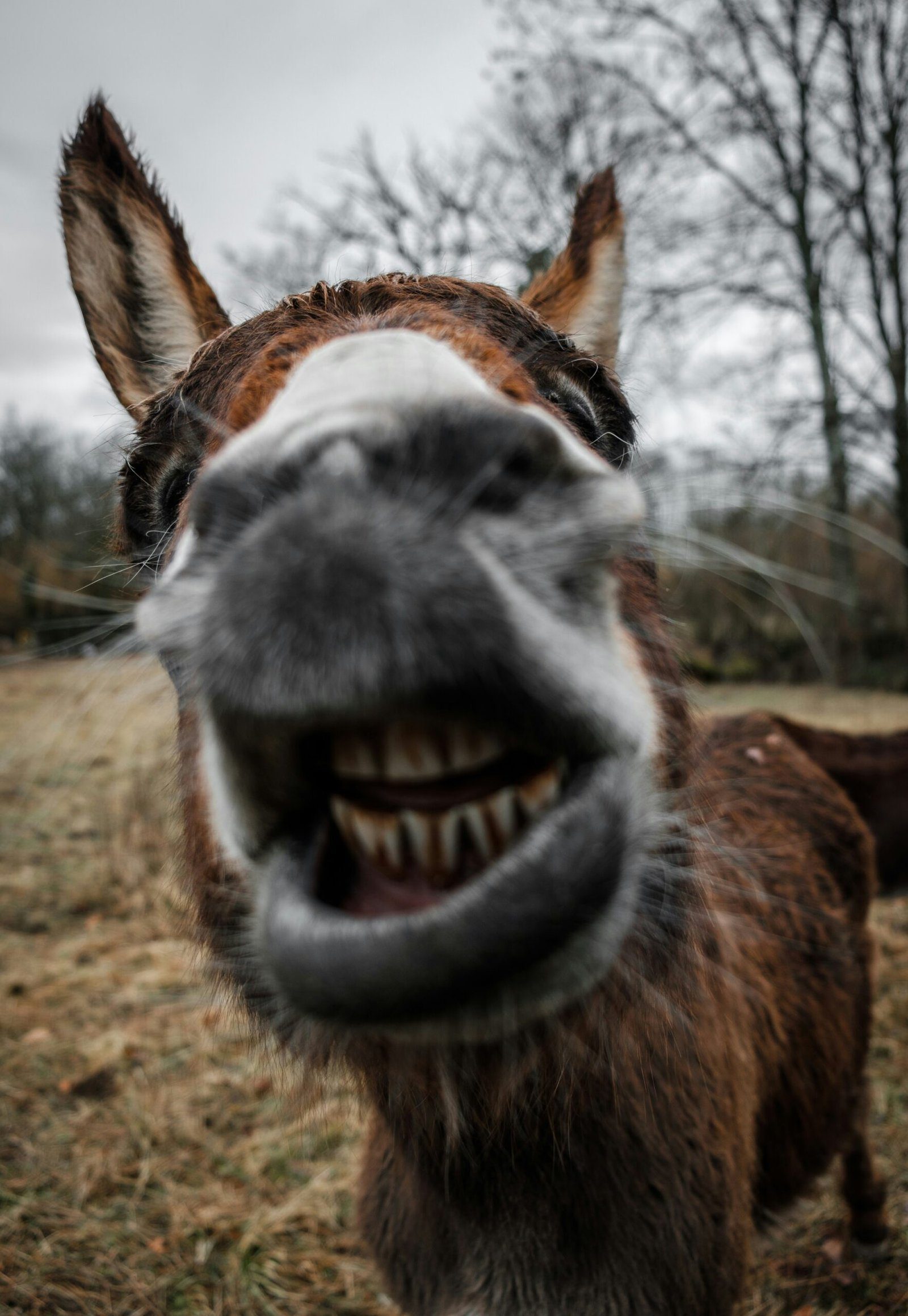
Within the great Aussie democratic system, I realized, lies the phenomenon of “donkey voting,” a term that might be unfamiliar to many, especially to first-time voters and outsiders like me.
First of all, let me explain the hee-haw. Numbered voting is required in preferential voting, where voters rank candidates in order of preference or priority. A donkey vote occurs when a voter marks their ballot paper in numerical order from top to bottom without considering the candidates’ policies or merits.
For example, if the candidates are listed as A, B, C, D, and E, a donkey voter would spitefully mark them 1, 2, 3, 4, and 5 respectively. It is also a donkey vote if it goes the other way around. This type of voting shows up in preferential voting systems, like the one used in Australia,.
It doesn’t count as a sincere vote though, and is more of an act of protest. Voting like this also shows that you have not used any intellectual horsepower to think through your ballot choices. This stubborn act is called donkey voting for a few reasons.
Number crunching
Now here is why this type of mischief might happen at the polls Down Under for you numbers people:
1. Lack of interest or knowledge: Some voters might not have enough information about the candidates or might be indifferent to the outcome of the election. As a result, they simply mark the ballot in the order the names appear. Make voting compulsory and people will find a way to half-ass it. Hence it’s dissed as a donkey vote.
2. Protest vote: A donkey vote can be a form of silent, but black and white protest against the political system or the available candidates. It’s a way for voters to show their dissatisfaction with the checklist or the choices without spoiling their ballot. The vote counts, and this one hurts.
3. In a country where 26 million people reside, having 111,015 people vote sequentially may not seem high enough for concern. Just read this article for more numbers:
Grazing on democracy’s green grass
As someone who has never voted before, as I am not from much of a democracy, the concept of donkey voting is both intriguing and concerning. I am from an absolute monarchy where brain drain is common and people want to go somewhere more developed where they have freedom. The grass is always greener, somewhere, but do we really have to share it with jackasses?
I think personally, not voting properly is subverting democracy, turning it assways. There is more to it than that though sometimes.
While donkey voting is not illegal in Australia, it raises ethical questions about the integrity of the voting process. Critics argue that it undermines the principle of informed voting, where each vote should reflect a considered choice.
I had always assumed that every vote cast in an election was a deliberate and thoughtful choice. The idea that some people might vote in numerical order instead of preference raises questions about the true representation of the electorate’s will. Who is in the electorate though, I wonder?
If I was a voter, I would feel a sense of responsibility to ensure that my vote counts in a meaningful way. This means taking the time to research the candidates and their policies, understanding the issues at stake, and making informed voting choices. Donkey voting, in contrast, seems to invalidate this important civic duty. Or could you use it as a form of effective protest? Not as a student during student union elections, I don’t think.
I remember hearing about it between 2012-2016 in my formative university years as a first time ever voter of any kind. Students do not need to vote during their student union elections although it is a wasted opportunity if one does not learn the basics of the democratic process then. Oh come on now, don’t be such a neigh-sayer and tell me you scoff at the idea. Why I chose to even engage leads me to think that better voter engagement, at the personal or relational level, can improve voter confidence.
Furthermore, the prevalence of donkey votes underscores the need for better voter engagement. First-time voters, in particular, could benefit from resources that explain the voting process, the significance of preferential voting, and how to make an informed choice.
Additionally, efforts to increase voter engagement, such as candidate forums and accessible information about political platforms, could help reduce the incidence of donkey voting where mandatory voting means you can’t vote with your feet and protest by not voting at all.
Passive-aggressive, maybe just aggressive?
I sometimes think that voting this way in protest is probably valid when no one wants to give you a voice in the first place. In case no one represents you, why not express your disagreement and mock the process in a passive-aggressive way?
In compulsory voting, you need to vote or pay a fine. If you do not want to vote but also want to avoid paying a fine, you can just cast your ballot but not indicate a clear preference in protest.
In the case of the indigenous Australian population, that might turn out to be a full-on silent treatment.
No wonder, since 60 percent of Australians have recently voted to not give Indigenous Australians their voice. Imagine not letting your host speak at all during a party you crashed;. where is the propriety in that? Reconciliation may indeed be dead, as the 2023 Australian Indigenous Voice referendum showed, and only time will tell if donkey or linear voting will increase along with informal votes. Compulsory voting has its flaws after all. Who can convince
people to vote democratically in a system they wouldn’t design as the rules of the representational game don’t let them play and win? Not given a voice? Then they won’t give their voice.
Can the great Australian experiment be saved from going further south? That’s an article for another day so I don’t have to half-ass it. Or maybe ask the original custodians of the land.