
Losing My Hero-in-Law

It all started in October 2022. Our peaceful lives were disrupted by a devastating diagnosis, like a riptide at the beach. 

My sister-in-law took Alberto, my father-in-law, to a cardiologist. Multiple tests revealed that he suffered from heart problems, and they recommended open heart surgery as soon as possible. 

Scary for Dad, and for all of us too. 

More tests brought more bad news: aggressive stage 3 lung cancer. 

From that day onward, everything changed;  not just for him, but for all of us. And so began all the countless appointments with countless doctors. There were so many of them that my partner and his sister rearranged their lives to ensure he made them all. They used lunch breaks or left work early.

Heart surgery, a stent and a port, chemotherapy, radiation treatments. Physical, mental. He went through it, we went through it. 

Seven months to the all-clear. He still had to see a doctor every three months, but everyone was so relieved to hear the good news.

Dad, our salt of the earth icon

Alberto Dela Cruz Jr. was a humble, loving,  and hardworking man. 

He would wear aloha shirts no matter the weather, loved sweatpants because he always complained of being cold, and wore Crocs because he said they were comfy to just slip on. Though he had turned 75 just before his diagnosis, he looked younger because he always colored his hair brown whenever gray hairs started to show. 

Alberto raised five of his children by himself after losing his wife to cancer when she was just 43. 

He missed her every day.

He brought three of his kids to Hawaii, including my other half, for a better life. His two eldest stayed in the Philippines. They were already married and too old to petition to come to America.

An agriculturalist back in the Philippines, he put his head down in Hawaii and labored as a security guard to provide for his grown kids back home, and those that he brought over to his adopted homeland.

With Dad, everything was better

(Unsplash/Nikola Duza)

Two things I loved doing with Dad were traveling with him and cooking up family barbecues. 

He adored heading back to the Philippines to visit family. Going with him was the best. We stayed for three weeks the first time I went there with him. The experience was ten times better because we were with family and, in particular, Dad. We laughed together, told stories, and ate rich and mouthwatering food. 

Dad sure did love singing karaoke both there and in Las Vegas. His favorite song was Sinatra’s My Way. Every lyric of that song matched him so perfectly. He owned it. Whenever I hear that song, I think of him.

Keeping close through the wipeout

Sadly, Dad’s health crises were not behind us.

My partner got a call from his aunty saying that Dad felt like he couldn’t breathe.  In the hospital,  they couldn’t keep his oxygen levels up, and they admitted him. It wasn’t cancer, but Alberto would never return home. 

I actually worked at the hospital he was staying in, so I visited him daily before work, on my lunch break, and after work. I made sure to make the most out of every day because I knew that it wasn’t looking good. 

He would always greet me with, “Hello, Shannel! Oh, you work today? Thanks for coming to see me.”  We would trade stories, and he would always tell me about his day, and how he struggled with his treatments.

 He even shared that he knew he was not going to make it. He urged me to  tell my partner and his siblings to forgive each other and be there for each other when he no longer could be. I tried to stay strong and hold back my tears in front of him. I prayed day and night that he would recover to see my daughter grow.

He would always hold my hand so tight, and introduce me to  the medics caring for him: “This is my daughter-in-law. She works here. I really appreciate her coming to see me all the time,” he would tell them with a big smile on his face.

Towards the end, a diagnosis of fibrosis, when the lungs cannot produce enough oxygen on their own, saw doctors summon  the family to break the news to us together.  Dad had two choices. One was  to have a tube inserted into his throat to boost his oxygen levels, but which would likely prove fatal due to his underlying health conditions. The other option was comfort care, delivering  morphine via IV, that would allow him to pass away comfortably. 

Dad chose comfort care, so he could end his life peacefully with our crew by his side. We all surrounded him in his final hours and held his hand until the end. It hurt even though, or maybe because, he had the chance to say goodbye before he took his last breath on May 12, 2023, when he left us. 

We couldn’t believe he was gone. And so we cried, and cried, and cried… 

I vividly remember my other half yelling and trying to wake his dad up. 

I have never experienced a death that hurt so much. The fear in Dad’s eyes made me so sad. They were the eyes of a man who didn’t want to go yet; who wanted to fight to live and to be here for his grandchildren. It was heartbreaking. At least we know that he is no longer suffering, and feel that he is now in a better place, watching over us all.

We’re mourning, but buoyed by his strength 

I will forever hold onto the memory of his strength. He was steadfast in everything he endured, from losing his wife and having to take care of his five kids by himself, to losing his son to suicide and having to bury him. Then, after all that, facing his serious health problems, he was still a fighter, and he never ever gave up.

Seeing my other half grieve also pains me. He talks about his father and reminds me how long it’s been since he left us. He still can’t believe that he’s gone, and he wishes he could see him or hear his voice again. I remind both of us that it’s okay to mourn Alberto.

Now, when we miss him, we clean his grave and bring him beautiful flowers, but it will never be the same. When a person passes, it is their spirit that you will forever be longing for. I can no longer hear his voice, his laughter, or see his smile. 

We will always miss Dad. All the memories we shared with him will live on through pictures, the retelling of stories,  and the little things in life that remind us of our departed hero.
In Experience: Reflections of a Settler

It’s all in the reflections. This account is one of my fondly revisited ones, a space for self-discovery and conscience.

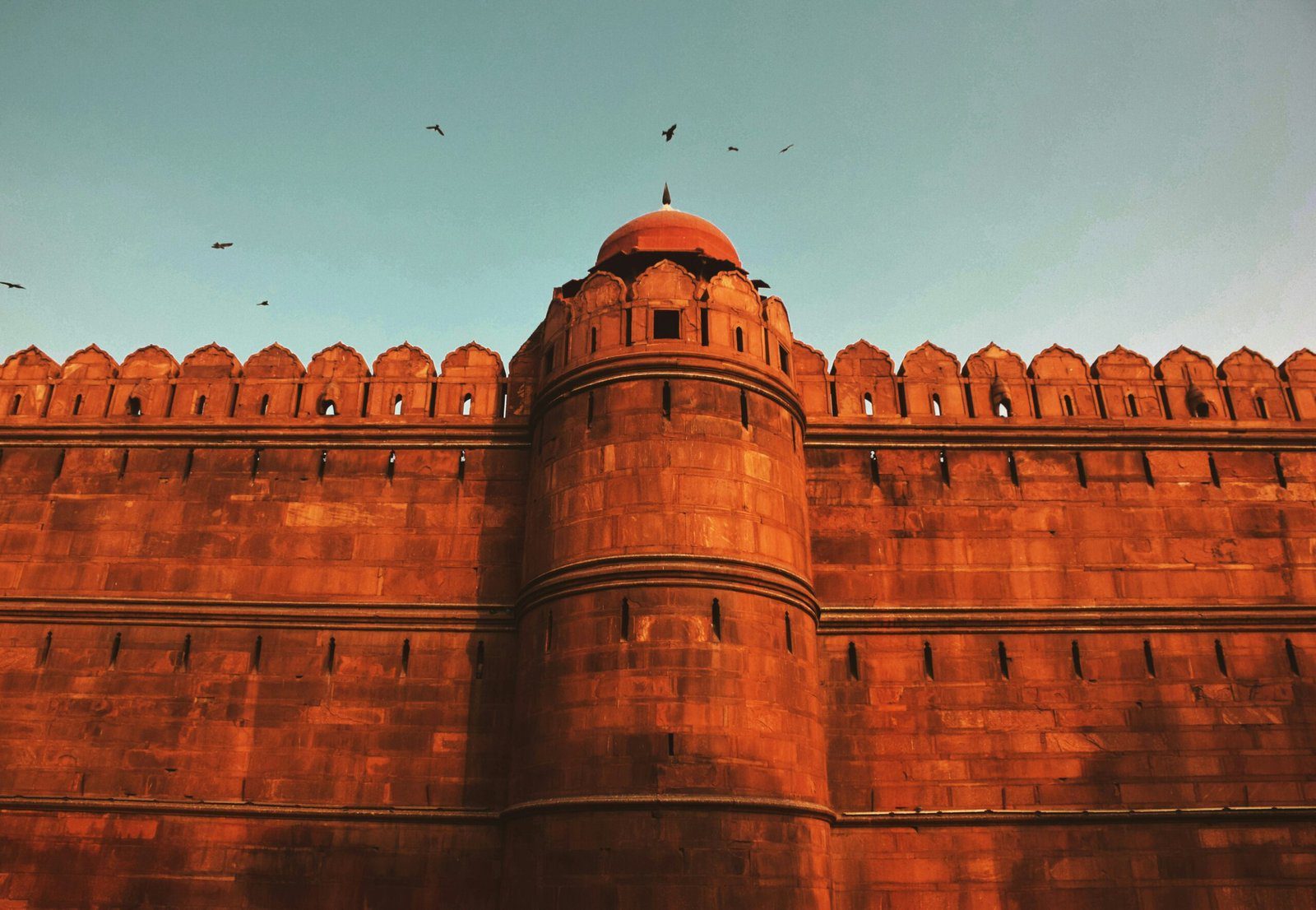
Aah, I’m exhausted! It was half past two on a Delhi late August summer afternoon in 2021 when I was attending one of my tutorial classes at my college. These sessions were calming ones where we would think about life and sort of relax through such reflections. In the hustle and bustle of assignments and deadlines, I sometimes lost the excitement of these sessions as a result.

So, this circle of informal questions quickly shifted to me, and I, at that moment, was completely baffled by the line of questioning. Seeing this, the teacher asked, “What’s the most striking difference between your place and here?” 

Without even thinking, I quickly answered, “Infrastructure and maybe nothing else.” It might have been the most absurd answer she’d ever heard, but it was thankfully enough as the class dispersed, and I was left with a question. 

It was probably regret that crawled up on me, so much that I could hardly think of anything else beyond that question whenever I would travel through my place and Delhi. Like a sense of being lost in observation. Being someone who always loved to observe the uncanniness in their surroundings, it made me more aware of the circumstances, the nuances of communication, gestures and the degree of proximity. 

Okay, so let me quickly peel away the layers of silence and say it out loud that there indeed is an array of differences in the regions. To begin with, Assam, the eastern state, is a rainbow of warm-hearted people belonging to distinctive ethnicities; some of them have inhabited these lands and some have flocked in during the past two centuries. Now, they are coming to Delhi, the land that kindled hopes in millions of aspirants to finally hit a milestone in their career. It’s also ethnically diverse and inhabited by the majority of these aspiring populations. 

How can I not express the most striking reason for my discontent, which is that the food of the Eastern States, this palace of rice, undoubtedly has my heart? Well, Delhi has its own variance in serving comfort foods, but what made me kinda sick within the two months of my initial stay in Delhi was the resilient roti culture. Still, I countered it over time and developed a fondness for some traditional North Indian dishes like “kadhi chawal” and the very tender thin “rumali roti.”

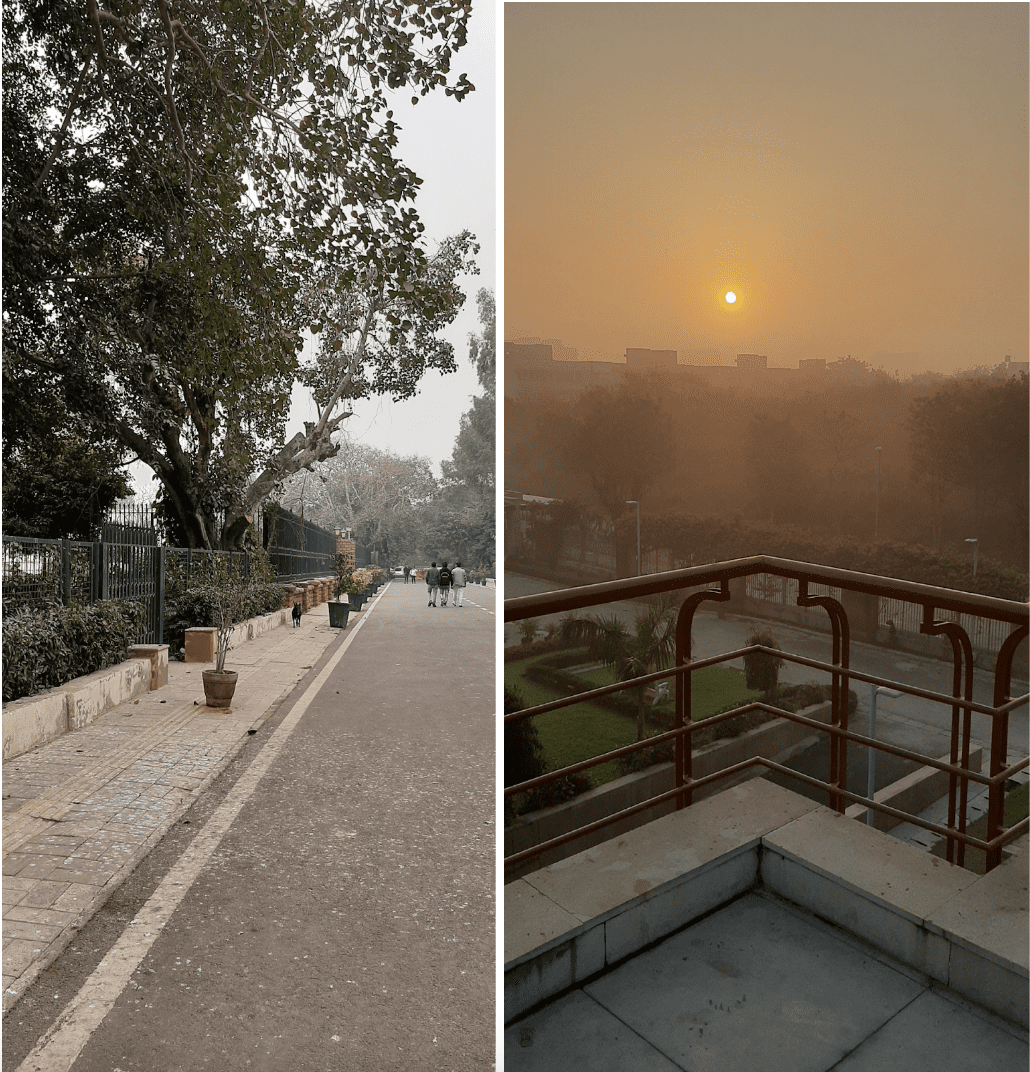
On the streets, I see an abundance of greenery and, hiding in it, stories of penance and sometimes grief. This landscape sustains tales of livelihoods where every day is a struggle to make ends meet. Still, the lands do not align with the competition to tread upon the lives of one another. It is implicitly integrated into the idea of being that, in every way, there is a placid display of diversity. 

The settlers of my eastern homeland preserve a simple but magnificent culture where one can find fresh vegetable markets and brightly blue skies. One that caters for its people in “kaah” (the bell metal used to make utensils), “muga” (muga silk), and that greets one with the “gamusa,” (a woven scarf with distinct embroidery patterns.). Enchanting wall carvings and fantastically lit elaborate markets make Delhi in itself the most vibrant capital of the world to experience life and people in. The street corners are animated with students and doorways to the metro are full of hawkers and a brigade of auto drivers who are ready to even take one “to the moon.”

It is only in the humanities and liberal arts that we capitalise on the idea of learning and thinking, cultivating skills for empathetic understanding. It is in exploring these phases of my journey that I started considering things that are seldom asked. But as I should say, they do hold relevance as they become significant throughout the experiences, and give more context to someone’s story.

All in all, it was a contrasting vision that was important to help me touch the nodes of reality, somewhere where there was not only a beginning but also closure. Feeling at home, reclining to all the familiar essence of it, needs imagination. And this is one that has now become very intricately intertwined with the idea of both places. Maybe the shared idea of belongingness rents this “liking” space in my heart. Now, even though I have no permanent residence to establish here, I trust that the familiarity of the region keeps home in a close embrace.

Now that my experiences have handed me a platter full of unique exposures, I regard this as an invaluable archive of memories. These memories will stay and colour new horizons of thought and provide me with a deeper contrasting tapestry of insights. In retrospect, to my response, our professor, I would say, “Ah how embarrassing!”

What a Difference! I Voted In India and the USA

My experience voting in these two countries seems so similar. Electronic voting machines and ballot boxes — covered enough to make it a perfect secret ballot, all set up on school premises. There are similarities in election propaganda, the campaigns, the rallies, and the voters have to be 18 years or older. Yet they are so different. India elects every five years, and the US every four.

Indian elections have a unique flavor, a sort of tanginess


(Photo courtesy of Shreshth Gupta via Unsplash)

Indian elections bring with them more movement than others; they are like carnivals: processions and massive campaign rallies with loud music and rhyming party slogans in Bollywood mashups. Overloaded vehicles of all kinds — bicycles, autorickshaws, cars, and bikes zoom in now and then through the streets — all calling loudly for votes. Life-size campaign banners used to influence voters are what bring in election fervor. Everything is a campaign board — the electric poles, tree trunks, public vehicles, walls, and roads decorated with posters and banners are everywhere. The door-to-door campaigns extend a personal touch. Talking to the candidates made me feel special, stirring in me, the 18-year-old first-time voter, a sense of responsibility— a feeling of “I should vote” and “I am old enough to make decisions.”

It was election day, and I was finally at the polling booth at a school, ready to cast my vote. 7:00 am to 6:00 pm is generally the polling window in India. I thought it would be a simple process, but my confidence shattered once I saw the voting machine in front of me. Where? Who?  I had done my homework, but the long list of symbols with just the candidate’s names beside it made me nervous. After a few seconds of blank, I gathered myself up and voted (thankfully for the right candidate). Voting in the largest democracy with some seven recognized national parties, around 57 recognized state parties, and numerous other notable registered unrecognized parties — the ballot pages sometimes get long and puzzling. 


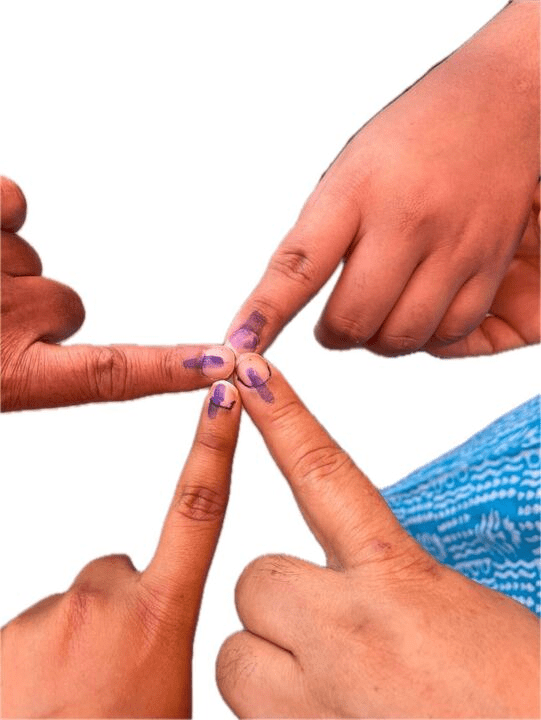
(Photo courtesy of Tripti Mund)

Post-voting indelible ink is used to prevent duplication and fraud in voting. That little drop on the left index finger is a statement of pride, of doing the democratic duty.  It is not mandatory to vote in India, but I take pride in the fact that I voted in all the elections that took place when I was there. 

The year I moved to the US, presidential debates had already begun. For me, it was, with other things, an acculturation of the election process.  I felt the US elections were so calm, which made me miss the volume of Indian elections.  

In the race for 543 seats, the Netajis (male politicians) and the Netrijis (female politicians) campaign standing in an open-top vehicle. Always with a namaskar (folded hands for greeting) and their head almost buried in marigold garlands. Close to elections, dresses in ethnic undertones stand out. Men dressed in kurtas and women in sarees. Heated-up speeches in open grounds from over-decorated stages, almost as tall as a house — visibility to the public is key. Screaming voices, high pitch with long pauses, and stress on every word, I could not find that in the US. 

Lunchbreak voting!

Here, candidates’ speeches and rallies are mostly town halls or debates between just two parties, the Democrats and the Republicans, which are interesting and decent, like TED talks.  

It was election Tuesday, and my US-citizen husband left home a little early. I thought it would take not more than an hour or two for him to be back home. At almost noon, I called him to find he was in the office. Working? This never happens in India! Election day is a holiday to vote or not. Yes, this is how it is in the US: manage time and your civic duties between work. 

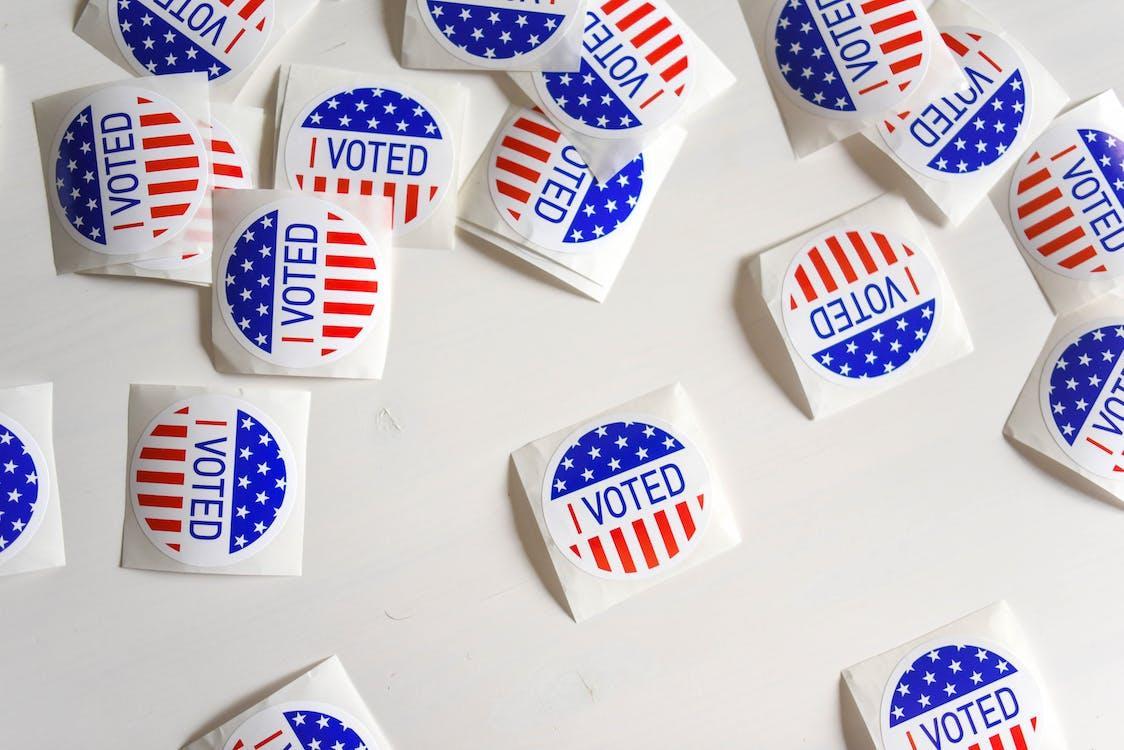
Free Stickers with I voted inscription and flag of USA Stock Photo

(Photo Courtesy of Element5 Digital via Pexels)

The Tuesday after the first Monday in November is designated  US election day. This was a culture shock for me. I came from a land where election dates are released two to three months before elections, from a democracy that never votes on one fixed day. Voting dates vary from state to state, even district to district. 

No voter ID card, just your driving license for proof of identity. No indelible ink, just an “I Voted” sticker. Once, we took our first-grader to see the voting process, and it is so different from India. 

Protests close to the elections are very common in both countries. While in the US, they start after office hours and end before 9:00 or 10:00 pm, India crawls to a standstill, with protests impacting daily life from dawn to dusk. I called them holiday perks. 

Flowers, scented flyers, crowds, and traffic jams surround elections. In my teens, I collected the scented flyers and carefully placed them between the pages of my books. They made my bag smell good. When a party wins you can see Holi and Diwali in the streets. What an extravaganza! 

As a citizen of the USA now, I always vote. Here, Tuesday night’s 9:00 pm election debates bring the election fun — both primary and presidential, followed by the television analysis. The debates stir the election mood. I find the primary debates more interesting: candidates of the same party trying to claim their candidature on national television, wow, so much energy! Indian parties hold their primary debates behind closed doors. We just get to know the contesting candidate. The post-debate analysis is animated. At my home, too, we hold parties where we hotly debate election topics.2024 is all elections and elections, and both democracies are out again, fastening their belts. India for its Lok Sabha polls and the USA for its presidential elections. While my family dinner table hosts discussions on Indian bhashans (speeches) and American debates…