
Girl Talk Club: The Feminist Community Giving Voice to the Displaced

Amid emotional collapse and the overwhelming sense of invisibility that runs through so many women’s lives, a simple idea reignited Bruna de Ornelas’s purpose: to create a space where women could truly meet, both themselves and each other.

That’s how the Girl Talk Club was born: an alternative community weaving together care, learning, and belonging in the heart of São Paulo, Brazil.

Through in-person gatherings, conversation circles, creative clubs, and emotionally safe English workshops, the project has become a refuge for creative, intense women who don’t fit into the traditional corporate mold.

Bruna, who holds a degree in International Business and teaches English to adults, went through a deep depressive episode after facing homophobic abuse in the condo where she lived with her wife and young daughter.

Without institutional support and carrying a history of harassment, she decided to build, from scratch, a new way of inhabiting the world and helping other women do the same.

“I could only go back to teaching if I truly believed I was capable of delivering my best work. But I couldn’t return to teaching in the same way. I needed a life project. A legacy. A love letter to myself and to my students,” she wrote in a letter published on Girl Talk’s social media.

Since then, the club has brought women together for free events, expanding the conversation around identity, voice, and autonomy in a city where many feel alone, even when surrounded by people.

The community also became a space for collective English learning, using collaborative formats that break away from traditional rigidity and center listening, vulnerability, and exchange.

Among Girl Talk’s initiatives are:

  • Open picnics for women, with conversations about career, creativity, and emotional support;
  • Writing and artistic expression workshops, inspired by artists like Geloy Concepcion;
  • Secret subscription-based clubs for more complex activities in smaller groups (reading, cinema, art, letter-writing, and business);
  • Thematic workshops and circles with guests discussing self-esteem, communication, and life transitions;
  • Online and in-person events on topics like “creative vulnerability,” “girl-owned business,” and “nonconforming professional identity.”

Today, Bruna leads the project alongside other women and is already preparing to expand into new educational formats while keeping the essence intact: no one needs to perform perfection to learn or to belong.

Girl Talk defines itself as a “space of subversive care,” created by women who are tired of bending to external expectations. 

In contrast to toxic positivity and performative success, the club embraces the risk of deep listening and the courage to reappear.

English Classes for Adults

As an English teacher beyond the Girl Talk Club, Bruna describes her approach as decolonial and gender-conscious. To her, teaching a language is more than grammar and conversation, it’s about repositioning women in the world.

“We go after this knowledge and then feel ashamed to use it. Because those born with access look at us sideways. And that applies to everything: English, art, education. What I offer is more than a class, it’s a reclamation of belonging. The average student believes they don’t deserve to learn English. That’s not procrastination. It’s historic. It’s structural. It’s healing work,” she says.

Bruna explains that her teaching questions who gets access to knowledge and how that access is perceived by society.

“It’s not well seen when we learn later in life. The system values those born inside of it. But we belong at the table too. We just need to craft new utensils.”

Currently, Bruna offers both individual and group classes, shared mostly through communities and organic networks. Her focus is to keep the space intimate, safe, and collaborative without resorting to the performance of self-promotion.
Damned If You Do

As a teacher, a member of a large family, and a feminist, I have always had crystal-clear notions about nurturing kids. For most of my teaching career, I’ve taught children ages 10 and under. I also have nephews and nieces that I’m very fond of. So far, children are the only humans who speak not only honestly but also kindly. 

Everywhere I go, I play with every kid I see. But I don’t want to have my own kids. Not now, maybe not ever.

As a firm believer in freedom of speech and the right to express one’s ideas, I have always been open about my desire to get married or stay single without having children. I’d have pets, of course, but not kids.

I don’t keep count, but I’m sure that tons of people are ready with a stock reply about God’s wrath and how women like me risk missing the boat to motherhood. 

“You say you’re not ready, or you don’t want children, but you’ll change your mind one day. However, it will be too late because God will punish you by taking them away from you.” 

Gasp! I’ve heard this statement over and over for several years, but it’s still shocking.

The facts don’t lie

The number of divorces has increased rapidly over the years. The biggest divorce victims are the kids. The Department of Statistics in Jordan tracked this in 2018. According to the study, out of 70,734 marriages, 4,690 ended in divorce. Four of the married women that got divorced were less than 18 years old, divorce lawsuits in the same year hit 4,445, and 2018 divorces were over 50 percent more than those in 2017. 

Numbers and statistics might not be everything, but to me, these numbers offer evidence that is just too strong to argue against. Besides, personal stories of nurturing families and my actual encounters with such families make me want to believe otherwise.

Facts like how many poor families with kids are living through struggles, how many parents are unemployed, or how many kids live through emotional distress resulting from divorce or separation aren’t widely publicized, but these are all part of the picture.

Stories of children I know

During my teaching career, I have witnessed the impact of such broken relationships and how negatively they have affected the children involved, which is why I don’t dare to have kids.

For example, I had a student who had to wait hours with the doorman until his father picked him up only to drop him off at his mother’s in the evening. The kid, 10 years old at the time, was so disconcerted and confused that it was hard to watch. 

Another student had to watch his father beat up his mother and throw her out with a newborn in the street in the middle of the night. The boy, who had just turned 11, found comfort in pornography and was a victim of familial sexual abuse. 

Another student broke my heart as she narrated her cousins’ exploits with her body. 

One last example among scores of kids that I taught was a mother who disappeared in the middle of the night with three of her kids, leaving the other three with their father, never to be heard from again.

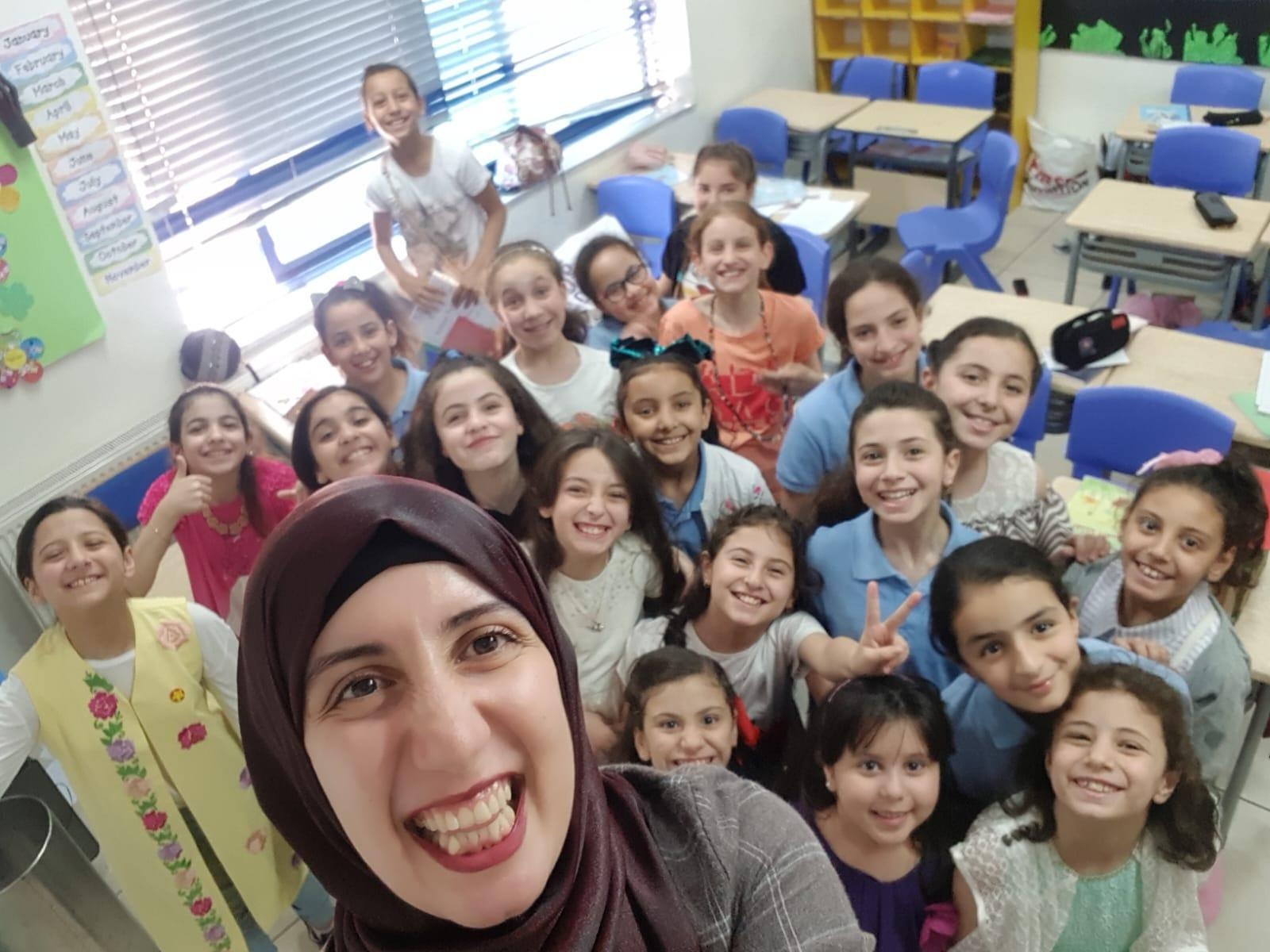
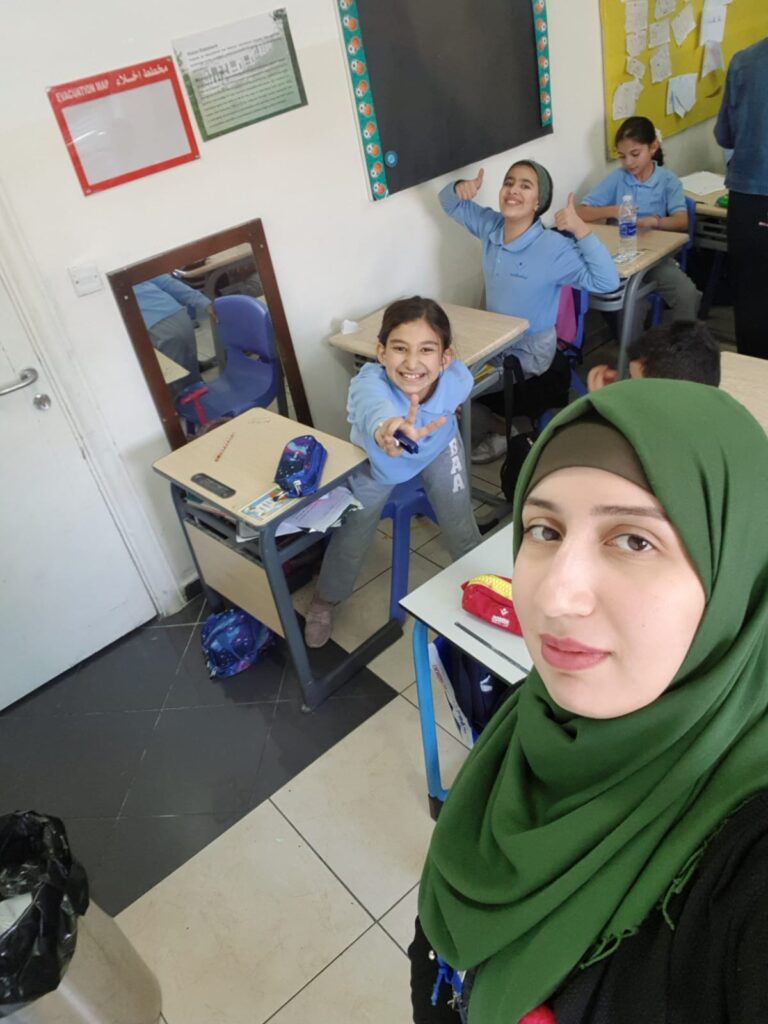
Wiam Najjar and students
(Image courtesy of Wiam Najjar)

Never giving in

When I met my husband, the first and most persistent topic of discussion between us was not wanting children. It was scary to speak about. It was unfathomable to him.

The only reasons I should have kids were to please my in-laws, to make society shut up, to prove I was “woman enough,” and to fit in. 

My husband is not a citizen of my country and, therefore, has no rights. Any child we bring into this world will accordingly have no rights. I can’t list my husband or child on the family register. I’m referred to as the foreigner’s wife. In my country, women are way behind men in terms of human rights, while men are under so much pressure to achieve it all. Having a boy or a girl does not look hopeful. 

Arguing with facts and statistics, expressing one’s fear of bringing a child into an unstable world, or simply stating that not wanting kids is never enough for society. 

God won’t punish me for considering the many possible scenarios and dreary stats. God won’t take anything away from me because I’ve made a choice. Kids are a huge responsibility that cannot be easily handled. It’s not simply instinct or custom. It’s bringing a human into this world and taking care of every aspect of their life until they grow up. 

Yeah, I’m scared of that responsibility. And I must admit that it isn’t an easy decision to make.

So whenever someone decides to ask me when I’ll have kids, I will let them read this piece, even before they ask!