
Backing New Beginnings: Refugee Entrepreneurs Find Support Across Britain

“When the land is full of snow and you don’t know what is underneath — ­business is like that,” says Akbar Majidov, an immigrant to Britain who runs a catering business with his wife Sanobar. You have to take risks, Akbar told The Sentinel: “you just need to walk on the snow. Sometimes there’s a hole there, but sometimes it’s OK.”

Akbar and Sanobar from Uzbekistan in central Asia are operating in London street markets and at private events, selling home-made food originating from their Persian-speaking Tajik culture. 

Akbar has had to tread virgin territory to forge a life for himself since he came to Britain in 2003, a life which has included working in construction and for restaurant group The Breakfast Club. Sanobar joined him permanently in London in 2019.

The husband-and-wife team has received guidance from non-profit organisation TERN, The Entrepreneurial Refugee Network, which is helping refugees to launch their own businesses. TERN helped 725 refugee entrepreneurs in the 2024-2025 financial year. It is seeing such demand for its mentoring and training courses that it is running a waiting list.

Kateryna Reshetnyk, a Ukrainian refugee from the eastern city of Kharkiv, now works with her husband in the Scottish town of Girvan, running PIXSEL UK, which produces hybrid glass protectors for car and motorcycle screens. Kateryna hadn’t operated a business before she was forced to flee the war in Ukraine. She told The Sentinel how she has also benefited from training through TERN.

“I had an accountancy course, an accountant from TERN helped me to create a business plan and I had a course for eBay. TERN and eBay helped refugees like me who want to sell on eBay.”

Immigrants to Britain have been facing a hostile environment in the past few years, both from governments and from right-wing populist party Reform UK, which is leading in opinion polls. However, there is also a groundswell of support for Britain’s multiculturalism. At least 50,000 people joined a march against the far right in London at the end of March. Nowhere is this multiculturalism more apparent than in the variety of international foods available to diners in London, the best city in the world for food, according to Tripadvisor.

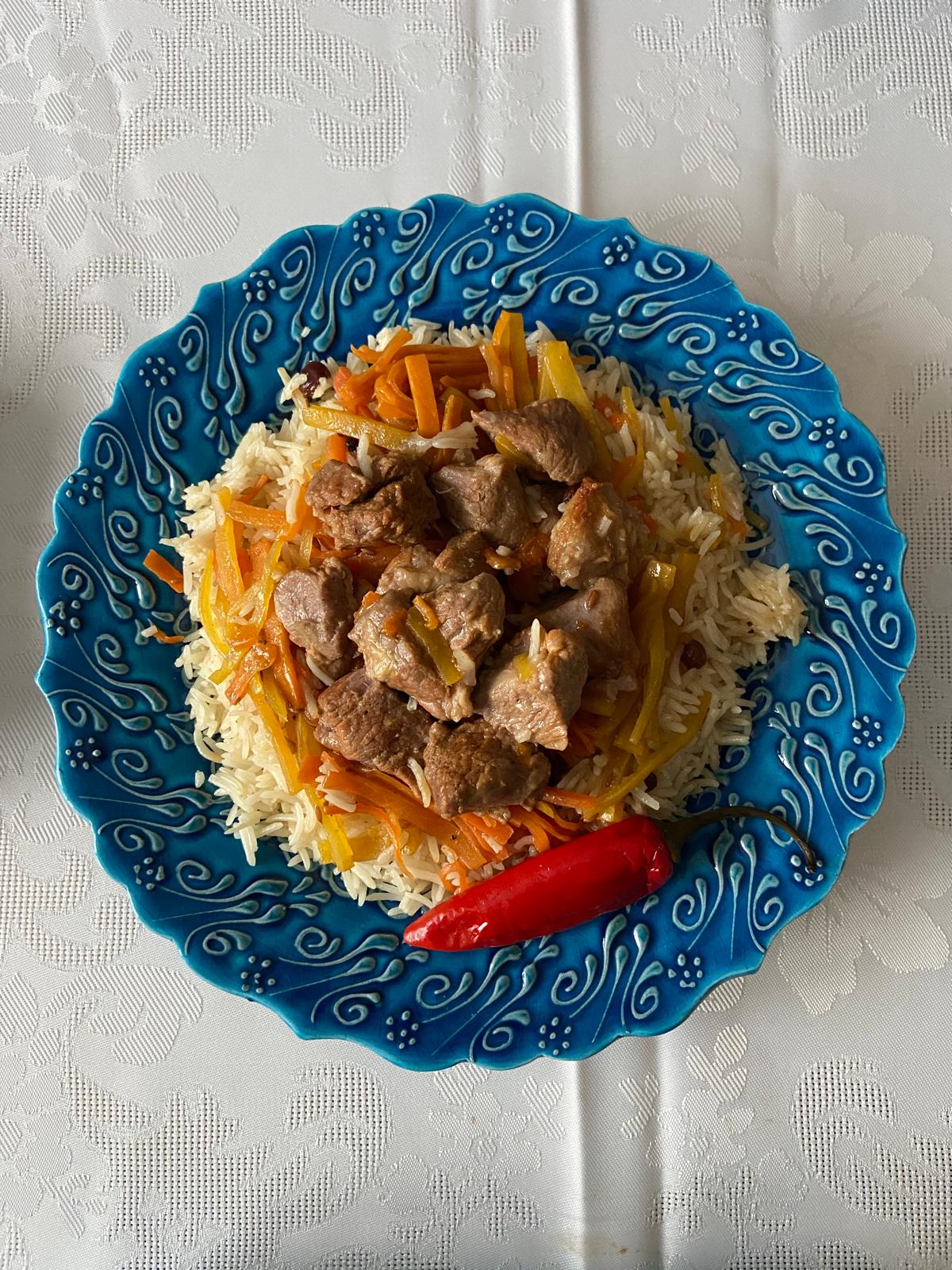
The signature dish of the Majidovs’ business, Samarkand Palav, is oshi palav, inscribed in 2016 on UNESCO’s Representative List of the Intangible Cultural Heritage of Humanity. Palav typically features rice, meat and carrots, as well as spices such as cumin. What makes the dish so tasty is that the ingredients are cooked together, with the rice absorbing the flavour of the meat and vegetables, says Akbar.

Another distinctive element of palav is that it is cooked and served in layers, with first rice, then meat, then vegetables, says Sanobar: “this very beautiful layer gives a touch of Bukhara and Samarkand.”

Sanobar says it is important for immigrants to integrate into Britain when they arrive. However, it is also important for them not to forget their own culture. For Sanobar, the contrast between central Asian and British culture can sometimes be great:

“In Uzbekistan, we keep a friendly, centuries-old culture. People live for today, and they don’t worry about money for the future. In the markets, in the bazaar, people share their food, they share everything. I think it’s good if they bring this nice culture with them and they share.”

Kateryna also stressed the importance for refugees of making the most of what they have.

“Thank you to people who trust us and who allow us to create a business here, and who provide advice for refugees. I understand now that everything changes very fast in our lives. You need to live for today and for this moment, not wait. I have been waiting for good things for four years, but we decided to create our business here, to live our full lives.”
Living in the Age of Geopolitical Fatigue

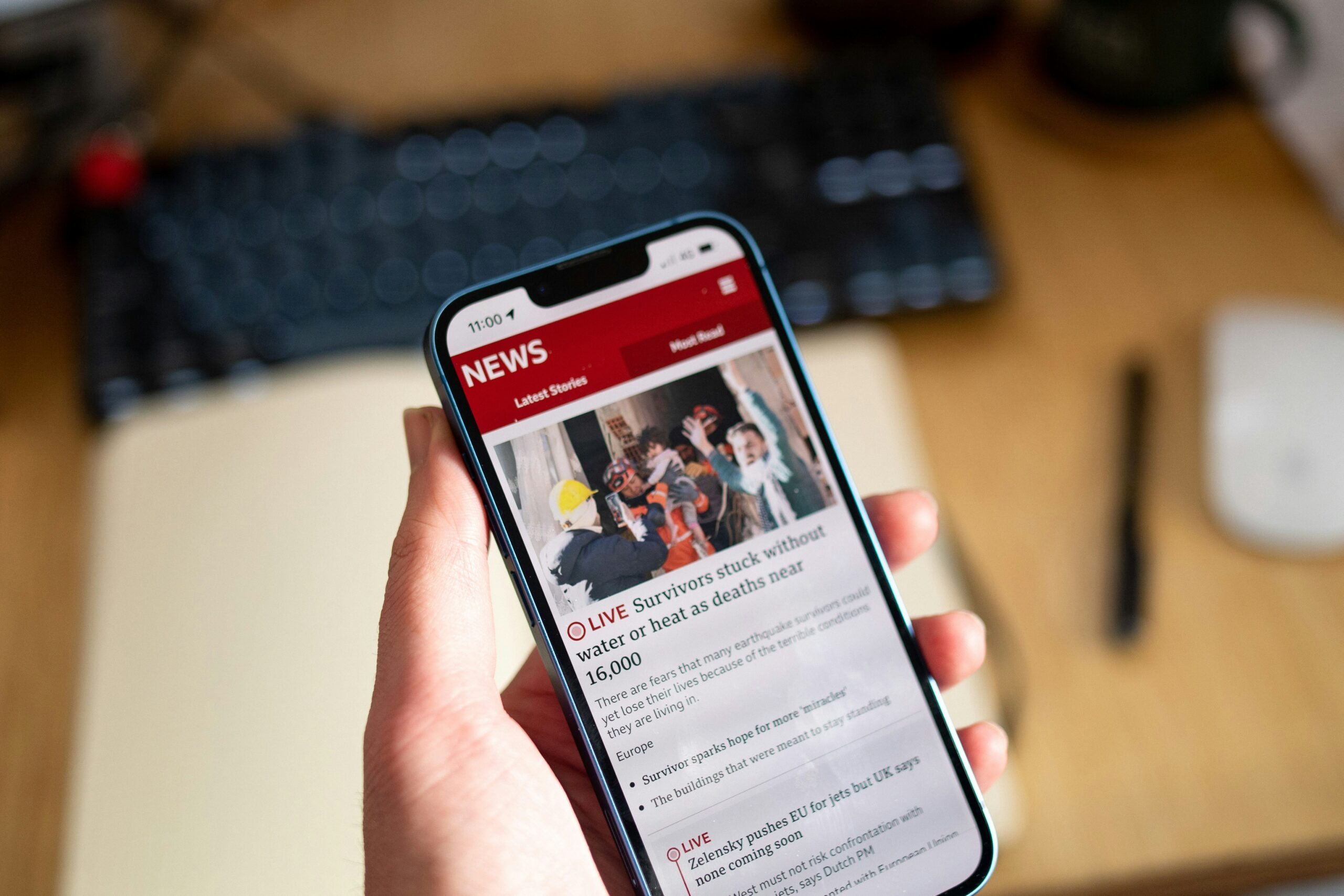
As a journalist, staying informed is my job. Lately, however, I find myself avoiding the news cycle. Each time I open my phone, another crisis demands attention. By the time I’ve absorbed one story, three more have displaced it. I closed the app. I look for something, anything, that offers a break.

Turns out, I’m far from alone. The Reuters Institute for the Study of Journalism’s 2025 Digital News report found that 40% of respondents across 47 markets now say they sometimes or often avoid the news, up 11 percentage points from 29% in 2017. When researchers asked why, selective news avoiders cite feeling anxious and powerless, finding the news repetitive and boring, and feeling overwhelmed by its negative nature.

This exhaustion is different from just being tired of politics. It’s the feeling of living through an accelerating cascade of global crises, Ukraine, Gaza, Iran, economic instability, climate warnings, while having almost no capacity to influence any of it. Unlike previous eras where crises had beginnings, peaks, and some kind of resolution, today’s information environment presents them as simultaneous and never ending.

Psychologists are starting to document what many of us already feel. The American Psychological Association’s 2025 Stress in America survey found that 69% of adults now cite the spread of inaccurate or misleading information as a major source of stress, up from 62% in 2024. Another 57% reported stress about the rise of AI, up from 49% the previous year. What’s telling is that this anxiety isn’t tied to direct personal impact, but to what researchers call “ambient awareness,” the background cognitive load of navigating a reality where information itself feels unreliable and emerging technologies reshape daily life faster than we can process the implications.

When More Information Means Less Understanding

Here’s the strange part: we know more about global events than any generation in history, yet understanding those events hasn’t gotten any easier. If anything, it’s gotten harder.

Information overload researchers have long documented this paradox: our cognitive capacity for processing complex, multifaceted issues has limits. Beyond a certain threshold, additional information can decrease comprehension rather than improve it. We become paralyzed by choice, unable to synthesize competing narratives into coherent understanding.

Digital platforms worsen this dynamic. Research examining social media algorithms has found that emotionally charged political content receives substantially more amplification than neutral reporting. A study published in PNAS Nexus examining Twitter’s algorithm found that among tweets selected by engagement based ranking, 62% expressed anger compared to 52% in chronological feeds, and content expressing out-group animosity increased from 38% to 46%. Sociologist Zeynep Tufekci describes this phenomenon as “censorship through noise,” information isn’t blocked, it’s drowned in a flood of high emotion content designed to keep you scrolling.

In this environment, picking a side feels easier than trying to hold multiple competing explanations in your head. The mental shortcut is understandable. The cost is polarization.

Crises That Disappear Before We Understand Them

Think back to February 2023. A massive earthquake killed over 50,000 people in Turkey and Syria. For about 10 days, it was everywhere. Then a Chinese surveillance balloon drifted across North America. Fighting intensified around Bakhmut. A train derailed in Ohio and people worried about chemical contamination. By March, the earthquake had essentially vanished from international news, not because the crisis ended, hundreds of thousands of people were still displaced, but because our collective attention had splintered and moved on.

This keeps happening. Research tracking humanitarian crisis coverage shows that media attention operates in dramatic spikes followed by rapid abandonment. A 2025 analysis of 78,667 news articles covering 10 major humanitarian crises found that coverage is highly event driven, with sustained engagement rare and dependent on sudden developments rather than ongoing need. The pattern suggests we’re moving from crisis to crisis without the time required to understand any of them fully.

When everything happens at once, it becomes almost impossible to maintain any sense of historical continuity. Social media turns into a marketplace where pre packaged interpretations compete for our clicks. And many of us, simply too exhausted to build our own understanding, just pick from what’s already there.

When Exhaustion Becomes the Point

Here’s an uncomfortable thought: fatigue can work as a kind of control, even when nobody’s deliberately engineering it. In authoritarian countries, it’s sometimes by design. Russia’s “firehose of falsehood” strategy intentionally floods information channels with contradictory claims. The goal isn’t to make you believe anything specific, just to make you too tired to figure out what’s true.

In democracies, it works differently but ends up in a similar place. When everything is presented as equally urgent, nothing gets the sustained attention it needs. Research on civic engagement suggests that constant exposure to crisis messaging can produce paralysis rather than mobilization. The perpetual state of emergency becomes normalized, and people retreat into managing their immediate circumstances rather than organizing for broader change.

A tired population doesn’t organize. It just tries to keep up. And when exhaustion turns into apathy, decisions get left to whoever already has the resources and the microphone.

Finding Our Way Back

I can’t solve the wars, the climate crisis, or the economic uncertainty that fills my news feed every morning. Neither can you. But I’m starting to think that understanding how all of this shapes what we pay attention to, and how we think, might be one of the few things we actually can control.

This exhaustion we’re feeling isn’t a personal failing. It’s a reasonable response to an information environment that’s moving faster than our minds were built to handle. We evolved to deal with immediate, local threats. Not a constant stream of global emergencies.

The answer isn’t to unplug completely. It’s to change how we relate to the flood. That’s admittedly an individual strategy for what’s really a structural problem. My personal discipline can’t fix how platforms are designed or how algorithms amplify outrage. But it can give me back something I’ve been missing: the ability to choose what gets my attention right now, and what can wait.

Some researchers are pushing for bigger fixes. Redesigning social media to stop rewarding engagement at all costs. Making algorithms transparent so we know why we’re seeing what we’re seeing. Funding public media that can provide slower, more thoughtful coverage instead of reactive feeds. Whether any of that can overcome the money and lobbying power behind the current system, I honestly don’t know.

What I do know is this: recognizing that my exhaustion makes sense, that it’s not weakness or apathy but a rational response to an overwhelming reality, feels like a small act of reclaiming something. In a world that demands constant reaction, the ability to slow down and actually think might be one of the most important things we have left.

That capacity is getting rarer. Which is exactly why it matters.