Living in the Age of Geopolitical Fatigue

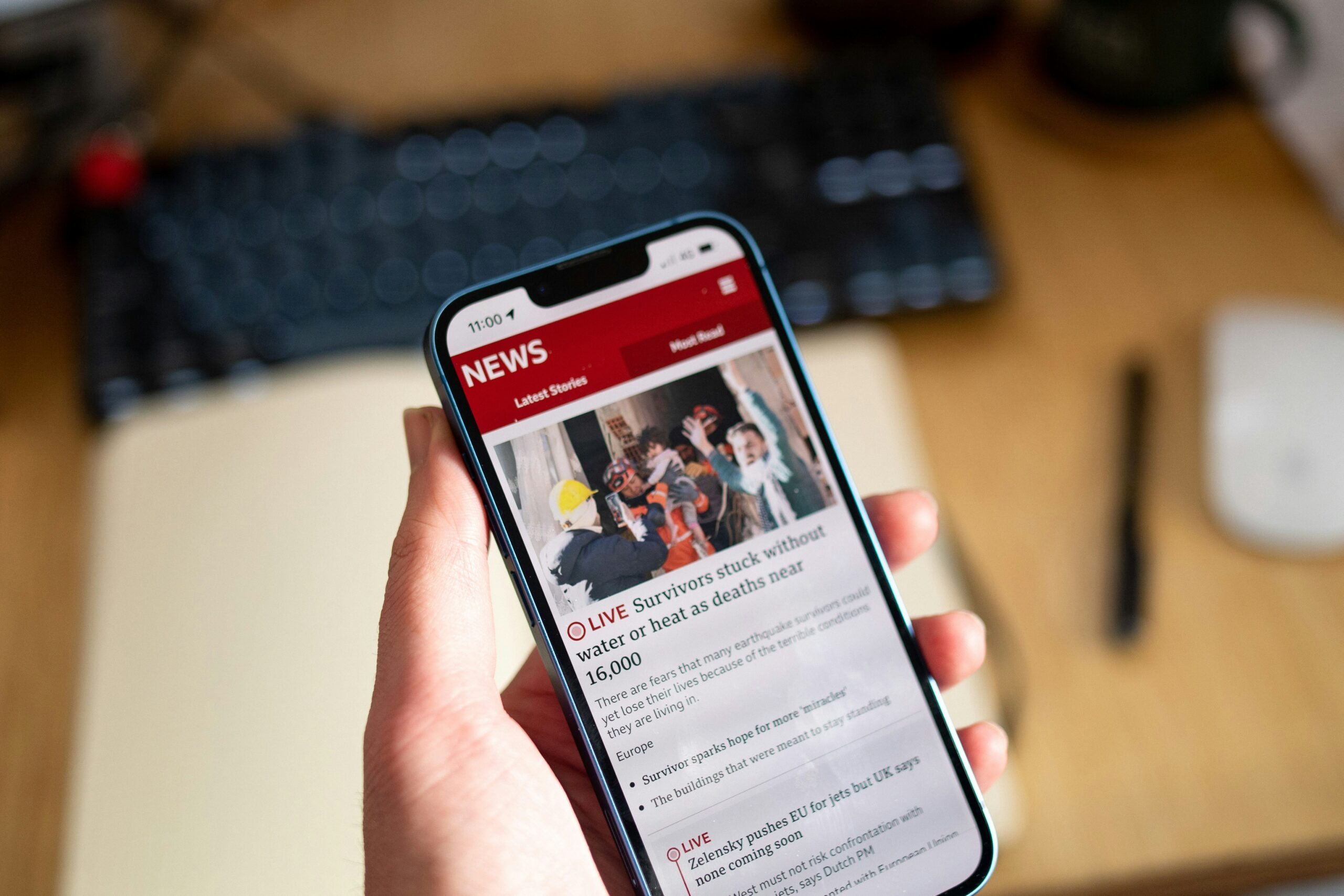
As a journalist, staying informed is my job. Lately, however, I find myself avoiding the news cycle. Each time I open my phone, another crisis demands attention. By the time I’ve absorbed one story, three more have displaced it. I closed the app. I look for something, anything, that offers a break.

Turns out, I’m far from alone. The Reuters Institute for the Study of Journalism’s 2025 Digital News report found that 40% of respondents across 47 markets now say they sometimes or often avoid the news, up 11 percentage points from 29% in 2017. When researchers asked why, selective news avoiders cite feeling anxious and powerless, finding the news repetitive and boring, and feeling overwhelmed by its negative nature.

This exhaustion is different from just being tired of politics. It’s the feeling of living through an accelerating cascade of global crises, Ukraine, Gaza, Iran, economic instability, climate warnings, while having almost no capacity to influence any of it. Unlike previous eras where crises had beginnings, peaks, and some kind of resolution, today’s information environment presents them as simultaneous and never ending.

Psychologists are starting to document what many of us already feel. The American Psychological Association’s 2025 Stress in America survey found that 69% of adults now cite the spread of inaccurate or misleading information as a major source of stress, up from 62% in 2024. Another 57% reported stress about the rise of AI, up from 49% the previous year. What’s telling is that this anxiety isn’t tied to direct personal impact, but to what researchers call “ambient awareness,” the background cognitive load of navigating a reality where information itself feels unreliable and emerging technologies reshape daily life faster than we can process the implications.

When More Information Means Less Understanding

Here’s the strange part: we know more about global events than any generation in history, yet understanding those events hasn’t gotten any easier. If anything, it’s gotten harder.

Information overload researchers have long documented this paradox: our cognitive capacity for processing complex, multifaceted issues has limits. Beyond a certain threshold, additional information can decrease comprehension rather than improve it. We become paralyzed by choice, unable to synthesize competing narratives into coherent understanding.

Digital platforms worsen this dynamic. Research examining social media algorithms has found that emotionally charged political content receives substantially more amplification than neutral reporting. A study published in PNAS Nexus examining Twitter’s algorithm found that among tweets selected by engagement based ranking, 62% expressed anger compared to 52% in chronological feeds, and content expressing out-group animosity increased from 38% to 46%. Sociologist Zeynep Tufekci describes this phenomenon as “censorship through noise,” information isn’t blocked, it’s drowned in a flood of high emotion content designed to keep you scrolling.

In this environment, picking a side feels easier than trying to hold multiple competing explanations in your head. The mental shortcut is understandable. The cost is polarization.

Crises That Disappear Before We Understand Them

Think back to February 2023. A massive earthquake killed over 50,000 people in Turkey and Syria. For about 10 days, it was everywhere. Then a Chinese surveillance balloon drifted across North America. Fighting intensified around Bakhmut. A train derailed in Ohio and people worried about chemical contamination. By March, the earthquake had essentially vanished from international news, not because the crisis ended, hundreds of thousands of people were still displaced, but because our collective attention had splintered and moved on.

This keeps happening. Research tracking humanitarian crisis coverage shows that media attention operates in dramatic spikes followed by rapid abandonment. A 2025 analysis of 78,667 news articles covering 10 major humanitarian crises found that coverage is highly event driven, with sustained engagement rare and dependent on sudden developments rather than ongoing need. The pattern suggests we’re moving from crisis to crisis without the time required to understand any of them fully.

When everything happens at once, it becomes almost impossible to maintain any sense of historical continuity. Social media turns into a marketplace where pre packaged interpretations compete for our clicks. And many of us, simply too exhausted to build our own understanding, just pick from what’s already there.

When Exhaustion Becomes the Point

Here’s an uncomfortable thought: fatigue can work as a kind of control, even when nobody’s deliberately engineering it. In authoritarian countries, it’s sometimes by design. Russia’s “firehose of falsehood” strategy intentionally floods information channels with contradictory claims. The goal isn’t to make you believe anything specific, just to make you too tired to figure out what’s true.

In democracies, it works differently but ends up in a similar place. When everything is presented as equally urgent, nothing gets the sustained attention it needs. Research on civic engagement suggests that constant exposure to crisis messaging can produce paralysis rather than mobilization. The perpetual state of emergency becomes normalized, and people retreat into managing their immediate circumstances rather than organizing for broader change.

A tired population doesn’t organize. It just tries to keep up. And when exhaustion turns into apathy, decisions get left to whoever already has the resources and the microphone.

Finding Our Way Back

I can’t solve the wars, the climate crisis, or the economic uncertainty that fills my news feed every morning. Neither can you. But I’m starting to think that understanding how all of this shapes what we pay attention to, and how we think, might be one of the few things we actually can control.

This exhaustion we’re feeling isn’t a personal failing. It’s a reasonable response to an information environment that’s moving faster than our minds were built to handle. We evolved to deal with immediate, local threats. Not a constant stream of global emergencies.

The answer isn’t to unplug completely. It’s to change how we relate to the flood. That’s admittedly an individual strategy for what’s really a structural problem. My personal discipline can’t fix how platforms are designed or how algorithms amplify outrage. But it can give me back something I’ve been missing: the ability to choose what gets my attention right now, and what can wait.

Some researchers are pushing for bigger fixes. Redesigning social media to stop rewarding engagement at all costs. Making algorithms transparent so we know why we’re seeing what we’re seeing. Funding public media that can provide slower, more thoughtful coverage instead of reactive feeds. Whether any of that can overcome the money and lobbying power behind the current system, I honestly don’t know.

What I do know is this: recognizing that my exhaustion makes sense, that it’s not weakness or apathy but a rational response to an overwhelming reality, feels like a small act of reclaiming something. In a world that demands constant reaction, the ability to slow down and actually think might be one of the most important things we have left.

That capacity is getting rarer. Which is exactly why it matters.

Mercosur–European Union Trade Agreement Advances and May Facilitate Brazilian Exports

After more than two decades of discussion, the Southern Common Market (Mercosur) and the European Union (EU) signed their long-negotiated trade agreement on January 17, 2026, during a ceremony held in Asunción, Paraguay, which currently holds the rotating presidency of the South American bloc.

The event was attended by the President of the European Commission, Ursula von der Leyen, and the President of the European Council, António Costa. The Argentine President, Javier Milei; the President of Uruguay, Yamandú Orsi; the President of Paraguay, Santiago Peña; and Brazil’s Minister of Foreign Affairs, Mauro Vieira, signed the agreement on behalf of the four full Mercosur member states.

However, the agreement still requires ratification by the parliaments of the European Union member states and the Mercosur countries before it fully enters into force.

According to reporting by the Brazilian news outlet G1, the Brazilian Representation in the Mercosur Parliament approved the agreement, and the text is now set to proceed to the plenary of Brazil’s Chamber of Deputies. 

The outlet also reported that, despite efforts by some European legislators to refer the matter to the Court of Justice of the European Union (CJEU) — a move that could delay implementation by up to two years — diplomats expect provisional application of parts of the agreement as early as March.

When it seemed that negotiations were nearing conclusion, the process faced additional institutional scrutiny in the European Union. A group of Members of the European Parliament supported referring aspects of the agreement to the CJEU for legal review. 

The Court will evaluate whether the pact complies with European Union law, particularly amid concerns about competition from Mercosur agricultural products entering Europe at lower prices, which could affect certain domestic producers. 

As a result, the negotiations that have lasted more than two decades may extend further before full ratification.

The European Union is composed of 27 countries, with a population of approximately 450 million people and a GDP of about USD 22.4 trillion, representing significant business potential. 

An agreement facilitating trade between these two blocs is considered a major step for multilateral trade cooperation at a time of rising protectionist tendencies in parts of the world.

Some products in which Brazil excels are included in the agreement and could benefit specific sectors of the economy. This is the case for fruits, where certain tariffs are expected to be gradually reduced or eliminated. 

Others, such as avocado, lemon, lime, melon, and watermelon, may not be subject to restrictive quotas between the blocs, potentially expanding trade flows.

Vegetables and fruits account for just over three percent of Brazil’s exports to the European Union. Brazilian fruit exports set records for the third consecutive year in 2025. A 12% increase in value reached approximately USD 1.5 billion, while volume grew 19.6% compared to 2024.

Brazil’s fruit cultivation is concentrated in the semi-arid region of the São Francisco Valley, which stands out for its ability to produce year-round, unlike many regions where harvest cycles are seasonal.

This is highlighted by the president of Abrafrutas, the Brazilian Association of Producers and Exporters of Fruits and Derivatives, Guilherme Coelho, in an interview with The Sentinel by Yuvoice:

“The São Francisco Valley is a reference point for irrigated agriculture in Brazil. It’s an impressive sector. What do we have here that neither Europe nor the rest of the world has? The semi-arid climate — a region in the Northeast with very limited rainfall.”

“But we also have the sun and the São Francisco River, which is used for irrigation. With rational water use, such as drip irrigation, only the amount the plant needs is supplied, with minimal waste. That’s why, six months ago, we received an ESG sustainability seal for fruit production. It’s another differentiator for products from the São Francisco Valley.”

Regarding Brazil’s capacity to supply fruit during global off-season periods, Coelho added:

“The semi-arid region, with abundant sun and irrigation, allows us to produce grapes and other fruits year-round. Europe, however, has seasonal gaps in production. In fact, much of the world does.”

“We produce grapes 52 weeks a year, while in Chile there is only one harvest due to colder temperatures. The same happens in South Africa and California.”

Coelho views the prospective entry into force of the agreement with the European Union positively, even though its full implementation depends on legal and parliamentary procedures:

“The agreement may move toward provisional application while legal review takes place. If the court upholds it, it continues; if not, the process may be halted.”

“As for the European Union’s safeguard measures — designed to protect domestic producers — I don’t have the technical expertise to assess their impact. It shouldn’t be seen as brutal competition where someone necessarily loses. Markets tend to adjust over time.”

Greenland and the Minerals That Could Decide Europe’s Green Dream

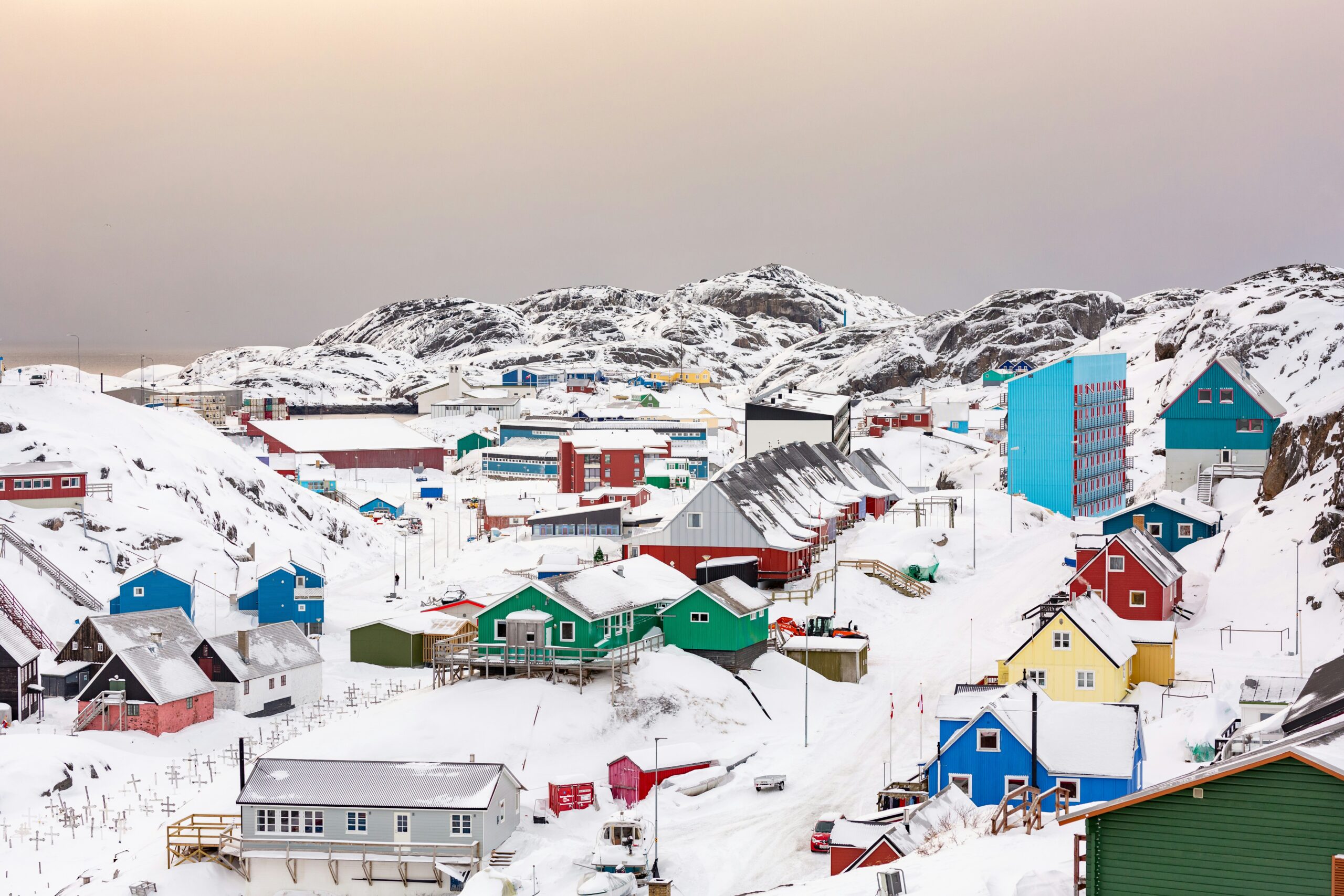
Since Donald Trump once again said he was interested in Greenland, speculation has resurfaced about why the world’s largest island suddenly commands so much attention. One of many answers lies less in surface and military strategies, but beneath the ground. Literally.

“Rare earths and strategic metals are a hot topic right now because they are essential to technologies we already depend on,” explains Dr. Patrick Conway, PhD in physical metallurgy in metals and rocks. These materials are used in everything from smartphones and electric cars to wind turbines and semiconductors and “you really can’t use other elements for this”. Once a technology is built around them, replacing them is not simple. In simpler words: the raw materials that power modern life.

But what in the world are rare earths and why do they matter so much?

Often referred to as REEs, rare earth elements are small ingredients with an outsized impact. They are used in powerful magnets, batteries, electronics, semiconductors and defence systems. Most modern technologies depend on them in some way, and new uses are constantly being developed.

They are called “rare” not only because they are hard to find, but as Dr. Conway explained, they are really difficult to extract, hard to process and hard to replace — and incredibly expensive. If supply tightens or prices rise, entire industries feel the consequences.

An example of one strategic element that recently proved extremely valuable for new technology is Hafnium (Hf) — a mixture of metals used to make strong materials for electronics, machinery, and other applications. Until recently, it was affordable enough to use in these alloys. However, “in the last couple of years, Hf was found to be extremely good in semiconductors so the demand skyrocketed and so did the cost because of the limited amount. It meant alloys we designed and produced before 2018 with Hf are basically unsellable because of the cost of Hf in it”, as described by Conway.

A rare discovery in Northern Sweden

“But this tension with REEs isn’t new”, he says as he recalls a major discovery in 2023 in Northern Sweden when the state-owned mining company LKAB announced what could be the largest known deposit of rare earth metals in Europe, located near Kiruna, far north of the Arctic Circle. The discovery contains more than one million tonnes of rare earth oxides. This deposit was seen as a huge win for Europe to become less dependent on China for these elements.

Even Swedish leaders celebrated this news as a strategic breakthrough. At the time, Energy and Business Minister Ebba Busch said that electrification and Europe’s push for greater independence from Russia and China would begin “in the mine,” stressing hard that the green transition depended on access to minerals and that Sweden’s mining sector had an important role to play. 

Europe’s dependency problem 

Europe does not currently mine rare earths at scale. Despite Sweden’s discovery, the continent still imports nearly all of the rare earth elements and other critical minerals it uses, with China by far the dominant producer and processor worldwide.

This dependency has long worried European policymakers. Green technologies, from electric vehicles to wind power, require a steady supply of materials that Europe does not control. Even large discoveries like Kiruna take years to turn into actual production. Permits must be approved, infrastructure built and environmental reviews completed — a process that can take a decade or more.

For Sweden, the Kiruna deposit is a major opportunity, but also a reminder of how long and complex the path from rock finding to finished product can be.

Why pay attention to Greenland until now?

Europe’s interest in Greenland did not appear overnight. As demand for green technologies has surged, particularly in the Nordic countries with the green transition, so has the need for reliable access to raw materials.

Greenland is believed to hold large quantities of critical minerals, including rare earths and graphite, which is essential for electric vehicle batteries. According to geological assessments, 25 of the 34 raw materials classified as critical by the EU are found in Greenland. These resources remain largely untapped due to harsh weather conditions, limited infrastructure and high costs.

Greenland has already taken cautious steps. It recently approved a 30-year mining licence for an EU-backed graphite project at Amitsoq, a move seen as strategically important for Europe’s supply chains.

Trump and geopolitics makes the vulnerability visible… and kind of urgent

Europe’s reliance on China for critical minerals has become harder to ignore amid rising geopolitical tensions. That vulnerability moved even more into the spotlight when US President Donald Trump publicly suggested that the United States should take control of Greenland — comments that sparked alarm around the Globe, and especially among European countries.

Swedish Prime Minister Ulf Kristersson made his position clear:

“We will not allow ourselves to be blackmailed. Only Denmark and Greenland decide on issues concerning Denmark and Greenland. I will always stand up for my country, and for our allied neighbors. This is an EU issue that concerns many more countries than those now being singled out. Sweden is now having intensive discussions with other EU countries, Norway and the UK for a joint response”, he wrote on X on January 17, 2026.

Kristersson described the rhetoric as unacceptable and made clear that only Denmark and Greenland have the right to decide Greenland’s future, warning against intimidation and economic pressure.

More than a mining story

Kiruna’s discovery showed Europe that the continent can uncover the resources it needs to power electric cars, wind turbines, and green technologies. Greenland, by contrast, illustrates how uncertain and complex this path remains.

For Europe, and for Sweden, the challenge is bigger than mining alone. It is about building a sustainable green transition that doesn’t compromise values, alliances, or the planet itself. In the end, the fate of Europe’s green ambitions may pivot not just on what lies underground, but on how wisely the continent navigates the road above it.

Accessing these materials involves politics, international cooperation, and environmental responsibility — but perhaps most critically of all, geopolitical stability. Which, it turns out, is also rare to find, to cultivate, and to maintain.