When More Information Means Less Understanding
Here’s the strange part: we know more about global events than any generation in history, yet understanding those events hasn’t gotten any easier. If anything, it’s gotten harder.
Information overload researchers have long documented this paradox: our cognitive capacity for processing complex, multifaceted issues has limits. Beyond a certain threshold, additional information can decrease comprehension rather than improve it. We become paralyzed by choice, unable to synthesize competing narratives into coherent understanding.
Digital platforms worsen this dynamic. Research examining social media algorithms has found that emotionally charged political content receives substantially more amplification than neutral reporting. A study published in PNAS Nexus examining Twitter’s algorithm found that among tweets selected by engagement based ranking, 62% expressed anger compared to 52% in chronological feeds, and content expressing out-group animosity increased from 38% to 46%. Sociologist Zeynep Tufekci describes this phenomenon as “censorship through noise,” information isn’t blocked, it’s drowned in a flood of high emotion content designed to keep you scrolling.
In this environment, picking a side feels easier than trying to hold multiple competing explanations in your head. The mental shortcut is understandable. The cost is polarization.
Crises That Disappear Before We Understand Them
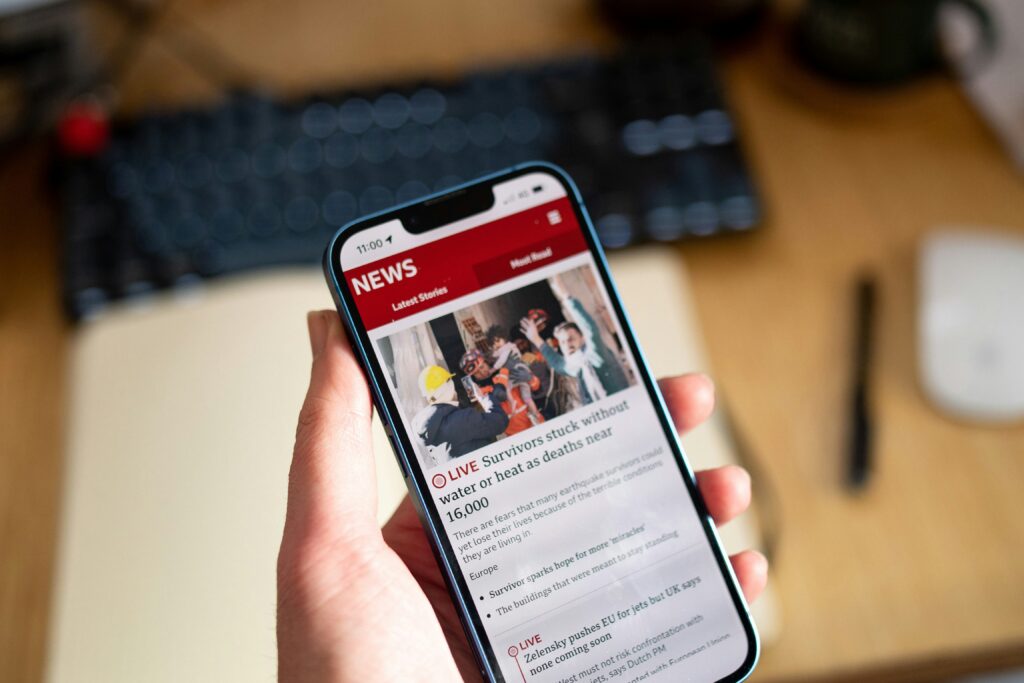
Think back to February 2023. A massive earthquake killed over 50,000 people in Turkey and Syria. For about 10 days, it was everywhere. Then a Chinese surveillance balloon drifted across North America. Fighting intensified around Bakhmut. A train derailed in Ohio and people worried about chemical contamination. By March, the earthquake had essentially vanished from international news, not because the crisis ended, hundreds of thousands of people were still displaced, but because our collective attention had splintered and moved on.
This keeps happening. Research tracking humanitarian crisis coverage shows that media attention operates in dramatic spikes followed by rapid abandonment. A 2025 analysis of 78,667 news articles covering 10 major humanitarian crises found that coverage is highly event driven, with sustained engagement rare and dependent on sudden developments rather than ongoing need. The pattern suggests we’re moving from crisis to crisis without the time required to understand any of them fully.
When everything happens at once, it becomes almost impossible to maintain any sense of historical continuity. Social media turns into a marketplace where pre packaged interpretations compete for our clicks. And many of us, simply too exhausted to build our own understanding, just pick from what’s already there.
When Exhaustion Becomes the Point
Here’s an uncomfortable thought: fatigue can work as a kind of control, even when nobody’s deliberately engineering it. In authoritarian countries, it’s sometimes by design. Russia’s “firehose of falsehood” strategy intentionally floods information channels with contradictory claims. The goal isn’t to make you believe anything specific, just to make you too tired to figure out what’s true.
In democracies, it works differently but ends up in a similar place. When everything is presented as equally urgent, nothing gets the sustained attention it needs. Research on civic engagement suggests that constant exposure to crisis messaging can produce paralysis rather than mobilization. The perpetual state of emergency becomes normalized, and people retreat into managing their immediate circumstances rather than organizing for broader change.
A tired population doesn’t organize. It just tries to keep up. And when exhaustion turns into apathy, decisions get left to whoever already has the resources and the microphone.
Finding Our Way Back
I can’t solve the wars, the climate crisis, or the economic uncertainty that fills my news feed every morning. Neither can you. But I’m starting to think that understanding how all of this shapes what we pay attention to, and how we think, might be one of the few things we actually can control.
This exhaustion we’re feeling isn’t a personal failing. It’s a reasonable response to an information environment that’s moving faster than our minds were built to handle. We evolved to deal with immediate, local threats. Not a constant stream of global emergencies.
The answer isn’t to unplug completely. It’s to change how we relate to the flood. That’s admittedly an individual strategy for what’s really a structural problem. My personal discipline can’t fix how platforms are designed or how algorithms amplify outrage. But it can give me back something I’ve been missing: the ability to choose what gets my attention right now, and what can wait.
Some researchers are pushing for bigger fixes. Redesigning social media to stop rewarding engagement at all costs. Making algorithms transparent so we know why we’re seeing what we’re seeing. Funding public media that can provide slower, more thoughtful coverage instead of reactive feeds. Whether any of that can overcome the money and lobbying power behind the current system, I honestly don’t know.
What I do know is this: recognizing that my exhaustion makes sense, that it’s not weakness or apathy but a rational response to an overwhelming reality, feels like a small act of reclaiming something. In a world that demands constant reaction, the ability to slow down and actually think might be one of the most important things we have left.
That capacity is getting rarer. Which is exactly why it matters.


Comments
Be the first to share your thoughts!
We value diverse perspectives and respectful debate.