The Eternal Quest For a Good Night’s Sleep

I haven’t always had trouble sleeping. 

About a decade ago, whilst studying for my master’s degree, I lived in a cramped room in a student house in Sunderland. For a full year, I would spend hours intensely studying at my desk before taking about five steps across the room and getting into bed.

It wasn’t a particularly nice bed. It was quite small, and if it hadn’t been for a strategically placed pair of drawers stopping me from falling out I probably would have been on the floor more often than not. And yet despite this, I would always fall asleep within an hour.

Fast forward to 2025, and I’ve upgraded that small bed for a nice double in a reasonably-sized bedroom. I also no longer have the stress of multiple exams and essays hanging over me, so it stands to reason that I would have no trouble falling asleep.

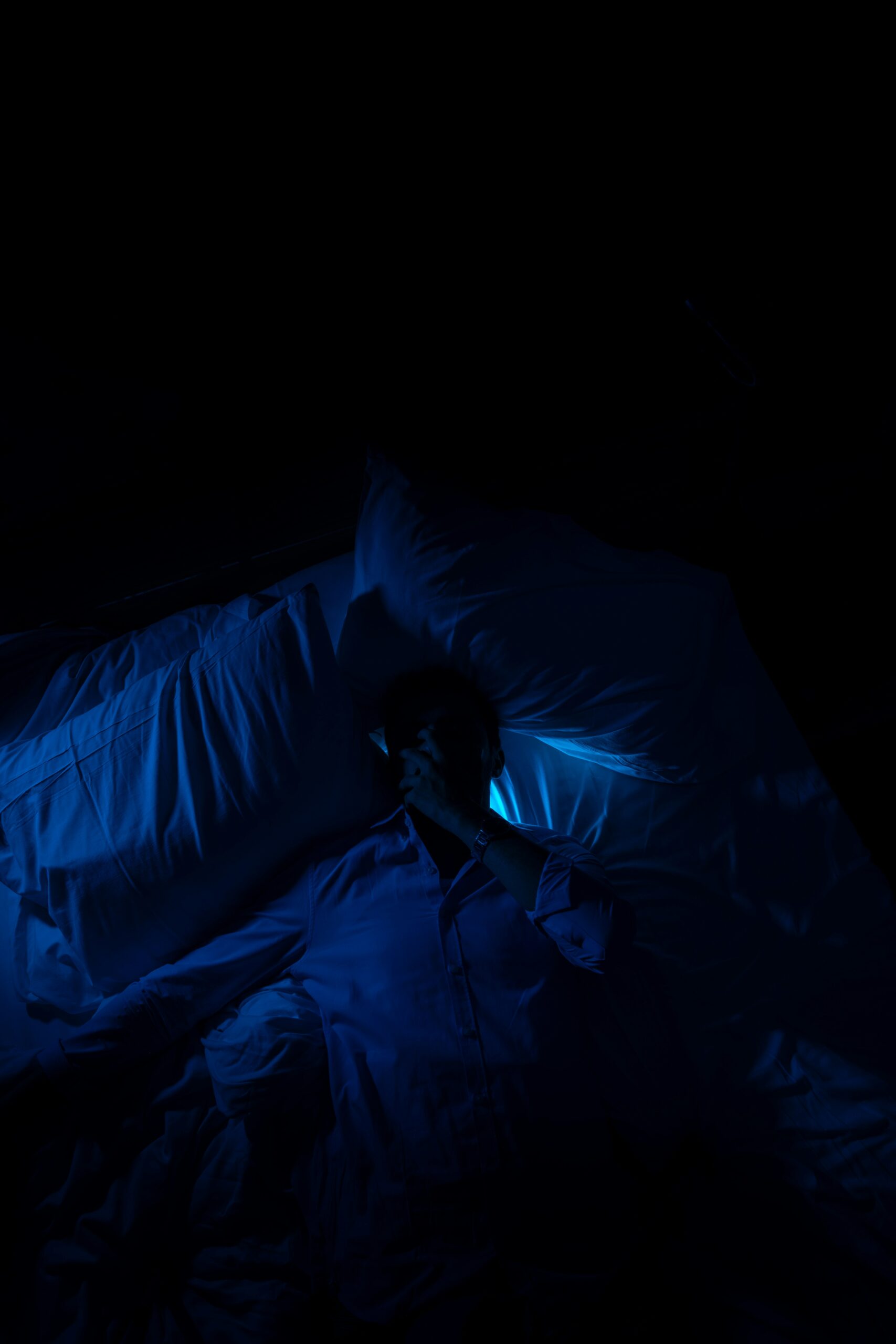
But for multiple reasons, the last five or so years have proven to be challenging as I’ve grappled with insomnia. And despite reading countless self-help books and taking several steps towards creating a better sleeping environment, a good night’s sleep continues to elude me.

I’m quite lucky in that I can still function normally during the day – I get up at a reasonable time, I can still go out with friends and I’m still able to write for my day job – but my poor sleeping habits over the last few years have definitely taken their toll, and there will be some days where I’m too tired to do anything other than sit on my sofa and doomscroll.

It’s hard to pinpoint the main cause of my insomnia. While I’ve often had trouble falling asleep during my life, the issue has really exacerbated in the last five or so years since COVID-19 first reared its head. I don’t need to tell you that the last few years have been stressful for everyone, and there’s every reason to believe that this is the main factor. I also have obsessive-compulsive disorder (OCD), which can lead to intrusive thoughts keeping me awake at night.

Whatever the reason, insomnia has gone from an annoying, but manageable condition to something that was starting to have a real impact on my life. The time had finally come to do something about it.

Improving my sleep hygiene

Go onto any website or read any self-help book about insomnia and you’ll see the term ‘sleep hygiene.’

Essentially, sleep hygiene describes the healthy habits that can help you get a good night’s sleep. This can range from your sleeping environment to what you do during the day.

In the last year or so I’ve started taking these things more seriously, whether it’s creating a nicer sleeping environment (no screens in the bedroom) or thinking more about what I’m doing during the day (eating healthily, no social media in the evening).

There’s a long way to go before I’m getting into a consistent sleeping pattern, but the early signs are encouraging. Simple acts like leaving my phone downstairs or reading before bed are already starting to have an effect, and I’m finding it easier to fall asleep, although I still find myself waking up randomly during the night.

I’ve also found that taking time away from social media (and the internet in general) has had a big effect. With 24/7 news and constant scrolling on social media, it can be incredibly difficult to switch off, even when I can tell that it is having an adverse effect on my mental health. The trick is to put as many barriers between you and those things as possible, whether that’s deleting apps, setting a daily browsing limit, or leaving your phone somewhere else, gradually spending less time online has ultimately had a big impact on my mood and my sleep hygiene.

Still, there are some elements that I can’t control, namely the recent heatwaves in the UK making it impossible to cool down enough for sleep and my dog, who likes to take up most of the bed (and who am I to stop her?), but with a few simple steps I’ve managed to greatly improve my sleep hygiene, and I’m hopeful that as time goes on I’ll be able to say goodbye to my insomnia for good.
By the Light of the Moon

A night owl by trade

The whole thing was surreal and dreamlike. Sitting in a worn leather armchair, observation minutes in hand, keeping as quiet as possible, I was working nights and felt subterranean, or was it subterfuge? The whole world’s fast asleep while I was in a private, secured facility with a duty to be wide-eyed and, in a sense, on guard. 

The work itself was seldom eventful. The bulk of the challenge was the reset to the long nocturnal hours.

As lone residential staff

I experienced working nights in the UK at two distinct engagements. 

One was working a month-on, month-off cycle of days and nights of 12-hour shifts. As you can imagine, sleep cycle hell. It would be about two and a half to three weeks in when I’d finally feel acclimated, and then it was over. That was a lone engagement. I was a one-man night staff for a two-story residential building. A sky-high caffeine intake and riding out one’s sense of exhaustion were non-negotiable to start with. Yet past the opening initiation rites, I had an office to myself, bright lighting, a kitchen, and writing to get on with. Undisturbed, alone, and in continued quiet, this was a safe haven to let the imagination run wild. Frankly, I’d be sullen and half-depressed when returning to daylight was next on the rotation. 

Never have I had such a raw sense of discovering golden, secret pockets of time and stealing those hours.

On the adolescent ward

The second was an entirely different deal tonally. I was working nights for about two and a half months at a time as a Senior Healthcare Assistant in an acute adolescent mental health ward. Duties, multifaceted, could include guarding safety and boundaries,  self-care and dignity within distress.

The drama was low, barring a rambunctious start and end to some shifts. Right when the staff changeover would take place, the whole ward could be spirited to test boundaries, literally and otherwise. But it was mainly being awake and alert for issues when the young people slept. Just that dynamic alone gave a parental vibe to it. Particularly when a circadian kick of tired would bloom to life: I’m awake so you can sleep. There felt some kind of undercurrent, an unspoken sacrifice to the work. All right … maybe coffee-drenched sleep deprivation colors your thinking and feeling, I’ll give you that. 

On returning from the fjords

After the UK nights, I worked my third and last night shift job in Norway, as land staff for cruises. I served as an Embarking/Disembarking Agent for retirees making trips in and out of the Oslo fjords. Suited and booted, I was the all-smiling, polite signpost on legs, working in hotels around Oslo. This was a job whose only drama hit when it came to hotel room sizes, since some guests were close to apoplectic about their demands. The shifts themselves were otherwise slow-burn and simple.

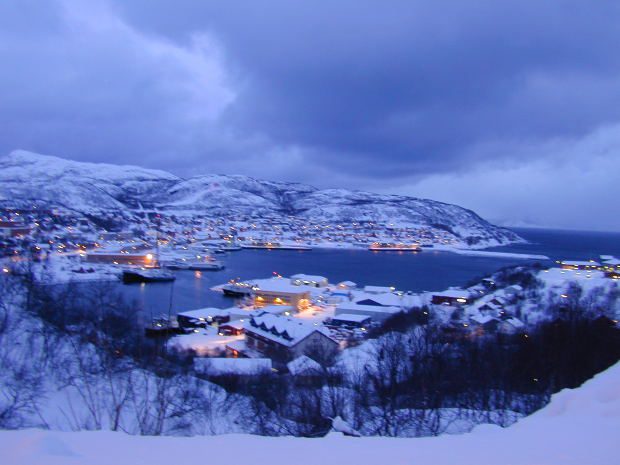
A Norwegian town, built upon a sea channel and surrounded by mountains, is dusted in fresh snow.
(Image courtesy of hyperlux via Morguefile)

I’d be in charge of the early risers, to get people on a coach to catch flights back home. The logistics were straightforward, as the concierge was always helpful, kind, and polite.

It was more the invisible, sleuth-like status that waiting in hotel lobbies in the dead of night gave. The night itself lent an air of film noir mystery. Soft light caressed golden and felt surfaces with spotless floors. The morning staff arriving, the night staff taking off, and revelers of the night returning to rest or collapse. I felt witness to a part of life I kinda shouldn’t be privy to. Dressed up and available in the lobby, my own desk, but not part of the hotel staff really. Needed when necessary, but otherwise not exactly there. As cars passed by in the cold darkness, I walked around a warm glowing foyer, a footnote to the surrounding world. Then again, wouldn’t you know it, I might just have got a little bit of writing done…

A mythical groove where creativity flows freely

I was always a night owl as a younger man, just a part of trying to steal more of the day. The hours between midnight and 3 AM could feel like a mythical groove for creative freedom seldom found. 

Yes, across nightwork and prior insomnia, writing has typically come alive for me. In years since, I’ve come to learn this could well be absolute guff, and there may be nothing better for creativity than a good night’s sleep. However, I can miss those hours. I can miss that sense I was up when the world fell fast asleep. That among all the quiet, in anonymity, I was carving out and discovering something I didn’t even know was there

I can’t advise being a night owl for creativity or otherwise. It might just leave you with a rather contemptuous relationship with the early morning. Yet there was some indescribable romantic glow of the deep of night with eyes wide open. An anesthetic contentment in isolation? An accidental high from screwing up a circadian rhythm? A little false power trip from having something others didn’t? 

I don’t know, but there’s nothing quite like being a night owl by trade. For better or for worse, I’m yet to find anything that compares. 

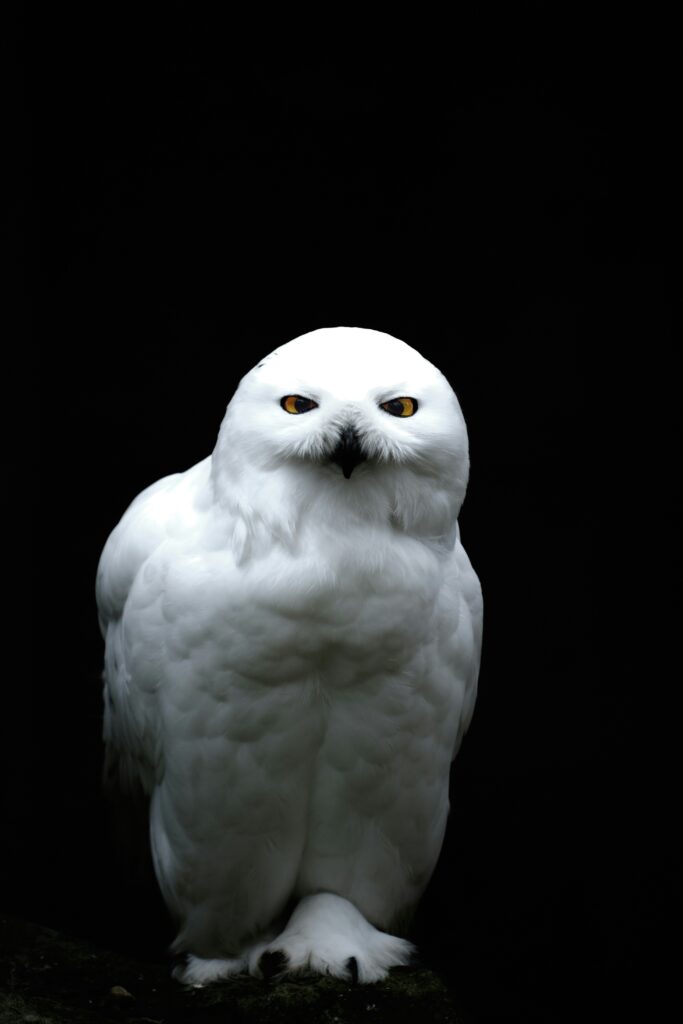
A snowy owl stares into the camera and hoots.
(Image courtesy of Alfred Kenneally via Unsplash)