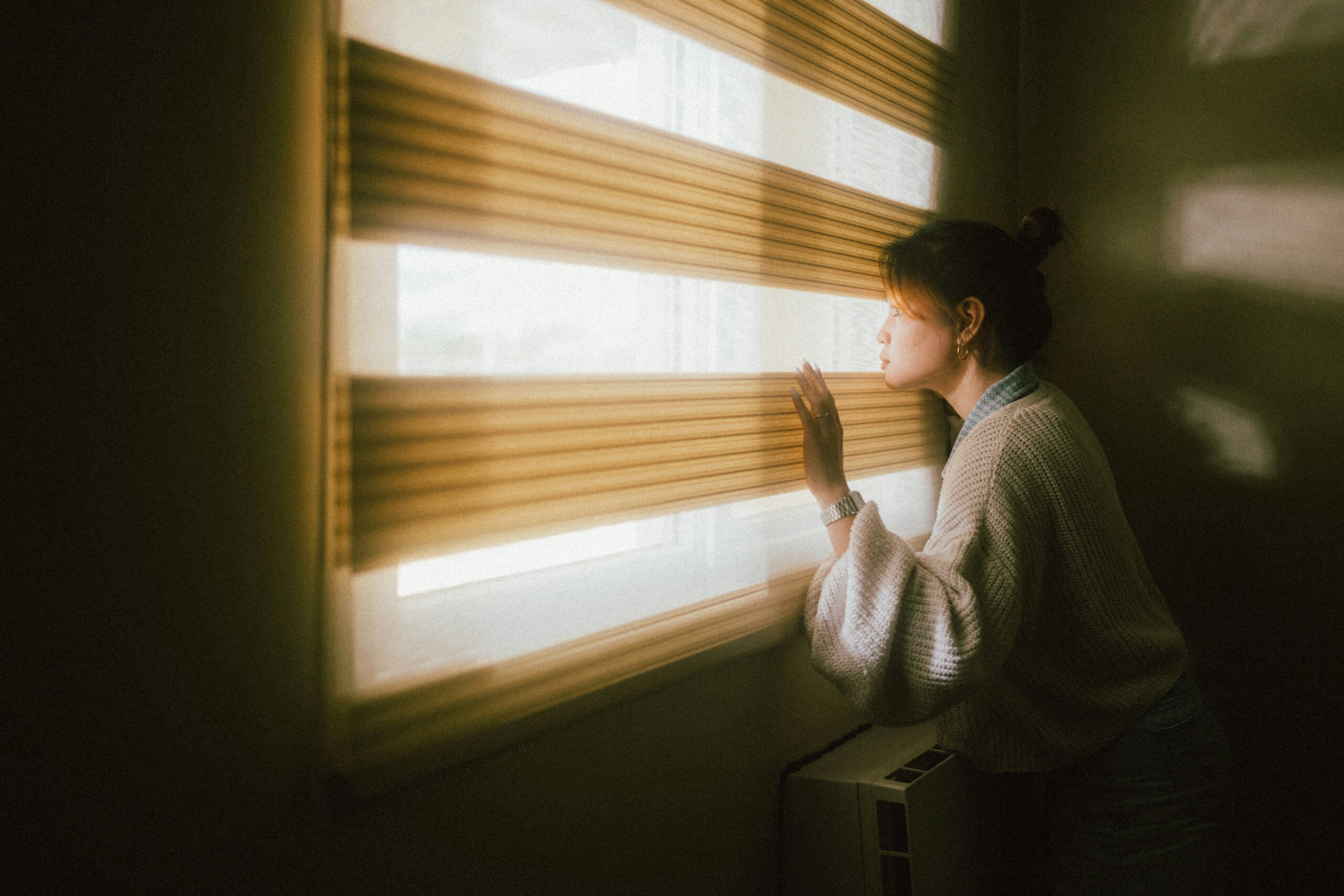

How Therapy Gave Me My Eureka Moment

About nine years ago, I was convinced that my life was over.

I’d graduated from university about a year before that, securing a respectable degree in journalism with good grades. Despite that, I’d left without any real idea of what I wanted to do with my life. Seeing friends with high-profile jobs and their own houses and cars took a toll on me as I struggled to find my place in the world, a calling. Watching others move forward as I felt stagnant caused me to fall into a deep depression, feeling that I had little left to live for. It began insidiously, first pressing on my mind throughout the day – small taps of worthlessness. It only grew as the time from when I had graduated stretched further and further into the past.

I can remember distinctly when I realized that something was wrong with me; it was a cold February day, shortly after my birthday. After a particularly bad dream where I was back at university, I awoke with a near-unbearable sense of despair so severe that I struggled to get out of bed. Nothing would shake the feeling.

Around the same time, my mum and brother had recently completed a beginner’s therapist course with a professional psychologist. The sessions appeared to have helped both of them. Realizing I needed outside help and seeing this as my chance, I sat down with my mum and spoke with her about my depression, my loss of joy for life. She provided me with the contact information for this psychologist so I could begin therapy immediately.

The sessions were slow at first. Despite being open to the support, I didn’t notice any progress in the first few sessions. After the third or fourth session, however, something changed. My therapist said that I already knew it to be true, despite my brain’s refusal to acknowledge it: this belief that my life was over wasn’t correct. I was only 23. Of course my life wasn’t over! I had just needed someone, a stranger, to examine my life and my thoughts and confirm that yes, I still had so much to live for. Such a simple statement, and yet it changed so much in an instant. It was like someone had shone a light in the darker corners of my mind, chasing the shadows that lingered.

You often hear about something clicking inside a person’s head, or a lightbulb lighting up. A ‘eureka’ moment, if you will. I’d never experienced anything like it until that moment. The feeling of despair began to dissipate as a result of that conversation. I was almost euphoric as I told my therapist of this breakthrough at my next session. Once I’d realised that my life was far from over, I worked with my therapist to look for ways to get my life back on track, determining how I envisioned my own success. I continued for a few more sessions, and by the end, I began to see the light at the end of the tunnel. A few months later, I went back to university, earned a master’s degree, and began my career as a writer. While my depression has never completely vanished – especially given the unprecedented nature of the last few years – I’ve become much better at identifying negative spirals and dismissing them.

Therapy saved my life


Writing about this a decade later feels weird. This belief I had held obviously wasn’t true, and it still isn’t today. I’m 32, I’ve worked as a freelance copywriter for five years now, and I recently started working with an international agency. There are still speed bumps here and there – the COVID-19 lockdown was rough, and I still have struggles with OCD and insomnia – but ultimately, I’m quite happy with my life. It’s strange to think back to a time when I was convinced that there was nothing left to look forward to.

Despite all this, I can’t help but wonder whether I would’ve experienced this eureka moment if I hadn’t gone to therapy. If I’d never seen that therapist, would I still be stuck in the depths of despair? Would I even still be here? I’d like to think that eventually, with the help of my friends and family, I would’ve been able to move past it, but I can’t know for sure. All I can be sure of is that I’m glad I got the help I needed.

It could help others like me

I’ve wondered about others who have suffered from similar thoughts. Are they able to see a therapist? Do they find the support they need? I was extremely lucky; I had money saved up to pay for visits, and my therapist provided me with a discount because he knew my parents. Even so, it was still expensive – upwards of £100 a session.

The price of therapy near me has only worsened as the cost of living crisis continues, and the NHS’s backlog means if you’re not willing to go private, you could wait years to see a therapist. There are so many people out there with the same problems that I had, but without any way to get past them. How many people are still waiting for their eureka moment? How long will it take them to chase away their shadows?

I can only hope that, as mental health awareness becomes more prevalent, the UK government will take steps to make therapy more accessible to the general public. It may not work for everyone, but it helped me understand my own brain, giving me the confidence to make connections, and kickstart my writing career. 

I just hope that other people in similar situations, with or without therapy, find a light to guide them forward.


My Healing Dance

Life, like a tapestry, weaves together moments of joy, sorrow, and resilience. Yet, sometimes, we find ourselves ensnared in the knots of our past, unable to move forward. Seeking counseling became a way to unravel my knots and discover the beginnings of release.

I carry with me unhealing scars, wounds that refuse to mend. 

Instead of finding solace, I bottled up these scars, sealing them tightly. When I’m at my lowest, I uncap the bottle, and the pain rushes out as if the wounds were fresh. 

One morning, I woke up with a heavy heart burdened by old scars. Unable to bear it any longer, I decided to seek counseling. I found an online counselor, and during our virtual session, she emphasized the essential nature of healing. “Forgive yourself,” she urged after I confided in her. “You’re too hard on yourself.” I questioned her words, pondering why I am so harsh on myself and how I can find forgiveness. Perhaps laying out my scars and discussing them will be the first step towards healing. Was the first step.

Craving love

The abandonment by both my parents has left me deeply scarred, but it was my mother’s absence that cut the deepest. I yearned for her love more than anything else, and this longing fostered a sense of not being wanted with a painful feeling of being second best. 

I often told myself, “If your own mother doesn’t love you, who will?” Perhaps this is why I accepted unfair treatment, simply craving love. Now, at 22, I find myself unable to define what love truly is. I’ve never uttered the words “I love you,” nor have I heard them yet from anyone else. Tragically, my mother passed away without ever expressing those three simple words.

My inner child

“Do you have someone to talk to?” my counselor asked. 

I replied, “No, I don’t trust anyone.” 

Perhaps it’s because I don’t want to reveal my scars, as it’s become clear to me that my reluctance isn’t about a lack of willingness. Instead, it’s rooted in the fear of what might happen if I trust someone and share my vulnerabilities. What if they, too, abandon me like my mother did? I find myself caught between two versions of myself: the 22-year-old who seeks healing from the sense of abandonment, and the scared little girl who still resides within me. How can I convince that inner girl to forgive herself when she doesn’t even know how? To her, forgiveness feels like admitting fault, as if she did something wrong. But is it my fault that my mother abandoned me? The scar of abandonment will take time to heal. My 22-year-old self is ready to move forward, but the wounded girl within me is not quite there.

The now version of myself blames her for being so, and I carry the weight of self-blame. Should I have forgiven her? 

My inner child insists that my anger was reasonable because she never apologized. But my adult self reminds me of our given philosophy: forgiveness is for us, not them. Now I’m grappling with guilt. 

Perhaps my inner child is right — she was the elder one, and she should have asked for forgiveness. 

Abandonment scars are not the only ones I harbor. I am a home for many more. However, abandonment is my deepest scar. Counseling has pointed to a few issues that I need to deal with personally before moving forward on this healing journey. The little girl in me wants to be loved, and cared for. I tell myself: “Mama is gone now, little girl.” Yes, we grieved, and yes, we loved Mama even though we were angry at her. But now it’s time to love ourselves and stop expecting it from someone else. 

I promise

Tears burn my eyes, and my heart swells with the realization that I should begin to love myself. My counselor was right — I hate myself, and I didn’t realize it until she pointed it out. From today on, I promise to try and love myself more. Maybe loving myself is the second step towards a sense of healing. The pain is too much for me to handle now, but I promise to love myself and care for me. “Little girl, the time is now to take this first step”. 

Jumbled healing

(Image courtesy of Hilarycl via Morguefile)

I’m discovering that healing isn’t linear; it’s a lengthy journey. Sometimes, you don’t even know where to start if you never realized you needed healing. 

But I’m embarking on this path now. Healing is like a dance — the music changes, but the steps carry on. Two crucial steps I’ve learned are self-compassion and acceptance. By acknowledging the scar and embracing self-compassion, I’m willing to heal. I’m discovering again and again that healing isn’t linear, but a jumbled journey. 

I’m willing to heal.

The Messy History of A Licensed Psychologist

I have OCD (obsessive-compulsive disorder), ED (eating disorder), depression, severe anxiety, and ADHD (attention deficit/hyperactivity disorder). I’ve always gone to therapy because my mother is a psychologist. 

I can’t even remember my age when I started, but I had more than five psychologists. I established a rapport with none until my first visit to a psychiatrist, when my undeniable mental health was crumbling. My psychiatrist never gave me a proper answer, but she was, and still is, the only therapist who I felt did not give up on me. Many others diagnosed me with borderline personality disorder.

Since I was young, I was always labelled as the “bad,” “problematic,” “rebellious,” and “naughty” kid, from kindergarten to adulthood. People often didn’t even remember my name, but they recognised that out of 14 cousins, I was the troublesome one.

So I started to believe that, too, and my behaviour didn’t change; in fact, it worsened throughout my development stages.

The beginning pangs

And as a teen, I began to self-harm. Eventually, my body felt numb, with no sadness, no fears of being misunderstood or good, pretty, and skinny. After that, my high school suggested my parents take me to a psychiatrist.

Hello, psychiatric medication. I still take them, though I still haven’t been properly diagnosed.

I can’t remember what happened during my first depression episode; I only have blurry memories of the fourteen days I was sent to a psychiatric ward and how I didn’t leave my room the whole time I stayed there. 

After that, my depression began to fade, though I was never the same again. Alcohol, drugs, kisses with older men, and so on were part of my adolescence. My grades were awful, and it took me almost nine years to finish high school.

Of course, I felt like no one cared. I was already the disappointment of my family and always had been, so they just didn’t even try to understand me, not when I was a toddler, when I was a teenager, or even now.

When I decided to apply to college, the OCD set in. Perfect became my goal in every aspect of my life. All my focus was on my studies. My first panic attack happened during class hours; I remember running out of the class and collapsing in the hallway,

In my second year, my goal was to maintain my perfect grades and lose some weight. I’ve always been chubby, and after a few months, anorexia nervosa knocked on my door. I received her like someone I had been waiting for my whole meaningless life. Binge eating eventually appeared, and that was when my whole controlled, perfect life crumbled. 

This is where I am now, fighting eating disorders, a second depressive episode, and more.

Image of ocean waves.
(Image courtesy of Mike Erskine on Unsplash)

The change in the tides

But now, as a clinical psychologist, I know how to fight. We don’t have to give in to the social belief that we are a problem that needs to be fixed, changed, or eradicated. Rather, we believe that people with mental health issues must be treated with compassion and provided with equal rights. Rather than focusing on the disability or disordered aspect of mental health, we focus on our strengths and learn how to rely on them.  

My biggest strength is helping others; doing so makes me feel worth it and empowered, despite and because of my experience, even as hurtful as they are, gave me tools to lift others from their own struggles and dark places. I see a little hope in those little steps of others on their path to wellness.

As we grow older, we start learning and differentiating one emotion from the other, and at the same time, our range of emotions gets bigger. Defiant behaviour sometimes is a sign of depression and/or frustration because you haven’t yet developed the emotional tools to make others understand what you are really feeling. My adolescence was marked by naughty, unruly behaviour that I had been carrying since childhood, which became dangerous and painful to me. I did not have the tools to understand what I was feeling. Past trauma had left its marks on me. Adulthood marked the desire to maintain control of my life, appetite, and surroundings instead of letting my emotions have control of me again. And yet, many times, I failed.

My work changes lives

My role as a psychologist focuses on getting mental health the proper awareness it deserves. We need to raise awareness for this marginalised, stigmatised, labelled and misunderstood community regarding mental health and the lack of opportunities that low socioeconomic status communities have in accessing education and healthcare.

Today, I work in a private organisation as a clinical psychologist, both with group therapy between employees and employers and individual follow-ups. This year, I received the incredible opportunity to start working with the jail population by making new programs that focus more on rehabilitation rather than punishment alone. DINALI is a subsection inside the Ministry of Defence in charge of the Uruguayan policies related to imprisoned people. My main area will be helping people close to finishing their sentences. The main goals are reinsertion into society. I want to give them tools on how and where they can get help on having their basic needs satisfied (food, clothes, a roof above their heads), getting a job and start working on their social life to build a close circle that helps them find purpose in life and feel loved and appreciated. 

Sometimes, I’m still a mess. Sometimes you might be, too. But as I’ve learned throughout every painful twist in my life, if you can’t help yourself, help others. 

Image of two hands reaching toward each other. The hand on the left holds a white flower as if to give it to the hand on the right.
(Image courtesy of Adalia Botha on Unsplash)