The (Not So) Hidden Toll of PhD Studies on Mental Health in Sweden

“Are you thinking about a PhD?” The truth was, I had never imagined I would end up in Sweden, much less complete a graduate degree in a Nordic country. A PhD felt like a distant, unlikely idea. So I answered, “I’m not sure.”

An associate professor overheard us. She turned and said discreetly:
“You need to be 110% certain. There are happy doctors, but there are no happy doctoral students.” 

Recent data suggest she wasn’t wrong. 

A nationwide longitudinal research studying the impact of PhD studies on mental health, tracked over 20,000 PhD students in Sweden between 2006 and 2017, has shown that doctoral training itself is linked to declining mental health. Using health records, psychiatric medication prescriptions, specialist care visits, and hospitalizations, the study was able to avoid reliance on self-reported stress or even fear from judgement allegations, while capturing real care-seeking behavior.

These studies found that before starting a PhD, students used psychiatric medication at rates similar to graduates who stopped at the master’s level. Medication use rises sharply immediately after beginning the PhD. By the fifth year, prescriptions for psychiatric drugs are roughly 40% higher than pre-PhD levels. After graduation, medication use declines substantially. These patterns are consistent across disciplines, genders, and backgrounds, except for medical and health sciences students, whose clinical duties provide different support structures.

This is not new in Sweden

This is not the first study to report similar results. In 2022, the Research Institute of Industrial Economics (IFN) found in this study that roughly 7% of PhD students receive treatment or a diagnosis for depression, and 5% for anxiety, in any given year. While these numbers are lower than earlier survey-based estimates, they are still higher than those of peers not pursuing a PhD. IFN researchers concluded that this mental health decline develops during the PhD program, indicating a causal effect of doctoral studies on wellbeing. Factors such as high expectations, lack of formal training, social isolation, and financial insecurity contribute to the manifestation and diagnoses of mental health conditions.

Likewise, the Swedish Public Health Agency (Folkhälsomyndigheten), found that in 2023 mental health-related stress, burnout, and antidepressant use rose among young adults, with school-related stress particularly affecting girls. By that time, universities acknowledged gaps in mental health support, while national reports continued to show increasing rates of anxiety and depression among young people.

In the case of PhD students, they are particularly vulnerable because they are both students and full-time employees. Several studies have investigated how this impacts their mental health, revealing concerning patterns. These studies suggest that it is the doctoral program itself and not a preexisting vulnerability, that drives this deterioration in their mental health.

Add the immigration stress factor

There are other factors that can contribute to this diagnosis, as international students face additional hurdles. The SULF Doctoral Candidate Association (2025) reported in this other study that non-EU/EEA PhD students face structural obstacles that can amplify stress: long residence permit processing times, unclear criteria for permit assessment, and limited options for appeal. These rules often prevent students from traveling for conferences, fieldwork, or personal reasons, restricting mobility and professional development. The report highlights a double dependency: students rely on their supervisors and universities to maintain their legal status while simultaneously meeting strict thesis deadlines. Delays caused by migration procedures can reduce the time available for research, forcing compromises that other doctoral students do not face.

These findings resonate with broader media reporting in Sweden, which has increasingly highlighted unclear expectations, power imbalances with supervisors, academic isolation, and a culture of overwork within doctoral programs. For international students, these pressures are compounded by relocation challenges, cultural adaptation, and social isolation.

“So much depends on your supervisors,” said Amira Perez, a PhD candidate in Stockholm University. “When you’re an international student dealing with homesickness, cultural barriers, or even the death of someone back home, having supervisors who understand is crucial. In my case, I went through personal tough moments that led to a burnout. I’m grateful that my supervisors understood and recognized what burnout and depression looked like. But I know I was lucky, and that this isn’t the case for many international PhD students in Sweden.”

Both studies also indicate that non-EU and non-Swedish PhD students are particularly vulnerable, as they are often less familiar with their rights and may not always recognize when a supervisor’s behavior has crossed a professional boundary.

Taken together, the evidence paints a consistent picture: doctoral studies in Sweden carry a substantial mental health burden, particularly for international students navigating both academic and migration systems. These studies underscore the need for targeted mental health support, clear institutional guidance, and policy reforms to reduce the psychological toll of doctoral education while supporting Sweden’s goal of internationalizing its higher education system.

The thin line between endurance and resignation

The researchers of these studies note that these findings are not just descriptive but also a call to action. They argue that the mental health strain experienced by PhD students in Sweden needs to be recognized as a structural issue, not an individual failure of resilience. 

In other words, this is not a matter of students needing to “cope better,” but of universities and policymakers needing to provide clearer expectations, more stable funding, better supervisory support, and accessible mental health resources. 

If Sweden wants to continue attracting international researchers and developing high-quality academic work, the conditions under which doctoral students live and work must be taken seriously as a matter of policy, not personal endurance.

How to cope with the stress of a PhD

Annika Wappelhorst, a PhD student in Media and Communication Science at Jönköping University is in her third year, but from the beginning she was mindful that maintaining her well-being would be essential to succeeding in her studies. Outside academia, she teaches yoga, enjoys reading fiction and non-fiction novels, and takes long walks around the nearby lake. Based on her experience, she shared a few strategies that have helped her maintain a healthier balance during their studies such as establishing clear work hours, staying organized and planning ahead, among other things.

“I don’t want people to think that pursuing a PhD in Sweden is the worst decision you can make,” Annika says. “What’s important is that you know your rights, how to identify unkind behaviours in supervision, and understand where to turn for help if something doesn’t feel right.”

If you feel that your PhD studies are affecting your mental health, there are several resources you can turn to for support. In an emergency, contact a psychiatric emergency room or call 112. For guidance on where to seek care or advice about available services, you can call 1177. Most universities also offer support through a PhD student ombudsman or their occupational health service. Additionally, the Swedish union for doctoral students (SULF) offers support, advice, and advocacy to help PhD candidates have good working conditions at universities across Sweden. 

The evidence is clear: Swedish universities must treat doctoral mental health as an institutional responsibility, not an individual challenge. Until then, knowing your rights and where to find help isn’t optional—it’s survival.

Federal Prosecutors Give Brazil 45 Days to Fix Nation’s Digital Accessibility

In September, the Federal Prosecutor’s Office (MPF) demanded that the federal government regulate Article 63 of Brazilian law within 45 days, aiming to increase digital accessibility. Ten years after the law was enacted, the provision has never been regulated, which prevents the establishment of mandatory standards and penalties for those who fail to comply.

A survey by the Brazilian Institute of Geography and Statistics (IBGE) revealed that only 3% of the country’s websites are considered accessible. Data like this shows that companies’ negligence toward this legal requirement remains a persistent issue, one that not only excludes part of the population but also overlooks its competitive market implications.

Given this scenario, it is essential to understand what digital accessibility is: the creation of environments, platforms, and content that can be used by anyone, regardless of physical, sensory, cognitive, or social conditions. This includes compatibility with screen readers, color contrast, image descriptions, captions, keyboard navigation, and sign language resources.

The most widely adopted international reference is the WCAG (Web Content Accessibility Guidelines), which defines the standards that websites and apps must follow. By regulating Article 63, Brazil intends to finally establish similar parameters.

Who is most affected?

With the advancement of the internet, it has become increasingly common for essential public services to be digitalized. Over a 30-year period, the digital evolution has been extraordinary . Today, it is possible to pay bills from anywhere in the world, without going to a bank or waiting in line. This shift is seen as positive, as it speeds up tasks and makes mobility more practical.

However, the central question remains: is this convenience accessible to everyone?

Recent IBGE data shows that 20.5 million Brazilians are still considered digitally excluded because they do not use the internet. These individuals are primarily older adults, people with disabilities, and people with low education or income levels. Democratizing this access is essential so that internet use does not become a privilege, as the online world is now central to research, leisure, creativity, and bureaucracy.

The lack of digital accessibility directly affects citizens’ lives. Failures in apps and digital domains cause many Brazilians to miss out on benefits and lose important deadlines because they cannot complete basic steps on digital platforms. In many cases, people must give up their autonomy and rely on others, exposing them to vulnerabilities that could have been avoided with more inclusive design.

This situation became evident in 2025, when the Federal Prosecutor’s Office investigated the accessibility of Brazil’s main government website, https://gov.br, and deemed that the platform’s facial recognition step was not accessible enough for visually impaired individuals.. Even after the addition of features such as a voice assistant and extended validation time, the service was still not considered adequate by the MPF.

In an exclusive interview with Yuvoice, Joyce Rocha shared her digital experience as an autistic woman. The accessibility specialist highlighted that companies’ disregard for digital inclusion largely stems from the ableism embedded in society, which seeks to undermine the independence of people with disabilities.

“This belief comes very much from ableism. Many think there is no need for such services, assuming these individuals depend on ‘third parties’. […] They are condemned to be seen only as vulnerable.”

Joyce also stresses the importance of sensitivity during the creation of these resources. With the rise of artificial intelligence and the automation of accessibility by many companies, Rocha believes that much of the design’s human sensitivity is lost during product transcription, directly affecting user experience.

Future outlook

The expansion of accessibility and the tightening of regulations are not limited to Brazil, but are happening worldwide. In June 2025, the European Accessibility Act (EAA) came into force, establishing mandatory legal requirements aimed at eliminating technological barriers and ensuring equal access to digital services.

In the United States, the ADA (Americans with Disabilities Act) has for years established legal accountability for companies that fail to ensure accessibility in their products and services.

With the growing enforcement of digital inclusion, companies are prioritising not only the inclusive aspect but also in the pursuit of market competitiveness. One example is Microsoft, which, in response to regulatory developments, redesigned its products and documentation in advance to implement new inclusive features. The company’s approach shows that accessibility is not only a matter of rights but also of market strategy, where those who adapt quickly gain an advantage.

Five Years After Backer Beer Contamination, All Defendants Acquitted for Lack of Evidence

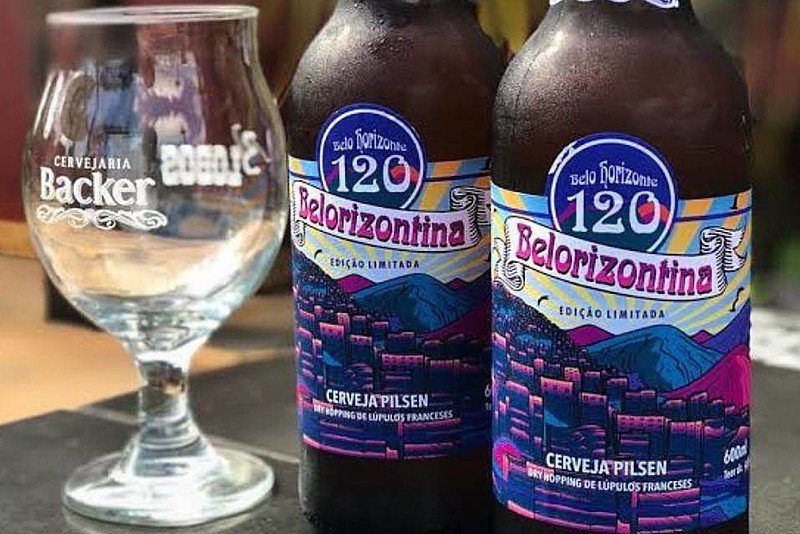
Five years after the discovery that beers from the Brazilian brand Backer were contaminated, an incident which caused the deaths of ten consumers and left 19 others with permanent injuries, all defendants have been acquitted due to insufficient evidence.

The decision was issued by the 2nd Criminal Court of Belo Horizonte on November 4, 2025. The justification was that there was not enough proof to hold any of the accused personally responsible. According to Judge Alexandre Magno de Resende Oliveira, the complaint filed by the Public Prosecutor’s Office failed to demonstrate “who, individually, acted or omitted themselves in a criminal manner.”

Background

The case began in January 2020, when several people were hospitalized in the Brazilian state of Minas Gerais with symptoms such as kidney failure, blindness, and neurological disorders. Investigations revealed that all victims had consumed beverages produced by Backer Brewery, based in Belo Horizonte.

Reports from the Civil Police and Anvisa (Brazil’s National Health Surveillance Agency) confirmed the presence of the toxic substances diethylene glycol and monoethylene glycol, both commonly used as antifreeze. According to the investigation, the contamination resulted from a manufacturing defect caused by a leak in the cooling system that allowed toxic fluid to mix with the beer.

At least ten deaths and 19 severe injuries were confirmed. Consumption of the contaminated beers led to permanent sequelae, including vision loss and neurological damage.

At the time, the Minas Gerais Public Prosecutor’s Office (MPMG) charged ten individuals linked to Cervejaria Três Lobos, the company that owns the Backer brand, with manslaughter, bodily harm, and crimes against consumer relations. The defendants included company partners, directors, and production and maintenance technicians.

Initially, the owners were accused of having knowingly taken the risk of contamination by keeping the factory operational despite technical failures. However, two of them were acquitted after evidence showed they had no management authority within the company. The third partner, responsible only for marketing, was also acquitted for having no direct involvement with product manufacturing.

Regarding the six engineers and technicians, the judge concluded that all were subordinate employees without decision-making power over the industrial process. The court also noted that responsibility for the refrigeration system lay with the technical supervisor, who had since passed away, and the industrial operations manager, who was not charged.

The tenth defendant, accused of perjury for allegedly lying about a label replacement at a supplier, was also acquitted under the principle of reasonable doubt, due to lack of concrete evidence.

In summary, the court found no individualized evidence of criminal negligence that could justify a conviction, even though the episode was acknowledged as a systemic failure within the company.

Aftermath and Civil Liabilities

Despite the criminal acquittal, Cervejaria Três Lobos still faces civil obligations. In July 2023, the MPMG reached a compensation agreement with Backer to provide financial reparations to the victims and their families. The deal stipulates payments of R$ 500,000 per victim and R$ 150,000 per immediate family member for material and moral damages.

So far, no victim has received payment, as Backer is undergoing judicial recovery (similar to bankruptcy protection), delaying compensation. The company maintains that the contamination was accidental and denies ever using toxic substances intentionally in its brewing process.

The acquittal has shocked victims and their families, who remain without compensation or accountability for the tragedy. Speaking to O Estado de Minas, Mirza Quintão Utsch, daughter of victim Antônio Márcio Quintão de Freitas, who died after drinking Backer beer on New Year’s Eve 2020, said:

“It’s extreme negligence to have a leaking tank, poison so many people, and not be held responsible for it.”

Despite the verdict, the Public Prosecutor’s Office announced it is considering an appeal to the Minas Gerais Court of Justice (TJMG). If accepted, the acquittal could be upheld or partially overturned, leading to a new trial. Until a final conviction is reached, all defendants remain free.

Brazil Faces Methanol Poisoning Crisis: 14 Dead and Dozens Hospitalized

Since last August, Brazil has been recording numerous cases of methanol poisoning due to illegal additions to beverages, resulting in several deaths. Beverage fraudsters add the highly toxic alcohol to reduce the costs of counterfeit drinks. Authorities continue to investigate  other possible hypotheses. In the last week of October, the Ministry of Health reported 59 cases and 14 deaths.

Methanol is an alcohol used by the industry as a solvent but never as an ingredient in beverages for human consumption. Recently, several countries around the world have experienced criminal poisonings due to methanol being added to alcoholic beverages. In 2024, the case of three British friends who died after consuming methanol-contaminated drinks in Laos made headlines in major newspapers worldwide. Until 2025, Indonesia was the country with the highest number of methanol poisoning cases, totaling 335 since 2019. In second place, India reported 140 cases, while Russia, with 121 cases, ranked third in methanol poisoning since 2019, according to data provided by Médecins Sans Frontières.

It is impossible for someone drinking a cocktail or even pure distilled and fermented beverages to know if methanol has been added to their glass. Both highly toxic methanol and ethanol, which is normally present in distilled and fermented drinks, are alcohols, making it difficult to identify them by odor or the colorless appearance of both.

After having three caipirinhas at a bar in São Paulo, in the upscale Alameda Lorena area, architect Radharani Domingos, 43, lost her vision in both eyes. Ophthalmologist Dr Fábio Ejzenbaum from the Santa Casa Hospital in São Paulo explained that the architect lost her vision permanently and emphasized the difficulty he had in delivering the news to the patient and her family. 

Dr. Ejzenbaum underscored  that abdominal cramping is one of the symptoms that go beyond what we know is expected after alcohol consumption, acting as an important alert to seek medical attention urgently. He also noted that early recognition and treatment, sometimes including hemodialysis, ICU admission, and acidosis control, are crucial.

Methanol added to drinks is metabolized differently from ethanol, as methanol is metabolized by the liver and turns into formaldehyde, which is highly toxic to the optic nerve and other organs and structures, such as the central nervous system, and  the kidneys. Formaldehyde is the substance used to embalm (preserve) deceased bodies, being very toxic to living beings.

The police are investigating several hypotheses, not ruling out the possible use of vehicle fuel alcohol, intentionally contaminated with methanol. That is, two offenses:

  1. Using fuel alcohol to add to counterfeit alcoholic beverages
  2. Adulterating fuel with the addition of highly toxic methanol, which is harmful even to car engines.

In the state of São Paulo alone, 66 people have been arrested for allegedly being involved in the counterfeiting of beverages with methanol. In early October, a clandestine factory was shut down by the São Paulo Civil Police in the ABC Paulista region, near the city of São Paulo. Brazilian lawmakers are evaluating changes in legislation to make the adulteration of food and beverages a heinous crime.

Earwax Test Developed in Brazil Can Detect Cancer Early, Study Shows

A study conducted by the Federal University of Goiás (UFG), a Brazilian public institution, shows that earwax-based tests can help indicate the presence of cancer in patients. The initiative, named Cerumenogram, received an honorable mention at the 2025 Capes Award.

The main advantage of the research lies in its ability to diagnose cancer early through a non-invasive, low-cost, and highly accurate approach.

“For oncology, we hope this helps improve people’s quality of life by preventing them from even developing cancer. It’s a simple, inexpensive, practical, and painless method,” said the study’s coordinator, Nelson Antoniosi Filho.

For these researchers, the earwax that accumulates in the ear canal holds enormous value. When removed and analyzed in the lab, it allows for the identification of changes in a person’s health.

“If our body is healthy, the chemical composition of earwax looks one way. If something is off, possibly indicating disease, that composition changes. So today, earwax is like a fingerprint of our health condition,” Antoniosi explained in an interview with Jornal Nacional.

The research began with diagnosing diabetes and detecting drug and pesticide intoxication through earwax analysis. The method was later adapted for veterinary medicine, allowing the identification of intoxications and even cancer in dogs.

The project has been ongoing for ten years in partnership with Amaral Carvalho Hospital, in Jaú (São Paulo), a cancer treatment center. Over time, results proved promising, and the test began detecting cancer in humans.

In 2025, a new discovery further excited the scientists: earwax experiments can identify pre-cancerous stages, enabling earlier and less painful treatment for patients. This breakthrough reinforces the importance of early diagnosis: the earlier cancer is identified, the greater the chances of a cure.

During testing, samples from 751 volunteers were analyzed, with 531 already undergoing cancer treatment. Among these, the test returned positive results for the disease. Of the 220 without prior diagnosis, only five showed atypical substances; all five were later confirmed to have cancer through conventional exams.

In an interview with Yuvoice, Nelson Antoniosi Filho explained that there is still no timeline for the test to become available for free in Brazil’s public healthcare system (SUS) due to regulatory processes. Therefore, it is expected to first reach private healthcare providers and public educational institutions.

“I want every public teaching and research institution in Brazil to offer this service to their communities. That’s how it should start, and then it can expand to the public healthcare system,” he said.

Nelson also emphasized the importance of public universities in achieving this milestone. He noted that funding and support from Brazil’s public education system are essential for revolutionary research, as such backing is rarely seen in private institutions.

“If it were a private university, I would never have approval for a project involving earwax. Do you think any private university would fund earwax research? At best, I’d lose my job for being insane!” he joked.

Currently, Antoniosi and his team are exploring the potential to detect neurological diseases such as Alzheimer’s and Parkinson’s through earwax analysis.

“We’re studying neurodegenerative conditions, like Alzheimer’s, Parkinson’s, and other dementias, which are also metabolic processes, to see if diagnosis is possible,” he told Yuvoice. “These studies aren’t finished yet, but we expect to conclude them within a year.”

This study highlights the strength of Brazilian science, especially research developed in public institutions, in driving scientific innovation. With new studies underway, the Cerumenogram project stands out as one of the most promising scientific initiatives in the country.

Former President and Brazilian Generals Arrested for Attempted Coup for the First Time in Brazilian History

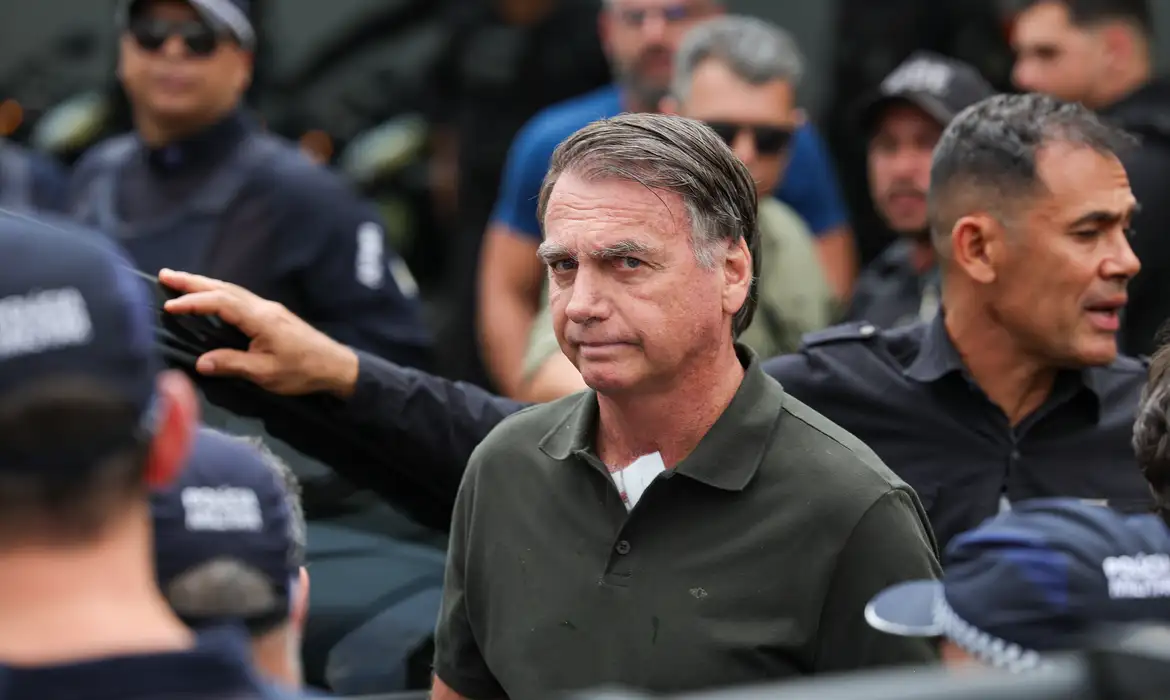
The former President of Brazil, Jair Messias Bolsonaro, has been definitively sentenced to 27 years in prison by the Supreme Federal Court on the afternoon of this Wednesday (25), in Brasília, the Federal Capital ( where the military resided). There, the former parliamentarian and retired captain of the Brazilian Army will initially be held in a Federal Police superintendent’s office., There are no further appeals available for the defendants in this case.

Former President Jair Bolsonaro had already been preventively arrested by the Brazilian Federal Police at sunrise last Saturday, November 22, at his residence in a luxury condominium in the capital of Brazil, Brasília. The former president attempted to tamper with the electronic ankle bracelet that monitored him, using a welding iron, which led to his preventive arrest and the subsequent suspension of the house arrest he had been serving since August 2025, due to the alleged escape risk. Until then, the convicted could appeal the conviction in the process, but the deadline ended this Tuesday.

In addition to the former president, Generals Augusto Heleno and Paulo Sérgio Nogueira, participants in the former Bolsonaro government, will also begin serving their definitive sentences (21 and 19 years, respectively) in a military barracks. Admiral Almir Garnier will be held in a military radio station of the Brazilian Navy. General Braga Neto, who ran for vice president in the 2022 elections, had already been in preventive custody for 11 months in a barracks in Rio de Janeiro, where he will remain. Former Minister of Justice Anderson Torres, who is not military, will go to the Papuda prison in Brasília.

The definitive arrest order was issued by Minister Alexandre de Moraes, the rapporteur of the judicial process that had already sentenced former President Jair Bolsonaro and others involved in an attempted coup at the end of 2022. At that time, Bolsonaro and the other convicted did not accept the electoral results of that year, which indicated the victory of the current president Luiz Inácio Lula da Silva and the unelection of thenPresident Jair Bolsonaro. It was the first time in Brazilian political history that a sitting president was unable to be re-elected to continue government. 

It is also the first time in Brazilian history that military personnel have been convicted for attempted coups. Brazilian historians point to up to nine coups since the end of the Brazilian monarchy. It should be noted that, whilst there is controversy among scholars regarding the counting of coups against the Republic, no fewer than nine coups have been cited.. In the 136 years since the abolishment of the monarchy, seven coups were successful, each with varying degrees of military participation.

In recent interviews with The Washington Post, three researchers paid attention to the unprecedented nature of the punishment of Brazilian military personnel. According to historian Lilia Schwarcz from the University of São Paulo, “Brazil carries two pacts of silence: the silence about slavery and the violence it produced, and the silence about the military. That’s why this case is so symbolic.” Carlos Fico, a professor at the Federal University of Rio de Janeiro, emphasized the aforementioned numerical issue concerning historical coups and, despite the high number, the absence of punishment: “For decades, I have studied more than 12 coups and coup attempts, and all resulted in impunity or amnesty. This time will be different…” Finally, political scientist Matias Spektor from FGV (Getúlio Vargas Foundation) points out the seriousness of the leniency against public officials who have the right to use weapons: “The country has never imprisoned anyone who had access to state weaponry. This is revolutionary.”

Uber and Bolt Face Mounting Safety Concerns in South Africa

Ride-hailing services Uber and Bolt, once hailed as safer and more affordable alternatives to traditional taxis, are under mounting scrutiny in South Africa. Riders and drivers are increasingly reporting incidents of violence, hijackings, kidnappings, and assaults linked to the platforms have raised urgent questions about safety gaps, weak verification systems, and sluggish emergency response mechanisms.

The recent shooting, arson and execution-style murder of 27-year-old Siyanda Mthokozisi Mvelase in Soweto, is of the many cases that have drawn public attention and the reemergence of the on-going violence between e-hailing drivers and taxi owners in South Africa. In Johannesburg, drivers have been lured to remote locations by fake ride requests, only to be ambushed and hijacked. Riders, meanwhile, have reported kidnappings in which they were driven off-route and held until relatives or friends paid a ransom. Police confirm that such incidents, once sporadic, have become worryingly frequent. Whilst no verified stats on the number of e-hailing related hijacking, it is worth noting that between January and March 2025, SAPS recorded 4,533 car hijackings nationally, down from 5,338 in the same period in 2024. Gauteng saw 2,488 hijackings which is about 55% of all hijackings in the country.

Despite these threats, Uber and Bolt continue to market themselves as safe and convenient. Both companies have rolled out safety features, such as in-app emergency buttons, ride-sharing with trusted contacts, and driver identity verification. However,  drivers and riders beg to differ, arguing that these measures have done little to close dangerous loopholes. Verification of drivers remains inconsistent, background checks are often cursory, and when users trigger the in-app emergency function, response times from security teams or law enforcement can be slow.

Drivers say they are increasingly vulnerable. “Drivers are screened but passengers are never screened… That’s how drivers get hijacked and beaten and some even get killed.” – said a Gauteng based Bolt driver, who has been working in the industry for the past two years. Many drivers operate late at night to maximize earnings, which exposes them to higher risk areas. Others complain that fare structures do not account for danger zones, forcing them into hotspots without adequate compensation or protection. In Cape Town, several drivers have begun refusing trips into informal settlements or poorly lit areas, a move that has left many commuters stranded.

The South African Police Service (SAPS) has acknowledged the surge in ride-hailing related crimes but insists that platforms must also take responsibility. “Law enforcement can only do so much. Companies have the data and technology to predict risks and alert us in real time. That isn’t happening.” Furthermore, Brigadier Athlenda Mathe, SAPS national spokesperson, said: “We have noted with concern the rising number of violent incidents targeting e-hailing drivers and passengers. SAPS is intensifying operations in known hotspots and working closely with stakeholders to ensure that perpetrators are apprehended and communities can feel safe using these services.

Globally, Uber and Bolt have faced similar controversies. In London, Uber temporarily lost its license in 2019 due to safety failings, while Bolt has faced regulatory scrutiny in several European cities over passenger protection but in South Africa, where crime levels are already among the highest in the world, the risks are magnified. Both companies insist they are investing in safety. Uber South Africa says it has expanded partnerships with private security firms to ensure faster emergency responses, while Bolt has introduced a “driver selfie verification” system aimed at reducing account takeovers by criminals. Yet riders and drivers argue that these measures are piecemeal, leaving them exposed to daily threats.

Civil society organizations are now calling for tighter regulation of the industry. The South African National Taxi Council (Santaco), which has long clashed with ride-hailing platforms, argues that Uber and Bolt must be subjected to stricter licensing and safety compliance. Others have suggested creating a central registry of vetted drivers accessible to both police and users.

For now, however, fear persists on both sides of the ride-hailing equation. As one Durban-based driver put it: “We want to work, but every trip feels like a gamble with our lives.

Until systemic gaps in safety are addressed, Uber and Bolt’s promise of safe, reliable transport in South Africa will remain under a dark cloud of mistrust.

Young refugees in Britain find joy in theatre

On a warm evening earlier this year, actors from Britain’s acclaimed National Youth Theatre joined forces with young refugees to present a new play, “The Flip Side”, in a small theatre on a busy North London road. The play showed both the weekend partying and the miserable weekday existence of young students and low-paid workers trying to get by in Britain today.

The performance was a rare chance to give voice to young refugees in Britain, who are at risk of becoming increasingly marginalised as political parties of left and right speak out against immigration. As The Flip Side was being performed, protests took place outside a hotel accommodating immigrants in Epping, east of London. Several similar protests took place in subsequent weeks, and the ruling Labour government is tightening immigration rules.

Overcoming this hostile climate, the refugee actors – members of arts charity Compass Collective –  find joy in performing.

The Flip Side actor Shanzay Dilshad, 24, originally from Pakistan, had never acted before joining Compass in 2022.

“That was the first time where I felt like this is something I definitely want to do. I want to share the stage, I want to be on the stage,” Dilshad told Yuvoice in an interview.

Dilshad said she has performed her own poetry on stage and had even overcome stage phobia to do so, and that Compass gave her “a feeling of home”.

Compass Collective was formed in 2018, becoming a registered charity in 2021. “Our ultimate vision is that young people seeking sanctuary in the UK are welcomed, and that they are able to access provision and meaningful progression, in order to live fulfilling lives”, the Compass executive director Dorothy Hoskins told Yuvoice. Compass trustees include Harry Potter actor Toby Jones.

In addition to drama, music, film and writing programmes, which Hoskins said help build confidence and communication skills, Compass also provides online English classes for young refugees and asylum seekers aged from 14-26. It also has a professional development programme from which Dilshad, co-chair of Compass’s Youth Board, has benefited. Future Compass plans include a project at prestigious London drama school Guildhall.

When young refugees were facing protests outside their hotels on one particularly febrile day this summer, Compass offered online access to games and a safe space.

Dilshad said The Flip Side showed young people’s struggle. “People have that kind of stereotype about young people, their weekend life that they get to live instead of their actual life. Like ‘I’ve been doing this waitress job, but I hate it’.”

Frank Mukisa Nsubuga, fellow The Flip Side actor and co-Youth Board chair of Compass, first got involved with the group in 2019. Mukisa Nsubuga, 27, originally from Uganda, enjoyed online sessions with Compass during the pandemic:

“It used to help me a lot. It was like my therapy,” he told Yuvoice, adding that, coming into a Compass session, “you know that there are people who care”.

Through Compass, Mukisa Nsubuga discovered a love of improvisation. The Flip Side, written by Shireen Mula, built up much of its script from the daily lived experience of its actors. Mukisa Nsubuga’s life story showed that he was burning the candle at both ends, studying and working, with little time to sleep.

“You are kind of having a conversation about your life,” he said. “I didn’t know I have a long day…for the first time I realised I really have no time.” Mukisa Nsubuga said he would like to change the frantic way he lives, “but right now, I can’t”.

Brazilian Actress Pre-Selected for the Oscars Had No Idea What It Was

2019. Caicó, in the sertão of Rio Grande do Norte, Brazil. The sertão (semi-arid backlands) is Brazil’s harsh and poetic hinterland—a land of cracked earth, faith, and endurance, where time moves slowly and people survive between drought and devotion. It’s a vast, dry region marked by small rural communities, strong traditions, and a history of resilience amid social inequality.

A team of filmmakers sets out under scorching heat—temperatures never below 32°C even in winter—in search of extras for the film Bacurau. They head toward neighboring Parelhas, to the district of Cobra, 25 km from the city of 63,000 inhabitants chosen as the filming location.

They decide to stop at a house for a snack. A voice breaks the silence:

— Good evening!

The phrase echoed with such force that the filmmakers said:

— That’s it! No need for casting tests. That’s the voice I need. She’s hired.

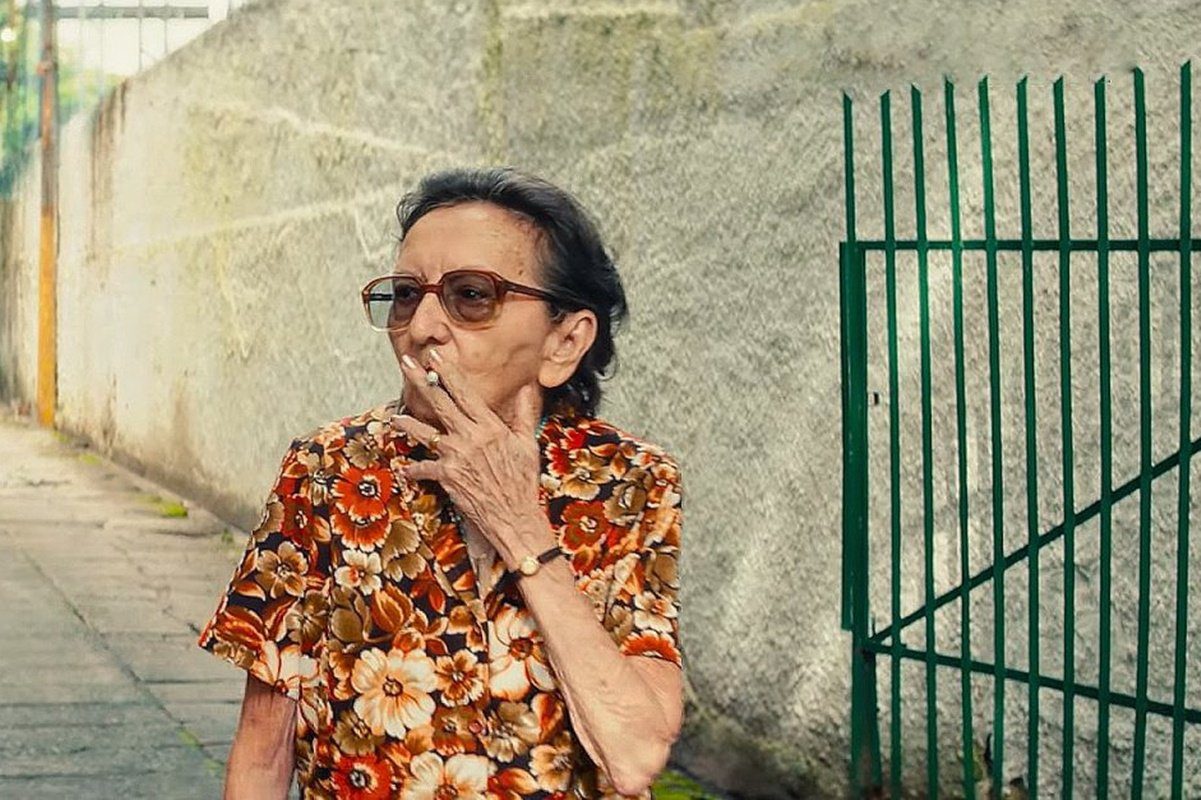
And that’s how rug artisan Tânia Maria, now 78 years old, became an extra in the drama directed by Pernambuco born Kleber Mendonça Filho. Little did she know she was beginning a journey toward the world’s most prestigious film award—the Oscars—which she admits: “I don’t even know what that is.”

To reach the filming set in the neighboring city, the newly hired actress had to travel by bus for an hour every day. During one lunch break, Kleber and casting director Leonardo Lacca (Leo) invited her to join them and co-director Juliano Dornelles at their table.

— Tell us a bit about your life.

Once again, Tânia’s words enchanted the team. She was later invited to act in a documentary-fiction hybrid about “Seu Cavalcanti,” Leo’s grandfather. Juliano didn’t waste time either and invited Tânia to act in Delegado, which recently wrapped filming and is set to premiere in 2026.

The youngest of five siblings (only one sister is  still alive), the artisan is a single mother. Today, she lives with her daughter, granddaughter, and great-granddaughter in Cobra, a district of Parelhas, 240 km from Natal (capital of Rio Grande do Norte).

But it wasn’t always like this. Long before fame, she made wedding dresses—and not just dresses.    

— I made all the clothes for a wedding. I made an entire wedding. Dresses for flower girls, bridesmaids, mothers of the brides. I just didn’t make jackets for the men. I lived in the brides’ homes for months. I lived in Natal, João Pessoa. I took my little daughter with me.

She explains why she left her career as a seamstress:

— I also made many uniforms for bus drivers and fare collectors, but 20 years ago I decided to change. Brides were too much work—they needed fittings and dress trials. So I started making rugs from used sofa fabrics. Today my daughter helps me. I want to make films, but I don’t plan to stop making rugs. I sell them wholesale to stores in Parelhas.

Welcoming Spirit

In the film O Agente Secreto, officially Brazil’s submission for Best International Feature Film at the 2026 Oscars, Tânia plays Sebastiana, who rents apartments in Recife (capital of Pernambuco  Province) to the character Marcelo, played by internationally acclaimed actor Wagner Moura (Narcos, Mr. & Mrs. Smith, Civil War).

— I’m welcoming, just like Sebastiana. I welcome everyone into my home.

In an interview with Brazilian site C7nema in May 2025, director Kleber Mendonça Filho described Sebastiana’s refugee shelter as a “bunker of affection.”

Sebastiana smokes, but Tânia quit.

— You know I didn’t go to France with the film because I couldn’t handle the flight without smoking? I used to smoke two packs a day, but I quit. The film will be shown in Natal and São Paulo, and I’ll go by plane.

In fact, the plane took the first resident in Parelhas’ history to visit the Palácio da Alvorada, the official residence of Brazil’s president. Not just to visit—Tânia watched the film in a private session with President Luiz Inácio Lula da Silva and First Lady Janja Lula da Silva.

— Lula shouted and patted my back every time my character appeared. He’s a simple man, you know? Lula is “sweet.” And Janja—don’t even get me started. I’m grateful to Kleber, Juliano, and Leo for all of this.

At the end of the film, the president asked Tânia: “What do you need?”

— Films!, said the septuagenarian with an energetic voice, also over the phone in an exclusive interview with The Sentinel by Yuvoice. She surely repeated the line with the same authenticity she used with the president.

She said the president agreed:

— There will be lots of films!

Neighbors had told Tânia to ask for paved roads and a soccer field. But she said she doesn’t drive and doesn’t play soccer—so she asked for opportunities in acting.

And she’s already getting them. Tânia is currently starring in Seu Cavalcanti, will premiere O Agente Secreto in Brazil on November 6, Delegado in 2026, Yellow Cake (already presented at Cannes’ Marché du Film 2025 and filmed in Picuí, Paraíba), and Almeidinha (shot in Caicó and Chile).

Full of Mystery

O Agente Secreto has no clear synopsis on film sites. The directors’ interviews are evasive. The official trailer is inconclusive.

The director says he doesn’t like labeling his films with adjectives. So the atmosphere of mystery isn’t limited to the film. Tânia lets slip a detail about her character’s political alignment—but quickly regrets it.

— You’re not going to publish that, right? They’ll get mad at me!

How could anyone ignore the request of someone so kind, simple, and authentic—still new to dealing with journalists?

I ask: what’s it like seeing Brazil’s Northeast on the world’s screens? Seeing Pernambuco and Northeastern actors rising to such success, even being considered for Oscar nominations?

— It still hasn’t sunk in!

Tânia reveals that Marcelo, Wagner Moura’s character, searches for his son in Pernambuco but doesn’t find him—or his documents.

— You’ve seen the film, right?

— No, Dona Tânia, not yet.

Unfazed, she doesn’t offer any more clues about the plot. Since I couldn’t uncover any secrets, I turn to reality.

— You were in your twenties during the start of Brazil’s military dictatorship. Do you remember what the country was like?

— Yes. Back then we didn’t have electricity. TVs were only near big cities. We got the news from Voz do Brasil on the radio.

— Could you tell what was happening in the country?

— Not really, but we knew something strange was going on. My own father had to hide in the swamp because of political alignment—he was on the run.

We reached the end of the conversation (which she called a “lecture”), and the actress didn’t reveal the political content of O Agente Secreto or any other spoiler . 

The film takes place in 1977, when Brazil still had eight more years under a regime that didn’t honor democratic rights and duties, led by General Ernesto Geisel, the second-to-last general to govern Brazil.

Want more details? Dona Tânia won’t tell us… We’ll just have to wait eagerly for the premiere.

COP30 in the Brazilian Amazon: Expectations, Infrastructure, and Price Controversy

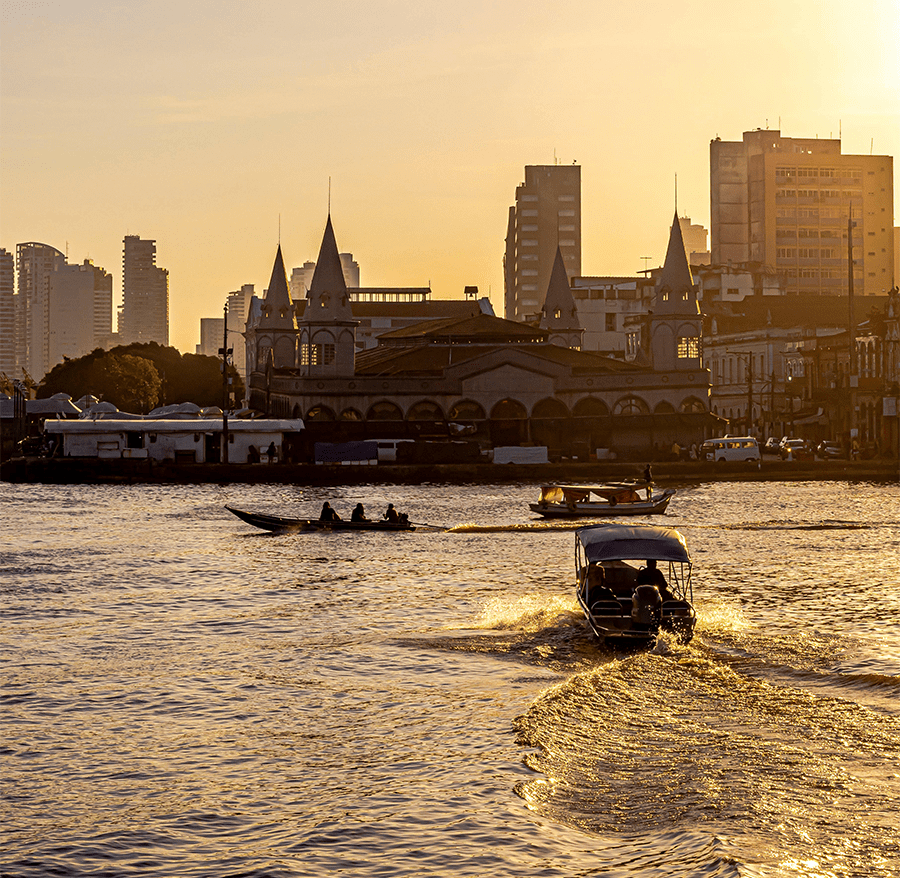
The city of Belém (the capital of Pará state in Brazil), in the heart of the planet’s largest tropical rainforest, is preparing to host the 30th United Nations Climate Change Conference (COP30) in November 2025.

The United Nation’s annual climate meeting plays the crucial role of reviewing climate mitigation and adaptation targets.

The gathering is expected to bring together leaders, negotiators, and activists from nearly 200 countries, placing Brazil, the Amazon, and its people at the center of international climate diplomacy.

However, alongside the anticipation for investment and visibility, tensions are rising due to the increase in accommodation prices during the event’s days.

The Amazon at the Center of the Debate

The choice of Belém as the host city is not random. Far from Brazil’s traditional economic hubs (São Paulo and Rio de Janeiro), the city carries symbolism: it brings the COP directly to the region most strategic for the planet’s climate balance.

Holding the meeting in Belém is a symbolic act and an opportunity to give due focus to the environmental issues experienced in the world’s most important natural reserve.

Professor Silvia Helena Ribeiro Cruz, director of the UFPA School of Tourism, emphasizes the location’s relevance.

“I ask, how can we discuss sustainability, climate change, and socio-environmental justice without being in the Amazon?”

For Brazil, COP30 is more than a large gathering: it’s a chance to transform global discussions into concrete actions, attracting investments in innovation, environmental policies, and sustainable development.

The expectation is that the event will leave lasting results for both the Amazon region and the country as a whole.

Construction Work and the Infrastructure Legacy

According to the Transparency Portal, the Federal Government has allocated more than R$ 4 billion (about US$ 750 million) to prepare Belém. The investment covers structural and logistical improvements that are intended to remain as a legacy for the city.

This funding aims not only to ensure the conference’s logistical success but also to leave a lasting legacy for the city and the region.

Among the projects nearing completion are the re-qualification of the Belém International Airport and the revitalization of Porto Futuro 2, a leisure and social complex on the capital’s waterfront.

Despite the progress, Professor Silvia Cruz warns of an inequality in the allocation of resources.

“The structural legacy will be mainly for the central urban areas, and little for the peripheral neighborhoods, where the socio-environmental problems, like lack of basic sanitation, are located.”

Belém (PA/Brazil), 02/14/2025 / Photo provided by Agencia Brasil, (Ricardo Stuckert/PR)

Hotel Sector, Prices, and the Government’s Response

The international visibility has also brought side effects.

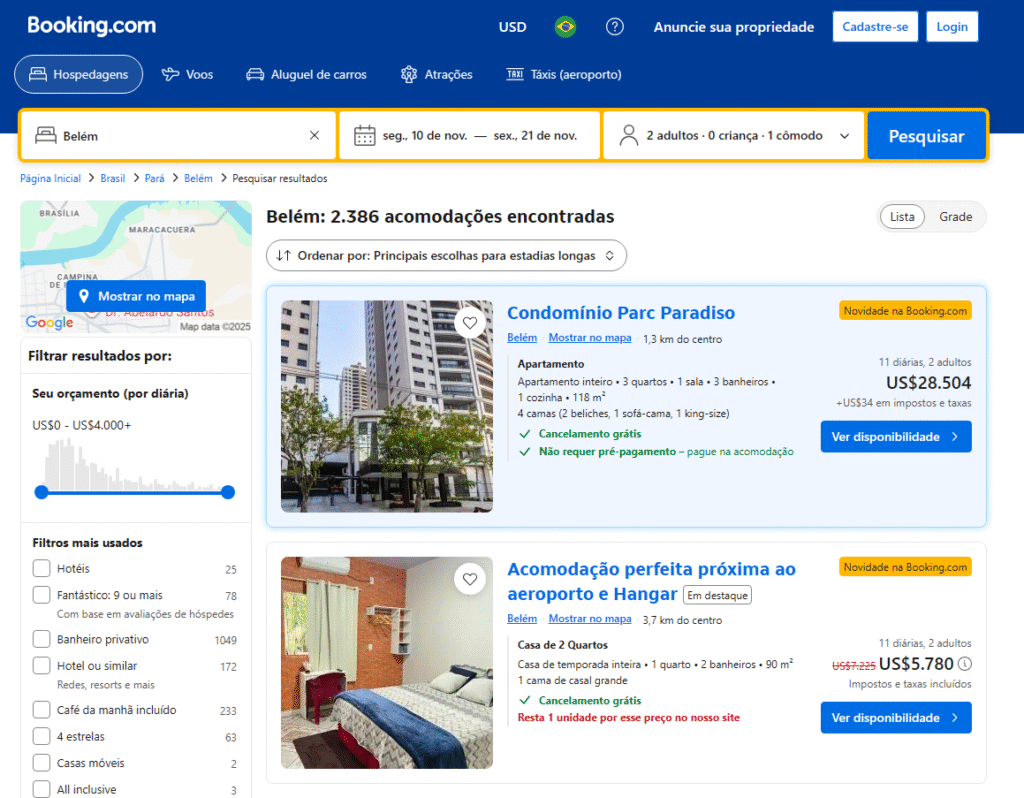
Reports of inflated values for hotels and short-term rentals have multiplied, with extreme cases: a 118 m² apartment advertised for R$ 151,000 (about US$ 28,000) for the 11 days of COP30.

This practice generated a government reaction. On September 24, 2025, the Minister of the Civil House, Rui Costa, confirmed that the Union will take legal action against establishments that are abusing prices.

The justification is clear: to seek “reasonableness” and protect Brazil’s image. “It is not right, it is not fair that hotels are charging stratospheric prices,” declared Costa, highlighting the effort to “deconstruct this narrative, including internationally.”

The ultimate goal, according to him, is for the “great legacy” of the COP to be “the image of a welcoming, warm people, with wonderful cuisine.”

Accommodation available on Booking during COP30. Accessed 09/31/2025.

The Critique of the International “Alarm”

For Professor Silvia Cruz, the media’s excessive focus on Belém’s problems distorts reality.

“In every COP, there is a price increase. This is nothing new. I’ve never seen this level of scrutiny in other cities,” she argues.

She believes the disqualification of the city is unfair and may even be a political maneuver.

“In my perception, the alarm regarding Belém, with media outlets concerning themselves with the city’s inner workings, is a novelty. I never saw this done with other cities where a COP was held, even though all of them have structural problems.”

“This seems to me more like an orchestration to destabilize the event’s organization and remove it from the Amazon,” she adds.

Another point raised by Silvia is the presence of foreign capital.

“The hotel network in Belém is currently comprised of over 60% of hotels belonging to international groups. I haven’t yet seen anyone ask how the daily rates are priced, and these groups are European and American.”

Despite the city facing challenges such as the need for improvements in public transport and the major bottleneck in basic sanitation, Professor Silvia Cruz emphasizes that hosting large-scale events is not new for Belém.

“Belém hosts the Círio de Nossa Senhora de Nazaré every year, an event that attracts, on average, two million people to Belém,” the professor reminds.

She points out that “any major event, in any city, presents challenges,” and that Belém has the capacity to receive large volumes of visitors, overcoming adversity.

Círio de Nazaré, photo by Fernanda Lima, available on pexels

An Invitation to the World

Despite the challenges and controversies, the main goal of COP30 remains to fulfill the global environmental agenda and bring the world’s real demands to the forefront.

The event should also serve as a platform to promote regenerative actions and sustainable tourism in the region, setting the stage for new public policies that envision a development agenda valuing local populations.

The professor argues that the true legacy goes beyond infrastructure: “education actions through socio-cultural actions and environmental policies alongside local populations would be the great legacy.”

She bets on the cultural strength and the welcoming nature of the people of Pará as a differentiating factor.

“The human warmth of the people of Pará will be the differential, that warmth that not only works hard but also welcomes and always offers the best they have to visitors.”

She concludes with an invitation to the world: “We are capable of welcoming so well that even the difficulties will be overcome. My message is don’t be afraid. Come see a bit of the Amazon up close, come see how we live and survive.”

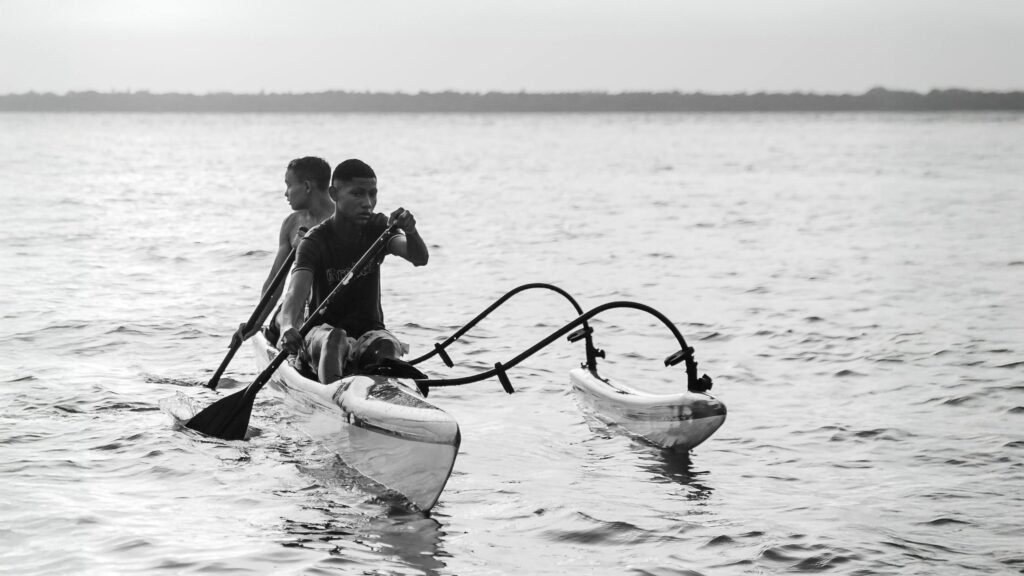
Canoeing on the Amazon River in Belém, Brazil / photo by Gabriela Ally, available on pexels