

Brazilian Professor Discovers Shorter Route to Mars

A Brazilian research project, initiated in 2015, used simulations and the trajectory of an asteroid as a reference to shorten the round-trip travel time between Earth and Mars. The study, published in the international scientific journal Acta Astronautica, proposes an alternative to conventional trajectories and rekindles debate over new possibilities for crewed missions to the Red Planet.

Scientist Marcelo de Oliveira Souza holds a degree in physics from the Federal Fluminense University, a public federal university in Brazil. He currently serves as a professor and researcher in the field at the State University of Northern Rio de Janeiro, a state university located in Rio de Janeiro state, in the city of Campos dos Goytacazes, southeastern Brazil.

He is the only astronomy specialist in a city of approximately 500,000 inhabitants. His study was recently published in the international scientific journal Acta Astronautica, which is associated with the renowned International Academy of Astronautics (IAA).

The journal is one of the most important in the field of astronautical science worldwide, publishing around 2,500 pages annually and covering discoveries and technological advances in the area.

“I started looking for asteroids that had some possibility, even a very small one, of passing close to Earth. Then I found the trajectory of an asteroid that had the possibility of passing near both Earth and Mars. So I thought, why can’t I use that trajectory as a reference to try to find a trajectory for a crewed trip to Mars?” Marcelo explained in an interview with The Sentinel by Yuvoice, describing how the study began.

The conventional route can take between two and three years in total, while the scientist’s proposal could reduce that duration to approximately seven months.

This would potentially allow a round-trip human mission to Mars projected for 2031, when the alignment between Mars, the Moon, and Earth—also known as the “Mars opposition”—would be more favorable for utilizing the route suggested by the researcher.

Technological advances over the past decade played a major role in Marcelo’s study, particularly the advent of Artificial Intelligence. He saw AI as a crucial partner in advancing his research, assisting with calculations, simulations, and new analyses of data he had already collected and previously examined.

Journey to Mars

Missions to the Red Planet are currently planned by NASA (National Aeronautics and Space Administration), ESA (European Space Agency), CNSA (China National Space Administration), and SpaceX (Space Exploration Technologies Corporation).

In Brazil, the Brazilian Space Agency (AEB) is responsible for implementing the country’s national space policy. Founded in 1994, the agency operates as the main public institution overseeing Brazil’s space activities and benefits from the country’s strategic geographic position in the Northeast, which is advantageous for satellite launches. Brazil has also developed capabilities in small satellite production and maintains global diplomatic and scientific partnerships.

Despite the shortened route, the scientist emphasizes that the major innovation lies in the method used to reach this result. Using a celestial reference—in this case, asteroid 2001 CA21—is what makes Marcelo’s study a potentially significant scientific milestone for Brazil and the world, especially as private companies have intensified plans to send humans to Mars.

Beyond the simulation results, Marcelo says the international attention surrounding his discovery has been gratifying and sees it as fundamental for inspiring other researchers and future scientists to pursue studies in this field within Brazil, potentially positioning the country as a reference in astronomical science.

His research was not only published in Acta Astronautica, linked to the International Academy of Astronautics, but also gained visibility on ScienceDirect, a major U.S.-based scientific literature platform with global reach. According to the researcher, the study has already been reported in approximately 50 countries, including Argentina, Spain, and India.

“I hope that this visibility at least helps motivate young people and children to pursue careers in this area, which Brazil needs. We often use NASA as a reference, and NASA is associated with space exploration, so people are naturally interested in that. What I feel is missing, for example, is for the Brazilian space agency to occupy that space within Brazil. I hope that with this work and others that will emerge, we can open a path for a national trajectory in this field,” Marcelo said regarding his expectations for the study and its impact.
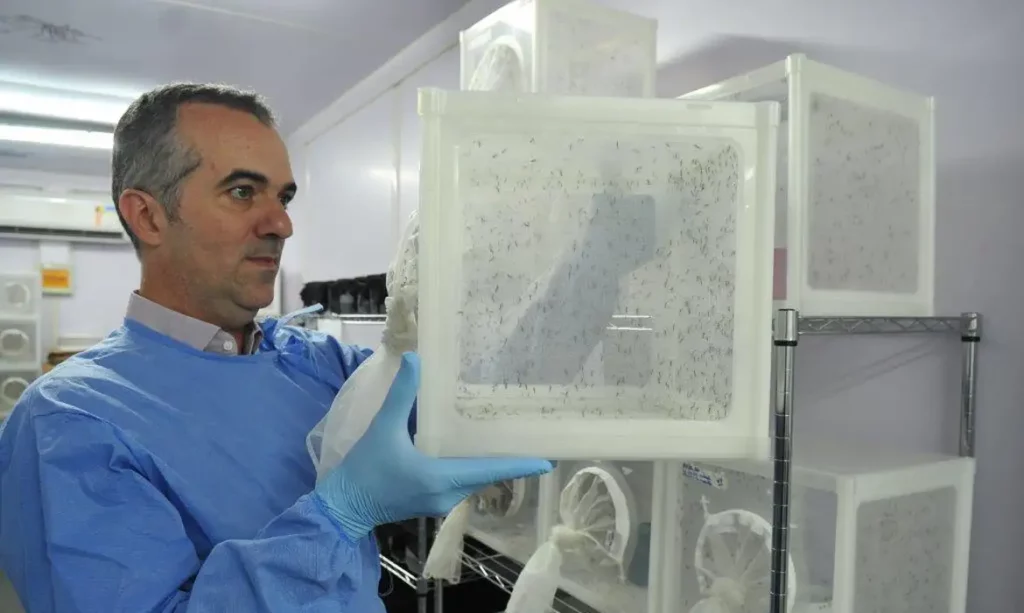
Brazilian named among the 10 most important scientists of the year

The journal Nature has released its list of the 10 people who shaped science in 2025. Among them is Brazilian scientist Luciano Moreira. His work focuses on inhibiting the transmission of diseases carried by the Aedes aegypti mosquito through the use of the bacterium Wolbachia.

An agronomist engineer and a licensed researcher at the Oswaldo Cruz Foundation (Fiocruz), one of the most important biomedical research institutions in Latin America, Moreira has worked for over 30 years in the search for alternative methods to combat mosquito-borne diseases.

According to the World Health Organization (WHO), insects are responsible for transmitting diseases that kill more than one million people every year worldwide.

In response to this challenge, Moreira developed the Wolbachia method, which consists of introducing the bacterium into mosquito eggs, thereby preventing the replication of pathogenic viruses.

The relevance of Luciano Moreira’s research becomes even more significant within the Brazilian context, where diseases such as dengue, chikungunya, and Zika continue to recur as annual epidemics, especially during the warmer seasons.

In 2024, Brazil recorded a historic peak, with more than 6 million cases of dengue throughout the year, 45 percent of which occurred during the summer months.

According to experts, the combination of a tropical climate, unplanned urbanization, and climate change favors the proliferation of the disease-carrying mosquito.

“The Wolbachia Method is one of the most promising and innovative strategies to reduce dengue transmission (as well as Zika and chikungunya). It is not a ‘treatment’ for people who are already ill, but rather a form of prevention that acts directly on the mosquitoes that transmit the viruses,” explains biologist Nathalia Costa.

She emphasizes that, despite major Brazilian scientific discoveries, the country still does not invest sufficiently in the biomedical field, causing many research projects to be interrupted.

Carolina Batista, a biomedical scientist at the Federal University of Rio de Janeiro (UFRJ), argues that instability in research funding leads to demotivation among professionals in the field.

“Brazil is recognized worldwide for training great scientists. I often say that we don’t do science, we perform miracles. Because of this great creativity in solving problems, Brazilians are highly sought after abroad in all areas of knowledge. What is missing? Beyond financial incentives, proper infrastructure. Power outages, lack of water, high taxes on laboratory reagents, everything discourages researchers. Many ‘brains’ have left the country in recent years.”

She also highlights the importance of the Wolbachia Method not only for the population but also for the environment.

“The project is wonderful because it found a natural way to combat mosquitoes while maintaining environmental balance, unlike what happens when a species is simply removed from nature. In addition, it is a cheaper health technology than vaccinating or treating the entire population.”

The so-called “anti-dengue” mosquitoes, still in the production phase, have become part of Brazilian public policy. The city of Niterói, in the state of Rio de Janeiro, is a pioneer in using these mosquitoes to reduce cases of epidemic diseases.

With a significant reduction of up to 89 percent in the tested neighborhoods, the experiment demonstrates the success of the method, proving to be a sustainable public health strategy that protects the entire community.

Recognized by the global scientific community, Luciano Moreira’s work goes beyond Brazil’s borders and influences public health policies around the world.

The Wolbachia Method is being implemented through the World Mosquito Program (WMP) in around 15 countries, including Australia, Colombia, Indonesia, among others.

Moreira’s presence on Nature’s list symbolizes not only an individual achievement, but also the recognition of the potential of Brazilian science to produce solutions capable of saving lives on a global scale.

Meet the other people on Nature’s list

In addition to Luciano Moreira, the magazine also highlights: 

  • Susan Monarez, from the United States, a leading advocate for science-informed public policy;
  • Achal Agrawal, an Indian scientist known for exposing scientific fraud and retractions;
  • Tony Tyson, from the United States, a pioneer in telescope development and leader of the Vera C. Rubin Observatory project;
  • Precious Matsoso, from South Africa, regarded as a key figure in negotiating the global treaty against pandemics;
  • Sarah Tabrizi, from the United Kingdom, for her efforts to advance treatments for Huntington’s disease;
  • Mengran Du, a Chinese geologist responsible for the discovery of new ecosystems in the deep ocean;
  • Liang Wenfeng, also from China, for innovations in collaborative artificial intelligence;
  • Yifat Merbl, an Israeli scientist, for breakthroughs in understanding the immune system; and
  • K.J. Muldoon, a baby born in the United States who has become a symbol of progress in hyper-personalized gene therapy, marking a milestone in the treatment of rare diseases.

Earwax Test Developed in Brazil Can Detect Cancer Early, Study Shows

A study conducted by the Federal University of Goiás (UFG), a Brazilian public institution, shows that earwax-based tests can help indicate the presence of cancer in patients. The initiative, named Cerumenogram, received an honorable mention at the 2025 Capes Award.

The main advantage of the research lies in its ability to diagnose cancer early through a non-invasive, low-cost, and highly accurate approach.

“For oncology, we hope this helps improve people’s quality of life by preventing them from even developing cancer. It’s a simple, inexpensive, practical, and painless method,” said the study’s coordinator, Nelson Antoniosi Filho.

For these researchers, the earwax that accumulates in the ear canal holds enormous value. When removed and analyzed in the lab, it allows for the identification of changes in a person’s health.

“If our body is healthy, the chemical composition of earwax looks one way. If something is off, possibly indicating disease, that composition changes. So today, earwax is like a fingerprint of our health condition,” Antoniosi explained in an interview with Jornal Nacional.

The research began with diagnosing diabetes and detecting drug and pesticide intoxication through earwax analysis. The method was later adapted for veterinary medicine, allowing the identification of intoxications and even cancer in dogs.

The project has been ongoing for ten years in partnership with Amaral Carvalho Hospital, in Jaú (São Paulo), a cancer treatment center. Over time, results proved promising, and the test began detecting cancer in humans.

In 2025, a new discovery further excited the scientists: earwax experiments can identify pre-cancerous stages, enabling earlier and less painful treatment for patients. This breakthrough reinforces the importance of early diagnosis: the earlier cancer is identified, the greater the chances of a cure.

During testing, samples from 751 volunteers were analyzed, with 531 already undergoing cancer treatment. Among these, the test returned positive results for the disease. Of the 220 without prior diagnosis, only five showed atypical substances; all five were later confirmed to have cancer through conventional exams.

In an interview with Yuvoice, Nelson Antoniosi Filho explained that there is still no timeline for the test to become available for free in Brazil’s public healthcare system (SUS) due to regulatory processes. Therefore, it is expected to first reach private healthcare providers and public educational institutions.

“I want every public teaching and research institution in Brazil to offer this service to their communities. That’s how it should start, and then it can expand to the public healthcare system,” he said.

Nelson also emphasized the importance of public universities in achieving this milestone. He noted that funding and support from Brazil’s public education system are essential for revolutionary research, as such backing is rarely seen in private institutions.

“If it were a private university, I would never have approval for a project involving earwax. Do you think any private university would fund earwax research? At best, I’d lose my job for being insane!” he joked.

Currently, Antoniosi and his team are exploring the potential to detect neurological diseases such as Alzheimer’s and Parkinson’s through earwax analysis.

“We’re studying neurodegenerative conditions, like Alzheimer’s, Parkinson’s, and other dementias, which are also metabolic processes, to see if diagnosis is possible,” he told Yuvoice. “These studies aren’t finished yet, but we expect to conclude them within a year.”

This study highlights the strength of Brazilian science, especially research developed in public institutions, in driving scientific innovation. With new studies underway, the Cerumenogram project stands out as one of the most promising scientific initiatives in the country.