
Brazilian named among the 10 most important scientists of the year

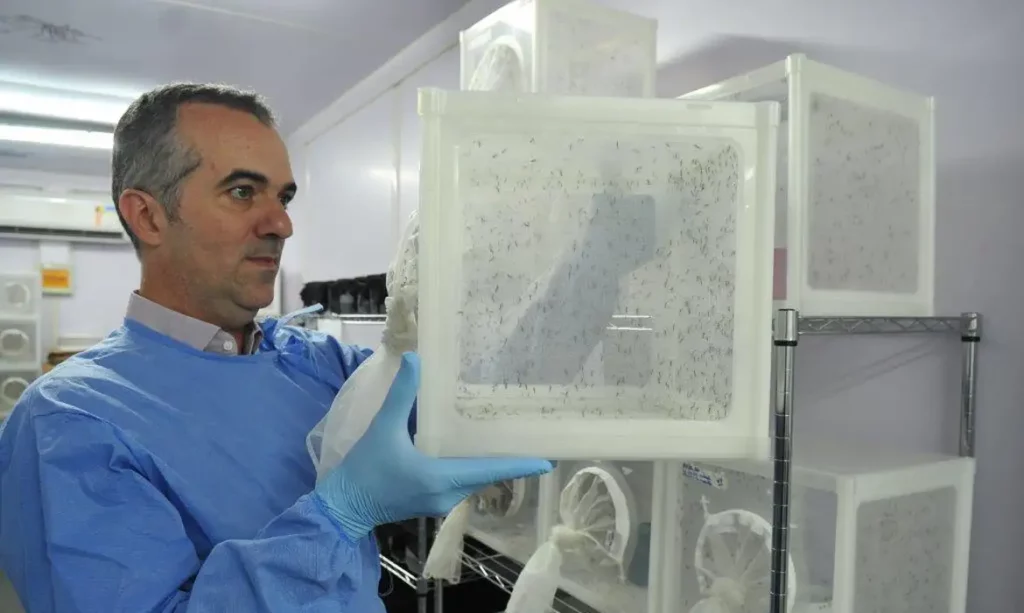
The journal Nature has released its list of the 10 people who shaped science in 2025. Among them is Brazilian scientist Luciano Moreira. His work focuses on inhibiting the transmission of diseases carried by the Aedes aegypti mosquito through the use of the bacterium Wolbachia.

An agronomist engineer and a licensed researcher at the Oswaldo Cruz Foundation (Fiocruz), one of the most important biomedical research institutions in Latin America, Moreira has worked for over 30 years in the search for alternative methods to combat mosquito-borne diseases.

According to the World Health Organization (WHO), insects are responsible for transmitting diseases that kill more than one million people every year worldwide.

In response to this challenge, Moreira developed the Wolbachia method, which consists of introducing the bacterium into mosquito eggs, thereby preventing the replication of pathogenic viruses.

The relevance of Luciano Moreira’s research becomes even more significant within the Brazilian context, where diseases such as dengue, chikungunya, and Zika continue to recur as annual epidemics, especially during the warmer seasons.

In 2024, Brazil recorded a historic peak, with more than 6 million cases of dengue throughout the year, 45 percent of which occurred during the summer months.

According to experts, the combination of a tropical climate, unplanned urbanization, and climate change favors the proliferation of the disease-carrying mosquito.

“The Wolbachia Method is one of the most promising and innovative strategies to reduce dengue transmission (as well as Zika and chikungunya). It is not a ‘treatment’ for people who are already ill, but rather a form of prevention that acts directly on the mosquitoes that transmit the viruses,” explains biologist Nathalia Costa.

She emphasizes that, despite major Brazilian scientific discoveries, the country still does not invest sufficiently in the biomedical field, causing many research projects to be interrupted.

Carolina Batista, a biomedical scientist at the Federal University of Rio de Janeiro (UFRJ), argues that instability in research funding leads to demotivation among professionals in the field.

“Brazil is recognized worldwide for training great scientists. I often say that we don’t do science, we perform miracles. Because of this great creativity in solving problems, Brazilians are highly sought after abroad in all areas of knowledge. What is missing? Beyond financial incentives, proper infrastructure. Power outages, lack of water, high taxes on laboratory reagents, everything discourages researchers. Many ‘brains’ have left the country in recent years.”

She also highlights the importance of the Wolbachia Method not only for the population but also for the environment.

“The project is wonderful because it found a natural way to combat mosquitoes while maintaining environmental balance, unlike what happens when a species is simply removed from nature. In addition, it is a cheaper health technology than vaccinating or treating the entire population.”

The so-called “anti-dengue” mosquitoes, still in the production phase, have become part of Brazilian public policy. The city of Niterói, in the state of Rio de Janeiro, is a pioneer in using these mosquitoes to reduce cases of epidemic diseases.

With a significant reduction of up to 89 percent in the tested neighborhoods, the experiment demonstrates the success of the method, proving to be a sustainable public health strategy that protects the entire community.

Recognized by the global scientific community, Luciano Moreira’s work goes beyond Brazil’s borders and influences public health policies around the world.

The Wolbachia Method is being implemented through the World Mosquito Program (WMP) in around 15 countries, including Australia, Colombia, Indonesia, among others.

Moreira’s presence on Nature’s list symbolizes not only an individual achievement, but also the recognition of the potential of Brazilian science to produce solutions capable of saving lives on a global scale.

Meet the other people on Nature’s list

In addition to Luciano Moreira, the magazine also highlights: 

  • Susan Monarez, from the United States, a leading advocate for science-informed public policy;
  • Achal Agrawal, an Indian scientist known for exposing scientific fraud and retractions;
  • Tony Tyson, from the United States, a pioneer in telescope development and leader of the Vera C. Rubin Observatory project;
  • Precious Matsoso, from South Africa, regarded as a key figure in negotiating the global treaty against pandemics;
  • Sarah Tabrizi, from the United Kingdom, for her efforts to advance treatments for Huntington’s disease;
  • Mengran Du, a Chinese geologist responsible for the discovery of new ecosystems in the deep ocean;
  • Liang Wenfeng, also from China, for innovations in collaborative artificial intelligence;
  • Yifat Merbl, an Israeli scientist, for breakthroughs in understanding the immune system; and
  • K.J. Muldoon, a baby born in the United States who has become a symbol of progress in hyper-personalized gene therapy, marking a milestone in the treatment of rare diseases.
Five Years After Backer Beer Contamination, All Defendants Acquitted for Lack of Evidence

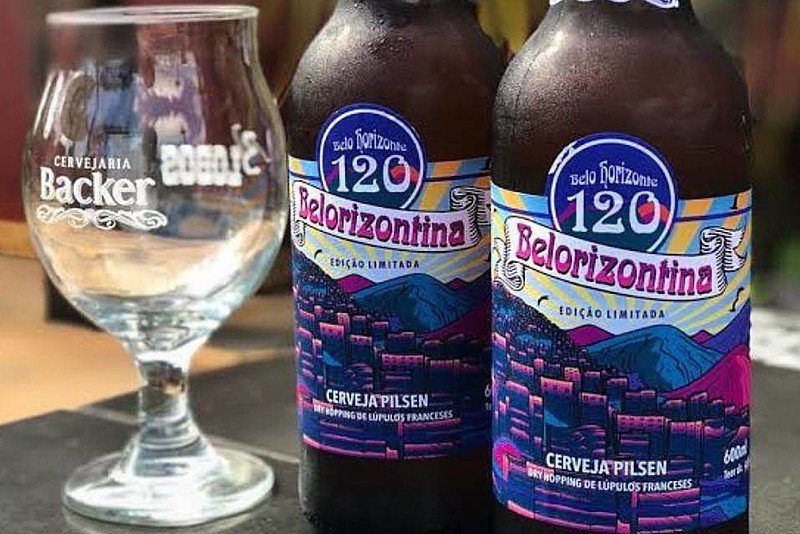
Five years after the discovery that beers from the Brazilian brand Backer were contaminated, an incident which caused the deaths of ten consumers and left 19 others with permanent injuries, all defendants have been acquitted due to insufficient evidence.

The decision was issued by the 2nd Criminal Court of Belo Horizonte on November 4, 2025. The justification was that there was not enough proof to hold any of the accused personally responsible. According to Judge Alexandre Magno de Resende Oliveira, the complaint filed by the Public Prosecutor’s Office failed to demonstrate “who, individually, acted or omitted themselves in a criminal manner.”

Background

The case began in January 2020, when several people were hospitalized in the Brazilian state of Minas Gerais with symptoms such as kidney failure, blindness, and neurological disorders. Investigations revealed that all victims had consumed beverages produced by Backer Brewery, based in Belo Horizonte.

Reports from the Civil Police and Anvisa (Brazil’s National Health Surveillance Agency) confirmed the presence of the toxic substances diethylene glycol and monoethylene glycol, both commonly used as antifreeze. According to the investigation, the contamination resulted from a manufacturing defect caused by a leak in the cooling system that allowed toxic fluid to mix with the beer.

At least ten deaths and 19 severe injuries were confirmed. Consumption of the contaminated beers led to permanent sequelae, including vision loss and neurological damage.

At the time, the Minas Gerais Public Prosecutor’s Office (MPMG) charged ten individuals linked to Cervejaria Três Lobos, the company that owns the Backer brand, with manslaughter, bodily harm, and crimes against consumer relations. The defendants included company partners, directors, and production and maintenance technicians.

Initially, the owners were accused of having knowingly taken the risk of contamination by keeping the factory operational despite technical failures. However, two of them were acquitted after evidence showed they had no management authority within the company. The third partner, responsible only for marketing, was also acquitted for having no direct involvement with product manufacturing.

Regarding the six engineers and technicians, the judge concluded that all were subordinate employees without decision-making power over the industrial process. The court also noted that responsibility for the refrigeration system lay with the technical supervisor, who had since passed away, and the industrial operations manager, who was not charged.

The tenth defendant, accused of perjury for allegedly lying about a label replacement at a supplier, was also acquitted under the principle of reasonable doubt, due to lack of concrete evidence.

In summary, the court found no individualized evidence of criminal negligence that could justify a conviction, even though the episode was acknowledged as a systemic failure within the company.

Aftermath and Civil Liabilities

Despite the criminal acquittal, Cervejaria Três Lobos still faces civil obligations. In July 2023, the MPMG reached a compensation agreement with Backer to provide financial reparations to the victims and their families. The deal stipulates payments of R$ 500,000 per victim and R$ 150,000 per immediate family member for material and moral damages.

So far, no victim has received payment, as Backer is undergoing judicial recovery (similar to bankruptcy protection), delaying compensation. The company maintains that the contamination was accidental and denies ever using toxic substances intentionally in its brewing process.

The acquittal has shocked victims and their families, who remain without compensation or accountability for the tragedy. Speaking to O Estado de Minas, Mirza Quintão Utsch, daughter of victim Antônio Márcio Quintão de Freitas, who died after drinking Backer beer on New Year’s Eve 2020, said:

“It’s extreme negligence to have a leaking tank, poison so many people, and not be held responsible for it.”

Despite the verdict, the Public Prosecutor’s Office announced it is considering an appeal to the Minas Gerais Court of Justice (TJMG). If accepted, the acquittal could be upheld or partially overturned, leading to a new trial. Until a final conviction is reached, all defendants remain free.

Brazil Faces Methanol Poisoning Crisis: 14 Dead and Dozens Hospitalized

Since last August, Brazil has been recording numerous cases of methanol poisoning due to illegal additions to beverages, resulting in several deaths. Beverage fraudsters add the highly toxic alcohol to reduce the costs of counterfeit drinks. Authorities continue to investigate  other possible hypotheses. In the last week of October, the Ministry of Health reported 59 cases and 14 deaths.

Methanol is an alcohol used by the industry as a solvent but never as an ingredient in beverages for human consumption. Recently, several countries around the world have experienced criminal poisonings due to methanol being added to alcoholic beverages. In 2024, the case of three British friends who died after consuming methanol-contaminated drinks in Laos made headlines in major newspapers worldwide. Until 2025, Indonesia was the country with the highest number of methanol poisoning cases, totaling 335 since 2019. In second place, India reported 140 cases, while Russia, with 121 cases, ranked third in methanol poisoning since 2019, according to data provided by Médecins Sans Frontières.

It is impossible for someone drinking a cocktail or even pure distilled and fermented beverages to know if methanol has been added to their glass. Both highly toxic methanol and ethanol, which is normally present in distilled and fermented drinks, are alcohols, making it difficult to identify them by odor or the colorless appearance of both.

After having three caipirinhas at a bar in São Paulo, in the upscale Alameda Lorena area, architect Radharani Domingos, 43, lost her vision in both eyes. Ophthalmologist Dr Fábio Ejzenbaum from the Santa Casa Hospital in São Paulo explained that the architect lost her vision permanently and emphasized the difficulty he had in delivering the news to the patient and her family. 

Dr. Ejzenbaum underscored  that abdominal cramping is one of the symptoms that go beyond what we know is expected after alcohol consumption, acting as an important alert to seek medical attention urgently. He also noted that early recognition and treatment, sometimes including hemodialysis, ICU admission, and acidosis control, are crucial.

Methanol added to drinks is metabolized differently from ethanol, as methanol is metabolized by the liver and turns into formaldehyde, which is highly toxic to the optic nerve and other organs and structures, such as the central nervous system, and  the kidneys. Formaldehyde is the substance used to embalm (preserve) deceased bodies, being very toxic to living beings.

The police are investigating several hypotheses, not ruling out the possible use of vehicle fuel alcohol, intentionally contaminated with methanol. That is, two offenses:

  1. Using fuel alcohol to add to counterfeit alcoholic beverages
  2. Adulterating fuel with the addition of highly toxic methanol, which is harmful even to car engines.

In the state of São Paulo alone, 66 people have been arrested for allegedly being involved in the counterfeiting of beverages with methanol. In early October, a clandestine factory was shut down by the São Paulo Civil Police in the ABC Paulista region, near the city of São Paulo. Brazilian lawmakers are evaluating changes in legislation to make the adulteration of food and beverages a heinous crime.