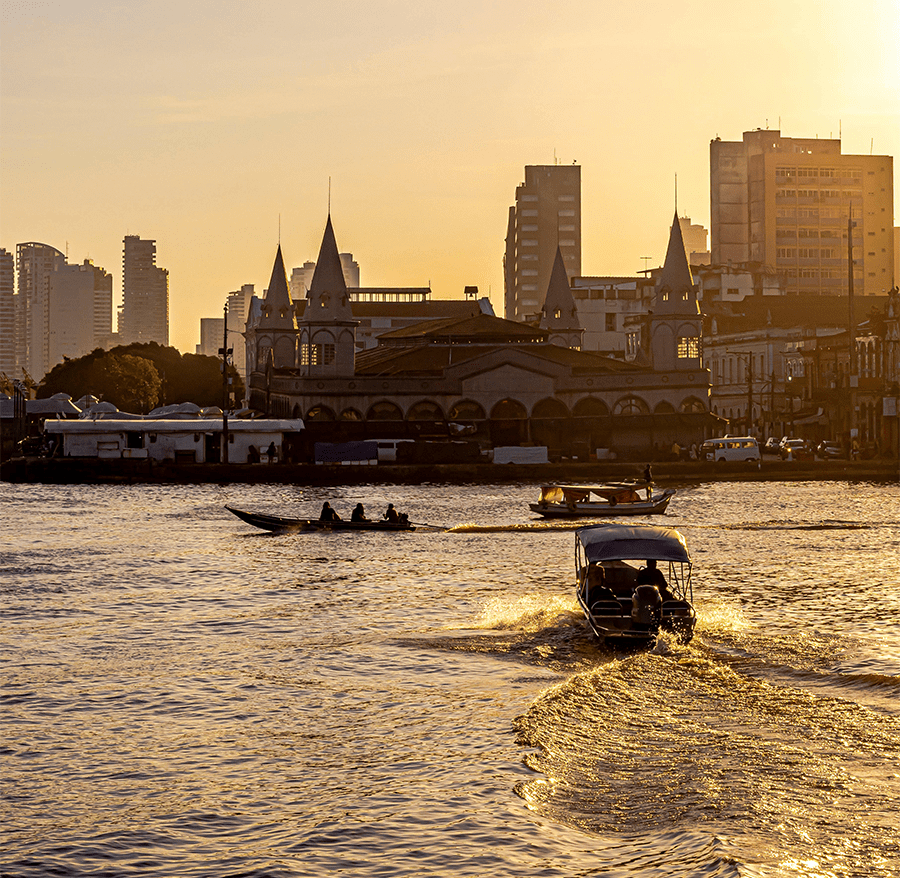
The city of Belém (the capital of Pará state in Brazil), in the heart of the planet’s largest tropical rainforest, is preparing to host the 30th United Nations Climate Change Conference (COP30) in November 2025.
The United Nation’s annual climate meeting plays the crucial role of reviewing climate mitigation and adaptation targets.
The gathering is expected to bring together leaders, negotiators, and activists from nearly 200 countries, placing Brazil, the Amazon, and its people at the center of international climate diplomacy.
However, alongside the anticipation for investment and visibility, tensions are rising due to the increase in accommodation prices during the event’s days.
The Amazon at the Center of the Debate
The choice of Belém as the host city is not random. Far from Brazil’s traditional economic hubs (São Paulo and Rio de Janeiro), the city carries symbolism: it brings the COP directly to the region most strategic for the planet’s climate balance.
Holding the meeting in Belém is a symbolic act and an opportunity to give due focus to the environmental issues experienced in the world’s most important natural reserve.
Professor Silvia Helena Ribeiro Cruz, director of the UFPA School of Tourism, emphasizes the location’s relevance.
“I ask, how can we discuss sustainability, climate change, and socio-environmental justice without being in the Amazon?”
For Brazil, COP30 is more than a large gathering: it’s a chance to transform global discussions into concrete actions, attracting investments in innovation, environmental policies, and sustainable development.
The expectation is that the event will leave lasting results for both the Amazon region and the country as a whole.
Construction Work and the Infrastructure Legacy
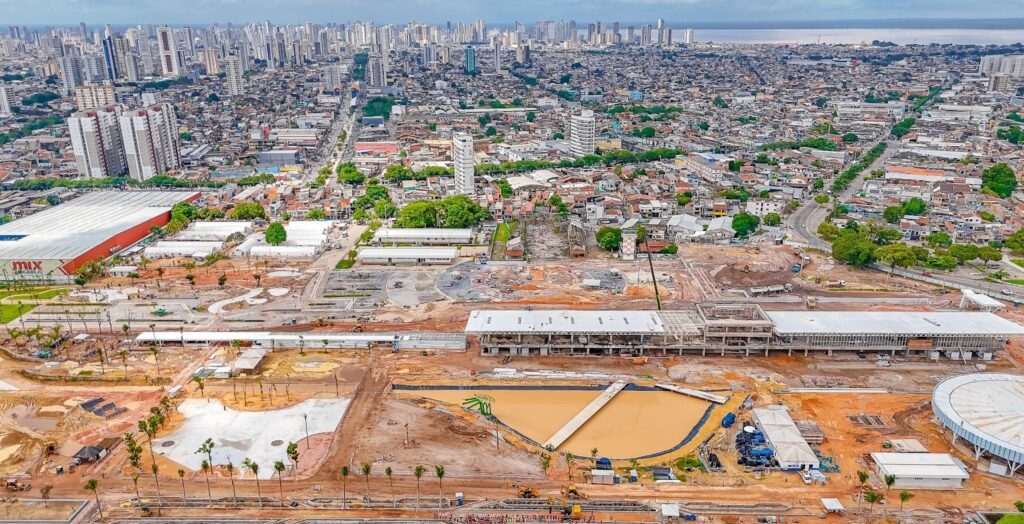
According to the Transparency Portal, the Federal Government has allocated more than R$ 4 billion (about US$ 750 million) to prepare Belém. The investment covers structural and logistical improvements that are intended to remain as a legacy for the city.
This funding aims not only to ensure the conference’s logistical success but also to leave a lasting legacy for the city and the region.
Among the projects nearing completion are the re-qualification of the Belém International Airport and the revitalization of Porto Futuro 2, a leisure and social complex on the capital’s waterfront.
Despite the progress, Professor Silvia Cruz warns of an inequality in the allocation of resources.
“The structural legacy will be mainly for the central urban areas, and little for the peripheral neighborhoods, where the socio-environmental problems, like lack of basic sanitation, are located.”
Hotel Sector, Prices, and the Government’s Response
The international visibility has also brought side effects.
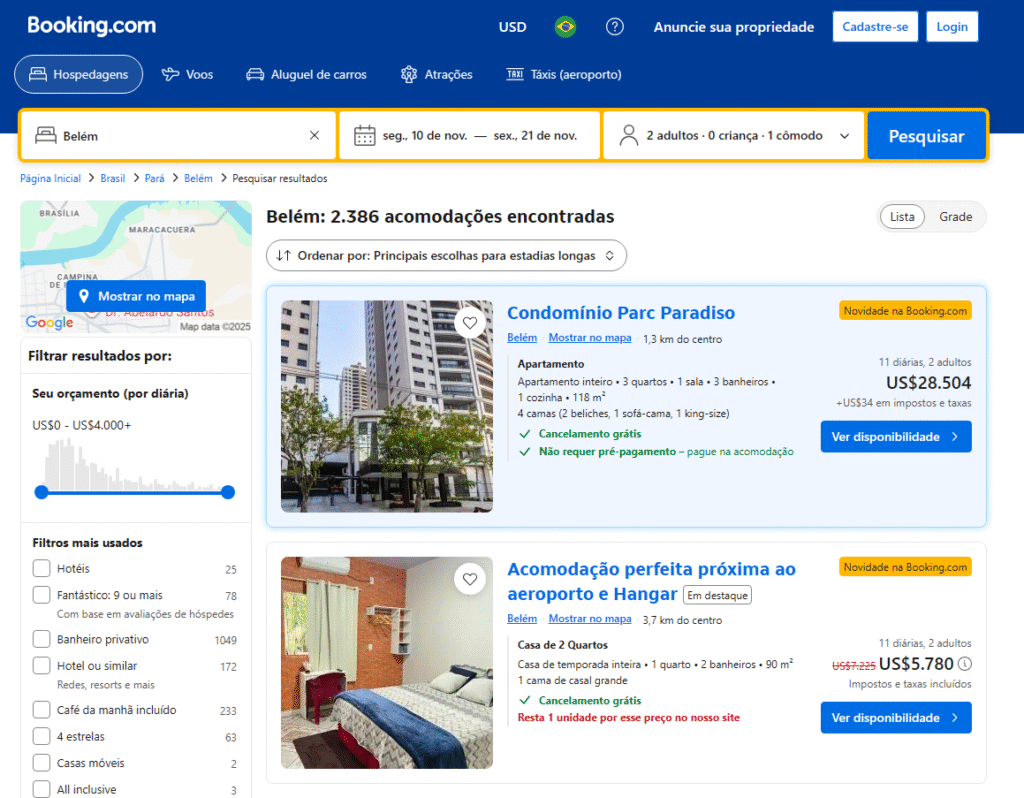
Reports of inflated values for hotels and short-term rentals have multiplied, with extreme cases: a 118 m² apartment advertised for R$ 151,000 (about US$ 28,000) for the 11 days of COP30.
This practice generated a government reaction. On September 24, 2025, the Minister of the Civil House, Rui Costa, confirmed that the Union will take legal action against establishments that are abusing prices.
The justification is clear: to seek “reasonableness” and protect Brazil’s image. “It is not right, it is not fair that hotels are charging stratospheric prices,” declared Costa, highlighting the effort to “deconstruct this narrative, including internationally.”
The ultimate goal, according to him, is for the “great legacy” of the COP to be “the image of a welcoming, warm people, with wonderful cuisine.”
The Critique of the International “Alarm”
For Professor Silvia Cruz, the media’s excessive focus on Belém’s problems distorts reality.
“In every COP, there is a price increase. This is nothing new. I’ve never seen this level of scrutiny in other cities,” she argues.
She believes the disqualification of the city is unfair and may even be a political maneuver.
“In my perception, the alarm regarding Belém, with media outlets concerning themselves with the city’s inner workings, is a novelty. I never saw this done with other cities where a COP was held, even though all of them have structural problems.”
“This seems to me more like an orchestration to destabilize the event’s organization and remove it from the Amazon,” she adds.
Another point raised by Silvia is the presence of foreign capital.
“The hotel network in Belém is currently comprised of over 60% of hotels belonging to international groups. I haven’t yet seen anyone ask how the daily rates are priced, and these groups are European and American.”
Despite the city facing challenges such as the need for improvements in public transport and the major bottleneck in basic sanitation, Professor Silvia Cruz emphasizes that hosting large-scale events is not new for Belém.
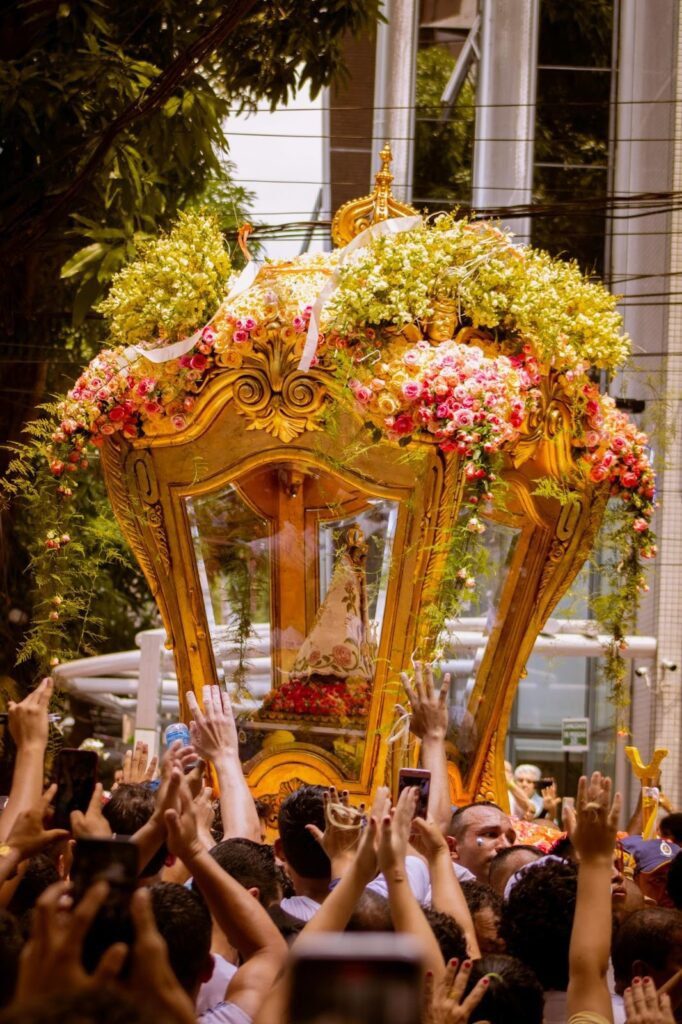
“Belém hosts the Círio de Nossa Senhora de Nazaré every year, an event that attracts, on average, two million people to Belém,” the professor reminds.
She points out that “any major event, in any city, presents challenges,” and that Belém has the capacity to receive large volumes of visitors, overcoming adversity.
An Invitation to the World
Despite the challenges and controversies, the main goal of COP30 remains to fulfill the global environmental agenda and bring the world’s real demands to the forefront.
The event should also serve as a platform to promote regenerative actions and sustainable tourism in the region, setting the stage for new public policies that envision a development agenda valuing local populations.
The professor argues that the true legacy goes beyond infrastructure: “education actions through socio-cultural actions and environmental policies alongside local populations would be the great legacy.”
She bets on the cultural strength and the welcoming nature of the people of Pará as a differentiating factor.
“The human warmth of the people of Pará will be the differential, that warmth that not only works hard but also welcomes and always offers the best they have to visitors.”
She concludes with an invitation to the world: “We are capable of welcoming so well that even the difficulties will be overcome. My message is don’t be afraid. Come see a bit of the Amazon up close, come see how we live and survive.”