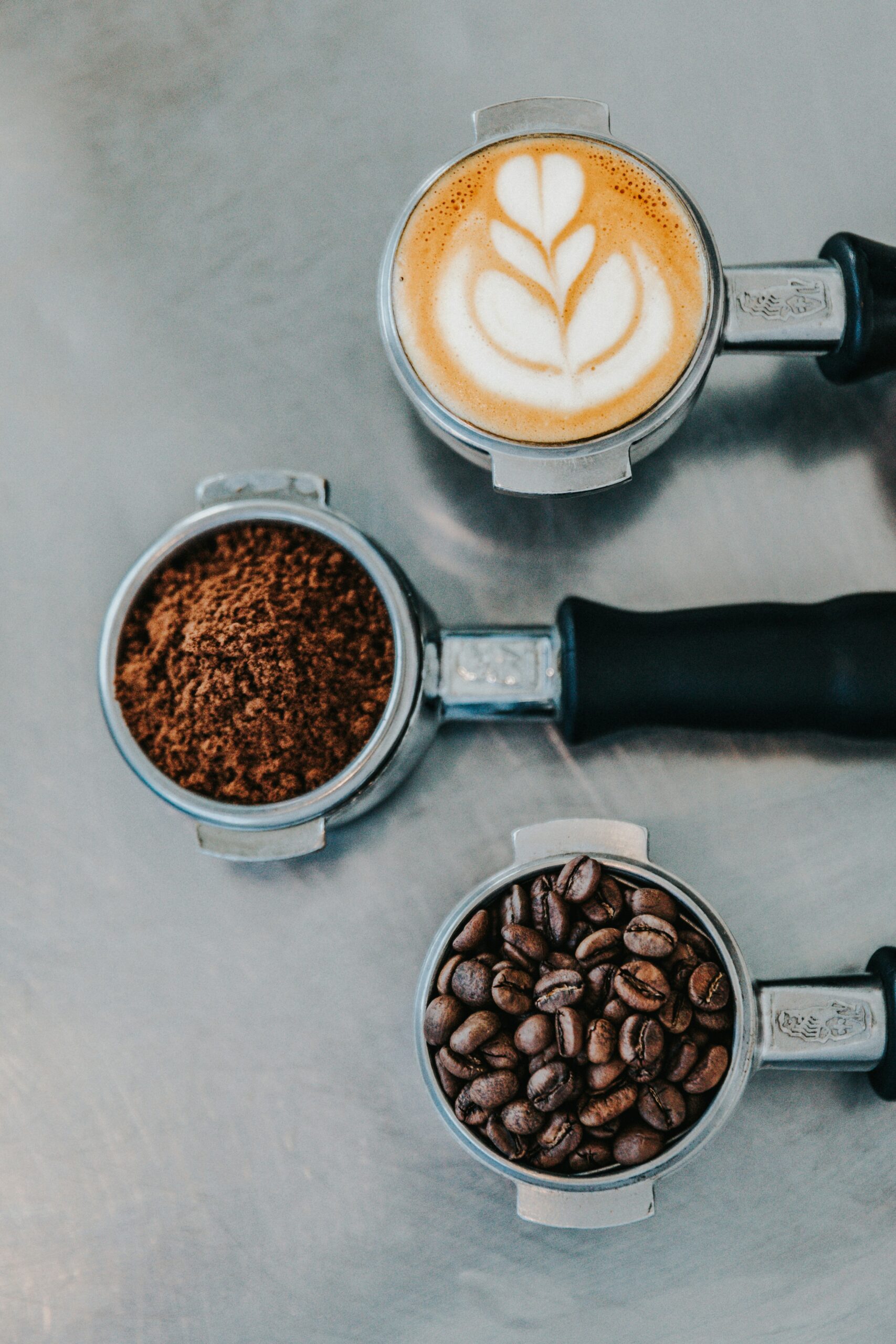
How do you like your coffee?
It’s one of the first questions I’m asked when I arrive at a job interview in Stockholm. Before anyone mentions my CV, someone reaches for the kettle. The interview hasn’t officially started, but in a way, it already has.
This is fika — Sweden’s daily ritual of coffee and conversation. But here’s the paradox: In 2022, Swedish coffee consumption drove the clearing of roughly 331 hectares of Amazon rainforest, exceeding the impact of Swedish beef consumption that same year, according to a 2025 analysis by Chalmers University of Technology, the Stockholm Environment Institute, and WWF.
For a country that topped the Global Sustainable Competitiveness Index in 2024 and aims for fossil-free energy by 2045, this creates an uncomfortable question: How does a climate leader reconcile a beloved cultural tradition with global environmental damage?
The Cost of Comfort
Swedes consume coffee at one of the highest per-capita rates globally. Fika isn’t just a coffee break — it happens at 10 a.m., after lunch, during meetings, on trains, at job interviews. To skip it feels antisocial. This is where colleagues become friends, where business gets done, where the long Nordic winter becomes bearable.
But coffee carries a steep environmental price. At least 312,803 hectares of Brazilian forest were directly cleared for coffee cultivation through 2023, according to Coffee Watch. Up to two-thirds of Brazil’s suitable Arabica growing area could be lost by 2050 under current climate trends. Coffee production depletes water resources, destroys biodiversity, and relies on carbon-intensive supply chains spanning thousands of kilometers.
Swedish University of Agricultural Sciences researchers report that 119 million cups of coffee brewed in Swedish restaurants are wasted annually — before accounting for the beans that never make it to market, the water used in cultivation, or the forests cleared to grow them.
“Coffee is one of the most environmentally damaging crops in global agriculture,” says Anne Charlotte Bunge, a sustainability researcher at Stockholm University. “If fika is to continue, Swedes need to rethink what they drink and how much.”
The Limits of “Klimatsmart”
The response has been what Swedes call “klimatsmart fika” — climate-smart coffee breaks. Cafés now prominently display certifications. Oat milk has become standard. Consumers increasingly choose specialty beans from traceable sources over cheap drip coffee.
Swedish roaster Löfbergs has invested in direct partnerships with producers, supporting agroforestry practices that improve soil health and biodiversity. CEO Anders Fredriksson frames this as both ethical imperative and business necessity: “A sustainable transition is critical for companies that want to remain competitive.”
Market data from late 2024 shows rising demand for sustainably sourced coffee, with artisanal cafés emphasizing ethical production. Plant-based alternatives now appear as expected defaults rather than sacrifices — oat milk in place of dairy, plant-based butter in cinnamon buns.
But does this add up to meaningful change?
The Amazon Footprint Report 2025 notes that while certification can reduce links between consumption and deforestation, no label guarantees a product is entirely deforestation-free. Sweden’s total coffee footprint remains substantial. Incremental improvements in sourcing don’t change the fundamental equation: coffee will never be a local, low-impact crop in Scandinavia.
What’s Not Being Addressed
This disconnect reveals the limits of consumer-focused climate solutions. Individual Swedes making better choices matters less than the aggregate demand signal. Sweden’s total coffee consumption continues at one of the world’s highest per-capita rates despite growing sustainability awareness.
There’s also no policy discussion. Unlike beef or palm oil, coffee faces no import restrictions, no deforestation-free sourcing requirements, no government initiatives to reduce consumption. The burden falls entirely on voluntary consumer action and corporate self-regulation.
A Tradition Under Pressure
Yet giving up fika entirely seems both unlikely and, to many Swedes, undesirable. Traditions rarely disappear because they’re criticized. They do, however, evolve under pressure.
This illustrates the emotional complexity of climate action when it intersects with identity. Fika isn’t fungible. It can’t be replaced with tea or hot chocolate without losing its cultural meaning. The ritual itself — the pause, the social connection, the shared moment — is what Swedes are trying to preserve.
What Would Real Change Look Like?
If Sweden were serious about aligning coffee consumption with climate leadership, several pathways exist:
Import regulations requiring deforestation-free certification for all coffee, similar to emerging EU standards for other commodities. Corporate transparency mandates forcing retailers to disclose supply chain environmental impacts. Public procurement policies prioritizing sustainable coffee in government offices, schools, and hospitals. Investment in alternative protein crops that could reduce agricultural pressure in tropical regions.
None of these are currently under consideration.
The Swedish government’s climate strategy extensively covers transportation, energy, and industrial emissions. Coffee doesn’t appear. This suggests that cultural traditions enjoy implicit protection from the kind of scrutiny applied to other sectors — even when environmental impacts are comparable.
“We have this idea that climate action is about big infrastructure and policy,” Bunge observes. “But it’s also about daily habits that feel too personal to regulate. That’s where it gets difficult.”
The Uncomfortable Middle Ground
The story of klimatsmart fika is ultimately about incremental adaptation in the face of systemic problems. It’s consumers making marginally better choices within a framework that remains fundamentally unsustainable. It’s corporations improving practices without reducing volumes. It’s a country maintaining its self-image as a climate leader while outsourcing environmental damage to distant ecosystems.
Is this progress? Compared to ignoring the issue entirely, yes. Compared to what the climate actually requires, probably not.
What fika reveals is how societies negotiate the gap between values and behavior, between what we believe and what we’re willing to change. The Swedish approach — acknowledging the problem, making adjustments, hoping it’s enough — may be the most honest response available when tradition collides with environmental necessity.
But honesty isn’t the same as adequacy. Sweden can’t forest its way to sustainability if consumption patterns remain unchanged. At some point, climate leadership requires confronting uncomfortable questions about which traditions can continue and which must transform.
For now, the coffee keeps brewing. The ritual continues. And the Amazon keeps shrinking — 331 hectares at a time.