Perfectly Imperfect

As someone who grew up in a family that values excellence, I was preoccupied with perfection for most of my life, whether it was in school, relationships, or everyday life. I set impossibly high standards for myself, and I thought that only through flawlessness could I achieve success and happiness. It wasn’t until I hit a breaking point that I realized the desire for absolute perfection was what kept me from finding true contentment and success. It was only when I embraced my defects did I achieve a better outcome than I could have ever imagined.

All became clear when I was 23, my life marked by ambition and self-doubt. I had just graduated from a world-class Israeli university with a postgraduate degree, and was immediately seized by the ambition to get a PhD. My first job was in a biological research company in the UK where I was mandated to research a study titled Quorum Sensing Disruption by Urban Plant Volatiles: A New Avenue for Anti-Biofilm Therapy in Multi-Drug-Resistant Pathogens. The job was everything I had hoped for — challenging, fast-paced, and full of opportunities to prove myself. But along with the excitement came an overwhelming fear of failure. However, I was determined to show my worth, to stand out, to be perfect.

At first, I was meticulous in everything I did. Every email had to be perfectly worded, every presentation flawless, and every project completed with a near-obsessive attention to detail. I spent late nights tweaking reports, overanalyzing every decision, and second-guessing myself. But no matter how hard I tried, it never felt like I had done enough. My colleagues seemed to work more with less effort, and yet their work was praised just as much as mine, perhaps even more so. I couldn’t understand it.

My performance reviews, while generally positive, always left me feeling like I wasn’t living up to my full potential. I began to notice something unsettling: I was burning out. I would go to bed exhausted every night, only to wake up feeling the same sense of anxiety and pressure as the deadline approached. I was trapped in a cycle of trying to be perfect, yet never feeling satisfied with the outcome. In my mind, the only way to get ahead was to be flawless in everything I did, but it was taking a toll on my mental and physical health.

The turning point came during a major presentation to a group of executives. I had spent weeks preparing, rehearsing, perfecting the slides, and running through every possible scenario, yet the real challenge lay in the topic itself: a combination of plants, microbiology, and medicine. As a  microbiologist, I had to be able to face and argue successfully in front of a panel consisting of individuals from a multidisciplinary field. On the day of the presentation, my nerves were at an all-time high. I could barely sleep the night before, and when I woke up, I had a knot in my stomach. I was convinced that one small mistake would ruin my chances of advancing in the company.

As I stood in front of the panel, I felt the weight of everyone’s eyes on me. I began the presentation, but my hands were shaking, my voice trembling. Halfway through, I stumbled over my words and froze. The silence in the room felt deafening. I could feel my face flush, and my mind was racing. “This is it,” I thought. “This is where it all falls apart.” But then, something unexpected happened. One of the executives, a woman named Victoria, spoke up. “Hey, it’s okay,” she said with a smile. “Take a deep breath. We’re all human. Let’s keep going.” At this point I remembered what my master thesis supervisor, Dr. Gidon Winters once told me: “Fredrick, everyone feels nervous, even after having published several peer-reviewed articles and made countless presentations, I am often nervous while presenting in a room full of people.”

An image of two monitors and long, skinny microphones atop a conference table with a podium in the background.
(Image courtesy of Werner Pfennig via pexels)

That moment, so small yet deep, changed everything for me. The pressure I had put on myself to be perfect, to avoid any flaws, was suffocating me. Victoria’s kindness and her understanding of the situation made me realize that mistakes were not the end of the world. They were simply part of the process. I took a deep breath and continued the presentation. My hands still trembled, but I felt a sense of relief. The rest of the meeting went smoothly, and despite my initial panic, I received positive feedback, and the paper was ranked as one of the best research papers in the company. I realized then that the perfection I had been striving for wasn’t what mattered. It was how I handled the imperfections that made the real difference.

After that presentation, I started to shift my mindset. Instead of obsessing over every little detail, I began to focus on progress rather than perfection. I allowed myself to make mistakes and learn from them. Instead of spending hours perfecting a report, I focused on completing tasks efficiently and learning from feedback. I began to understand that imperfection didn’t equate to failure — it was an opportunity to grow.

Over the next few months, I noticed a change in how I approached research and work in general. I was more relaxed and more present, and I wasn’t constantly living in fear of making a mistake. I began to take on more challenging projects, and I wasn’t afraid to take risks. Some of those risks didn’t pay off of course, but others turned out to be some of the most rewarding experiences of my research. My team noticed a difference, too. I became a better collaborator, more willing to ask for help when I needed it, and more open to other people’s ideas.

But the benefits weren’t limited to just my research. I started to apply the same principles of imperfection to my personal life. I had always been self-conscious about my appearance, constantly comparing myself to others and trying to achieve an unattainable standard of beauty. I spent years dieting, exercising, and obsessing over my appearance, only to end up feeling frustrated and inadequate. I realized that I was never going to look like the models in magazines or the influencers on social media, and that wasn’t the point. What mattered was how I felt about myself.

I began to embrace my natural features, faults and all. I stopped worrying about every little flaw and started appreciating what made me unique. I no longer measured my worth by the number on the scale or the reflection in the mirror. I started to focus on things that truly mattered — like spending quality time with family and friends, pursuing hobbies, and learning new skills. And, most importantly, I permitted myself to be imperfect.

Sometimes I forget that I’m allowed to be flawed, that I’m allowed to be human. Perfection used to be an addiction forced onto me because everyone chased it. However, since I strived to accept my flaws, my drive has been different. I want to make mistakes and learn from them. I want to develop a better understanding of everything. I want to be held accountable for every mistake and bad decision, and to be gifted with the grace to grow. I have done a lot of imperfect things — from lying to breaking others’ hearts to ghosting people with no reason — but that’s the beauty of discovering myself.

I learned that all these faults don’t define me; instead, they are stepping stones to meeting the version of myself I can honor. I realized that I had embraced a part of myself that disguised itself as good, but it was the version of myself that prevented me from appreciating who I am. I have taken accountability and changed my ways, character, and behaviors. It’s funny how we often think that perfection is the key to success, but in reality, it’s our imperfections that make us human, and it’s through those imperfections that we truly grow.

Eventually, I discovered that it’s not about being flawless. It’s about showing up, learning from the mistakes, and being kind to yourself along the way. When I let go of the need to be perfect, I found not only better outcomes but also a sense of peace and contentment that I had been desperately searching for. Sometimes, it’s in our imperfections that we find our greatest strengths.
I Think I’ll Write That Down

I’ve always seen my anxiety as a spiral.

Whether it increases or decreases, it’s an ever-present factor in my life. While I’ve never been diagnosed with “severe anxiety,” and I don’t experience it daily like some, I’ve dealt with typical nervousness and the occasional worry that things may not go according to plan. Overthinking has  also always been a major factor in my life. 

Without talk therapy, I’ve found writing to be therapeutic for me. Whether it’s fiction or not, my stories are my own. Writing helps me deal with all of that pent-up, anxious energy that may be going to waste. For me, this form of self-help allows me to focus on what’s important and how to improve myself. 

Since my teenage years, I’ve tried many coping mechanisms to help. Breathing exercises, calming music, meditation, and focusing on specific scents help lessen the stress. By using these techniques, my occasional anxiety subsides and helps “reset” my mental health. However, for the past two years, I’ve been able to improve my well-being even more by writing. With a journal and my favorite pen, I can write about anything, allowing myself to vent directly into the lined pages. This form of therapy has reduced the severity of my overthinking. It also aids in clearing my mind; I can think about where the anxiety is coming from before I commit to putting it to paper, leading me to find the source of my feelings faster.

Flashback to the turning point

Ever since I attended and graduated from both Seminole State College and the University of Central Florida, I began to overthink everything, and it nearly took over my life. Much like anxiety, overthinking is something that isn’t meant to be taken lightly, and it led to a somewhat disastrous impact on my physical health at one point. So one day, just like that, I decided that I needed to change my life and better myself.

That was when I purchased my first hardcover journal in 2023.

From then on, I’ve been writing everything into the pages; whether it’s good or bad, it goes along the lines. By putting pen to paper, I can truly express myself and say what’s on my mind without feeling judged. I don’t have an extra layer of stress from interacting with someone, and I’m not forced to deal with any awkward feelings or embarrassment by emotionally dumping everything on a therapist. For me, I don’t see myself having that kind of emotional vulnerability to someone that I could have potentially met twenty minutes ago.

With the journal, it’s one and done. Once I finish any ramblings or add something that may have been bothering me, I feel a significant weight lifted off my shoulders. From then on, I can essentially put the overthinking to bed. Regardless of what the subject matter is, I feel as though I never have to think about it again after writing, which I love. Like writing a shopping list so you don’t have to remember the list.

Not carrying the burden, but setting it down

While writing therapy may not be the best form of self-care for some, it has definitely worked for me, especially as I’ve gotten older. As I’ve become more experienced through school and more aware of the world, I’ve found that journaling is the best technique for me when it comes to keeping a consistent, positive mental attitude. While I choose to not let my anxiety control my life, I genuinely feel that I’m putting myself on the right path with this process. 

Living in a world with constant stress, hiccups, and fears, I’m grateful to have an activity that’s all mine.

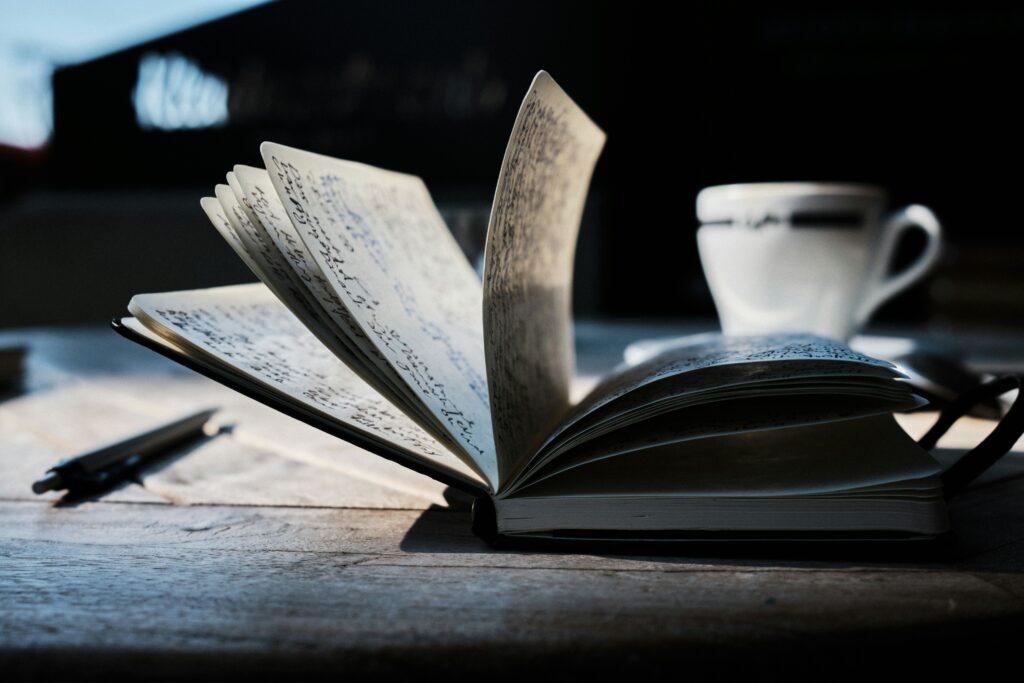
A journal splayed open. To the left of the journal is a pen. Behind the journal is a teacup.
(Image courtesy of Yannick Pulver on Unsplash)

Painfully Obsessive

Looking back, I have no idea why it took me so long to be diagnosed with OCD. 

I know that Obsessive Compulsive Disorder is a common mental health condition affecting about 1.2% of the population in the UK. Symptoms can vary quite significantly in different people, but the main symptoms include obsessive thoughts — unwanted thoughts or images that regularly and insistently enter your mind and refuse to leave — and compulsive behaviors that must be performed repeatedly to counteract those same unwanted thoughts.

It’s one of the more well-known mental health conditions, and yet it was only a few years ago that I began to truly understand it, and realize that I had it myself.

The telltale signs of OCD

In my 31 years on this planet, I’ve picked up a few recurring habits that, in hindsight, were obviously symptoms of OCD. These primarily took the form of intrusive thoughts. 

  • You’ll never be good enough to hold down a job.
  • You can’t make friends in your 30s.
  • You are going to run out of money.
  • You’d better not show up to social events.


Nothing particularly extreme, but enough that it would take a toll on my mental health.

Then, compulsive acts. For me, it was regularly checking my bank account and making sure the doors were locked at night. Again, not particularly unusual, but when you’re doing it multiple times in quick succession, it can start to get out of control.

The stigma surrounding OCD makes it easily misunderstood

The problem with OCD (and indeed with many mental health conditions) is that there’s a lot of unhelpful information I’ve read, so it can be hard to properly understand what it is.

For example, there are many people who believe that OCD just means that a person is tidy. While this is probably the case for a lot of people with OCD, it couldn’t be further from the truth in my case. I’m not a particularly tidy and organized person — I don’t fret about things being in their right place or in a certain order. This is a common misconception, and it’s one that I unconsciously believed for most of my life, but it’s the reason it took me so long to realize that my own habits were symptoms of a bigger problem.

Another issue is that OCD tends to be trivialized, both online and in the real world. I often hear people describing themselves as “a little bit OCD” when it comes to keeping tidy or organized, Most of the people joking about OCD aren’t doing it to deliberately trivialize it, but the constant jokes can make it seem like OCD is silly or exaggerated, and not a serious mental health issue that controls your life. When it sure does. 

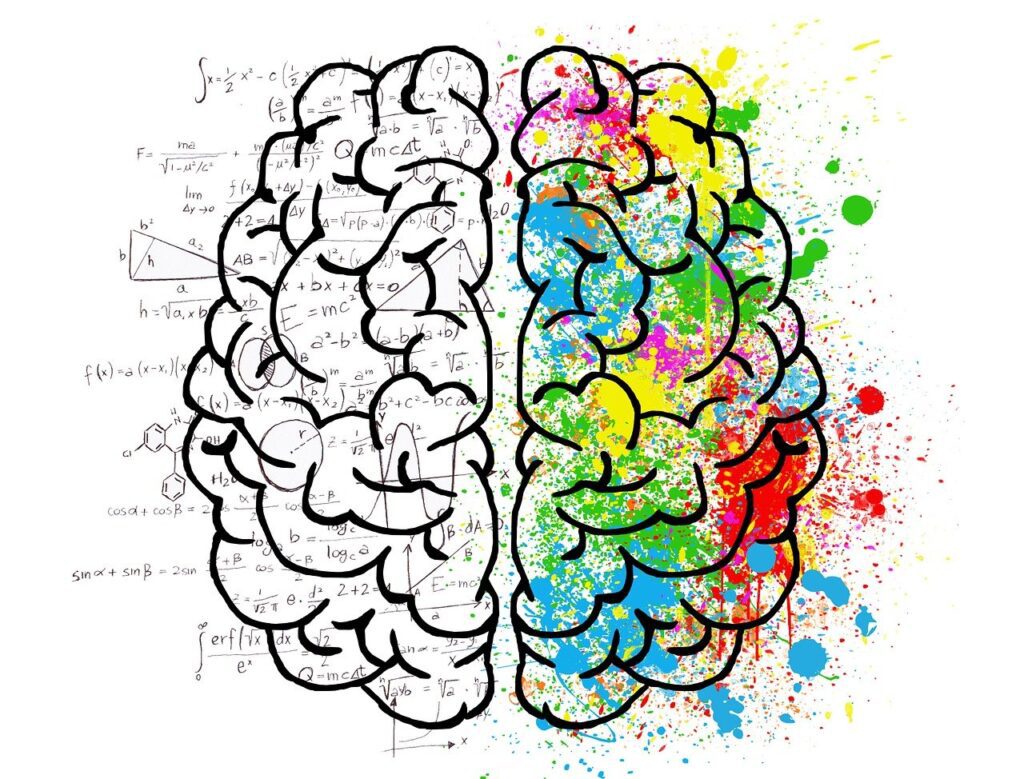
Graphic of a brain. The left has math equations across it, while the right has bright paint splashes.
(Image courtesy of Elisa via Pixabay)

It was the diagnosis itself

The misunderstandings surrounding OCD meant that it was only in 2022 that I finally understood that these mental habits weren’t normal. By that point, what had been a few compulsive habits had snowballed into continuous intrusive thoughts that led to anxiety.

Figuring out that these thoughts were being caused by OCD and getting an official diagnosis from the doctor was a life-changing experience. Fully aware of the patterns of OCD, little by little  I could now recognize and combat these intrusive thoughts instead of being dragged down by them. Since OCD has a way of making you feel like these worries are entirely legitimate, I found it important to reject them as soon as they come up. Don’t spend time deliberating — just immediately reject. 

Things have definitely changed for the better since then. There were times before I was diagnosed when I was sometimes afraid to go to social events, because I was worried something bad would happen like I’d get sick or something like that. After being diagnosed, I was able to see that these thoughts aren’t real, rather the symptoms of an illness. As a result, I no longer feel controlled by anxiety when going out, which has improved my life a lot. It’s manageable now. I am more in charge and not getting sick if I go out. What I’m not saying here is that having a diagnosis didn’t make me completely better, immediately. 

What I am saying is it helped me to cope with my reality. I finally had a label for these behaviors and intrusive thoughts that I hadn’t previously. When something finally gets a name, it’s suddenly a lot less powerful than before. We fear the unknown; when we learn what the unknown is, it’s not that scary anymore. The diagnosis is now known, and I know that there are treatment options available to me. I know I can mitigate some of the issues. That knowledge is freeing.

While it’s impossible to eliminate OCD, I’ve been able to say goodbye to a number of habits over the last few years. No more constant worrying about whether I’ve locked the doors, no more continuously checking my bank account for the slightest bit of movement. There will still sometimes be times when I’m drawn back into worrying, but by and large, I’m now able to manage these compulsions.

The stigma surrounding OCD is gradually diminishing, and more people are starting to become aware of the serious effects it can have on a person. Nevertheless, it can still be difficult to determine whether something is just a run-of-the-mill worry and when it’s more serious. My perspective: If a thought or compulsion is causing you anxiety, it’s always best to see a professional.

Getting an official diagnosis can be life-changing, and the first step towards knowing the reason behind, and treating, harmful habits. It was for me, anyway.

A rainbow of colored pencils lined up, but not exactly so
(Image courtesy of Washington Oliveira via Unsplash)

Why Brazil Turns Yellow Every September: A Nation’s Fight Against Suicide Stigma

Every day, 38 Brazilians take their own lives. Since 2013, every September, the country turns yellow to highlight the urgency of this number and expand the conversation around mental health. The “Yellow September” campaign has become one of the largest global initiatives against the stigma surrounding suicide.

Yet the topic remains globally neglected: according to the World Health Organization (WHO), suicide claims more lives than AIDS, malaria, and breast cancer, but only 38 out of approximately 194 countries promote national prevention campaigns. In Brazil, the most concrete response to these statistics has been listening. 

More than numbers, these are interrupted stories that call for compassion. It’s in the space between silence and a cry for help that initiatives like the Center for Valuing Life (CVV) emerge—a national reference in emotional support and suicide prevention.

CVV Hotline: A Safe Space to Be Heard

Loneliness. We are solitary beings. We’re even born alone. Sometimes we go through good or bad moments, but we don’t always have someone to talk to. This is just one of the situations experienced by CVV’s on-call volunteers, part of a global network of similar centers.

Early Saturday morning. Most people in Brazil are asleep, but Alan Lima, for the past eight years, remains available to answer calls to 188. On the other end of the line, a voice may belong to someone with insomnia, someone lonely, with no one to share life’s difficulties with—or someone experiencing suicidal thoughts. 

Alan explains that he’s received calls from people so lonely they simply wanted to share a joyful life experience but had no one to talk to. He also has a paid profession, but dedicates himself to giving lectures and serving as a spokesperson for the Center for Valuing Life.

Like Alan, CVV Brazil’s volunteers are ordinary people. You don’t need to be a healthcare professional or have specific training to volunteer—just the willingness to listen. After a few weeks of training, volunteers begin answering calls and hearing stories, initially supervised by a more experienced colleague. 

One weekly shift is the minimum requirement. During months when mental health is more widely discussed—like September, thanks to the national “Yellow September” campaign—there’s a need to reinforce the team handling calls.

Volunteers attend monthly support meetings to share experiences and continue their training. Most work remotely, answering calls via software on a computer. Some members even live outside Brazil and still provide services. 

Support is also available via chat, email, and in-person. Across the country, there are 90 physical service centers. Across all platforms, 3,360 volunteers rotate shifts 24 hours a day, 7 days a week. In the first half of 2025, CVV received over 1.2 million calls.

Search platforms like Google and even Instagram help guide people to the organization. For example, if we come across content showing signs of distress, we can anonymously report it (via the “three dots” on Instagram), prompting CVV to reach out and offer help. 

Volunteers have noticed that AI chat platforms, when detecting users trying to use them as “therapists” or expressing suicidal thoughts, have also started suggesting calling 188.

Despite all the benefits CVV provides to society, it receives no government or private funding, surviving solely on volunteer labor and donations to maintain its structure. Most of the financial donations come from… the volunteers themselves! (Yes, besides their time and dedication, they also donate money.) 

The institution, now 73 years old, handled 2.7 million calls in 2024. Beyond the hotline, it’s active on social media and offers over 100 free podcasts on mental health and suicide.

More recently, the organization joined TikTok to reach younger audiences and promote suicide prevention among them. 

With a calm and steady voice, Alan explains that suicide and mental health remain taboos in Brazilian and global society. Often, simply having someone to talk to is already a way to prevent worse outcomes.

It’s quiet work that may seem small, but it holds the immense power of meaningful social support. 

CVV Brazil is part of Befrienders, a global organization.

Grief in an Underwater Volcanic Vent

There’s this childhood  film that, no matter how outdated the CGI clearly is, just seems to get me — even today. “The Adventures of Sharkboy and Lavagirl” made me feel seen in my perceived difference from others my age; I was naturally more of a loner, more of someone on the outside. As I’ve gotten older, however, I’ve come to relate to the movie’s plot through a different understanding —that of losing loved ones.

An unexpected loss times two

At seventeen, I lost my maternal grandfather, Grampy, to stage four brain cancer. A year later, I lost my maternal grandmother, Hud,  due to an incident at her assisted living space during the pandemic. Both deaths were unexpected for our entire family.

I couldn’t process it all at the time. It was too much, too fast.

As Grampy and Hud’s only grandchild, we had a strong bond, and they were an integral part of my support system. I felt their encouragement no matter where I was in life. They celebrated me and consistently showed up for events like Girl Scouts, choir performances, birthdays, and more.

I don’t think I’d be the person I am today if it weren’t for both of them.

I often reminisce on the memories I have of my grandparents, looking through scrapbooks we made together and  watching movies we loved — like “The Adventures of Sharkboy and Lavagirl.” Over the course of the last few years, I’ve begun to process my grief through these actions. I’ve also managed to retain a connection with my grandparents despite their deaths.

Reconnecting with the things I enjoyed when I was younger allows me to experience how life was when Hud and Grampy were alive  — easier, more fun. It’s a temporary escape from the stress of daily life, from adulthood.

Grampy and Hud on one side, Sharkboy and Lavagirl on the other

 In “The Adventures of Sharkboy and Lavagirl,” the protagonist, Max, uses a fantasy realm as a method of coping with bullying and family issues; the dream world is his safe place. Like Max in his dream world, my dreams allow me to  continue my life with Grampy and Hud as it once was.

In my own dream world, my grandparents regularly appear. We carry out everyday tasks together, like shopping, going out to eat, and having Tuesday night dinners at their house. I wish that time was infinite in those dreams. In other dreams, they’re alive, and I’m trying to prevent their deaths to no avail. Those dreams can’t end fast enough.

I now have a constant fear of unexpectedly losing more loved ones. Emergency medical situations are anxiety-inducing, as are travel plans. My  grief is also hard to contain — it overflows, causes me to do things out of the ordinary, and makes me want to punish myself. It’s agonizing, and intensifies my depression and suicidal thoughts. I blame myself for what happened to them, even though I know it wasn’t my fault.

When life doesn’t feel as heavy, I speak about who Grampy and Hud were in honor, much like Max proudly sharing the legacies of Sharkboy and Lavagirl to his peers.

Image of a sailboat floating on the water. Above is a night sky filled with stars.
(Image courtesy of Johannes Plenio on Unsplash)

I don’t know where they went

Mentioning Hud and Grampy in the past tense reminds me of Max in the beginning of the film, when he’s unable to explain where Sharkboy and Lavagirl are. Another character asks him: “Why don’t you bring Sharkboy and Lavagirl to class tomorrow?” Max explains, “They went away. I don’t know where they went.”

Much like Max, I don’t know where Hud and Grampy are or where they went. I’m not religious, nor do I have any particular beliefs about what happens after. In all honesty, I don’t really want to think about in what state they might — or might not — exist.

Max knows that Sharkboy and Lavagirl are real, and he knows where they are when he’s asleep — they come alive when he’s dreaming. At the behest of his family and peers, Max tries to tell himself that Sharkboy and Lavagirl don’t exist, but he finds it difficult to believe. This reminds me of the first stage of grief: denial. 

Immediately after Hud and Grampy’s deaths, I found it challenging to refer to them in the past tense. It was an internal denial of their passing; I just couldn’t accept it.

The aftermath holds so many questions

I daydream often about how differently my life would have turned out if my grandparents were still alive. Would I be happier? Would I still have admitted myself to a psychiatric facility last year? Maybe it’s unrealistic to think their presence would have changed much, but the questions remain for me.

There’s a moment in the film where Lavagirl asks Max to dream about her so her identity will become stronger. She tells him, “Dream about me next, Max, I need to know who I am. Not just destruction, or a simple flame. Dream of me as something good.”

I frequently wonder which pieces of my identity are a result of Grampy and Hud’s love  and which pieces were lost when they died. More questions bound through my brain during these moments.

Would they think I’m a good person? Have I made them proud? What advice would they give me? I’ll never know the answers to these questions, and I never will.

I can’t change the past or bring them back to this earth. However, I can focus on how much love they had for me, and I for them. Those recollections are my safe place, especially when life feels heavy. 

I can’t yet  mend the parts of myself that were broken when they died  back together, but I can hold onto their memory. And like Max, I can dream of them — where life goes on just as it used to.

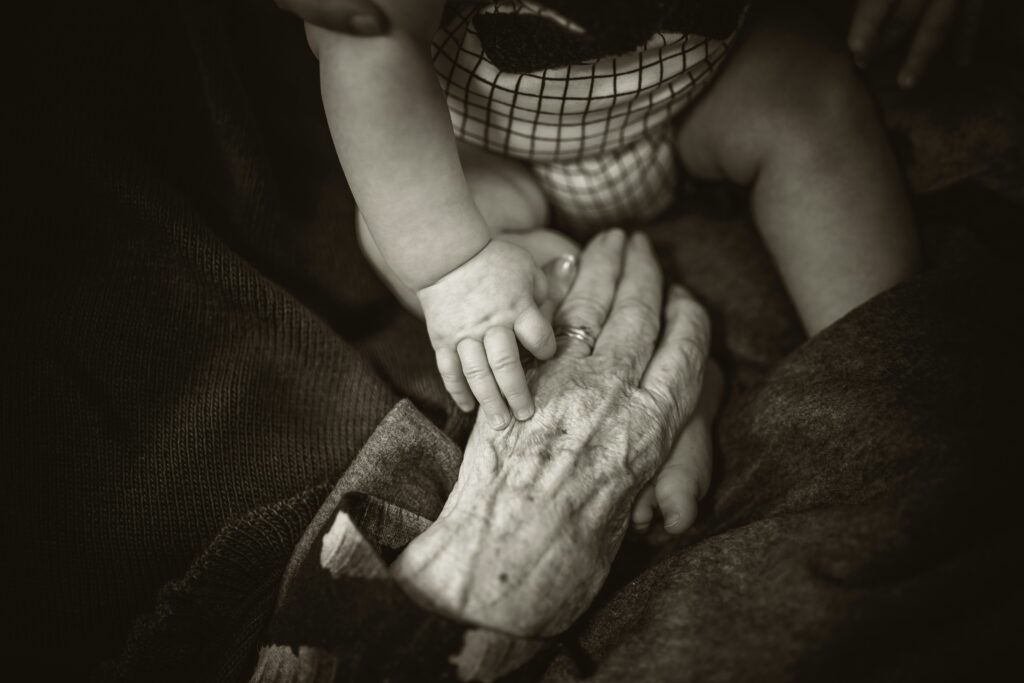
Image of a grandparent holding a small grandchild’s hand.
(Image courtesy of Rod Long on Unsplash)

Well, That Was Awkward

I broke down in tears at the pharmacy this morning.

I cost too much to live. 

I was only $20 off. My car payment of $150 went through the night before. I thought I was in the clear. I had not calculated, however, that I would need to hold an extra $20 in my account to cover my prescriptions.

My medication costs a lot in terms of other people’s money — and my time — just to secure them. I then go to the extra effort of taking them, so as to not waste other people’s money; it would be one thing if I were footing the bill for these meds and didn’t take them, but when someone else is paying for them? Unacceptable.

Second, I take them so as not to spiral into the chaos that is my unmedicated medical condition (insanity) — thus not wasting my time by visiting a mental institution (again). It would also cost more money for that additional visit. And it is already expensive to live: rent, utilities, cell phone bill, gas for the car, rent of the car…. And that’s if you’re normal… but, “no one is normal,” right?

“It is ok to not be ok.” Right?

If you say so.

Life is certainly expensive either way. In addition to the federal government backing the mission that is “Justin’s Life,” my parents give me money to make up for the difference between being a have and a have-not. They provide me with $1,400 or so a month, on top of the $1,500 or so a month I earn by being disabled (what a moral conundrum in and of itself, I must add). With that money, I earn the right to live at the poverty line.

The emotional price

I can provide you with a balanced account from this morning alone. The costs were high — high enough for me to cry as the pharmacists dispensed my medications and politely removed items I could not afford to buy if I wanted to afford my medications. Mouthwash. It upsets me to think that my breath smells, but it makes me feel worse to wake up in a mental institution. So, there is the first emotional cost decision — be unhygienic so it keeps you out of a mental institution or worse. So I cried.

As a 40-year-old, 6’3” white male in Manhattan, Kansas, I am sure I created an awkward situation for the attending pharmacists. They are just trying to do their job in the midst of my existential crisis. I would love to thrive or at least have clean breath, but I have to focus on surviving.

If it costs a lot of money to be disabled, I apologize to the economy. 

But I never met an economy that rewarded me for having emotions so powerful they have to be sedated and subdued with prescription medications. So, how much is my emotional labor worth at this moment? I am breaking down, apologizing for not having enough money to pay for what I need, and these two pharmacists are not paid enough to deal with my shit. So, did I make an emotional deposit with the pharmacists or a withdrawal? 

A lonely corridor with high steel bars and a murky gray sky in the background.
(Image courtesy of Indigite Cruel on Unsplash)

The moral price

That is where the moral costs come into play. Were we in Sparta, my baby body would have disintegrated long ago because I was born dead, and thus I would have no value to add. But I was born in America, baby! No concern for the umbilical cord strangling my oxygen supply; they just forced an oxygen tube down my throat and up my butt to bring me to life, according to some. According to those still living, I was born happy and healthy. Either way, according to the federal government, I am permanently disabled. But I was born in America, baby, so I have the rights of Life, Liberty, and the Pursuit of Happiness. 

Healthcare, however, does not fall under the auspices of those rights. 

I gotta fight for those rights every second. A moral dilemma: be an economic burden on the economy by existing or take your chances without the support structure that allows you to survive. A further moral dilemma is believing you are meant to thrive while knowing it takes much more than your emotional budget just to survive.

The intellectual price

My IQ is high as fuck. Too high, really. According to a former psychiatrist, I connect too many dots… that is a nice way of saying I am paranoid, delusional, and insane. But then again, everything is connected, right? From my left nut to my right brain to the end of the cosmos, everything is connected by the reality of energy alone. That is a good-enough stretch for my intellect to admit, in my opinion, that this morning I cried by design. 

What if I spent the money my family gives me to survive on a business that could make me independently wealthy? Then all my problems would be solved. But as a real one once said, “Mo money, mo problems.” That is the smartest thing I have ever heard, and I say that as someone who has seen what happens when people get the wealth they worked toward. I have enough problems as it is.

And so the economy did what it was designed to do — take labor from me in return for goods and services. The labor, however, was in the form of financial, emotional, moral, and intellectual production; my family came through for me financially, as they always do. I merely had to invest the emotional, moral, and intellectual labor. To survive.

What am I capable of when I begin to thrive? 

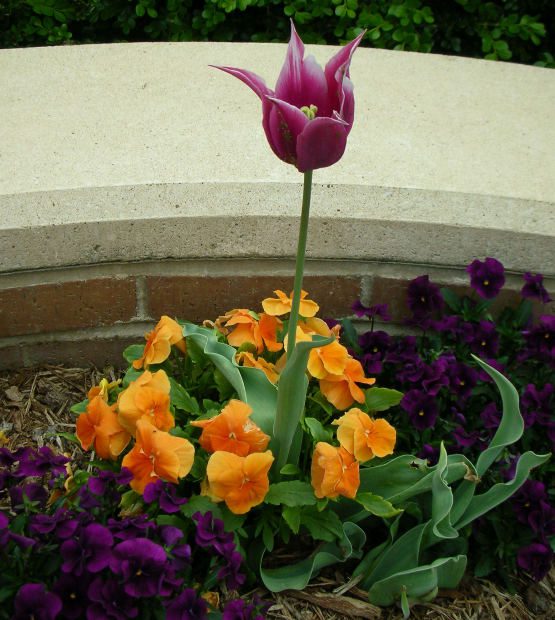
A single pink tulip and orange and purple pansies thriving next to a brick wall.
(Image courtesy of taliesin on Morguefile)

Girl Talk Club: The Feminist Community Giving Voice to the Displaced

Amid emotional collapse and the overwhelming sense of invisibility that runs through so many women’s lives, a simple idea reignited Bruna de Ornelas’s purpose: to create a space where women could truly meet, both themselves and each other.

That’s how the Girl Talk Club was born: an alternative community weaving together care, learning, and belonging in the heart of São Paulo, Brazil.

Through in-person gatherings, conversation circles, creative clubs, and emotionally safe English workshops, the project has become a refuge for creative, intense women who don’t fit into the traditional corporate mold.

Bruna, who holds a degree in International Business and teaches English to adults, went through a deep depressive episode after facing homophobic abuse in the condo where she lived with her wife and young daughter.

Without institutional support and carrying a history of harassment, she decided to build, from scratch, a new way of inhabiting the world and helping other women do the same.

“I could only go back to teaching if I truly believed I was capable of delivering my best work. But I couldn’t return to teaching in the same way. I needed a life project. A legacy. A love letter to myself and to my students,” she wrote in a letter published on Girl Talk’s social media.

Since then, the club has brought women together for free events, expanding the conversation around identity, voice, and autonomy in a city where many feel alone, even when surrounded by people.

The community also became a space for collective English learning, using collaborative formats that break away from traditional rigidity and center listening, vulnerability, and exchange.

Among Girl Talk’s initiatives are:

  • Open picnics for women, with conversations about career, creativity, and emotional support;
  • Writing and artistic expression workshops, inspired by artists like Geloy Concepcion;
  • Secret subscription-based clubs for more complex activities in smaller groups (reading, cinema, art, letter-writing, and business);
  • Thematic workshops and circles with guests discussing self-esteem, communication, and life transitions;
  • Online and in-person events on topics like “creative vulnerability,” “girl-owned business,” and “nonconforming professional identity.”

Today, Bruna leads the project alongside other women and is already preparing to expand into new educational formats while keeping the essence intact: no one needs to perform perfection to learn or to belong.

Girl Talk defines itself as a “space of subversive care,” created by women who are tired of bending to external expectations. 

In contrast to toxic positivity and performative success, the club embraces the risk of deep listening and the courage to reappear.

English Classes for Adults

As an English teacher beyond the Girl Talk Club, Bruna describes her approach as decolonial and gender-conscious. To her, teaching a language is more than grammar and conversation, it’s about repositioning women in the world.

“We go after this knowledge and then feel ashamed to use it. Because those born with access look at us sideways. And that applies to everything: English, art, education. What I offer is more than a class, it’s a reclamation of belonging. The average student believes they don’t deserve to learn English. That’s not procrastination. It’s historic. It’s structural. It’s healing work,” she says.

Bruna explains that her teaching questions who gets access to knowledge and how that access is perceived by society.

“It’s not well seen when we learn later in life. The system values those born inside of it. But we belong at the table too. We just need to craft new utensils.”

Currently, Bruna offers both individual and group classes, shared mostly through communities and organic networks. Her focus is to keep the space intimate, safe, and collaborative without resorting to the performance of self-promotion.

Millennial Gardener

“Hello, and welcome to Gardeners’ World.” 

               Six weekly words from Monty Don that fill me with excitement. 

                      My weekend starts right here. 

It’s Friday night. The housework is done and the fridge is full. I have no weddings to attend, no airport pick-ups to complete, and no job applications to submit. I don’t know where my phone is and I don’t care. Tomorrow I will go to The Garden Centre: my only appearance beyond my property’s perimeter. I won’t buy anything, plants-wise. I will be there ‘for inspiration’. The only permitted extravagance will be a couple of cappuccinos and a couple of croissants in the café, where my couple’s conversation will be of clematis, crocosmia, camellia, and chrysanthemum. Pot to pot, bed to bed, border to border. 

I am a Millennial Gardener and I married one too… 

Dirty at thirty    

I’ve never been hit by a bus, but last week my wife and I completely overhauled our garden, and I feel like I might as well have been. I’m in agony. It took fifty hours over four days, involving three conversations with adjoining neighbors over adjoining fences, two car journeys to collect supplies, and baking one homemade fruit loaf to enjoy during our self-allotted tea breaks.

 From which, as the days went by, our knees increasingly struggled to rise up again — 

  • You’re dealing with someone who’s run half-marathons in his time here. 
  • I’m an ex-personal trainer and amateur boxer. 
  • I’ve played two-hour Rock & Roll sets to audiences up and down the UK, night after night, with a band that recorded an album over eight days, surviving on little other than two hours’ sleep and the fumes from an empty bottle of tequila. 
  • I accidentally converted a seven-mile ramble into a 30-mile expedition in the Lake District when I missed the turn-off back to the … pub. 
  • And I once worked for 36 corporate days in a row preparing for a trial in the High Court of England & Wales. 

But I did all that in my twenties, a time full of exciting and youthful debauchery. The decade in which I’m now horrified to find myself in is one of aches and pains, indigestion tablets, weather forecasts, early nights, and compost-covered knees. I should’ve watched for the warning signs. 

A passion project

Yet, looking down from my window at that garden as I write these words, I am proud. We’ve taken a sad patch of overgrown turf — in the middle of a newly-built estate inhabited by our generational comrades — to a flourishing hideaway from what we’re conditioned to believe is reality.  

Unlike my legal career where the absence of a physical work product left a hole where satisfaction should’ve grown, the garden rewards us with fruits of our labor. Quite literally – our apple tree is about to burst and I’ve spied some baby strawberries hiding from the local birds. 

Our border plots are packed with hidden references to personal memories shared with lost relatives and absent friends. Our sweet peas climb in tribute to my granddad. Our fresh mint multiplies with a nod to childhood Sundays, foraging with my dad for lunch condiments. A peace Buddha keeps watch from the corner, grounded at the base of a crimson tree with love-shaped leaves. This year’s display of dahlias will be a psychedelic wonderland, and our self-built vegetable bed is our own slice of hippie self-sufficiency. The magnolia tree we wrestled from the jaws of demise is a reminder: if there is passion, even the most clueless and misguided forms can lead to greatness. 

(Image courtesy of Lynnelle Cleveland via Unsplash)

Don’t fence me in …

I don’t understand why gardening has such a geriatric reputation. That’s like saying cooking is boring. Sure, cooking is boring – if you’re one of those people whose craziest culinary flirtation is heating up a frozen lasagne. But, like any pursuit, artistic or otherwise, gardening is a blank canvas buzzing with endless creative potential. 

Yes, it’s a place for solitude and wholesome reflection. But it’s so much more than that. It’s a source of constant connection to sit, unbothered by the pressures of a fast, frightening world. 

It’s a place for entertaining, strung, as it is, with festoon lights, like a small stage at Glastonbury, over a fire pit which was, last weekend, surrounded by my wife, my best friend of twenty years, his wonderful girlfriend, and me. Draining bottles of champagne and sharing cigars, playing mad games and acoustic guitars. Remembering times of old as a Two, and now as a Four, making plans for times new. Toasting marshmallows and friendship.

I never thought I’d find myself replacing the vodka-swilling nightclub promise of a Friday night with the dulcet tones of Monty Don. Just like I never believed I’d swap the supple collagen of twenty-five for the damaged cartilage of thirty-one. But with the slow wilting of the body seems to have bloomed an ameliorating of the mind. As we sat and drank and smoked and played and reminisced and conspired, I think our little share of nature, in some way, saved us all. 

(Image courtesy of Ella de Kross via Unsplash)

My Invitation to the Wellness Table

Well, isn’t that perfection?

My own experience with body dysmorphia began young. I was big as a child and, after a significant loss in my life, began quite the crash diet at 16, accompanied by near nightly hour-long runs. Yup. At 16, no dietician or for that matter remotely wise. I did very much lose the desired weight, but the cost on my body and self-image would last long after this driven attempt at taking control of it.

Disordered eating and its traits are prevalent. I’d go as far as to say in an increasingly visual, screen-drenched society, it may be more implicitly encouraged than ever. Johnathan Haidt’s The Anxious Generation gives a comprehensive overview of the unmitigated harm social media has dealt young people. The most pronounced strand is entirely wound around image, and inevitably, with society’s construct of beauty standards; body image. 

With young women definitely the most vulnerable on the front line of this danger, young men on a much smaller scale are incrementally falling to unhealthy self-image standards, too.

Yes, men, too

I’m using the term disordered eating because I contend its traits are easily found. One may or may not be ‘diagnosable’, but a rundown of the diagnoses may sound uncannily familiar. Orthorexia would be defined as ‘clean eating to an obsessional level’. Bigorexia would be defined as a ‘monomaniacal pursuit of desirable body definition with clean eating’, particularly prevalent among men. Contemporary gym culture seems to be a hotbed for both of these with an online environment fueling a culturally accepted fire.

Night Eating Syndrome is a consumption of 80% of a day’s calories at night. Well, I’ll openly admit after a night out with enough beers in me I must have done that more than once. Binge Eating Disorder can be characterized as always on and off diets, always going on a diet tomorrow, finding it extremely difficult to control eating outside of three meals per day. 

Let me be clear, a diagnosable condition is an urgent matter in need of professional intervention. Yet, I wholeheartedly believe the traits of many of these patterns are easily found among many millions.

I’ve always believed mental illness to a dangerous extent is projected in the greater public psyche to some ill-fitting cartoon. It’s the ‘outsider’: they’re male, they are muttering to themselves, their eyes are wild, they’re either wiry or huge so an explosion of violence is imminent. Yet statistical reality points in the opposite direction. The highest mortality rate of any psychiatric disorder belongs to anorexia nervosa. It’s not a guy who’s an overt danger to those around him, it’s a woman who’s a danger to herself. A young woman, barely noticeable, who wants to avoid confrontation, who doesn’t want to take up space, who wants to be small, who wants to get smaller and smaller till she disappears altogether. This young woman is desperate to take control and her means of doing so become her lethal enemy.

My contact with ‘The Underworld’

Working for an eating disorder program was a juxtaposed experience. Half was pure inspiration — witnessing vulnerable young women support one another as they hauled themselves out of hell one day at a time. The other half was a nigh-on Orwellian affair — abetting strict, unnatural conditions to bring acutely unwell individuals back to health in profoundly punishing ways. We would accompany them for three meals and two snacks across a day at the ‘Wellness Table’. People who desperately psychologically did not want food in their bodies. They say bringing an addict out of an addiction is like caging a tiger. The table was more like bringing a tiger out of a cage and taking it for a walk several times a day.

Returning home having worked with the eating-disorder patients was a singular experience. I have no problem admitting I usually came home either feeling somewhat shaken or stressed. In the same facility, I was regularly working with alcohol and drug misuse treatment, but that was rare to leave a mark the way this work did. There was a haunting quality to this work, to be engaged with people whose mortality was in question. Who at times would present as if they were just young girls ‘playing up’. Who could be genuine allies to each other’s progress, or need separating for being a danger to another’s wellness. It was truly difficult work to not take home and feel full of fear or frustration. 

Any resistance in their work could be a win for an illness on board that wanted them dead.

The most accessible psychology I found at the time was Carl Jung’s. In very broad terms, his psychoanalytic school of thought is half medical framework and half literature of mythology and folk tales. His psychological contention of archetypes and symbols in psychology has been greatly expanded and explored by many, most notably by Donald Kalsched. His work Trauma and the Soul holds incredible accounts of mythic symbology and archetypes found in depth psychology work. Angels, demons, gatekeepers, child gods continually recur in the dreams and imagination of people who dig such depths. What I never expected was to get a genuine sense of such hallmarks right in front of me, in reality.

The Wellness Table brought the most staggering encounter of transference I’ll ever have. Coming to the end of any of the three meals a day would leave me either exhausted, furious, or wired. This was not my energy, this was not my emotional state or thinking, it belonged to the brave young women on the program. But just 45 minutes of sharing that terrain with them left me in an entirely different and uncomfortable space. Some glimpses, sometimes, at their most resistant and unwell, when what was killing them was winning the fight, they would be archetypes walking the earth.

After having spent enough weeks witnessing these people take on their greatest challenge, the whole experience changed. How they appeared and felt to me was now different. The depths of just how unwell these young people were was staring me in the face. Bodies hardly sustaining their own running. 

On a slow track towards death and barely able to take that which would keep them alive. These people were liminal. Neither quite alive nor exactly on their deathbed. I was face to face with the Undead. 

Did the overwhelming majority of clients I worked with leave the facility in better health of body and mind than when they arrived? Yes. Many had made friendships during their stay that I’m confident lasted beyond. I would also be remiss to imply that every last patient was suffering from anorexia, as it wasn’t so. 

Yet in all cases, they had that flicker of something mythical, much of it stirring to witness. Embers of Promethean fire and a courage worthy of Athena herself. All warmed with hope. 

(Image courtesy of Aedrian Salazar via Unsplash)

Inmate or Guard?

I got the rarest of opportunities. Something of a fly on the wall in the most delicate of environments. As a kind of underling of a therapy team, an intern in a rehab is a unique kind of nothing; a cipher of experience, neither staff nor patient. Witness to anything with hardly any agency at all. “Inmate or Guard?”I was once asked by someone easing into their long-term stay. In truth, I wasn’t either. I’d find myself continually second-guessing the sense of service in my role. 

One of the organic joys was watching communities form. Total strangers with their poison taken from them, being asked to come together. There is absolutely nothing more harmful to a recovery than isolation. The two pillars upholding any active addiction are isolation and shame. One tends to feed the other in a vicious cycle. Getting to witness people historically riddled with these but now seen and heard, finding a sense of togetherness. was a genuine privilege. Being a trusted presence, fostering a sense of safety where this could happen, was hugely validating.

Yet there was always push and pull. Wanting the best for people and to see their growth could be a difficult thing to regulate. Being the guardrails and not anything more could be a difficult post. So much could be on the line for those giving their stay at the rehab the most long-lasting value. People, who over time and conversations, would come to reveal all that was glowing and admirable in them. Witnessing exactly how communities would form and bond could also be uneasy. What was camaraderie and what was corrosive? What was the place of gallows humor and a visible sense of mischief in an environment designed to bring people to reality?

Nevertheless, reality would arrive to puncture any floating above it all or skirting round the edges. 

Between process groups, therapy sessions and psycho-educational workshops, reality was coming after them day after day. In most cases I would witness, seldom would anybody leave without a sense that they had a problem of greater scale than they’d previously wanted to believe. Those staying had very real circumstances, phone calls could be worth the world, residents had families hanging in the balance.

Bruised and wounded

One of the several psychological interventions offered in the program was a “collateral letter”. The letter was to be read to a person staying at the rehab during a process group and it was to be written by their closest ones back home. Designed to be a confrontation with reality, not a lambasting or shaming. More a form of inventory of how much harm has been caused to those who mean the most.

One Monday, to a vibrant community of incredible lived stories and contagious characters, a collateral letter opened their week. It was thunderously powerful. The words written and read were searingly heartfelt. They were words laden with love, but a bruised and wounded one. The message was clear as day. The person the letter was written for was dearly loved, with children, a wife, a family to hold on to. This individual meant everything, but if they couldn’t leave alcohol behind, the mother of their children would have no choice but to protect the family and leave them behind.

The therapist sitting next to me was clearly moved. Breaths so deep I could’ve credited them to Tony Soprano. I was far from immune, sitting on a bubbling well of emotion that I needed to keep buttoned down for propriety. The person reading the letter was moved to tears and rightly so, she would lead the feedback as well. What she was reading mirrored her own circumstances, she’d spent the last couple of weeks clinging to phone calls on the present danger she could lose her own family. She would be seconded in the feedback. Another individual in the exact same present danger; grasp recovery or risk losing your closest. Soulful and robust, they underscored the gravity of matters to him: get a hold of yourself, get on with your recovery, words aren’t words alone, this is reality.

It was as if just for that 20-minute spell, somebody stopped the clocks. Time paused, reality was here and nothing else mattered. An individual was being handed truth in a form they’d never have again. A phosphorous, molten truth of priceless value. Where else could something with such honesty be handled with such care? 

On that Monday, I felt an immense sense of service. To be sure, I was just a small cog in a much greater machine, but that Monday I walked out feeling a part of something profoundly valuable.

Monday and Friday

The main thing that the therapy team hammered into interns and Healthcare Assistants was boundaries and just how important they are. Maybe I didn’t get that down, maybe I had a degree of personal investment in outcomes I could have handled better. There is always a danger in emotional resonance with matters one can’t control. When I came back that Friday, there was a different feeling around the place. The air was thick and stilted, something was off. Just four days on, from one of their several random drug tests, someone in the community tested positive for cocaine.

The message from the therapy team was clear: when there’s using, there’s no growing. The healing back to square one, the value lost, the formidable message of Monday nowhere to be found. “The Community is Unwell”.  I was gut-punched. The intervention couldn’t have been any more potent, the stakes any higher, yet mere days later we were staring down the barrel of families left in tatters. Addiction blindly bulldozing reality. 

It would be the longest day I’d spend interning at that rehab. It didn’t belong to me. It really wasn’t my hurt but I couldn’t deny the sting of it. I was left with a painful doubt — what use did this work have to these people? What was my service? 

(Image courtesy of Jakob Owens via Unsplash)