Family of Origin

I was a twentysomething, twentysomething. Lost and wayward, yet somehow granted the occasional tentpoles of good people to guide me along the way. I was nudged by one of those people at the time to go work for a rehabilitation center. I was raised in an alcoholic home and, like many who come from such beginnings, memory is a blur to me. A roof beam here, an adult’s face there, maybe a friend’s house. But the older I’ve gotten, the more I can see how things were.

The adults aren’t my parents, the roof beam doesn’t belong to a place I recognize, and the friend’s house isn’t really a friend’s. I was shifted around a lot. I was the youngest of my family and because of this, I was kept away from the disaster zone. Like many, I’m sure, I was left with a lot of questions.

I knew the “how” and I knew the “why,” but not the “what” exactly. What is the profile of a person? What is in the architecture of a person who loses their motherhood for the bottle? It’s a fall from grace that many don’t want to know exists. Women, I know, have described motherhood as something “sacred.” What exactly is the making of a supposed transgression?

While it originally brought some amusement to tell people that I was interning at a rehab, it would turn out to be an incredibly rich, spiritually nourishing experience. Moreover, this voluntary engagement would soon turn into employment. At the start, my placement was once a week and each day was illuminating. Shadowing the therapy team, I was sitting in on group therapy sessions, handovers, and supporting clients during their stay.

There’s a prevalent cultural misconception about what a rehab is and what exactly it does. These places don’t and can’t fix people, neither do they heal or get rid of addiction. In clinical terms, twenty-eight days is hardly a pocket of time at all. What a rehab can do and what I’ve witnessed it do, is bust denial. It can give appropriate interventions in the correct environment to assure that there are no illusions about the scale of the problem. A rehab can give a person abstinence and the tools to uphold it. It can show the way for a lasting sobriety. It is entirely up to the individual if they want to take it beyond their stay; the choice can only be made by them.

Across the months, there would be clients passing through for twenty-eight-day stays, or longer. Treated as a collective, they would be known as the “community” by the therapy team. Within a month it became clear I was in the right place. Each community passing through included at least one woman in her forties who had become alcoholic. More curiously, father, brother, lover, son… they all had a significant “Oliver” in their lives. So who were they?

They were clearly people giving their all. Perhaps too much, they were all remarkably hard on themselves. They were all either the only girl in the family, or the youngest, having a profound sense of being the runt of the litter. They were all from homes where doing one’s best was required and yet having one’s feelings acknowledged was seldom. They were all from formative environments where anxiety could be felt in the air. They were all able to speak of a mother or father, sometimes both, that they just couldn’t reach.

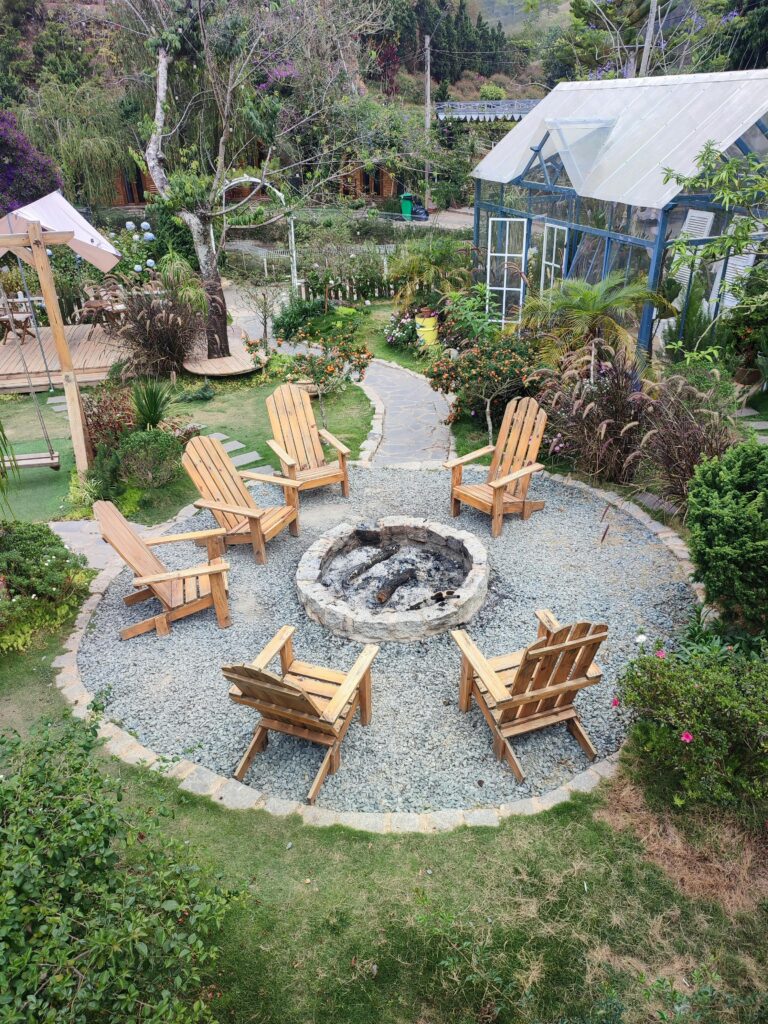
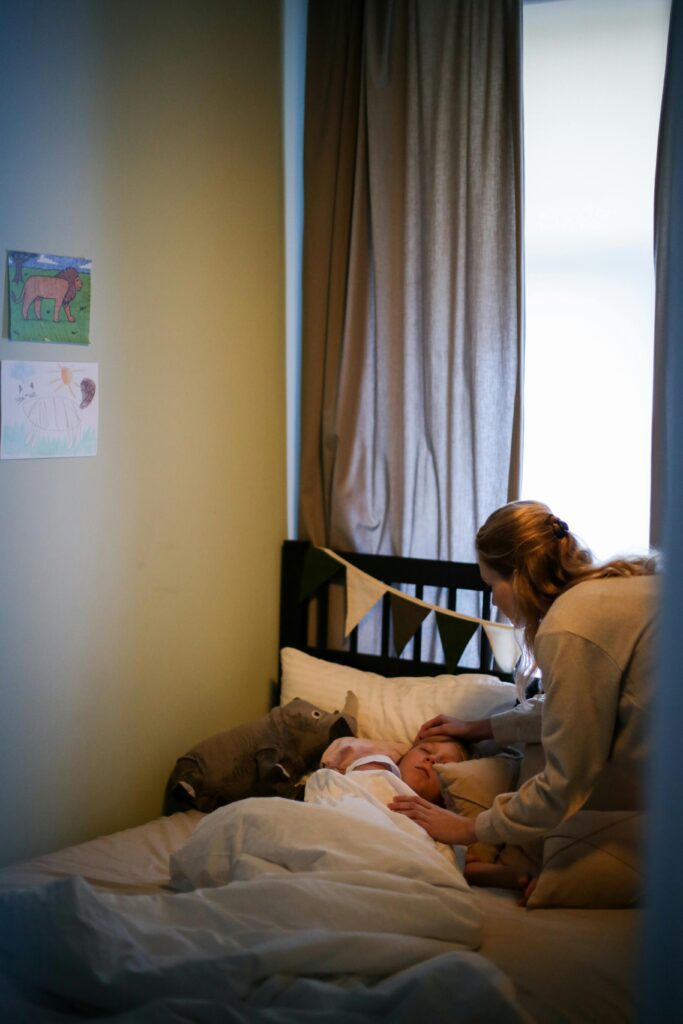
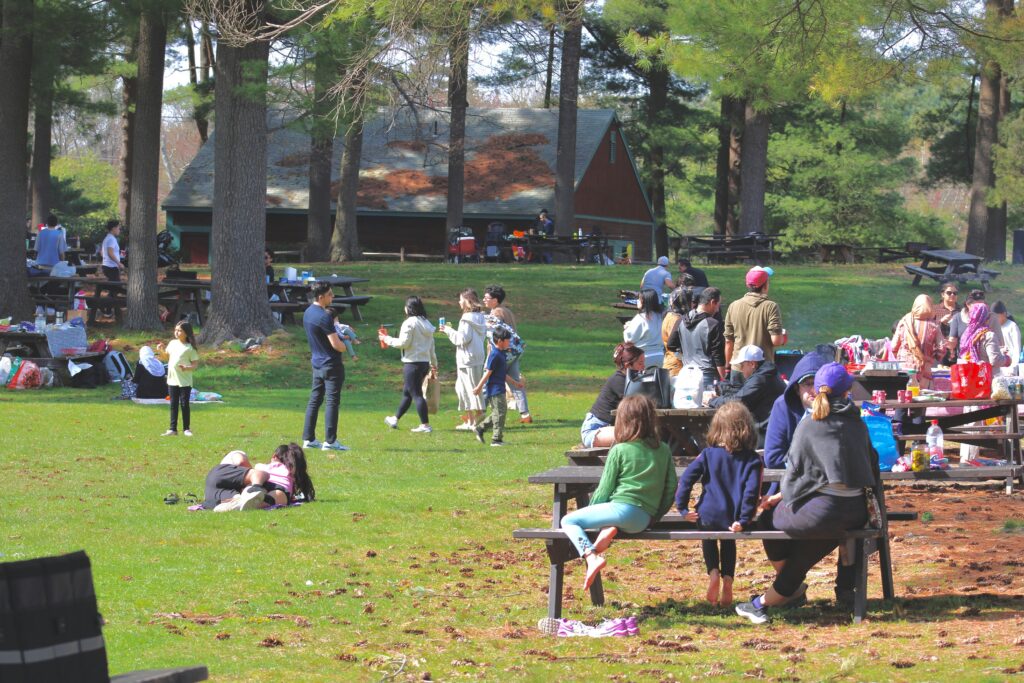
(Image courtesy of Bùi Hoàng Long via Pexels)

From school rebellion, to university freedom, to home life and domesticity, each was profoundly affected by their actions letting down others. Each understood their drinking habits but hadn’t realized the extent of this pervasive spiritual anesthetic. Each one of these women felt unseen or unheard as perennial perfectionists with sewer-bound self-worth. Something had to give.

Yet I look at these themes and can’t help but figure… it’s no cosmic curse. It’s not a smiting from the Almighty. To be sure: some had a genetic predisposition, a family disease, but some didn’t. The women in question were remarkably warm, provincial, and familiar figures. You can picture them loading up their shopping in a supermarket car park. Or waiting and chatting with fellow parents at the school gates. Maybe catching a coffee with friends, prams and/or little monsters in tow. Perhaps finding an oh-so-rare moment to themselves at a nearby salon. These women aren’t anomalies; they’re all around us everyday.

Transgression or falling? I’m not so sure. Addiction has an eerie ability to breed denial and minimization. From what I’ve seen, it’s a playing-out of matters we can’t control, a hard turn of misfortune, a flicker of fate away. 

My Healing Dance

Life, like a tapestry, weaves together moments of joy, sorrow, and resilience. Yet, sometimes, we find ourselves ensnared in the knots of our past, unable to move forward. Seeking counseling became a way to unravel my knots and discover the beginnings of release.

I carry with me unhealing scars, wounds that refuse to mend. 

Instead of finding solace, I bottled up these scars, sealing them tightly. When I’m at my lowest, I uncap the bottle, and the pain rushes out as if the wounds were fresh. 

One morning, I woke up with a heavy heart burdened by old scars. Unable to bear it any longer, I decided to seek counseling. I found an online counselor, and during our virtual session, she emphasized the essential nature of healing. “Forgive yourself,” she urged after I confided in her. “You’re too hard on yourself.” I questioned her words, pondering why I am so harsh on myself and how I can find forgiveness. Perhaps laying out my scars and discussing them will be the first step towards healing. Was the first step.

Craving love

The abandonment by both my parents has left me deeply scarred, but it was my mother’s absence that cut the deepest. I yearned for her love more than anything else, and this longing fostered a sense of not being wanted with a painful feeling of being second best. 

I often told myself, “If your own mother doesn’t love you, who will?” Perhaps this is why I accepted unfair treatment, simply craving love. Now, at 22, I find myself unable to define what love truly is. I’ve never uttered the words “I love you,” nor have I heard them yet from anyone else. Tragically, my mother passed away without ever expressing those three simple words.

My inner child

“Do you have someone to talk to?” my counselor asked. 

I replied, “No, I don’t trust anyone.” 

Perhaps it’s because I don’t want to reveal my scars, as it’s become clear to me that my reluctance isn’t about a lack of willingness. Instead, it’s rooted in the fear of what might happen if I trust someone and share my vulnerabilities. What if they, too, abandon me like my mother did? I find myself caught between two versions of myself: the 22-year-old who seeks healing from the sense of abandonment, and the scared little girl who still resides within me. How can I convince that inner girl to forgive herself when she doesn’t even know how? To her, forgiveness feels like admitting fault, as if she did something wrong. But is it my fault that my mother abandoned me? The scar of abandonment will take time to heal. My 22-year-old self is ready to move forward, but the wounded girl within me is not quite there.

The now version of myself blames her for being so, and I carry the weight of self-blame. Should I have forgiven her? 

My inner child insists that my anger was reasonable because she never apologized. But my adult self reminds me of our given philosophy: forgiveness is for us, not them. Now I’m grappling with guilt. 

Perhaps my inner child is right — she was the elder one, and she should have asked for forgiveness. 

Abandonment scars are not the only ones I harbor. I am a home for many more. However, abandonment is my deepest scar. Counseling has pointed to a few issues that I need to deal with personally before moving forward on this healing journey. The little girl in me wants to be loved, and cared for. I tell myself: “Mama is gone now, little girl.” Yes, we grieved, and yes, we loved Mama even though we were angry at her. But now it’s time to love ourselves and stop expecting it from someone else. 

I promise

Tears burn my eyes, and my heart swells with the realization that I should begin to love myself. My counselor was right — I hate myself, and I didn’t realize it until she pointed it out. From today on, I promise to try and love myself more. Maybe loving myself is the second step towards a sense of healing. The pain is too much for me to handle now, but I promise to love myself and care for me. “Little girl, the time is now to take this first step”. 

Jumbled healing

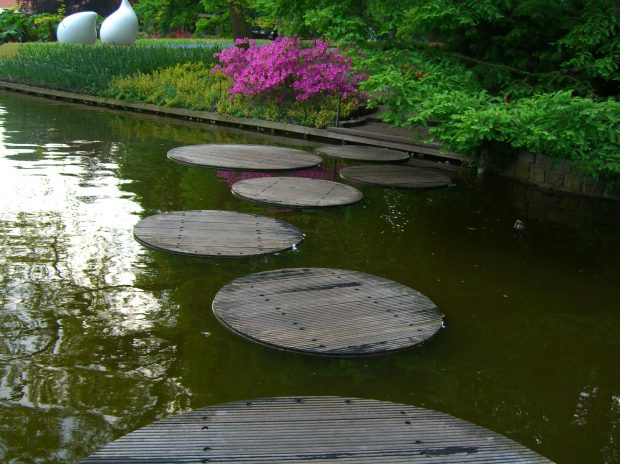
(Image courtesy of Hilarycl via Morguefile)

I’m discovering that healing isn’t linear; it’s a lengthy journey. Sometimes, you don’t even know where to start if you never realized you needed healing. 

But I’m embarking on this path now. Healing is like a dance — the music changes, but the steps carry on. Two crucial steps I’ve learned are self-compassion and acceptance. By acknowledging the scar and embracing self-compassion, I’m willing to heal. I’m discovering again and again that healing isn’t linear, but a jumbled journey. 

I’m willing to heal.

Covered Mirrors and the Souls of the Dead (November 2)

It may be strange, but my grandfather died between the 1st and 2nd of November 2000. He, who had always been full of life and joy, had been confined to his bed for two months, weakened by a very aggressive cancer. Not even two intensive surgeries had been able to remove it completely. The doctors had always told us not to lose hope, and I had deluded myself into thinking that his recovery was truly possible.

I was sixteen years old and I didn’t know the true meaning of death. Death had seemed like a distant or fantastical concept, something to be read about in a mystery novel or seen in a movie, but reality is different from fantasy. Especially when it comes to the people we love.

That night, death took my grandfather in his sleep and, although we had been expecting it for a while, knowing never stops the pain. When he stopped breathing, the only people in the room were my grandmother and her sister, Caterina, who had volunteered to take shifts with my parents and my maternal uncle and to relieve my grandmother of some of her daily responsibilities. It was she who noticed that my grandfather was finally free from pain.

When I heard the landline phone at home ring, I immediately understood from my mother’s voice that the inevitable had happened. We quickly got dressed and went to my grandparents’ house, which was in a seven-story condominium not far from ours.

I didn’t cry on the way. There was still something unreal about the event. But when my grandmother greeted us in tears and led us into the bedroom, where I saw my grandfather’s waxen and motionless face with my own eyes, I was undeniably confronted with the reality of death.

As my mother sobbed, I felt almost paralyzed. Suddenly, Aunt Caterina put her arm around my shoulders and whispered softly, “You’ll see, your grandfather will be at peace now. But you have to help me do something.”

I looked at her, perplexed. What was there to be done?

“We have to cover all the mirrors in the house.”

I thought she had gone mad as she took me by the arm and slowly led me into the hallway. Dazed and with my heart pounding, I followed her into a small storage room. She grabbed some large dark blue dish towels and a sheet.

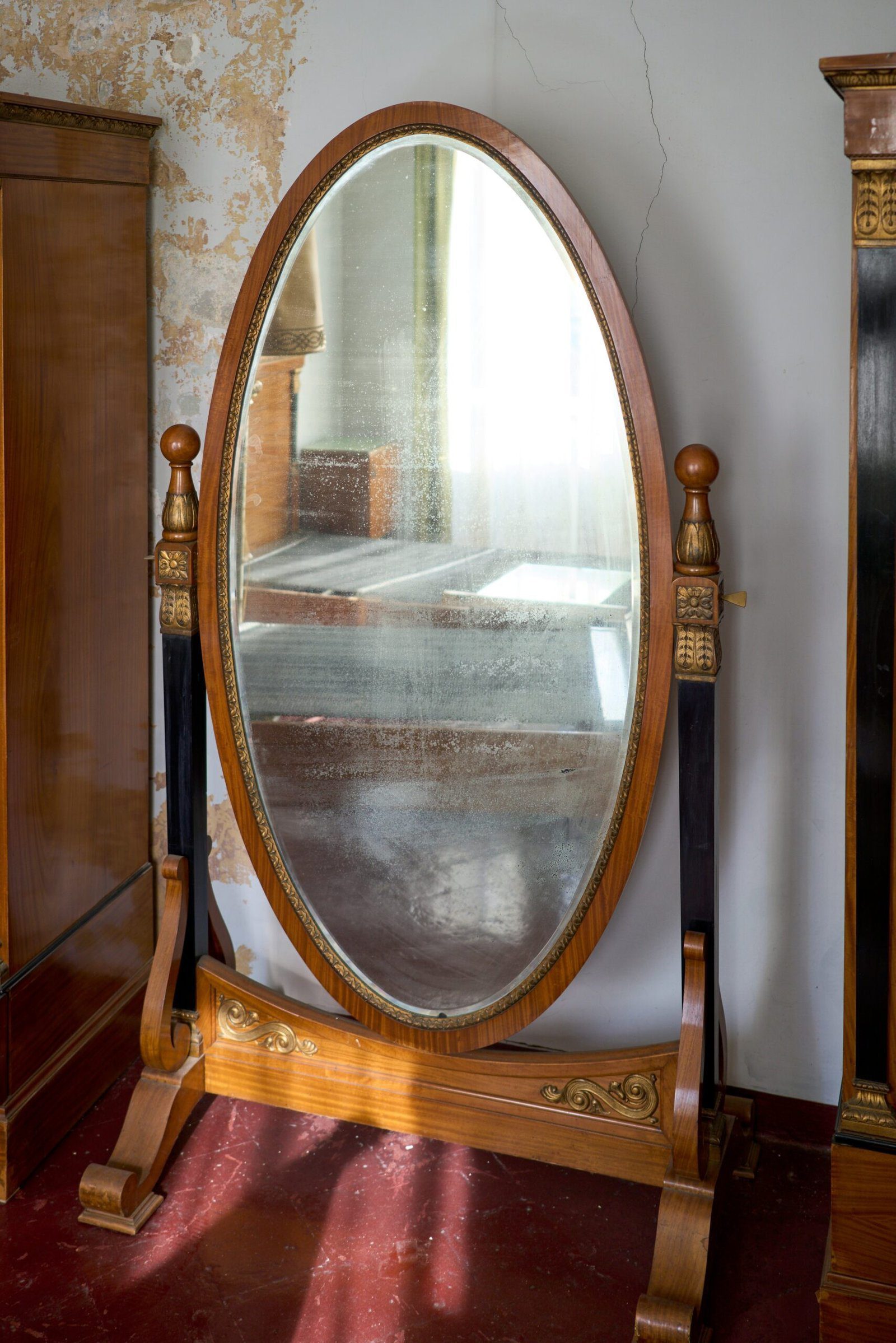
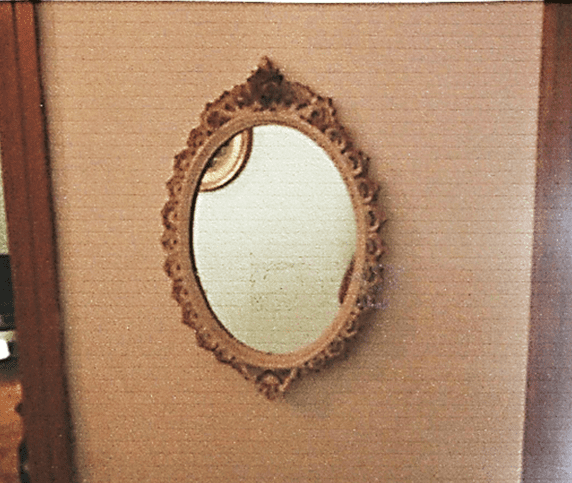
There were three mirrors in my house. One mirror in my grandparents’ bedroom, one in the corridor, and a rather large and antique one in the dining room that had been passed down through three generations.

(Image courtesy of Viviana De Cecco – November 2000)

When we entered the bedroom, Aunt Caterina asked me to help her tuck the edges of the cloth into the upper corners of the frame so that it was completely covered. 

It was this way that I discovered one of the funeral customs that are still deeply rooted in Sardinia, in all of southern Italy and in various cultures around the world. There are traditions so old that no one knows exactly when and where they originated. Covering the mirrors when a person dies is a custom that has its roots in the mists of time. 

Aunt Caterina explained to me that covering the mirror with a cloth prevents the soul of a deceased person from being frightened by seeing its own reflection. In addition, to prevent the departing soul from getting lost, it is appropriate to close all the windows, draw the curtains, leave some lights on and leave the door open to facilitate its journey to the afterlife.

The mirror is often seen as a portal between our earthly world and another dimension, and the wandering soul of the deceased, drawn by the glow of its reflective surface, may become trapped there forever. Instead of leaving its mortal remains, it could potentially drag the souls of all the living people reflected in the same mirror and haunt the house of the deceased for all eternity.

I remembered all the times when, as a child, my grandfather would sit me on his lap before a family celebration and make funny faces in the dining room mirror to make me laugh. He was always ready with a joke, and the thought of not seeing his smile again tore at my heart. Seeing those mirrors covered with those big dark cloths, the typical color of mourning, felt like a sign of the end. They reminded me of those abandoned houses where life had faded and happiness has been lost forever.

These dark beliefs are much more prevalent in the inland rural areas than in the cities. That’s why my aunt’s words, coming from a rural village where certain superstitions about the dead are never underestimated, touched me deeply. Even though those ideas may seem quite incredible and ludicrous, there was something both frightening and reassuring about that belief. It was comforting to think that my grandfather’s death wouldn’t be the end, and that we had helped usher in the beginning of his journey to perhaps a better place.

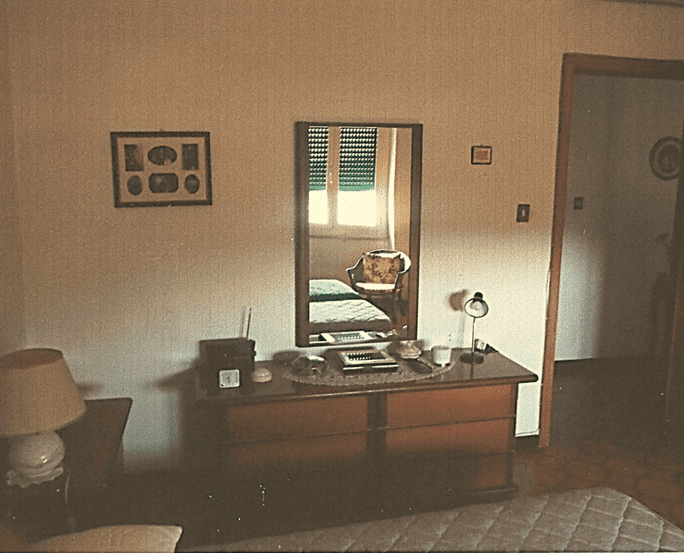
(Image courtesy of Viviana De Cecco – November 2000)

Even today, I feel torn between rational skepticism and doubt that there may be some truth in these ancient beliefs. Perhaps our ancestors were much wiser than us modern people. 

The Greeks and Romans were among the first to seek glimpses of the future in reflective surfaces. Who hasn’t broken a mirror and heard: “Now you’ll have seven years of bad luck”? The Romans believed that a person’s life was divided into seven-year cycles. Breaking a mirror would bring bad luck simply because it represented the souls of the living. Likewise, for the Egyptians, mirrors weren’t just for cosmetic purposes among the wealthier classes, but they also had funerary significance. It was believed that their radiance was linked to the sun god Ra and was a symbol of vital regeneration, which is why they were often depicted in the reliefs of the tombs of high dignitaries.

While doing some research on the internet, I discovered that this belief is also widespread in the Jewish religion. In the sacred text called the Talmud, there’s a phrase that several writers have quoted in their novels that refers to the human relationship with mirrors: “We do not see things as they are, we see them as we are.” This phrase makes me think that a mirror shows us our physical reflection on one side, but also reveals the nuances of our gaze, where all the feelings that lie beneath our exterior are hidden.

When we look at ourselves, we often say that we have a lively gaze. Where does this vitality come from? What can we call it? Is it the soul that we see? What is hidden within us that the mirror cannot really show us?

When a mirror reflects a dead person, there is no gaze to interpret and no movements to reproduce. Think of the vampire, who has no reflection in the mirror precisely because he is dead. Or consider exorcism practices, which sometimes use mirrors to chase demons out of the possessed.

So how do we know what is beyond the reflection of a lifeless body? I believe that superstitions are created to find the answer people have been seeking for centuries in their search for the meaning of life and, above all, its end.

Now it seems to me that this ritual is a demonstration of the living’s love for their loved ones, a testament to their desire to protect them. No one can know for sure what really happens the moment they depart this world, just as no one can know if there is emptiness or light.

What is certain is that, on that night when I returned home with my parents, I looked in the mirror in my room and wondered if my beloved grandfather, who had always been a guiding presence in my childhood, had found peace.

When my Aunt Caterina died three years later, there was no need to cover the mirrors. She died of pneumonia in the hospital, in that sterile environment where death seems even sadder. Everything happened slower with her. I had time to say goodbye to her and to hear that she had no regrets. She had been happy and was going in peace.

At that moment, standing at her bedside with my relatives, I began to believe in the soul. I believed it could be found in the looks of those who are with us, in their words and in all those gestures through which every human being communicates with his fellow human beings.

The Price of Addiction

Alcohol abuse runs in my family. 

It seems like a curse passed down the generations.

That said, I also struggled with substance abuse in my early adult life. 

It has been a battle not to run to the bottle when I am feeling lonely or unsuccessful. I do not want my generational curse to overpower and ruin me. Hence, I fight for a better future every day.

A summer to remember

One summer, I was feeling extremely lonely and defeated. I was failing community college. I was having relationship drama. My mom was in Pennsylvania with my dad and my friends were nowhere in sight, so I turned to wine.

I was also on medication for my mental health. Mixing those with wine was a huge risk. There wasn’t a single day that summer when I was sober. As a result, I got a speeding ticket, three points on my license, and had to join a driving school.

For the first time, I felt completely alone, as if I did not have anyone to turn to. And I think that is why a lot of people drink. They drink not to feel or to numb their feelings of hurt and despair. Or, as in my grandma’s case, to forget, for a while, the mental trauma of the past

My familial alcoholic traits

My dad’s family is all alcoholics. They drink in secret and judge people for drinking at a bar. It’s kind of a double standard mindset- like the saying, “People who live in glass houses shouldn’t throw stones.” My dad is not as alcoholic as his mom and siblings, but he has some narcissistic traits.

My grandfather died of an overdose at the age of forty. He was a heavy drinker and physically abusive. My grandparents were divorced by then, so my grandma raised five kids by herself. My grandma and dad found my grandfather’s dead body in his apartment, surrounded by empty beer cans and pill bottles.

My aunt’s husband walked in the same footsteps as my grandfather. He was only in his thirties when he died of an overdose. He was found in his car at his workplace. Fortunately, he was not driving so the only life lost was his.

My way of ending the toxicity 

Some people drink to celebrate a good time but mostly, I think, people drink to numb the pain and avoid feeling certain emotions. 

I know because I did the same. I drank to numb my childhood pain, to numb my feelings of loneliness and despair, and to forget about life for just a little while.

I stopped after that summer. The reason was, firstly, my mother had returned, and I was no longer alone. Secondly, being fully aware of the effects of addiction, I never gave in completely to the high, having learned from my grandfather and uncle. 

I lived in the present moment, so I could change the outcome of my life. I wanted a better future for my kids, so I chose therapy instead of the bottle. 

This is how I broke the generational curses that haunted my family.

Whispers To My Starry-Eyed Crush

There’s no time I can imagine myself not thinking, 
Of the “New Girl” euphoria theme song not ringing. 
Every time I close my eyes I’m daydreaming, 
‘Cause I would never be the person I was without 
Your human being. 

Pinky promise, don’t disappear? 
I know I might be your biggest fear, 
I know I don’t make things kind of clear, 
But I would hate to admit, I shall be a lover to volunteer. 

Funny how sometimes you just find things 
And I didn’t even need to find our invisible string, 
You steal my words from my mouth like I’d never exist, 
As soon as I fall into, my heart won’t resist. 

The fact that you were born in the same constancy, same instancy, 
Makes me want to have my fingers crossed- for me to be one who is hurt, 
And you know that my eyes aren’t able to not flirt. 

I sound a little bit exaggerated, 
It’s because you make me sound so overrated,

My laughs just float when I’m around you, 
Making me nervous to imagine- 
You were the person I was  
Looking through. 

It sounds clingy, 
However, can you be my sweet nothing?
My hands never lie, 
Like I would never be by your side, be aside.

Moving Away From the Cliff’s Edge: A Mum’s Story of Her Child’s Mental Health

It is no understatement that the last few years have been difficult for various reasons. It’s almost too obvious to state that we, in the West, consume a lot of environmental, social, and political information that clogs up our web browsers and mental state.

Meanwhile, the external world provides further insights with its doom and gloom, and you wonder what this does to your internal world and, more importantly, the internal world of your dependents.

Impact on my son’s world

My son is almost twelve years old. He had rolled through lockdown like most kids his age; with an interest in what is happening in the world and not attending school online.

Days turned into weeks, which turned into months. We were let out briefly, then locked down again.

We didn’t force homework on the kids; we ate meals together and walked around the neighborhood, trying to follow the advice of mental health advocates by maintaining a calm atmosphere.

Eventually, we all returned to our pre-COVID routine: school, work, supermarket shopping, and socializing.

My son entered a new school, a major leap, as he was now a little fish in a big pond. Senior students were young men dressed in school uniforms towering over him. He was excited and wanted to go, especially since many of his friends from his primary school were joining him.

Things went okay; there was lots of new stuff to remember, which was overwhelming for any kid. 

But, as the year passed, he stopped communicating, wanted to stay home more, and got irritated when asked to do his homework. Children undergo emotional cycles that coexist with physical changes, which we understand. It’s natural! 

Let’s face it: We all have to deal with many life changes, so we are all in the same boat, right? 

Then, arrived that moment, when my son uttered that one sentence, which changed my perspective forever!

“Mum, please don’t freak out, but sometimes I think I am pointless and don’t want to be here.”

To this day, I still recall that visceral experience whenever I drive down the street where he said this to me. 

I was ready for a conversation about bullying, but not for one about suicide.

In line with my son’s request, I did my best not to freak out and decided that today was not a day for school, but for getting hot chocolate and heading to the park.

We talked and shared moments of silence before heading home.

Later, I had a breakdown in my bedroom, experiencing a complete red-eyed, sobbing meltdown.

You see, suddenly you understand that your child is grappling with their persistent  suicidal thoughts.

You can effectively address bullying or support someone coming out, as our society is much better at dealing with these issues, and schools are well-placed to help. But, conversations around suicide are different and tricky. They are complex to hear and even more challenging to own. 

(Photo courtesy of Anastasiia Chaikovska via Pexels) 

Finally, navigating the cliff’s edge

One way to describe this experience  as a parent is to imagine that you are in a field, whose one of the boundaries is a cliff.  You spend most of your time in the middle of the field, with your life seemingly moving along with little fear or disruption.  You can’t even see the cliff edge because there is a natural boundary of beautiful trees or native bush. This vegetation represents the details in your life that keep you intact: a comfortable living environment, the love of family and friends, food on the table, and the power on. 

When something happens, such as a life-threatening health diagnosis, the death of a friend, or, in my case, your child experiencing extreme mental strife, you are catapulted from the relative safety and comfort of the middle of the field to the cliff edge. It triggers a raft of strong feelings, a desire to run away, but a relentless obsession with looking into the abyss. 

You see your friends and family in the middle of the field carrying on with their lives, which now seems pointless or distracting. All you can do is live in a void between the edge of the cliff and the threat of falling to the bottom.

Consequently, your mind gets so tied up in problem-solving and self-doubt, and the need to wrap them up that it gets harder to sleep and talk to anyone about it. It feels like a personal failure. 

Why can’t I make my child feel happy and safe?

What did I do to him?

Can I pinpoint the moment all this started?

Of course, I could not answer these questions sufficiently. All I could do was stop looking over the cliff’s edge and secure my footing to secure my child’s.

Taking the necessary steps

After meeting his facilitators from school, who were helpful and constructive, we consulted a counselor to assist him with his overwhelming feelings.

It’s been a long, difficult road, full of sleepless nights and moments of terror. For any parent, checking your child’s room for anything that may harm him is distressing..

Acknowledging that you can’t fix everything is something we parents instinctively know, yet knowing and fully internalizing that knowledge are two very different paths.

Mental health issues are a part of the human experience, regardless of age. I am incredibly proud of my son for having the strength and bravery to tell me how he felt, especially while being so young.

He is bright and quirky, with a great sense of humor, a talented artist, and a loyal, compassionate friend. He is also a troubled soul with a profound understanding of his darker side. 

As his mother, I am in awe of him, but it feels bittersweet that he carries this self-knowledge.

(Photo courtesy of cotton bro studio via Pexels) 

I love him to the moon and back

Counterfeit World 3.0

Roscoe has defiled Doyle’s living room, again. So, Doyle was siphoning resources—not much, about a tenth of one percent—from RAMPART’s projection of a post-Great Lakes Midwest to figure out what to do about the dog. Head down, avoiding the gaze of tenured professors and project managers, he played with parameters: what if I’d had Roscoe since he was a puppy? What if I was his first and only owner? What if I was still with May and wasn’t trying to take care of him all alone?

Again and again, RAMPART hitches, borrowed computing power tapped dry. Lake Erie is suddenly in stasis, simulated pipelines freezing over without bursting. In a fake California, avocado trees and almond nuts super-chill.

Doyle knows: stranger things will happen. He can’t bring himself to read the weekly reports out of the Minder team. But he sees them burdened more and more with the world’s climate news, with the world’s climate future. Administration has tried to ease burnout by rotating people through, but that just smears the misery around. 

In a little notebook at his workstation, he makes a game out of it, connecting calamities to breakdowns of personal maintenance, along with ways he’ll reward himself for getting them right. He’ll order a pizza and gorge himself on it, he’ll put his work aside and lose himself in a video game, whatever. He has to keep this going, somehow. More and more it’s a victory just to force his eyes open in the morning. 

May tried to talk him into finding another project to work on. “There must be a healthier way to get your hours in,” she told him, three or seven or twenty times. When he replays those memories, Roscoe is always laying its muzzle in her lap, and she is stroking its dumb floppy ear. The two of them were so close, but somehow she’s gone and the dog is still there. 

“Forget the university, forget my department.” In his memory, Doyle always fixes her with a very serious “you’re not thinking this through” look. And then he cringes at what an ass he was, and is. “There is nowhere in the world on the bleeding edge of complexity theory like RAMPART. Maybe an alphabet agency, but do you want to move to Washington?” 

To that she had no answer. That satisfied him just fine. Everything, everything in the world, has a reason for it. Everything is as it is because there can be no other way. The dog poops on the rug because it needs to defecate. The glaciers melt because the Earth’s atmosphere traps too much of the sun’s heat. Doyle stays on with RAMPART because there is nowhere else to understand the world. 

Not that working out why his ex’s dog is violating his living room has ever been one of the uses he’s imagined for his education.

From queries of ideal dog-caretaking scenarios lobbed at RAMPART, Doyle can learn very little. All of the results were perfectly useless. Much of the information the projections provide is, even for useful questions. But there, again, the low reasoning of high planners: if the machine provides answers to questions no one asks and works for those in need of work, run the machine! 

In his chair, he leans back and groans, a balloon deflating. To certain things he’s locked in: hours for teaching undergrads, doing research, writing up results—all of it is non-negotiable. He had not asked for the dog. He doesn’t want it. But when May announced that she was moving out and breaking off their engagement, she had given reason why it would not do otherwise than for the dog to stay with him. He felt helpless before it, before whatever goals she wanted him to move toward, and before the monumental task of taking care of its smelly, drooling, bottomlessly energetic majesty. Taking care of the dog was a bad idea. He let it happen anyway. And now here they are. 

What Doyle needs, ridiculously, is for the dog to understand. And maybe that is overestimating it, but Doyle knows there is plenty that it does understand in its dim doggy brain. Surely, Doyle reasoned, it can be made to understand absence? Absence of time to get it out? Of will to move, to see other human beings going about their lives pretending the world wasn’t going to end in their lifetimes? 

At least an absence of appropriate places to empty its bowels indoors? 

No, RAMPART said. Told him what he already knew. It can’t be other than what it is. Certain outputs are guaranteed by certain inputs. They’re locked in. 

When he goes home, wincing through the blast of feces-tainted air that pours over him as he unlocks his apartment door, he decides to be brave. He decides to try something new. 

After he’s scooped up the offending object and scrubbed the rug with half a bottle of spot-cleaner, he calls, gently: “Dog!” 

Roscoe pads on out, big paws quite delicate. There’s an undeniable cast of shame on his ferretish greyhound face, and Doyle finds himself wondering how that can be: shame is a recognition that an internal self has somehow failed an external other. Most days, Doyle figures the dog barely knows he exists. 

On the soiled carpet, it sits. Stares up at him with eyes liquid and dumb. 

“Bad dog,” Doyle says, but there’s no real anger behind it. His thoughts are elsewhere: he spent the afternoon updating drought projections to line up with a just-approved plan to drain all the Great Lakes, the largest combined freshwater reservoir in the world, to irrigate farms for a handful of billion-dollar agribusiness concerns. Visions of shores receding from piers, of cold and warm fronts sliding over the Great Plains like drunken roller-skaters, of lines of refugees begging for mouthfuls of water. He wants to escape. 

The dog whines up at him, a high piggish squeal. Its tail thumps the carpet. 

“I’m going to stream something,” Doyle says, mostly to release himself from the hope that he’ll do something productive tonight. And the fear, always there, that he’ll do it poorly. He pats his thighs. “Cuddle up?” 

The dog stares at him. 

He collapses onto the couch, remote in hand. Absently he pats the spot beside him, inviting the dog to carve its own groove into the cushion.

Instead, it retreats from him across the room, to where its leash hangs by the door. Eventually, its whines shift from plaintive to aggressive, growing deeper and rougher. 

Doyle sits, insistent. If only it could understand, he thinks. I have nothing in me for you right now. 

Eventually, Roscoe gives up and shuffles out. Doyle avoids eye contact. From the squeak of bedsprings, Doyle can tell it’s claimed the bed. That suits him fine: he curls up on the couch, volume down low, light and sound washing over him until he’s gone. 

***

There’s a simulation he likes to run. To torture himself with. Worst-case scenario: five degrees Celsius, world on fire, economic collapse, water wars, nuclear wars, wars to end all wars. 

He’s feeling crappy today, so he boots it up, finest detail, fifty years ahead. The tail end of his natural lifespan. 

RAMPART is too complicated, and watches too many factors, to give you the same result every time, even with the same parameters. So every sim is like watching a different horror movie from the same series: the same, but startling in its particular depravities. 

Shallow graves pockmark the American southwest. And bullet casings, ammo dumps, burst bridges, contaminated water supplies. Climate refugees from Central America spat. But the violence doesn’t end there. 

So-called American civilization has come to nest in enclaves of a few tens of thousands: in the Rockies, in Appalachia, the Upper Peninsula, and islands in the Pacific. He traces their lines of flight from centers of power in Washington, New York, Chicago, and California. It rhymes with some history he knows; elite flight in times of crisis. They take everything they can and when there is nothing left to take, they move on. 

He can picture all of society like this giant, holding so many on its shoulders. Crushing some underfoot. To outrun some crisis or other it shrugs, and casts off more and more, those with looser grips. Losing ballast. Until there is nothing left, no one. 

When his turn comes, he hopes he’s crushed quickly. Not left to watch it recede from him. Not left by himself.

***

One muggy oppressive April day the Minder team has an opening, and Doyle is asked to fill it. Doyle is almost grateful to have something to think about besides the ruins Roscoe is making of his apartment, until about lunch. 

Technically the job is to mind the RAMPART sims: to keep them up-to-date so that the other teams — Public Outreach, Policy Advising, Climate Diplomacy — have a solid baseline to work from. But to do that you have to look at the thing itself: the rapidly fouling world, the only planet anyone has. 

It’s kind of funny when Doyle thinks about it. To navigate a changing climate, you need models. Someone must make those models: someone must stare unblinking at that worsening climate in the increasingly unlikely hope that anything is done at all. Even a humanitarian project runs on human suffering. 

At least he’s not the only one feeling this way. Every chance he can get to try and connect with anyone else on the team, he takes. They’re all stuck in this together. And it’s pretty funny, the sentiments that fall out of them, this collection of twenty-somethings whose collective decades of study have amounted to, basically, a certainty that their lives are over before they even began. 

Even as everything else is dying, two things flourish: cockroaches and gallows humor. 

Project admins are loose about approving hours. So a run to check climate-monitoring equipment, a job that could be done by two people, can become an all-team road trip. Desks vacated, windows down, scraping something off the highway to share and calling it joy. 

They’re far out in farmland the university runs for its ag programs, not much more than blue skies and grains still greening in the stalk. 

“Bet we could buy this land real cheap,” Sripan says. “Set up some windmills, run some broadband, get some crypto farms running.” 

Everyone groans. Thaddea kicks the back of Sripan’s seat. “I hate the problems I spend all day studying,” she says, voice squeaky and mocking. “But the causes? I love the causes!” 

Sripan looks stung. Doyle knows where he’s coming from: his education hasn’t been cheap, either. There are always costs to defray. You kick the world and all you get is a broken foot, so why not see if the world can help you pay your new medical bills? 

“It sounds like Sripan wants to do crypto sustainably,” Doyle volunteers. “I didn’t hear anything about running a diesel motor to power anything.” 

“Doesn’t matter,” Thaddea says, negotiating with her seatbelt until her back is to the window so she can address the whole team. “So long as someone’s bought in, even doing it sustainably, and someone somewhere else can make money off it, corner-cutting miners will try to get in.” 

“You could say that about any societal evil at this point,” Doyle says before he can think it through. 

Thaddea nods. 

The rest of the trip up is really quiet. 

The equipment they’re there to look at is in a little rural airport the university maintains. It’s mostly rented out to hobbyist pilots and companies making short-notice flight plans, and neither group is making a showing today. They pretty much have the run of the place. 

On the roof of the air traffic control tower they have their instruments, though only Sripan makes a beeline for the ladder. Doyle lingers on the tarmac a moment, trying to picture Roscoe sprinting through fields until he collapses in a panting, drooling mess of doggy endorphins. It’s hard to imagine anything ever being that happy. Then he decides to try and speak to Sripan. To not let him feel alone. Hopefully. 

“How bad is it?” Doyle asks him up top. For a moment, he’s just a researcher following the data. Working out a problem. For a moment, he doesn’t have to live here. 

“Bad.” Sripan shows him the atmospheric data, the temperature readouts, and the heat waves. RAMPART estimates of knock-on deaths and how well they fit with the latest projections on global collapse. “But there is a bright spot.”

Doyle punches him in the shoulder. “Yeah, it’s called the Sun. It’s going to cook us in our own sweat.” 

Sripan doesn’t even seem to feel it. Instead, he pulls up an unfamiliar graph, a range of glorious heights and precipitous drops eventually flattened out to zero. “Recognize this?” 

“Life expectancy of the average human being since the start of the Industrial Age?” 

“I thought not.” Sripan brings up a JPEG of another harebrained crypto-coin that had made a few people obscenely wealthy and consigned most of its investors to their parents’ basements forever with its crash the past fall. 

“Crying over spilled milk?” 

“No. Look at these emissions numbers —”

Doyle snaps his fingers. “Which are tied to electricity production —”

“Which dropped when Babacoin crashed.” Sripan overlays the two figures, and there it is, a lag in new emissions right where they’d hoped it would sit. “The market recovered, and with it emissions, but…” 

Human actions are making this crisis: human actions can unmake it. 

“All we need to do is vaporize the world economy.” The words fall out of Doyle, leaden and lifeless. 

“What I’m hearing is, everyone is screwed.” Thaddea hangs on the last step of the ladder. 

“No,” Sripan retorts. “It’s just that everything is…” 

“Complicated,” Doyle finishes. Human civilization follows one set of rules, rewarding accumulation and positive feedback loops, and the global climate acted according to the laws of physics, which was not as kind to those as the Fortune 500 list was. RAMPART only confirmed an obvious fact: a collision between those two sets of rules would be very, very ugly. 

“So what do we do?” Sripan asks. 

“Can we even do anything in the first place?” Thaddea asks. 

Doyle allows himself a smile. The answer to that question: it’s complicated. 

A mono-rotor plane circles overhead, probably a trainee waiting to land. Toylike, fragile, small enough to reach out and grab, to bash against the rocks until it stops spewing poison. An increase in complexity often — though not always — meant a corresponding drop in robustness, in failure tolerance. A rubber airplane toy can bounce off the ground, be dusted off, and delight its pilot again. A real airplane does not have the same resilience. 

RAMPART itself might have transcended this limit: its distributed network, which gave it its prodigious computing power, might have also rendered it basically beyond dismantling. Certain ways of thinking might have a similar elegance, an indestructibility enviable to anything less than a water bear. 

It remains to be seen if human civilization is a comparable phenomenon. 

“I don’t know,” Doyle says. “Things can happen, but I don’t know how much anyone can do…”

“No one can do anything.” Thaddea takes the roof, and takes her dramatic stand: everyone should just roll over and die. 

Sripan looks like he’s thinking of a retort. But nothing comes of it. 

In a group setting, moods can also achieve that elegance, Doyle thinks. Every time we see the million ways the world is dying: we cannot forget. We cannot think otherwise. 

Depression is a robust complicated meme. Depression is an elegant group phenomenon. Depression is a shared swamp, a crab bucket, everyone dragging each other down. Maybe he could try and get a paper together, or at least a presentation at some conference. He’s supposed to have a career here, after all. Not just be married to misery. 

Doyle wants to say something: we just saw how manmade factors can push things in a positive direction. But the moments tick on, and the mosquito drone of the propeller plane overhead beats at him until he can’t believe it anymore. So they sit in silence, waiting. 

Above, the plane circles, landing not yet approved. Daylight going. Fuel burning. Not grounded and not really in the air. Suspended. 

***

He needs a more exotic apocalypse. RAMPART was built to model climate change, but a little tinkering with its parameters reveals a startling imagination for all things eschatological. So he asks it to surprise him, and it does.

He shouldn’t be doing this. But he doesn’t feel like anything tonight but a slab of sweating meat soaking the couch, squinting at his computer through eyes dry and gunky. Nothing RAMPART will show him can make him feel any worse.

The first thing he knows is the Sun is an angry red, and swollen in the sky. It has outlasted every other star or blocked them out. Or something has gathered them up like marbles on the playground and taken them home.

The Earth’s soil is poisoned with heavy metals, its atmosphere a haze of nerve agents too sophisticated to be there by accident. The Moon rains down on the blasted world every night, its pieces pulverizing the last of the biosphere. He is in awe of what a ruin has been made.

There is a stark beauty here, too. He finds cities ringed around monuments to dead glories, skeins of cracked boulevards, and canals connecting lifeless districts. There are walls etched with art and indecipherable cuneiform. There are garden beds smashed into splinters. There are metal statues, half-gone, lying helter-skelter in the streets and propped against door frames. Some are hollow. Some are packed with ash and charred bone. Some are open-mouthed, their jaws wrenched out-of-socket, mouths hanging open like plastic bags in the wind, empty eyes weeping mercury. 

He can imagine what might have happened here. It does not matter. He will not ask RAMPART to run the model in reverse, to wake these imagined people from their empty deaths back into empty lives. Their rest seems too gentle: their end came for them all, together. He takes a moment to imagine facing the end one among billions laying down for the night to never wake up. It’s not hope. But it is something to hold onto.

Roscoe pads up to him in the dark by his computer. He whines and whines and whines. Doyle could take him for a walk: May left a reflective vest for them. He certainly won’t be sleeping tonight. 

Instead, he shoos Roscoe away, afraid for its sake that it will die alone in mute animal panic with all the rest of them. 

***

May calls him. He can’t believe it. He just stares.  

She drops the call before he can pick it up. 

He can’t bring himself to call. But he can text. And he spends the next twenty minutes nauseous, checking his phone, certain she’s going to pounce on him. 

She wants some more of her stuff back, that is all. They arrange a meet-up, a place of her choosing. On the day in question, he vibrates in the driver’s seat trying to convince himself to not go home and ignore the dog. 

May picked a post-Starbucks coffee shop for their post-love meet-up, gently lit in earth tones. It smells like good coffee in there but Doyle still feels like he’s about to throw up as soon as the door jingles. Even before he spots her. Especially when he spots her. There is a small smile on her face when she waves him over. He almost spills his drink he’s shaking so badly. 

They talk drinks like they used to. Doyle starts to smile and then it’s gone, terrified that might be construed as flirty. If this was their second date, things might be going well. But it’s not. 

For a moment there is silence. Then the hiss and rattle from behind the bar, the shuffle of foot traffic, and the wordless thrashing of himself within himself by himself. He wants to be away. 

“I grabbed the books I know are yours,” he says. He’s been waiting to get them out for months, every memory of them cross-shaded with one of her. He felt nauseous to see them but could not bear to throw them away. Eventually, he heaped a blanket over them. 

“How’s Roscoe doing?” 

“Fine,” he says, too quickly. May can tell: she winces, stung. 

“Is he still with you?” 

“Yes.” Still slobbering, shedding, still shitting in the living room because Doyle can’t get him out. “We are… Having trouble, though.” 

May draws back. “Oh.” 

“I’m having a hard time.” He hasn’t told anyone this. But to May it bursts out like a weeping sore. 

She looks at him, tender, frustrated: you’ve gone and spilled your guts all over me. 

May opens her mouth and he cuts her off: “And it’s not your fault —” 

“I know it’s not,” she says. “It’s yours. You took that job, you plug yourself into your phone until you want to claw your eyes out, you refuse to look for help, you keep everyone away, and when that’s pointed out to you, you use that to torture yourself rather than do anything.” She looks away from him and stares out the coffee shop window. Wondering, Doyle imagines, what life would be like if she had spent these last few years of her life with anyone else.

He knows she’d be better off. Everyone would. He cannot think of a single good thing he’s ever done. It makes no sense to imagine ever having done so — he’s the kind of person who can’t even bring himself to walk a dog. 

“Please take the dog back,” Doyle says. It comes out like a whisper, like something is choking him. 

“No.” Her anger is more threatening than jagged steel. “You need that dog. You need something you can’t push or rationalize away. Something to drag you out of yourself. If he has to, with his teeth.” 

“I can’t make this work,” he says. He’s pleading. Pathetic. “I can’t make anything work.” 

“Why not?”

“There’s nothing else in me, May.” 

If she has anything to say, she doesn’t say it. Doyle can read it in her face: he is not worth the time, or the effort. Or the heartbreak. 

They drift out to his ratty little Subaru. Something about its weird elongated chassis, how low it is, makes it look like it’s cringing from them. 

From the trunk, he takes a box: the books, some spices and kitchen utensils, a miniature sculpture she bought for him he’s used as a paperweight. She doesn’t take it. 

“Doyle,” she says. “You need help. To see someone, or —”

“Okay,” he snaps. He’s tired of hearing this like he’s a child who needs to eat his vegetables. 

Relief seeps into her like a stain. “That’s good to hear.” 

“Come back to me,” he says. He couldn’t not say it. It’s got a pull, inescapable. It was only reasonable. And now that it’s out of him, he has arrived at the place he’s been going to since she left him. There is nowhere else to go.

She wheels away, looking for her car. “No.”

“You said it: I need help, I need someone.” He can feel the grit of the idea as he grasps it. He can make this work. For once, he can get the inescapable working of the world on his side. 

“I’m not doing that. We’re done.” She’s walking away. He follows. He recognizes her RAV-4 up ahead. She’s probably changed her windshield wipers twice in the six months since she left. 

“Because I’m not worth it?” That must be it. There’s no other reason. 

“Because you can’t ask me for that. Because I tried.” 

“How?” He’s demanding, snarling. Passers-by have stopped in their tracks, to watch. 

“I tried and tried. You took and took until I didn’t feel like I was helping.” She swings her door open between them. “I felt like I was drowning with you. I won’t do that again.” 

Her door crunches closed but the engine doesn’t start. Her head is in her hands. 

He did this. This is his fault, proof of his worthlessness. He is an anchor to drag people down and nothing else. 

He still has her stuff. She is still on the other side of the window. One last thing to hold on to, to hope for when all else has deserted him. He is left waiting a long time. 

***

RAMPART is not an arbitrary device. If you want a world that isn’t on fire, you can’t tell it that gas doesn’t burn. You need to ask it to imagine that no one wants to burn gas in the first place. Doyle wants to prove that this will never happen. 

It’s the cowardly impulse to put lit cigarettes out on your arms. It’s a way to spite May, and himself: to know that he is right to feel this way.  

So he goes for broke. Asks RAMPART to show him how to reel back from the brink. Muscular moves away from fossil fuel burning, which means a build-out of public green energy unconstrained by profit motive. And that demands a massive, unimaginable, shift in political economy: basically, everyone above the mayor or middle management in the West needs to go. 

And that’s just to put the brakes on the worst to come. To reverse the damage of these last two centuries requires a snapping of sclerotic and risk-averse societies into vigorous action: reflective aerosols dispersed to increase albedo and lower temperature, shrinking suburban sprawl to make room for habitat corridors. New ecologies need to be built from the ground up, new sciences of control imagined to steer them, and new ethics inscribed to command them. No part of the old and elegant and evil thinking that has so made the world Doyle lives in can remain untouched. 

He can see it all when he closes his eyes. It glimmers, precious and fragile. Its after-image follows him, a counterfeit world trying to superimpose itself. 

If he had a fine, subtle knife, perhaps he could pare away the ruin, disfigure this world until no one could tell the difference between it and the fake. Cut and cut and cut until he has made a newer, gentler place, where springs burst pure. Strange thought on a lonely night: of course there is no such place. This is all he was born to. 

He cannot get the thought of the knife out of his head. The border between this world and the next is so very thin. 

***

He opens his door one day, and before he can even step inside the dog is there, hairs on end, no whites to its eyes, teeth bared. Growling. Right up at him. 

Doyle gets it. He is a bad dog owner. This poor animal has barely left his 600-square-foot apartment in months. It has been reduced: he has seen this dog pleased, head laid gently in May’s lap after a good walk, paws squared up at street corners while they wait to cross. This is not that dog. 

Roscoe is the dog Doyle has made of it because Doyle can’t do — can’t be — anything other than what he is.

When Doyle sees Roscoe like this, his first thought is to dial animal control. Goodbye, dog. Let me get back to my wallowing.

But: there is no reason to think of this vicious mangled animal as any more real than the gentle pet he’s known. He has made it according to one mold, an ugly and selfish one, but he just as easily might remake it. Doyle is aware suddenly that the sky is bright and blue, that Roscoe has vigor in its — in his — limbs, and that he, Doyle, might be able to match him. There is still time. 

He kneels there on his doormat until he’s at the dog’s level. The dog’s expression softens into canine concern, a whine rather than a growl. It makes him laugh. 

“Easy, buddy,” he says. 

Doyle clips the leash onto the dog’s collar, and the dog practically spills out the door, eager to be everywhere, see everything, sniff the same tree, and hear the same squirrel it must have seen a million times before. Doyle guides it down the sidewalk, watching its eyes, how everything is new again to it.

It’s high spring. Doyle frets over the temperature until the sunlight dappling the new shoots catches his eyes. In the branches, birds cry, and squirrels chatter over food hidden through the winter. Doyle doesn’t think it’s beautiful. But he understands how the dog might, and that — knowing that he made that happen —  it feels good. 

He can’t remember the last time something felt good. 

He is not a new man. He cannot bleach away what he knows, even on this lovely day. He refuses to forget any of it. 

But Doyle will make an effort, too, to remember this. How easily he and the dog took this stroll he thought impossible. How this pleasant breeze and daylight gibbous moon could not be contained in his systems of the world. Every day he has ever lived might have held this moment: not ignorance, and certainly not perfection, but a rest from his incomplete understanding. It is not foolish to imagine doing away with the ruin. There is always the chance to see into a better day. Waiting, more true, hidden in this false moment. 

“And where would that leave us, Roscoe?” 

At the sound of his name, Roscoe pulled himself from the tree he had been sniffing, ear cocked crazily. And when his attention settles on Doyle, he seems — though perhaps Doyle was suffering from an overly sunny disposition — to smile.

Ye Olde Plastic Knight

I awoke at the crack of noon. My first order of business was to determine my whereabouts. I appeared to be home, although one can never be certain. I searched for my chalice to soothe my parched throat, but it was empty. 

I resolutely made the journey from reclining to standing. 

Shall I drink to that?

Sir Henry was asleep in his corner of the domicile, and I had not the heart to wake the man. While he may not have been the best companion to share living quarters with — he often complained about the bracing winds that blew through — a man must receive all the rest he can get. I peered into a nearby fount to see if my armour was in good nick. My shoulder-protecting pauldrons were a bit dented, but the rest appeared fine. Most importantly, my cape with the colours of the rainbow, the symbol of any true Plastic Knight, was pristine as always. I left my residence and went to meet my knight in training, Squire Robert. 

He arrived at the meadow on his old steed. It had belonged to his brother, who had no more need of it when he left to become a merchant on the other side of the Kingdom. Robert was a good lad. He spoke to everyone with a smile that could not be false. He had with him my morning’s sustenance. Bread with peanuts ground into a paste and a chalice filled with the dreaded orange sugar beverage.

“I told you not to bring me this vile liquid,” I said.

“Well you can’t just drink wine the whole day,” Robert replied. “Besides, we’re still a week away from the end of the month, and I’m not happy about it either.”

“I shall make do for now. I am simply voicing my displeasure at imbibing such ghastliness.”

“You’re being overly dramatic. Isn’t it the Way of the Plastic Knight to accept food and drink whenever offered?”

I grumbled and finished the drink. Though he was still green, the boy did have an understanding of the Code. 

Leaving the meadow, the two of us proceeded to the Lord’s Castle. We paid our respects and then prepared for monster slaying. The boy was not ready to face beasts, and saying something about his upcoming trials, he departed. 

Hunting monsters is a dangerous task. You must find a locale with a great number of intersections in order to intercept their path. Once there you must attack, with unwavering fortitude in the face of insurmountable odds. The beasts are truly terrifying — chimera of every possible fashion, wolves with horse heads and chicken legs, snake-headed apes sporting the wings of a bat, and more. Too many to count. Truly, only a Plastic Knight wielding a Great Sword can defeat them. 

Fair maiden

From time to time, a citizen of the Kingdom would come and bequeath me the largesse of a small donative for my efforts. At a point, with my cloak flashing brilliantly in the light, a young maiden stopped by me.

“This is amazing,” she said with a smile. “I wish I could give you something, but I don’t have any money on me.”

“Fear not maiden, a Plastic Knight does not strive for wealth, but for honour.”

“You are hilarious.”

I wished the lady farewell and continued my task of defeating the savage hordes. 

Go, Man, Go!

Once my long day of fighting was done, I visited the local merchant quarter. This bustling covered market of the Kingdom housed everything from food vendors to fine tailors. I patronized the wine merchant and, thanks to the generosity of the citizenry, procured two flagons made by the Cousins Four company. Before I left, I decided to head to the grocer and procure two fine Orange Fruit of the Man for me and Robert to have later. The boy has always loved them. I made my request to the merchant. 

“Look Umkhulu, I’m sorry I don’t know what you are asking for?”

“The Orange Fruit of the Man, dearest lady, an exotic sweet fruit from lands far off. It has a sweet taste and green skin. Most delicious and soft.”

“Oh, okay, I see. Don’t worry, you want two, yes?” 

From vintage to nectar to  bottle

As I began the journey home, I noticed Ol’ Salazar guarding Kahs. These vicious and noisy creatures with giant silver teeth, wide-set yellow eyes,  and stunted legs have power to travel much faster than a horse. Protecting Kaws is a very lucrative employment for a Plastic Knight. Unlike most, Salazar takes his task seriously. He is never too far from his mace if anyone molests one of his charges. I nodded to the man and offered him wine. He accepted.

“A fine vintage. One may be inclined to call it a nectar, do you not agree?” I said.

“I dunno, can hardly taste anything these days.”

I examined the man and noticed for the first time how heavy his eyes seemed, how deep the creases on his brow were, how taut the skin on his cheeks. The life of a Plastic Knight, rewarding as it may be, is a hard one. I left my struggling compatriot and headed back to my domicile. Sir Henry greeted me with joyous salutations. I believed my patron was glad I was home until I saw he spied the wine. I gave him a bottle and ignored his overplayed gratitude. I cursed the god that brought this vile wretch to my sanctum. We finished the bottle. I then realised that the sun had nearly set. It was time to meet with my squire again. 

At the arena

Squire was performing in the Arena when I arrived. He struck furiously, the crowd cried out in triumph. I shouted “Huzzah!” and his comrades lifted him up and cheered. I met him outside after the events. 

(Photo courtesy of Niko Pečnik via Pexels)

“Congratulations, young squire! A fine performance, I must say.” 

“Thanks. I saw you were here about halfway in. Did you see me sc…?” but before he could finish his query, he was whisked away by one of his compatriots. I left him to his glory for a while. Once everyone else left, he returned to me.

“Sorry. Josh just wanted to say ‘well done.’ Anyway, why were you so late?” Robert asked.

“Well, hunting and killing the fiercest beasts in the land is not something one can do in a single turn of an hourglass. I also paid a visit to the fine wine vendor. He has a wonderful establishment, I must say.”

My squire seemed despondent. I asked what the matter was. 

“You went to… actually, forget about it.”

“No, what is the matter, my young squire?”

“I just… I just can’t believe you went to the goddamn bottle store again. After what Mom… you know what? Fuck it! I’m done.”

The boy marched off before I could ask him what he was talking about. What is a mum? I decided to let him go. He obviously still burned with the fire of competition.

“Well into the night, towards adventure!”

***

Morning already?

I woke up but kept my eyes closed. I could feel my achy legs from the day before. My knees were stinging from the carpet burn I got off the grass. I rotated my ankles, and felt the dull throbbing pain of the late tackle from after I scored the game-winning goal last night. Everyone was so shocked that the ref didn’t even call a foul. My heart was pumping and I felt an electric energy all through my arms and legs. I could still hear the crowd chanting my name, their roar filling my body. I don’t know how Lebogang Manyana managed to play at Soccer City, with 50,000 chanting his name. I could still see Josh looking at me with a grin on his face, congratulating me. 

Then I saw Granddad stumble over. I made myself cross and now I was properly awake. I called for Mom but she didn’t answer. She had left for church already. I don’t know why she always went to church, probably to pray for Granddad. I left my room and turned right, walked past the bathroom and into the kitchen. I popped some bread in the toaster, hearing the faint click as it locked in my breakfast. It was still six days to the end of the month, so I mixed some No Name squash drink for myself. I had peanut butter on the toast without more. Six days until payday. 

Once I finished eating, I remembered I was supposed to meet up with the old man again today. Part of me felt like going back upstairs and sleeping the day away, but I got dressed, made some food and drink for him, grabbed my bag, got on my bike and was on my way. I rode through the neighbourhood, heading towards the park, our usual meeting place. There weren’t that many cars out, so I could build some speed, feeling the lactic acid in my charley horse legs finally burn away. 

Out to lunch in the park

By the time I arrived at the park, I had a decent sweat going. It was a sunny day with no clouds in the sky. Couples had come in to be in love and make goo-goo eyes at each other. I sat by a bench for a bit just taking in the people. 

(Photo  courtesy of Yiran Yang via Unsplash)

Everyone had a smile on their face and a few gave me a nod as they walked by. I started to look around the park, pushing my bike as I walked. 

I kept looking through the park until I saw a flash of colour through the bushes. I dropped my bike and dived in, the thorns raking through my legs and arms. I felt blood on my legs and I winced in pain. I got to the flash of colour, though I still couldn’t see it clearly through the bushes. I reached for it, more thorns tearing at me, and pulled out a condom wrapper. After washing my hands at a nearby fountain, I decided to move on to the statue.

By the time I got there my legs had started to feel rubbery and I was breathing hard. I looked around. I didn’t know who it was a statue of, just some old guy on a horse with a face too worn to see, but Granddad liked to kneel in front of it. I chilled there for a bit because I was kinda pissed at Granddad and didn’t really feel like finding him. Then I remembered seeing him stumbling, the smell of wine on his breath. I started worrying that he had got himself hurt. It had happened before. 

I stopped people walking past the statue and asked, “Hey, have you seen an old man with a scruffy beard wearing a plastic costume?” 

Some beer belly with a bald head told me to “Fuck off you bloody tsotsi!” He was probably thinking I was scamming him or something. A young white guy ignored me, saying “Sorry I don’t have anything on me, hey.” 

My heart started beating faster and faster, images filled my mind of Granddad lying at the bottom of a ditch, his head cracked open and his face bloody. 

I cycled down the road for quite a while, the sound of my own grinding chain distracting me. I kept going until I got to the courtyard next to the dam. Granddad would often “busk” there, pulling out a long piece of plastic pipe, yes,  and swinging it around like crazy. It doesn’t sound too exciting, but he really goes for it, jumping and diving with flourishes and everything. People would often stop and watch and some would give him money. 

I looked around, remembering that when I was eight years old, I felt so proud watching him. Afterwards he would buy us each a mango, or as he called them the orange fruit of the man. I could almost taste the sweetness of the fruit, sticky pulp clinging to my face. I always felt so safe around him. I believed he was the strongest man in the universe and would always protect me. I thought that until four years later when some drunk asshole punched him in the face during one of his performances. 

I started looking more desperately, calling out to him, feeling the panic building in my chest. 

Before giving in, I thought I’d better check the mini-mall. It was an okay place I guess, it had a little bit of everything, but the building stank and none of the stores ever had exactly what you wanted. I looked in the bushes and the dark corners of the parking lot. Still nothing. I asked Old Sal the car security guard if he had seen him. He rested his chin on his knobkierrie (African club) stick and said, “Not since yesterday. Tell him thanks for the wine.” He gave me a toothless grin. I said “No problem” and let him be. Old Sal had been there as long as I could remember, as unchanging as he was ancient, but still no slouch with his knobkierrie in hand. 

I asked the shopkeepers if he’d been in. The bottle store was already closed and the manager at the supermarket said he didn’t see anything. 

(Photo courtesy of Alexander Mils via Unsplash)

As I was leaving one of the ladies at the counter asked, “Are you looking for the orange man-fruit Umkhulu?” 

“Yeah. An old man who dresses strange?”

“I saw him yesterday. Hasn’t been in today. If I see him, I’ll tell him you are looking for him.”

I figured I’d visit the overpass where he stayed, in case he was holed up there, but that’d be unusual. The place was absolutely trashed, with old blankets and garbage everywhere. Near a dirty mattress was what looked like a puddle of pee. Henry was still asleep. I tried to wake him to ask him where Granddad was, but all I got was a fart in response. 

My Mom had always wanted Granddad to live with us, but he didn’t want to. He had always said, “The life of a Plastic Knight is one of absolute freedom. Why would I allow myself to be chained to the prison of domesticity?” Although he was homeless, Granddad didn’t stray too far away from his usual spots. So if I couldn’t find him anywhere it was something to worry about.

I started cycling through the streets aimlessly, looking out for any sign of Granddad and thinking about the time he helped me learn to ride a bike. 

He would say, “Robert my young lad, to ride a steed first you must earn its respect. You must have confidence, my young man.” 

“But what if I fall, Granddad?”

“Then you will rise again.”

I kept cycling and cycling

My legs ached, the muscles almost cramping. My throat was dry and I had finished Granddad’s orange squash hours ago. My heart was pounding in my ears and my head hurt. I began cycling downhill, pushing pace, going faster and faster. A passing car jumped to a stop. I swerved to avoid it. My bike hit the pavement. Pain shot through my body as the air left my lungs. Luckily I landed in a bush and didn’t seem to have hurt myself too badly. I had cuts all over my arms, hands and legs now. I turned my head and saw a massive rock right by my face. My heart dropped. I get why mom always nagged me about a helmet.  

It was getting dark so I gave up and started for home. I passed by the football field just in case anyone saw him after I left. The field was probably the nicest place in a five-kilometer radius. The grass was always green and mown, the floodlights the only consistent lights in the area, all due to an outreach program that looked for up-and-coming players for professional clubs. My dream was to get a scholarship through the program. I just had to make sure my team won the league. 

Josh came up to me. “Hey man, I just wanted to say again that the goal you scored last night was craaazy,” he said.

“Thanks, man. I was wondering if you saw that guy who was talking to me before I left?”

“Who you talking about?”

“You know, that old man I was with, kinda talks like our Shakespeare lessons in English.”

“Oh shit that guy, uh nah. Haven’t seen him since yesterday, dude.”

“Thanks. I’m out, see you around.”

(Photo courtesy of Skylar Kang via Pexels)

And he kept recycling

I was a few blocks from home, wondering how I was going to tell Mom that her dad was missing, when I actually saw him passed out on the pavement. He was still wearing the suit made of old plastic milk bottles, and his cloak stitched together out of chip packets. 

I woke him up and told him to come with me. I half carried him, with his arm around my shoulder, and most of his weight resting on me. He smelled like toilets and wine. I wondered if he had wet himself while he was sleeping.

“Where are we headed to, my squire?” His words were slurred.

“Back to Mom’s place. You need a meal and a bed. No arguments.”

“You cannot trap me in such confines, my good sir, I will resist with much fortitude.”

He tried to walk away from me and nearly fell back onto the pavement. Picking him back up, I said, “Listen, dear Knight, you have been invited by um … the Countess to come to a royal feast in order to celebrate your many accomplishments. It is, um, at her behest that I implore you to come join us. She has heard of your many exploits — from me.”

“If it is at her behest then I shall join you for said feasting. We shall sing and dance the night away. With many pitchers of wine.” He paused and looked me in the eyes for a second. “You have been injured, dear squire.”

“A few rapscallions are no match for the squire of a Plastic Knight, no?”

“While I have no doubts of your combative prowess, I beseech you leave the slaying of monsters and defeating of vagabonds to professionals. We cannot have the hero of the arena being harmed.”

“I guess you’re right. Come on then, Mom will be happy to see you.”

“Wait, squire, I have something for you.” He stopped and nearly stumbled. He reached into his jacket pocket and pulled out something green and golden. 

“I have an Orange Fruit of the Man.” He took a knife out from his other pocket, made one long slice along the edge, and expertly peeled the mango in one quick movement. He handed it to me with a flourish.  

I bit into it, tasting the sweetness, feeling the soft fruit on my cheeks. 

Toxic Words

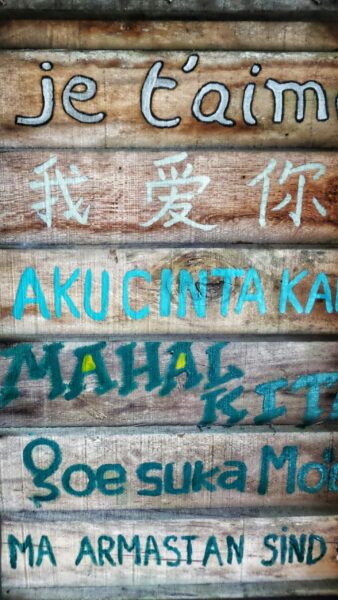
Every language has thousands of words, and the ones we choose, I believe, almost always reflect who we are, what we feel, and what we want to communicate. I say “almost always” because I have never been fond of certainties, and I consider doubt an essential element of life, as to not judge people based solely on what they say. 

Sometimes, I too have said something rude in a moment of anger, but soon after came regret and most of all, the realization that I had made a mistake. No one is perfect, but when the words that are now called “toxic” are repeated and become a deliberate and ongoing way to hurt, then it becomes a conscious intent to denigrate and offend.

Who has not heard the old saying “actions speak louder than words?” 

It is a concept that seems extremely valid to me, but sometimes we forget that words have weight. With thousands of words at our disposal, it is reasonable to assume that most of our linguistic expressions in life and social communication are the result of a choice. Unless fate (or whatever else governs human life) intervenes in our lives, when we speak to another person, we should be careful not to offend the sensitivity of our interlocutor.

Recently, while reading a website of aphorisms, I was struck by a quote by author Rhonda Byrne. In 2006, she wrote the essay “The Secret,” which I plan to read soon, discussing topics related to personal growth and inner development:

            “It only takes a minute to cause hurt but sometimes a lifetime to repair.”

The author puts “words” first and then “actions”. This does not seem to me a coincidence. Words are a way to convey positive feelings, but also to express violence and aggression toward, for example, fragile people.  

Human beings cannot live in isolation. We all often need affirmation, support and help from those around us. I believe that the freedom to express one’s opinion does not preclude the ability to do so with kindness and tact.

My best friend had been the victim of a truly toxic relationship. When she introduced me to her new boyfriend, he seemed to me like a serious and polite young man. He was elegant, handsome, and behaved like a gentleman from another era.

But from the very first night, I could tell that something was wrong in their relationship. There were four of us at the restaurant table where we had made reservations: myself, my then-boyfriend, and the two of them. As the waiter served the first course, my friend’s boyfriend began to share anecdotes about their fledgling relationship.

“You know your best friend can’t cook? And if you saw the mess she makes in the washing machine! She ruined two of my shirts. She can’t even read the washing instructions.”

Throughout the evening, he criticized every one of her actions. As he spoke, I wondered: “How can a man in love only point out the faults of the person he is with?”

Maybe my friend was not perfect. Maybe it was true that she could not cook or use the washing machine. But where is the line between truth and contempt? The point was not to be hypocritical or to hide my friend’s flaws, but to choose words that wouldn’t make her interpret it wrongly and feel inferior because of her minor shortcomings. 

I tried to resist the temptation to confront him in front of everyone in the restaurant, and at the end of the evening I took my friend aside.

“Do you realize that all he did was criticize you? How can you live with someone who doesn’t appreciate you?”

“He has never laid a hand on me, if that is what you mean. He is not violent.”

But I knew that violence does not always manifest itself in actions. There is also a subtle and invisible form that is transmitted through words.

When I told her to leave him, she shrugged. She had always had a difficult home life and a troubled relationship with her father. But she had chosen a man who was even worse.

Every word he spoke was meant to show contempt, to belittle and manipulate her. He wanted to make her feel bad about the smallest things, as if he wanted to prove his superiority.

There was nothing I could do at that moment. The choice was not mine. I could only offer her my support and tell her that I would help her at any time. A few months later, I got a call from my friend. She had left their home. She had reached a point where tolerating it was no longer an option.

This is why I believe we must choose our words carefully when interacting with those close to us. Sensitivity is a value that should not be sacrificed to selfishness.

This is why Rhonda Byrne emphasized the importance of words. How we use them surely reveals the kind of person we want to be.

From Academia to a Gompa and Back: How Retreats Brought Me Full Circle

Enmeshed in a busy year working at my academic office at my university, I thought about attending a retreat. I wanted some relief from the tiresome routine.  As a postgraduate student, I was embroiled in a substantial project of completing a research dissertation. The subject I was working on was philosophy/theology and ecology, and I enjoyed it. This was the year before the arrival of Covid-19, and there was still a bustle around the corridors and offices of the School of Humanities. 

Added to my research paper,  my academic duties included reading and grading assignments, attending lectures, and giving an occasional lecture to students enrolled in the Genre Studies unit. These were fairly light duties for any casual academic. For me, the burden of resolving the complicated subject matter of my research was most challenging. Sitting long hours working on it, I sometimes found it hard to concentrate, and I would try to find a way to clear my mind, mostly by strolling in the university gardens. 

In the garden, there were trees, lawns, and walking tracks. Refreshment corners with coffee and snacks were also available in various locations on the campus — a campus good enough to refresh and recharge oneself. But I realized these moments were not refreshing enough. I needed more than these small havens on the campus, and a fuller break from the responsibilities of my work. Perhaps it was time for a course in contemplation.

I could usually recover by retreating into my quiet office space, writing, researching, and listening to classical music. This still works well for me, but the internet remains a constant distraction. When I was offered the opportunity to go on a retreat, I decided to go for it, so I booked a spot for the mid-term break.

Most retreat centers are located in bushland — remote woods away from town and the internet — areas of complete solitude. They are close to nature and use solar power and tank water. It could be rough to keep the tablets, pads, laptops, and phones always charged.

The silence here was so exciting
My first retreat was a combination of daily meditation “sits” in the gompa  (silent sessions in the meditation hall), sleeping in a caravan, and engaging in the crack-of-dawn writing bouts lit by battery-operated lamplight.

(Photo Courtesy of Maria Orlova via Pexels)

On my first flush of morning in the retreat, the bush was quiet. I knew that soon, the birds would begin to stir in the sky.  I was writing a paper to present at a conference on theology, while also working on completing my thesis. My computer, with its e-book library, was my essential equipment, and that early morning quiet time alone was inspiring. 

Well before daylight each morning, I would walk up to the kitchen to fill a thermos with coffee. On the way, I might encounter kangaroos pausing watchfully in their paths, waiting to discover my intentions. I would practice a kind of gentle meditative walking, hoping they would not be disturbed by my presence. Soon, they would bound off, either down the valley towards the dam or into the bush, and I would continue walking, but now, I had a deepened connection with my surroundings. In the retreat center in a mountain range in northern New South Wales north of Sydney, the early spring air was crisp and clear.

The air

What a joy to have access to such clean air in the tranquil bushland!

Each morning during the break, I would sit near a small pond at the edge of a stand of gum trees, where spring wildflowers were blooming. Sometimes, the teacher would come and sit with me, and we would discuss a Zen verse or the Heart Sutra.

(Photo Courtesy of Pat Whelen via Unsplash)

Then, we would return to meditate in the gompa. Here, a statue of Buddha sat before the window on an altar with smaller statues and photos around him and lovely flowers and incense offered to him. It was a serene space at the top of a hill, surrounded by native bushland and flat sandstone rocks from which a view extended across the valley to the south. Inside the gompa, it was silent, apart from the occasional rustle when other meditators adjusted their posture. A stillness descended over the space as participants focused on their breath, beginning to release thoughts of the outside world and various day-to-day activities. 

(Photo Courtesy of Jared Rice via Unsplash)

At night, after the last meditation, the constellations of the Southern Cross and the Pointers were brilliant among the bright star fields beyond Earth. 

One thing I learned was that no matter what might appear to be going on within my fellow attendees and myself or in the memories that arose during meditation, it would always be our own personal “stuff” that would come up, simply so we could become aware of it. It was only after several uncomfortable sessions with a busy mind that I found the best way to do that. It was to alternate a sitting meditation session with one in which I walked outside or stood among the wildflowers, attending to the birds while, as earlier in the day, emptying my mind of thoughts. 

(Photo Courtesy of Adana Durso via Pexels)

Silence would sometimes pervade my awareness of those airy heights, at least for a while.

When the last day arrived, we cleaned the gompa, the kitchen, and the caravans and left the Retreat Centre around lunchtime. The next day, I returned to the university, and my mind calmed as I settled back into my office. The world seemed brighter, and my random thoughts only came occasionally and more quietly. I knew I would be able to return to academic work, but now with a peaceful mind. 

Soon, the paper was finished and ready to be presented. It was time I made some real progress in writing my dissertation.