Trigger Warning:Trauma, loss of relatives, cancer, depression, self-harm, suicidal ideation, accidental death, hospital settings
There’s this childhood film that, no matter how outdated the CGI clearly is, just seems to get me — even today. “The Adventures of Sharkboy and Lavagirl” made me feel seen in my perceived difference from others my age; I was naturally more of a loner, more of someone on the outside. As I’ve gotten older, however, I’ve come to relate to the movie’s plot through a different understanding —that of losing loved ones.
An unexpected loss times two
At seventeen, I lost my maternal grandfather, Grampy, to stage four brain cancer. A year later, I lost my maternal grandmother, Hud, due to an incident at her assisted living space during the pandemic. Both deaths were unexpected for our entire family.
I couldn’t process it all at the time. It was too much, too fast.
As Grampy and Hud’s only grandchild, we had a strong bond, and they were an integral part of my support system. I felt their encouragement no matter where I was in life. They celebrated me and consistently showed up for events like Girl Scouts, choir performances, birthdays, and more.
I don’t think I’d be the person I am today if it weren’t for both of them.
I often reminisce on the memories I have of my grandparents, looking through scrapbooks we made together and watching movies we loved — like “The Adventures of Sharkboy and Lavagirl.” Over the course of the last few years, I’ve begun to process my grief through these actions. I’ve also managed to retain a connection with my grandparents despite their deaths.
Subscribe to The Superhero Brief!
Free access to the CEO's newsletter.
The views expressed in this newsletter are those of the CEO and do not necessarily reflect the views of the organization.
Reconnecting with the things I enjoyed when I was younger allows me to experience how life was when Hud and Grampy were alive — easier, more fun. It’s a temporary escape from the stress of daily life, from adulthood.
Grampy and Hud on one side, Sharkboy and Lavagirl on the other
In “The Adventures of Sharkboy and Lavagirl,” the protagonist, Max, uses a fantasy realm as a method of coping with bullying and family issues; the dream world is his safe place. Like Max in his dream world, my dreams allow me to continue my life with Grampy and Hud as it once was.
In my own dream world, my grandparents regularly appear. We carry out everyday tasks together, like shopping, going out to eat, and having Tuesday night dinners at their house. I wish that time was infinite in those dreams. In other dreams, they’re alive, and I’m trying to prevent their deaths to no avail. Those dreams can’t end fast enough.
I now have a constant fear of unexpectedly losing more loved ones. Emergency medical situations are anxiety-inducing, as are travel plans. My grief is also hard to contain — it overflows, causes me to do things out of the ordinary, and makes me want to punish myself. It’s agonizing, and intensifies my depression and suicidal thoughts. I blame myself for what happened to them, even though I know it wasn’t my fault.
When life doesn’t feel as heavy, I speak about who Grampy and Hud were in honor, much like Max proudly sharing the legacies of Sharkboy and Lavagirl to his peers.
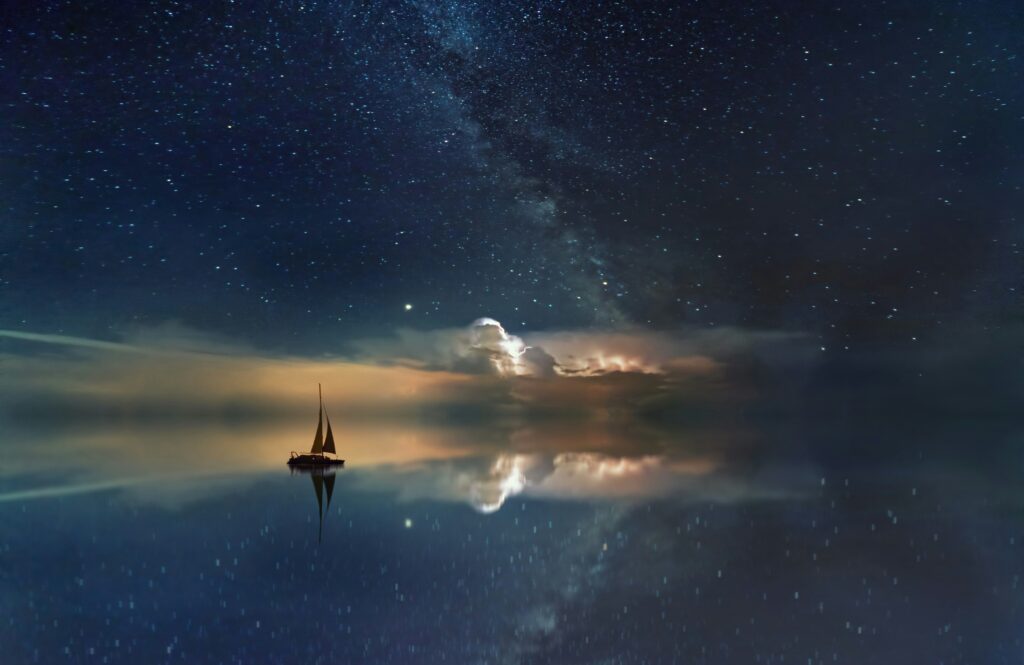
(Image courtesy of Johannes Plenio on Unsplash)
I don’t know where they went
Mentioning Hud and Grampy in the past tense reminds me of Max in the beginning of the film, when he’s unable to explain where Sharkboy and Lavagirl are. Another character asks him: “Why don’t you bring Sharkboy and Lavagirl to class tomorrow?” Max explains, “They went away. I don’t know where they went.”
Much like Max, I don’t know where Hud and Grampy are or where they went. I’m not religious, nor do I have any particular beliefs about what happens after. In all honesty, I don’t really want to think about in what state they might — or might not — exist.
Max knows that Sharkboy and Lavagirl are real, and he knows where they are when he’s asleep — they come alive when he’s dreaming. At the behest of his family and peers, Max tries to tell himself that Sharkboy and Lavagirl don’t exist, but he finds it difficult to believe. This reminds me of the first stage of grief: denial.
Immediately after Hud and Grampy’s deaths, I found it challenging to refer to them in the past tense. It was an internal denial of their passing; I just couldn’t accept it.
The aftermath holds so many questions
I daydream often about how differently my life would have turned out if my grandparents were still alive. Would I be happier? Would I still have admitted myself to a psychiatric facility last year? Maybe it’s unrealistic to think their presence would have changed much, but the questions remain for me.
There’s a moment in the film where Lavagirl asks Max to dream about her so her identity will become stronger. She tells him, “Dream about me next, Max, I need to know who I am. Not just destruction, or a simple flame. Dream of me as something good.”
I frequently wonder which pieces of my identity are a result of Grampy and Hud’s love and which pieces were lost when they died. More questions bound through my brain during these moments.
Would they think I’m a good person? Have I made them proud? What advice would they give me? I’ll never know the answers to these questions, and I never will.
I can’t change the past or bring them back to this earth. However, I can focus on how much love they had for me, and I for them. Those recollections are my safe place, especially when life feels heavy.
I can’t yet mend the parts of myself that were broken when they died back together, but I can hold onto their memory. And like Max, I can dream of them — where life goes on just as it used to.
Kristen McConville is a 23-year old writer who originates from Virginia, US. She is enthusiastic about accessibility, inclusivity, and disability rights.
Primarily a poet, she also enjoys working on memoirs and short stories. Kristen often writes about disability, neurodiversity, mental health, societal issues, and her life experiences. She frequently connects her love of writing back to when she found out in her childhood that she is distantly related to the author Charles Perrault. Passionate about editing, she finished her undergraduate with a Bachelors of Arts in English & Creative Writing, and minored in History.



Comments
Be the first to share your thoughts!
We value diverse perspectives and respectful debate.