
UNBREAKING THE NEWS

Iranians in Britain who oppose regime and war

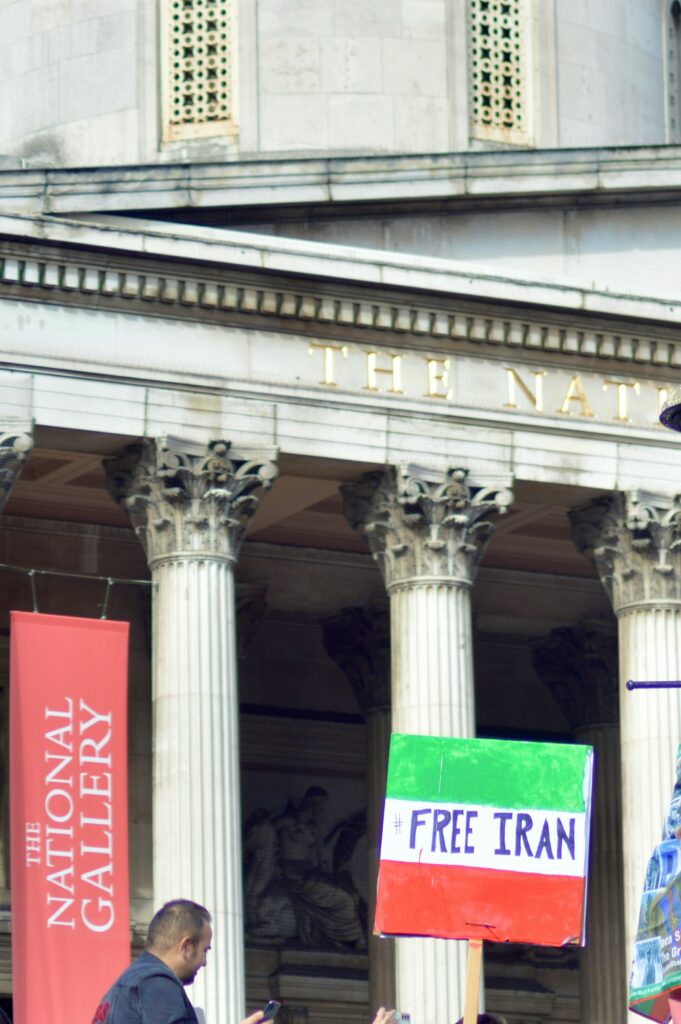
The U.S. and Israeli airstrikes on Iran have ignited passions around the globe, including among Iranians living outside the country. Clashes broke out in London on March 6, six days after Iranian Supreme Leader Ali Khamenei was killed, between supporters of Reza Pahlavi, the son of Iran’s last shah, and supporters of Iran’s current regime.

But three Iranians living in Britain told The Sentinel that these polarised views did not reflect their opinions, nor those of people living under the bombardment in Iran.

For political activist Aghileh Djafari Marbini, who is opposed to the current regime, it was not possible to rejoice at the death of Khamenei: “I’m not sad, but I’m not happy either.”

“The places that are being bombed are places I know.  I haven’t been to Iran for the past 10 years, but you know the smells, you know the places,“ she said, adding that the destruction of Tehran meant it was hard “knowing that my two kids will never go back to the place I left behind.”

Djafari Marbini, who spent most of her childhood in Iran, has been able only intermittently to hear news of her family there, given restricted Internet access.

“We do hear from people. One person hears from them and we hear from them that they’re OK,” though she added that the daily news of the war was “gut-wrenching”.

Djafari Marbini said the use of external force was not the right way to bring about change in Iran.

“I am very anti-this regime, I have never voted for anyone under this regime. What goes on in Iran is not the business of outsiders. We Iranian people have the right to determine our future. I don’t want my country to go from one dictatorship to another. This is not what people want.”

Djafari Marbini said it was important to remember the diversity of views, both inside and outside Iran. An analysis of the slogans used in the January protests in Iran, for example, showed that only 17% indicated support for Pahlavi.

“It’s a country of 90 million people and a variety of opinion, it’s like any other place. Lots of people are very upset about Khamenei having died.”

Djafari Marbini does not favour the return of the monarchy, unlike some of her friends and family, a cause of disagreement between them.

“I can’t see how this fracture can be fixed, I have lost friends, I had a row with a cousin in Canada.”

Her sister Hosnieh Djafari Marbini, a doctor, said the attacks brought back her childhood memories of the Iran-Iraq war of the 1980s:

“I really dreaded the dark because I was so afraid of the bombing, I couldn’t stop shaking when the bombings took place.”

Khamenei has been replaced by his son Mojtaba, whom Suzanne Maloney, vice president of the Brookings Institution’s Foreign Policy Program, described as hardline in a report on leadership transition in Iran published only four days before Khamenei’s assassination.

“Repression increases every time there is war, it hardens views, it breeds fear and anxiety,” said Hosnieh Djafari Marbini. “Now Iran has got an even more hardline regime than it had before. I cannot see how any of this is going to bring so-called freedom or liberty.”

“It is going to make all our lives much harder, it’s causing so much suffering.”

British Prime Minister Keir Starmer has faced criticism both at home and abroad for his unwillingness to enter the war, with U.S. President Donald Trump calling him “not Winston Churchill”.

However, British-Iranian journalist Arash, who declined to give his full name due to the sensitivity of the issue, said Britain should keep out of the war.

“We don’t want the UK to get involved, it will be really bad for the UK,” he said, pointing to the pressure on oil prices. “We need to try to mediate in order to find a diplomatic solution.”

Economist Timothy Ash also highlighted the broader economic impact of the conflict in a Substack post on March 10, pointing out that it went beyond oil prices, given Iran’s current closure of the Strait of Hormuz, a major route for the world’s shipping. Ash said that if this route were not opened soon, “the impacts to the global economy of the on-going war will still be very significant and could well still be globally systemic.”

READ MORE

Comments

Be the first to share your thoughts!

We value diverse perspectives and respectful debate.