A rare discovery in Northern Sweden
“But this tension with REEs isn’t new”, he says as he recalls a major discovery in 2023 in Northern Sweden when the state-owned mining company LKAB announced what could be the largest known deposit of rare earth metals in Europe, located near Kiruna, far north of the Arctic Circle. The discovery contains more than one million tonnes of rare earth oxides. This deposit was seen as a huge win for Europe to become less dependent on China for these elements.
Even Swedish leaders celebrated this news as a strategic breakthrough. At the time, Energy and Business Minister Ebba Busch said that electrification and Europe’s push for greater independence from Russia and China would begin “in the mine,” stressing hard that the green transition depended on access to minerals and that Sweden’s mining sector had an important role to play.
Europe’s dependency problem
Europe does not currently mine rare earths at scale. Despite Sweden’s discovery, the continent still imports nearly all of the rare earth elements and other critical minerals it uses, with China by far the dominant producer and processor worldwide.
This dependency has long worried European policymakers. Green technologies, from electric vehicles to wind power, require a steady supply of materials that Europe does not control. Even large discoveries like Kiruna take years to turn into actual production. Permits must be approved, infrastructure built and environmental reviews completed — a process that can take a decade or more.
For Sweden, the Kiruna deposit is a major opportunity, but also a reminder of how long and complex the path from rock finding to finished product can be.
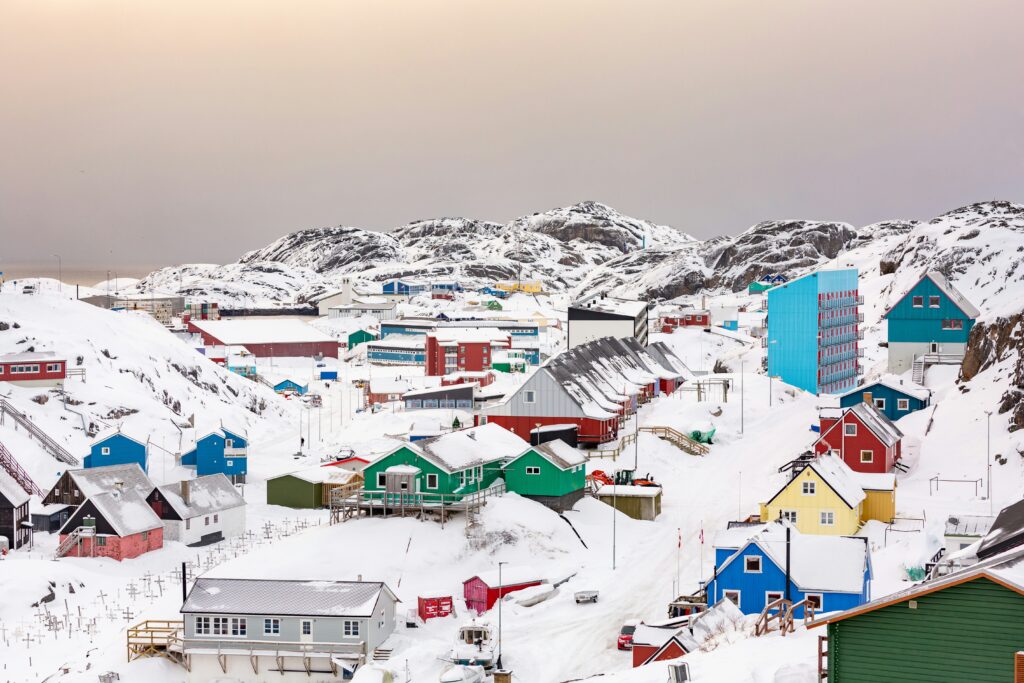
Why pay attention to Greenland until now?
Europe’s interest in Greenland did not appear overnight. As demand for green technologies has surged, particularly in the Nordic countries with the green transition, so has the need for reliable access to raw materials.
Greenland is believed to hold large quantities of critical minerals, including rare earths and graphite, which is essential for electric vehicle batteries. According to geological assessments, 25 of the 34 raw materials classified as critical by the EU are found in Greenland. These resources remain largely untapped due to harsh weather conditions, limited infrastructure and high costs.
Greenland has already taken cautious steps. It recently approved a 30-year mining licence for an EU-backed graphite project at Amitsoq, a move seen as strategically important for Europe’s supply chains.
Trump and geopolitics makes the vulnerability visible… and kind of urgent
Europe’s reliance on China for critical minerals has become harder to ignore amid rising geopolitical tensions. That vulnerability moved even more into the spotlight when US President Donald Trump publicly suggested that the United States should take control of Greenland — comments that sparked alarm around the Globe, and especially among European countries.
Swedish Prime Minister Ulf Kristersson made his position clear:
“We will not allow ourselves to be blackmailed. Only Denmark and Greenland decide on issues concerning Denmark and Greenland. I will always stand up for my country, and for our allied neighbors. This is an EU issue that concerns many more countries than those now being singled out. Sweden is now having intensive discussions with other EU countries, Norway and the UK for a joint response”, he wrote on X on January 17, 2026.
Kristersson described the rhetoric as unacceptable and made clear that only Denmark and Greenland have the right to decide Greenland’s future, warning against intimidation and economic pressure.
More than a mining story
Kiruna’s discovery showed Europe that the continent can uncover the resources it needs to power electric cars, wind turbines, and green technologies. Greenland, by contrast, illustrates how uncertain and complex this path remains.
For Europe, and for Sweden, the challenge is bigger than mining alone. It is about building a sustainable green transition that doesn’t compromise values, alliances, or the planet itself. In the end, the fate of Europe’s green ambitions may pivot not just on what lies underground, but on how wisely the continent navigates the road above it.
Accessing these materials involves politics, international cooperation, and environmental responsibility — but perhaps most critically of all, geopolitical stability. Which, it turns out, is also rare to find, to cultivate, and to maintain.


Comments
Be the first to share your thoughts!
We value diverse perspectives and respectful debate.