Quit This Job to Keep That Dream

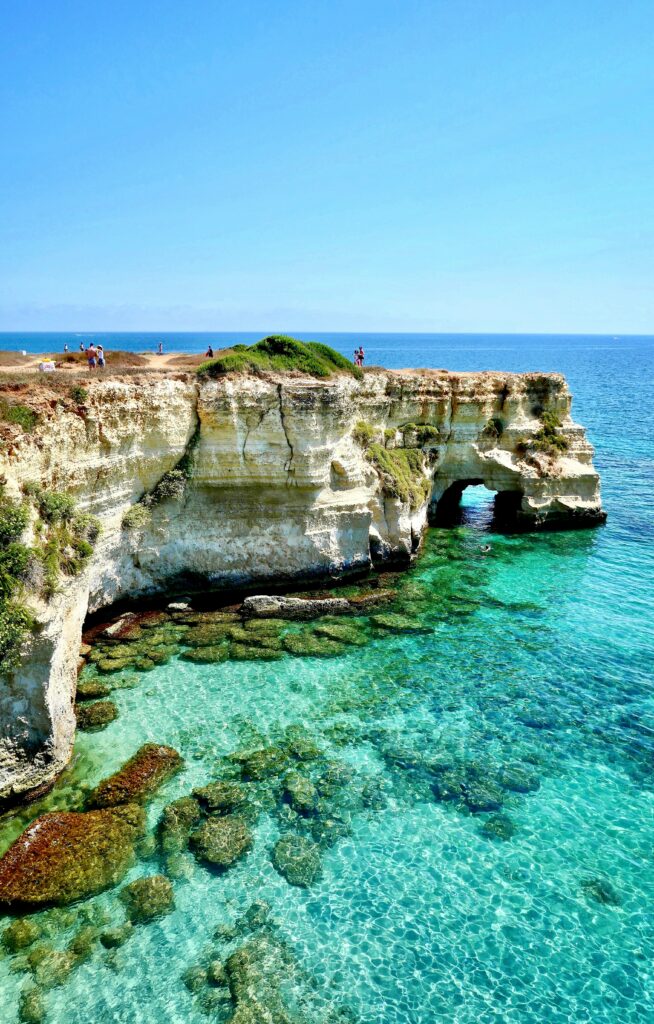
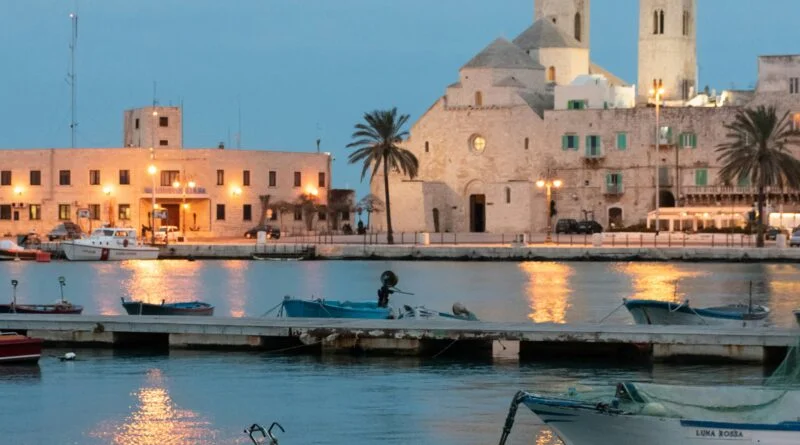
I am staring at a beautiful sunset over the Puglian shoreline, with a singer passionately belting out his heart. His voice echoes throughout the resort where I am staying. Sono contento.

This moment feels perfect, filled with a profound sense of oneness. It’s one of those full-circle moments where you understand why you made the choices you did.

Standing on the roof of this Adriatic resort, I have just finished my last day of teaching English to 18 students from across Italy for over 14 days. This unforgettable experience was the culmination of decisions for a trajectory I set myself on over six years ago. At the end of 2017, I decided to leave teaching, feeling I had reached my limit and believing it was better to end on a high note. 

Teaching had been good to me, with wonderful co-workers who changed my life and, of course, the students, who were always great, even when they were difficult. Teaching was my world, and I was good at it. It was a calling, like being a nun, monk, or firefighter. You do it not for praise or money, but because you believe you can positively influence the next generation, helping them find their dreams and true happiness so they can serve society beneficially. Grazie.

Reading and writing and filming

Around this time, I rediscovered my passion for screenwriting and filmmaking. I began writing scripts and TV pilots for fun. Friends insisted my writing was funny and enjoyable, which made me think I could pursue this career. I had tried before but was always scared of continuing, opting instead for a steady route that could secure a safe and stable life. However, the dream of becoming a screenwriter had been with me since I was eight years old. I loved movies more than anyone else I knew.

As I got older, I would go to the library and rent 15 to 20 films a week in the summer. I read every film book available, from André Bazin and Jean-Luc Godard, to Federico Fellini, Yasujiro Ozu, and Akira Kurosawa. I paid special attention to books on editing by Walter Murch and screenplays by Woody Allen. This was my world, and anyone who knew me knew this.

When I was 13, instead of having posters of athletes, girls, or bands on the wall (though there were some), I had big, beautiful film posters. Every night as I lay in bed, I would look at these posters, dreaming of the day my own film’s poster would be on the wall. A huge wooden poster of Fritz Lang’s “Metropolis” stood across from “L.A. Confidential,” and over my bed was Atom Egoyan’s “The Sweet Hereafter,” a film that changed me as a young writer. Over the years, I collected posters, from the original print of “Return of the Jedi” to Fellini’s “Otto e mezzo” and many Sergio Leone films. 
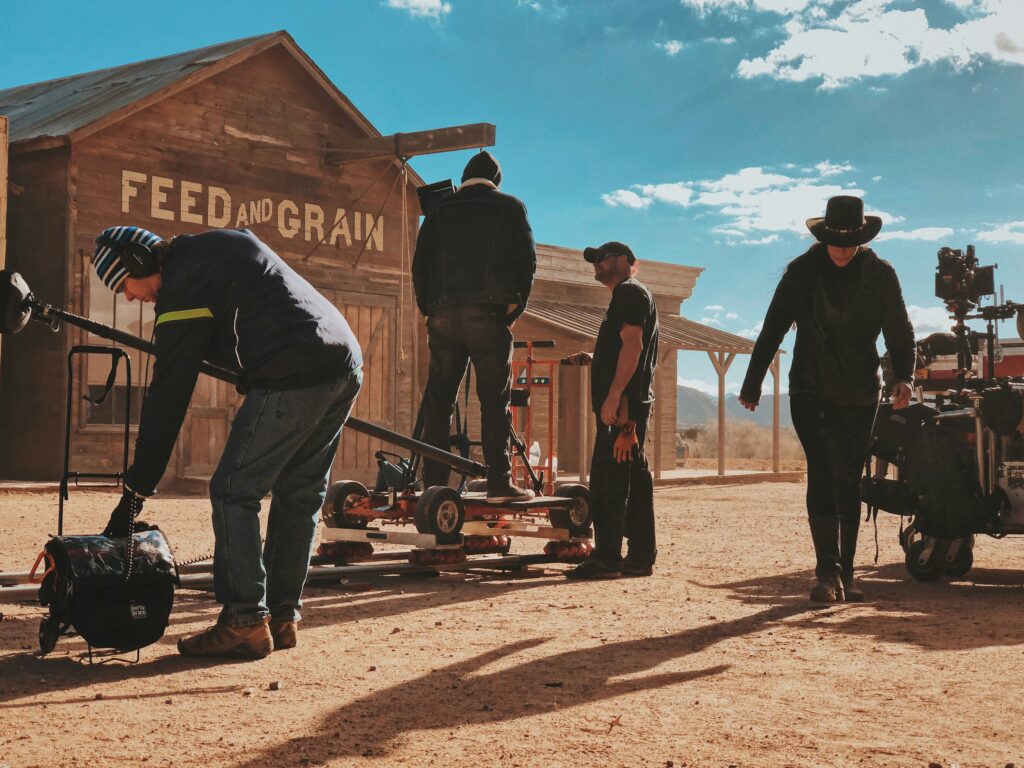
(Image courtesy of Chris Murray via Unsplash)

As I grew older, my love for film became just that — a love. No matter what, film will remain with me forever. During this phase, I was fortunate to work as a crew member on several big movies, learning from wonderful filmmakers who became great teachers. One of my fondest memories was working on a Spike Lee film, an experience that taught me so much. However, unlike many, I was not interested in working in Hollywood; I wanted to work in Europe and make films like my heroes. Soon enough, I finished my master’s degree in cinema and directed music videos in Europe. 

Success came early, and I felt I was too young to understand what was happening. I changed my career path and took courses to become an English teacher. Throughout this career change, I managed to integrate my love of cinema, making English films in class and writing screenplays or plays on particular English topics. In the background, I kept writing screenplays for an audience of no one, believing my time in cinema was over.

By 2017, I hit a wall in my life. I was engaged and had a great job, but I wanted more money for a secure future. Stupid worries raced through my mind like; “How was I going to afford that Maserati with the V8 Ferrari engine that I had on my vision board?” 

Making money

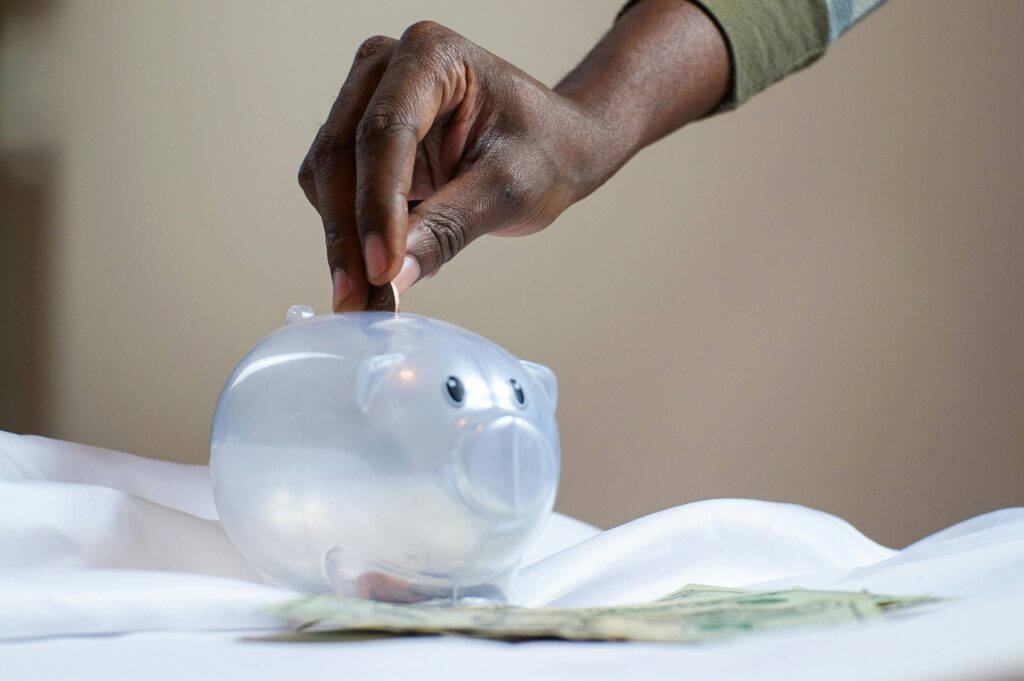
I looked at the job market and saw where I could make more money. I started postgraduate courses in digital marketing, digital product management, platform design, and data analytics. I studied hard and got good grades. Slowly, clients started to come in, and soon I was building my first websites with consulting flowing in. What happened next changed me forever. I took on the role of director of marketing and communications in a startup in Italy. I was successful, and the bosses promised more money, often dangling small rewards in front of me to lure me into working harder to drive their bottom line. 

(Image courtesy of Duren Williams via Pexels)

It started with fancy trips to Vienna, then expensive clothes, lavish yacht cruises, and expensive dinners with famous people. I believed I was getting everything I wanted. Every day I came home exhausted, used, and spent. I had no time for my wife, family, or my hobby, screenwriting. I started to get worse, angry, and hungry to prove myself in front of the rich bosses and investors. 

Just when I was about to give it up, they bought a Maserati, to which I was one of the few to have access. The first day I drove it, the V8 Ferrari engine roared, reminding me of the picture of the Maserati I had always wanted on my vision board. Now it was here. But after an hour of driving with all eyes on me on the highway, I felt empty. How could this not give me the joy I expected? 

I was confused and lost

Then COVID happened, slowing down business and forcing us all to retreat home. With so much time on my hands, I decided to write again. It started with finishing one screenplay, then another and another, and then a book. My wife pushed me to send my work to screenwriting festivals. What happened next was shocking: I started to win, and win a lot, at festivals all over the world. I didn’t need the recognition; I was just having fun writing. 

After COVID and a return to some normalcy, I began to reevaluate everything in my life. This job did not fill me with joy, and the bosses never cared about my well-being or even my relationship with my family. I missed the time I had writing; it made me happier and gave my life purpose.

I started to prioritize my family, my writing, my health, and my mental well-being. The company was shocked because I started to care less about the job. 
(Image courtesy of Duren Williams via Pexels)

It wasn’t really that I cared less; I was simply doing the work I was hired to do. I still met all deadlines and achieved results. But after 5:00 PM, I left the office and shut my phone off. No late nights answering emails. I started to take holidays and my legal two days off. Of course, they tried to guilt-trip me about my priorities. It was at a yoga retreat in the mountains that I made an ultimatum: I would stay one more year, then quit and focus on writing again.

Aiming higher

It’s been over three months since I quit the job that did not serve my higher purpose. I have had more fulfilling, life-affirming experiences than in six years in a job where I did not matter. During this time, I have sold two screenplays, one of which will be in production in February 2025. I have been to amazing concerts, reconnected with my brother in Barcelona, hiked mountains, surfed, ziplined, gone to waterparks, reconnected with God on a deeper level, joined an American football team, and had the best work experience of my life in Puglia, teaching English to 18 amazing students across Italy who have changed my life. 

There are lessons to be learned from chasing money, wealth, and prestige. I learned a lot from all that. For six years, I was on a mission to prove people wrong, to show them how many things I could acquire. This material solace instead created a life devoid of anything meaningful. I failed to see that truly rich people live their purpose. 

Purpose, I came to understand, is doing what you love, which serves your higher self and improves the world around you. The joy I now have for life is incomparable to the six years of boredom I experienced while waiting for my profit share. Or the sailboat I was promised. In the end, none of those things materialized, as they were used as false idols to take me away from myself. I realized I always had the most valuable thing in the world within me: my happiness and my freedom. 

And so do you. Prego

(Image courtesy of Massimo Virgilio via Unsplash)

Whispers of Ancestry

From the shadows of the ancient dawn, the voices of forefathers 
The tapestry of human history is a blend of triumph and tragedy 
In the heart of Africa three hundred millennia past 
Life came to earth, the evolution of sapiens  

They had no capes nor sweaters, and fought to survive or die waiting 
Following the wisdom of their elders, surviving another day 
Quartz sparking feasting on a giant Irish elk 
Seeking out solace and shelter, nestled in the cavern’s depth  

Under the Tuscan sun, tales of strength and resilience 
Homo sapiens, possessing both perception and native wit  
Babylonian chronicles, unfolding the whispers of ancestry 
Listening to those mighty slumbers, under the quiet earth

Educated Through Chaos

My name is Tiessouma Pare and this is my education through chaos. 

It all started that October of 2009. I had just joined my first year at the University of Norbert Zongo, located in the north-central part of Burkina Faso, in the Faculty of Economics and Management. At that time, I admit that my university studies were not really easy with all the instability my country was constantly going through. While many classmates were giving up their studies as soon as they started, I chose not to follow them but to move forward and pursue my ambitions. It was a harder route. Or that was me. 

By October 2012, despite the difficulties and obstacles during my studies, I obtained my Bachelor’s in Economic Analysis and Policy. Nobody thought I could manage to.  At last, I made my family proud of me. Everything I had aimed for was not accomplished yet.  I still had one more year of hard work waiting ahead, to complete my studies and move on to the next steps I had dreamt of. 

One year later, I obtained my Master’s in Economic Analysis and Policy. During this period, I started a practical internship ending in Dec 2013 within a financial institution responsible for supporting beneficiaries in obtaining housing. 

Enough school

Following my internship, the Spring of 2014 saw my integration period within Coris Bourse. That financial institution specialized in portfolio management in the stock market of the BRVM, the regional stock exchange. 

It was March 2014, I had  barely joined SOFIOR, a company specializing in consulting on gold trading and mining methods, when my country entered a succession of socio-political crises that unfortunately put me out of work before I could even complete a year of living my dreams.  I was almost depressed, my very being was in absolute turmoil, just as my country was.  Despite the despair that I was going through, I felt I had no other way forward but to find a way to get out of it and pursue my ambitions. I never wanted the chaos within me to succeed. Times were bad, and finding a job seemed impossible. I was desperate but nothing seemed to work.  

After a year there was some hope, some welcoming news. I got an offer from a telecommunications company as a “customer success” representative. Not what I was looking for, but I had no choice then. With no job at hand, I even signed a contract for three months. The customer success job came as a lucky charm, for at the end of the contract I felt  overwhelmed to be offered a different job for another company specializing in consulting on gold trading and mining methods, SCOR Burkina. 

However, coinciding with a succession of sociopolitical crises, thanks to the unrest, I found myself unemployed once again. It was June 2016. It was not even a year since I had started living again, and things seemed to get seriously worse since I was going through a financial impasse. 

Time for a leap abroad 

It was now September 2016, seven years after I had decided not to give in to the sociopolitical unrest. Enough was enough. After being persecuted for legal claims, I decided to leave my land, not easy but I had to live. I traveled to the USA for new adventures, while remaining focused on my goals. There was little to lose in the mess of Burkina Faso.

In February 2017, I signed my first contract with Uber to recover financially. Yes, I started in the US as an Uber driver. I did not stop here.  I invested whatever I earned in obtaining certificates — yes — particularly in the humanitarian and technological fields. 

Still pushing through chaos

Five years passed and I decided to start my own company, as I had enough experience in logistics and transportation.  This thrived.  My logistics and transportation firm is still running at a profit. 

In October 2023, I received my credential from World Education Services (WES) in “International Academic Qualification.” 

Back to school starting September 2023,  I am in an apprenticeship with New York’s Cooper Union in Java programming and Android development.  I am now a macroeconomist,  with skills in financial analysis, development economics and sustainable economy. I have also developed skills through many certificates: global health, mediation, and cross-cultural negotiation. 

These skills  boosted a great sense of responsibility, leadership, and communication. I also learned how to be patient, create values, and build rapport. The list is long and flooding my life with learning that never ends. 

Still pushing through chaos, is courage and perseverance ever enough?

Always arm yourself. 

(Image courtesy of Brandi Alexandra via Unsplash) 

Don’t Stop Me

Don’t Stop Me


Don’t stop me, Man, for I want to fly…
Let me be myself, for I want sky
My aim is beyond your comprehension, so let me go
I am restless while you sleep, for I must do what I have to do
I am hungry but I am aiming, my target too far
My perseverance is holier than the dew atop that mountain

Don’t stop me, Man, for I want to fly…
My passion burns me days and nights, and I die to live
Yes my friend, yes my foe, I am dead to the world
Hope not to conjure up your dead friend, for I am alive in another place
With my fecund imagination, I create a billion worlds of my own
The tyranny of little things can’t kill my fire — it burns and burns

I know I shall prevail against all odds
I will not tremble with the size of the times
I walk, I run, I rise, I fall… 

My trials and tribulations are severe and dark
But I move like the wind and find my way like the water
Time waits me but I wait none
Quitting is worse than death when one life is what you get

So don’t stop me, Man, for I want to fly…
See, how I float with the time, talking to the wind… 

Gobsmacked By Environmental Consciousness: How COVID Recycled My Values & Priorities

We learn valuable life lessons the hard way. In 2018, as I proudly stepped out of my final year of high school, little did I know that the journey ahead would teach me valuable life lessons. My post-school life began with an unexpected jab that forever altered my perspective on managing personal finances and also a surprising consideration – environmental sustainability. Who knew?

Gobsmacked by freedom

(Image courtesy of Ady April via pexels)

After completing school, I was convinced that higher education was beyond my grasp. Underestimating my academic record, I decided to take up any job I got. 

Independence looked more appealing than education. 

I managed to find a job as an Administrative Clerk at a wholesale and supply store. I had no clue that this decision would become the root of my deeper sense of understanding of the economy and money management. As a teenager, my salary, which was more than my pocket money, seemed a luxury. I spent whichever way I wanted. No restrictions. I was so happy I worked there for three years, even during the challenging period of the COVID-19 pandemic. It became a necessity then. And why would I leave my newfound independence?

That period was dreadful for those who worked in stores, given the merciless looting that took place in our country. Our lives were at risk of being infected and also due to our workplaces being looted, we were in danger of being killed by store looters — the new breed of looters formed during the pandemic.

Gobsmacked by threats

(Image Courtesy of Eri Mclean via pexels)

As an administrative clerk, my interactions with an array of people — drivers, suppliers, and customers — every encounter was almost life-threatening.  Implementing stringent safety protocols seemed just mental solace. The threat of the store being looted and in the process of safeguarding it being killed was also scaring me. Striking a delicate balance between upholding professional obligations and safeguarding personal health and life became paramount. 

Despite the inherent risks, I approached each interaction with diligence, ensuring that essential business operations continued smoothly, focused on both profit and safety. This added layer of complexity was not for a teen like me. For me, it was a heavy dose of challenges . My goal was just to have a job and safeguard my independence. 

Balancing the demands of the job while managing personal anxieties about health and safety became a daily struggle. I grew up to be an adult, a real adult. Despite the hardships, I remained resilient, adapting to new protocols, mastering remote collaboration tools, and maintaining open lines of communication with my superiors.

Witnessing the destruction of businesses and the financial fallout reinforced the fragility of economic stability in me. Something too hard to take in as an independent teenager was the idea of financial insecurity. The very thought of losing my job sent a chill down my spine. 

Gobsmacked by finances

(Image courtesy of Joslyn Pickens via pexels)

It was during these days of instability that I realized the need for financial stability, and that only a college degree paved the route to a better job and hence stronger finances. Determined, I applied for a Bachelor of Commerce in Law degree. Much to my surprise, the institution acknowledged my academic results and cast away the doubts I had about myself. Despite the financial struggles that would accompany. me, I was determined. I joined the college.

But once independent, always independent. As I alone shouldered the burden of college fees and other monthly expenses,  I could not afford to quit my job as clerk. However, this challenge served as a stepping stone for my personal growth, growth towards adulthood, towards worldly maturity. I transitioned from a spendthrift teen and learned how to budget and save. I turned my financial burden into my financial awareness. 

Juggling work and studies, I found gratitude in the fact that my employment not only fueled my educational pursuits, but also provided a way to help my family financially. I understood the value of taking care of the needs of my family.

My job allowed me to review the ever-changing prices from suppliers for an extensive array of household products, from hardware to appliances to food. It was during this time that I witnessed the harsh reality of economic instability. The instability that affected me and everybody else around me. The price of essential food items such as corn, wheat, and rice increased significantly as the months passed.

Occasionally, the company’s suppliers used to send out letters notifying us of shortages of certain products or informing us of inflation due to the scarcity of raw materials.  My education continued, I started noticing the interconnectedness of our economic systems with environmental sustainability. Our actions, both as individuals and as a society, have far-reaching consequences. 

When many saw the scarcity of raw materials exploding the prices, I saw the importance of taking care of our natural resources. 

I felt the need to prioritize environmental responsibility.

I stopped running after wants. In a world where our choices are impacted by availability and price tags, the importance of the modest consumer takes on a broader perspective. It extends beyond financial stability to encompass the conservation of resources and the preservation of our environment. 

Experiencing the economic instability due to pandemic effects, with looting and its aftermath, stirred in me the need for a mindful and sustainable approach to life. These challenges forced my family and me to adapt to be more resourceful and wise with our spending. We cut our expenses wherever possible, and managed with whatever we already had.

Gobsmacked by environmental sustainability

(Image courtesy of MS Uppy via unsplash)

Saving, reusing, and recycling are not just environmentally friendly actions. In moments of uncertainty, I turned to those simple yet profound acts as a source of empowerment and resilience. Whether it was finding new ways to repurpose household items or diligently sorting recyclables, each action felt like a small but meaningful contribution to a larger cause. Beyond just environmental conservation, these practices turned into my values to become a source of personal fulfillment even during a difficult time. I embraced a commitment to sustainability by prioritizing the principles of reduce, reuse, and recycle. 

Actually, the pandemic recycled my values and priorities.

Recognizing the importance of minimizing waste and conserving resources, I did my bit for the environment and drew my own satisfaction. Reducing unnecessary consumption, carefully assessing my needs, and opting for eco-friendly alternatives whenever possible became my motto. 

Additionally, I actively sought out opportunities to extend the lifespan of things and reduce landfill. My small yet humble step towards embracing sustainability.

Embracing the recycling ethos, I diligently sorted waste materials and ensured proper disposal in recycling facilities, contributing to the circular economy and promoting a positive chain reaction that influences the availability of resources, the stability of economies, and the well-being of our planet. 

As we navigate through the uncertainties of life, a pandemic that hit the entire world, tragic and devastating for millions, left a never-fading print of horror in our lives.  Its effects changed how we view life, and I was no exception.  A commitment to responsible living can create a healthier and more sustainable future for all.

My journey taught me that being financially aware is important because anything similar could knock us out again, leaving us in limbo and facing inflated prices. The choices we make today in response to the environment will  have a big impact tomorrow. 

Covered Mirrors and the Souls of the Dead (November 2)

It may be strange, but my grandfather died between the 1st and 2nd of November 2000. He, who had always been full of life and joy, had been confined to his bed for two months, weakened by a very aggressive cancer. Not even two intensive surgeries had been able to remove it completely. The doctors had always told us not to lose hope, and I had deluded myself into thinking that his recovery was truly possible.

I was sixteen years old and I didn’t know the true meaning of death. Death had seemed like a distant or fantastical concept, something to be read about in a mystery novel or seen in a movie, but reality is different from fantasy. Especially when it comes to the people we love.

That night, death took my grandfather in his sleep and, although we had been expecting it for a while, knowing never stops the pain. When he stopped breathing, the only people in the room were my grandmother and her sister, Caterina, who had volunteered to take shifts with my parents and my maternal uncle and to relieve my grandmother of some of her daily responsibilities. It was she who noticed that my grandfather was finally free from pain.

When I heard the landline phone at home ring, I immediately understood from my mother’s voice that the inevitable had happened. We quickly got dressed and went to my grandparents’ house, which was in a seven-story condominium not far from ours.

I didn’t cry on the way. There was still something unreal about the event. But when my grandmother greeted us in tears and led us into the bedroom, where I saw my grandfather’s waxen and motionless face with my own eyes, I was undeniably confronted with the reality of death.

As my mother sobbed, I felt almost paralyzed. Suddenly, Aunt Caterina put her arm around my shoulders and whispered softly, “You’ll see, your grandfather will be at peace now. But you have to help me do something.”

I looked at her, perplexed. What was there to be done?

“We have to cover all the mirrors in the house.”

I thought she had gone mad as she took me by the arm and slowly led me into the hallway. Dazed and with my heart pounding, I followed her into a small storage room. She grabbed some large dark blue dish towels and a sheet.

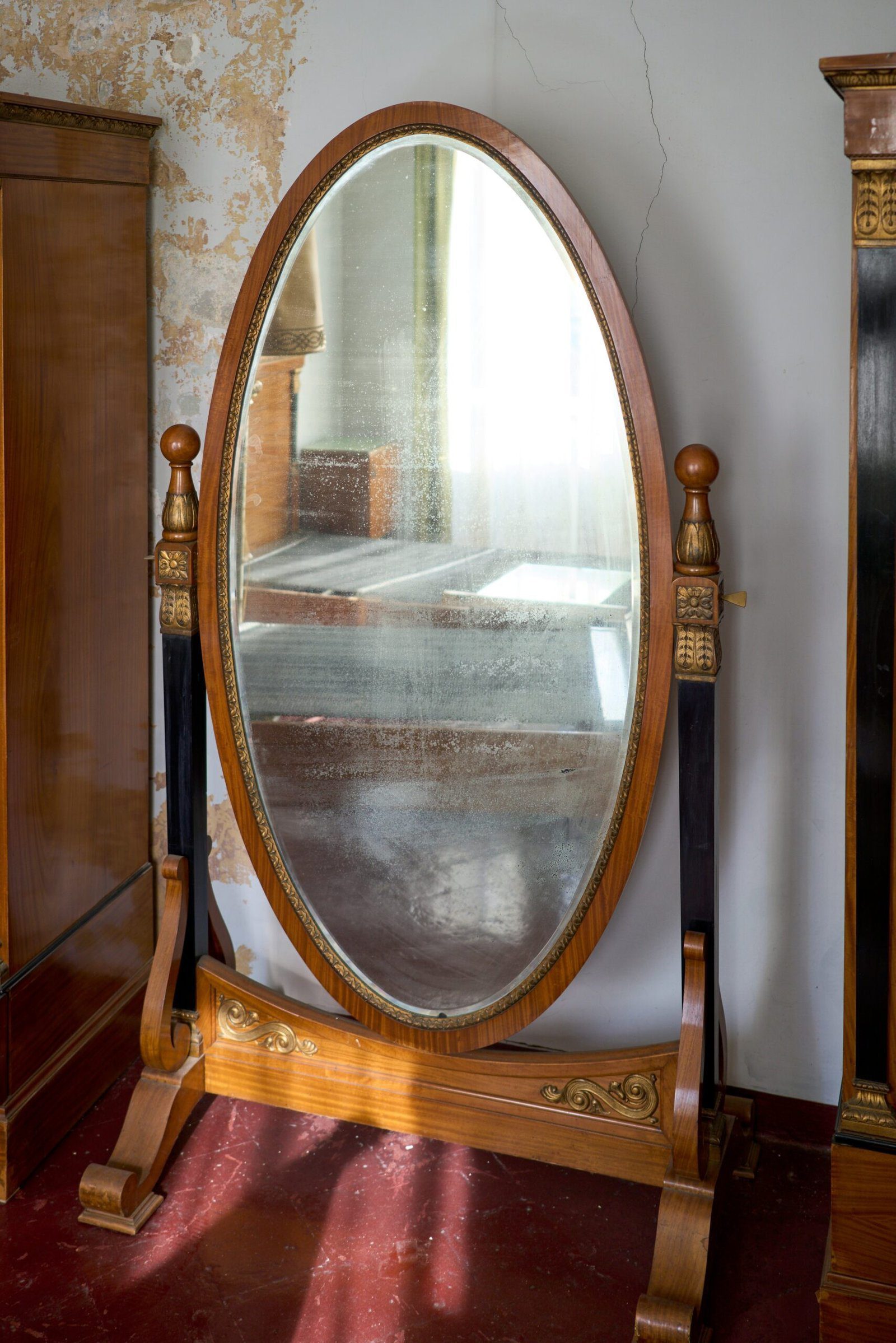
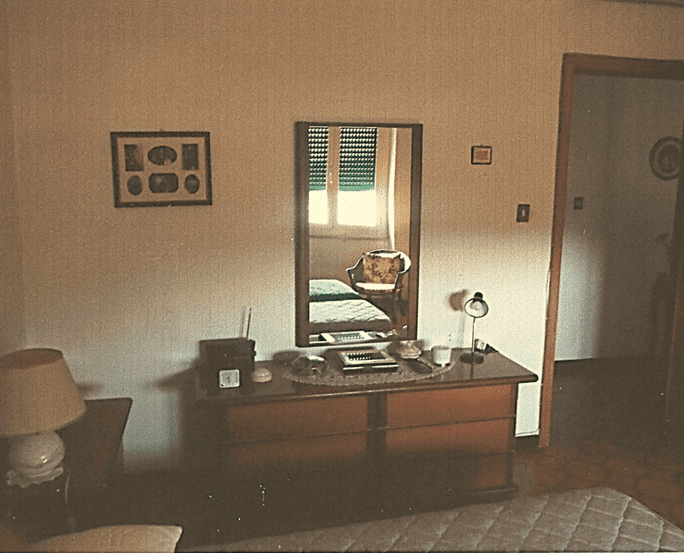
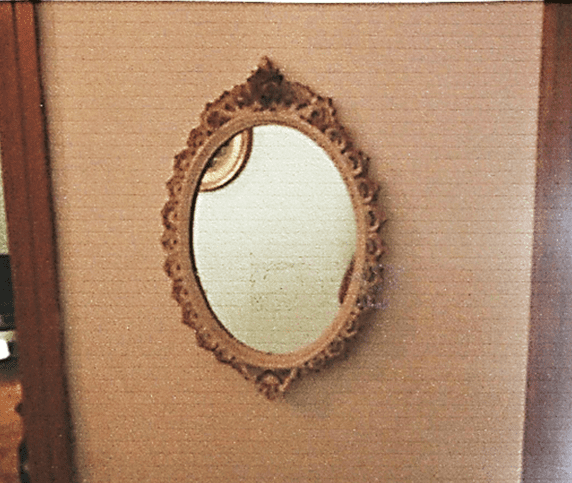
There were three mirrors in my house. One mirror in my grandparents’ bedroom, one in the corridor, and a rather large and antique one in the dining room that had been passed down through three generations.

(Image courtesy of Viviana De Cecco – November 2000)

When we entered the bedroom, Aunt Caterina asked me to help her tuck the edges of the cloth into the upper corners of the frame so that it was completely covered. 

It was this way that I discovered one of the funeral customs that are still deeply rooted in Sardinia, in all of southern Italy and in various cultures around the world. There are traditions so old that no one knows exactly when and where they originated. Covering the mirrors when a person dies is a custom that has its roots in the mists of time. 

Aunt Caterina explained to me that covering the mirror with a cloth prevents the soul of a deceased person from being frightened by seeing its own reflection. In addition, to prevent the departing soul from getting lost, it is appropriate to close all the windows, draw the curtains, leave some lights on and leave the door open to facilitate its journey to the afterlife.

The mirror is often seen as a portal between our earthly world and another dimension, and the wandering soul of the deceased, drawn by the glow of its reflective surface, may become trapped there forever. Instead of leaving its mortal remains, it could potentially drag the souls of all the living people reflected in the same mirror and haunt the house of the deceased for all eternity.

I remembered all the times when, as a child, my grandfather would sit me on his lap before a family celebration and make funny faces in the dining room mirror to make me laugh. He was always ready with a joke, and the thought of not seeing his smile again tore at my heart. Seeing those mirrors covered with those big dark cloths, the typical color of mourning, felt like a sign of the end. They reminded me of those abandoned houses where life had faded and happiness has been lost forever.

These dark beliefs are much more prevalent in the inland rural areas than in the cities. That’s why my aunt’s words, coming from a rural village where certain superstitions about the dead are never underestimated, touched me deeply. Even though those ideas may seem quite incredible and ludicrous, there was something both frightening and reassuring about that belief. It was comforting to think that my grandfather’s death wouldn’t be the end, and that we had helped usher in the beginning of his journey to perhaps a better place.

(Image courtesy of Viviana De Cecco – November 2000)

Even today, I feel torn between rational skepticism and doubt that there may be some truth in these ancient beliefs. Perhaps our ancestors were much wiser than us modern people. 

The Greeks and Romans were among the first to seek glimpses of the future in reflective surfaces. Who hasn’t broken a mirror and heard: “Now you’ll have seven years of bad luck”? The Romans believed that a person’s life was divided into seven-year cycles. Breaking a mirror would bring bad luck simply because it represented the souls of the living. Likewise, for the Egyptians, mirrors weren’t just for cosmetic purposes among the wealthier classes, but they also had funerary significance. It was believed that their radiance was linked to the sun god Ra and was a symbol of vital regeneration, which is why they were often depicted in the reliefs of the tombs of high dignitaries.

While doing some research on the internet, I discovered that this belief is also widespread in the Jewish religion. In the sacred text called the Talmud, there’s a phrase that several writers have quoted in their novels that refers to the human relationship with mirrors: “We do not see things as they are, we see them as we are.” This phrase makes me think that a mirror shows us our physical reflection on one side, but also reveals the nuances of our gaze, where all the feelings that lie beneath our exterior are hidden.

When we look at ourselves, we often say that we have a lively gaze. Where does this vitality come from? What can we call it? Is it the soul that we see? What is hidden within us that the mirror cannot really show us?

When a mirror reflects a dead person, there is no gaze to interpret and no movements to reproduce. Think of the vampire, who has no reflection in the mirror precisely because he is dead. Or consider exorcism practices, which sometimes use mirrors to chase demons out of the possessed.

So how do we know what is beyond the reflection of a lifeless body? I believe that superstitions are created to find the answer people have been seeking for centuries in their search for the meaning of life and, above all, its end.

Now it seems to me that this ritual is a demonstration of the living’s love for their loved ones, a testament to their desire to protect them. No one can know for sure what really happens the moment they depart this world, just as no one can know if there is emptiness or light.

What is certain is that, on that night when I returned home with my parents, I looked in the mirror in my room and wondered if my beloved grandfather, who had always been a guiding presence in my childhood, had found peace.

When my Aunt Caterina died three years later, there was no need to cover the mirrors. She died of pneumonia in the hospital, in that sterile environment where death seems even sadder. Everything happened slower with her. I had time to say goodbye to her and to hear that she had no regrets. She had been happy and was going in peace.

At that moment, standing at her bedside with my relatives, I began to believe in the soul. I believed it could be found in the looks of those who are with us, in their words and in all those gestures through which every human being communicates with his fellow human beings.

Denise and More, Still Nel Cuore!

Three-year-old Denise Pipitone was abducted from Mazara del Vallo, Italy on September 1, 2004, and has never been found. At the time, I was a prosecutor in Marsala, Sicily.

I was on holiday and could only follow the case on television. I did not know at the time that this very sad case would transform my life, forcing me to never give up, and to have much more courage, inventiveness, and patience than I ever thought possible.

The story of Denise’s disappearance also helped me rarely to accept any compromise, never to go down paths that would have led me to betray myself, and to seek my own happiness and that of my family members beyond all ties and conventions.

Because any hypocrisy and any surrender to my dreams as a child would have made my battle impossible: the battle for the truth, always, and at any cost,. But especially for finding the tangled path to Denise.

Image courtesy of David Werbrouck via Unsplash

Tragically, so many children  go missing every day all over the world. Sometimes it is their families who are responsible for these crimes. Sometimes it is someone with mental illness or a serial killer that must be found. Sometimes it is chance and misfortune that takes them away.

Denise’s case is a symbol; my commitment and that of all those who are looking for her and will always continue to look for her want it to also be a warning so that such crimes are not repeated, and so that all missing persons are searched for until a trace is found.

Just as the Good Shepherd searched for his lost sheep, we must not give up and must continue to put in place every useful initiative to reach the goal.

The only suspect in the kidnapping to date, Jessica Pulizzi — Denise’s half sister — has been definitively acquitted by the Italian courts.

On the other hand, serious procedural errors were also committed during the investigation. Jessica was heard several times in summary information without a lawyer, before being entered in the register of suspects. It was already clear that she was suspected of having taken the child. That trial went cold. 

In 2024 — thanks to the work of private investigator Giuseppe Asaro and criminologists Antonella Delfino Pesce and Katia Sartori — Denise’s father, Tony Pipitone, filed an application with the Marsala Public Prosecutor’s Office to reopen the investigation into his daughter’s abduction.

Tony, together with some friends, founded a nonprofit association last year,  The Missing Children in the Heart L’associazione I bimbi scomparsi nel cuore  — to help all families who are looking and longing.

I, too, am a member of this association, which for one thing is supporting a constitutional petition for the establishment of a parliamentary commission of enquiry into the case of Denise Pipitone’s kidnapping. The petition has already garnered more than 3,000 signatures.

Our association and the one founded by Piera Maggio, the little girl’s mother, are constantly sharing posters of Denise, with age progressions and useful information and contacts, all over the world. We are very confident that we will all manage together to break through the fog and find the thread that will lead us to Denise.

You readers, too, can help us by sharing this story. For more information or if you have any leads about Denise’s disappearance or on other missing children, please get in touch with our association. 

Unwritten Dreams

I forgot to have a big dream
Now that I think about it
I never even found my passion
The easy solution would be to claim that I’m a writer 
But that doesn’t feel true most days
The words I write are not my own
Rather the physical manifestation of my pain
Of something within me that is beyond my control
And removing them is a process that exhausts me

I never planned for my future
I simply took it day by day
Leaving me to feel lost and unprepared
Unwilling to accept that this is it
I am missing the feeling that used to drive me
That gave me hope for what was to come
Because I am in a future now
Once again filled with words that hurt me
And worried that this is all I will ever amount to

Midlife Crisis @ 18

I believe I’m going through a midlife crisis at the age of 18. Whenever I make a mistake, I think to myself, “I shouldn’t have done that; I’m practically an adult.”

But I’m not an adult, not really. I mean, legally I am, but that doesn’t count. I still live with my mom. I’m still working at my one and only job. I don’t pay bills. I don’t have my driver’s license.

The other day I probably would’ve fallen for a scam call if it weren’t for my mom intervening, and my heart still drops to my stomach whenever I think back to it. That was so stupid of me. I think the reason they almost got me is because my phone always says “Possible Scam” as the contact when scammers call me, so I immediately deny the call. But that wasn’t the case that time. 

Who’s a smoothie?

Okay now, I’m speaking from the future here. I had to take a break because I didn’t really have anything else to say. But now I do. I have been fired from my job, and my biggest concern is that I didn’t get the last word in.

The reason I got fired was getting into one too many arguments with the owner of the place, Tropical Smoothie Cafe. Two arguments to be exact. 

In my defense, the first time we got into it, I didn’t know he was the owner. I just thought he was my manager. Also, in my defense, it was my first job. Lastly in my defense, I was in the right both times. 

Unfortunately, I learned too late that whoever’s in the wrong doesn’t matter when you’re an employee and your opponent’s your boss. I blocked his number and deleted his contact. Then deleted two of the apps that had anything to do with the job.

But that leaves me with two coworker numbers. What do I do with them? Should I send them a final farewell before blocking and deleting their numbers as well? They’re not necessarily my friends, but they were kind. The best part about all of this is that my shyness (and the opinion that there’s little to no point in talking to my co-workers about anything but work) made it so I didn’t form any close bonds at the workplace. That and I’m pretty sure I get to keep both shirts and my visor since he didn’t say anything about returning them. I did give him a chance to do so.

This all happened around 1:00 in the afternoon yesterday, and today I blocked him sometime around 6:00 pm. He either forgot or was too angry with me to talk any further (which I highly doubt. Firing one employee shouldn’t cause any anger. Nor should a ten-minute argument over text). Or he allowed me to keep them? Regardless, I’m keeping them. 

Back home

Although they do hold some bad memories, maybe over time, they will go away.

(Image courtesy of AcrylicArtist via Morguefile)

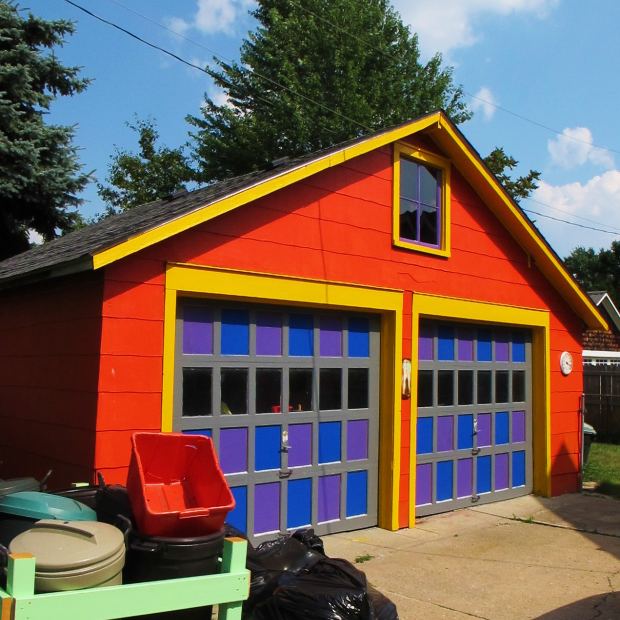
Like the time I ran my mom’s car into the garage. That happened sometime during the end of February. And all the stupidity and embarrassment I felt have mostly subsided

Maybe that’s me. My favorite color is red, but I have very few red belongings. 

I am still a teen. My hobbies consist of learning languages, playing video games, reading, writing, and watching movies. My favorite movie at the moment is Call Me by Your Name, and my least favorite is Ten Things I Hate About You.

I want to be a famous writer in the near future, so I can see what people have to say about my characters, and maybe one day have them end up on the big screen. I really enjoy the idea of being known by a lot of people.

Lessons in Korean

:

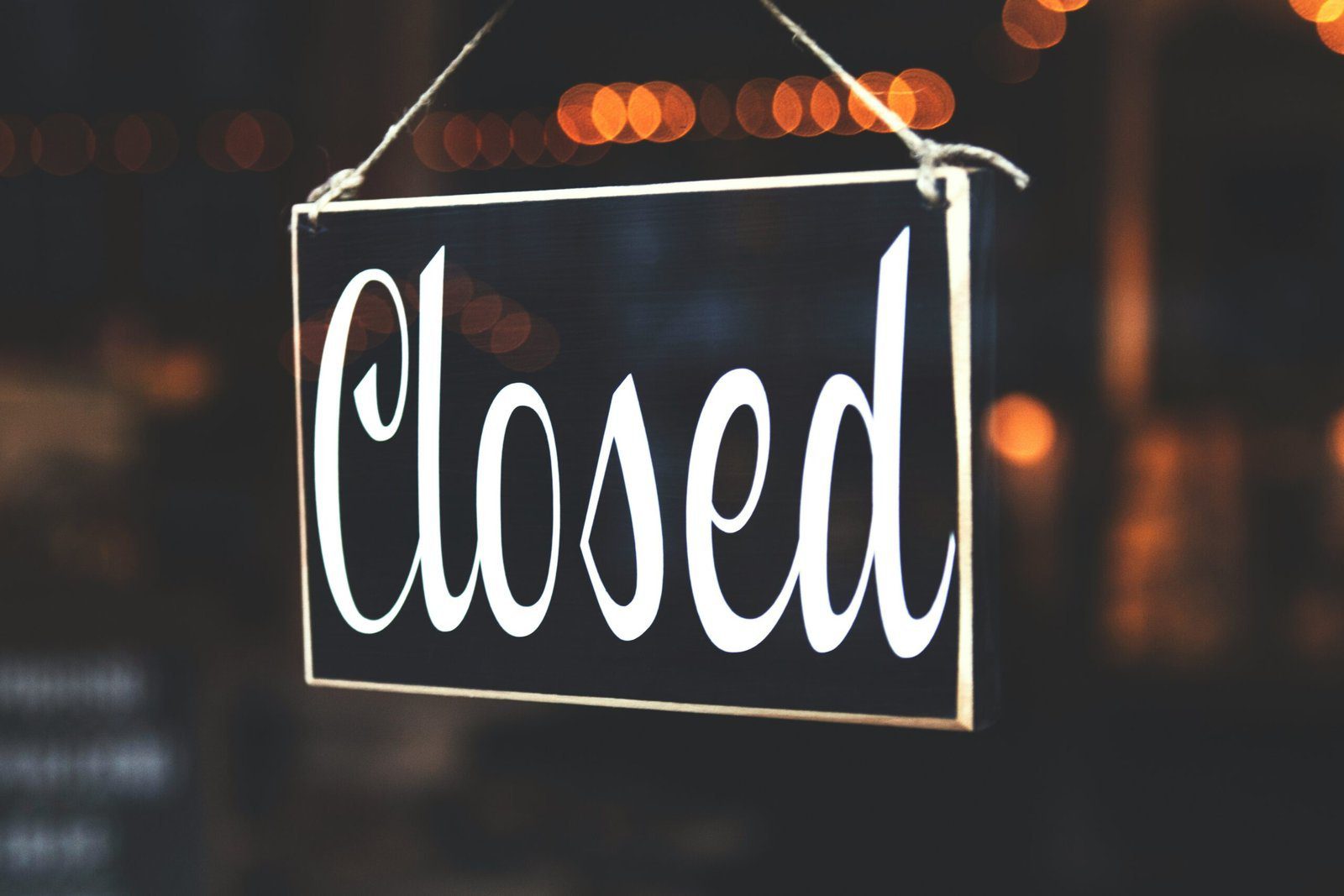
Six letters, six minutes. C-L-O-S-E-D at 8:00pm. It’s now 8:06pm. 

I stare at the bold black letters in front of the weathered “J. Hara’s General Store” with a bit of torturous disbelief. My stomach grumbles and I feel my husband’s thinly veiled displeasure radiating off his person like a heat wave. I turn to him and state, “Well now what?” 

Grumble, grumble. “I don’t know, honey. I’m just as surprised as you are,” my husband says.

“I know right? It’s a Saturday evening. How can things close at 8 o’clock at night?!”

“Big Island really does things differently from O’ahu.”

I nod in agreement. “Well,” I suggest, “I guess we can try to drive back further into town. Do you want to grab Taco Bell?” 

My husband, Jess, ponders my inquiry for a few moments while kicking a rock on the pavement below. I begin to shiver from the evening air while I likewise scan our surroundings. 

Currently we’re standing in front of a locally owned market and general store boasting its historical status with old, wooden siding and some sepia tone photos on its outer cork advertisement board. To our left is a gravel parking lot, and to our right is a closed cafe and a small gas station. Other than a few lampposts dotted here or there, the cool, white moonlight shining down is the only illumination we have. 

J. Hara’s General Store is the closest to our weekend getaway…a mere 40-minute drive away. Neither my husband nor I really want to keep driving, but we’re too hungry to go back to our campsite without something to eat. We have spent the whole day hiking the Volcanoes National Park and, in our excitement, we have neglected to eat anything beyond trail mix for the better half of the day. So, we hop back into our rental Jeep long past the sunset on Pele’s playground and decide to drive North until we find somewhere to eat.  

And now here we are. But we’re six minutes too late.

Perhaps noticing my sudden goosebumps or feeling the cool breeze himself, Jess recommends we head back to our vehicle to try and look up something else on Yelp. Up until a few miles down the road, we have had no phone service, thus the time discrepancy with the restaurant. Agreeing, we begin to walk to the Jeep, chatting about our day all the while, when the young couple at a gas pump catches my eye.

Other than the not-so-amenable employee closing up, my husband and I, and the couple, the parking lot is empty. Typically, I mind my own business, yet I can’t help but notice that the man has been fiddling with the gas pump for the entire time Jess and I have been there. It clearly has an “OUT OF ORDER” bag over its handle, so I can’t understand why he would be trying to use it. 

They look young, and seem stylish; the man sporting a boy band singer haircut and monochrome black ensemble and the woman, with her profile poking out of the top of the red Mustang convertible, is pretty enough to be an actress. He continues to call out to his female companion, with increasing frustration when suddenly it clicks.

He’s speaking Korean!

(Image courtesy of Kang So-eun via Pixabay)

Many years before I wound up at this gas station in Kurtistown, Hawai’i, I spent many nights in Monterey, California at a little place called the Defense Language Institute (DLI), the United States military’s premier language learning academy. For sixteen arduous months, I spent upwards of seven hours a day, five days a week learning my assigned language of Korean to become a linguist in the US Navy. 

Frankly, the experience was very difficult for me. Although my aptitude was great, and I had not much trouble with the actual Korean learning process, many of the emotional, physical, and spiritual aspects and consequences of my Korean course were back-breaking. The rigorous military-school work balance, homesickness, youth, poor self-esteem, and even just the blunt, and seemingly callus treatment from our native Korean instructors often wore me down. 

I can see now how these experiences shaped me and helped me become a much stronger version of myself today, but at the time, I was often melancholy and filled with angst. 

I channeled my feelings into despising the Korean language for being required to learn it. I didn’t want it to come to me easily; I wanted to fail and start something new in the Navy, but my fear at what the military would do to me were I to quit at such an advanced stage forced me to continue to perform well academically. 

Essentially, I had shown my potential in a difficult course with a low retention rate. Were I to fail, my superiors might know I was doing so purposefully and reassign me a terrible job in the Navy. Like painting ships for twelve hours a day. Needless to say, when I finally graduated from DLI, I was excited to move on and my first duty station was…well, you guessed it, Seoul, South Korea.

Many aspects of living in Korea were very enjoyable, like the cuisine, shopping for cheap skin care and beauty, all activities I enjoyed, though I was not a huge fan of the culture itself. Being a foreigner, even one who spoke Korean fluently, didn’t exactly help me feel at home. The homogeneity of the society only succeeded in making me feel like a fish out of water, no matter how hard I tried to swim. 

My time there, luckily, was short, lasting only about four months before I was reassigned to Hawai’i. I’ve more or less been here ever since, though I left the military about a year ago. Nevertheless, my relationship with the Korean language and Korean culture has always been one of contention for me, with me rarely speaking Korean to this day. 

Do I speak Korean or not?

So it is, on this June evening in the middle of seemingly nowhere on a verdant, tropical rock in the middle of the sea, that a young Korean gentleman and lady are in need of help, and, if you believe in it, divine intervention sends a Korean linguist their way.

As my husband and I approach the door of our rental car, I feel a mixture of anxiety and apprehension enter my gut. Should I help them? No, they’ll figure it out. But they’ve been stuck there for a while already. But what if I try to help and I mess up? Will they understand me? No, I should just let it go. 

Then, I think, “What if they were me?” 

I feel myself walking toward the pair as if my feet had a mind of their own. Even if I am shy and my past experiences make me wary, I am going to help these people if it is the last thing I ever do. 

After all, especially having come up the way, I know there is nowhere else to get gas but another ten miles north or so into Hilo proper. What if they can’t make it back that far? No, we will Korean our way through this together. 

“Hwaiting!” (Pronounced more like high ting, the marker is similar to “Let’s go” or “Do your best.”)

I approach the man meekly, but then energetically surge into Korean, like we’d known each other our entire lives, though much more politely, I hope. He is definitely surprised, but I can see the relief on his face.  I explain, “Ee-go-noon an-twey-yo” (It doesn’t work), and that he has to use a different one, that these other pumps have 89 or 93 octane, depending on what the Mustang needs. 

His girlfriend/wife even steps out of the car to say thank you, as they are clearly getting very flustered, having never been to the US and are not completely versed in English, signage, and the like. Before we part ways, we even bow to one another as is customary in Korean culture, though rare  in Western ones. In spite of my initial fear, I am able to help people in need. This holds a special meaning for me.

As we walk back to our Jeep, Jess says, “Nicely done, babe! I’ve never actually heard you speak Korean before. You seem really good.”

I reflect for a moment on his words. At DLI, our teachers enforced humility. Even the top student was not good enough. In Korea, I never felt good enough either, being a boulder in a world of pebbles. In my heart, I often struggle with worthiness, too.

But tonight, I look at my husband proudly and smirk, “You’re right. I’m actually kind of a pro.” Lesson learned. 

(Image Courtesy of Viktor Forgacs via Unsplash)