To the Summit of Fuji

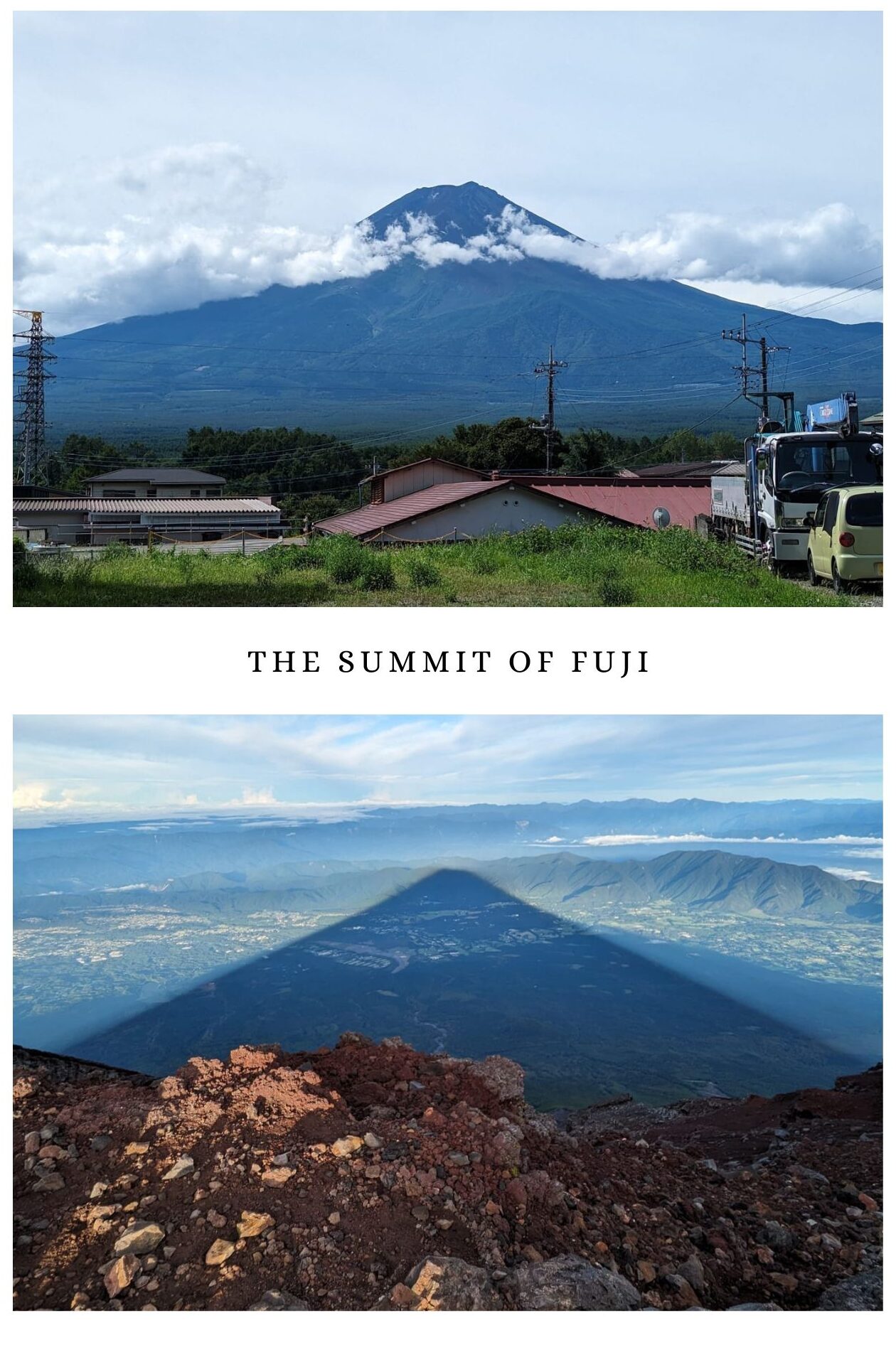
Image shows a combination of two photos: the first is a landscape shot of Mount Fuji during summer, the second shows the shadow of Fuji spread over the land.
(Images courtesy of the writer)

As of writing this, it’s been roughly two years since I reached the summit of Mount Fuji. I could wax endlessly about the idyll of Japan, having spent 26 days exploring Honshu and Kyushu with my ex-partner, but Fuji-san was an integral milestone over and above the rest – one I shall meditate on forevermore.

Many tourists will form stark interpretations of Mount Fuji. Bask in its immeasurable beauty. Dread its perilous dangers. Truthfully, my experience was more fragmented. Fuji-san is an entity, a landmass of divinity that murmurs its own language. I connected intensely with the journey during my climb. Out of wonder? Respect? Fear? I felt my body screaming, every checkpoint marred by the knowledge of steeper ascents lying ahead, and yet I emerged with a greater spirituality I hadn’t intended to find.

Fifth station: ground zero

The bus rattled in winding meanders, past volleys of trees as the views grew increasingly more ethereal. Customary for most ascents, we were charting half the mountain by road, crossing vast, impassable forests towards an accessible basecamp. I was entranced by the cultural significance of my oncoming quest, packed into this bus full of both locals and tourists from around the globe. Since my partner had steered clear of the task, I was also totally alone.

By the time we reached the fifth station at 2,300 meters, every person was struck by the same revelation:
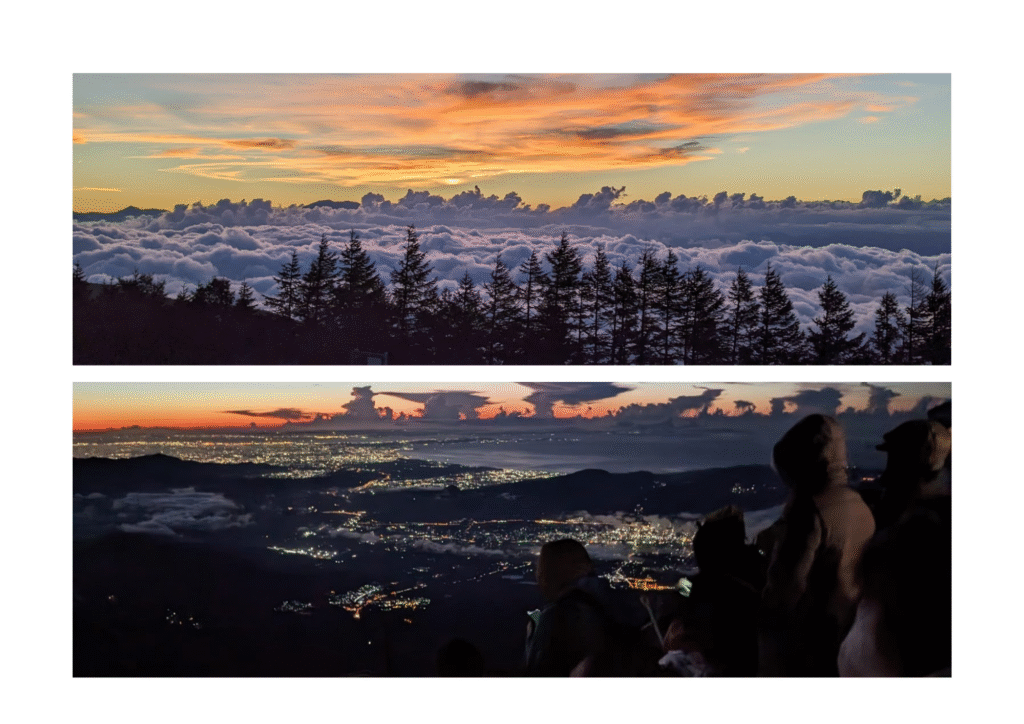
Two images featuring the view from the ascent of Fuji. The first shows a sunset from the fifth station while the second shows a sunrise from the summit.

We were already surfing the clouds.

An asphalt lot spreading towards a bank of skeletal firs, and beyond that, nothing but rolling marshmallow waves tinged in gold. All I’d done was step onto a bus!

With over an hour before I was due to begin, I reviewed my inventory. Sugary food and drinks? Check. Climbing poles and torch? Check. Oxygen canisters? Check. Phone? Drastically low on battery. Not my photo ops! I was forced to commandeer a charging port on the outside rim of the visitor centre because they didn’t have them… inside for some reason…

It was during this dilemma that I met Louie, a fellow Brit. Like me, he was going alone for now and asked if I wanted some company for the ascent. Knowing I was gunning for a ‘bullet climb’ to reach the summit before sunrise, the fact that Louie told me he would be staying in one of the overnight huts further up made me wary. Eventually, we compromised, deciding to stick together until the sixth station where Louie would reunite with his tourist friend and I would press onwards.

As the sun wilted around 7 p.m., we set out on the popular Yoshida Trail, quietly confident. We’d researched the gentle and non-taxing section between fifth and sixth. Even while trekking the muddy terrain and fallen roots, we believed that darkness would be our greatest enemy and awareness our guiding light.

We lost the trail within fifteen minutes.

Somehow, we’d verged onto a tractor path, coated in loose stones and rutting indents. The angle of ascent was something like 45 degrees in comparison to the demarcated trail we’d keenly avoided some 200 meters back. Still, we pressed on. An effective shortcut, we thought.

An hour passed. Our bodies were failing. Our legs slipped every twenty paces. We had no evidence of travelling remotely in the right direction. All we knew was up.

Then a building reared into view.

Sixth station: a moment of suspension

The first milestone was wedged into an outcrop of gravel just above the tractor route. A hut offered facilities and shelter, but no functioning shops. The view was gorgeous. The distant lights of towns and villages texturing the landscape like beds of fireflies. The fading midnight colours, pockmarked by flurried drifts of cloud. 

I learned from Louie about his Canadian friend, Kyohei. He was so lost, he may well have been climbing a different mountain. Several phone calls were received and dropped in this time, leaving us exasperated on the fleeting motes of phone service at this altitude. Still, Kyohei flickered between how right he believed his directions were and how wrong Fuji-san was for deceiving them.

Dutifully, I stayed with Louie for a further hour, talking through the finest details of our lives – where we studied, our passions, our hobbies, our fears. When Kyohei finally found us and I bade the two of them farewell, the appreciation for life’s individual complexity and the beauty of human collision stayed on with me.

The route to seventh was smooth and repetitively serpentine. Shockingly, I found the temperature so mild that I stripped down to a t-shirt. Despite the purported frigid conditions at this altitude, I didn’t apply any more layers until the summit.

What was glaring during one of my breaks was the utter silence in my vicinity. No additional climbers were visible behind or ahead of me. No wildlife, no traffic, no environmental disturbances. This was a vacuum, devoid of sense. Time had been suspended. There was something spiritual about this immersion in the faraway, this stretch away from noise. Something healing.

Seventh station: sheer insignificance

I’m confident about my fitness. I run regularly and stay active through work. I’ve climbed hills with challenging conditions before.

Oh boy, this was beyond that.

Following seventh, the angle of elevation hiked steeply. Surfaces underfoot became ever more perilous – I’m talking avenues of boulders, sharp chicanes overlooking fatal drop-offs, steps that felt like ladders. The threat of danger was suddenly unrelenting.

With some near misses under my belt, I started to comprehend how insignificant my existence truly is. I’m eleven stone (give or take) of carbon, bones and messy opinions. With one misstep, I could have been reduced to a smear along the countryside.

For any intending to make this climb, please prepare for the worst (that includes renting all the necessary equipment, including poles, torches and gloves – survival is unlikely without these) and please don’t underestimate the difficulty from guides you may read online.

And, you know, don’t get lost on any unchartered tractor paths.
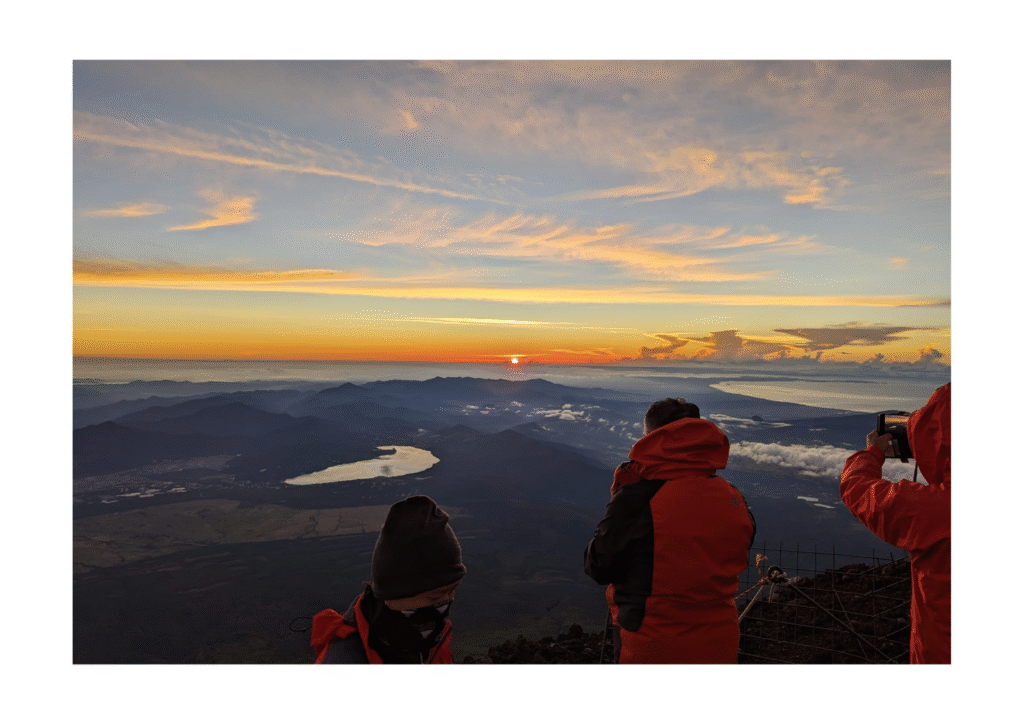
Sunrise from the summit of Fuji.

Eighth station: hunger and resilience

By eighth, there were signs of civilization. Most of the overnight huts were located nearby. Suddenly apparent was the hunger lurking in the pits of my stomach and a severe lack of snacks remaining in my backpacks. My breaks were growing longer, whilst my contemporaries seemed to be coping just fine. Damn these unbothered gurus of mountaineering…

I needed help, and having relied on my partner (who had been studying for a year in Japan) for the majority of our communication, I felt lost locating it. I considered throwing in the towel or renting a hut for the night, but in the end, I sucked it up. Somehow, I  managed to acquire some chocolate after a bungled back-and-forth with some retailers, which was a small moment of pride for me. I could do this on my own.

There was one universal language up here – resilience. Every soul was laser-focused on the same triumph and I knew this determination would translate into movement. I knew we would prevail.

Ninth station: the shove

Just before ninth, the Yoshida and Subashiri trails intersected. Suddenly, where before isolation left you exposed, you could barely move through queues of bodies shoving impatiently towards the peak. Somehow, it felt further away than ever.

In many ways, this was the easiest part, and the most encouraging. Forced to shuffle at a snail’s pace, you can catch your breath more easily. Plus, you finally appreciate the sheer volume of cultures surrounding you. Climbers young and old, timid and bold… every race, religion and creed, every unique background and occupation, all united, breathing down each other’s necks and longing for the rocks to level out underfoot.

My thoughts drifted to Louie and Kyohei. I wondered if they’d made it to their hut, or whether they’d made the final push. I only hoped they hadn’t turned back too soon.

The summit

There was something initially underwhelming about reaching the summit. There was no great final obstacle, no fanfare. The upward push simply ended, filtering into a condensed community of buildings where I was finally able to get a warm udon meal (transformative) and rest, dwelling in the majesty of what was to come.

Everyone gathered along a rocky hill encircled by barriers. This appeared to be a designated lookout point, facing the eastern sky. And at 5 a.m., far from our vantage at the top of the world, a beam broke free from its twilight.
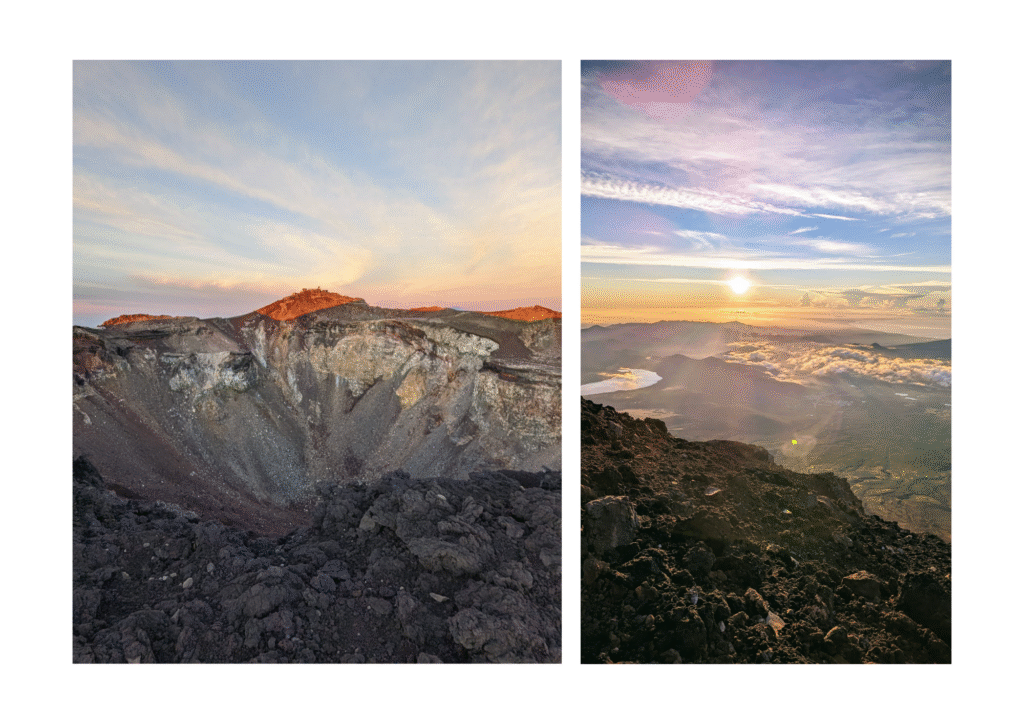
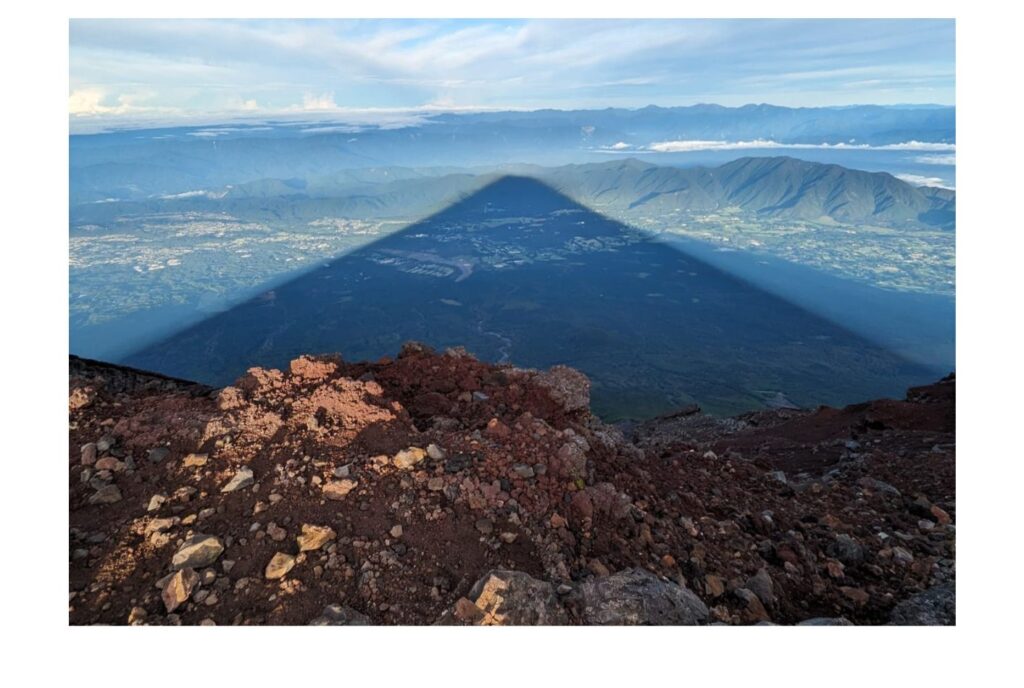
Two images of the view of and from Fuji, showing the contrast between rock and sky.

1,476 meters. Nine and a half hours. One of the most extraordinary feats I’d accomplished. With my newfound triumph and a warm meal in my belly, I felt more awake than ever. I took an extra hour or so (as many climbers do) to walk around Fuji’s caldera, one part of which descends into the crater. They just let you do that. You can climb into an active stratovolcano. It’s crazy.

The future of Fuji

Many elements have changed since I ascended the mountain in 2023. For one, it now costs 4,000 yen per person to climb, whereas before donations were voluntary. The trailheads are now closed off in the evenings between certain hours to any climbers not staying in huts. That aside, I found this experience to be utterly life-changing and would recommend it to anyone daring enough. I would do it again in a heartbeat.
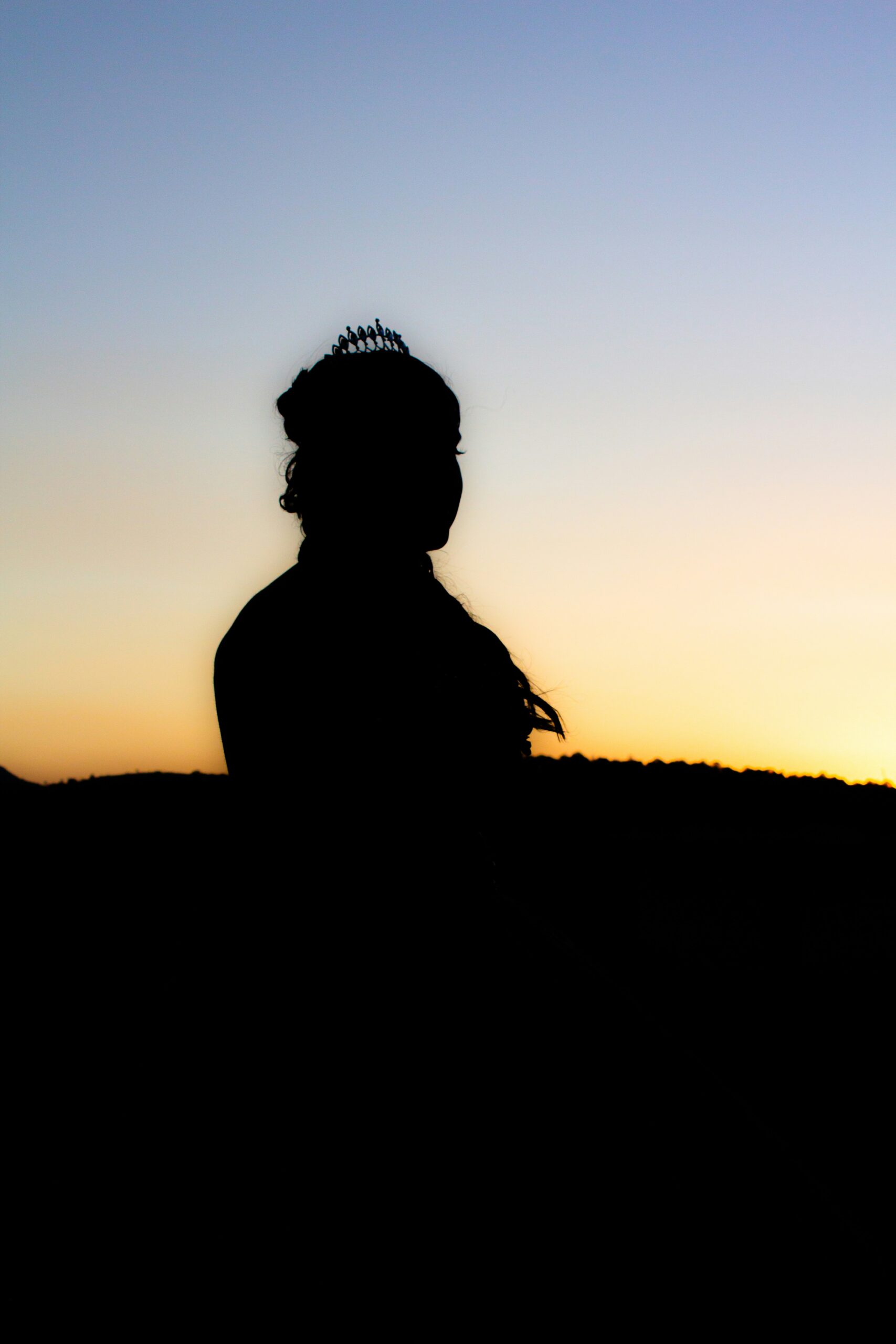

Heavy Are The Crowns

Heavy are the crowns we wear,
Invisible, but not silent,
Bendable, but not fragile,
Loving, self-sacrificing,
Unable to be forgotten,

A laurel of desperation,
Seeking safety, warmth, and control–
Small, but sturdy in novice hands,
Arches, possibilities within reach,
Fitting loosely on an ambitious head,

An anadem of Renaissance,
Provoked by imagination and intellect,
Eager, encompassing,
One that births revelations,
A statement to those who offer their gaze,

A garland of frugality,
Dulled and scratched in the face of war,
Marred by gruff, firm hands,
Witness to crimson, bone, and coal;
Treasured even in the new era,

A chaplet of enduring strength,
Waterlogged with the weight of grief,
Ashes, dense as streams,
Polished to a shine with regrets,
Dinged, dimpled from the buffeting of obligations,

A coronet of shining radiance
Filled with the adoration of her subjects,
Jewels, not of decadence,
But those that still shine with opulence,
Valued beyond her last days,
Hidden away between painful breaths,

A diadem of bittersweet ties,
Reflecting a lifetime of servitude,
Unearthing the value after a dynasty dies,
Buffed to a mirror reflection,
The lines tracing the story of ghosts,

Heavy are the crowns we wear,
Passed onto us from predecessors,
Our fingers trace a mottled ancestry to times unknown,
But the love and sacrifice are not forgotten.

The Long and Short Game

Crushes

What exactly is a crush? Can it be quantified? Measured? Narrowed to a single description? I used to think that  a crush was an attraction you felt strongly and quickly within the first months of knowing someone… Depending on the mutuality, this crush can either expand or fade (often with one-sided difficulty).

A crush feels magnetic, like everything lighting up at once… Otherwise, it doesn’t count, right?

Well, no. There’s more depth to attraction than that, as I’ve discovered recently. Hidden strands and universal shifts. I’d never accounted for friendships where attraction develops later, or where crushes are seasonal, almost, fading with the weather. I’d never accounted for my changing tastes.

As of late February, I’ve been in a relationship with my best friend of five years. I can’t get enough of her, yet the strangest thing is… not even three months ago, I never would have put this on my bingo card. Genuinely.

The subtlest shifts can usher in the most tectonic of changes.

The long game

I met my now-girlfriend (we’ll call her Emma) in our first year of university, when neither of us really knew what the hell we were doing. I’d previously been off with COVID or some other hacking spell from a drama workshop, so Emma approached me mid-session on the day I returned. She’d missed seeing me in class. Something had drawn her to me, though even then it was never anything romantic. In fact, it was somewhat chronic, seeing how it led to our crippling bubble tea addiction at the local Pearls, where we then spent the majority of our free time.

We developed a bond very quickly, having the same humour, quirks and coping mechanisms. This was exacerbated by our respective flatmate situations.

As a freshman, I lived in a hallway of eight, each having an individual and unique personality that quickly separated into cliques. We were amiable enough, holding parties, supporting one another — though towards the end of the year, the ‘incident’ happened. Without delving into too much detail, a growing wedge between two members of the hallway (a conflict I was utterly uninvolved in, I should add) forced me into choosing sides. I attempted to mediate, but because of my indecision, it was I who was treated like the villain.

I’ve rarely felt that isolated in my life. Never once did I receive an apology. Even worse, for some time, it seemed I would have to make reparations out of necessity if I wanted housemates to bunk with in our second year.

That’s when Emma started showing up. She’d been having trouble with her corridor too. Together we found a mutual escape with one another, hanging out in each other’s rooms, dancing to theatre songs, filming silly TikTok videos, drunken rants and reassurances.

She’s the reason I was able to finish my first year, if I’m being candid.

The roommate problem

With second year approaching, we mock-interviewed four combinations of housemates, only having each other as constants – this part was not up for debate. Once we’d found a third, we prowled for houses and lucked out with a sudden opening on the hill leading down from our university. Emma and I moved in for a week to test the waters, and celebrated the occasion with our respective families at a local restaurant.

What was hilarious was that my parents had actually met her parents several years before anything would happen.

As I learned recently, I had made a good impression.  Emma’s mum and dad had both been rooting for us, even as we pursued our own relationships. Many of our mutual friends suspected that we were an item too, though we never took any notice.

For one thing, now being roommates, there was forbidden territory. We were ever aware that if  we started dating and something had gone wrong — the awkwardness of still living together would probably have driven us apart forever. I hear horror stories of younger couples from our university moving in together and promptly breaking up, yet still having to share the same room (or even the same bed)! Our bond was a reliable constant, and this continued through our second year of living together when Emma and I took on substantial roles in student societies and needed a shared space to de-stress.

When you pair that with a genuine lack of physical attraction back then, It seemed impossible that we ever could have crossed a line.

Suddenly, distance

Three years flew past. Suddenly, we were back home, considering our options from different counties. I dove straight into my Master’s, while Emma took a year to pursue masterclasses and save money.

Ironically, my contact with Emma was fairly infrequent for a time. I’m still not sure why to be honest. Perhaps we were cautious of codependency? Perhaps I was just genuinely bad at texting? For whatever reason it happened, I have this distance to thank, inexplicably, for us growing even closer. Within that absence, I think something clicked into place.

The short game

The moment I started ‘crushing’, however you define it, is unclear. I wouldn’t even strictly call it a crush… just a gentle, lifting realisation. I tend to trace it back to Emma’s 2026 New Year’s post on Instagram, featuring her family during some merry late night celebrations. I made a joke, commenting how it looked like her dad was capsizing, falling drunkenly from a rather voluminous armchair and out of frame. We got to talking off the back of that. We were properly talking. I mean, four days straight, yapping every minute we could.

It was like a veil had been lifted, one that had previously only revealed half-truths. I stared at her photos for longer. I scrolled through threads upon threads of conversation, searching for notes of interest. I was soaked in curiosity, to know her better, to hear about every minute detail of her day.

Within a month, we met with some mutual friends in London for bowling and I invited Emma to come visit my home county. Within another month, she was laying on my parents’ couch beside me. That first night, we got to talking about prior relationships and encounters, especially some troubling ones where close friends had revealed their true feelings to her, causing their relationship to subsequently go cold. She mentioned how she’d never put herself in that position again.

PANIC! I thought I had zero chance. Consider also that, not even a week prior, Emma had posted a reel on Instagram talking about how soulmates can be platonic – that the universe doesn’t always deal in red strings, but blue ones and pink ones too. This, I thought, was a truly wonderful sentiment, if not a touch concerning on the whole burgeoning attraction front.

Still, I didn’t eliminate the possibility, the little clues I’d picked up. I took her out the next day to watch The Housemaid, followed by some hot chocolate in a bistro cafe. We ended up back on the couch in the evening, wrapped in each other’s arms with some animated films on the TV. The chemistry was abundant, our faces growing closer and closer, but I was terrified of making that first move! All our many years of history were riding on this one moment.

Strangely, it was Kung Fu Panda 2 that did it for us, when Emma started making random pss pss pss noises as if she was trying to beckon a cat from across the room. I kissed her then, teasingly, just to shut her up, this esoteric ritual having gone on for around a minute.

The kiss was very much returned.

Image of a man and a woman sitting facing the sun setting over the ocean. They are sitting close and leaning against one another.
Image courtesy of Kemal Esensoy on Unsplash

New beginnings

Emma’s mentioned that her timing on the whole “I’m never dating my friends again” discussion was a bit wonky, but I’m glad she brought it up. I’m not willing to mess this up, hence my asking Emma to be my girlfriend the day she was due to travel back home. I’m done chasing loose ends. I’m done dithering.

I’ve never truly loved someone before. Not like this.

We’ve talked at length since about whether we should have gotten together earlier. Neither of us see it. The foundation we’ve built gave rise to new angles and perspectives – not so much a revelation as a new chapter. The start of a fresh page. Everything has fallen into place for us because of this timing, and I don’t think we’d have it any other way.

So have patience. Sometimes crushes can be mere infatuations. They can lead you into meaningless scenarios. Don’t get caught in the trap of feeling that love has to be explosive or dramatic as we see in films and TV and stories. Sometimes you play long games, sometimes you play shorter ones. Other times it can feel like both together. But trust me, when you’re slow-dancing to Labi Siffre with the truest extension of your soul, it feels like weaving a cocoon in the fabric of time.

When you find that special someone… you’ll know.

I Can’t Not Use It

How come it’s ”insufferable” but not “unsufferable”? Why is “irregardless” an accepted word? Is it “sneaked in or snuck”? Who actually says “tomato” instead of “tomato” (You know what I mean)?

The root of it all

I’m sure I’m not the only one who read a lot growing up. However, all that exposure to the written language, vocabulary, and different styles of writing didn’t exactly include a dictionary. Believe me, I’ve tried reading it before, and, surprisingly, it wasn’t exactly fruitful. You see, the written word is exactly that: written. If you come across a new word that seems difficult to pronounce, you don’t exactly get to hear what it sounds like unless you ask somebody to help you. And honestly, when you get in the flow of reading, do you really want to stop just to ask?

That all changed when I entered high school.

In my first year, I remember how fascinating it was to learn that much of the English language is borrowed from other countries and that many of the words we know now are based on a dead language — Latin. Latin roots, prefixes, and suffixes particularly drew my interest, and I’ve always chuckled to myself about how I was most interested in English because of Latin.

It was also then I realized that I wanted to pursue a career in English.

Not an English teacher

Now, mind you, I didn’t want to be a teacher; I just wanted to be surrounded by words and books, and I wanted the opportunity to learn more about language. That interest stayed with me all through high school, and I was determined to be an English major.. My favorite one-liner was, “I’m an English major, not a dictionary.” Throughout college, my interest in language continued to grow, and I studied Japanese while learning to teach English as a second oral language. There was also a hot moment when I learned the Korean alphabet (Hangul).

Ironically, I even became a teacher assistant in Japan.

With the help of  my students and the teachers outside the English department, I came to realize that the English language was just a mess.

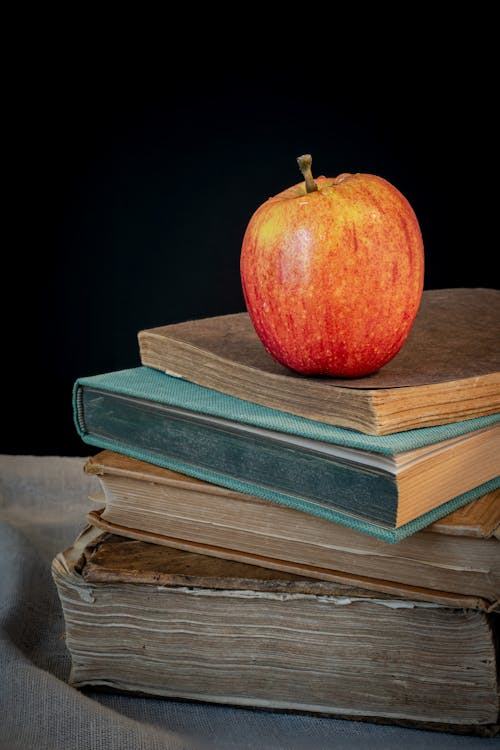
A stack of older-looking books with an apple perched on top.
(Image courtesy of Ylanite Koppens on Pexels)

Which homophone is the correct word to use? What do these idioms mean? How come there’s a specific order for adjectives? Why is it that when you affix a word (like compile), it’s pronounced differently from the original word (like compilation)? Homonyms? Now they’re just plain rude.

Yet, I pursued the language. I studied linguistics. I bought books to better understand grammar.I researched the same words over and over just so I could confidently explain their meaning to somebody who was trying to understand English themselves. To be honest, though, I still don’t quite know how to use adverbs correctly. But Hangul did come in handy when I was trying to show students how to pronounce English words correctly.

A lifetime within three years

Of the hundreds of students I’ve taught over three years, I’d say about 92% didn’t want to learn, whether from me or in general. Maybe about 6% were interested passively, and the last 2% were genuinely interested in a second language. Learning English helped them open up new opportunities, leave their hometown, and understand something outside their routine lives.

There’s one student, a bright young man, who I think about fondly. He took to the lessons – and my dumb games – with actual interest. I was fortunate to have taught him from his first year through his third year. Then, summer vacation rolled around after graduation, and the new semester started. It wasn’t until then that I learned he went to Hawai’i with his family for vacation and was involved in a tragic accident.

A small part of me thought that I helped cultivate his interest in the language, that I contributed just a small part to his confidence in English, and that it was just enough for him and his family to travel abroad. I may have forgotten his name (a terrible flaw I am truly ashamed of), but I can still picture his face perfectly. I know it’s not something I should hold myself accountable for, that it’s unreasonable to blame anyone for what had happened. Instead, I choose to be grateful that I had the chance to be a positive influence in his life.

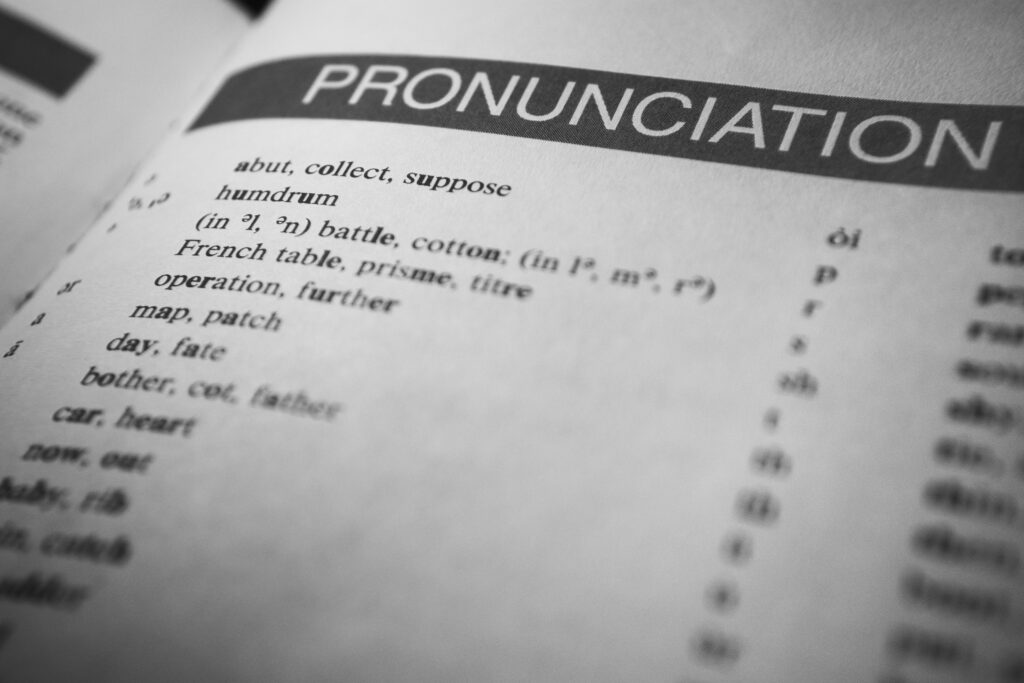
A page from a textbook showing the phonetic notations of a group of words.
(Image courtesy of Nothing Ahead on Pexels)

Me, my professor, and English

Truthfully, English is my second language, but it’s become my primary language. Studying it has broadened my horizons, deepened my appreciation and understanding of it, and allowed me to connect with people who also truly wanted to learn. I’d like to thank my grammar professor in college, who helped spark that motivation in me to better understand English. She fled North Korea, taught herself English, and is now teaching native English speakers how to better understand and dissect the innate understanding we have of the language – such as why we know to say “jump into the pool” and not “jump onto the pool.”

I still love to learn, and I’m best working behind the scenes rather than in front of students, teaching. That spark I felt nearly two decades ago still remains to this day.

And for the record, I personally say ‘toe-mae-toe.’

Parents: Surprise, They’re Human Too!

For many children, our parents are our whole world. They are the people whom we idolize most in the first few years of our lives. We romanticize them and expect nothing but the best from them.

Yet as we get older, there comes a moment or series of moments when we realize our parents aren’t quite as perfect as we thought they were. For me, I grew up with two parents in a rather “traditional” household: Dad went to work and earned a living, Mom stayed home and took care of me and my little sister. I always thought the world of both my mom and dad, my mom being the loving caretaker and my dad being the stern yet reliable working man. 

As I grew, I started to see the cracks, some more hidden than others. Arguments, money troubles, mistakes made — and slowly but surely, they eroded that idolized image of my parents, and I came to see them for what they were: flawed human beings. My mom and dad, the two people in my life who could do no wrong, suddenly had an unflattering light shown on them. While cartoons and the Tooth Fairy and all the joys of childhood distracted me from this for a time, every adult knows that whimsy doesn’t last forever. 

Their learned flaws

The parents who raised my generation came from a time when their parents’ words were law — children were meant to be seen, not heard. A parent could never be wrong. A parent needed to be a perfect role model so that the kids grew up to be perfect role models for their kids and the whole cycle would continue. If only life were so simple. 

I imagine for many people the sudden realization that their parents aren’t the epitome of humanity was a rather nasty shock, as it was for me. As that barrier breaks down and you see your parents as flawed human beings, it can become harder to abide by their words, when doubt creeps in over whether or not they’re correct in their views, actions, or behaviors. I held a lot of resentment against both my mom and dad for not being their “honest selves,” some of it earned and some of it due to a lack of understanding of just how difficult it is to be a parent. 

Arguments were swept under the rug, not properly dealt with and discussed. Those arguments would happen because resentment festered and bubbled. My family would not always openly discuss the real issues, instead dealing with the superficial ones while my parents still tried to make it seem like everything was okay. I certainly can’t blame them for wanting to give me a happy childhood, something they both had their own struggles with. Yet not discussing the real problems behind these arguments, sometimes oversharing in the middle of an argument because they had hit their boiling point, only made it more difficult to understand why they would fight if everything was okay. 

My parents had difficult childhoods, as did their parents before them. It’s hard to break cycles like that. Throughout their time raising me, my parents tried not to repeat the mistakes they saw their own parents make. At times they succeeded, and at other times they fell into the trap of trying to be perfect role models, making it all the more confusing whenever they struggled to uphold that impossible goal. There was no smooth transition from idolizing my parents to understanding they were just regular, flawed people.

Parents have a lifelong impact 

I don’t think my parents, or any parents for that matter, were wrong to put on a show at times and pretend everything was okay, even when it wasn’t. I have yet to have the privilege of being a parent, but I’ve worked with many kids and interacted with my nieces and nephews over the past ten years. If there’s one thing I’ve learned, it’s that a panicking adult does no good for a child. Maybe my parents knew that, too, and were just trying to protect me. 

Adults are supposed to have the tools to handle any situation and make sure kids know that everything is going to be okay, even when we don’t know ourselves and lack the tools to determine otherwise.  But we lie or exaggerate. We hold their hands for reassurance, then go and break down silently to process it ourselves, hidden from their prying eyes. 

Being completely honest with a child that you don’t have all the answers and are freaking out yourself can introduce trauma, and life does enough of that already. It’s only since we are all older that both my parents and I can be more honest with each other. I now find that being able to speak openly with my parents about their flaws and mistakes has helped me understand them on a much deeper level and avoid making some of the same mistakes. 

The three of us have come a long way from who we all used to be. In a sense, we’ve come full circle. As a kid, I openly loved my parents and enjoyed being around them. As the years went on and family dysfunction took hold, I distanced myself from them, not fully comprehending why they pretended to be these perfect role models that they never were. Now as an adult, as someone who has been able to openly talk to my parents and discuss and understand their flaws, I’ve grown to understand why they tried to be so perfectly perfect, while also learning how to break the cycle. 

In my opinion, letting a child see that you are human, that you make mistakes and apologize for them, being honest without imposing your own fears and insecurities, is crucial to developing a proper relationship with them. 

With my own nieces and nephews, I make sure to apologize and admit to them when I am wrong. I want them to be able to talk to me about life, and I want to help them navigate it with stories of my own experiences and mistakes. No adult is perfect, no adult will ever have all the answers. Kids need to know that it is okay to be wrong. Otherwise the cycle of the “perfect parents” will continue. And parent-child relationships will suffer as a result.

Small is Beautiful: DECOIN of Ecuador

In the Ecuadorian Tropical Cloud Forest, where wax palms sit high above the canopy, wreathed in mist above great green mountains, there lives a creature the size of your thumb.

The Intag Resistance Rocket frog or Ectopoglossus sp nov., a species new to categorization, was first documented in 2019, three years after the discovery of the thought-to-be extinct Longnose Harlequin frog (Atelopus longirostris). The name of the former was chosen after an international contest to name the species. 

Because Leonardo DiCaprio has posted several tweets supporting the conservation of the region, people started to call the Longnose Harlequin frog (“rediscovered” there in 2016) after him, aka the “DiCaprio frog.” The Harlequin frog, first described in 1868 by Edward Drinker Cope, was rediscovered in March 2016 by researchers in the Junín area of Ecuador’s Imbabura province.

Giving rare frogs names after celebrities isn’t new; a similar honor was given to James Cameron in 2012, when a Venezuelan frog was named after him. Do you need to be a big-name A-Lister just to be able to save Earth’s creatures great and small? As DECOIN’s story tells us, you do not have to be.

Worlds away from Pandora

In the mountainous cloud forests of Intag in Ecuador, DECOIN (Defensa y Conservación Ecológica de Intag), led by Carlos Zorrilla, is its own kind of “Cameronian” story. Socioeconomic conditions in the Andes echo James Cameron’s blockbuster series, “Avatar”: mining corporations, the deployment of paramilitaries used to harass a native population, and a struggle for the soul of the land. Only here, there are no space aliens or denizens of a planet connected through a hive mind. 

If Cameron, who visited the Arara tribe in Brazil in 2010 to support indigenous communities protesting the construction of a dam, were to make another movie about real people fighting against mining, I would hope such a film would feature those in the Intag region, like Zorrilla, Sylvia Selger, and their colleagues at DECOIN.

The path of resistance

Founded in 1995, DECOIN is a grassroots organization that aims to protect biodiversity in Intag by, among many other things, establishing community-owned watershed reserves. In doing so, it provides locals with safe drinking water and, in some cases, sustainable alternatives to mining in the Intag-Cotacachi-Imbabura region.

They are a non-corporate entity that resists destruction brought by large mining corporations and empowers locals to protect their own water supply and biodiversity. In the “Avatar” films, the hero Jake Sully adopts the local customs of the Na’vi to help them keep their land. DECOIN uses a similar tactic: giving the locals back what is theirs. It isn’t always filled with Hollywood explosions, thankfully, but it is deeply strategic.

In Zorrilla’s “manual of resistance”⁠, the primary tactic against mining corporations is simple: protect your land. He wrote the manual “so communities know what to expect when mining or petroleum companies show up at their door.” He tells me that he wanted to “give some ideas as to what to do about it.” Zorrilla’s manual has been translated into several languages so as to reach a broad audience. You can find the manual in the link in this paragraph or download it from the miningwatch.ca website. (It is written for activists, so the language might be strong. Please be advised.) Select “publications,” and search for “protecting your community” (with quotes). The supplement is available there as well.

As the manual describes: “The company will often attempt to buy … key properties. They may offer high prices for land to win over residents and to weaken the resistance. Sometimes they will buy land gradually… Or they might try to rent the land for many years… they can just pick up and leave when they’re done without having to clean up”.

To counter this, Zorrilla and his team pioneered what he calls “the most successful conservation measure”: buying up the land and giving it to the communities. “Not for us to protect,” Zorrilla told me in our interview, “but for the communities and local governments. Since they have more at stake, that’s where they get their water.”

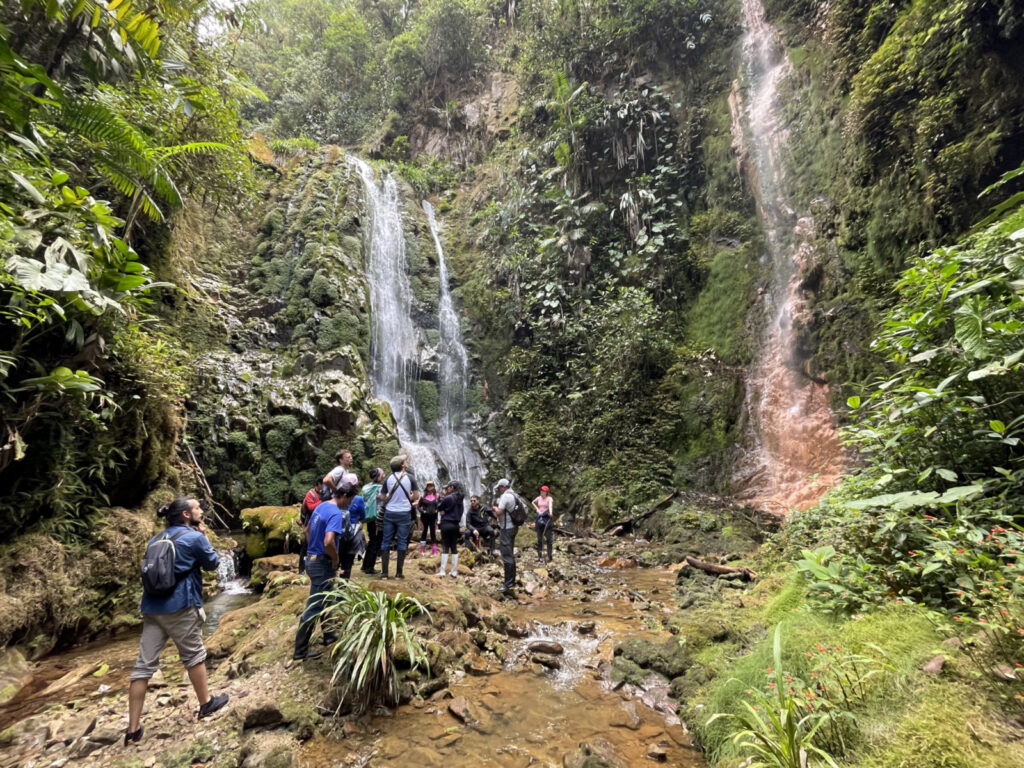
A group of people standing in front of two waterfalls in the forest.
(Image courtesy of Carlos Zorrilla, DECOIN)

Though the world often focuses on the vastness of the Amazon, the cloud forest of Intag is a niche area of even higher density. Sylvia Selger explained the biological math during our talk: “The cloud forest is a tropical mountain cloud forest. These forests are known for being very, very diverse. They have more endangered species per square kilometer than the Amazon.” Because these forests are islands in the sky, evolution has created life forms found nowhere else.

In the cloud forest, Intag’s Resistance Rocket frog is a legal giant. In 2008, Ecuador became the first country in the world to enshrine the Rights of Nature in its constitution. This shifted the legal landscape from nature being “property” to nature being a “subject” with the right to exist, persist, and regenerate. “In my eyes, the Rights of Nature is, in essence, a momentous shift of paradigm, from an anthropocentric way of experiencing the world, to an ecocentric vision, in which other species and elements of nature have equal standing in the courts,” says Carlos Zorrilla.

By proving that mining activities would inevitably impact species like the Longnose Harlequin frog and Intag’s Resistance Rocket frog, DECOIN provided the scientific testimony to the courts that the resilient inteños — the people of Intag — needed to halt the mining projects. For the comuneros (community landowners), these aren’t just scientific data points; they are the neighbors with whom they share water.

Small is beautiful

DECOIN’s resilience through staying lean is genuinely inspiring. Many other environmental organizations survive by receiving CSR or ESG funding and are tied to corporate interests. DECOIN survives by staying focused locally, no frills.

In his own words, Carlos told me that “Small is beautiful.” This philosophy protects the movement. When the government harasses him to advance the agenda of mining companies, they find that DECOIN has no major funds and cannot be traced to an illicit agenda. “We are not an NGO,” Mr. Zorrilla explains. “We are a grassroots organization. Unlike some of the big NGOs in the big cities that visit the sites they support, driving big expensive SUVs, our organization does not own a vehicle. Most of our members only travel by bus, and our office, which we only open one day a week, is tiny.”

His colleague Sylvia Selger says that DECOIN has “almost zero overhead.” Both she and Zorrilla “don’t get a salary from DECOIN, and we are paying one worker a wage.”

When I asked if they have a Patreon, they both told me they do not. They rely on a network of trusted friends and partners to source funds when their community needs it, so there is complete transparency and trust in a tight-knit group. Carlos tells me, “This establishes us as a reliable partner. If a community needs urgent funding, we’re able to give it to them without having to go through all the horrible paperwork that most organizations are forced to do. This is more important these days, since the government passed legislation to go after NGOs that oppose mining projects. So, we don’t really, we’re fine. Very small, very few people, and we are from the area, people know us, and we can have a quick response to threats.”

“We want to keep it that way. Small is beautiful. In this case, small is beautiful.”

Small does not mean powerless, as history in Intag has shown. Even as something as small as a frog can be major proof for the case of nature’s rights, smallness was also not an obstacle for the United Nations Development Programme to grant DECOIN the prestigious Equator Prize in 2017.I hope that as long as DECOIN stays “small,” the small things like the Resistance Rocket frog and the people of Intag (inteños and inteñas) have a chance. ⁠


For more information about DECOIN and its impact, visit their website here⁠.Carlos Zorrilla also recommends that people watch more documentaries about DECOIN’s struggle in Intag on YouTube, including this Mongabay one.

Carolina Maria de Jesus: The Day Hunger Stopped Being Abstract

During Brazil’s 2026 Carnival, one of the most celebrated names was that of writer Carolina Maria de Jesus. She was honored by Unidos da Tijuca, a major samba school from Rio de Janeiro competing in the country’s top division. Her life story became a samba anthem, echoed by thousands of voices along the Sambadrome — the iconic parade avenue where Rio’s Carnival unfolds each year.

But my first encounter with Carolina did not happen at Carnival.

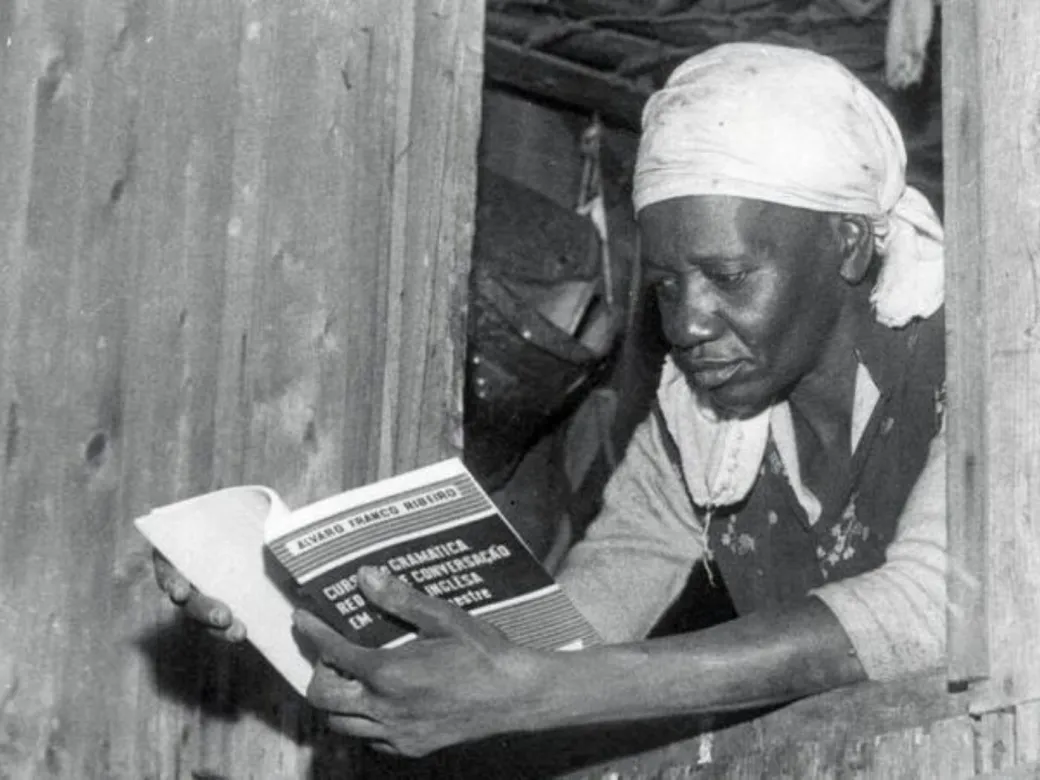
I was 13 years old when I first read ‘Quarto de Despejo’ 1960, at the beginning of my adolescence, for a school assignment. It was the first time I was confronted with a narrative that spoke about hunger in a real way. Until then, hunger had been a distant word — a textbook statistic, a concept that fit neatly into exams and classroom debates.

For the first time, hunger stopped being social data and gained a voice, a body, and a daily life. Carolina,  a Black woman from a favela — often translated as “urban slum,” but more accurately a marginalized community shaped by structural inequality — who survived by collecting paper, wrote in order to live. Her direct, raw language was the only one possible in the face of daily violence.

One simple sentence stopped me: “Hunger is also a teacher.”

I remember closing the book for a few seconds. Reading does more than move us — it leaves a mark. It makes us think about our world, how we live in it, and reminds us that it is not the only world that exists. Reading allows us to reflect on the different realities and experiences of every human being.That book showed me that writing can be a form of resistance and that no human being is defined by the conditions into which they are born.

That was when I realized writing could be more than literature. It could be resistance.

Born in 1914, Carolina documented hunger, exclusion, and the struggle to raise her three children. She transformed scarcity into historical record. She disrupted Brazil’s elitist literary tradition by placing the favela,  or  “urban slum,” at the center of the narrative.

The original title ‘Quarto de Despejo’ literally means “the junk room,” the space where unwanted objects are stored. Carolina used it as a metaphor for how society hides what it does not want to see. Not just an urban metaphor, but a political one. Society organizes itself through the marginalization of its own citizens.

But at that age, my reaction was not theoretical.

I had already moved between very different social worlds — from dinners in affluent neighborhoods in Rio de Janeiro to visits to Rocinha, one of Latin America’s largest favelas. I understood the difference. What I did not yet understand was structure.

Carolina taught me that hunger is not accidental. It is constructed. And she showed me that writing can expose that construction.

Perhaps that was the moment I began to understand why I wanted to use my own voice. Perhaps that was when journalism stopped seeming like just a profession and started feeling like responsibility.

Years later, when I saw Carolina’s name sung by thousands during Rio’s Carnival parade, I realized that the private revelation I had experienced as a teenager had become collective recognition. The parade did in celebration what the book had done in silence for me: affirm that literature is born wherever human experience insists on being heard.

Despite the international success of Child of the Dark, Carolina was not immediately embraced by Brazil’s literary canon. For years, her work was treated merely as social documentation, as if testimony could not also be art.

“Hunger is also a teacher.”

I have never read Brazil the same way since.

INK

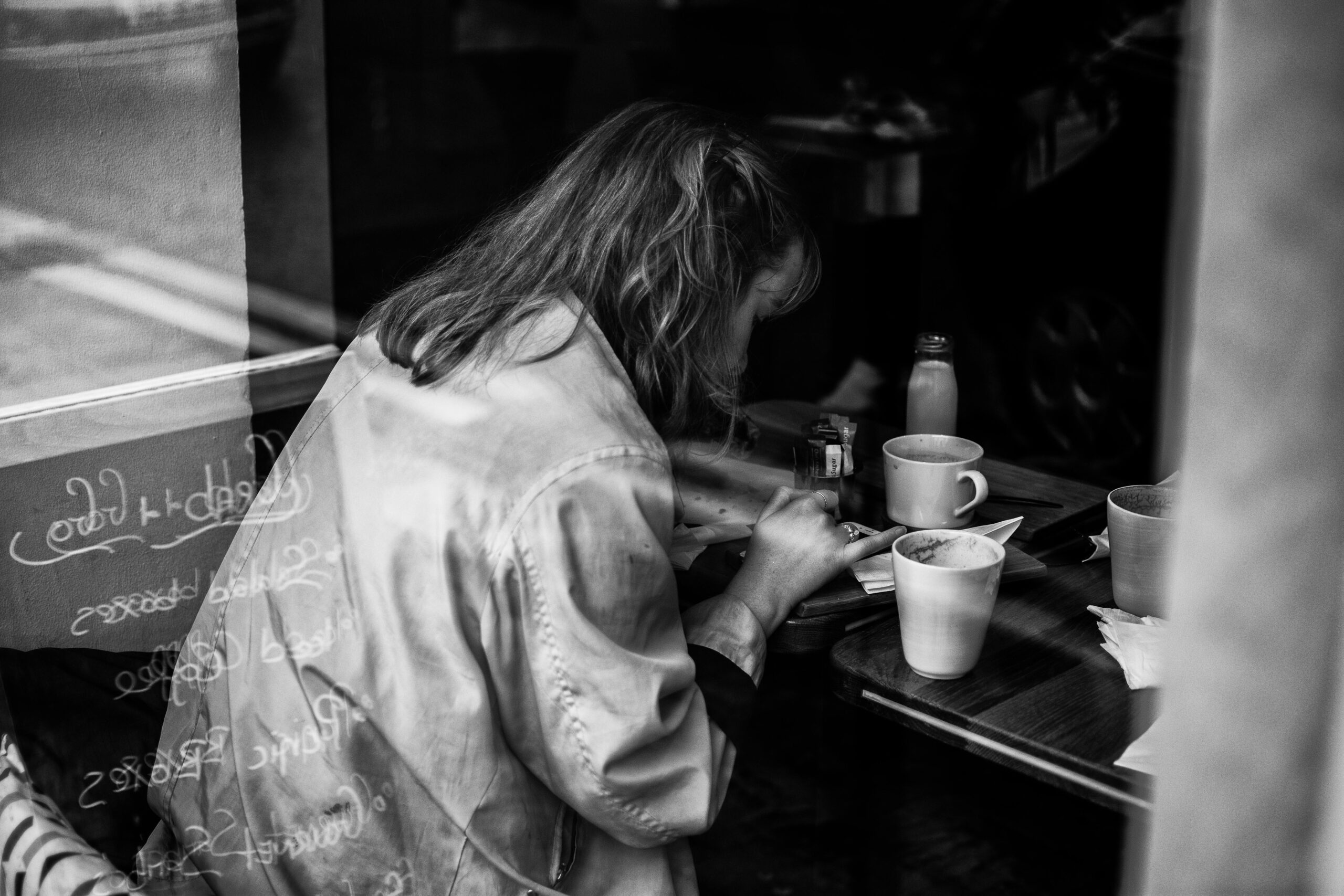
In a coffee shop a woman sits, head bent, knotted and frizzy blonde hair cascading down her back. A claw clip clings to it with little purpose: impotent, listless, one tooth broken at the root.

Besides her sit a cup of coffee and a laptop. She hates the artificial light it generates: a swinging metronome, pulling her face toward the glare, frying her retinas.

Well, out of sight, out of mind, she thinks, and slips it into her backpack. But the burn behind her eyelids still sears.  

She pulls out a notepad; wrinkles her nose in distaste at the sight of her own messy handwriting. Why can’t she have beautiful, flowing script like other girls? Effortlessly curly and smooth (their hair always the same — no frizz in sight) half cursive: one letter making love to another, forming a sensuous breath, an uninterrupted thought inhaled and exhaled in harmony.

Poetry ought to hold hands with elegant script — not chicken scratch.

But what was the word she was looking for?

Her moonbeam shouldn’t just glisten or gleam; but perhaps illuminate? Luminate? Effervesce?

Too highfalutin, she thinks.

Use simple words you aren’t a Victorian novelist. No Brontes here. Hadn’t they written all their best works by the age you are now? You, on the other hand, have written nothing.

She decides on “shimmer” with distaste.

Across the shop, a middle-aged woman sits on a sofa. Her latte lays untouched on the low table before her. She is deeply uncomfortable and utterly ignorant of her own feelings — her whole awareness taken up with wishing her cell phone would ring, though she knows it will not.

 Her daughter, after all, is busy. Her daughter doesn’t need her. Her daughter is just fine.

Somewhere, on the other side of the country, she sits — like that girl to the right maybe — writing a beautiful paper that will get an “A.” And she will call home happy about it, someday. Just not today.

Though Ashley takes much better care of her appearance, she thinks, spotting the claw clip. That’s the way she was raised: “You have to put your best foot forward,” she always told her daughter.

She wishes Ashley would call more often. She wishes even more that she did not resent her for not calling — children must be left to live their own lives — but then, on the other hand, didn’t their parents deserve more than to be treated like an ATM?

Maybe I did something wrong when she was growing up, she wonders, thinking back into a blurry abyss where memories sometimes rose to the surface with painful clarity.

Though she is ashamed of it, she often snoops in their joint bank account. She had seen the bill the day before: mental health solutions, psychotherapy. She knows what people talk about in those sessions — about all the things their parents did wrong — every unintentional trauma they imparted, the spankings they had given. Well, hadn’t everyone told her it was good to spank her children then? Hadn’t her own parents done it to her, sometimes with a belt? It had never crossed her mind to resent them for it.

But children were different now because now was a different time. They believed in looking deeply into every feeling and rooting out every pain, rehashing every conflict. They had no idea what a great luxury it was to be able to do so.

She remains unconvinced, no matter what Ashley says, that it is always better to uncover than to bury. Her coffee grows cold, so she forces herself to drink it, mechanically.

A little boy runs back and forth across the shop, from his Mother, seated at a bistro table outside, through the heavy door (he must push hard, like Superman, to make it move) to the shelf of games. He runs his fingers over each game but chooses none because his legs are twitching to run and leap.

He dashes back again (fast, like a cheetah), catching a glimpse of a thin woman sitting beside the games. She has lines all over her face because she is old, and she looks sad. He forgets about her the moment he turns away and pushes at the door.

Mother sits reading, though he can feel her watching him, making sure he does not try to run across the street. He wishes they could play together, but knows she doesn’t want to.

He knows Mother more by smell and touch and sound than by sight — because she is always moving, and her legs are the body part he sees most. She is a skirt, a lullaby, a pantsuit, a warm hug, sometimes a stern voice, but always far above him, in a different sphere he cannot fully enter.

He kicks a pebble and sends it scuttling onto the street. He starts after it with abandon, but finds himself stopped, because Mother has grabbed his shoulder, though she has not looked up. She is omniscient, omnipresent.

She says, “Jeremy, stay.”

He looks longingly after the pebble, then at a bird in a tree, then at the pastries in the shop window. He runs back through the door, push, push, PUSH, and the shop bell jingles.

A grayscale image of a man washing his hand. It is large, strong, and he lets the water cleanse it thoroughly.
(Image Courtesy of George Becker via Pexels) 

In the bathroom, a man eyes his bald head in the mirror above the sink — a rounded and reflective plain, speckled by only a few sickly trees that escaped the strip mall’s razor. He remembers that an astounding percentage of men don’t wash their hands. This makes him feel a little bad for women, and a little bad for himself, too.

Well, he will scrub his hands proficiently, though considering he is about to touch the door handle (urine-bespeckled, undoubtedly) he is not sure it matters.

Everything in life comes out the same, no matter how hard you try, he thinks. What was the point of being good or right in a world where everything is contaminated already — the planet, more or less a castle of bacteria, growing far too fast to be cleansed by soap and water?

A losing battle, he decides, drying his hands.

All this time his eyes have rested on the fruity-flowery wallpaper covering the single-person bathroom: the peaches a warm, burning orange, the cherry blossom petals a delicate, breathy pink, the leaves and vines a cool, comforting green. He is acutely aware that because he is a man, he should not like this wallpaper, but that, unfortunately, he does like it, just like he likes white mochas and peach Bellini.

He walks out of the bathroom and sees a little kid bolt through the shop door, making the bell tinkle. Once upon a time, he was that child, a whirlwind of energy, a flame cruelly contained by kerosene-glass.

Always shattering, screeching and weeping — though the weeping had only continued ‘til seven or so, when he came to understand the cringy weakness of it. He still cried, of course, but only silently, alone, at night. If no one hears a tree fall, does it really make a sound?

He has a theory that “good” men continue to cry into adulthood, even if forced to do so in private. Those who dry up their ducts transform into gods of burning rage… the price of evaporating human tears.

Unless he is self-deluded, and the wallpaper and crying mean something else entirely. He has often wondered if he is gay. Hadn’t softness and sensitivity — however hard he fought against them — permeated his life? The problem with this theory is he doesn’t really want to have sex with men. But considering the repression and homophobia of most males, how can he know for sure? Everything he believes about himself could be a lie — the truth hidden deep beneath layers of societal guilt and shame.

Maybe, even now, his perceived attraction to the girl in the corner — he watches her as she rips through notebook pages, dotting “I’s” and crossing “T’s,” viciously dashing out whole sentences — is all a sham. Her knotted hair reminds him of brambles on the edge of a lawn, encroaching into the landscaping, squelching non-native plants, reclaiming the wild.

It must be this wildness that bewitches him, that enters his body like an evil spirit and drags him across the room to her. Hitting on women in coffee shops is too bold and deeply out of character for him.  Watching his body stroll over to her, he considers if his real intention is to reassert his heterosexuality.

Standing at her table, alarmingly close to her, he realizes he has nothing to say. Mercifully, not only does no sound come out when he opens his mouth, but the girl, absorbed in her art, seems unaware of his presence. Before she can look up, he turns and hustles toward the door.

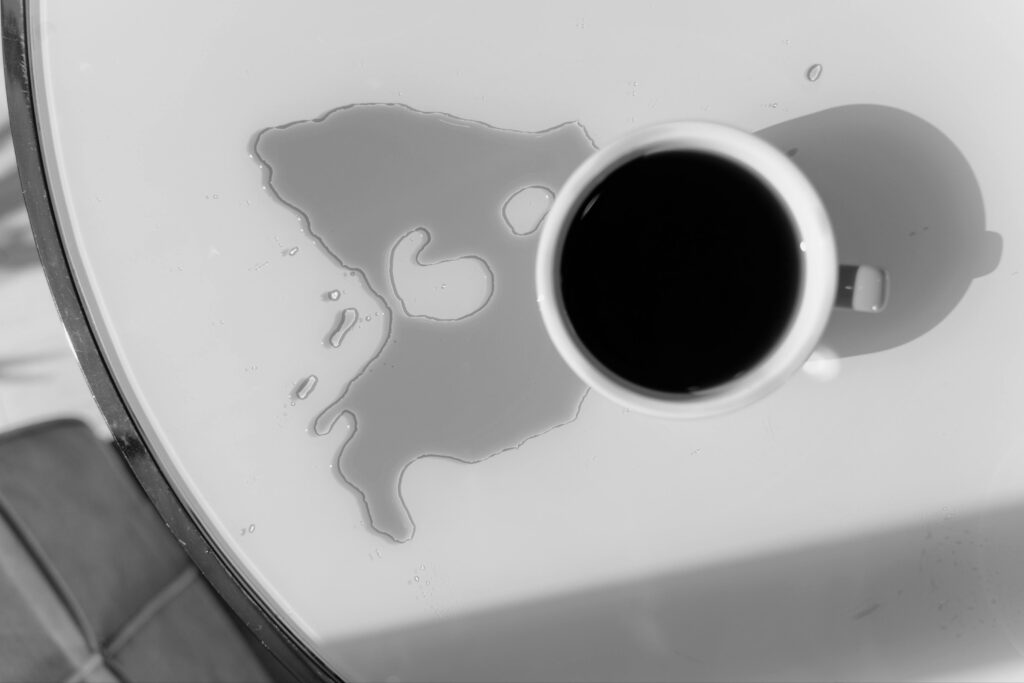
A grayscale image of a cup of coffee that has been partially spilled. The puddle of coffee on the table has gone cold.
(Original image courtesy of RDNE Stock project via Pexels)

On the way out, he nearly runs into the little boy, bolting outside again. He shifts his balance to prevent collision, nearly falling, and careens into a low table, upsetting the coffee cup of an older woman. She looks up at him with tight pursed lips and wide, startled eyes.  

“Oh shit, sorry about that,” he says, trying to help her clean up the mess. But she waves him away, saying nothing. He is left to drift toward the door, knowing himself a failure.

The commotion makes the writer come to herself again. She sees the older woman soak up her spilled coffee with napkins, the child outside pull at his mother’s pant leg, and the younger man disappear through the shop door with a clang.

Even from behind she can tell he is attractive — broad shoulders, a nice butt. Why can’t anyone like that ever notice me? she thinks.

 He’s probably gay, she decides. He’s dressed too nicely to be straight.

She turns back to her page, buzzing with discontentment. One more cold, hard letter written, and her hand stills. Her pen has run out of ink.

Unemployed and Uplifted by Strangers

Lost in my job hunt

For several months, I have consistently scoured LinkedIn and other job posting sites for a variety of available roles. During my senior year of college, my mental and physical health took a toll, and I fell behind in job hunting.  After graduating, I spent part of this summer searching for employment opportunities. 

Being unemployed can feel deeply isolating, especially when the people around you seem to have a structured routine. Several of my peers entered graduate school or already had jobs lined up, while I did not. I often find myself comparing my situation to theirs, and have done so recently. It is almost impossible for me to avoid.

Stuck in isolation this summer, I wondered how I could feel less alone; how I could feel like I truly belonged somewhere. A sense of belonging was difficult to have when I was at home by myself most of the day, especially during the weekdays.  

Making connections appears easy in the digital age, at least in theory, but face-to-face interactions can be hard to form when you do not have a way to get to social events. I wasn’t sure how to communicate what I was feeling to the people in my life, so I kept it all inside.

Finding my people online

In-person interactions were not always possible. People sometimes did not understand what I was going through. 

I found that speaking online was simpler.

In June, I discovered a group chat on Twitter (X) tailored for people who were struggling to find a job.  

A typewriter with a paper that says virtual companionship.
(Image courtesy of Markus Winkler via Pexels)

Once I discovered that someone in the phandom, as punned by Dan and Phil for fandom (Since 2015, one of my special interests has been the YouTubers, Dan and Phil. ), had posted about a support group for those who are unemployed, I knew I had to join it. 

Soon after, I noticed group members encouraging each other to apply for jobs and sharing small victories along the way. 

For the first time in a while, I felt seen. I then realized that I wasn’t the only person my age who was struggling to find their individual place in the workforce.

Drowning in rejections

In the deep sea of rejection emails, silent application views, and resume downloads that are trashed without a follow-up, I often wonder when an opportunity will finally appear for me. At this point, I’ve applied to over fifty jobs, with no interviews. 

Now, working with the Department of Rehabilitation Services is my only way into the workforce, my best path into employment. Searching for a job is already difficult for most people my age, who are affected by high costs of living, turnover, and the current job market in the U.S.  However, this quest is even more challenging as I have a physical disability that affects my ability to stand for long periods of time and prevents me from lifting much  weight. My dream field, editing, has been restructured, going from mostly human labor to mechanical work due to the incorporation of AI. 

Although I often feel like it is hopeless for me to keep trying to find employment, I persevere with my quest. Every time I want to give up, I am reminded of why it is important, and that I must find a job in order to pay off my student loans. Through the process of attempting to get supported employment and work adjustment coaching, I remember that I am not alone, and there are many others in the same position as I am. 

In my struggles, I am fortunate that at least I have something that is equally important that uplifts & supports me: a digital space full of like-minded individuals, a community where I can share my concerns, voice my frustrations, and continue to be understood. 

I feel empowered by these strangers. It’s interesting and comforting at the same time. How easily we’ve built connection and trust through shared experience. Despite coming together from different places, we’ve discovered we share similar passions, career paths, and even interests beyond the phandom that first brought us together.

Two people standing on gray paving with text saying, "Passion led us here."
(Image courtesy of Ian Schneider via Unsplash)

Creative dilemmas

People always say that social media is unrealistic and flawed, but in certain online spaces, it can be the only place that fosters genuine conversations. There have been a few occasions when we came together and spoke about how exhausting it was to keep applying and being relentlessly rejected by companies. 

This vulnerability is important. Sometimes, you just need someone to listen and relate to what you are going through. We may not know each other outside of our screens, but I realized that this group chat has been meaningful and beneficial for all thirty-three of us.

I have shared my frustrations about job scams I’ve come across, asking if anyone else has also applied to similar listings that seemed legitimate at first glance but turned out to be fake. In this day and age, where AI is the standard, scams can seem legit, especially when you are neurodivergent, like me.

Additionally, dialogues about how frustrated we are by AI are a common theme in the group chat. My dream is to work in editing and the majority of the creative roles that I see list “AI training” as part of the job description.  

It is frustrating to see opportunities that value machine learning over human creativity.  It is very discouraging to know that I have a bachelor’s, and companies want applicants to use their degrees to train AI, the very technology that could replace them.

A group of four white robots sitting on top of blue laptops.
(Image courtesy of Mohamed Nohassi via Unsplash)

I often find myself reflecting on the ethical implications of using AI and questioning myself as to whether doing so is worth it. I can’t help but fear that AI will continue to advance until my skills will no longer be needed.  

I consider whether the money is worth the risk of teaching AI how to eventually replace me. To me, it is not. 

I may need a job within the next two months in order to be able to afford my monthly student loan payments. But I refuse to go against my beliefs and to compromise my values for a paycheck. I’m just glad I am not the only one within my generation who thinks the same. 

Commonality matters

Having something in common with people is vital in this state of the global job market and economy. While individuality is frequently found within physical spaces, commonality of experiences allows people to support and uplift each other. Even though some of us live hours or time zones away, we still understand one another’s struggles.

Not that we talk about unemployment, but we also often share memes related to Dan and Phil’s content, and anecdotes and stories about how we became their fans. It is encouraging. This may seem random, but it is my way of getting to know my mutual netizens and learn more about people behind the user names.

When my loved ones are busy or unable to chat, I know I can always turn to this digital support group — a space that reminds me I’m not alone.

Hope and optimism

Staying optimistic that I will find employment is emotionally intense for me. But, in the words of Dan and Phil: Whenever I’m alone, or if I’m feeling grey, there’s one place I can go to brighten up my day!

Love and Learning in Oslo

Sagene, maybe midnight. Maybe just before. It’s late. I had my usual spot at the local park, up on the rise where a couple of benches sit, with a view to the whole place. It’s January and it is cold — really cold — but I don’t mind it. 

In Norway, they know how to bundle up. Frankly, living two entirely separate existences — from the bright, warmer months to the dark, colder ones — is a necessity. Norwegian winter isn’t a joke, it’s real. You get endless false summits of the snow finally melting, only for it to fall again and again and again.

I was triple-layered all over, beanie on my head and a flask of piping hot coffee in hand as I sat out to smoke. I was escaping, in truth. There was always a part of me in that relationship that just needed…air. I just had to, wanted to. Then of course, I’d feel mildly guilty that I’d pulled such an escape hatch and left my girlfriend back in the flat.

I took my seat on the bench, my increasingly customary spot. I looked up to see the Big Dipper faintly flickering in the sky above. This was my little refuge. Yet that led to a significant question… why exactly did I even need a refuge?

***

I was in Norway, following the girl I loved. She and I had been together some six years when back home came calling for her and, on open invite, I followed.

We both left London feeling we’d found the person we would gladly spend the rest of our lives with. It was magical. Leaving the only country I’d ever known in the name of romance was exhilarating. (It’s also one of the coolest ways to sign off from a job).

We spent six months living at her folks’ place. Amazing people, brilliant hosts, with a pristine haven of a home. I sat, got fed, and mildly fat when, legally, I couldn’t do anything else. It was around the six month mark when my girlfriend got a job interview in Oslo. We moved to the capital and got a little apartment with a balcony in a beautiful, leafy corner.

It’s rare that reality lands like an anvil, giving that shuddering sweep of blood running cold. Those sideswipes happen, but they aren’t often. Usually, typically, reality unfolds, slowly, carefully, over time. As it has been said in writings more important than this one, “God gives us as much truth as we can handle”.

In retrospect, I was running on myths: Myths and half truths — all well meant, I should caveat. It would dawn on me in the weeks ahead that I’d be taking advice about living in Norway from someone who hadn’t actually done that since school age.

Myth Number 1 – Norway is not that expensive.

We were Londoners. We’d spent the best part of our formative 20’s in the Big Smoke. It’s a major capital, and, like most, it comes at a premium. Even so, my girlfriend was fairly confident that the cost of living would be about the same.

I believe we were about two food shops in when she’d turn to me and said,

 “Norway’s bloody expensive, isn’t it?”

Myth Number 2 – Everyone Speaks English There. You’ll Be Fine

Now this is a slippery one. Mostly because it is true. The vast majority of Osloaites (or, in Norwegian, Osloenser) I met or made friends with had a comfortable and easy grasp of English. Yet how this related to job markets was less than inspiring. The inference that speaking Norwegian wasn’t a necessity for employment turned out not to be true. My preceding months of Duolingo were far from enough to get by…

Myth Number 3 – Work Part Time, Do Your Writing

The only doubt I had in moving was that I’d be making major changes in my life I wasn’t ready for. I was confident in the relationship, in my partner, and in the move to a part of the world that gave her family a support network. We spoke before moving and she gracefully, beautifully, gave me the green light: do it, go for it, live your dream. Work some 25-30 hours a week and spend the rest of your time doing what you love.

However, with the above two items being so, this was simply impossible.

All this unfolded over the opening weeks and into months of living in Norway. Reality can never live up to fantasy; that’s why we’re generally dissuaded from it. My partner got a job that was really well paying, and she was good for it. Honestly, she had an incredible mind, a remarkably intelligent person.

She went on a coding course while we were living at her folks’. She got head-hunted by one of the biggest publishers in the country, for a well-paid and profoundly contemporary job. The flipside of the coin was: it swallowed her whole.

She was consumed by it. She stressed about it approaching work. She stressed about it during work, and she stressed about it after work. It became the only topic of conversation when she was back. Weekends were increasingly matters of recuperation, when she was regularly beleaguered with migraines.

I couldn’t help but feel gut-punched at the irony. She was so deserving of this job. This was an immensely capable and smart individual. London’s job market had been indifferent, when not cruel, to her. Finally, she got a chunk of employment that actually measured up to her value. Yet this was the first time a valuable and well paying role had come her way in our time together. I was so happy for her getting the post, but once again, reality clashed with fantasy and visions. I’d never considered that a job which actually made the most of that brilliant brain would leave her depleted and despondent.

I don’t know when exactly the turn happened —when I started to feel the pressure cooker — but I remember a firm sense that… I’d lost my place in the relationship. I began to feel invisible and powerless. My freelancing engagements were hardly enough to line pockets, and Norway is expensive. Her mind was elsewhere, with no conversation but work. I felt like a passenger. As for my love… that was the burn, I still loved her, but love is a raw and beautiful force with many different faces.

She felt like home. I cared for her deeply. I felt an overwhelming sense of responsibility and care for her happiness. I was a best friend, a father figure, a flatmate, and definitely a source of comfort. But… lover, romantic partner? Something got lost on the flight from Heathrow to Oslo. Something altered as the reality of living in Norway unfolded. She was deeply committed to me, and I’d drawn a line in the sand by moving over, but something was gone.

Seven years in, was this normal? How does one tell? Who does one ask? What makes you know?

***

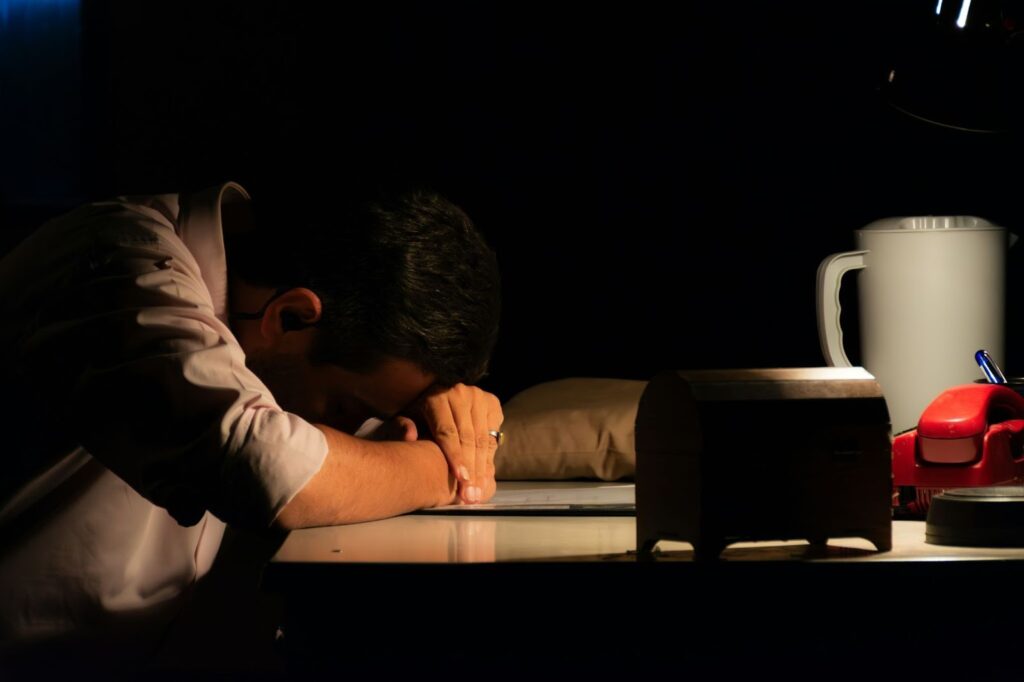
Image of a man at a table, his head down on his crossed arms in front of him. A single light illuminates his body and the objects on the table.
Image courtesy of Human Bahluli on Unsplash

Sagene, gone ten pm, maybe midnight. It’s cold out–or is it? It could be spring, summer. I spent so much time finding my little spot up at the park it’s something of a blur. I do remember kissing my girlfriend before heading to the park, clear as day. I remember her face; I remember coming away from the kiss with it… just not feeling right.

The spot was quiet, just the occasional dog walker passing through. Sitting on the bench, I felt full– something in me not sitting right. Maybe it was the kiss, the relationship.. It was this dark, uncomfortable presence in my psyche that refused to be ignored. My mind swam as memories plumed.

Cabin trips in the spring and summer. Seven beautiful Christmases worthy of oil paintings. A family taking me in as one of their own. Hard times in London. Good times in London. The uncomfortable ups and downs of being a twenty-something. The wonderful ups and downs of being twenty-something lovers. Friends back home. Embarrassments. Arguments. Uproarious laughter. Binge-watching series. Holidays and trips together. Tender holding of one another. Comforting each other through losses. The opening joy of starting up in Oslo together. Her cute face…

I stood up from the bench, my cup ready to spill. I stepped forward just a matter of steps, looking out to the horizon, just a few trees and high-rises filling a spread of skyline. To no one, to anyone, the words left my lips with a throat as tight as vice:

“This isn’t the one…”

And I cried and I cried and I cried. I bawled like an infant, alone in relative darkness. I’d moved everything I had and left everything behind for this. I was all in. I’d rolled the dice and I got snake eyes.

***

What followed was a year of trying. I tried the good-cop way and we kept the groove of the relationship. I tried the bad-cop way and disturbed the groove of the relationship, but not for the better. Sometime in June the following year, I broke the relationship off. Despite the well of tears that followed for us both in the weeks and months ahead, it would increasingly dawn on us that it was the right decision.

I don’t know if my eureka moment was realizing the relationship had to end, or the conviction that came about myself having made the leap. By the time I had to leave Norway, I’d entirely placed my happiness and self-worth in someone else.

I’d taken the archaic maxim ‘happy wife, happy life’ to an extremis that just abandoned me. There were parasitic elements that I couldn’t reconcile or take pride in: your country, you got the good job, you take the reins now.

I’d stopped treating love with love. Some ghastly dependency arrived with an utter sense of resentment; that the success of the move for her hadn’t instantly equated to a glowing happiness. Moving countries for your love is certainly a man’s choice, and I’d turned out a scared boy.

Returning to the UK brought a determination. I couldn’t look to or depend on externals; I needed to look at me. I wanted responsibility and change, with a full understanding that they are harbingers of stress and challenge. I wanted to be the architect and accountable party for my own happiness and never lose sight of that.

I desired reality, even if it meant the frightening prospect of staring it down the barrel. I wanted to be someone who could take that. I set out to do the work of becoming the guy I was meant to be, not someone I thought I was… running on myths out of someone else’s mouth and covert contracts about others.

***

Creative destruction is a term for economics but I feel it can be more broadly applied. Sometimes the antiseptic stings; we have to make decisions that are painful at the time for better results down the line. That’s certainly turned out to be true. I’m very much becoming who I was meant to be with a steeper degree of self-worth, insight and responsibility than I’d ever had in my life. I’m also pursuing what I love more diligently and consistently than I’ve ever done.

As for the villainous matter of being the breaker in the break-up…

When I left my partner, she had a beautiful, full furnished apartment and a well-paying job in the capital of her country. She was just a train ride away from family and had a blooming social life in the city. This hasn’t changed.

There’s a saying that “sometimes, in order to find love, we must hurt the ones we love”.

We’re both for the better for it, with a deeper understanding of love and ourselves that staying together could never have fulfilled. She’s free now and so am I, living the lives we want to.

That’s the reality– no myths required.

Image of a person’s clutched hand. Sand falls out of their hand as they loosen their grip.
Image courtesy of Liana S on Unsplash