INK

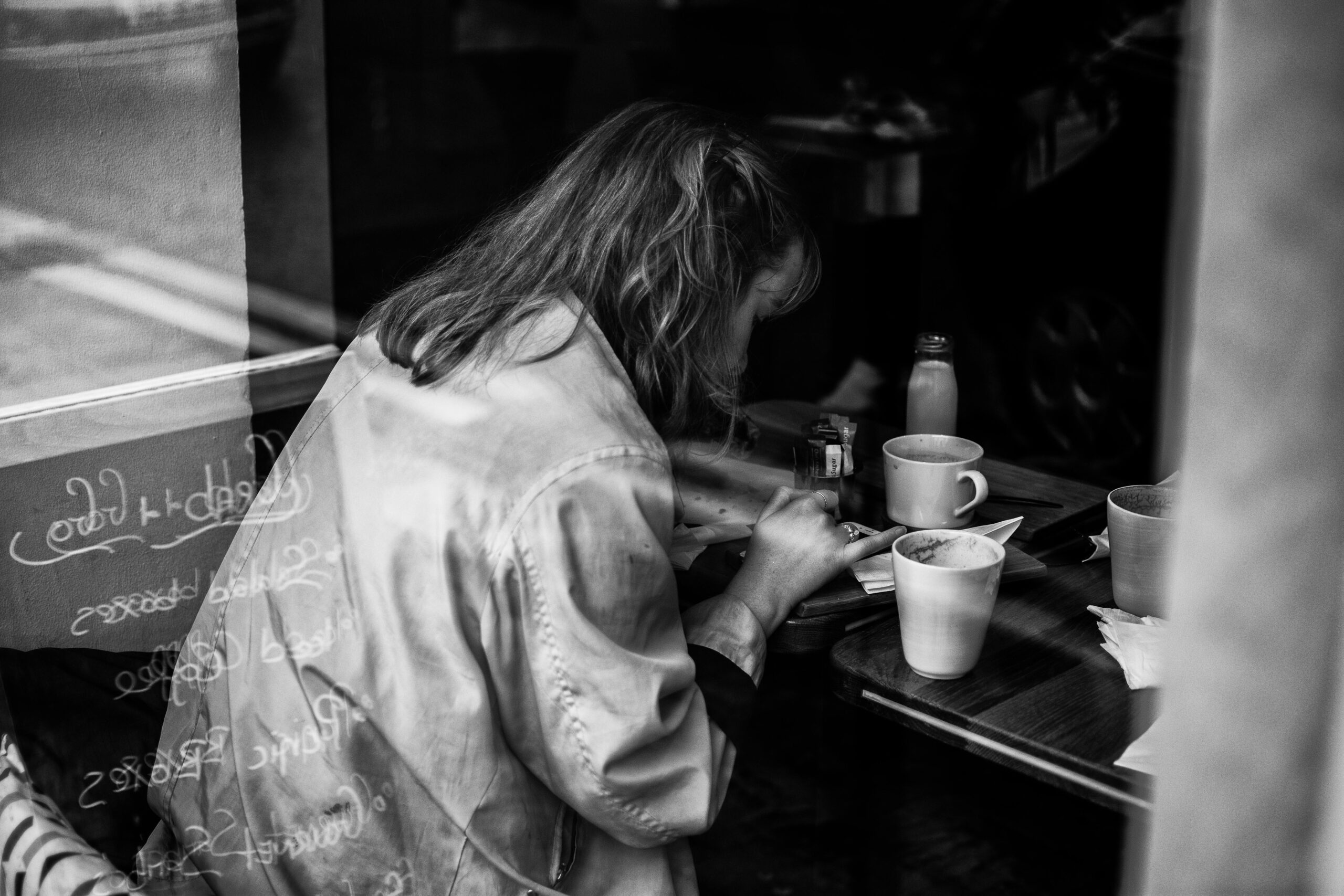
In a coffee shop a woman sits, head bent, knotted and frizzy blonde hair cascading down her back. A claw clip clings to it with little purpose: impotent, listless, one tooth broken at the root.

Besides her sit a cup of coffee and a laptop. She hates the artificial light it generates: a swinging metronome, pulling her face toward the glare, frying her retinas.

Well, out of sight, out of mind, she thinks, and slips it into her backpack. But the burn behind her eyelids still sears.  

She pulls out a notepad; wrinkles her nose in distaste at the sight of her own messy handwriting. Why can’t she have beautiful, flowing script like other girls? Effortlessly curly and smooth (their hair always the same — no frizz in sight) half cursive: one letter making love to another, forming a sensuous breath, an uninterrupted thought inhaled and exhaled in harmony.

Poetry ought to hold hands with elegant script — not chicken scratch.

But what was the word she was looking for?

Her moonbeam shouldn’t just glisten or gleam; but perhaps illuminate? Luminate? Effervesce?

Too highfalutin, she thinks.

Use simple words you aren’t a Victorian novelist. No Brontes here. Hadn’t they written all their best works by the age you are now? You, on the other hand, have written nothing.

She decides on “shimmer” with distaste.

Across the shop, a middle-aged woman sits on a sofa. Her latte lays untouched on the low table before her. She is deeply uncomfortable and utterly ignorant of her own feelings — her whole awareness taken up with wishing her cell phone would ring, though she knows it will not.

 Her daughter, after all, is busy. Her daughter doesn’t need her. Her daughter is just fine.

Somewhere, on the other side of the country, she sits — like that girl to the right maybe — writing a beautiful paper that will get an “A.” And she will call home happy about it, someday. Just not today.

Though Ashley takes much better care of her appearance, she thinks, spotting the claw clip. That’s the way she was raised: “You have to put your best foot forward,” she always told her daughter.

She wishes Ashley would call more often. She wishes even more that she did not resent her for not calling — children must be left to live their own lives — but then, on the other hand, didn’t their parents deserve more than to be treated like an ATM?

Maybe I did something wrong when she was growing up, she wonders, thinking back into a blurry abyss where memories sometimes rose to the surface with painful clarity.

Though she is ashamed of it, she often snoops in their joint bank account. She had seen the bill the day before: mental health solutions, psychotherapy. She knows what people talk about in those sessions — about all the things their parents did wrong — every unintentional trauma they imparted, the spankings they had given. Well, hadn’t everyone told her it was good to spank her children then? Hadn’t her own parents done it to her, sometimes with a belt? It had never crossed her mind to resent them for it.

But children were different now because now was a different time. They believed in looking deeply into every feeling and rooting out every pain, rehashing every conflict. They had no idea what a great luxury it was to be able to do so.

She remains unconvinced, no matter what Ashley says, that it is always better to uncover than to bury. Her coffee grows cold, so she forces herself to drink it, mechanically.

A little boy runs back and forth across the shop, from his Mother, seated at a bistro table outside, through the heavy door (he must push hard, like Superman, to make it move) to the shelf of games. He runs his fingers over each game but chooses none because his legs are twitching to run and leap.

He dashes back again (fast, like a cheetah), catching a glimpse of a thin woman sitting beside the games. She has lines all over her face because she is old, and she looks sad. He forgets about her the moment he turns away and pushes at the door.

Mother sits reading, though he can feel her watching him, making sure he does not try to run across the street. He wishes they could play together, but knows she doesn’t want to.

He knows Mother more by smell and touch and sound than by sight — because she is always moving, and her legs are the body part he sees most. She is a skirt, a lullaby, a pantsuit, a warm hug, sometimes a stern voice, but always far above him, in a different sphere he cannot fully enter.

He kicks a pebble and sends it scuttling onto the street. He starts after it with abandon, but finds himself stopped, because Mother has grabbed his shoulder, though she has not looked up. She is omniscient, omnipresent.

She says, “Jeremy, stay.”

He looks longingly after the pebble, then at a bird in a tree, then at the pastries in the shop window. He runs back through the door, push, push, PUSH, and the shop bell jingles.

A grayscale image of a man washing his hand. It is large, strong, and he lets the water cleanse it thoroughly.
(Image Courtesy of George Becker via Pexels) 

In the bathroom, a man eyes his bald head in the mirror above the sink — a rounded and reflective plain, speckled by only a few sickly trees that escaped the strip mall’s razor. He remembers that an astounding percentage of men don’t wash their hands. This makes him feel a little bad for women, and a little bad for himself, too.

Well, he will scrub his hands proficiently, though considering he is about to touch the door handle (urine-bespeckled, undoubtedly) he is not sure it matters.

Everything in life comes out the same, no matter how hard you try, he thinks. What was the point of being good or right in a world where everything is contaminated already — the planet, more or less a castle of bacteria, growing far too fast to be cleansed by soap and water?

A losing battle, he decides, drying his hands.

All this time his eyes have rested on the fruity-flowery wallpaper covering the single-person bathroom: the peaches a warm, burning orange, the cherry blossom petals a delicate, breathy pink, the leaves and vines a cool, comforting green. He is acutely aware that because he is a man, he should not like this wallpaper, but that, unfortunately, he does like it, just like he likes white mochas and peach Bellini.

He walks out of the bathroom and sees a little kid bolt through the shop door, making the bell tinkle. Once upon a time, he was that child, a whirlwind of energy, a flame cruelly contained by kerosene-glass.

Always shattering, screeching and weeping — though the weeping had only continued ‘til seven or so, when he came to understand the cringy weakness of it. He still cried, of course, but only silently, alone, at night. If no one hears a tree fall, does it really make a sound?

He has a theory that “good” men continue to cry into adulthood, even if forced to do so in private. Those who dry up their ducts transform into gods of burning rage… the price of evaporating human tears.

Unless he is self-deluded, and the wallpaper and crying mean something else entirely. He has often wondered if he is gay. Hadn’t softness and sensitivity — however hard he fought against them — permeated his life? The problem with this theory is he doesn’t really want to have sex with men. But considering the repression and homophobia of most males, how can he know for sure? Everything he believes about himself could be a lie — the truth hidden deep beneath layers of societal guilt and shame.

Maybe, even now, his perceived attraction to the girl in the corner — he watches her as she rips through notebook pages, dotting “I’s” and crossing “T’s,” viciously dashing out whole sentences — is all a sham. Her knotted hair reminds him of brambles on the edge of a lawn, encroaching into the landscaping, squelching non-native plants, reclaiming the wild.

It must be this wildness that bewitches him, that enters his body like an evil spirit and drags him across the room to her. Hitting on women in coffee shops is too bold and deeply out of character for him.  Watching his body stroll over to her, he considers if his real intention is to reassert his heterosexuality.

Standing at her table, alarmingly close to her, he realizes he has nothing to say. Mercifully, not only does no sound come out when he opens his mouth, but the girl, absorbed in her art, seems unaware of his presence. Before she can look up, he turns and hustles toward the door.

A grayscale image of a cup of coffee that has been partially spilled. The puddle of coffee on the table has gone cold.
(Original image courtesy of RDNE Stock project via Pexels)

On the way out, he nearly runs into the little boy, bolting outside again. He shifts his balance to prevent collision, nearly falling, and careens into a low table, upsetting the coffee cup of an older woman. She looks up at him with tight pursed lips and wide, startled eyes.  

“Oh shit, sorry about that,” he says, trying to help her clean up the mess. But she waves him away, saying nothing. He is left to drift toward the door, knowing himself a failure.

The commotion makes the writer come to herself again. She sees the older woman soak up her spilled coffee with napkins, the child outside pull at his mother’s pant leg, and the younger man disappear through the shop door with a clang.

Even from behind she can tell he is attractive — broad shoulders, a nice butt. Why can’t anyone like that ever notice me? she thinks.

 He’s probably gay, she decides. He’s dressed too nicely to be straight.

She turns back to her page, buzzing with discontentment. One more cold, hard letter written, and her hand stills. Her pen has run out of ink.

The Other Side of the Counter

‘That’ customer in me

I feel the need to start by saying: we have all been the rude customer at some point — myself included. The last time I felt like a bad customer was when my wife and I moved into our current apartment. The leasing office had claimed that if we did not come in to pick up our keys on the official move-in date, it would affect the lease. A lease we had already signed. Not only that, we had already paid the first month’s rent. 

I explained to them that it didn’t matter to me if we picked up the keys a few days later, even though we already paid. They weren’t having it. In the end, this was not due to some overzealous property manager but a computer system designed by some far-off entity operating from the unreachable shadows. I never once considered that. I should have known better, given my years in customer service. This article is not meant to bully rude customers. It is simply my method of handling the rude, the kind, and the incompetent.

Feelings behind the counter

My career as a personal trainer, spanning nearly ten years, has been almost entirely focused on customer service. I’ve seen the other side. 

Most of the time, the person on the other side of the counter would be more than willing to give you everything you want. We can’t, though. 

We have bosses who have bosses breathing down our necks. There are systems in place that make it impossible for employees working in the trenches to be helpful in a real way. We are seen and treated by employers as a shield to criticism rather than empowered to solve problems.

The fact of the matter is, we are not paid enough to care whether or not you get a better deal. Our wages are never affected, for better or worse, on approving or denying customer requests. We only aim to keep our jobs long enough before we bounce to the next slightly better-paying position. This leads to negative experiences for the consumer.

Oftentimes, negative encounters result in the representative being told, “This isn’t very good customer service.” This is something I hear quite a bit in my current work. Which I assume is meant to make the “desk jockey” feel guilty. 

The idea that customer service is giving everything the customer wants is ludicrous. At the gym where I train clients, people often want free guest passes for their friends and family. Let me tell you something, I would love to have a pocket full of free guest passes to hand out. More people coming through the gym with a great experience eventually could lead to me having more clients. 

A sign reads “free entry” in red print with a pointing arrow.
(Image courtesy of Karim Manjra via Unsplash)

However, the company feels differently. No free guest passes for you! Employees in general are shackled by a strict set of regulations out of their control, and we follow them because rent is due on the first.

Myth or the truth

This is where my philosophy on true customer service comes into play. 

Customer service is not about giving everyone what they want. It was never meant to be that. And never will. Customer service is the employee treating you the same as everyone else, while giving you all the available information in a clear and concise manner. 

It doesn’t matter if we have a friendly rapport or if I perceive you to be the most miserable person I have ever met. I greet you by name if I know it. I answer the same question repeatedly without a hint of annoyance. I apologize when I am unable to fulfill a request. Such as moving gym equipment so you can do one single exercise in a specific spot that can be accomplished in several other places. 

Yes, this actually happened, and not out of feeling exposed to the male gaze by a certain exercise.

Wooden Scrabble tiles spell out “I am the truth”.
(Image courtesy of Brett Jordan via Unsplash)

There was an instance regarding the prone hamstring curl machine, which positions your butt in the air for all to gawk at. We did have a woman bring this concern to our attention, and we gladly shifted its position to be more modest.

Some requests are reasonable and will be executed. If yours was not, maybe consider that the employee is not the problem. 

Human side —no — gentle reminder

If a customer I have helped feels my service was less than adequate, I still greet them the same way the next time I see them. Customer service is the representative who never gives you a different side of themselves. 

But believe me, we will be talking about you behind your back. It’s just the way it is. 

So, next time you feel you’re being treated unfairly, please keep a couple of things in mind: the employee has no real power, and usually the manager doesn’t either. If we did, we’d give you what you want just to make you go away. 

Lastly, be kind to those who run the desk. We’re having a worse day than you. 

(The above excludes car dealerships, of course.)

 Sorry, Have I Upset You?

I was a first-year medical student when a stage 3 cancer patient gave me insight into the patient perspective. She described the heartless demeanor of the oncologist who first informed her she had cancer. 

As she started crying, his response was: “I’m sorry, have I upset you?”

Clueless. Many people have the preconceived notion that the key to being a good physician is book smarts and experience, overshadowing the value of nurturing a trusting doctor-patient relationship. However, over the past decades, there have been countless studies indicating that the emotional connection is a key aspect of caring for a patient. Fostering this connection not only cultivates trust, it also leads more patients to staying with their treatment. 

Now, modern medical schools have emphasized the importance of empathy and understanding, but is that enough?

Some feelings can be taught

Before medical school, I thought empathy and compassion were innate skills that could not be taught. However, years as a medical student proved otherwise; most if not all of my peers are trained to nurture empathy and humanity. That seems to indicate that the cancer patient’s Sorry oncologist started out with a sense of empathy and humanity, which unfortunately diminished throughout his career. This realization left a deep question: why do physicians experience a waning sense of empathy over the course of their working lives? 

(Image courtesy of Jon Tyson via Unsplash)

While my first instinct was to blame this doctor, at some point I realized that as a physician, one is generally more exposed to death. Over the years, he might have eventually become so accustomed to death that he lost his sense of empathy — patience with the patient. 

This tendency may have been exacerbated by high patient volume, which can lead to physicians viewing patients as just another case while disregarding the essential humanity.

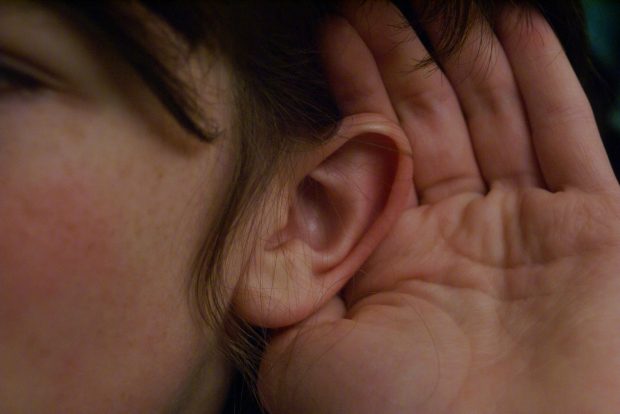
Avoiding burnout, physicians take a holistic approach to patient care, to hear and understand the patient’s journey. Listening to the big picture enables us to be empathetic to the little things. Like the language they use. 

Taking this approach would change the doctor-patient interaction from statements like “This is your diagnosis” or “Take this treatment” to a more heartfelt and compassionate conversation that ensures all patients receive the treatment they deserve, and expressed in a way they can absorb. 

(Image courtesy of jppi via Morguefile)

Cultivating empathy

Physicians often focus intensely on gathering the most critical information to diagnose a patient’s condition, meticulously assembling the pieces of a complex puzzle. However, in their quest for accuracy, many become so engrossed in the details of the symptoms that they overlook other essential elements, such as the psychological aspects of patient care. 

I’ve witnessed doctors firing off questions, barely allowing the patient a moment to breathe. “Are your parents alive?” quickly followed by “Did they have a similar condition?” without pausing to consider the emotional impact of their words. I, too, have been guilty of this efficiency. However, the patient’s expression brought me back to reality, and I have sincerely tried to prevent this pattern from recurring. 

 As I have sought ways to foster my feelings of empathy with patients, I frequently remembered my own primary care physician, who manages to keep the embers of his humanity burning brighter each year. He told me that the secret behind his everlasting kindness and empathy was continuous training. Although that may seem straightforward, too simple, it is truly an integral part of life and an axiom I have gone back to time and again. As Leonardo da Vinci said, “simplicity is the ultimate sophistication.”

I also try to remember a favorite expression of my mother’s, who had always told me to “Put yourself in others’ shoes.” This life philosophy makes it easier for me to connect emotionally to my patients by incorporating the patient’s unique perspective.

Staying sensitized

To preserve maximum empathy, I have committed to the following principles:

  1. The Continuous Practice of Mindfulness and Reflection: Medicine is a lifelong journey, and reflecting on one’s actions allows the physician to improve with each patient interaction.
  2. Empathy Through Understanding: I strive to place myself in others’ shoes, recognizing that each patient is on a unique journey. By doing so, I no longer see them merely as numbers or cases, but as individuals with their own stories.
  3. Maintaining a Healthy Work-Life Balance: This balance is vital in preventing burnout, a significant desensitization factor. By taking care of myself, I can better care for others.

I hope these rules will help me maintain my sense of compassion while pursuing a deeper understanding of the potential impact of a condition on my patient’s life. 

I pray that my three principles offset being overwhelmed by too many patients and desensitizing myself as a coping mechanism to their personal suffering.

Healing Beyond Medicine

Patients, diagnoses, and treatments are my life.

As a medical intern, what else can I think of other than the whirlwind of patients? 

New challenges and lessons are what each day brings, but nothing could have prepared me for the encounter. An encounter that would leave a lasting imprint on my heart and impact my approach to patient care. 

It was a typical morning at the hospital when I received his case. He was diagnosed with dengue fever. After a thorough examination, I was asked to put in a urinary catheter as he was having burning sensations during urination. I discovered that he had smegma collected at the urethra, likely due to poor genital hygiene. This condition, though not uncommon, required a delicate approach to counseling the parents about the importance of that hygiene. 

As I walked into the consultation room to meet his parents, I felt a mix of emotions— empathy for the child’s discomfort and anxiety about how to broach the subject with his parents.

I took a deep breath, reminding myself of my duties as a doctor. My responsibility was not only to diagnose and treat but also educate and empower.

His parents’ love for him was evident, but as I probed further, I realized his parents were unaware of the essential steps of genital hygiene. They looked concerned and anxious as I gently explained the importance of cleanliness to prevent infections and discomfort. As I spoke, I tried to be sensitive and compassionate, ensuring I didn’t make them feel judged or inadequate as parents.

I drew parallels between routine hand hygiene and genital hygiene to make it relatable for them. Slowly, their apprehension began to fade. Their ignorance was now replaced by a genuine interest in learning how to take better care of him. I demonstrated the correct method and recommended age-appropriate techniques to teach him as he grew older. 

As I continued the conversation with his parents, I realized that connecting with the community was crucial. Any discussions about genitals were considered taboo, a resultant of a generational cycle of ignorance, and breaking it required not just medical knowledge but also cultural sensitivity. I understood that I needed to tailor my approach to suit their beliefs while ensuring his parents grasped the significance of proper hygiene.

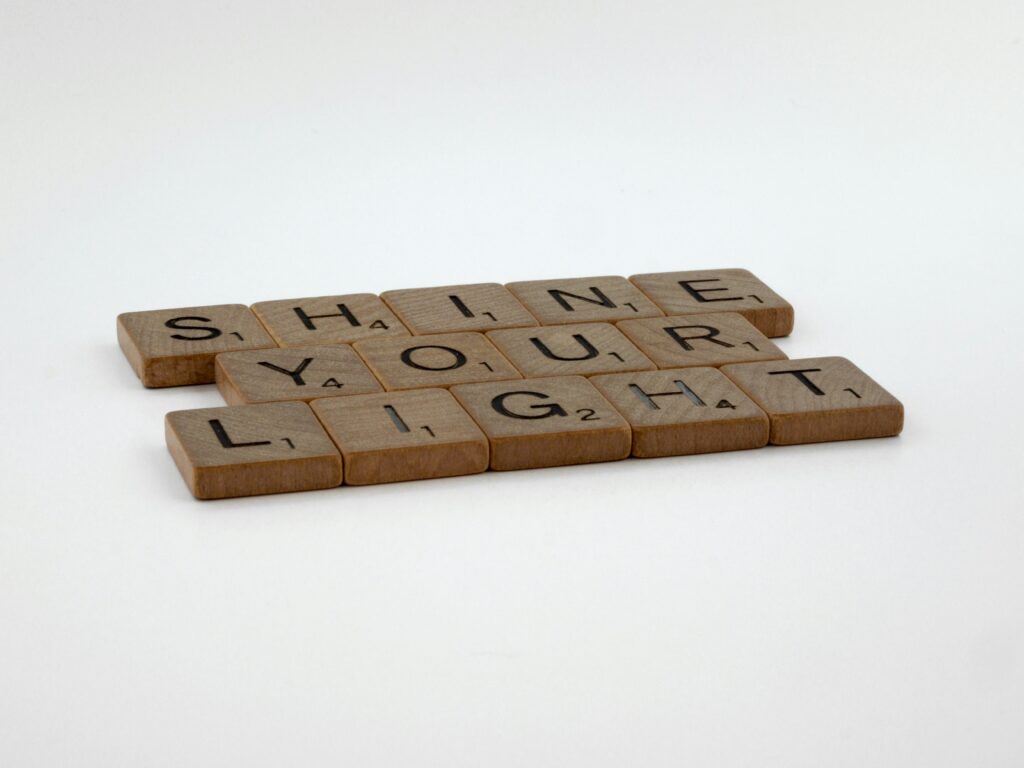
Scrabble tiles that spell out “Shine your light.”
(Image courtesy via Brett Jordan via Unsplash)

His case instilled in me a sense of social responsibility. I immediately proposed a project for the tribal population, offering encouragement and support as they navigated this new chapter of a subject long considered taboo. Initially there was resistance but with time, they became more comfortable discussing their concerns and asking questions.

The success here encouraged me to host awareness programs addressing common health-related misconceptions and promote open conversations about hygiene and health. My aim was to empower parents and caregivers with knowledge to ensure a healthier future for him and children like him.

A physician’s room with an exam table under a window.
(Image courtesy of charlesdeluvio via Unsplash)

His incident taught me an invaluable lesson–that compassion, patience, and cultural awareness are as important as medical expertise. As a doctor, I learned the privilege of Healing Beyond Medicine was by building rapport and trust with patients and their families. Through these efforts, I hope to witness a transformation within the community. Parents should feel more confident seeking medical advice, and conversations around health must become normalized. Being a medical intern not only taught me medical skills but also the profound significance of doctor-patient counseling. Empathy, warmth, and understanding can bridge gaps and lead to lasting changes in patient lives. 

My journey with him and his parents taught me that true healing goes beyond prescriptions. It involves a genuine connection with the community we serve and a reminder that no issue is small and, if tackled properly, it can lead to a huge impact in the community.