Is it Me, or Are We All “Stacking Grinds”?

All time must now be quality time

Ah, the grind. The 40-plus hours a week of earning my keep whilst trying to keep soul and sanity intact. There’s not much I can add to the endless commentary on this reality. What interests me most on this topic is that contemporary living seems to be centered around the grind on top of the grind. Or should I say, the grinds on top of the grind. The stacked grind, if you will. It’s as though our increased reliance on machinery and automated processes has changed our expectations of ourselves — that we, too, should have a certain level of productivity at all times. Ever productive, ever optimal. 

Sustainable, optimal, valuable. Execution, success, failure. This language is the perfect fit for operating businesses, quarterly board meetings, and machines. It’s far from a healthy or perfect fit for people, though. Machines were only ever brought to society to bring results. Unfortunately, not only are we not machines, the results of our productivity are rarely as important to us as the process of being busy itself is. Aren’t we all about the process, the journey? The results and the destination aren’t ever that relevant. Maybe that’s how this obsession with the grind came to be; we wanted to chase that high of being productive at all costs, at all times. Is this grind stacking a result of industrial brainwashing? Are we collectively turning ourselves into mass machinery, becoming something we were never meant to be? 

Optimally

I’m trying to work out what optimal means for myself, and I’m looking around at my peers. What I’m observing is curious. Those in the deepest of grinds, chasing work, gym, social, vocational, and status goals seem the furthest from happiness. The people closest in my life, who have the best slice of happiness, are doing quite the opposite. 

These people are far from gym rats: padded, not iron board flat, and far from worried about how photogenic they are. Selfies and social accounts aren’t really these people’s deal; they are more concerned about school catchment areas than their waistlines. They don’t ask for much, money is responsibly watched over, not idolized with a giddy dream of more. Despite the lack of striving, thriving, “optimal;” they appear to have what all those chasing optimal don’t have — a noticeable degree of contentment and peace with themselves and their lives, which I admire.

The stacked grind is insane, and yet, it’s normal for many. 

I’m writing this as I attempt it on my own. I’ve got the 40-hour a week job, the 3–4 workouts a week, the clean diet, the regular social hangouts, and as the author of this piece — wouldn’t you know — my vocation, my calling, my “side hustle” is writing.

Grinding to a… burnout?

I’d be lying if I told you I don’t wake up some Saturday mornings and feel… flattened. I’m still a young man (relatively… my twenties have been and gone; toll the bell, please) and yeah, I’m tired. It would also be dishonest of me to tell you I’m not after “optimal.” And, frankly, it would be dishonest of me to tell you I know what optimal means for myself. When I look around and see my peers after the same thing — this elusive idea of optimal — they appear equally bewildered at the input-to-reward ratio of grind stacking. 

Ha, there I go again, talking in ratios. Machine, much?

With all of this stacking and pushing for optimization in our lives, am I the only one who  foresees the inevitable outcome — burnout?

This contemporary burnout culture worries me, and maybe because I’ve experienced it myself. An utter internal flatlining was my burnout. Unable and uninterested in relating to much and full of fear. Thanks to the travelling I was soon to do, I did get months off work to recoup. What really shook me was my genuine anxiety over returning to work when the time inevitably came. 

People more disciplined, educated, and capable than me have burned out. Lawyers, doctors, nurses — all professions admirable but a likely disaster in these hands — sidelined and flattened through overexertion. Burnout is not specific to geography. I’ve seen burnouts in Australia, New Zealand, the UK, the U.S., and Norway. We’ve never had more provincial safety or material comfort. In some sense, we’ve never had it so good. 

Maybe it’s because we’re expecting and wanting more than ever before. Previous times had people working longer, harder hours with less to aid them, and yet burnout was not in their lexicon. 
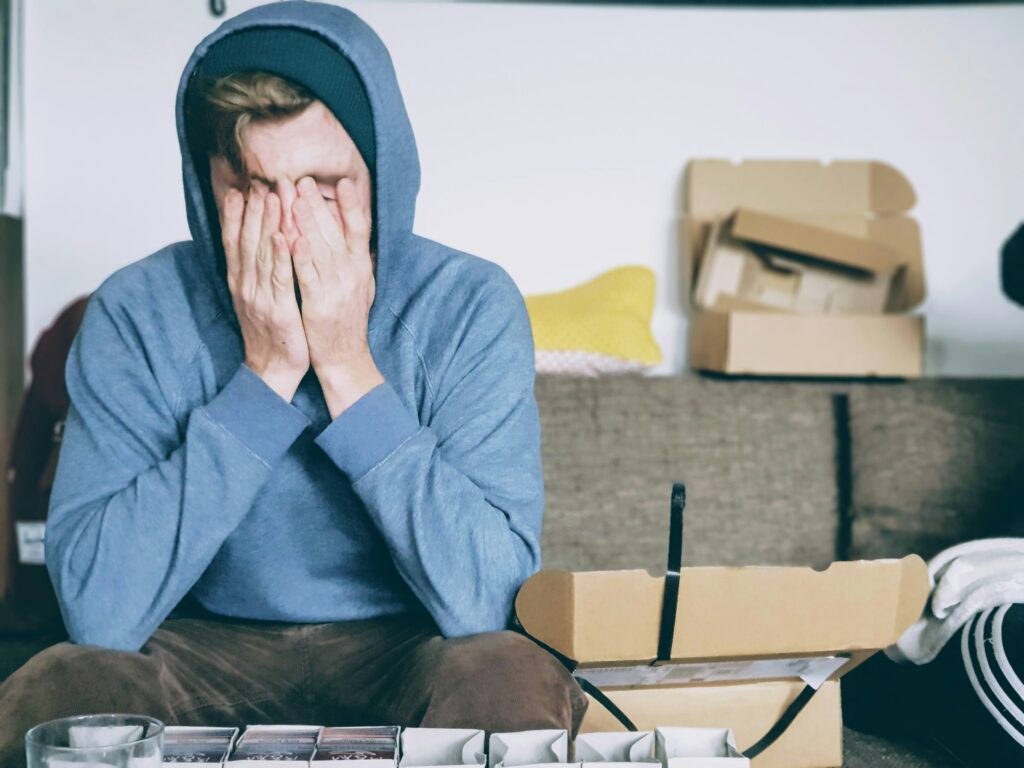
Image of a person holding their head in their hands in a cluttered space.
(Image courtesy Christian Erfurt on Unsplash)

Will the grind measure up?

When our elders look back, they don’t regret what they have done — they regret what they didn’t do. In this respect, we might consider more stacking. However, the free spirit in me very much wants to savor the juice of life. While I can, when I can, go for all of it, the good stuff. A very best attempt to squeeze out every last drop.

I’m observing the struggle of the grind and not its raving success. There are surely people who can and do hit the robot groove: up at 5, supplements, exercise, work, date night, and a chartered flight the following morning. For the select few who do not find their mortal limits screaming at them in this process, I applaud them.

Yet it is the tenor of our grind-into-burnout culture that unsettles me. A Buddhist proverb says, “Each of you is perfect the way you are, and yet, you can use a little improvement.” 

I feel our current culture emphasizes the last part of that phrase — with scant regard for the first.

What You Taught Me

Feed a cold, starve a fever.
Forgive, but don’t forget.
Fight for your rights —
That’s what you taught me.

When I needed to be accepted, though,
And appreciated, loved, for who I was
You judged and directed
And praised me for pleasing you.

You… whose every mood needed to be studied and attended to since I can remember.
At least since I was six.

You… who needed her delicate disposition cared for like a child, but cared for
By a child.

When that is not a child’s job.

Ask around.

Oh, I still love you.  

From Silence to Standing Ovation

“Are you just going to stand there without saying anything?”

That was what someone in the crowd blurted out when I stood on the stage, frozen for over three minutes, trying so hard to remember the opening lines of my speech. Sadly, I couldn’t. Embarrassed was an understatement. I can’t even describe how I felt.

The hall suddenly felt cold — so cold that my body started shaking. At that moment, I wished I had the superpower to disappear. Every student laughed — except my best friend and my tutors. Maybe I wasn’t prepared enough. Or maybe the sight of the crowd scared the words right out of my mouth.

I had no choice but to step down — embarrassed, regretful, and wishing I never got on that stage in the first place. Of course, I cried an entire ocean. 

It was our end-of-the-year party back in high school, and from that day on, it felt like every student — except my best friend — became my enemy. Hours passed. Days passed. But I couldn’t get what happened out of my head. It kept replaying in my mind every time I was alone.

Scrabble tiles on a red background spelling out “Just do it.”
(Image courtesy of D S Stories via Pexels)

On second thought, face your fears 

Seven months later, I was given another chance to speak. And this time, I was ready. Ready to show them what I could really do. But getting there wasn’t easy. It came with a lot of practice and change to a “Can Do” mindset. I spent weeks watching my teachers closely — how they spoke, their body language, their pauses, their tone. I took it so seriously. I studied them like you’d think I was contesting for a national prize, or the president was going to be in the audience.

Still, I failed. A lot while I was practicing. I would skip lines, forget my words, and even go completely blank during practice. But I never gave up. I never did. 

If someone once said “Winners never quit, and quitters never win,” well, I wanted to win. I wanted to earn back my respect. I wanted to silence every mocking laugh. So I could not quit. 

Yes, first impressions matter — but second impressions? They can change everything.

I would call my parents, siblings, and even the workers at home to sit and watch me practice. They gave me honest feedback, and I took every correction seriously.

Slowly, bit by bit, things began to change. I stopped skipping my lines. I didn’t go blank anymore. And the biggest change: my mindset. Before, I had a fixed mindset. I was too focused on proving myself to others instead of becoming better for myself. I wanted validation more than real growth. 

But then, everything shifted.  

I began to focus on myself,  becoming the best version of myself. I became more comfortable in my own skin. Yes, I started loving myself and wanting better for myself. And that’s when the real change started. My speeches flowed naturally. I now spoke with confidence. 

My parents and siblings clapped — genuinely. They told me where I could improve. I listened and applied their feedback.

Then another opportunity came. It was our end-of-the-year party again. But this time, nobody was selected, we were asked to volunteer to speak, and anyone who did would be given a chance to speak…  I didn’t even hesitate. I raised my hand.  And I was lucky enough to get a chance. 

As the day approached, I studied, prayed, and practiced. A lot, I mean, a lot. I stumbled many times.  I was also tempted to step down. Fear still crept in me.

“Are you sure you can do this, huh?” 

“Should I fake being sick?”

 “Should I run away on that day?” 

“What if I mess up again?” 

But deep inside, I kept hearing this quiet voice: “You can do it.” That little voice pushed me to keep going. I heard everything but listened only to “You can do it.”

A black woman speaks powerfully while multiple microphones convey her important message!
(Image courtesy of Alfo Medeiros via Pexels) 

Ditched my fears forever

Finally, the day came.  I mounted the stage. My heart raced the moment I saw the crowd. I was afraid and my hands began to shake — that old fear.  This time, I didn’t let it stop me.

I took a deep breath, looked around, and began. I started with:
“Good morning ladies and gentlemen…”

And I kept going, line after line, word after word, until the very last word. I didn’t skip a single line. I spoke not perfectly, but confidently. That made all the difference. I owned that stage, the stage was mine. My speech ends and…

The auditorium was echoing with claps.  It was loud; everybody was clapping. My overjoyed eyes saw some of my tutors standing while clapping. I saw my best friend crying. She was proud of me.

I got off the stage with teary eyes. This time it was tears of joy and pride. “Did I just do that?” I kept asking myself over and over again.  My tutors and friends came over to me, appreciating me for my performance. One of them, who had laughed at my first speech, came over and said, “I never thought you could pull that off. Bravo.” I replied with a smile, “This is just the beginning.” 

That night I was overjoyed, I didn’t remember to eat dinner. I just sat replaying the video on my phone, again, and again, and again. 

That was the day, it dawned on me —

My voice matters.

And do you know the sweetest part? Your voice matters too. 

Yes — You! 

 It exists.

 Find it! 

Road to Dendron

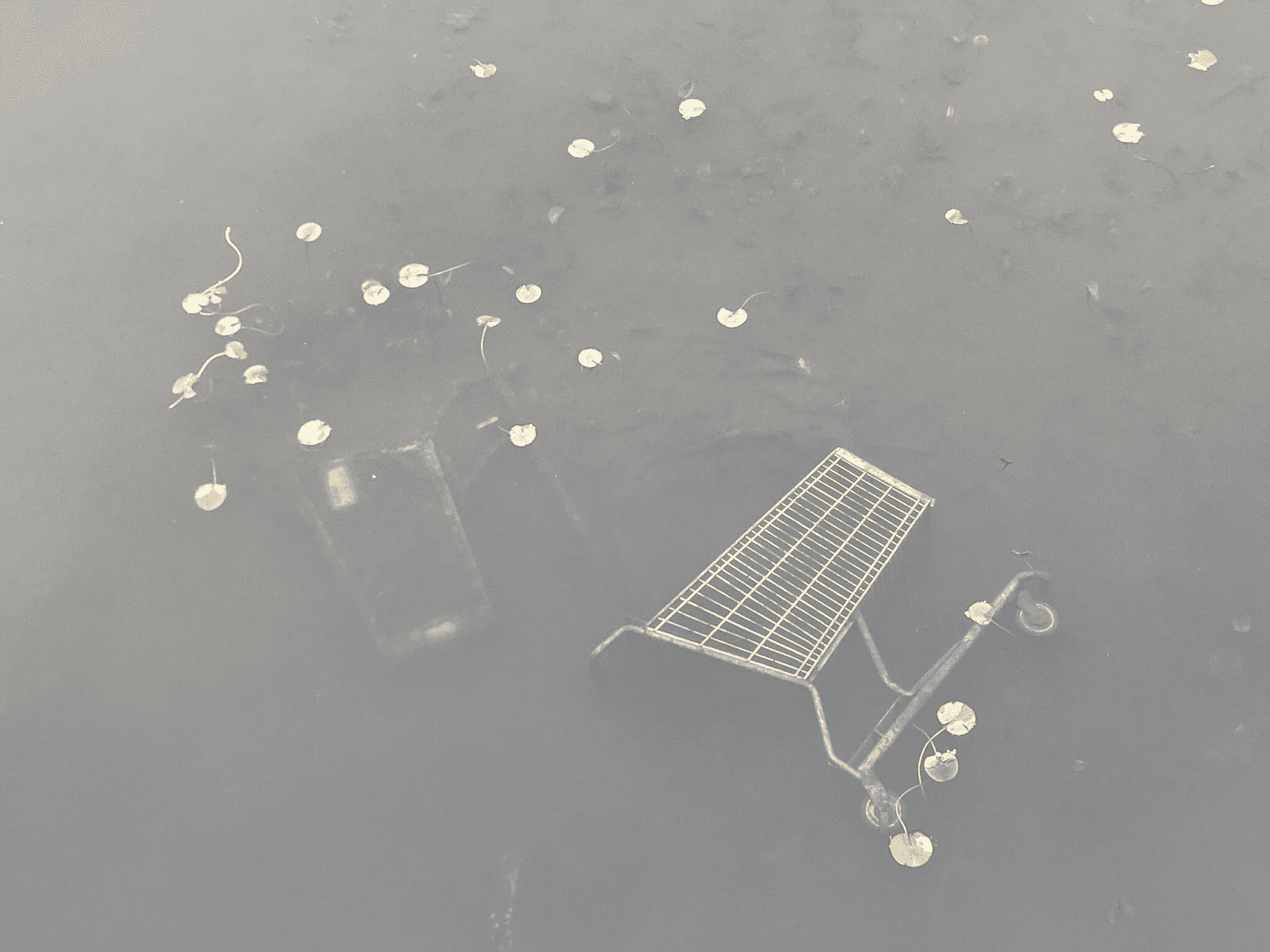
A shopping cart,
On its side, curled up,
Sunken in the river;
Lily pads gilded
Its edges, softening
Lines and loops that
Watched a child grow
In the grocery store,
While her father did the best he could;

Swans preen,
Curled up, among
Tulips, crocuses,
While a crone
Smokes cigarettes
Outside the bodega
With glass bottles– 
Green, blue, bountiful
As hyacinth;
The sun kisses her face,
With freckles, laugh lines,
Rouge; she did the best she could.

The Art of Isolation

My relationship with isolation

I’m an introverted person. I can preserve myself quite solitarily, recharging with personal hobbies and quietude. There are often days when my recovery from a social event ends up being the comforting main course of an evening routine, replacing parties with pyjamas after an experimental aperitif. Introversion, however, should never be confused with a lack of social needs. I’m not so crippled by shyness as I once was, and I find myself craving the company of people more often.

Studying drama and theatre for three years, I was constantly surrounded by activity. Seminars, workshops, group projects, society sessions, shows… not to mention living with two amazing, intuitive housemates. During this time, a small university town can feel like your whole world, especially for drama students. God, that frenetic, boundless energy… When you’re sucked into its vortex, your mind and body start to crave it. The pull of creation, catharsis, and community — the push of careening from one show to another. These periods can get intense. Consequently, the small pockets of private time I was able to scavenge were sanctified.

Then, when I moved south to London to pursue a Master’s degree in scriptwriting, everything was flipped on its head. Suddenly, I was buried in work that required disciplined, insular focus. My accommodation turned into a studio. The characters in my brain became my family. Leaving all those fantastic, local connections behind, I found those rushes of interaction harder to replicate. 

Change is scary!

Let’s face it. That being said, there was a knack to my routine, once I screwed my head back on. How to accommodate isolation… and cherish it. I wanted to share a couple of tricks that really helped me in moments of loneliness to self-discipline, protect my mental health and maintain relationships. It’s my hope that anyone facing this level of change — whether it’s a new home, a breakup, or something else — can put their adjustment first. It’s an integral process.

Picture your comfort

One of my biggest regrets was leaving my flat undecorated for months, telling myself it was only a temporary stay. What was the point of moving in? In truth, a room is a reflection of your mental state, and you should tend to it with the same level of respect. Find ways to imbue your intimate surroundings with positive thoughts.

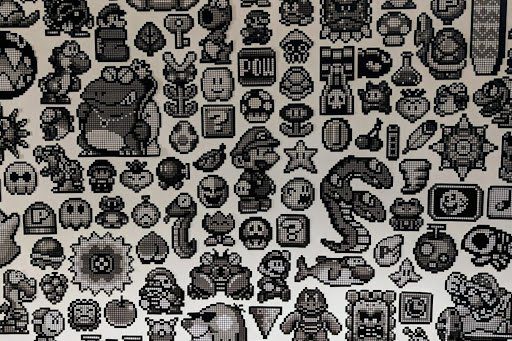
Back in my first family home, I started fostering an obsession with pixel artwork. I spent long afternoons creating greyscale reproductions of characters and objects from the Super Mario Bros. series. I had a whole collage of them set up above the mantelpiece, which looked pretty awesome if I do say so myself. 

So upon moving to London, I spent one long night reinstalling this collage in my new room. Even this simple, childlike action transformed the space, spurring a newfound motivation to decorate and fill my surroundings with home comforts.

Becoming settled in a space is one of the first steps to feeling comfortable in your own skin. Don’t ignore this task.

Adjust your scenery

This suggestion’s been advocated to death, but seriously, touch grass as much as you can. Fresh air is a surefire solution to boost dopamine levels and dispel the malaise of isolation. Surrounding yourself with people, even complete strangers, allows you to feel connected to a larger unit — suddenly, the weight of the world doesn’t solely rest on your shoulders.

After a certain point, it became impossible for me to enforce creativity in my room, so I started taking trips to the local library – there, I was able to hold myself accountable against others, relishing in the purpose of leaving my house. Provided you work remotely, separating relaxation and productivity spaces is integral to building focus and routine; if you can’t work in public, try at least to delineate these places within your home. Spending too long in one confined location is a breeding ground for procrastination.

Never underestimate the healing power of a long walk in nature. I myself have taken an obscene amount of those.

Book your relaxation

One of the greatest pieces of advice I have ever read was that rest is a right and not a reward. As a writer, it’s easy to grind myself into burnout, and I’m also a stickler for last-minute panic and how it turns me into a sleepless superhuman when I’ve got a deadline approaching.

Living in isolation, I find it more difficult to balance work and recreation. I’ve tried a bunch of time blocking-and-tracking methods over the years. More recently, I’ve attempted scheduling hours in the day for my personal hobbies: gaming, composing, novel-writing, watching TV, whatever I may need. I’ve realised that these moments are essential in preserving my productivity, and dedicating my time makes them feel systematic and automatic. As a result, I know I’m working towards something I can look forward to.

Everyone’s work schedule will vary, but it’s essential to create pockets of time throughout the day to do the things we love.

Dose your interactions

Something as simple as seeing an old friend for a day can satisfy your social gauge for a surprisingly long time (travel permitting, of course). On those days when nostalgic trips may not be possible, it’s still important to periodically engage with the local community.

I had a problem with interactions when I moved to London. Having developed friendships over three years in my undergraduate degree, I maintained that I should cherish and bolster these connections above others. Anything I built over a single year of study could never be as robust, right? Realistically, that was only an excuse for my insidious nostalgia, so I continued acting in shows, enjoying a new community in this once-unfamiliar terrain. Some of my greatest confidants arose from my Master’s year, and with many, I’ve remained in regular contact.

Don’t doubt your ability to be appealing to others and make friends in foreign environments. If you are the only obstacle standing in your way… get out of the way.

Starting over

Ultimately, I believe a large part of feeling isolated stems from internal unease. Self-caring for your body and soul before anything else will aid you in building confidence, taking new steps, forging new connections, and engaging with the shifting network of life.

Starting over is never a sign of weakness; sometimes, it is the most prominent indication of strength. 

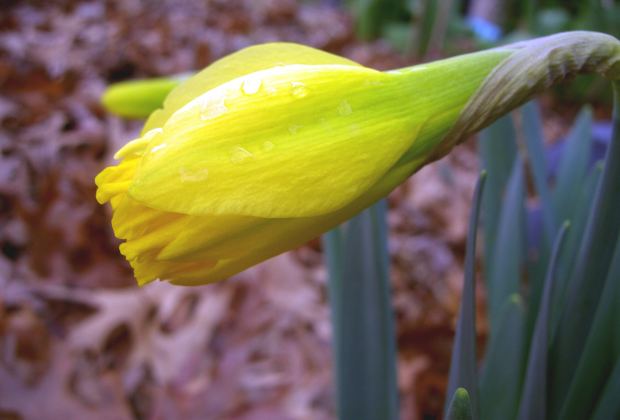
Image of a thriving daffodil flower bud with drops of dew.
(Image courtesy of Jdurham via Morguefile)

By the Light of the Moon

A night owl by trade

The whole thing was surreal and dreamlike. Sitting in a worn leather armchair, observation minutes in hand, keeping as quiet as possible, I was working nights and felt subterranean, or was it subterfuge? The whole world’s fast asleep while I was in a private, secured facility with a duty to be wide-eyed and, in a sense, on guard. 

The work itself was seldom eventful. The bulk of the challenge was the reset to the long nocturnal hours.

As lone residential staff

I experienced working nights in the UK at two distinct engagements. 

One was working a month-on, month-off cycle of days and nights of 12-hour shifts. As you can imagine, sleep cycle hell. It would be about two and a half to three weeks in when I’d finally feel acclimated, and then it was over. That was a lone engagement. I was a one-man night staff for a two-story residential building. A sky-high caffeine intake and riding out one’s sense of exhaustion were non-negotiable to start with. Yet past the opening initiation rites, I had an office to myself, bright lighting, a kitchen, and writing to get on with. Undisturbed, alone, and in continued quiet, this was a safe haven to let the imagination run wild. Frankly, I’d be sullen and half-depressed when returning to daylight was next on the rotation. 

Never have I had such a raw sense of discovering golden, secret pockets of time and stealing those hours.

On the adolescent ward

The second was an entirely different deal tonally. I was working nights for about two and a half months at a time as a Senior Healthcare Assistant in an acute adolescent mental health ward. Duties, multifaceted, could include guarding safety and boundaries,  self-care and dignity within distress.

The drama was low, barring a rambunctious start and end to some shifts. Right when the staff changeover would take place, the whole ward could be spirited to test boundaries, literally and otherwise. But it was mainly being awake and alert for issues when the young people slept. Just that dynamic alone gave a parental vibe to it. Particularly when a circadian kick of tired would bloom to life: I’m awake so you can sleep. There felt some kind of undercurrent, an unspoken sacrifice to the work. All right … maybe coffee-drenched sleep deprivation colors your thinking and feeling, I’ll give you that. 

On returning from the fjords

After the UK nights, I worked my third and last night shift job in Norway, as land staff for cruises. I served as an Embarking/Disembarking Agent for retirees making trips in and out of the Oslo fjords. Suited and booted, I was the all-smiling, polite signpost on legs, working in hotels around Oslo. This was a job whose only drama hit when it came to hotel room sizes, since some guests were close to apoplectic about their demands. The shifts themselves were otherwise slow-burn and simple.

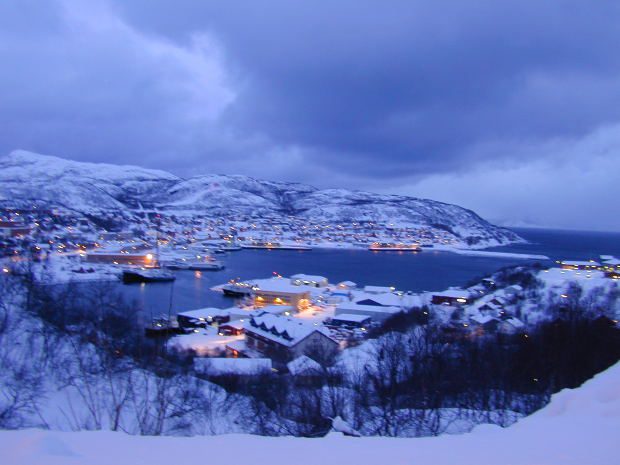
A Norwegian town, built upon a sea channel and surrounded by mountains, is dusted in fresh snow.
(Image courtesy of hyperlux via Morguefile)

I’d be in charge of the early risers, to get people on a coach to catch flights back home. The logistics were straightforward, as the concierge was always helpful, kind, and polite.

It was more the invisible, sleuth-like status that waiting in hotel lobbies in the dead of night gave. The night itself lent an air of film noir mystery. Soft light caressed golden and felt surfaces with spotless floors. The morning staff arriving, the night staff taking off, and revelers of the night returning to rest or collapse. I felt witness to a part of life I kinda shouldn’t be privy to. Dressed up and available in the lobby, my own desk, but not part of the hotel staff really. Needed when necessary, but otherwise not exactly there. As cars passed by in the cold darkness, I walked around a warm glowing foyer, a footnote to the surrounding world. Then again, wouldn’t you know it, I might just have got a little bit of writing done…

A mythical groove where creativity flows freely

I was always a night owl as a younger man, just a part of trying to steal more of the day. The hours between midnight and 3 AM could feel like a mythical groove for creative freedom seldom found. 

Yes, across nightwork and prior insomnia, writing has typically come alive for me. In years since, I’ve come to learn this could well be absolute guff, and there may be nothing better for creativity than a good night’s sleep. However, I can miss those hours. I can miss that sense I was up when the world fell fast asleep. That among all the quiet, in anonymity, I was carving out and discovering something I didn’t even know was there

I can’t advise being a night owl for creativity or otherwise. It might just leave you with a rather contemptuous relationship with the early morning. Yet there was some indescribable romantic glow of the deep of night with eyes wide open. An anesthetic contentment in isolation? An accidental high from screwing up a circadian rhythm? A little false power trip from having something others didn’t? 

I don’t know, but there’s nothing quite like being a night owl by trade. For better or for worse, I’m yet to find anything that compares. 

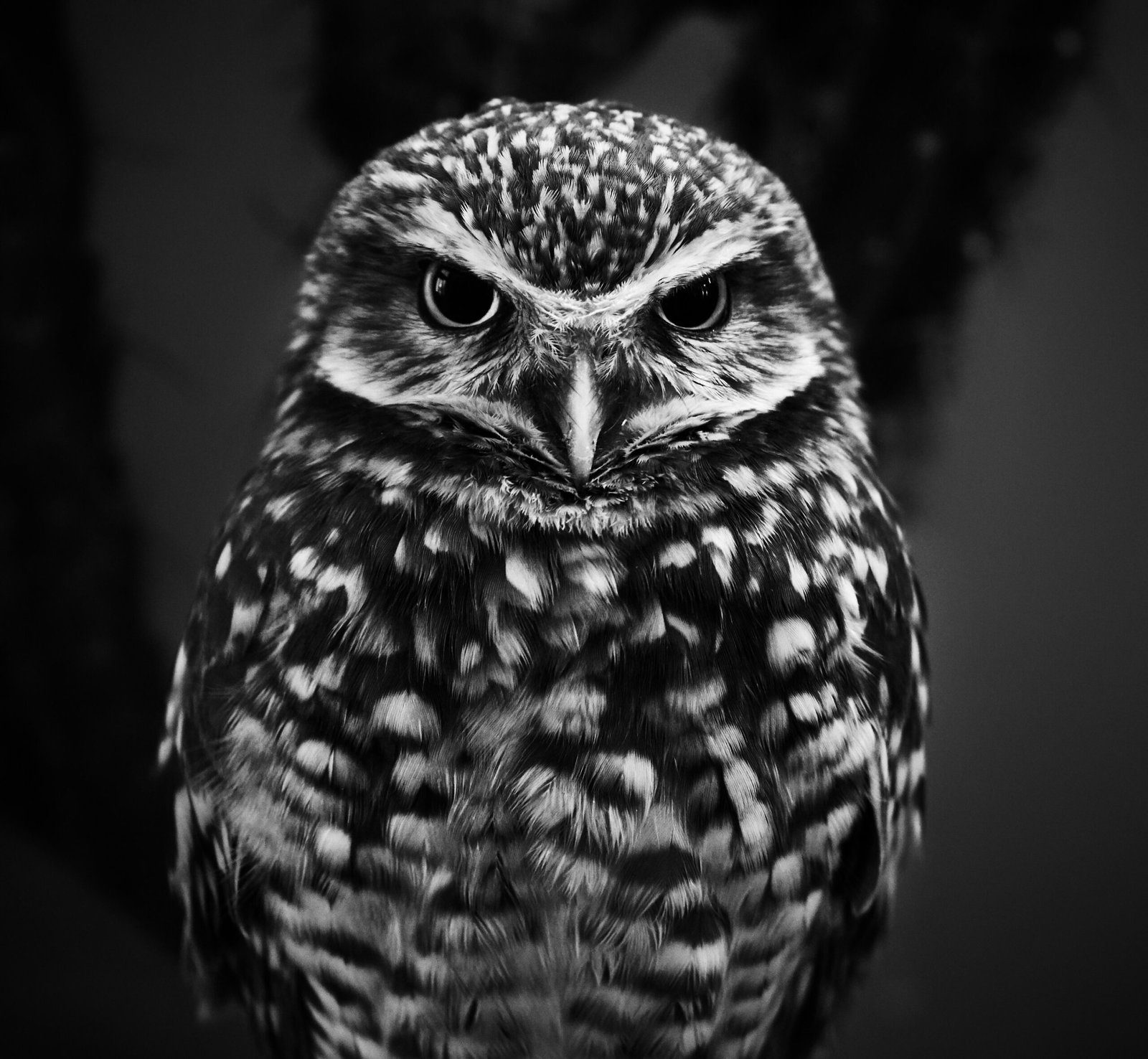
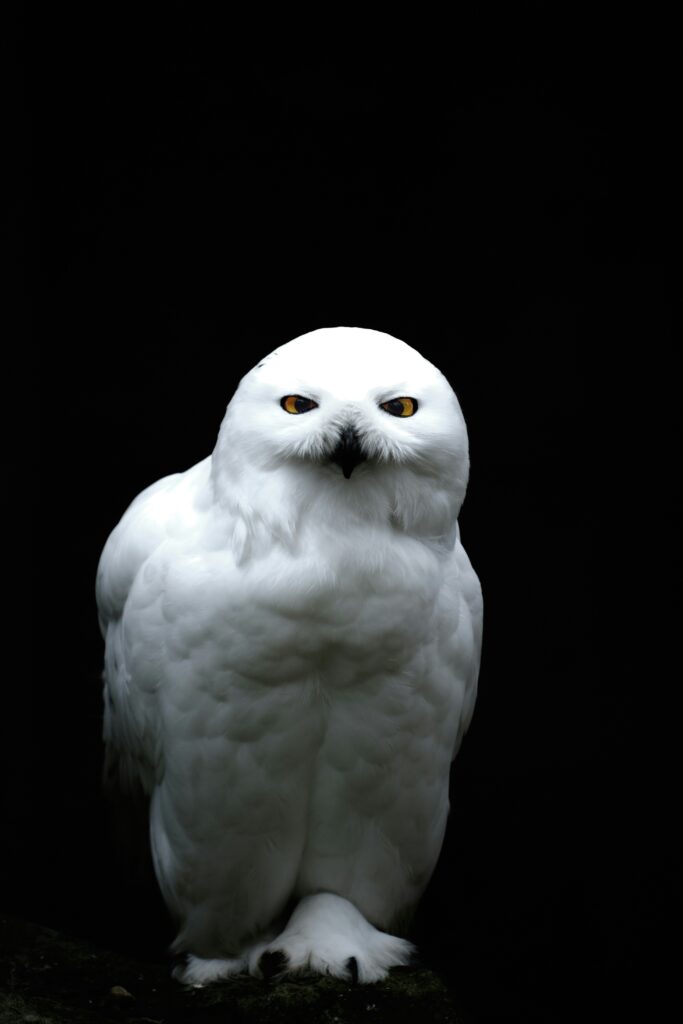
A snowy owl stares into the camera and hoots.
(Image courtesy of Alfred Kenneally via Unsplash)

Trying To Be

The search for answers

Sometimes, when we have time to reflect on ourselves, questions arise that make us reflect on life itself. Questions like: What is my purpose in this world? What is my mission here in the land of my birth? If my country is my home, what do I want to be? Countless, endless questions become a labyrinth in our minds, struggling to find a way to discover answers to things we don’t know, but that we hope to find throughout life.

I’ve had countless nightmares throughout my life. I’m not kidding… Being 31 doesn’t mean my life is already figured out. In fact, nightmares have visited me every night to remind me that I haven’t yet found where I want to be. The truth is, I don’t know where I deserve to be. 

In Colombia, for example, our culture is so rigid and planned that if you don’t follow social norms, you’ve wasted your life. These invisible rules actually reflect the discontent, frustration, and insecurity that prevent us from getting what we invest in our lives. 

Colombian culture impresses upon the youth that the only possible lifestyle consists of ​​”being born, growing up, choosing a career that will make me rich in the future, buying a house, and starting a family,” only to then be told — sincerely or hypocritically — “How lucky you are!” or “You deserve it.”

What do we deserve? And, what kind of luck should we hope for?

In my case, when it all comes down to money, choosing a career in art without a good salary hasn’t allowed me to fully become the independent woman I want to be. Is happiness found in money? I know it isn’t, but social norms make you think so. 

I am a woman who, given my sexual orientation and unmarried status, does not fit in with the Colombian status quo. Because of this, I have taken refuge, like others from minoritized groups before me, in art as a profession, gaining approval of my skills in universities by way of a diploma. I’ve received, in return, a qualitative gain that can be characterized as: “Pao, you write very well!” And I hope that I do. 

So what can we say about artists? We celebrate our wisdom in the worlds we create for ourselves, because in the real world, we are in the lion’s den that darkens our existence.

A place to belong in

Canada, on the other hand, being my first English-speaking destination, was my first home away from home, allowing me to open my mind and understand that life is more than the place you occupy. Europe, being a quick tourist trip, showed me, between its history and avant-garde style, that the possibility of an existence of a body in a space doesn’t require rules to exist. Now, the United States, the unexpected destination I chose next, is the country where I’ve been learning how to unlearn the supposed truths that I grew up with.

Those countries were just a window to see that we have another way of life, a window to reflect and say that it’s not too late to find yourself and be who you want to be. Do I regret not having the courage to decide what I want to be earlier in life? Of course I do!

But, at that time, I wasn’t mature enough to decide what I really wanted. I was simply a girl exploring the world and reaffirming that there is a life beyond the one you have in your native country. 

Why the United States?

I’m not quite sure myself. As of now, I’m writing to you from Alabama. Yes, the quiet state of Alabama! My first impression here was of a calming routine of a busy life, where you see more countryside than industry and more landscape than cement. It is welcome after feeling like I was on fire from the constant search to exist in the same land that saw my birth. 

How ironic, right? If decades ago there were Martin Luther King, Rosa Parks, and other leaders who left their trace today in every street, museum, and sculpture – so as not to lose the battle against oblivion and be forgotten – today, a Latina woman from a developing country has found herself in this land to silence any voice that stirs the weeds of her mind, preventing her from seeing the peace she seeks within to flourish.

Through my eyes

One day, for example, while driving aimlessly down an unfamiliar street, I found myself surrounded by abandoned, but not defeated, houses. The old framework still stands, refusing to disappear, leaving – in the eyes of tourists – the sense of a silenced but resilient history that refuses to be left in the past. When the rubble of the house still stands intact in its soil and foundation, it is unhindered by the thick layer of roots that tries to undermine it.

This is a description that may seem boring to many, but it has been the motivation and inspiration for my resilience in trying to discover who I want to be. I am still in the process of making sense of what I have discovered. I have found confidence in the knowledge that the calm hidden in the foundations of things will show me how the steady rhythm of the present can work.

The unknown path

Despite writing so harmoniously about what I see of Alabama, my mind is restless because I am experiencing the unknown in my country: peace. A peace that is forgotten when I am dominated by emptiness, the uncertainty of tomorrow, fear, anxiety, frustration in the face of the unknown, the passivity of time, the absence of answers, regret over decisions, the pressure of not having yet raised the diploma of “I am who I want to be,” and other emotions that I carry like a burden. These feelings don’t hinder anyone’s path except my own.

I don’t know how long I’ll be here. I only know that we are seeds seeking soil to flourish, bodies occupying a borrowed space to exist, and minds trying to understand the paths we build to travel on. As I write to you and you read my words, even without knowing each other, we are building bilateral relationships. Here, I am trying to find myself through my own writing while you are possibly reading these words to silence your nightmares or to reach out for a moment of connection. It is ultimately the same immense path we try to travel in this encompassing world, in the time and space that each of us has managed to be.

But who do I want to be?

This is the question that my eternal and inaudible voice asks, as it will accompany me until the day I stop searching for a path, stop fighting my nightmares, and cease to exist. For now, I know it is my compass in time to never forget that, on Earth, our existence is labeled with a first and last name and that our life impacts those around us.

Rougarou

The cypress boughs reached out above her, curlin’ tightly, like his fingers had around that damned bottle. The woods were darker than Nadine had ever seen them. She knew the forest had a way of sucking all the light of the world into it, like ether through a straw, and, yet, she still felt safer there, among the thickets, than with Pa when he had been drinkin’ and yellin’. Before Mama had died, they would walk through those woods together, catchin’ fireflies at the creek. For Nadine’s thirteenth birthday, she had received a small silver brooch from her mama, a gris-gris, inscribed with the glowing insects she loved so much, and she was told to never take it off, especially in them woods. Nadine recalled how her mama would laugh loud enough to drown out the distant shouts of Pa when he was in one of his huffs, and she remembered watching the sides of Mama’s eyes wrinkle like the peach trees in August when she howled.

For a long while after she had left them, Nadine had wondered how Mama could laugh so hard, even when Pa was so angry all the time. “Yer Pa is tryin’, but dere are some tings we just keep tryin’ widout tinkin’ if de tryin’s doin’ any good,” she would say before laughing again like the foxes did hunting rabbits. Nadine remembered that Mama had told her that laughing real hard brought the fireflies out, and “nuttin’ bad could happ’n” while they danced in the air. But somethin’ bad had happened; she lost Mama.

Nadine learned to avoid her father’s wrath simply by watching how his eyes looked when he’d come round from the docks. If they were puffy, like the great gray goujon he’d hook for market, bloated, staring in different directions but not seein’ anything, then it was time to skip out the back and take the path she knew soundly, even after the sun had set behind the tupelo trees.

Nadine knew every bog, bank, and branch of the bayou, and she had learned how to stay safe there, too. Boiling some black willow bark would ease Pa’s sore back and Mama’s headaches. With a good fire and some patience, she could stew nettles to make soup that would keep her going for days. If she was careless and got stung by the nettles or a bald-faced hornet, a little jewelweed sap could soothe the stings. Nadine’s mama had taught her everything she had ever known about them woods, and they protected her even now. 

“Chil’, WHERE Y’AT!?” Pa yelled from near the house. Nadine instinctively held her breath– he was awfully bad tonight. He had never been this bad when Mama was alive.

Nadine remembered how Mama’s headaches had progressively worsened, to the point where her own remedies from the woods worked about as well as a screen door would in Pa’s pirogue. Then, Mama’s nose started bleeding, and she fell on the front porch. She slumped next to the cardinal flowers poking through the railing, the same crimson color that ran down her face and onto Nadine’s hands as she tried rousing her. She shook her mama violently, desperately, as tears burned her face like the July sun. There was so much blood, then Mama lay still. 

Pa had found Nadine holding Mama, wrapping her arms around her like honeysuckle as she had every day of her life. Nadine stopped crying, but she still shuddered and squeezed her mama’s arms, hoping they would warm up again. Pa had not looked his daughter in her eyes again since that day, and they never did have a proper funeral for Mama.

***

“WHEN I FIND YUH!” her Pa roared. The panicked prick of reality buried those painful memories among the ferns surrounding her. Pa sounded real close, and she knew that that meant trouble. Nadine was careful to step only on the dry or mossy patches of the trail so as not to give her Pa any undue lagniappe. She traveled away from the furious voice, although she knew that, like lost light, sound also became garbled in those woods. A human voice could wander for what seemed like miles after its owner had stopped talkin’, with the tree hollows and tides echoing and taunting any listeners within earshot. 

Nadine grew quieter still, and sought cover in the dampened groove under a toppled cypress near Firefly Creek, briefly making sure there were no hornets’ nests in the exposed roots. She heard something moving, quick as a cocodrie, through the woods. It was large and heavy, but still moved swiftly– much faster than her pa could in his stupor. He was angry about somethin’, but, even pie-eyed drunk, the couyon wouldn’t rush into the bayou unprepared. No, whoever was closing distance on Nadine could not be Pa. Then she heard it, like the sharp crack when her mama had collapsed on the warped wooden steps of their porch. 

There were two gunshots, and wiry red flashes to her right, much closer than she had expected, where the gunpowder had ignited. Birds scattered from their roosts, and a boar squealed in surprise. Then, Pa screamed, a wet, dark scream that matched the inky blackness of the woods. Silence settled across the bayou, as brief as the fire flashes, before Nadine heard something else entirely.

A rasping breath followed, and she swore she could hear something inhaling deeply through its nose. Nadine thought she almost felt the searching stare of someone she could not see, and she gravely hoped they could not spy her ‘neath the clammy roots where she hid. Her own breath caught as a figure emerged from the grove. She grasped her brooch with one hand and covered her mouth with the other.

The figure was hulking and matted in dry muck. They stood tall on two sinewy legs that seemed nearly as thick as the tree trunk that concealed Nadine, and their face was far too long. Their aquiline snout and teeth shone sharp, even in the dark, and, yet, the figure’s yellow eyes reminded the girl of the fireflies she so deeply admired. She dug her palm into her mama’s brooch and lost herself to terror. Nadine’s other hand fell away as she gasped, and the creature turned, hearing her, and staring with open maw. Nadine noticed somethin’ slick painting the figure’s mouth, red as the blackbird’s wings, when they approached her hollow with ferocious speed. 

Without thinking, she laughed desperately, wildly as her mama had in life. She squeezed the brooch as hard as she could, until the silver was warm like her. As she laughed, the figure bounded towards her, filling her vision as they grew nearer still. All she saw were their two swollen, yellow eyes, staring unblinking into her own. This was the end, her end. She felt it, had felt it for a while, ever since Mama had died.

***

The rumble was soft, even, and gradual. It sounded as if the ground were shakin’, but her hands and stomach rested upon the damp, still earth. The echo filled her ears and the space behind her eyes, and she suddenly heard her mama’s laughter. The trees creaked, while the sky seemed to be brightening, awash with a luminous luster. With a glow as full and warm as her mama’s embrace, a cloud of fireflies flickered, turning the bayou into a crystalline scene. Wisps of yellow, green, and gold transformed the cypress trees into inverted chandeliers, while the water was wet peridot. 

The sky gleamed with swarms of fireflies, multitudes like she had never seen. Swaths of insects landed anywhere they could, including all over Nadine’s chilled body. The figure inhaled deeply again, but the laughter continued, stronger still, and the fireflies swarmed them, unrelenting. The figure reached out to bat at their luminescent assailants. The insects overwhelmed them, pulsing with their living light, until, yet again, all Nadine saw was the figure’s gaze, full as the moon would be in a fortnight. 

As the figure swayed, gilded in wings and the thunderous thrum they made, the laughter now came from Nadine’s own throat. And, as she stared back, the figure’s eyes were, all at once, a much more familiar color. “Mama?”

To Sleep — Perchance to Get Some Rest

“When you lie down, you will not be afraid; yes, you will lie down, and your sleep will be sweet,” Proverbs 3:24. 

This Bible verse never rang true in my mind, nor did I ever understand it that well until I started noticing a change in my sleep resulting in insomnia. You see, these are such verses that must arrive at the moment you don’t know what is happening around you in your life. Maybe they are verses sent from God after all. 

College days and freelancing nights

Well, I have been a very busy person, placing value on my external wellness at the expense of my internal health. It all started back when I arrived at the campus of the University of Nairobi, Kenya. Those were the days when survival on campus was an essential matter. It was as if this was the place where the theory of natural selection, or the survival of the fittest, intensified.

In my freshman year, I eventually got used  to the new environment. You know how difficult it is to adapt. This is a point where people are most easily swayed into attempting activities they have never done before. I was not left out in all this. I found myself occupied with activities that were supposed to help me survive on campus. Around this time, there were quite a good number of online jobs, and so I got myself into the freelancing industry.

Luckily most of these jobs were mainly done at night. During the day, I would focus on my academics, and then at night I would turn to my freelancing job. Survival is one phenomenon of life that, to me, is still a mystery. The pressure that comes with surviving is just overwhelming. This is the point where phrases like “Let the sleeping dog lie” or “The rich never sleep” hit hard. The dilemma where you do not know whether to do something or not may lead to the fear of the unknown . For me, this was what could happen if I prioritized sleep over my survival, where survival translated into making money.

If you were in my shoes, you would eventually prioritize survival first and then everything else much later. I could wake up, attend my lectures, run a few errands around school, hang out with my friends around town, and at dusk, I would take my supper, which always came early, before getting ready for nighttime activities. I would work almost the whole night from 8:00 pm past 3:30 am, then I would do some of my coursework, and a short rest between the hours of 4:30 and 6:00. 

Basically I slept for an hour and a half. Yes, and on a daily basis. 

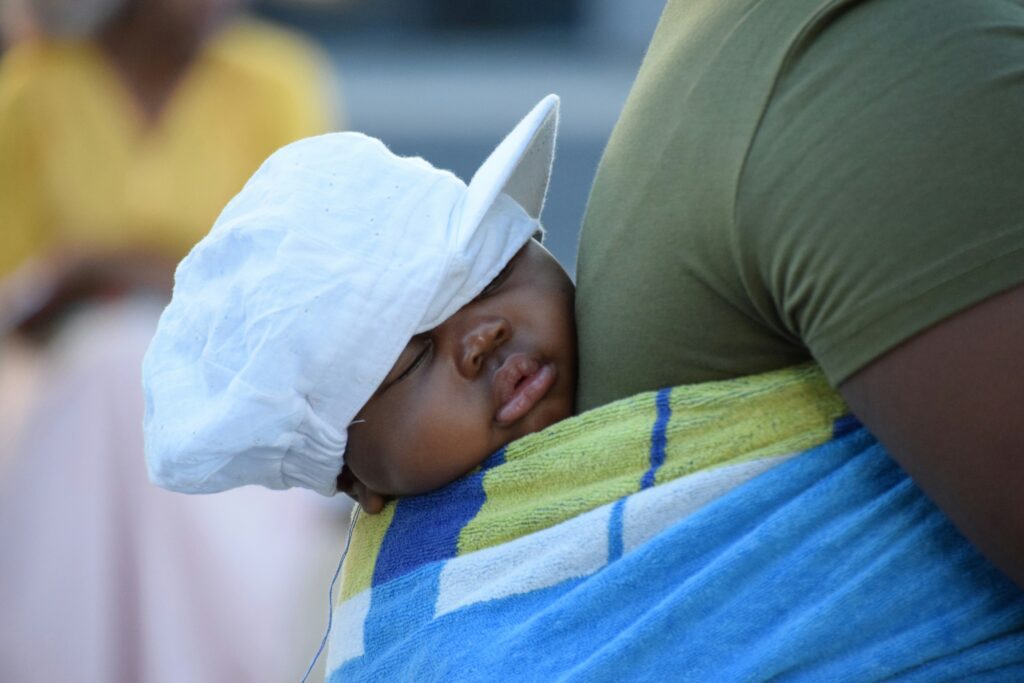
A young child with a white hat sleeps while cradled on their parent.
(Image courtesy of Jack van Belzen via Unsplash)

No complaints, at first

My body surprisingly never complained of fatigue or anything of that sort. Little did I know that my body’s engine was running out of oil and depending on the small reserves meant for emergencies. I never felt any alarm or an indicator that my body was soon leading me down the road to a breakdown. Sure, even a machine needs adequate time to rest its components to perform better. But was I a machine or a human being who needed to survive on campus? I continued this habit for the next three years, and everything was moving along well enough.

Then came the fourth and final year in my studies at the university to complete my degree. Suddenly, the online tasks began to diminish. I could find only one job to work on, unlike previously when I could find several tasks to take on. This meant that I would now be working shorter hours during the night, for instance, from 8 pm to 10:30 pm, and then I was done. That’s when I realized I was doing a great injustice to my own health.

Indeed, choices have consequences. It dawned on me that all this while I have been trying to turn a deaf ear to all the signs my body was sending me with the frequent loss of appetite and the frequent feeling of boredom. It turns out even the intense feeling of fearing the unknown was my body trying to show me the signs that I was depriving it of a very essential activity, sleep. 

I could get to bed at 11:00 pm, but instead of sleeping, I would turn over and over in my bed in an attempt to get to sleep without success. The tossing and turning could take the better part of the night, accompanied by overthinking and a buildup of stress until around 4:00 am, when sleep would finally find me. 

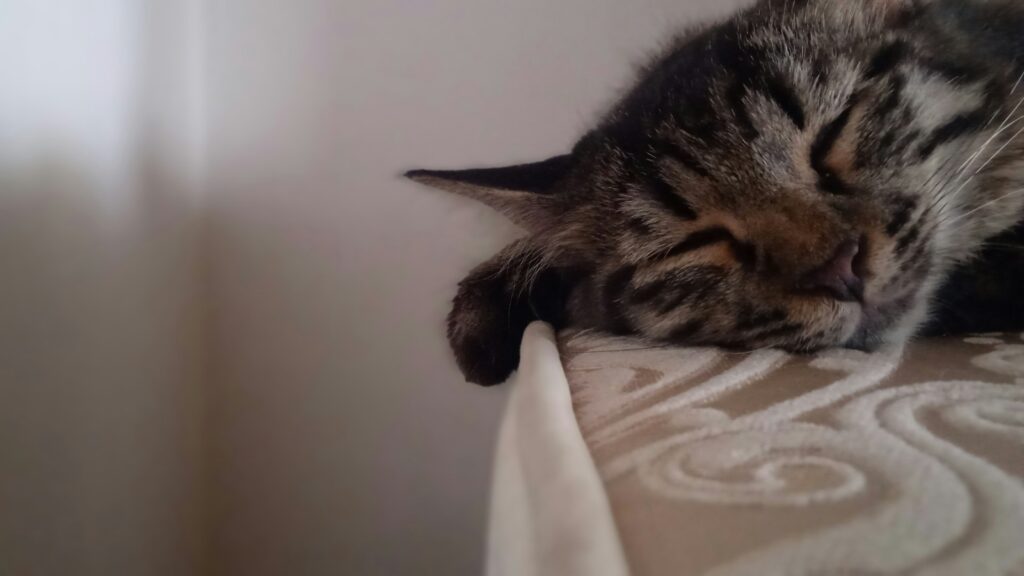
A striped tabby cat sleeps soundly on their bed.
(Image courtesy of Maryam Rad via Unsplash)

Is sleep a priority?

I suffered the results of my activities. Sleep had never crossed my mind as something of great importance to my general well-being. It was more or less the least of my priorities. 

I was now forced to bring my day and night back to those of a normal person. It was difficult, for sure, to reset my sleeping routine, but I had no other option. I started reading about the importance of sleep and how it can affect someone’s mental health, and I was shocked by what I read. Each time I read an article, it resonated with me, and I felt guilty for having been so mean to myself by not prioritizing sleep.

I even came across another verse in the Bible that says, “It is in vain that you rise early and go late to rest, eating the bread of anxious toil; for he gives to his beloved sleep,” Psalm 127:2. 

A good night’s sleep is a godsend

From this point on, I realized that sleep was not just a mere occurrence in the body of animals, but rather a divine thing, one of the best that God gave us. All this while I was harming my body by overworking it rather than giving it a little time to recuperate

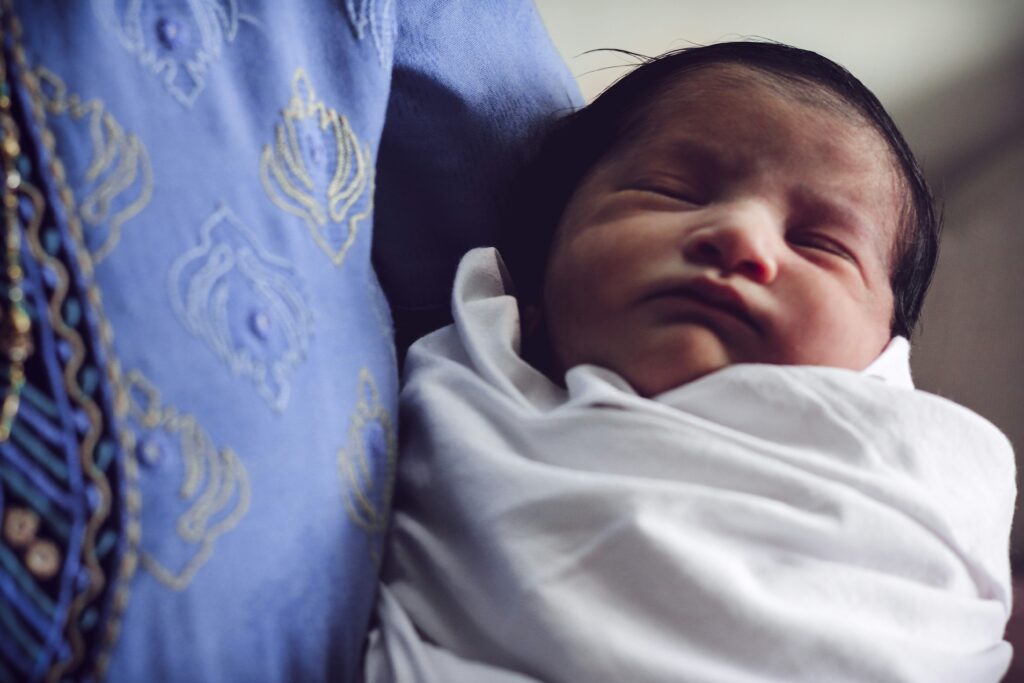
An infant in swaddle sleeps while held in their loved one’s arms.
(Image courtesy of Aakash Gupta via Unsplash)

While God grants us sleep freely to help our bodies and give our mind rest, this is the time I felt of drawing us close and revealing most plans towards us through our dreams. Doubtless, when you wake up in the morning, you feel more energetic and rejuvenated after a long, tiresome day.

According to the National Institute of Neurological Disorders and Stroke (Brain basics: Understanding sleep), a normal sleep stretch should be between 7 – 9 hours, at specific times when the brain releases hormones responsible for sleep. God or nature created the night so that we might set aside our duties and take that time to sleep and trust that we can release the burden of control of our lives all night.

Finally, I appreciated the fact that quality sleep is not directly in my power. Beyond the refreshment that comes from sleep is the great power of a restart that manifests during the time we are asleep. This is the time frame when healing arrives, and afterwards comes the feeling of renewed health on waking up. 

What by day and what by night

What is our way? What is our purpose? 

How different is each day upon waking? I shall always remember that I can perform much more by day when I sleep well night by night. 

I make it a priority. 

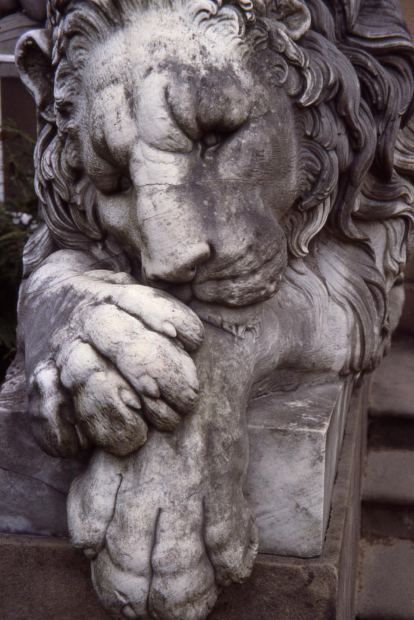
A stone statue of a lion dozing.
(Image courtesy of Beglib via Morguefile)

Migrant

Note: A profound thank you to Daniel at DS Productions for his impassioned background music which is featured in the audio recording of this piece.

Our land is on fire, regardless of the soil that sustains us,
Our soul is burning, regardless of the lava that cloaks us;
Our body dances the ballet that embraces us.

We are naked and unprotected bodies,
Like migrants born to conquer
The land of the unknown,
The land of the unheard,
The land of absence.

You and I are migrants,
Migrants like the sin of being.

We are nothing more than displaced bodies that seek, amid prayers,
To silence the hunger, arrogance, and abuse of those
Who inhibit our being.
We are nothing more than souls trying to give substance to the ashes that have Blossomed from our being.

We are nothing else than rejected bodies in a land we did not choose to be,
When our life, lost in the mist, searches for the light
To reach praise of the gods,
Once, our tears went unheard.