Editor’s Note: This poem mournfully reflects upon relationships that have ceased to exist.
Days Gone
You’re plagued with nostalgia’s grotesque Scraps, an alchemizing insurgent. That banished inner voice Barks propaganda dressed in velvet. Dogma pollutes, preaching “You’ll be together again.”
Rusty scattered nails, hammered Without permission, in rotting Myrtle wood. Every now and then You hear so-and-so is up To this, and that. Doing well. Better than.
What should you expect?
Casting spells and chanting Fails to countermand the gravity That holds your feet fast. It’s easier to submit, but man evolved, Rebellious, to stand against. Dejection fills empty driveways. Simple truths are ignored As decried memories. Forget swallowing your dose – Reality is a brick-sized suppository.
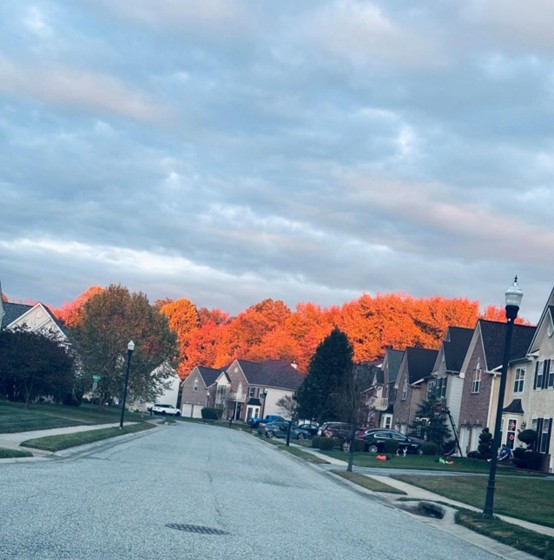
Dusk on Fall Drapes the sky in ember hush; Wandering winds whisper secrets to the cooling earth. Fruits, flowers, and leaves — all ready to fall with the fall, As cider’s sweet breath and pumpkin pie dreams Float like gold in the gathering dusk.
Shorts and skirts set to hibernate; Fleece and wool take their place, Welcoming the holidays — oh, what fun! Halloween, Thanksgiving, Christmas, and New Year. Letting go the warmth, embracing the chill, Weaving comfort with family and friends.
Beanies cover my greying hair, Jackets hide the little pot belly. Only my beaming face remains — The one the world can see now. I love this part of the year — No tissues to wipe my sweat, No sunscreen, no tans, Just me and my cozy cheer.
The sun sets early — no need for blinding curtains; Keep them open.
Lying beneath the cozy comforter, I gaze at the sky, the stars, and the moon. Clouds moving slowly across the darkening horizon.
I’m an introverted person. I can preserve myself quite solitarily, recharging with personal hobbies and quietude. There are often days when my recovery from a social event ends up being the comforting main course of an evening routine, replacing parties with pyjamas after an experimental aperitif. Introversion, however, should never be confused with a lack of social needs. I’m not so crippled by shyness as I once was, and I find myself craving the company of people more often.
Studying drama and theatre for three years, I was constantly surrounded by activity. Seminars, workshops, group projects, society sessions, shows… not to mention living with two amazing, intuitive housemates. During this time, a small university town can feel like your whole world, especially for drama students. God, that frenetic, boundless energy… When you’re sucked into its vortex, your mind and body start to crave it. The pull of creation, catharsis, and community — the push of careening from one show to another. These periods can get intense. Consequently, the small pockets of private time I was able to scavenge were sanctified.
Then, when I moved south to London to pursue a Master’s degree in scriptwriting, everything was flipped on its head. Suddenly, I was buried in work that required disciplined, insular focus. My accommodation turned into a studio. The characters in my brain became my family. Leaving all those fantastic, local connections behind, I found those rushes of interaction harder to replicate.
Change is scary!
Let’s face it. That being said, there was a knack to my routine, once I screwed my head back on. How to accommodate isolation… and cherish it. I wanted to share a couple of tricks that really helped me in moments of loneliness to self-discipline, protect my mental health and maintain relationships. It’s my hope that anyone facing this level of change — whether it’s a new home, a breakup, or something else — can put their adjustment first. It’s an integral process.
Picture your comfort
One of my biggest regrets was leaving my flat undecorated for months, telling myself it was only a temporary stay. What was the point of moving in? In truth, a room is a reflection of your mental state, and you should tend to it with the same level of respect. Find ways to imbue your intimate surroundings with positive thoughts.
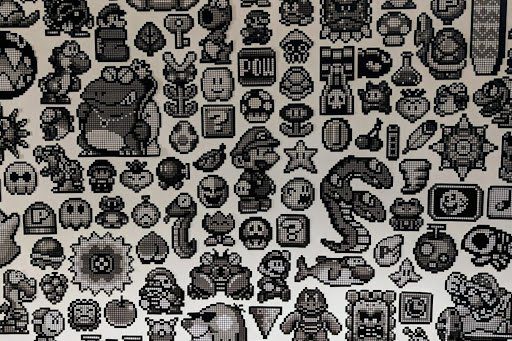
Back in my first family home, I started fostering an obsession with pixel artwork. I spent long afternoons creating greyscale reproductions of characters and objects from the Super Mario Bros. series. I had a whole collage of them set up above the mantelpiece, which looked pretty awesome if I do say so myself.
So upon moving to London, I spent one long night reinstalling this collage in my new room. Even this simple, childlike action transformed the space, spurring a newfound motivation to decorate and fill my surroundings with home comforts.
Becoming settled in a space is one of the first steps to feeling comfortable in your own skin. Don’t ignore this task.
Adjust your scenery
This suggestion’s been advocated to death, but seriously, touch grass as much as you can. Fresh air is a surefire solution to boost dopamine levels and dispel the malaise of isolation. Surrounding yourself with people, even complete strangers, allows you to feel connected to a larger unit — suddenly, the weight of the world doesn’t solely rest on your shoulders.
After a certain point, it became impossible for me to enforce creativity in my room, so I started taking trips to the local library – there, I was able to hold myself accountable against others, relishing in the purpose of leaving my house. Provided you work remotely, separating relaxation and productivity spaces is integral to building focus and routine; if you can’t work in public, try at least to delineate these places within your home. Spending too long in one confined location is a breeding ground for procrastination.
Never underestimate the healing power of a long walk in nature. I myself have taken an obscene amount of those.
Book your relaxation
One of the greatest pieces of advice I have ever read was that rest is a right and not a reward. As a writer, it’s easy to grind myself into burnout, and I’m also a stickler for last-minute panic and how it turns me into a sleepless superhuman when I’ve got a deadline approaching.
Living in isolation, I find it more difficult to balance work and recreation. I’ve tried a bunch of time blocking-and-tracking methods over the years. More recently, I’ve attempted scheduling hours in the day for my personal hobbies: gaming, composing, novel-writing, watching TV, whatever I may need. I’ve realised that these moments are essential in preserving my productivity, and dedicating my time makes them feel systematic and automatic. As a result, I know I’m working towards something I can look forward to.
Everyone’s work schedule will vary, but it’s essential to create pockets of time throughout the day to do the things we love.
Dose your interactions
Something as simple as seeing an old friend for a day can satisfy your social gauge for a surprisingly long time (travel permitting, of course). On those days when nostalgic trips may not be possible, it’s still important to periodically engage with the local community.
I had a problem with interactions when I moved to London. Having developed friendships over three years in my undergraduate degree, I maintained that I should cherish and bolster these connections above others. Anything I built over a single year of study could never be as robust, right? Realistically, that was only an excuse for my insidious nostalgia, so I continued acting in shows, enjoying a new community in this once-unfamiliar terrain. Some of my greatest confidants arose from my Master’s year, and with many, I’ve remained in regular contact.
Don’t doubt your ability to be appealing to others and make friends in foreign environments. If you are the only obstacle standing in your way… get out of the way.
Starting over
Ultimately, I believe a large part of feeling isolated stems from internal unease. Self-caring for your body and soul before anything else will aid you in building confidence, taking new steps, forging new connections, and engaging with the shifting network of life.
Starting over is never a sign of weakness; sometimes, it is the most prominent indication of strength.