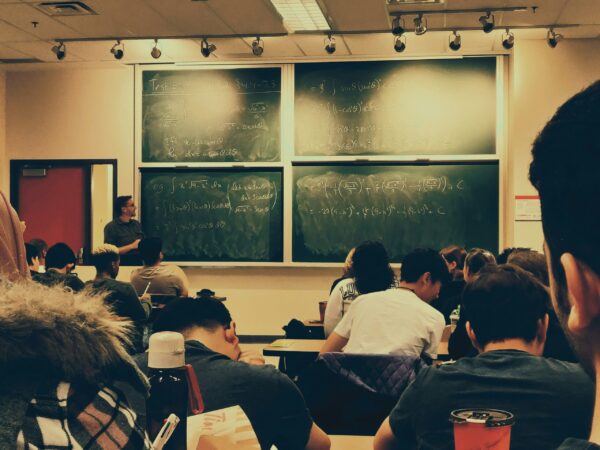
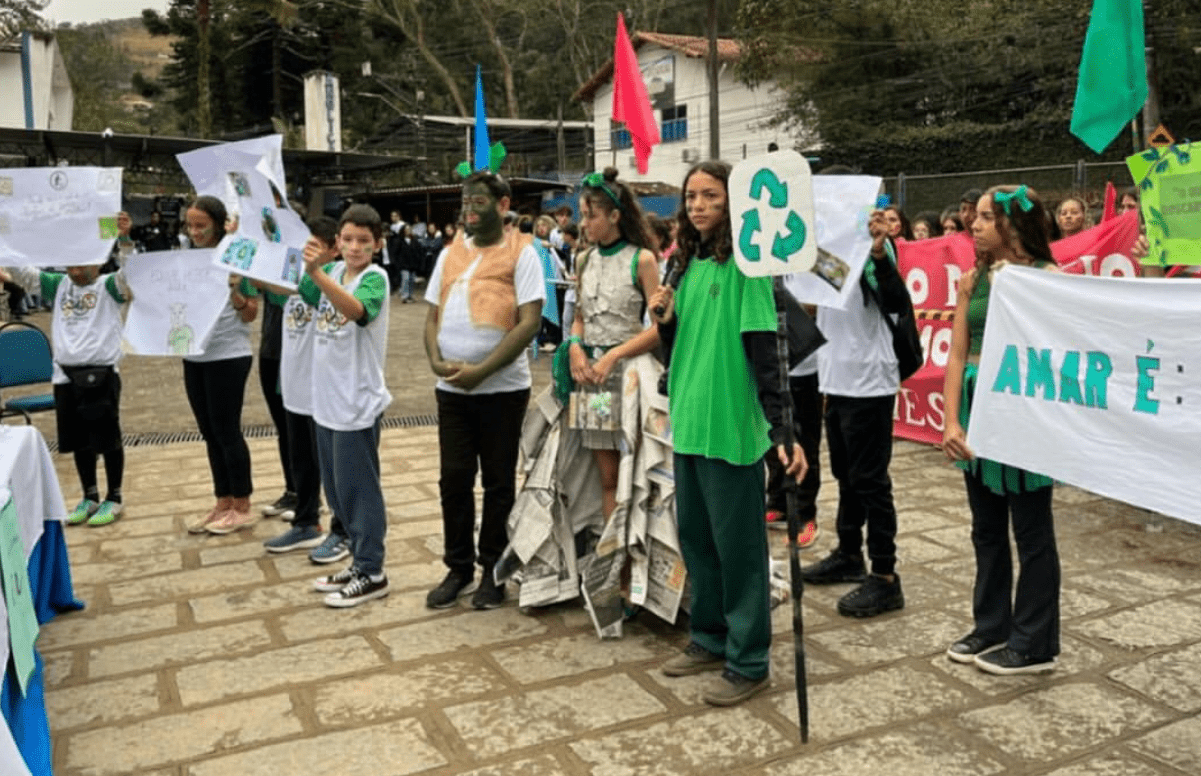
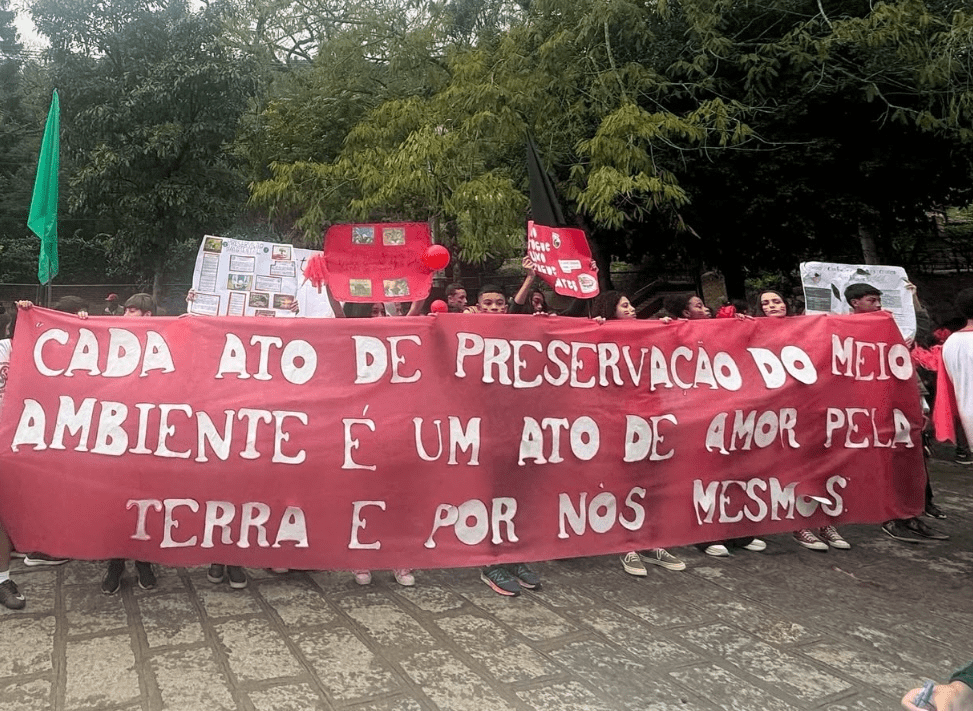
In Rio de Janeiro, public school students are leading the fight against the climate crisis.
Between 2020 and 2024, the initiative EVA Brasil brought environmental education into public and rural classrooms across the state-and its impact is already reaching local policymakers.
Less than a year after EVA’s pioneering work concluded, Brazil has become a focal point in discussions on sustainability in schools. In 2025, climate change, biodiversity protection, and disaster prevention were added to Brazil’s basic education curriculum, marking a major step in environmental education.
The initiative aims to involve all schools in the country in projects centered on environmental justice, encouraging young people to participate and learn from one another throughout this journey.
With a new school year underway, EVA’s legacy offers lessons on how youth-led education projects can shape policy.
In 2024, EVA’s work reached the City Council of Petrópolis (Rio de Janeiro, Brazil). Through the project, students collectively created thematic committees and drafted proposals for the city’s Climate Adaptation Plan. These proposals were formally submitted, documented, and filed with local authorities.
The initiative involved community outreach and debates in participating schools, in partnership with the wider community. The process included mapping environmental risks and identifying preventive measures against disasters.
The impact of the program goes beyond classrooms, focusing on students’ intellectual development. The team promotes teacher training and introduces activities on climate adaptation and sustainability, strengthening both the school environment and the community at large.
This movement highlights the urgency of applying socio-environmental education into civic formation, so that society, from its very foundation, understands the consequences of its actions on the planet.
The project’s experience shows how socio-environmental education can prepare new generations to face an increasingly evident climate crisis in Brazil. It is crucial to remember that young people will be among the groups most affected by decisions made today, reinforcing the need for initiatives that give them voice and a space to act.
Impact
In an interview with Yuvoice, Denise Fonseca, Eva director, emphasized the importance of youth engagement.
“Young people, especially teenagers, are by nature restless and eager for change. This is part of this stage of life, when they assert their existence, reclaim their identity, and present the new self they are building from their own experiences. Their worldview gradually differs from that of their elders. Not just to question, but to propose paths forward. Formal education directly impacts the youth community: it brings newness into the family sphere and opens space for transformation”.
The role of young people is crucial, she says. “They have this ability to spread ideas. Change begins within their own social circles”.
When informed and encouraged, young people cease to be mere spectators and become more participatory, able to understand climate shifts, question unsustainable models, and contribute to solutions for a greener future.
A survey conducted by EVA members showed that more than 60% of families reported adopting more careful environmental practices, such as waste separation, water quality monitoring, water and energy consumption control, and awareness around fire prevention.
The project, however, did not receive government support during its four years of operation and relied on donations to stay afloat, which made it harder to improve and sustain its activities.
Despite these challenges, the Eva team continued fighting for broader recognition throughout its duration, and the project officially concluded its field work at the end of 2024, having laid the groundwork to potentially expand its impact to other schools facing similar vulnerabilities.
Initiatives like this gain even more relevance in today’s global and national landscape. While EVA’s impact is seen at the family and community level, Rio de Janeiro’s environmental progress is also reflected on a broader scale.
The state has stood out. According to MapBiomas research, between 1984 and 2023, it was the only state in the country to record growth in forested areas. This progress is directly linked to Atlantic Forest restoration efforts – a biome that covers the state of Rio de Janeiro – and to the work of NGOs and local organizations.
Consistent environmental policies have also proven effective in restoring native forests and soils.
Still, these gains are not enough to neutralize the impacts of other environmental dilemmas. Brazil continues to face severe challenges such as deforestation and ecosystem degradation, issues that demand urgent action.
It is clear, therefore, that young people must be brought together and encouraged to understand the full scale of the climate and environmental crises affecting the world.
Only through an educated and empowered generation can Brazil hope to confront its climate future.