
UNBREAKING THE NEWS

”The Secret Agent” and the memory of the dictatorship: Brazilian cinema wins the Golden Globes and revisits an authoritarian past

The victory of “The Secret Agent”  in the Best Non-English Language Film category at the 2026 Golden Globes consolidates a recent movement in Brazilian cinema that has turned its gaze toward the country’s past, investing in narratives that address historical memory and criticize the silencing imposed by the regime.

All eyes are now on the Oscars, where the film is nominated for best picture and best international feature, among other awards. 

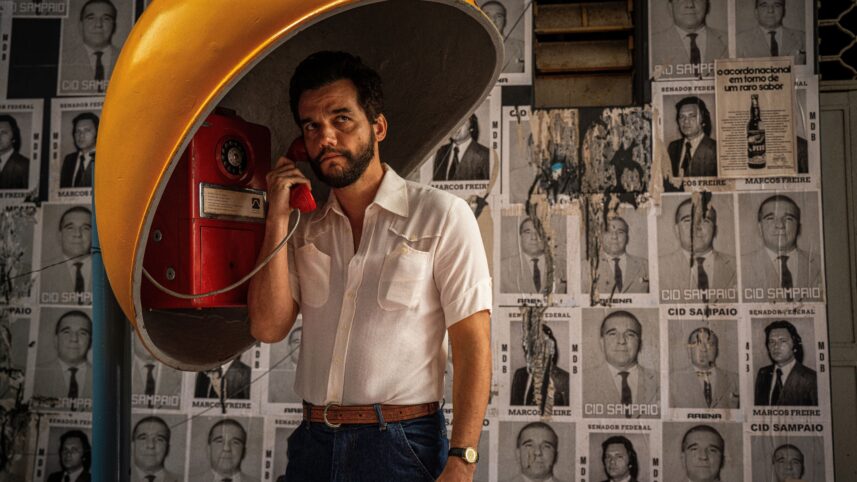
Starring Wagner Moura, who also won the Golden Globe for Best Actor in a Drama and is nominated for this year’s Academy Award in the same category, the film stands out both for its international recognition and for its symbolic power in telling a story set during Brazil’s military dictatorship.

Set in a time of repression, censorship, and human rights violations, “The Secret Agent”  engages with a wound that remains open in Brazilian society. Even after 40 years, its marks continue to manifest themselves in institutional politics, in public discourse, and in the way society itself relativizes or denies the crimes committed by the state during that period.

The film’s consecration at an international award ceremony such as the Golden Globes extends this debate beyond Brazil’s borders. In addition to it’s Golden Globe win, “The Secret Agent”  was nominated for four Academy Awards: Best International Feature Film, Best Actor, Best Original Screenplay, and Best Production. By recognizing a work that addresses repression and the regime’s various surveillance mechanisms, the film industry validates the relevance of telling these stories as a way to contribute to memory and the construction of democracy around the world.

The film’s recognition directly dialogues with the recent impact of “I’m Still Here”, which gained prominence the previous year by portraying the same historical period through family memory and the scars left by censorship. That film strongly contributed to the rise of a new public debate about the dictatorship and, alongside “The Secret Agent”, highlights how authoritarian pasts are still poorly understood by large segments of society, not only in Brazil, but across several Latin American countries.

Julia Ramos, a historian and professor at the Federal University of Rio de Janeiro, states that the production of historical films is essential for fostering complex debates among mass audiences through simple and accessible language.

“In the Brazilian case, films about the military dictatorship take on even greater importance. The country went through a post-dictatorship process marked by political projects that encouraged forgetting, the idea of ‘turning the page,’ erasing the past, and moving on. This silencing directly contributed to the fact that, today, there are still sectors of society that relativize the violence of the period, defend the dictatorship, or simply do not understand what it truly represented.”

Unlike many works that revisit the dictatorship through intimate family memory and mourning, “The Secret Agent” chooses to expose the structural mechanisms of repression, showing how surveillance and control became normalized practices in everyday life at the time. This narrative choice directly confronts the historical erasure that marked Brazil’s post-dictatorship period. According to the final report of the National Truth Commission, released in 2014, at least 434 people were killed or disappeared between 1964 and 1985, a figure that highlights the systematic violence of the regime and reinforces the need for narratives that critically revisit this past.

READ MORE

Comments

Be the first to share your thoughts!

We value diverse perspectives and respectful debate.