Springtime For Iran? The Iranian Haft-Sin and the Eighth “S”: Soghoot (Collapse)

The Iranian New Year arrives with spring, or perhaps it is more accurate to say that spring finds its meaning through the Iranian New Year.

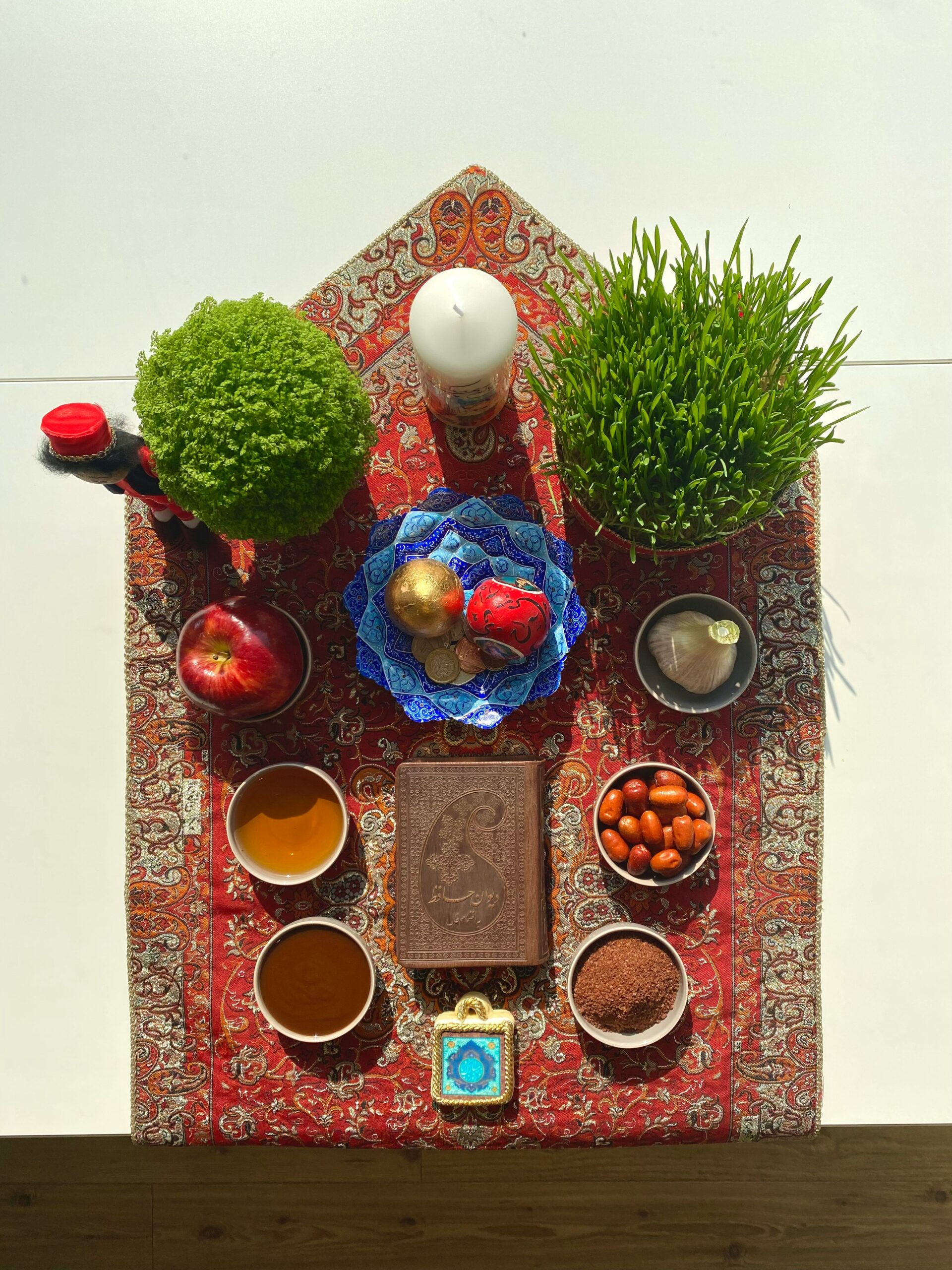
One of our most beautiful traditions is setting the Haft-Sin table — seven symbols starting with “S” that represent life, hope, rebirth, and continuity. But this year, for Iranians across the world, there is one more “S”: Soghoot (Collapse.)

Collapse; a word that begins with the same letter in Persian, yet carries with it a weight of pain, anger, and at the same time, hope.

For years, Iranians have chanted: “This is the year of blood; the regime will fall.”
But each time, before any fall could happen, it was these innocent people who fell to the ground;
it was these dreams that shattered;
it was these lives that were extinguished.

And yet, each time — like a phoenix — they rose from the ashes, with wounded bodies and exhausted souls, but still standing.

Who could have believed that after the massacre of January 2026, after so many lives were cut short, one could even think of spring?
The grief was so overwhelming that even uttering the word “freedom” had become difficult;
a word whose cost proved far greater than we had ever imagined,
and the brutality that stood against it was beyond any nightmare.

But only twenty days ago, at 9:33 in the morning local time on the 28th of February 2026, news shook the world:
an attack on the “House of the Leader.”

A place that for years symbolized power and repression suddenly became an epicenter of collapse.
No one believed that a dictator who called himself the “Leader of the Muslims of the world” — and who had been hiding underground after the 12-day war in the summer of 2025, leading him to be unofficially crowned with the derogatory alias of Mooshali (mouse in Farsi) — could have been killed in such an attack.

It took a full day for the news to be confirmed.
And once again, during the dawn call to prayer.

For Iranians, the call to prayer at dawn is not just the beginning of a day;
it is a chilling reminder of the hours when executions took place, before sunrise.
How many nights did we stay awake until dawn, in anxiety and helplessness, wishing
that maybe this time…
maybe this young person, this athlete, this activist, this unnamed human being… would survive.

And now, the announcement of the dictator’s death at that very moment, at the dawn call to prayer
felt, for many, like cooling water poured over burning hearts.

The morning after was a different morning.
A morning that — even if it marked the beginning of another war — carried the scent of liberation.

Twenty days have passed since that day.
An intense war is underway, with multiple countries involved in the Persian Gulf region and the engagement of two major armies.
Yet despite all this, the number of casualties still cannot be compared to the massacre that took place in just a few hours.

Today, the world is less shocked by the war than by the “continued resistance of the regime.”
But how could they understand, when for years they chose to look away?

Over the last 47 years, many countries that claim to uphold human rights
not only remained silent,
but through their actions, granted legitimacy to this monstrous regime.

And they still fail to understand that a government that massacres its own people has no hesitation in setting the world on fire and destroying the ancient land of Iran.

To this day, not a single country has officially closed its embassy in Tehran,
nor expelled the ambassadors of this regime.

But the people of Iran see all of this clearly, and without forgetting.

When the “right side of history” is more visible than ever,
yet political interests outweigh human values,
surely this should serve as a warning sign for the citizens of those very countries.

Meanwhile, the power structure in Iran remains in the hands of the terrorist authority, the Islamic Revolutionary Guard Corps, which has controlled the country for years. And just today, before the New Year, they offered a “gift” to Iranians; they executed three protesters of the uprising in January, again at prayer time. That is why Iranians fear the survival of this inhuman regime more than missiles. 

And now, a new leader, the son of that same dictator, has been chosen, carrying the same veneration of violence, and one even more rigid than before.
A leader whose voice the people have not even heard, and whose very existence, whether  alive or dead, is uncertain,
yet his alias, Mooshtaba (from the lineage of a mouse, as his father’s alias was Mooshali, and a distorted form of his real name Mojtaba), speaks volumes about how local people view this continuity.

But what has not changed is the voice of the Iranians.

Iranians who still chant: “Death to Khamenei.”
While during the lifetime of the first leader of this regime, no one publicly chanted “Death to Khomeini,”
and his funeral was held with the utmost pomp and circumstance.

And now, 36 years after his death,
the body of the dictator, who was killed on a cold winter day, remains unburied.

This is the fate of a dictatorship that denied families the right to mourn.
that buried bodies at night, without names;
that broke gravestones so that memories would be erased.

And yet, the names and memories of those loved ones were not erased;
they were etched into the hearts of the people.

And today, that same dictator remains without a name, without a grave.

As if the soil of Iran, stained with the blood of its children,
refuses to accept his cursed body.

During these years of resistance, Iranians have always said: even if only one of us remains, it will be enough to dance on your grave.
And now, there is no grave to dance upon.

And may this be a stark lesson for dictators: how one can fall from the height of power to utter humiliation in less than half a century, despite all the massacres and crimes.

Last year was a year filled with pain.
A pain that neither fades nor is forgotten.
A massacre whose full dimensions are still unknown, yet one that is forever seared into the collective memory of Iranians.

And yet
hope was never extinguished.

This year, among the Haft-Sin,
there stands one more “S”:

Soghoot (Collapse)

A collapse we waited for, for years.
A collapse we paid for with our lives.
And a collapse that perhaps — marks a new beginning for life, freedom, and a spring that, this time, belongs to the people.
Missiles That Attack Your Heart Thousands of Kilometers Away

My first experience with war — yes, the first one — was when I was five years old. I remember it clearly.

I was born in the winter of 1982, about a year and a half after the Iran–Iraq War began. Until I turned five, my city, Tabriz, famous for its handmade carpets and the largest covered bazaar in the world, had remained relatively safe. Some infrastructure outside the city had been attacked, but I was too young to remember.

Then, in the winter of 1987, the city was bombed, and we were forced to leave.

My grandfather had a white Peykan, the iconic first Iranian-made car that evokes national nostalgia.  He drove my grandmother, my mother, my two-year-old brother, my aunt — who was in the last month of pregnancy — and me, out of the city. My father and my aunt’s husband stayed behind to protect the house and our belongings. Looking back, it seems both frightening and absurd: how could two men protect a home from missiles with their bare hands? 

I remember the cold winter day we left Tabriz for Miyaneh, a small city about two hours away, where relatives lived.

Maybe it was the wrong decision.

The day we arrived, Iraqi bombers attacked Miyaneh. A girls’ high school — Zeinabieh High School — was hit. Even today, nearly four decades later, a sign at the entrance to the city reads: “Welcome to the city of the martyrs of Zeinabieh High School.” It remains the most tragic event in the city’s history.

But the memory that stayed carved in my mind happened just before that. As we entered the city, my grandfather stopped at the bazaar to buy some nuts for the relatives we were about to stay with — we had left Tabriz so suddenly that we had brought nothing. At that moment, a jet fighter broke the sound barrier overhead. The explosion of sound shattered the windows of every shop around us.

The plane flew so low that, in my childish imagination, I thought I could reach up and catch it.

Years later, when I learned in physics class about supersonic speed and the breaking of the sound barrier, I already knew exactly what it meant. I had experienced it in the most real laboratory imaginable.

No child should ever have to learn physics through war.

A few days later, my cousin was born. 

Her birth filled the house with joy. As a child, it helped me forget the fear of that attack. We soon returned to Tabriz with the newborn baby, and only years later, did those memories come back to me.

*  *  *  

Years later, while studying in Italy, I once heard fighter jets flying over the city for a national day celebration. The sound instantly brought back that childhood fear. I could not continue studying.

For many years afterward, life in Iran felt like a different kind of battle. Especially as a girl, I was in a constant, invisible fight with the regime’s inhumane rules — a compulsory hijab among them. But despite repression, there was no real war again until the summer of 2025.

By then, I was already living in exile.

We knew this was the regime’s war, not the people’s. Unlike the war with Iraq, this conflict was not even with a neighboring country; it was with a state the Iranian regime refuses to recognize. The war lasted only twelve days, nothing compared with the eight-year war of my childhood.

This time, many regime officials were assassinated, and nuclear facilities were attacked. Civilians were also killed, and residential buildings were destroyed — tragically, as in every war. Yet many Iranians felt relief that those responsible for decades of repression were gone.

But the most terrifying experience — even for those of us in the diaspora — was the complete communications blackout. The internet, phone lines — everything cut.

We could not hear the voices of our loved ones to know if they were alive.

The internal enemy that has held Iranians hostage for forty-seven years feels more dangerous than missiles.

*  *  * 

And now I find myself living through the third war of my lifetime.

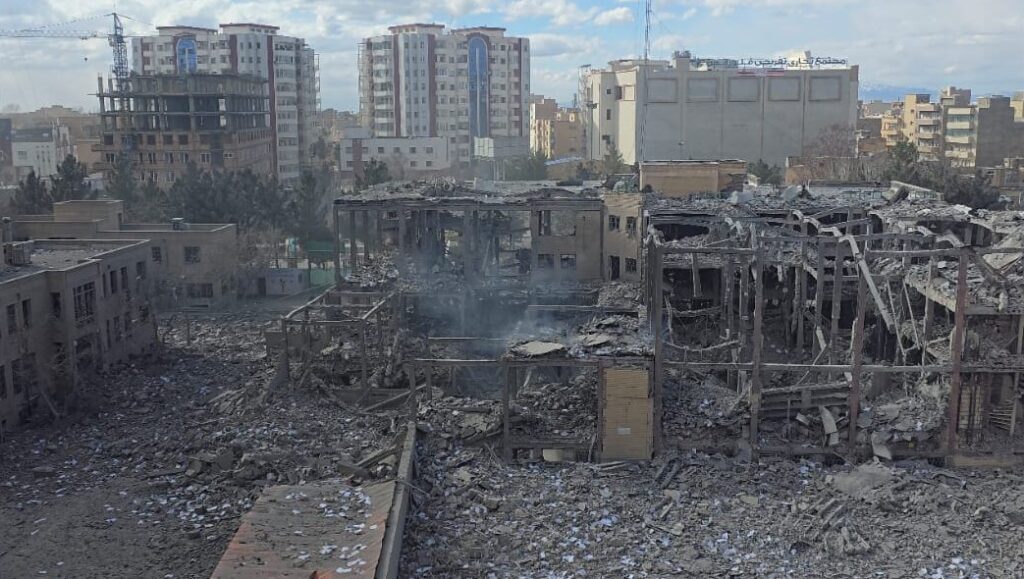
On the eleventh day of this war, a police building next to my family’s home was struck by a missile.

That day was the hardest day of my life in exile.

Destroyed police station in Tabriz, Iran. | (Photo by Anonymous)

Since the beginning of the war, I had spoken with my mother only once, for less than a minute. The communications channels were blocked again. That morning, I woke at 4:30 a.m. with a terrible headache. I took a painkiller and tried to go back to sleep, but could not.

I started the day as usual, pretending to live a normal life in exile while my country was at war.

Around noon, in the middle of an online meeting, my brother suddenly called.

“We are safe,” he said quickly. “Don’t worry. But the police station next to the house was hit hours ago.”

When he told me the exact time, I realized it had happened at 4:30 a.m.— the moment I woke up.

Thousands of kilometers away, yet somehow my mind was still there.

As a physicist, I should not believe in telepathic connections. But not everything in life can be explained by science.

When I finally heard my mother’s voice, it was a huge relief. She tried to reassure me.

“I had just cleaned the windows for the New Year,” she said lightly. “Now they’re all broken.”

I knew she was downplaying it to protect me. But when she ended the call with “I love you so much,” I heard the fear she did not say out loud.

For the past three days, we have had no connection again.

No internet. No phone.

Who could imagine that during war — when communication is vital— a regime would deliberately cut people off from the world?

I even feared my family might be in danger because we had spoken critically of the regime during that call. In Iran, that can be more dangerous than missiles.

I cannot stop thinking: if that missile had deviated by only a few meters, what would have happened to my family? And how could I have continued living?

That day I took two more painkillers. Even three days later, the pain has not fully subsided.

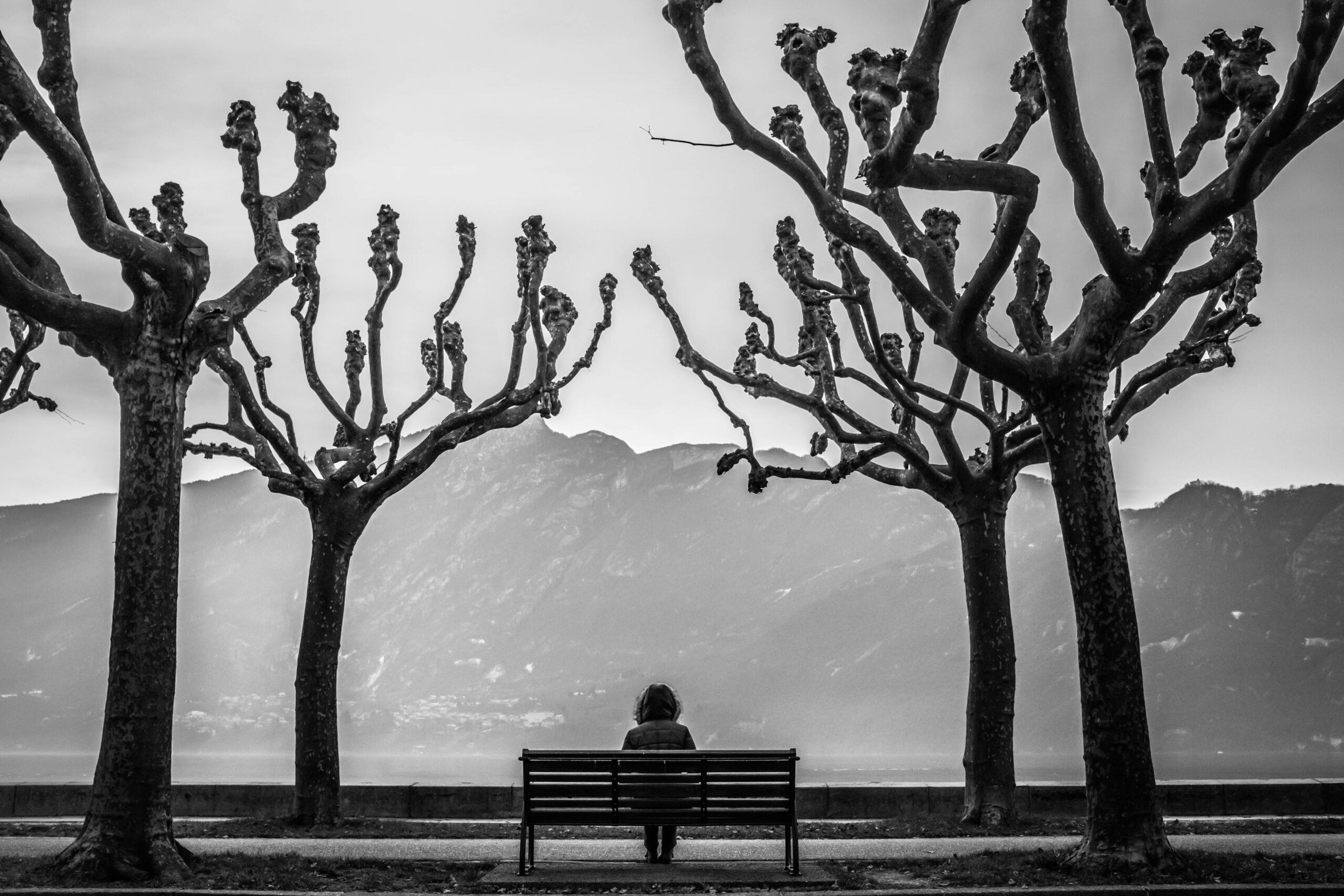
After sunset, I walked for hours, crying. I wanted desperately to hug someone, but exile is a lonely place. Instead, I hugged the trees along the path.

I imagined their branches wrapping around me.

When you hug a tree, you notice something: its skin is rough, not soft like human skin. Perhaps that is because it has survived many harsh winters. The bark grows thick to endure them.

It reminded me that my own skin must also grow stronger.

Trees teach us something else: after every long winter, spring eventually arrives.

But there is one difference between trees and people like me. Trees are rooted. In the past four years of exile, moving across four countries, I have not been able to take root anywhere.

My roots remain in my beloved Iran.

And I carry a small seed of hope in my heart, waiting for the day I can plant it in a free Iran.

Iran to the Interstellars: Can You Hear Us?

This is a message to interstellar powers.
If you think you are a “Human,” do not read on.

Hi there,
I hope you can hear me.

I am calling you from Iran, a country on Planet Earth, in the Milky Way Galaxy. I am a cosmologist, and I know how to address other galaxies in the classifications that we have prepared, but I do not know your system. So I hope you know where Earth is. If you can find Earth, it is easy to find Iran. It is the saddest country on this planet now.

The population of this planet stands at around nine billion people, and you probably wonder why, instead of just talking with them, I am reaching out to you. Because here, although we have ears and eyes, in critical times we close them. We do not have time to hear and see the grief of OTHERS. Yes, “others.” On this planet, we are strangers.

We have several instruments to contact you with, but I always say to myself that even if you hear our signals, and even if you find us with your equipment, you will not respond or contact us — because this planet, although it looks blue, is in reality red, the color of blood. We look civilized, with satellites, Artificial Intelligence (AI), and the ability to travel to the Moon, but we are unable to communicate with each other.

When I was younger, I dreamed of traveling to other planets out of curiosity and out of wonder, but  always in the certainty of returning to Earth, my home. But now I want to escape it.

That is why I am reaching out to you, and I am asking for your help.

Two weeks ago, another uprising started in my beloved country, Iran. We Iranians call it a revolution, but here no one believes it. Do you know what “revolution” means, or should I explain?

The regime that has governed us for forty-seven years (Earth years, which are equal to 365 days,) has been murdering us. We do not even know how many have been slain, because all communication with our country has been blocked for twelve days. You may wonder how I am able to write to you. I can, because I am one of the millions of Iranians who left home, who left their loved ones to live in a free world, but whose roots and hearts are still in Iran.

In the last twelve days, we tried to be the voice of our people by any means we had. On this planet, there are many languages, and we do not know them all, but we used a new technology called AI to translate our messages, and social media too. But it isn’t working, because no one is listening. Even with this advanced technology, we are still voiceless. I do not know which language you speak, but I am writing to you in English, which is not my mother tongue.

On this planet, we have satellite internet and Starlink to communicate, but these technologies are not for Iranians. We are sanctioned by the rest of the world and denied access to technology because our regime is oppressive. Can you imagine that the people of a country are being punished because of a regime they have stood up against several times, and that they have been murdered in droves for doing so? How do you punish regimes in your galaxy? Do you have sanctions? I hope not.

There is a country on this planet called the USA. You have probably heard of it, because on this planet everyone knows it — even a child in a remote village. Its president promised Iranians that help was on its way, and now it has been ten days that we are waiting. Imagine a nation asking another country for support to kill a dictator.

Do you know what a dictator is? We have had several here on Earth. The most famous and brutal one was Hitler, who wanted to dominate the whole planet. That was eighty years ago. But if you ask me, the dictator of Iran is running a close second, because he kills in the name of God. He believes he represents God, and therefore he can do anything, because God can do anything. Do you also believe in God? Do you also label your people by religion?

I was telling you about the help from the US. That country is far from Iran, and its planes take hours to reach us. Although they feature advanced military technology, they are not fast.

Here, killing is very fast.
Saving is very slow.

As a physicist, I know that the speed of light is the highest possible speed, and the nearest star to us is more than four light-years away. So it would take at least four years if you decide to help my people. I should probably have sent this message in 1979, when this brutal regime occupied my country and held my people hostage. But I was not born then.

Still, many do not believe this regime should go. They believe in reform. They do not believe dictators don’t change. They fail.

I do not know how I can convince you to help, because on this planet it has not been possible to grab the attention of humans. I can tell you that in two days, 16,500 people were murdered, 330,000 were injured, and at least 8,000 lost their eyes. We Iranians call it genocide. Do you know what that means? If you say no, I would not be surprised, because even here, no one believes it.

Here, politicians say that even if the US saves us by killing the dictator, it would only be because of our resources. Iran has oil, gas, and plenty of other valuable natural resources. Do you need them? If we offer all of them to you, will you come and save my people? We need these resources only if we are alive. Dead people need nothing.

Here, politicians remain silent and say it is an “internal issue.” Imagine: a dictator can kill all the people he governs, and no one questions it because it’s an internal issue. If you have such a rule — not to interfere in the affairs of other galaxies — then I am wasting my time writing to you.

I do not know what more to add.

Here, we have human rights. Perhaps you have interstellar rights. I hope your laws cover us as well, because here we aren’t equal under these rights, and countless human rights organizations are spineless.

Please come and save my people, even if it takes years to reach us.
We Iranians have done what we could.
Children are still being born in our country.
They deserve to live in freedom.

Witnessing the Unthinkable in Iran

There is a Persian proverb that says, “Hearing is not the same as seeing.”
These days, I can no longer trust even my eyes.

On one side, I see the vast uprising of my people in Iran — the largest since the establishment of this inhuman regime. On the other, I see the rare and fragmented videos that manage to escape the media blackout: bodies piled at the Legal Medicine Organization. If I did not hear Persian voices or see Persian writing in these videos, I would refuse to believe this is Iran. My mind instinctively rejects them.

I was born three years after the 1979 revolution. Until the Green Movement of 2009 [a non-violent protest seeking democratization that spread throughout Iran] — when I was a student in Germany — I had only vaguely heard about the mass executions of political prisoners in the 1980s. I had never read about them. There was no accessible documentation, no social media, no independent platforms. At home, politics was never discussed; my family was entirely non-political.

In 2009, as I gradually began to understand what that revolution truly was, I was shocked. When I learned that young women — virgins — were raped before execution because their executioners believed virgins would otherwise go to heaven, I was rendered speechless. Even today, my mind resists fully processing this. Rape is a major crime under Islamic law, punishable by death. And yet it was systematically committed by those who claimed moral and religious authority.

It was then that I also began to realize that a compulsory hijab was not rooted in Islam. But I had been deeply indoctrinated: I genuinely believed that if I showed my hair, I would be punished in hell. It took three years of reading, research, and painful self-deconstruction — despite extremely limited access to information — before I accepted that the hijab is not mandated by Islam. I removed it and made a promise to myself: I would never wear it outside Iran.

I later returned to Iran after my PhD, and became a professor. Inside the country, I complied with the law. Outside Iran — at conferences and research visits — I never wore the hijab. I knew I was risking the career I had struggled so hard to build. But that was my dignity.

That is why, in 2022, when Mahsa Amini was killed for a few strands of hair, I resigned from my faculty position. I could not accept that a human being could be murdered because of hair.

From 2012 to 2022, before my exile following that resignation, I lived in Iran and witnessed the country’s steady collapse: the freefall of the national currency, exponential inflation, deepening poverty, and the visible anger and exhaustion of the people. Multiple uprisings occurred during those years. One in 2018, was crushed within days.

Then came November 2019 — the first time the regime shut down the internet nationwide for five days. I remember it vividly. I was waiting for a visa to attend a conference in Europe. The embassy called me — something they never do — because they could not email me. My visa was ready, but I could not book a flight. There was no internet. During those five days, more than 1,500 people were killed. That was when we learned that we could be killed in total silence.

In January 2020, Ukraine International Airlines Flight PS752 was shot down. For three days, the regime lied, calling it an accident. Again, my mind resisted the truth. One hundred and seventy-six innocent people — including an unborn child — were killed. It was the first time in history that a state killed its own citizens in its own airspace. I remember thinking: This will not be the last crime. This regime is capable of anything.

Then came COVID-19. Once again, Iranians died in silence. The Supreme Leader — today mockingly called MoushAli by the people (moush meaning mouse, after he hid for days during the June 2025 Iran–Israel war) — banned vaccines from the US and the UK, and insisted on domestic production. To this day, we do not know how many Iranians died because of that decision.

September 2022 marked the turning point of my life. I became the first faculty member to resign publicly. Threatened by the regime, I did not return to Iran from my scientific travels, and have remained in exile ever since. Given my activities over the past three years, I know that if I return one day, I will be executed.

Because I had studied this regime’s brutality closely — both historically and through lived experience —  I knew that the next uprising would be met with unimaginable violence. I feared how many lives would be taken. It took thirty-nine months for the next uprising to ignite. And still, I am unable to comprehend the scale of the brutality.

Since January 8, all communications — phones included — have been completely severed. We experienced similar blackouts during the June 2025 war. Once again, we had no news of our loved ones. Today, reports suggest that 12,000 people have been killed in just two days: on January 8 and 9. My mind rejects this number. I cannot even cry. Those who have lost someone understand this state: when you cannot accept the loss, grief does not yet take the form of tears. I cannot accept the death of humanity itself.

Today I saw a video of blood being washed from the streets while bodies lay piled nearby. Evidence erased in real time. I still cannot believe it  —  not because this regime is incapable of such crimes, but because the perpetrators speak Persian. They are part of my people. How did they become this evil, within a civilization thousands of years old? Are they children of Iran? Are they human? How do they kill, go home, sleep, and return the next day to do it again?

Will this nightmare end? My mind feels as if it is collapsing.

For forty months in exile, my mother was the one person I spoke to about all this grief. January 7 was the last time I heard her voice. I already missed her smell, her hug, her kiss. Now I miss her voice too.

This is what it means to stand against a dictator who is still in power — whose machine gun is still firing.

How long this will last, I do not know.
No one knows.

Counting the Days Until Freedom in Iran

These days, with the eyes of the world on widespread protests in Iran, my mind returns to September 2022. 

I left Iran just three weeks before the killing of Mahsa Amini, intending to spend three months abroad on a scientific visit. Now, more than three years later, I have yet to return.

My grief following Amini’s brutal murder while in state custody was so deep that I know with certainty that had I been in Iran, I would have been in the streets. Shouting for freedom. For dignity. For humanity. Things that had been systematically stripped away under a brutal regime for decades. But I was far away. And so, one week later, I resigned publicly from my academic position. It was the only way I could stand with my people.

At that time, we did not call it a revolution. We did not even call it “Woman, Life, Freedom”. This was the name given to the uprising later on, in tribute to a Kurdish slogan chanted at the funeral of Mahsa Amini, who was of Kurdish origin. The rebellion unfolded gradually. But in truth, it was a revolution for the most basic rights of women.

By “basic,” I mean the right to choose not to cover our hair.

Not even the right to dress freely, because even today, forty months later, women in Iran cannot walk in the streets wearing a T-shirt, short trousers, or a skirt. Access to school, university, work, and public services is still under hijab law. So whatever you hear about “hijab freedom” in Iran is a lie.

Iranian girls and women still risk their education and their jobs for appearing without a hijab in public. Their “lifestyle violations” are recorded in official files and used against them in evaluations. If this regime survives, these records will haunt them for life.

And it is not just a hijab.

Under the Islamic regime, women are forbidden to sing.

Every Iranian woman singer you know lives in exile, not because she committed a crime, but because she wanted to sing. Even sharing a singing video on your social media as a female singer inside Iran can lead to arrest. For forty-seven years, not a single female singing voice (Iranian or non-Iranian) has been broadcast on state television or radio. 

Do not ask me for the reason. As a scientist, I cannot explain what I cannot understand.

I share something in common with those women singers. I, too, have been living in exile since September 2022. My resignation was seen as a threat to the regime. My family was threatened. For my safety, I was forced not to return home.

In the past forty months, I have moved across four countries. Not by choice, but because of visa restrictions, sanctions, and the impossibility of finding stable work as an Iranian in exile.

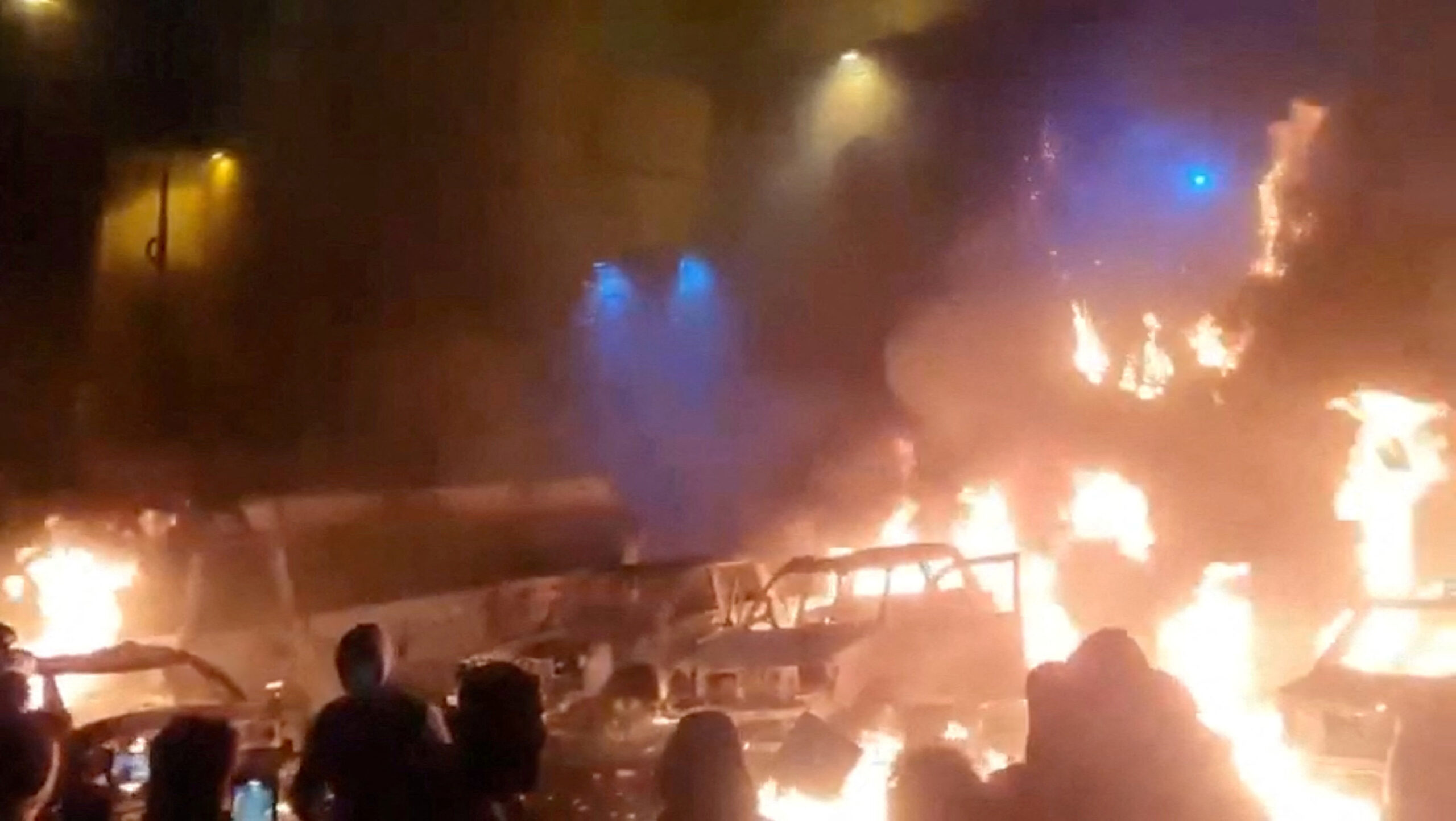
And now, once again, my country is on fire. Waves of protests have erupted across dozens of cities in Iran, with citizens demanding freedom, equality, and an end to the regime’s repressive policies. The demonstrations began on December 28, 2025, in Tehran’s Grand Bazaar, sparked by the collapse of the national currency. Although many think economic woes drive these protests, they are also about women’s rights and general freedom

And since then, my heart has lived in my throat. In 2022, even from afar, I knew how to act. Today, I do not. All I can do is write; write as someone in exile while a revolution unfolds at home.

A person who wakes up, eight and a half hours away, to videos of people being beaten and shot with live ammunition.

And who goes to sleep in tears, wondering how the arrested survived the night, how the families of the murdered are enduring their loss.

My friends in Iran and in the diaspora say, “This is the end.”

I hope it is.

But even if it is not — (and may the universe never hear this) — I am proud. Proud that Iranian women rose in 2022 and fought for their rights. No future regime will ever be able to say it granted these rights to women. Iranian women already got their rights.

Equality is one of the core demands of this uprising/movement/revolution, whatever name history gives it. We still have a long way to go. The price has been unbearably high. But we learned something irreversible: In a society where women and men are not equal, there is no freedom.

We learned to fight for our rights because, from now on, if any regime, system, law, or ideology tries to take them away, we will stand and resist.

In 1979, only a few women resisted. Many rights — such as access to education, the ability to work, freedom of travel, the ability to obtain a divorce, and political participation — had been granted from above during modernization, not won through struggle. Society was not ready. So when the Islamic regime took them away, too many accepted it since they were not even aware of them.

This time it is different.

We paid the price. And because of that, we will never forget.

So keep your eyes on Iran. What you are witnessing is a revolution against one of the most brutal religious totalitarian regimes in history. You may think I am exaggerating. You are only seeing the tip of the iceberg.

Even Iranians themselves will ask how they endured this regime for so long.

Books will be written. Films will be made. But none will truly convey the suffering, just as we can never fully feel the suffering of those who lived through World War II. That is why history repeats itself.

But one thing I know with certainty: Religion will never again rule Iran. And Islam will not be the name of the country. What is now the Islamic Republic of Iran will soon just be Iran.

I count the days until I return home, along with millions of Iranians in exile.

The Persian poet, Houshang Ebtehaj, who himself died in exile, once wrote:

می‌بینم
آن شکفتنِ شادی را
پروازِ بلندِ آدمیزادی را
آن جشنِ بزرگِ روزِ آزادی را

I see
the blossoming of joy,
the high flight of humanity,
the great celebration of the day of freedom.