Humanity explores the human condition and what it means to be alive in today’s world. Sometimes, this can be practical, lived politics as they impact our lives and how we seek to change the world around us, or a distillation of those experiences we have yet to fully unearth, in the gaps and fringes of ourselves.
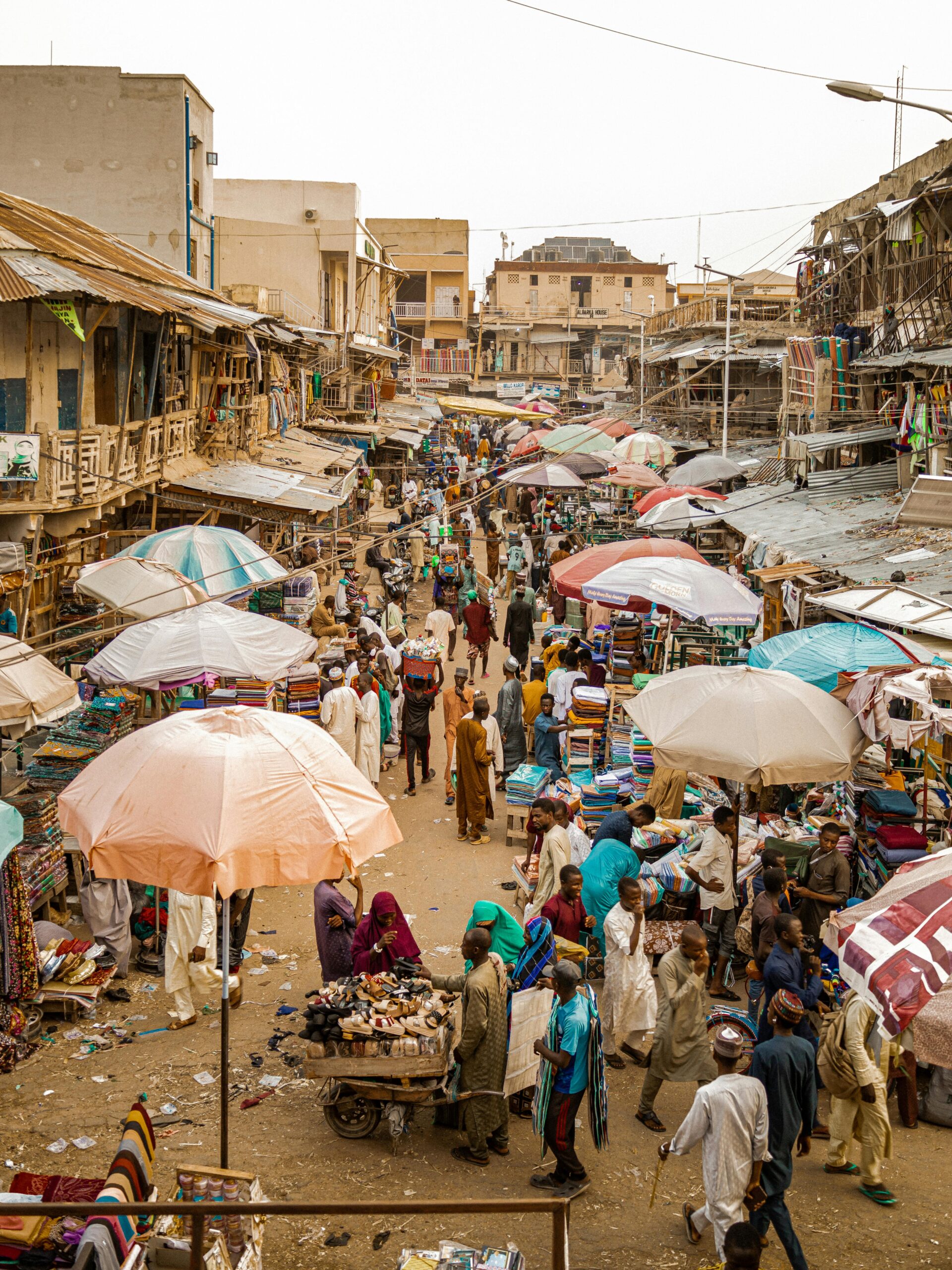
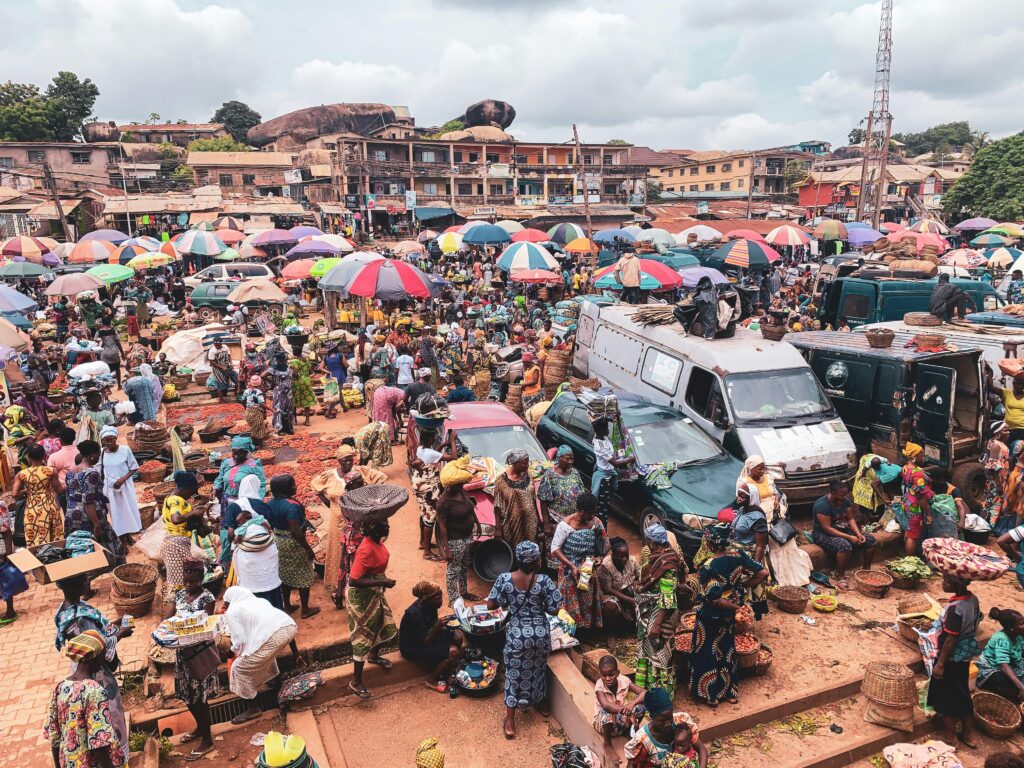
The Nigerian marketplace is a potpourri of interesting experiences. Experiences you won’t get or have anywhere else. You want to be cracked up? Head on. You want to be comprehensively angered? Go there. Much more interestingly, you want to be cheerful? That’s the place.
I have had myriads of funny and not so funny experiences at various markets.
Namely
Nigerian market people will not hesitate to rename you without due consultation or prior permission. Besides the general ‘Customer’ title even a JJC (“Johnny Just Come,” any newcomer) can earn on the very first market visit, there are tons of other names like Sister, Aunty, Mummy, and Fine Girl. Plus the ones that depend on your complexion or appearance like Oyinbo (my color) or Akowe (my wife). Funny.
Hilarious
These people are hilarious. I remember that time a guy was calling me over “Bola!” while adding “Agidi e yi naa ni/ke dai bakya ji” (This stubbornness of yours is the problem). And I was like, “E ma gba ma mi ke/keda wa kuma?” (You and who else?).
Let me tell you off
One – these market people sometimes feel they’ve earned the right to lecture you and advise you on societal vices and virtues. I can’t forget a recent experience at a food market so easily. I had priced a tube of tomato paste and inquired if the other type of the same brand was the same price. The woman turned to pick a nylon bag or something and I picked up the tube to give her, only for her to turn back, see the one I’d picked and scolding me like, “She iyen le mu tele me enh? Se iyen le bere tele. E je ma ni itelorun/wannan kika taya? ki bar ruwan ido” (What did you think, isn’t it that one you priced before? You better be content, yada yada/da sauransu/et cetera). “Ah ah, what’s that?” in an angry voice. I simply dropped it and walked off while she ran on.
Two – I went to another vendor to buy something else and since they gave me an unfavorable price, I began to walk off. She was like, “Answer now, how much will you pay, Aunty Dada, hajjaju? Answer now!” Really? I came back angry with “Aunty Dada, Hajjaju? Aunty Dada? Rele/Da kyau/Peacefully?”
Three – okay my dressy hair is all packed up in semi-twists and twist outs, so what? And what with me trying to find my way in the dense traffic of the market, some woman snapped, “Iya Gomina’ e he ka koja.!/Maman gwamna bamu wuri mu wuce!” (Wait, is today a disrespectful-people-only market day? Governor’s mother! Please let us pass.)
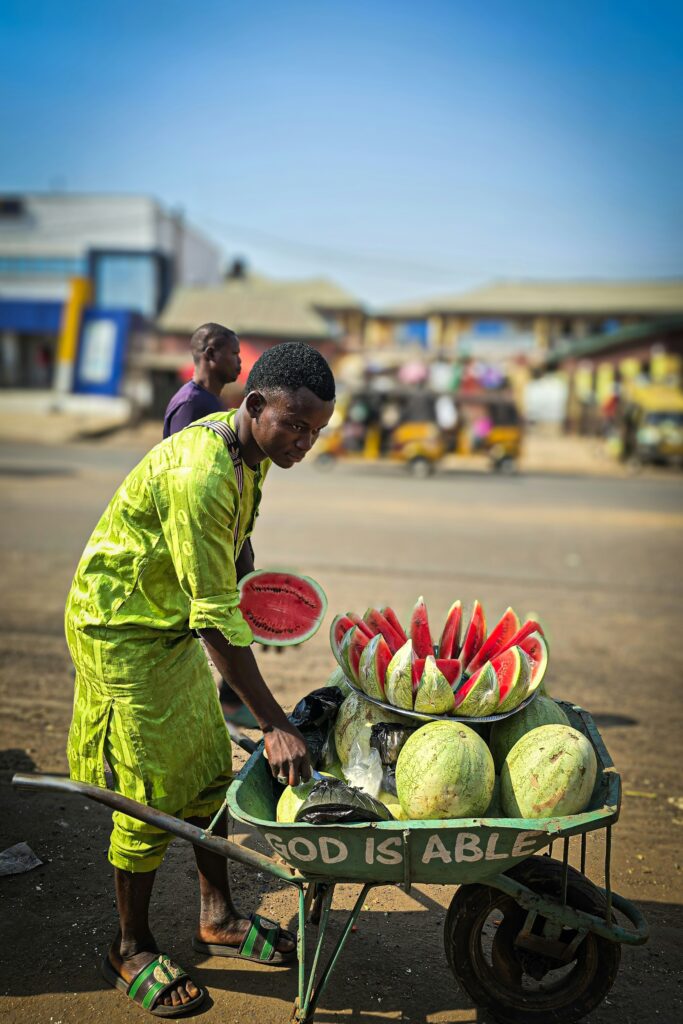
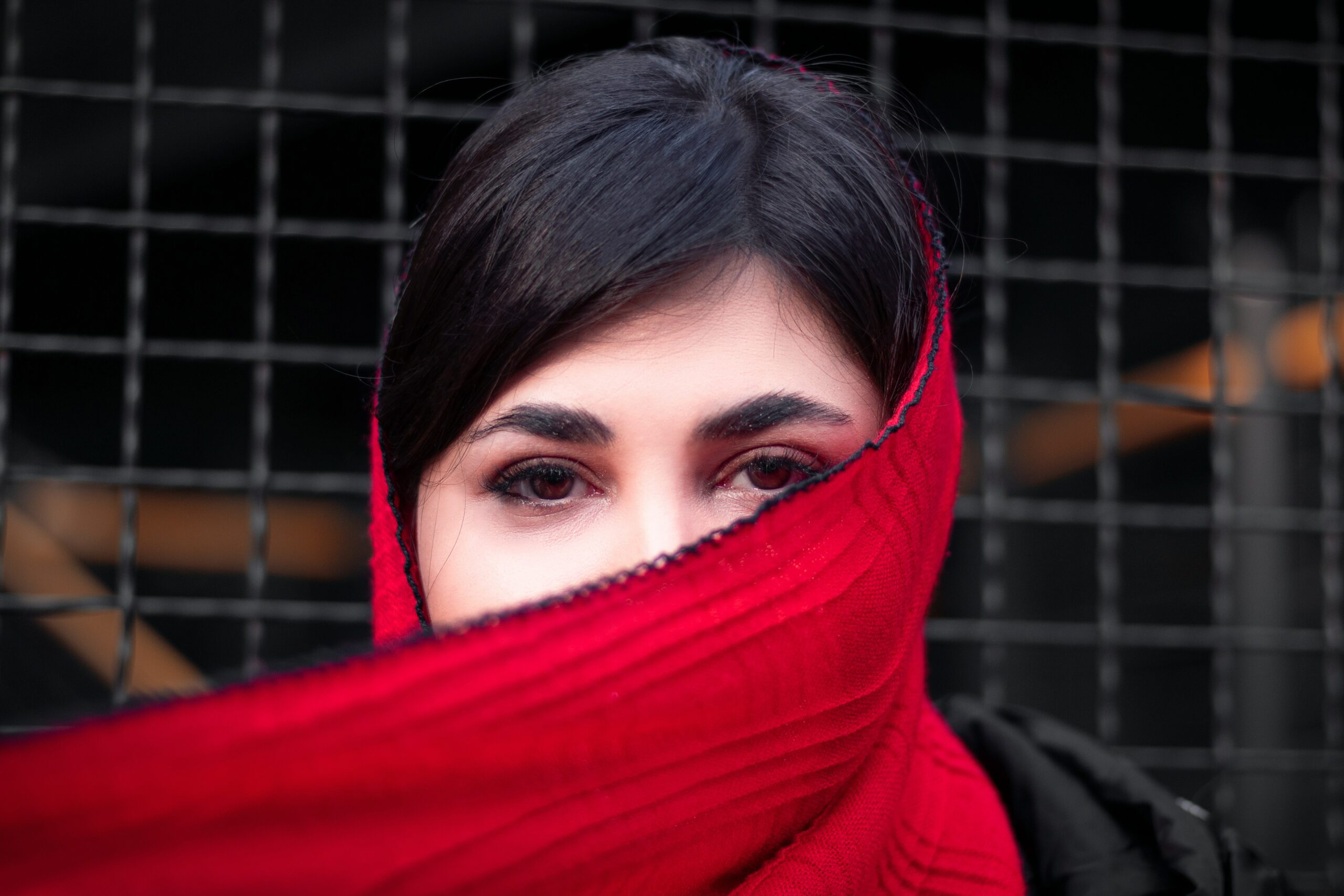
(Image courtesy of Tunde Buremo via Unsplash)
Let me bless you
But then the marketplace can also be an interesting place. It’s where you get to laugh at some overzealous retailer yabbing another, where barrow men keep yelling at you to get out of the way, where you can be emotionally blackmailed into a budget deficit.
And where the same market men and women with the same mouth with which they tell you eight cups is a kongo — a standard measurement homemakers already know — also earnestly ply you with hackneyed prayer points after a pedestrian preacher.
And oh, the bright smile you elicit when you quip in Hausa, “Maka gini?/A dalilin me?” (For what reason?) to a Hausa woman like me, the triumphant glow on the face of the seller who’s managed to hijack you into her stall out of several vendors hailing you to stop by theirs… The funny manner in which loudspeakers describe a non-existent problem with your own health to you and how their omnipotent product has been made just for you… The reminder that there are still honest people “In Nigeria!” by a seller who calls you back for your change as you walk away absentmindedly.
I bet you have one or two interesting stories to tell, too, about open-air markets.
In other news, I am doing a One-Fruit-Daily-Challenge this month. I started with watermelon yesterday, and today it’s oranges. But we’ll talk about that later okay? Wink. Bye!
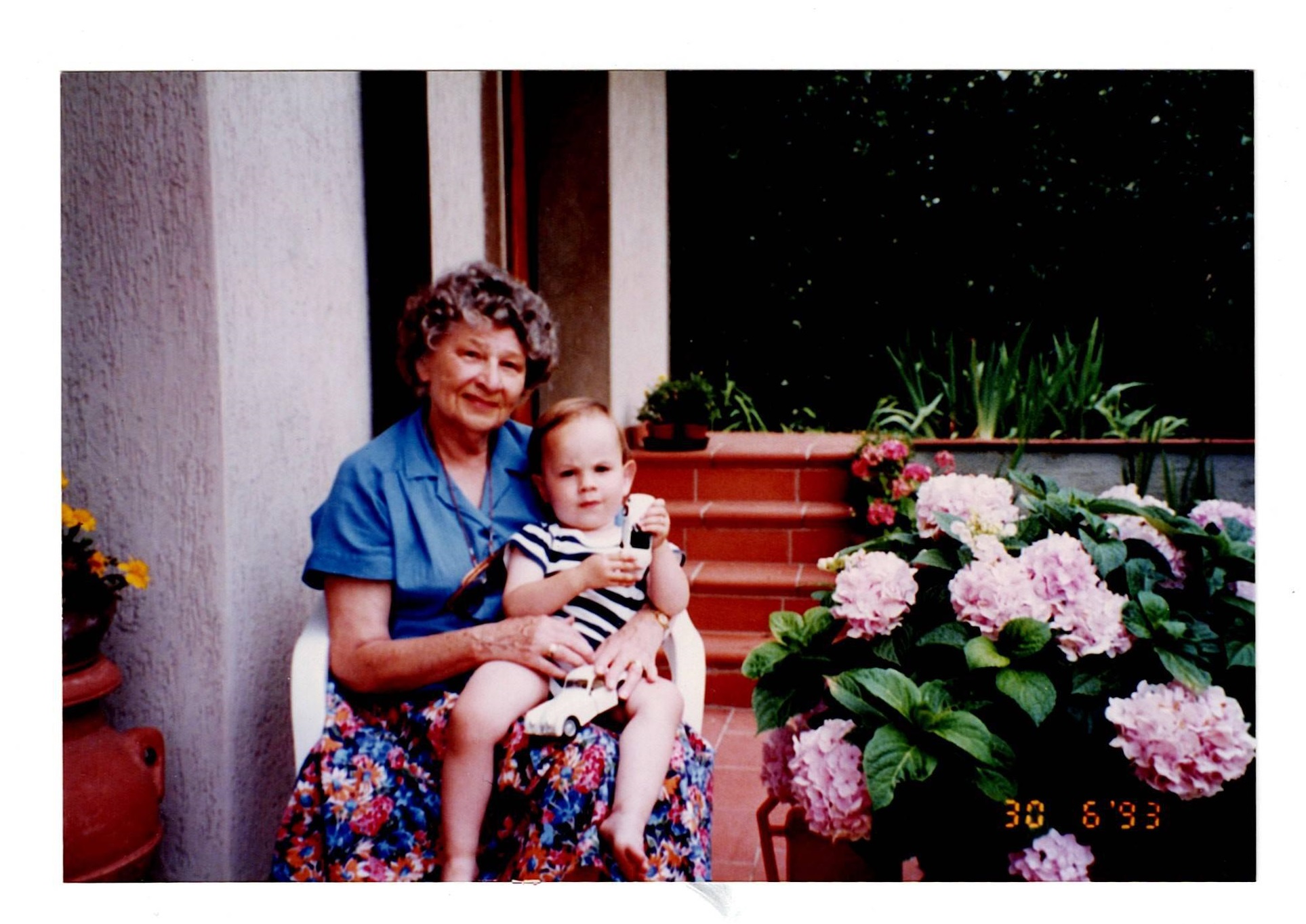
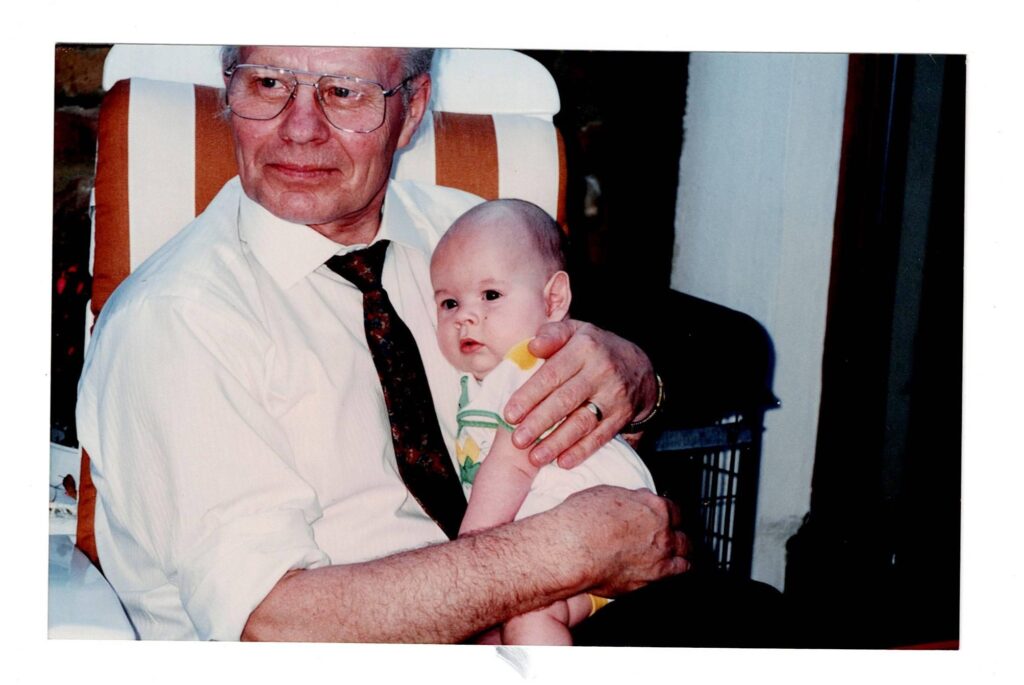
I’ve come to learn and understand that loss is multifaceted. When losing significant others, you can miss and yearn for the person you were to them as much as the person themselves. However, with these two… I swear I just miss them. They were blue-chippers, solid gold, 100 percent themselves, through and through. My Babcia (BAB-cha) and Dziadzio (ZHAD-zee-oh). These curious sounding words are Polish, and they mean Gran and Grandpa.
These two were almighty impressive people. They overcame the unimaginable as child refugees from war-torn Poland in 1939, he just 14, she just 17. Surviving the Gulag was just one leg of an incredible picture-perfect journey that would span the globe: from middle Europe, across the ‘stans to the Middle East, down to Africa, then back up to Europe.
Yet this isn’t necessarily the most astounding part of their story. They went on to become examples of everything society expected from people after the war.
They were staples of the Polish communities found in Ealing & Balham in London. They were decades-long company men and women in the years that followed. They were doting and dedicated parents and guardians. Proudly married for 45 years. These were the kind of people that rebuilt the world. “The Greatest Generation” may not be hyperbole.
My relationship to them? Hard to begin to quantify.
Babcia, Dziadzio, the moon, and I
But I’ll do my best. So… I would face orphandom as a teenager. I share this not to underscore how much closer, tighter, or in need I was of them. No, quite the opposite. In circumstances where the moon had fallen out of the sky, where all was off and nothing made sense anymore – they did. My Babcia and Dziadzio stayed right as they were. The world changed and they didn’t. They were who they’d always been to me and I was all the better for it.
I’d always be met with his boisterous warmth and her curious concern.
My Dziadzio would rattle off an engaged recounting of current affairs from his favorite paper, wanting to hear my take, then onto football for much the same. This was laced with a healthy sprinkling of the most corny Christmas cracker-tier jokes (look it up) and the latest action films he’d caught on terrestrial television (shout out to Arnold Schwarzenegger, Jean-Claude Van Damme, with honorable mentions to Steven Segal’s later work and early-career Jason Statham).
My Babcia always wanted to know how I was doing. She wanted the latest updates on anything and everything with a tone balancing curiosity and concern. Not a single detail was unimportant to her. Even when entirely uninteresting to me. She was rare to give advice or instruction; she always just listened, cared, and celebrated the little wins that I couldn’t even see. I remember bringing them a pizza I had made in Home-Ec. Nothing more than a flatbread with tomato and cheese on top, it was celebrated like a Michelin star masterpiece. Otherwise, she’d update me on the latest happenings of the Royal Family and her Columbo reruns, and throw casual sprinklings of shade at my Grandpa, something only a decades-long marriage can earn.
Eat!
A copious feeding was entirely non-negotiable. Even when I’d started slimming down, attempting to watch what I eat, it didn’t stop. I was trying to make myself into an unstoppable force while the feeding was an immovable object. They nailed it, though. A pitch-perfect palate hit that I very much wanted and, sure, got a kick knowing they enjoyed me consuming it.
Irrespective of time of day or visit (or even if there was a meal to consume ahead), there was a given rollout:
Pringles (I suspect these were stocked for their addictive capacities…)
Kabanos (Polish garlic sausage — long, thin, at their best when left to dry in a cupboard for a few days)
In time, a beer (Tyskie — Polish brand, crisp, light, not a bad lager at all)
And a scotch (when I was old enough — my girlfriend at the time was served sherry, for ‘The ladies are served sherry’)
The lighthouse of light
I was always seated with two great talkers at a time when I could be struggling to find words. For sure, I took it for granted then. I could to a degree be ‘umming and ahhing’ about the necessity or frequency of weekly visits to them. Yet each visit, without fail, they were the most impeccable and genial of hosts. There was always energetic and warm conversation when I often didn’t know what to say, think, or even feel. A lighthouse in the storm.
My whole association with them is light, or like light. It’s clear, it’s warm, and profoundly positive. Every single fragment of memory figment. From the shape of clear frame spectacles or the pattern of floral blouses, to the upholstery of arm chairs and tablecloths. Anything Babcia-and-Dziadzio-related is ‘good times’ psychologically speaking. And, oh, the way they sounded… such thoroughly anglicized people with thick Polish accents till they parted. They were distinct, they were unique, they were them — just right.
Now to be clear, my Gran and Grandpa were… how to put this gently? Like, old when I was born. They were always old, definitely part of the charm. So it should come as no surprise by the time I’m north of about 21, they would begin to have their struggles. Her mobility was significantly affected, leaving her housebound for her last few years. He would suffer macular degeneration, in essence, gradually losing his sight. Their spirits simply didn’t budge, though.
He became something of her carer in their final years, despite sight leaving his grasp. She would find herself on more than one occasion expressing genuine surprise, even awe, that she had lived so long. He would lose his drivers license and long for driving his car when it was gone. However, the difficulty didn’t define them, they didn’t really know how to moan or complain, these two. From the outside looking in, we relatives could see how it wasn’t easy for them. We all shared a genuine wonder in how they continued as ever. My sister and I have since wondered, did they stay around, live longer for us? Until we’d reached adulthood? Cosmically or consciously, I don’t know. I never will, I’m not sure I’m meant to.
(Image courtesy of the writer)
But, you know
She would go first. Initially — though this would inevitably fade before he would join her — he was given a new zest on life in months proceeding. We would be granted one of his great one-liners.
Sitting there in their flat, he would look out the window and mournfully declaim:
“I miss my car.”
He would then state in a much less deep and profound manner:
“I miss my wife, but, you know.”
Their difficulties, inner storms, were somewhat hidden in these later years. Certainly from myself and again, even in decline, they didn’t make demands or change up their roles. Babcia and Dziadzio stayed the same, even when the greatest confrontation was upon them. Their wisdom and perspective was never wielded at us, certainly not at me.
I have a clear memory that serves this up to a tee. There was a World Cup on, I believe 2018. I had trained out from London to visit them and had spent the best of a late afternoon at their flat. It was heading into the evening, so I was ready to train back. I came to the door to say goodbye, and my Dziadzio asked if I wanted to stay and watch one of the games with him. I declined, for I had an hour and half journey back, and had spent the afternoon there. When it came to the exit, looking back at their flat door, him closing it, I could see a slight resigned sadness to him.
A couple of years later it struck me like a brick — he likely knew that was our last chance to catch a World Cup together, which it was — and that went completely over my head at the time. As you can see, this was only handled with a quiet grace and wisdom; a selflessness.
I have their stories in recorded form and research from family members and writers of the Polish diaspora post WWII. It’s a daunting task, but I very much endeavor to write them. At the same time, as expressed here, child refugees of Poland form just a strand of a much greater tale. I’m daunted by it and believe it’s because I know even the best of writing would never capture their totality and all they gave and meant.
Maybe that’s just for me though, maybe that’s the legacy they’ve left me personally; their place in my heart and mind.
Looking at the title, I can appreciate you may be expecting a somewhat downbeat or defeated article. My hope is that in exploring the subject, quite the opposite can be true.
In our current climate of information saturation, I am witnessing a constant stream of narratives from the broadest array of identities and their specific struggles. Across online profiles, accounts, and publications, I can hear people all over the world discussing their challenges and hardships. From individual accounts of economic, social, and mental hardship to collective stances of resistance and solidarity against systemic injustice, I’d argue that overcoming is a desire alive and well, shared by many millions.
Yet I’m left thinking, what is the purpose of this exactly? What are people getting from this narrativizing and sharing? Only those sharing can answer this question; as an observer, I’m left supposing. My foremost thought is whether sharing and publicizing such struggles actually aids in overcoming them.
Is overcoming just a desire or a myth?
Overcoming as a term says to me, or implies, that the challenge is over, the declaration that the struggle has ended successfully. This end, however, isn’t my experience. I’m straight, white, and a man, and I have no qualms staring down the barrel of my significant privilege. I have no representative duty or value, neither do I face any systemic oppression.
My relationship with overcoming has been purely internal: dealing with matters of well-being and mental health. The overcoming of demons and one’s inner world in my experience is a day-at-a-time process. Overcoming in this sense is not a matter of reaching a plateau or seeing greater societal change, rather it’s been about evolving as I’ve grown; it’s been an ongoing investment in myself for a better quality of life. I’ve also found that my perspective on the quality of my life has changed over the years.
If you were to ask 21-year-old me what quality of life looks like, I don’t doubt you’d receive a rather grandiose and imaginative response. As a drama school graduate with little sense of his place in the world, I’m sure quality of life for that young man meant stardom, LA, a big house, and the never-ending waterfall of adulation. If you ask me now what a better quality of life looks like, it means being present, being on top of my responsibilities, having a balance in my life, and feeling decent-to-good on a consistent and regular basis.
I feel the need to be careful with my commentary given my social identity. I am not someone who has been raised witnessing the discrimination and oppression of loved ones or experiencing it myself. Not for a second do I feel I can remotely comment on what overcoming means for people living experiences I’ve never known myself.
Time is teaching me that the “myth” of overcoming reflects how we define it. I know for a fact that 21-year-old me would be mildly depressed looking at my life now. Conversely, I know now that the younger version of me had something of a loose grasp on reality, albeit a determined and adventurous attitude towards it. I’m reminded of the Buddhist tenet, “The root of all suffering is desire.”
(Image courtesy of Fabrizio Conti on Unsplash)
A new relationship with the idea of overcoming
Perhaps I feel I’ve overcome more now because the goals and desires I previously held have faded as anything reachable.
I’m not for a moment saying anyone shouldn’t feel that they can have desires. Neither do I seek to tell anyone to wait for the results of your labor, your targets. I can only say that in my experience, overcoming appears to be a life’s work. The only way overcoming something becomes a myth for me is setting up timelines and results in my head uninformed by any external reality. Overcoming is no myth, but it is a process that takes time. I need to go a day at a time and perhaps only look back every six months or so, if not longer.
It would be my contention that we are all overcoming something and becoming more.
That maybe, just maybe, looking back over time, be it in one lifetime or across the generations that follow us, we’ll see our story of overcoming was no myth at all.
This is a message to interstellar powers. If you think you are a “Human,” do not read on.
Hi there, I hope you can hear me.
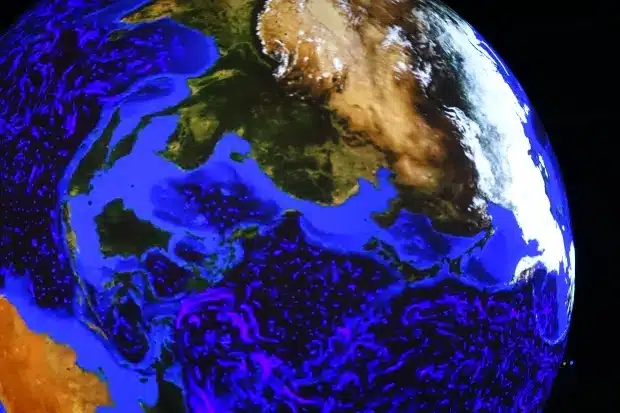
I am calling you from Iran, a country on Planet Earth, in the Milky Way Galaxy. I am a cosmologist, and I know how to address other galaxies in the classifications that we have prepared, but I do not know your system. So I hope you know where Earth is. If you can find Earth, it is easy to find Iran. It is the saddest country on this planet now.
The population of this planet stands at around nine billion people, and you probably wonder why, instead of just talking with them, I am reaching out to you. Because here, although we have ears and eyes, in critical times we close them. We do not have time to hear and see the grief of OTHERS. Yes, “others.” On this planet, we are strangers.
We have several instruments to contact you with, but I always say to myself that even if you hear our signals, and even if you find us with your equipment, you will not respond or contact us — because this planet, although it looks blue, is in reality red, the color of blood. We look civilized, with satellites, Artificial Intelligence (AI), and the ability to travel to the Moon, but we are unable to communicate with each other.
When I was younger, I dreamed of traveling to other planets out of curiosity and out of wonder, but always in the certainty of returning to Earth, my home. But now I want to escape it.
That is why I am reaching out to you, and I am asking for your help.
Two weeks ago, another uprising started in my beloved country, Iran. We Iranians call it a revolution, but here no one believes it. Do you know what “revolution” means, or should I explain?
The regime that has governed us for forty-seven years (Earth years, which are equal to 365 days,) has been murdering us. We do not even know how many have been slain, because all communication with our country has been blocked for twelve days. You may wonder how I am able to write to you. I can, because I am one of the millions of Iranians who left home, who left their loved ones to live in a free world, but whose roots and hearts are still in Iran.
In the last twelve days, we tried to be the voice of our people by any means we had. On this planet, there are many languages, and we do not know them all, but we used a new technology called AI to translate our messages, and social media too. But it isn’t working, because no one is listening. Even with this advanced technology, we are still voiceless. I do not know which language you speak, but I am writing to you in English, which is not my mother tongue.
On this planet, we have satellite internet and Starlink to communicate, but these technologies are not for Iranians. We are sanctioned by the rest of the world and denied access to technology because our regime is oppressive. Can you imagine that the people of a country are being punished because of a regime they have stood up against several times, and that they have been murdered in droves for doing so? How do you punish regimes in your galaxy? Do you have sanctions? I hope not.
There is a country on this planet called the USA. You have probably heard of it, because on this planet everyone knows it — even a child in a remote village. Its president promised Iranians that help was on its way, and now it has been ten days that we are waiting. Imagine a nation asking another country for support to kill a dictator.
Do you know what a dictator is? We have had several here on Earth. The most famous and brutal one was Hitler, who wanted to dominate the whole planet. That was eighty years ago. But if you ask me, the dictator of Iran is running a close second, because he kills in the name of God. He believes he represents God, and therefore he can do anything, because God can do anything. Do you also believe in God? Do you also label your people by religion?
I was telling you about the help from the US. That country is far from Iran, and its planes take hours to reach us. Although they feature advanced military technology, they are not fast.
Here, killing is very fast. Saving is very slow.
As a physicist, I know that the speed of light is the highest possible speed, and the nearest star to us is more than four light-years away. So it would take at least four years if you decide to help my people. I should probably have sent this message in 1979, when this brutal regime occupied my country and held my people hostage. But I was not born then.
Still, many do not believe this regime should go. They believe in reform. They do not believe dictators don’t change. They fail.
I do not know how I can convince you to help, because on this planet it has not been possible to grab the attention of humans. I can tell you that in two days, 16,500 people were murdered, 330,000 were injured, and at least 8,000 lost their eyes. We Iranians call it genocide. Do you know what that means? If you say no, I would not be surprised, because even here, no one believes it.
Here, politicians say that even if the US saves us by killing the dictator, it would only be because of our resources. Iran has oil, gas, and plenty of other valuable natural resources. Do you need them? If we offer all of them to you, will you come and save my people? We need these resources only if we are alive. Dead people need nothing.
Here, politicians remain silent and say it is an “internal issue.” Imagine: a dictator can kill all the people he governs, and no one questions it because it’s an internal issue. If you have such a rule — not to interfere in the affairs of other galaxies — then I am wasting my time writing to you.
I do not know what more to add.
Here, we have human rights. Perhaps you have interstellar rights. I hope your laws cover us as well, because here we aren’t equal under these rights, and countless human rights organizations are spineless.
Please come and save my people, even if it takes years to reach us. We Iranians have done what we could. Children are still being born in our country. They deserve to live in freedom.
There is a Persian proverb that says, “Hearing is not the same as seeing.” These days, I can no longer trust even my eyes.
On one side, I see the vast uprising of my people in Iran — the largest since the establishment of this inhuman regime. On the other, I see the rare and fragmented videos that manage to escape the media blackout: bodies piled at the Legal Medicine Organization. If I did not hear Persian voices or see Persian writing in these videos, I would refuse to believe this is Iran. My mind instinctively rejects them.
I was born three years after the 1979 revolution. Until the Green Movement of 2009 [a non-violent protest seeking democratization that spread throughout Iran] — when I was a student in Germany — I had only vaguely heard about the mass executions of political prisoners in the 1980s. I had never read about them. There was no accessible documentation, no social media, no independent platforms. At home, politics was never discussed; my family was entirely non-political.
In 2009, as I gradually began to understand what that revolution truly was, I was shocked. When I learned that young women — virgins — were raped before execution because their executioners believed virgins would otherwise go to heaven, I was rendered speechless. Even today, my mind resists fully processing this. Rape is a major crime under Islamic law, punishable by death. And yet it was systematically committed by those who claimed moral and religious authority.
It was then that I also began to realize that a compulsory hijab was not rooted in Islam. But I had been deeply indoctrinated: I genuinely believed that if I showed my hair, I would be punished in hell. It took three years of reading, research, and painful self-deconstruction — despite extremely limited access to information — before I accepted that the hijab is not mandated by Islam. I removed it and made a promise to myself: I would never wear it outside Iran.
I later returned to Iran after my PhD, and became a professor. Inside the country, I complied with the law. Outside Iran — at conferences and research visits — I never wore the hijab. I knew I was risking the career I had struggled so hard to build. But that was my dignity.
That is why, in 2022, when Mahsa Amini was killed for a few strands of hair, I resigned from my faculty position. I could not accept that a human being could be murdered because of hair.
From 2012 to 2022, before my exile following that resignation, I lived in Iran and witnessed the country’s steady collapse: the freefall of the national currency, exponential inflation, deepening poverty, and the visible anger and exhaustion of the people. Multiple uprisings occurred during those years. One in 2018, was crushed within days.
Then came November 2019 — the first time the regime shut down the internet nationwide for five days. I remember it vividly. I was waiting for a visa to attend a conference in Europe. The embassy called me — something they never do — because they could not email me. My visa was ready, but I could not book a flight. There was no internet. During those five days, more than 1,500 people were killed. That was when we learned that we could be killed in total silence.
In January 2020, Ukraine International Airlines Flight PS752 was shot down. For three days, the regime lied, calling it an accident. Again, my mind resisted the truth. One hundred and seventy-six innocent people — including an unborn child — were killed. It was the first time in history that a state killed its own citizens in its own airspace. I remember thinking: This will not be the last crime. This regime is capable of anything.
Then came COVID-19. Once again, Iranians died in silence. The Supreme Leader — today mockingly called MoushAli by the people (moush meaning mouse, after he hid for days during the June 2025 Iran–Israel war) — banned vaccines from the US and the UK, and insisted on domestic production. To this day, we do not know how many Iranians died because of that decision.
September 2022 marked the turning point of my life. I became the first faculty member to resign publicly. Threatened by the regime, I did not return to Iran from my scientific travels, and have remained in exile ever since. Given my activities over the past three years, I know that if I return one day, I will be executed.
Because I had studied this regime’s brutality closely — both historically and through lived experience — I knew that the next uprising would be met with unimaginable violence. I feared how many lives would be taken. It took thirty-nine months for the next uprising to ignite. And still, I am unable to comprehend the scale of the brutality.
Since January 8, all communications — phones included — have been completely severed. We experienced similar blackouts during the June 2025 war. Once again, we had no news of our loved ones. Today, reports suggest that 12,000 people have been killed in just two days: on January 8 and 9. My mind rejects this number. I cannot even cry. Those who have lost someone understand this state: when you cannot accept the loss, grief does not yet take the form of tears. I cannot accept the death of humanity itself.
Today I saw a video of blood being washed from the streets while bodies lay piled nearby. Evidence erased in real time. I still cannot believe it — not because this regime is incapable of such crimes, but because the perpetrators speak Persian. They are part of my people. How did they become this evil, within a civilization thousands of years old? Are they children of Iran? Are they human? How do they kill, go home, sleep, and return the next day to do it again?
Will this nightmare end? My mind feels as if it is collapsing.
For forty months in exile, my mother was the one person I spoke to about all this grief. January 7 was the last time I heard her voice. I already missed her smell, her hug, her kiss. Now I miss her voice too.
This is what it means to stand against a dictator who is still in power — whose machine gun is still firing.
How long this will last, I do not know. No one knows.
Flowering Go ahead and flower dear Let your colors shine So slowly the leaf unfurls Yet, so quickly you die.
But the joy is in the rising Inching upward in the sun Sipping from clear waters Till all your growth is done.
Glory in the flowering Because soon petals fall And no one will remember But you grew; you were tall!
Writing, like all art, is a dance between our conscious and unconscious minds — a tapestry woven out of what we know (about ourselves, our world, and eternity) and also out of what we do not. There is divinity in art, a magic both science and rational thought can’t quite account for.
All good and beautiful books write themselves, with only partial involvement from the author. I can see the man under the marble — only, the marble is my own mind. I must free him by writing, erasing, editing, throwing out, and starting anew, till the inside is liberated and visible to the outside: to the world, but also to myself.
For the last few years, my New Year’s resolution has been the same: Finish the book. I haven’t.
This year, my resolution is different: Make progress on the book.
Keep chipping away at the marble, breaking it down and piecing it back together, as many times as it takes. Live and let the book grow up around me, through me, in me.
To explain fully, I have to take you back to 2021, when I still believed in the usefulness of what turned out to be my two greatest enemies: plot and planning.
My senior year of college, I was revising, for credit, the first draft of a novel I had written during my senior year of high school (ie, I was reading it with a sense of horror and rewriting it). The idea for the novel had actually come to me many years before, in middle school, during a graveyard clean up. Elm Ridge Cemetery in Grass Valley, California: I was struck not just by the peacefulness of the place, but also by the weight of its history — all of those lives, spanning hundreds of years, reduced to a few, often illegible, verses carved into stone.
I envied the people who lived next to the cemetery — their very backyard peppered with headstones. That is where I got my idea for my in-progress novel, Spinnerets. Spinnerets chronicles the childhood and adolescence of a little girl named Jean, who grows up right next to Elm Ridge Cemetery and spends most of her time playing with spiders.
But to return to 2021, I was trying to revise my first draft and making the exact same mistakes I had made in my first go-around at eighteen. Meticulously planning the book chapter by chapter (because isn’t that what you are supposed to do?), I brutalized my characters to stay on schedule, twisting their limbs into horrific contortions.
When I received full credit for my college course and reread my manuscript, I knew the second attempt was just as bad as the first. In an uncharacteristic moment of abandon — I am very vain and protective over everything I write and tend to save it, no matter how bad — I deleted the manuscript. I opened a new word document and wrote down the first words that came into my head. Those sentences and the scene that grew up around it became the opening vignette of Spinnerets.
I should note that I was undergoing a transformation at this time, which I owe to the little girl I was taking care of in the afternoons, one Sonali Holbrooke. (She will undoubtedly be a great novelist herself one day. Let it be known that I said it first).
We were sitting at the little table in her room, drawing pictures. I am awful at drawing. I am not lying to you when I say I cannot draw a tolerable stick figure, and I hate things I’m not good at. But on that day, I had a very simple thought that struck me as profound: Sonali and I weren’t drawing so we could produce a product others would find valuable. We were drawing for fun. The end result didn’t matter. The process did.
I thought back to the joy I experienced as a scribbling child, when I wrote for the love of writing itself, and the dread it engendered in me now. Writing hadn’t been about proving myself back then, didn’t have to be perfect. What if I could get that back, I thought. What if I could write like Sonali drew?
So I reached into my mind to recall the writing process of my childhood and found it to be aimless and spontaneous, having everything to do with daydreams and fantasy. I would picture characters, put them in a situation, and allow them to talk to one another, their conversations revealing who they were and what they meant to one another. With no plot or goal in sight, just a desire to let my imagination come to life, I let them speak for themselves.
What I started that day in 2021, I’ve held to. Spinnerets has no preconceived plot or direction. I have composed the bulk of it by sitting down at my great grandmother’s typewriter (which cannot backspace, an important part of my process) and writing whatever comes into my head.
And amazingly, vignette has built on vignette, fashioning plot where there was none, just as a plant grows up from the ground, very quietly and mysteriously. But every year, around New Years, I have held to the vestige of my former perfectionism — my need to control the narrative and produce something “worthwhile.”
“This year, I’ll finish it,” I’ve always said, over and over. I am only now realizing that, in light of my creative trajectory, such rigidity is ridiculous.
Spinnerets isn’t a structure I am building: it is a vine, growing from the soil inside of me, that I am tending. I cannot force its maturation any more than I can force the rain to fall.
In the years I have spent with my book, something beautiful has happened: we have inched upward and outward together, our existences helplessly intertwined and entangled. Did I see a water snake, swimming among the waters of the Yuba River? Yes, and Jean saw one, too — and that experience, grafted into the book, bloomed into a central motif, shaping both her life and mine.
I am writing Spinnerets as life is writing me.
So, this year, in 2026, I am vowing to let go of deadlines. My new resolution is this — I will continue on the path I set out on five years ago, but without hurrying myself, without time constraints. I will live, and I will write for the joy of it.
May my book sprout from that joy. I wait eagerly to see it flower.
These days, with the eyes of the world on widespread protests in Iran, my mind returns to September 2022.
I left Iran just three weeks before the killing of Mahsa Amini, intending to spend three months abroad on a scientific visit. Now, more than three years later, I have yet to return.
My grief following Amini’s brutal murder while in state custody was so deep that I know with certainty that had I been in Iran, I would have been in the streets. Shouting for freedom. For dignity. For humanity. Things that had been systematically stripped away under a brutal regime for decades. But I was far away. And so, one week later, I resigned publicly from my academic position. It was the only way I could stand with my people.
At that time, we did not call it a revolution. We did not even call it “Woman, Life, Freedom”. This was the name given to the uprising later on, in tribute to a Kurdish slogan chanted at the funeral of Mahsa Amini, who was of Kurdish origin. The rebellion unfolded gradually. But in truth, it was a revolution for the most basic rights of women.
By “basic,” I mean the right to choose not to cover our hair.
Not even the right to dress freely, because even today, forty months later, women in Iran cannot walk in the streets wearing a T-shirt, short trousers, or a skirt. Access to school, university, work, and public services is still under hijab law. So whatever you hear about “hijab freedom” in Iran is a lie.
Iranian girls and women still risk their education and their jobs for appearing without a hijab in public. Their “lifestyle violations” are recorded in official files and used against them in evaluations. If this regime survives, these records will haunt them for life.
And it is not just a hijab.
Under the Islamic regime, women are forbidden to sing.
Every Iranian woman singer you know lives in exile, not because she committed a crime, but because she wanted to sing. Even sharing a singing video on your social media as a female singer inside Iran can lead to arrest. For forty-seven years, not a single female singing voice (Iranian or non-Iranian) has been broadcast on state television or radio.
Do not ask me for the reason. As a scientist, I cannot explain what I cannot understand.
I share something in common with those women singers. I, too, have been living in exile since September 2022. My resignation was seen as a threat to the regime. My family was threatened. For my safety, I was forced not to return home.
In the past forty months, I have moved across four countries. Not by choice, but because of visa restrictions, sanctions, and the impossibility of finding stable work as an Iranian in exile.
And now, once again, my country is on fire. Waves of protests have erupted across dozens of cities in Iran, with citizens demanding freedom, equality, and an end to the regime’s repressive policies. The demonstrations began on December 28, 2025, in Tehran’s Grand Bazaar, sparked by the collapse of the national currency. Although many think economic woes drive these protests, they are also about women’s rights and general freedom
And since then, my heart has lived in my throat. In 2022, even from afar, I knew how to act. Today, I do not. All I can do is write; write as someone in exile while a revolution unfolds at home.
And who goes to sleep in tears, wondering how the arrested survived the night, how the families of the murdered are enduring their loss.
My friends in Iran and in the diaspora say, “This is the end.”
I hope it is.
But even if it is not — (and may the universe never hear this) — I am proud. Proud that Iranian women rose in 2022 and fought for their rights. No future regime will ever be able to say it granted these rights to women. Iranian women already got their rights.
Equality is one of the core demands of this uprising/movement/revolution, whatever name history gives it. We still have a long way to go. The price has been unbearably high. But we learned something irreversible: In a society where women and men are not equal, there is no freedom.
We learned to fight for our rights because, from now on, if any regime, system, law, or ideology tries to take them away, we will stand and resist.
In 1979, only a few women resisted. Many rights — such as access to education, the ability to work, freedom of travel, the ability to obtain a divorce, and political participation — had been granted from above during modernization, not won through struggle. Society was not ready. So when the Islamic regime took them away, too many accepted it since they were not even aware of them.
This time it is different.
We paid the price. And because of that, we will never forget.
So keep your eyes on Iran. What you are witnessing is a revolution against one of the most brutal religious totalitarian regimes in history. You may think I am exaggerating. You are only seeing the tip of the iceberg.
Even Iranians themselves will ask how they endured this regime for so long.
Books will be written. Films will be made. But none will truly convey the suffering, just as we can never fully feel the suffering of those who lived through World War II. That is why history repeats itself.
But one thing I know with certainty: Religion will never again rule Iran. And Islam will not be the name of the country. What is now the Islamic Republic of Iran will soon just be Iran.
I count the days until I return home, along with millions of Iranians in exile.
The Persian poet, Houshang Ebtehaj, who himself died in exile, once wrote:
میبینم آن شکفتنِ شادی را پروازِ بلندِ آدمیزادی را آن جشنِ بزرگِ روزِ آزادی را
I see the blossoming of joy, the high flight of humanity, the great celebration of the day of freedom.
“Gender works in part through these verbal exchanges where someone’s adherence with the rules or norms for people of their gender identity is called into question.” —Lee Airton, author of Gender: Your Guide.
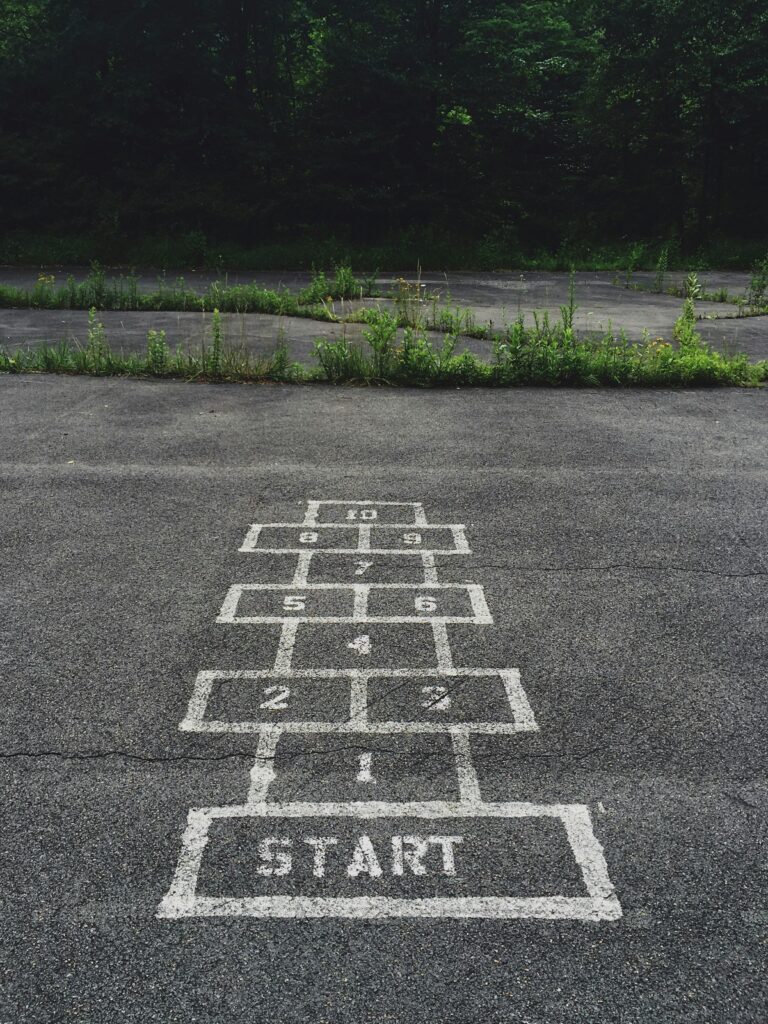
A game of hopscotch against the warm summer blacktop with your ballet flats at recess isn’t just fun; it’s an opportunity to join the other girls in an activity.
Jump. Jump. From one square to the next, making sure to stay within the confines of each square.
Over time, you begin to play the game of avoiding cracks on the ground whenever you can, regardless if you’re playing hopscotch, regardless if you’re alone.
Every step is a landmine, a cautionary tale. It’s difficult to become faster in speed, without one foot stepping on a crack or tripping out of the carefully-laid squares. The rhythm of your feet tread swiftly as you hop, then step together, over and over.
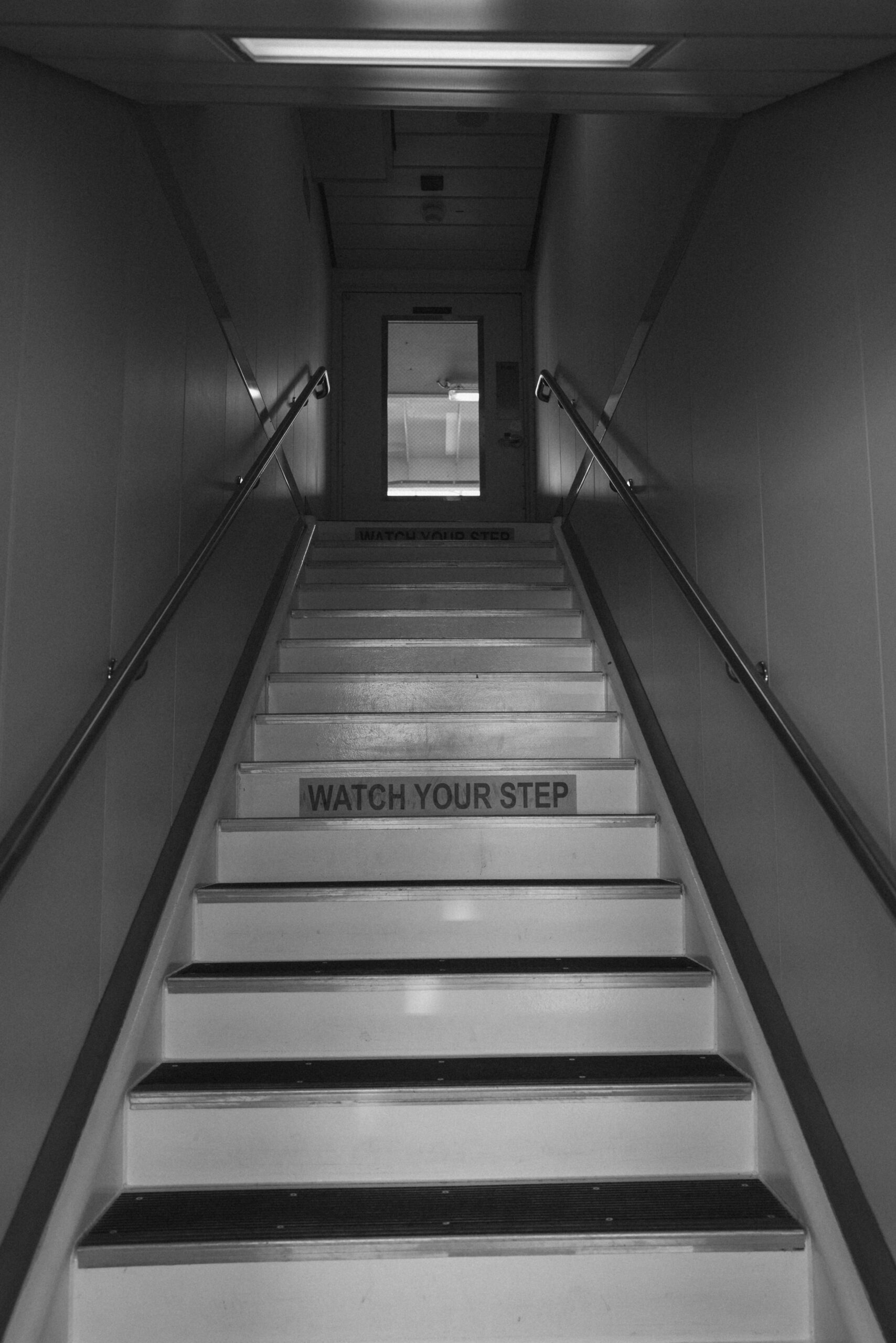
(Image courtesy of Jon Tyson on Unsplash.)
Your steps are deliberate, and you count the numbered blocks in your head. …7, 8, 9, 10. It’s an expected pattern you must follow.
The fear is still there
As an adult, watching where you step remains relevant — hopscotch morphs into a deadly tightrope routine, a massive amount of expectations below that are ready to swallow you whole. In childhood, you’re carefree. Societal expectations have not yet been placed upon you, and you’re unaware of the gendered binary that might — if you’re like me — later engulf your sense of self.
For most young children, they’re slowly becoming familiar with the unspoken rules of society, and when they are, it’s often in the form of playground games. Questions are outlined in a manner that involves noticing who is included, and who is excluded. Who stands out, and who doesn’t? Do they stay in the confines of the constructed squares?
Image courtesy of Marek Studzinski on Unsplash.
You told yourself — promised yourself — that you would come out by the end of this year. That the daily tightrope routine would finally end, and you could rest. But you still aren’t ready to explain the change in your appearance or why you wear a binder, share your pronouns or the name you wish to go by. In a world where diversity is considered “woke” and the message is broadcast on television as a scare tactic, you wonder when it will be the right time to come out. Figuring out when the timing is right makes the tightrope seem like it isn’t fully secured. You wish you could predict where the rope might snap, but that’s impossible.
It’s approaching the end of the year, the unspoken deadline that you set for yourself. The end of the rope is in sight. But is it safe to continue? And are you ready to step off? The tightrope sways in the wind as you make your journey from who you thought you were to who you’ve always been.
Coming out will be dangerous. Losing some people in your life will be inevitable, but it’s a risk you must take to exist as your true self. There will be many difficult conversations. This identity isn’t a choice; it’s not something you decided. What you did decide is to embrace this part of you in private until you feel safe coming out into the open, stepping off of that tightrope. The only thing you’ve chosen is your happiness.
After you step off, if you step off, everything will be unknown, and out in the open. Your life, business, and future will become an open book, even if you don’t want it to be.
You consider your choices. Waiting longer isn’t an option. Living a double life will be difficult to uphold much longer. The world below your feet already looks like it could swallow you up at any minute. You have to do this on your own time, but you also have to do it before it consumes you.
Why do you push yourself when you know you might fall? You’ve lived in the dark of the closet before, marking the beginning of your tightrope journey. You know you can at least survive in that somber space. But for how long?
The Closet
The closet door opens and closes, like a swinging door on a windy day. You tell yourself it’s okay if a passerby notices its opening. They might comment on its interior or on you, but this is to be expected.
You choose your outfit in the safety of its dark confines, and then the closet shuts. It remains behind you, while in front of you is that tightrope you must walk daily. You practice your stride before beginning the journey, testing your balance to prevent falling.
Testing is key in a realm where the rope could be ripped from underneath you at any time. It allows you to figure out how to save face. How to answer questions, and how to cover your truth when it seems dangerous to be honest. The cover is weak, thin like a fraying rope.
But you must protect your peace, and sometimes that means hiding the truth. Sometimes, that means turning back around on the tightrope and choosing the closet for that day.
You still don’t feel ready to come out to everyone by the end of this year, to finally cross the tightrope for good, but you’ve successfully told a few. That in itself is an accomplishment.
Right now, that’s all that matters. You will conquer the tightrope someday.
Every December, I am reminded once again that I come from a country where Christmas is not part of our cultural calendar. In Iran, we follow a solar calendar that begins in spring, not winter. Our New Year, Nowruz, arrives with blossoming flowers, warmer days, and the promise of renewal. It makes intuitive sense: the Earth wakes up, and so do we.
So even after all these years of living outside Iran, I still cannot quite get used to the idea of celebrating the start of a New Year in the coldest, darkest moment of winter. My body insists, “This cannot be the beginning!”
But ironically, when I lived in Iran, where I was not expected to care about Christmas, I was forced to care. Why?
Because the rest of the world shuts down.
Which means:
application deadlines have moved earlier
research funders disappear for two weeks
collaborators vanish into holiday mode
offices send out-of-office replies
And as if that wasn’t enough, only two months later, another wave of deadlines arrived, right when Iranians were preparing for Nowruz.
So I lived in a double-deadline universe.
But then, as an astronomer, I realized something comforting:
This is all Earth’s fault.
And strangely… Earth deserves some credit.
On Mercury: deadline panic, every 88 days
Imagine living on Mercury. A full year is only 88 days long.
Which means:
four grant/tax cycles
constant “end-of-year” reflections and resolutions
Honestly, Mercury sounds like a cosmic nightmare.
On Saturn: great view, terrible timing
Then there is Saturn; majestic, stunning, photogenic. If I lived there, I would wake up every morning to an Instagram-worthy sky filled with golden rings.
But a Saturnian year is 29 Earth years.
Which means:
waiting nearly three decades just to say,
“Happy New Year! How have you been since… 1997?”
The rings might be beautiful, but waiting 29 years for a holiday would test even the most patient among us.
On Earth: a perfectly imperfect compromise
And so, despite all my complaints that the winter holidays that feel upside down, the double sets of deadlines, the confusion of trying to celebrate in one calendar while living in another, I have to admit something.
Earth sits in exactly the right place
Close enough to the Sun to avoid freezing, far enough to avoid burning, tilted enough to give us seasons, and spinning at just the right pace to make a year …
not too fast
not too slow
just right
So this Christmas…
Whether you feel the year has rushed past you or dragged on endlessly, whether you celebrate Christmas or Nowruz or something entirely your own;
Just remember:
On a cosmic scale, Earth has given us the best possible calendar for both living and dreaming.
And enjoy the holidays, however and whenever they arrive for you.
And if you ever feel overwhelmed by deadlines, just be grateful you don’t live on Mercury.
Message: “Aunt nell, Nanti hettie. Dooey daiture and quinque, parker, Bona lavs, ducky. “ Polari translation: Listen, I am not straight. In 2025, I give you my best wishes, my dear.
In high school gym class, I often overheard conversations about sexual encounters, stories, ‘advice,’ and asking questions. I remember in ninth or tenth grade, a friend asked me questions about sexual experiences due to my being in a relationship. I felt uncomfortable, as this wasn’t something I wanted to discuss out in the open. I also didn’t want to discuss what started occurring in my life at 17 (that I hadn’t yet fully processed). Sex was an uncomfortable topic. Romance was different.
Finding the right words or labels
I had always felt romantic attraction towards others. My first crush was on a boy in my kindergarten class, and I realized in sixth grade that I was attracted to girls. Throughout my life, I thought of romantic attraction, not sexual attraction, as a vital component of a relationship.
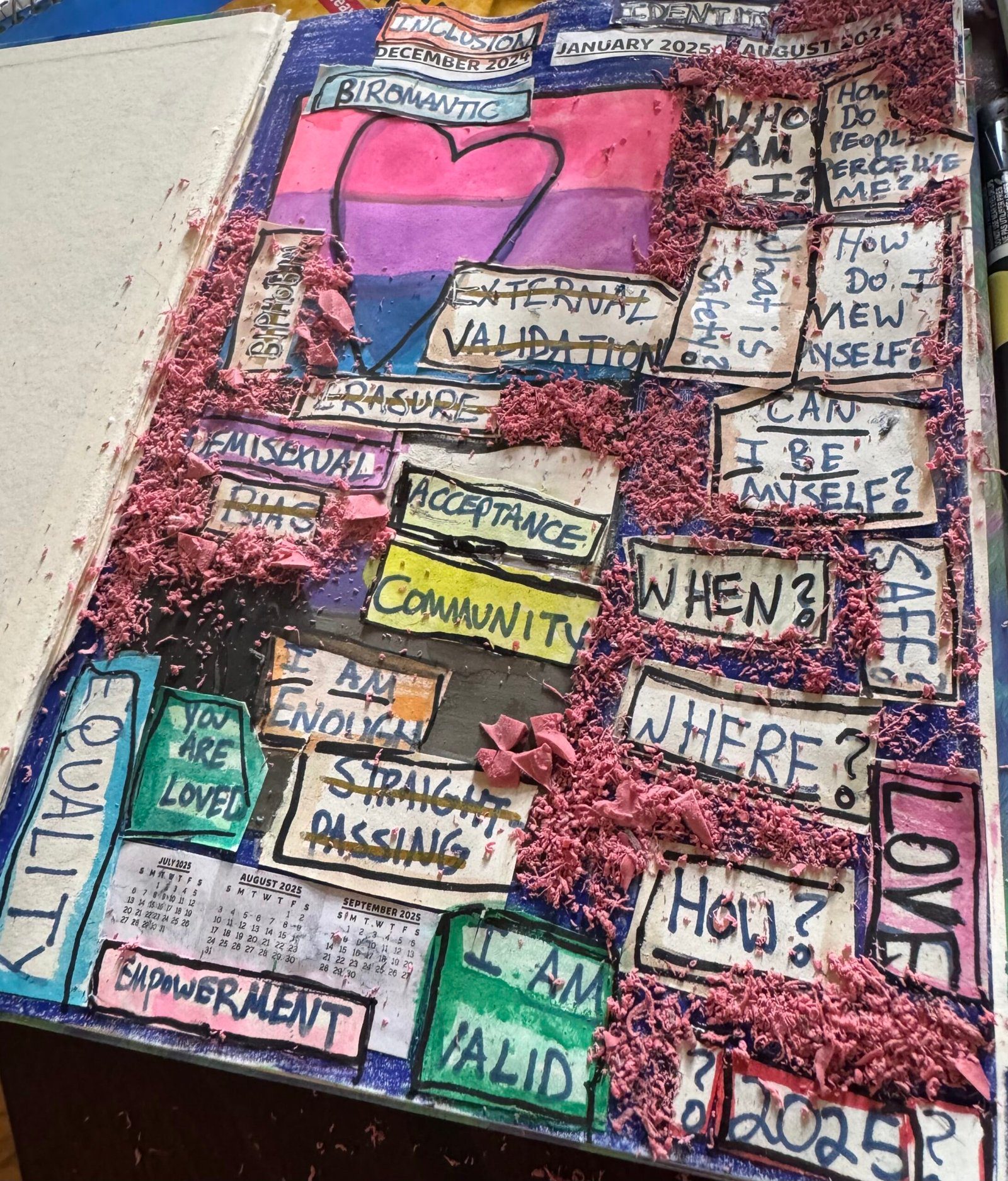
In seventh grade, I discovered the label bisexual. That identity lasted eight years, since I didn’t know there were other options to define myself. Earlier this year, I reconsidered if the label I had worn for so long was accurate to who I am. After thinking it over, I faced that the most accurate way to identify myself was biromantic and demisexual.
Biromantic is described as “being romantically attracted to more than one gender, not exactly in the same degree, same time, or in the same way.”
Biromantic to me means that I am romantically attracted to others, just not in the sexual sense.
Demisexual can be defined as “experiencing little to no sexual attraction without a strong emotional or romantic connection, falling under the ace umbrella (Asexual).”
To me, this means that I’m only sexually attracted to someone after thoroughly getting to know and trusting them on a deep, romantic level. I’ve never viewed myself as someone who could have a one-night stand or a friends-with-benefits situation.
For the past five years, I’ve reconsidered if it’s safe for me to be authentic in terms of my sexuality. With the rise of anti-LGBT laws and bills, I’m afraid to be open about it in public. If I’m with my close friends and in a safe environment, I’m able to speak about it in detail. Without my community, I’d feel lost.
The feeling of community does not always take the form of a connection that exists in person, since there are online friendships I hold dear to me. For basically ten years now, I have been an active member of the fandom that surrounds two of my favorite YouTubers, Dan and Phil.
Many within the fandom (phandom) are also LGBTQIA+. In addition, Dan and Phil themselves are queer individuals, and foster community within their fan base. This has been a positive space for me since I was thirteen, and first discovered my attraction to women/feminine-presenting people.
A friend of mine who I first met in the phandom once exclaimed while hanging out, “I’m here, I’m queer, I’m gay, and I slay.” This is an example of inclusion within the phandom.
Although I’m afraid to share my identity in some social situations, I have a safety net. The same net simultaneously protects and isolates me. Two years ago, my fiance and I became engaged. Due to bias and biphobia, I’m often viewed as straight because of my fiance’s gender.
For example, a classmate in high school asked me if I was “still bi” after beginning my relationship with my now-fiance. I’m sometimes not considered part of the LGBT community as a result of this relationship. That’s isolating.
Erasure is a concept that I internalize, and I have a difficult relationship with it. It makes me feel uneasy knowing that others dictate my identity. Being part of the community is part of my identity. The intersectionality of all my identities live within me: I am a woman, biromantic, demisexual, neurodivergent, and disabled — all at the same time.
(Image courtesy of Steve Johnson on Unsplash)
The world we live in now
However, in this current climate, I’m privileged to have that safety net of being straight-passing. I am outwardly protected against hatred in some ways, but still discriminated against.
After a situation that happened to me a few years ago at a local restaurant, I’m scared to wear pride clothing. A nearby city didn’t have their first pride celebration until 2019. I know that not everyone in the area supports people like myself.
That protest during senior year
During my senior year of college last year, students found out about a restrictive policy that was passed by the board. This policy stated that transgender, trans, and nonbinary students were no longer eligible for admission; many of my former peers are trans and nonbinary.
At a campus event with a guest speaker, I felt unfairly silenced. We were told we couldn’t speak out, couldn’t interrupt the speaker, yet weren’t allowed to leave yet. Students who weren’t seniors protested the policy by wearing all black and accessorized with pride flag pins. But, I was a senior.
Part of me knew that the college administration was restricting students, but part of me didn’t know to what extent. I knew I needed to use my voice for good, since the restrictions were even stricter for students who were not closer to graduating. People in my life warned me about protesting, told me to not get myself in trouble. I didn’t care, because it was my senior year and knew just one extra voice could make a difference. I crossed that line almost daily, every time the administration made changes. I constantly worried that I would be called into the dean’s office, but thankfully I wasn’t.
I was surprised to find out how restricted I was as a student, but not shocked at the same time. I believe I was surprised that the administration thought so low of students, as many of us would not have even attempted to interrupt the speaker — without being told not to. I felt a sense of disconnection between how we as students viewed ourselves and our peers vs. how the Admin viewed us. The local police showed up to the Annual Founder’s Day event after the meeting, without our knowledge. I felt as if Admin viewed anyone who spoke out as a threat, when most people were not.
Some faculty were supportive of students, and I understand why some were not in the position to risk their jobs in order to support us.
In response to feeling shut out before, that same month I attended a protest on campus where students joined together, raising our voices to “Rescind the policy.” The administration approved the protest ahead of time. It was student-led, with fixed guidelines allowing us to shout approved phrases, hold signs, and only protest during the approved time slot. The protest coincided with the week that a board of directors meeting was occurring on campus. Once the meeting was over, we could no longer protest.
Following the protest, I joined a few others who were planning on speaking to a local reporter. I didn’t know if I would be punished for speaking out afterwards, but I took that risk. Loved ones warned me not to do it, saying I would get in trouble. However, after the way the campus climate had shifted quickly under the appointment of a new commander, getting in trouble was the least of my concern.
Despite graduating from college and leaving that environment, I face bias and discrimination still, but primarily due to other parts of my identity.
Anxiety comes upon me whenever I see red MAGA banners in nearby cities or when I come across articles online that mention politicians’ stances. Anxiety creeps in when I visit cities that are dominated by primarily anti-LGBT institutions.
I often don’t tell others about my sexuality upon meeting them since I cannot be sure of their intentions. I wonder if I can attend local pride events — if it’s worth the possibility of being targeted online by someone from my hometown who is passionate in their anti-LGBT sentiments. How accepting a particular state is a variable in determining where to relocate.
As well as this, I never know what will happen to my loved ones who are part of the community in 2025. I wish there were protections in place for every LGBTQIA+ individual. I wish I could foster that progress.
How I define progress and resistance
I may be ridiculed in public when I wear a pride shirt, but I know my experience isn’t the same as LGBTQIA+ people in other states or around the world. I may have been outed in seventh grade — and called a slur when I publicly came out as bisexual on instagram in ninth grade — yet, I cannot compare my experience to those who were queer activists in the 60s, 70s, and onward. I don’t know what it’s truly like to fear my life on the daily for who I am.
I can’t relate to the community members who spoke a code language for decades in order to share everyday encounters with their friends. There are no direct terms for biromantic and demisexual in this language. Thus, I most likely would have been referred to as bibi palone (bisexual woman). Polari represents the history of the community during one of many dangerous time periods for those in the LGBTQIA+ community.
Survive and thrive
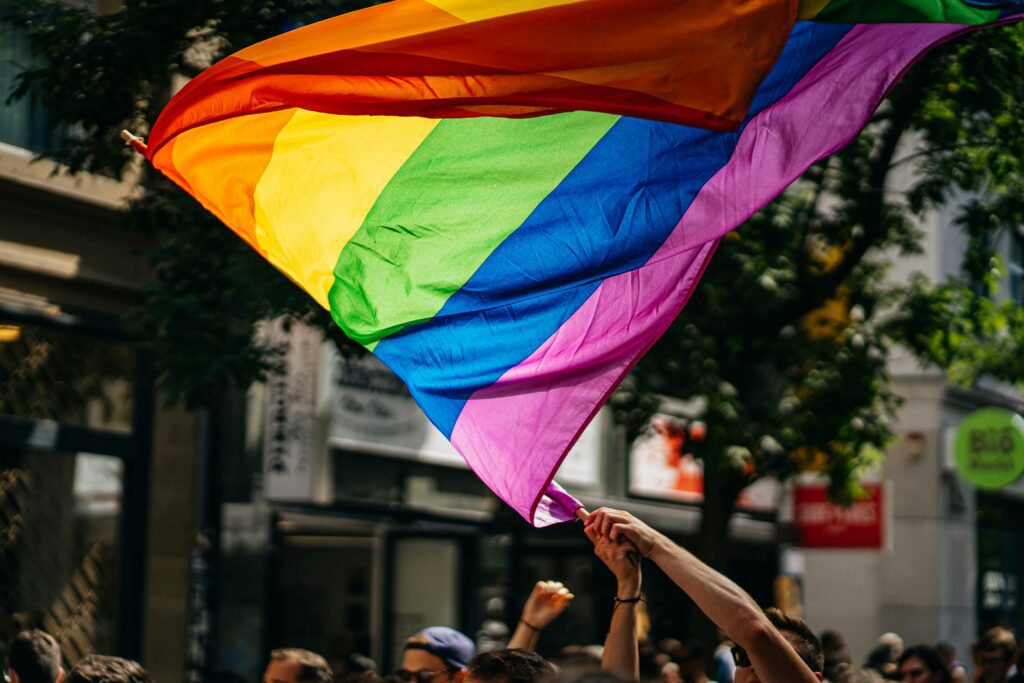
The historical basis for pride was to stand up against injustice, fight for those who can’t do so themselves, and make a difference. Pride at its root is about being authentic, even when social barriers are in place.
I’m not suggesting that others outside of myself should necessarily tackle injustice, as individuals exist in different circumstances than myself. I myself am sometimes worried about wearing pride clothing or accessories. Further, fostering change is not a monolith. It can be carried out through different methods.
Prioritizing well-being and self-care may be the only form of autonomy for individuals. Sometimes, resistance consists of survival and, eventually, thriving. Being true to who I am makes a difference.
I’m very glad to be able to live with my fiance now. Right now, for me, being myself is resistance enough.
Image courtesy off Raphael Renter | @raphi_rawr on Unsplash