
Mr. Sweeney’s Sandbox

And, just like that, he was gone.

It was New Year’s Eve, and Jace was spending the holiday at the hospital again, for the third year in a row. He had become a nurse to “help others heal,” but, at 37, realized that he was the one hurting. No significant other, no kids, and not even a dog (although only the last being really piqued his interest); he had been going through the motions at work since the pandemic because that was all he could do. Medicine had changed. He had changed. He was still hopeful, and honest, and worked hard, especially on those holiday nights when so many were home with their loved ones. He had a family that cherished him– a doting mother he spoke with daily, a brother who still sent heartfelt greeting cards for every holiday, just as he had when they were still in college, and his best friend, Khalil, who always graciously told him, “Come to the house for New Year’s,” before he inevitably turned down the invitation because he “had to work.”

It wasn’t that Jace was avoiding his family, but, rather, that he felt for those who didn’t have any. That was something he had witnessed in 2020 to disastrous degrees. Families had been separated because of COVID, among other maladies, both physically and metaphorically. When he was the on-call nurse seated at the front desk of the waiting room, he remembered watching multiple people, dozing, until their heads snapped up, a look of tremendous pain etching them in gray, just as the doctor emerged to inform them that, tragically, their loved ones had succumbed to the virus.

He recalled watching a mother with twin babies who did not even have the strength to cry after losing her husband, simply because she needed to process what she was going to do next, how she was going to care for two one-month-olds on her own. Another man, older, with a worn tweed flat cap resting on his lap had used it to conceal his face while he softly sobbed at the news of his wife’s passing.

These traumatic tableaus played in Jace’s head often, but they were not the ones that weighed most heavily upon him. It was those individuals who flickered out of existence, with no one but him to remember them, that made him keep coming back during the holiday season. 

Even though he was fully vaccinated, Jace had had COVID twice, but that came with the territory. He thanked his lucky stars that he had survived what so many others hadn’t, but he would risk it again, if he could be there to listen or even just to make sure another person didn’t burn out like a toppled candle left to pool on the table. Jace would support them as best he could, even if that meant saying “You’re alright. It’s going to be alright,” when he could see the monitors’ oscillations declining.

Jace knew that lying to his patients in those final moments was wrong, but so was having them suffer silently in isolation. If he could ease their worries, fray their pain at the edges, for just a few moments, then he would.

Tonight, things had been relatively tranquil, even with the holiday. Jace was seated in the front lobby taking his fifteen. He made a point to at least observe the celebrations happening around him, and he would call his mom, brother, and Khalil to make sure they were enjoying themselves. His mom asked him to make a wish for the New Year and waited for him to blow a kiss into the sky (a family tradition), while his brother asked if he received his holiday card. He had; it was filled with paper confetti that he was still vacuuming up days later. His brother laughed heartily at the success of his harmless prank and reminded Jace to eat something before the end of his shift the next morning. Khalil screamed, “Happy New Year, Jacey-Boy!” into the receiver as she playfully swore off alcohol and chocolate for the umpteenth year in vain. Talking made him feel a bit better, and, every once in a while, the double doors of the hospital would slide open, and he would spy revelers celebrating the fleeting moments of the year. A woman in a sequined dress, with bright red legs from the cold, walked past with a kazoo, and the low quack actually made Jace grin. Then the chime of his alarm sounded.

He took the elevator up, waved to a fellow night nurse, and grabbed his charting cart before quietly swiveling it down the hall, hoping not to rouse anyone. So far, his patients were soundly asleep and stable. He made sure to whisper, “Happy New Year,” while he updated their vital readings and checked their fluids. Jace had to wake one little girl to give her some scheduled medication, and he had remembered to bring a packet of foil star stickers as a gift. The child was thrilled, and Jace promised not to notice if one or two stickers made their way onto the railings of the bed.

When he entered a Mr. Sweeney’s room on his rounds, he noticed the man’s chart was devoid of emergency contacts. He had checked himself into the hospital after testing positive. He also seemed to be asleep. His hair was gray and sparse on top of his head, and his eyebrows were a bit too wooly. He had stubble on his face to match them, which made a slight scratching sound against the nasal cannula wrapped around his face, and a modest belly that rose and fell alongside his chest. Jace whispered good wishes once more and was slightly startled when one of Mr. Sweeney’s eyes opened, focusing on him after a few moments. “What’d you say, sir?” 

“Oh, I’m sorry to wake you. I was saying ‘Happy New Year, Mr. Sweeney,’ but obviously was too lou–” “That’s kind of ya, sir,” Mr. Sweeney interrupted him. “Please, call me Todd.” “Well, Todd, Happy New Year to you,” Jace responded, feeling the echo of a lump in his throat. “Thank you very much. What’s a young person like you doin’ here of all places? You should be out celebrating, especially since–” he lifted one arm, with substantial effort, and made a circle in the air, “we’re not exactly the best partygoers.” Todd laughed, again with effort. 

“I really don’t mind. I like being he–” “I’m going to stop you right there and ask you a question, sir. Do you believe in God?” Jace bristled a bit, hoping, desperately, that this conversation would not turn into a tirade. He thought carefully for a few moments and answered as truthfully as he could, “I do believe in a higher power, but I have seen enough to make me question a lot of things.”

He braced himself for a verbal onslaught, but, instead, Todd smiled at him. “I can tell you’ve been a nurse for a while.” “Yes, eleven years now.” “And you’re still here? Interestin’,” Todd said, almost to himself. He coughed for a spell before continuing. “Sir, I can understand questioning everything in your line of work. I don’t much like bein’ here myself, so it’s nice to know there are people like you around. However, I’m goin’ to remind you to live your own life, too.”

Todd paused for a bit, looking out the window at the streetlights. He turned back to Jace slowly, smiling warmly. “It’s really none of my business, but I don’t care much for boundaries after they stuck tubes in me.” “Are you uncomfort–” “Never mind that. I’m fine, or at least tryin’ to be. What I want to say is that, whether it’s God or someone else entirely, you’ve got to remember that we’re all in the sandbox.” “I’m sorry?” Jace said gingerly. “The sandbox. Ya see, this world we live in is basically just a big sandbox for God. He sits down, in his corduroys, grabs his shovel, his plastic pail, and a bit of water, and he starts buildin’. Trees, trucks, pups, pythons, you, and me– he builds it all. He plays, has his fun, and then he, like anybody else, has to go home.”

Jace lingered on his words, thinking not of the giant bearded figure with a booming voice that he had seen in church, but of a little boy playing in sand while his parents watched from a nearby bench. His hands were dirty, and he smiled, looking over at them while they waved back.

“Sir, I know what you’re doin’ here is really special, but maybe it’s time to put the pail away for a while, hm?” His gaze softened as he looked at the nurse, awaiting a response. Jace smiled back, nodding a few times in understanding. “Good night, Todd, and Happy New Year, again. Thank you for the conversation, and, if you need any–” “I’ll certainly call if I need somethin’. Thank you, sir, and Happy New Year. It’s been a pleasure.” Todd lifted his hand slowly and waved, his IV hose swaying like tall grass. He closed his eyes again, and Jace scooted the cart out of the room, partially closing the door.

Jace took the T back to the hospital at 8:00 pm on New Year’s Day, readying himself for another night. He hadn’t slept much as he continued visualizing the scene that Todd had gifted him. Except, the man on the bench was wearing a tweed flat cap, and the woman had her hand on a double-stroller while two little boys played together in the sand, one in white corduroys, the other in blue. 

After calling his mom, he grabbed his charting cart and ambled down the hall once more. Jace visited the little girl, spying star stickers adorning her bed. Some glittered in an arch above where her head was positioned on her pillow. When he reached Todd’s room, he walked in quietly, not planning to wake him this time. His head was turned towards the streetlights again, and his eyes were half-closed. Jace immediately noticed Todd’s chest and soft belly were still and rushed over to his bedside. “Mr. Sweeney? Todd!?” He reached out to touch him, noticing that his skin was the same shade of gray that those individuals, overcome with grief and worry, always had in the waiting room. He was cold.

Jace called his fellow nurses and the on-duty doctor, who reported to the room as swiftly as possible, vials of medication and resuscitation equipment in tow. However, Todd had been gone for a while. Jace stared at him, as he continued gazing out of the window, while people in blue scrubs and white coats swarmed around him. Jace still hoped that Todd would turn towards him with the same gentle smile he had the previous night, and he imagined him, laying in a sandbox, eyes towards the sky, sand falling between his fingers as he clenched his fists.

Amid the flurry of activity, he went over to Todd, closed the man’s eyes as best he could, grabbed the rubbish pail near the bed, and emptied it before leaving the room.
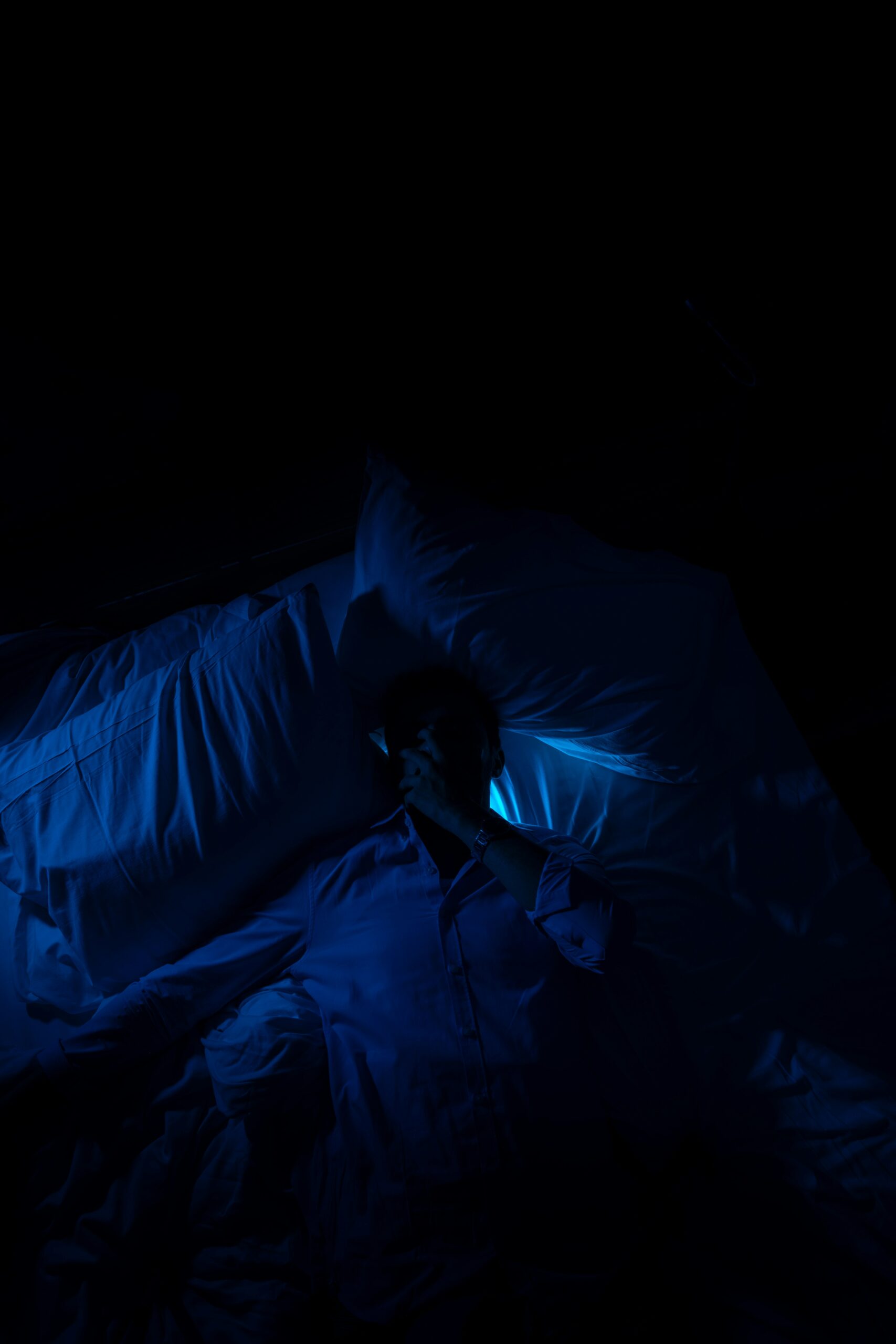

The Eternal Quest For a Good Night’s Sleep

I haven’t always had trouble sleeping. 

About a decade ago, whilst studying for my master’s degree, I lived in a cramped room in a student house in Sunderland. For a full year, I would spend hours intensely studying at my desk before taking about five steps across the room and getting into bed.

It wasn’t a particularly nice bed. It was quite small, and if it hadn’t been for a strategically placed pair of drawers stopping me from falling out I probably would have been on the floor more often than not. And yet despite this, I would always fall asleep within an hour.

Fast forward to 2025, and I’ve upgraded that small bed for a nice double in a reasonably-sized bedroom. I also no longer have the stress of multiple exams and essays hanging over me, so it stands to reason that I would have no trouble falling asleep.

But for multiple reasons, the last five or so years have proven to be challenging as I’ve grappled with insomnia. And despite reading countless self-help books and taking several steps towards creating a better sleeping environment, a good night’s sleep continues to elude me.

I’m quite lucky in that I can still function normally during the day – I get up at a reasonable time, I can still go out with friends and I’m still able to write for my day job – but my poor sleeping habits over the last few years have definitely taken their toll, and there will be some days where I’m too tired to do anything other than sit on my sofa and doomscroll.

It’s hard to pinpoint the main cause of my insomnia. While I’ve often had trouble falling asleep during my life, the issue has really exacerbated in the last five or so years since COVID-19 first reared its head. I don’t need to tell you that the last few years have been stressful for everyone, and there’s every reason to believe that this is the main factor. I also have obsessive-compulsive disorder (OCD), which can lead to intrusive thoughts keeping me awake at night.

Whatever the reason, insomnia has gone from an annoying, but manageable condition to something that was starting to have a real impact on my life. The time had finally come to do something about it.

Improving my sleep hygiene

Go onto any website or read any self-help book about insomnia and you’ll see the term ‘sleep hygiene.’

Essentially, sleep hygiene describes the healthy habits that can help you get a good night’s sleep. This can range from your sleeping environment to what you do during the day.

In the last year or so I’ve started taking these things more seriously, whether it’s creating a nicer sleeping environment (no screens in the bedroom) or thinking more about what I’m doing during the day (eating healthily, no social media in the evening).

There’s a long way to go before I’m getting into a consistent sleeping pattern, but the early signs are encouraging. Simple acts like leaving my phone downstairs or reading before bed are already starting to have an effect, and I’m finding it easier to fall asleep, although I still find myself waking up randomly during the night.

I’ve also found that taking time away from social media (and the internet in general) has had a big effect. With 24/7 news and constant scrolling on social media, it can be incredibly difficult to switch off, even when I can tell that it is having an adverse effect on my mental health. The trick is to put as many barriers between you and those things as possible, whether that’s deleting apps, setting a daily browsing limit, or leaving your phone somewhere else, gradually spending less time online has ultimately had a big impact on my mood and my sleep hygiene.

Still, there are some elements that I can’t control, namely the recent heatwaves in the UK making it impossible to cool down enough for sleep and my dog, who likes to take up most of the bed (and who am I to stop her?), but with a few simple steps I’ve managed to greatly improve my sleep hygiene, and I’m hopeful that as time goes on I’ll be able to say goodbye to my insomnia for good.

Mythical Overcoming

Overcoming

Looking at the title, I can appreciate you may be expecting a somewhat downbeat or defeated article. My hope is that in exploring the subject, quite the opposite can be true.

In our current climate of information saturation, I am witnessing a constant stream of narratives from the broadest array of identities and their specific struggles. Across online profiles, accounts, and publications, I can hear people all over the world discussing their challenges and hardships. From individual accounts of economic, social, and mental hardship to collective stances of resistance and solidarity against systemic injustice, I’d argue that overcoming is a desire alive and well, shared by many millions.

Yet I’m left thinking, what is the purpose of this exactly? What are people getting from this narrativizing and sharing? Only those sharing can answer this question; as an observer, I’m left supposing. My foremost thought is whether sharing and publicizing such struggles actually aids in overcoming them. 

Is overcoming just a desire or a myth?

Overcoming as a term says to me, or implies, that the challenge is over, the declaration that the struggle has ended successfully. This end, however, isn’t my experience. I’m straight, white, and a man, and I have no qualms staring down the barrel of my significant privilege. I have no representative duty or value, neither do I face any systemic oppression.

My relationship with overcoming has been purely internal: dealing with matters of well-being and mental health. The overcoming of demons and one’s inner world in my experience is a day-at-a-time process. Overcoming in this sense is not a matter of reaching a plateau or seeing greater societal change, rather it’s been about evolving as I’ve grown; it’s been an ongoing investment in myself for a better quality of life. I’ve also found that my perspective on the quality of my life has changed over the years.

If you were to ask 21-year-old me what quality of life looks like, I don’t doubt you’d receive a rather grandiose and imaginative response. As a drama school graduate with little sense of his place in the world, I’m sure quality of life for that young man meant stardom, LA, a big house, and the never-ending waterfall of adulation. If you ask me now what a better quality of life looks like, it means being present, being on top of my responsibilities, having a balance in my life, and feeling decent-to-good on a consistent and regular basis.

I feel the need to be careful with my commentary given my social identity. I am not someone who has been raised witnessing the discrimination and oppression of loved ones or experiencing it myself. Not for a second do I feel I can remotely comment on what overcoming means for people living experiences I’ve never known myself.

Time is teaching me that the “myth” of overcoming reflects how we define it. I know for a fact that 21-year-old me would be mildly depressed looking at my life now. Conversely, I know now that the younger version of me had something of a loose grasp on reality, albeit a determined and adventurous attitude towards it. I’m reminded of the Buddhist tenet, “The root of all suffering is desire.” 

Greyscale photo of a person trekking across a rocky mountain
(Image courtesy of Fabrizio Conti on Unsplash)

A new relationship with the idea of overcoming

Perhaps I feel I’ve overcome more now because the goals and desires I previously held have faded as anything reachable.

I’m not for a moment saying anyone shouldn’t feel that they can have desires. Neither do I seek to tell anyone to wait for the results of your labor, your targets. I can only say that in my experience, overcoming appears to be a life’s work. The only way overcoming something becomes a myth for me is setting up timelines and results in my head uninformed by any external reality. Overcoming is no myth, but it is a process that takes time. I need to go a day at a time and perhaps only look back every six months or so, if not longer.

It would be my contention that we are all overcoming something and becoming more

That maybe, just maybe, looking back over time, be it in one lifetime or across the generations that follow us, we’ll see our story of overcoming was no myth at all.

Iran to the Interstellars: Can You Hear Us?

This is a message to interstellar powers.
If you think you are a “Human,” do not read on.

Hi there,
I hope you can hear me.

I am calling you from Iran, a country on Planet Earth, in the Milky Way Galaxy. I am a cosmologist, and I know how to address other galaxies in the classifications that we have prepared, but I do not know your system. So I hope you know where Earth is. If you can find Earth, it is easy to find Iran. It is the saddest country on this planet now.

The population of this planet stands at around nine billion people, and you probably wonder why, instead of just talking with them, I am reaching out to you. Because here, although we have ears and eyes, in critical times we close them. We do not have time to hear and see the grief of OTHERS. Yes, “others.” On this planet, we are strangers.

We have several instruments to contact you with, but I always say to myself that even if you hear our signals, and even if you find us with your equipment, you will not respond or contact us — because this planet, although it looks blue, is in reality red, the color of blood. We look civilized, with satellites, Artificial Intelligence (AI), and the ability to travel to the Moon, but we are unable to communicate with each other.

When I was younger, I dreamed of traveling to other planets out of curiosity and out of wonder, but  always in the certainty of returning to Earth, my home. But now I want to escape it.

That is why I am reaching out to you, and I am asking for your help.

Two weeks ago, another uprising started in my beloved country, Iran. We Iranians call it a revolution, but here no one believes it. Do you know what “revolution” means, or should I explain?

The regime that has governed us for forty-seven years (Earth years, which are equal to 365 days,) has been murdering us. We do not even know how many have been slain, because all communication with our country has been blocked for twelve days. You may wonder how I am able to write to you. I can, because I am one of the millions of Iranians who left home, who left their loved ones to live in a free world, but whose roots and hearts are still in Iran.

In the last twelve days, we tried to be the voice of our people by any means we had. On this planet, there are many languages, and we do not know them all, but we used a new technology called AI to translate our messages, and social media too. But it isn’t working, because no one is listening. Even with this advanced technology, we are still voiceless. I do not know which language you speak, but I am writing to you in English, which is not my mother tongue.

On this planet, we have satellite internet and Starlink to communicate, but these technologies are not for Iranians. We are sanctioned by the rest of the world and denied access to technology because our regime is oppressive. Can you imagine that the people of a country are being punished because of a regime they have stood up against several times, and that they have been murdered in droves for doing so? How do you punish regimes in your galaxy? Do you have sanctions? I hope not.

There is a country on this planet called the USA. You have probably heard of it, because on this planet everyone knows it — even a child in a remote village. Its president promised Iranians that help was on its way, and now it has been ten days that we are waiting. Imagine a nation asking another country for support to kill a dictator.

Do you know what a dictator is? We have had several here on Earth. The most famous and brutal one was Hitler, who wanted to dominate the whole planet. That was eighty years ago. But if you ask me, the dictator of Iran is running a close second, because he kills in the name of God. He believes he represents God, and therefore he can do anything, because God can do anything. Do you also believe in God? Do you also label your people by religion?

I was telling you about the help from the US. That country is far from Iran, and its planes take hours to reach us. Although they feature advanced military technology, they are not fast.

Here, killing is very fast.
Saving is very slow.

As a physicist, I know that the speed of light is the highest possible speed, and the nearest star to us is more than four light-years away. So it would take at least four years if you decide to help my people. I should probably have sent this message in 1979, when this brutal regime occupied my country and held my people hostage. But I was not born then.

Still, many do not believe this regime should go. They believe in reform. They do not believe dictators don’t change. They fail.

I do not know how I can convince you to help, because on this planet it has not been possible to grab the attention of humans. I can tell you that in two days, 16,500 people were murdered, 330,000 were injured, and at least 8,000 lost their eyes. We Iranians call it genocide. Do you know what that means? If you say no, I would not be surprised, because even here, no one believes it.

Here, politicians say that even if the US saves us by killing the dictator, it would only be because of our resources. Iran has oil, gas, and plenty of other valuable natural resources. Do you need them? If we offer all of them to you, will you come and save my people? We need these resources only if we are alive. Dead people need nothing.

Here, politicians remain silent and say it is an “internal issue.” Imagine: a dictator can kill all the people he governs, and no one questions it because it’s an internal issue. If you have such a rule — not to interfere in the affairs of other galaxies — then I am wasting my time writing to you.

I do not know what more to add.

Here, we have human rights. Perhaps you have interstellar rights. I hope your laws cover us as well, because here we aren’t equal under these rights, and countless human rights organizations are spineless.

Please come and save my people, even if it takes years to reach us.
We Iranians have done what we could.
Children are still being born in our country.
They deserve to live in freedom.

Resolutions, Schmesolutions

I have a lot of hobbies. I started cross stitching in middle school and knitting and crocheting in college. So, for most of my crafting life, I have been balancing learning these crafts and going to school. Now, in my early 30s, I must squeeze in whatever craft time I have with my work and taking care of my family. I love my life, but having my skills often stagnated is often emotionally taxing.

I’ve always had very high standards for certain things. No good baked or dish cooked has ever been perfect. After trying the fruits of my labor, I always have to make a note about an ingredient that needs adding or that the cooking time needs to be adjusted. This deep need to sharpen my skills is why I went to grad school. The idea of knowing everything about a subject was enticing. I so desperately wanted to deepen my language skills (in multiple languages) and develop my research skills. Imagine my disappointment when I realized that learning everything was impossible.

This desire, however, still exists in my crafting life. It is not enough to be good at my chosen crafts. I expect my products to be impeccable. I must be able to win the blue ribbons at state fairs (I have never entered a project into a contest, nor have I been to a state fair. But the expectation remains). Other crafts also call to me: sewing (quilting especially, but also hand quilting), embroidery, basket making, loom weaving, spinning, nålbinding, bobbin lacemaking, yarn dyeing (with both natural and artificial dyes) – the list goes on! There lives in me a desire to learn carpentry despite knowing that I absolutely do not have the coordination to be around power tools. This bucket list is not taking into account the instruments I do and want to play, the languages I want to learn, the movies I want to watch, the books I want to read. I thank whoever responsible that I was not born with the talent to draw or paint, because that would open another can of worms. 

So, when the holiday season rolls around and we’re inundated with talk of New Year’s resolutions, it is not a surprise that I make an ambitious list of projects that I never finish. For example, I started a reproduction of Long Dog Samplers’s “Pandemic” cross-stitching pattern. Created while most of the world was in quarantine during the early days of the COVID-19 global emergency in 2020, this pattern was designed to keep stitchers entertained while staying indoors. The piece is mammoth. The finished project is about 20 inches wide by 24 inches high. 

I managed to score a copy when the company was giving it away for free in late 2020 and put it at the top of my project queue. Having acquired the necessary materials for Christmas, it was my resolution to start and finish the piece in 2021. Also on my list were: learn how to use my sewing machine, knit a sweater, and learn how to crochet doilies. 

In 2022, I resolved to finish it.

In 2023, I resolved to finish it.

In 2024, I finished the piece on Thanksgiving Day.

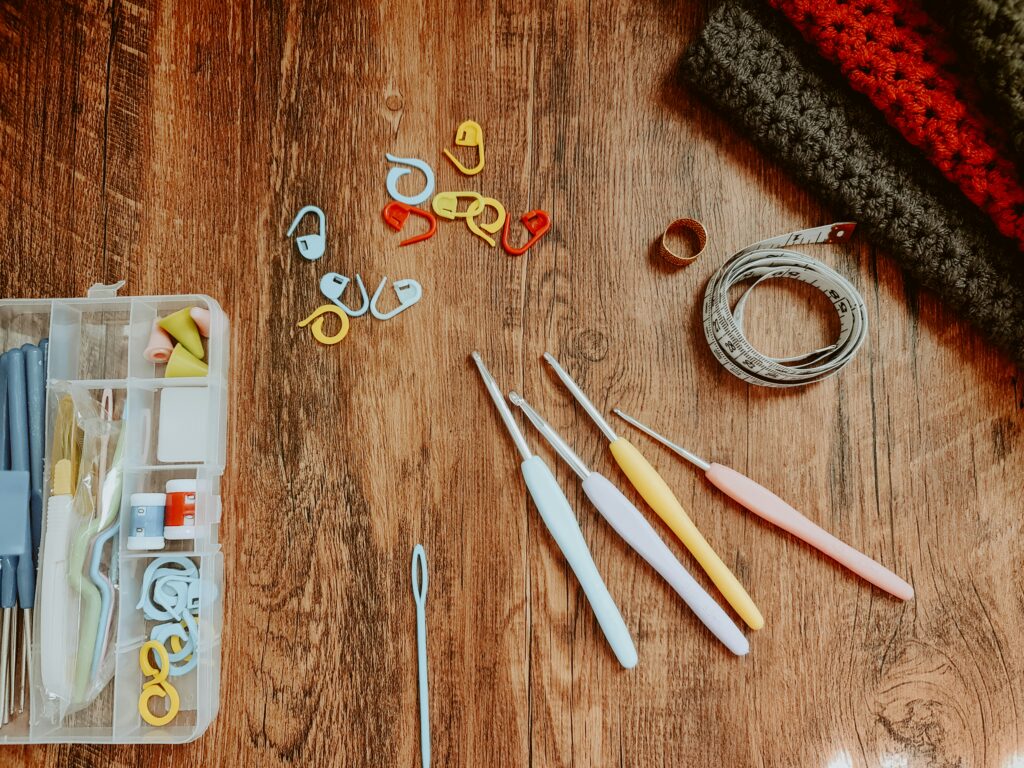
A tabletop covered with various notions associated with crocheting: stitch markers, a tape measure, crochet hooks, and a tapestry needle among them.
(Image courtesy of Edz Norton via Unsplash)

Of course, I wasn’t dedicating every single second of every single day to “Pandemic.” I was in grad school. I was spending time with my dogs and my husband. I was giving birth, at one point. I was, admittedly, working on other cross-stitching projects concurrently. I do not regret the time it took to complete this huge accomplishment. I am so proud of my work.

But, at the same time, I have yet to develop the skills necessary to knit a sweater. I only just learned how to crochet doilies this past year (unexpectedly, the patterns make a lot of sense to me, and I am very good at making them). Years have come and gone, resolutions made and unfulfilled, and I feel as if my skills have remained stagnant.

And usually this doesn’t bother me. Lately, my life is too busy to be distracted by my harsh self-critiques. I can bounce from project to project with enthusiasm and whimsy. That is, until I visit everyone’s worst enemy: social media.

First, before I break down the negative, I want to say how grateful I am for the resources social media provides that wouldn’t have been accessible in the past. I have countless sources of information at my fingertips. I can go on Ravelry and find tens of thousands of knitting and crochet projects within seconds. I can watch a YouTube video for a tricky method instead of having to resort to written instructions. Posts on Instagram give me color and pattern inspiration. And, not to be rude, I learn from the mistakes others make (if I had a nickel for every time I exclaimed, “With that color combination?” to myself while scrolling).

Platforms like Instagram, TikTok, and Reddit inundate us with narratives of perfection every day. Usually users purport physical perfection, aided by the use of filters. But there exist the feelings of imperfection one gets when looking at the life events that people choose (and choose is an important word here) to share. People rarely share the negative aspects of their lives. So, when crafters share flawless shots of their WIPs (works in progress) or FOs (finished objects), it’s just as likely one will be inspired as much as they could feel inadequate.

Sometimes, this feeling can be instructive. If someone’s stitches are neater than mine, I can take that in, find strategies to improve, and grow. But the pressure still exists, and it is not always constructive. For example, about once a year I attempt to learn how to knit Continental style (holding the yarn with the left hand) instead of English style (holding the yarn with the right hand). This is because so many Continental knitters boast about their speed and how their style is more efficient than that of English knitters (despite the fact that English knitters often have better tension, and therefore better-looking FOs). My mind just cannot grasp Continental, no matter how much I try. But then I think: when I finally achieve my dreams of being able to make garments without agonizing over how to do it, am I going to remember how speedy I was?

Then, there are the variables that I cannot control, namely the depressing obsession with scrolling social media instead of working on my projects, but also: other people’s family lives might not be as hectic or demanding; they might have more disposable income to buy better materials; they might have been taught by a family member and, because of this, don’t have to learn the Italian Cast On from blurry videos on YouTube. For some, their craft is their job. They have unlimited hours in the day to become better.

It’s important, to me and for me, that I keep these things in mind when I start to compare my abilities to others’. Comparison does not only steal joy, it can lead to depression if I don’t keep my comparisons in check. I spent much of my late adolescence depressed and I have no intention of going back to that. Frankly, I can’t afford to. I refuse to go back to laying in the dark, wasting away while the world spins on around me. 

So where does this leave me with my unfulfilled resolutions and my inability to feel accomplished? I think I’ll keep making resolutions at the start of every year, be they a handful of new projects, a goal to read x number of books, or what-have-you. Achieving the goals is a nice thought, but the journey is the important part. Even if I spend the whole of 2026 never finishing a project, I’ll still be working toward something. What’s worse: not finishing by some made-up due date or having never started at all?

But I really do need to stay off social media.  

Ego

Ego

The profound stature of
This hill I would die on
Disarms me;
Enveloping me with insidious
Melanalcoholic acceptance.
Sleepless nights become
Displaced, impassive sedation.
Monotony shrieks, bellows.

I bear the years behind me.
Ignore the lies I tell–
I feel them all.
Success robs me of peace;
Failure bats at my brain.
Beat it smooth so that
I may bask in the ambience
Of blissful oblivion.

Cog!

In a large hotel conference room speckled with round tables, I drank my lukewarm coffee and listened to my colleague extol the great work our advertising agency had done on a recent product launch. She recounted the late nights, the weekend work, and the hundreds of advertisements routed clean by our team.

“It was hard. It was grueling,” she said. “But we did it. And we did amazing work.”

Coffee cups, deadlines, and the weight of expectations

I kept my eyes focused on the table and played with the paper coffee cup in my hand. I didn’t feel like celebrating.

Weeks earlier, I had attended a pre-launch meeting on a Monday morning. After starting the Teams call, the Accounts person settled into her seat, greeted colleagues, and then, with a sadistic smirk, announced, “I hope you all enjoyed your weekend, because it is the last one you’ll be getting for a long time.”

And in the following weeks, I watched her words come true. The team consistently worked twelve- to fifteen-hour days, squeezing in thirty-minute lunches if they were lucky. Weekends disappeared. Even the Fourth of July wasn’t spared.

Overwork, exploitation, and the people-first myth

Even though I wasn’t technically assigned to the launch team, everyone in Editorial chipped in: I clocked in at 6 a.m. on multiple Saturdays to get in half a day’s work and still salvage my weekend plans. I logged in early and stayed late on weekdays, trying to avoid calculating how much overtime I would have earned if I had stayed at my former company.

A man holding 5, 10, and 20 dollar bills with his face covered.
(Image courtesy of Carola G via Pexels)

Were there other solutions rather than working the team to the bone? Of course there were. Management could have hired more temporary freelancers to reduce the burden, an option vetoed (I assume) solely because it would have cut into profits. Even if hiring extra manpower was impossible, they could have offered compensatory time to the overworked after the launch, but they didn’t.

Don’t get me wrong — I am genuinely grateful for my job. It not only provides me with a wage that meets my basic needs, but also allows me to travel and save for the future. I work remotely in the comfort of my own home, oftentimes with a purring cat on my lap. I get paid sick leave and vacation, and my agency even closes down for a week between Christmas and New Year’s. I am one of the lucky ones — truly privileged.

Yet, I can’t help but feel like I am a tool, a production piece, a tiny cog in a huge money-making machine. And perhaps I could accept this if the specific money-making machine manipulating me did not claim to have a people-first culture. If it did not insist it supports a healthy work-life balance while simultaneously telling, not asking, employees to work on holidays.

My complaint may sound like a tired one in a world that takes for granted that employees live to work, rather than work to live, a sad inevitability of a capitalist society and one many of us are resigned to. Most of us know, deep down, that no matter what companies say, they mainly care about their bottom lines and little else. 

To genuinely cultivate a people-first culture, which many corporations claim to have, companies will have to put people before profit. It is not enough to merely toss employees a bone when it is convenient or legally required. Rather, it is essential to choose to honor workers even when doing so curbs cash flow.

So, as I listened to the Accounts Team celebrate the virtues of our team at the all-agency meeting  (the amazing work we had done and how thrilled the clients were), I didn’t feel proud. I just felt sad.

I thought of my own parents, both in vastly different fields from my own, who regularly work seventy to eighty hours a week. They do so not because they want to, but because they feel that to do their jobs well and stay employed, they have no choice.

Cogs, families, and what really matters

Overwork is an epidemic in American society, and it’s often packaged as something noble. But it’s not. Employers can shout from the rooftops that working late nights and weekends, neglecting family and recreation, is something to be celebrated, but that doesn’t make it true. At the end of the day, companies — not their employees — are the ones who benefit from the sacrifices of the workforce.   

Twenty years from now, I seriously doubt most of the people who worked on our product launch will remember what they produced for a client. But I’d bet they’ll regret not attending their child’s baseball game because they needed to meet a deadline.

In the end, I’ll put in my extra hours like everyone else: to be a team player, to keep my job, and to make sure my company continues to see me as a valuable resource. Because I need the money: to live, to get married next year, and to start a family.

But make no mistake — any extra hours I’m forced to spend at my computer aren’t a credit to me. And overwork should not be celebrated. Corporate America, you can keep your round of applause.

I’m more than a cog in a machine. 

Why Can’t We All Exercise?

The motivation of wanting to work out – including eating right – often attacks me in full force before the New Year begins. I refuse to start new routines of any kind on January 1st, as I know they won’t stick no matter how hard I try. Instead, what actually seems to work for me (at least for the past two or three years), is fully committing to and beginning my resolutions in November and December. By fully committing myself to waves of motivation when I happen to be inspired, I am able to ensure that these new goals will stick. 

The furthest I’ve ever gotten on my personal “record” was that I successfully managed to work out from December through March of 2021. During that time, I was able to truly stick to my desired routine by starting out slowly with working out for thirty minutes everyday, twice a day. I found that living with this positive mindset improved both my physical and mental health.  Seeing as how I hadn’t experienced such clarity since high school, it truly seemed like this New Year’s resolution was going to stick with me. Unfortunately, life sometimes gets in the way at the most inconvenient times, and one day I broke the cycle that led to the end of the resolution. 

But now, as we reach the end of 2025, the final three holidays of the year are once again upon us. Regardless of how you celebrate, I do know that having a “resolution” of any kind seems to be a mandatory individual choice for someone to follow to “better themselves” once the dawn of a New Year passes. 

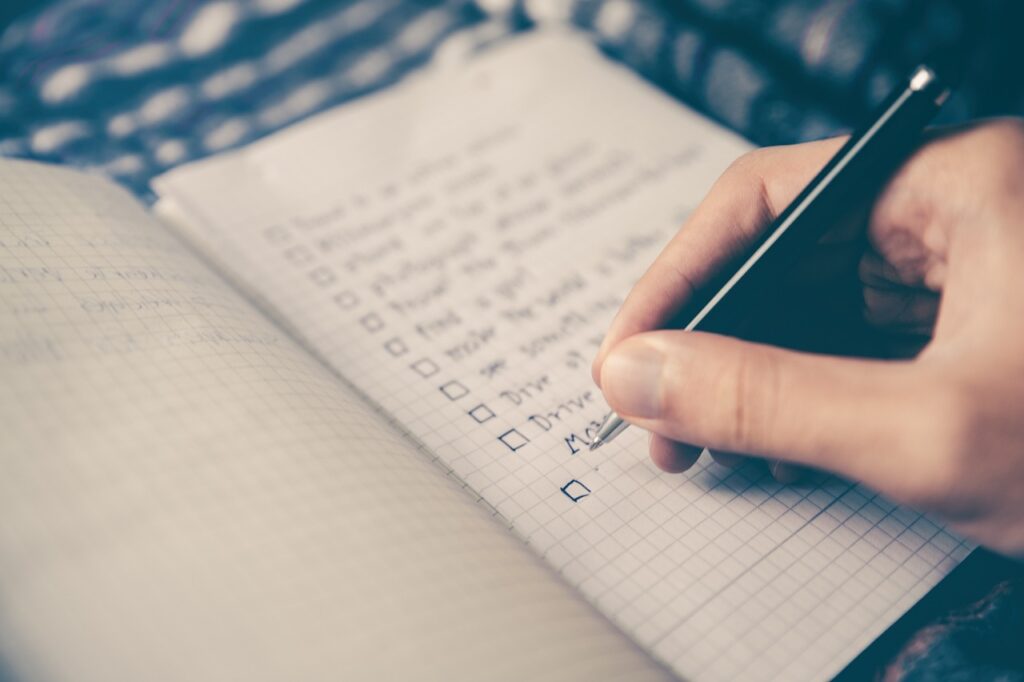
An open journal page containing a new “to-do” list. 
(Image courtesy of StockSnap on Pixabay)

Looking back, the concept of having a New Year’s resolution was originally brought on by my parents, who encouraged me to think of something new to improve myself for the next year. This is similar to my  participation in Lent where I’ve easily given up chocolate, junk food, and even tried to have less screen time. However, while my endeavors to eat healthier and reduce screen time had succeeded when I was a teenager, the resolution that now seems the most important to me is physically moving my body and trying to get in better shape than I already am. 

Despite turning 26 on December 31st, I am still relatively young and healthy (or at least, I try to be healthy). As such, as I get older, I want to take on every day to the fullest and that includes feeling great about what I eat and drink. I also know that staying on top of your motivation no matter how big or small the change may be, you should act on it. While the motivation always lies within me, I unfortunately do not have the action. Moving forward, the “acting steps” are what seem to be most challenging for me, hence my inability to actually commit to starting out slow with a new workout routine. 

Now, as the New Year is once again upon us, I know that (especially considering the current state of the world and all the challenges that come with hosting family for an extended period of time) pursuing this resolution will be an excellent change. I know that this resolution is considered the “easiest” and the “one that fails the most” among people, but I’m positive that this won’t stop me. I’m also aware that most people try to avoid keeping up with this tradition or end up coming up with something different for the New Year. I know I have! I even skipped it a year in high school because I genuinely could not think of a single thing to bring with me to improve myself as a person for the New Year. 

Exercising is one of the most important activities you can do for your body. It not only feels great, it can potentially help you live longer. Moving our bodies is something that no single person should avoid unless they want a huge pile of problems to struggle with later on in life. I have not fully taken the time to workout in 2025 (minus a few stretch routines), and I can already feel that “beginning layer” of complications. My diet is off, and I’m not as flexible as I used to be. Even my creativity manages to slip away from me every so often. 

I sometimes think back to my high school days, when my physical and mental clarity were much sharper because of my place on the rowing team. I was more energetic, I could focus better in school and on my assignments, and my diet was the best it had ever been. Now, I’m hoping that as this New Year approaches, I can reach that same level of clarity I once had. I’m not asking for it to make me perfect — who is? — but sticking with this will at least give me some level of stability moving forward with my ever-changing adult life. 

All Yours

Finding someone isn’t all fun. I’ve got a few miles on me now. Plenty have checked out the terrain. Plenty more have declined. I’m hoping to find that someone, my person.

I miss the regular walks in parks, you know. Never mind the season, I just liked being out with you. Whether you were bright and chirpy or distracted with work, or family, your phone, all three. Park walks were always sweet.

I remember the laughter, every one of yours; the cacklers, the gigglers, the chucklers, the wheezers or snorters. Hearing a laugh, no matter its form, is never a bad thing.

Cuddling up on the sofa with your place half a tip. Cozy and peaceful, the blare of the TV’s screen, its glow, the way you smelled. You, without a worry in the world, giving slow patient affection without a thought. Going out is great. Sometimes home is better.

I can always tell when someone loves me from their eyes. The scores of eyes I’ve had look at me and through me. Happy, loving, angry, or exasperated. Call it selfish, but having all your attention always lit me up.

No matter who I’ve been with, I’ll admit when you went away, you were all I’d think about. I remember each and every time, how happy you were to see me, whenever you returned. In truth, I doubt any of you were as happy to see me, as I was you.

Sure, I’m a dustbin on legs who’ll eat anything, but food with you was always best. Food from you, even better. Always served with a warm smile in your voice or on your face, a loving touch. Excuse the cringe, but the key to this guy’s heart is most definitely his stomach.

I’ll confess, I found meeting your mates overwhelming. They weren’t always fans of me. To be honest, I didn’t always like them, but I’d do it anytime for you. You know, I don’t forget how you wanted to show me off to everyone and how great that felt. 

I know I’m not bad. I know you can do better, too. Maybe someone more focused. Someone who can sit still more, someone better with kids, I don’t know. 

I’ll never forget the moments where you’d just speak to me. From the heart, subconscious, involuntary. It really didn’t matter what you said, it was how you were saying it. It didn’t matter if it was good or deep and meaningful, it could be bad or absolute nonsense. 

It didn’t matter. There was a special frequency, only for me. Like I became your secret confidant. Knowing things even your Mum or besties didn’t know.

I realize I could frustrate you and cause problems you never asked for. I’m a lifelong sufferer of heart-on-my-sleeve. The sleeve’s torn up now. I’m not bad, you know.

Another long afternoon, and it’s sad to think so many opportunities have passed with good and loving people. I’m not giving up yet though – I think you’ve always got to be willing.

Karen might be the sweetest woman I have ever met. She always gives me the same loving look every time she sees me.

She’s been running this kennel for over 10 years now, and, every time I’ve returned, she says, “We’ll find you a home one day, Rolo.”

I hope she’s right. I just wanna belong to someone.

We’ll Always Have the Cinema

After 30 years living in my childhood home, I finally moved away last year.

Moving was in the cards for a while, with the cost of living in the UK making living in such a big house unsustainable. After an incredibly stressful year that consisted of having improvements done, putting the house on the market, finding a new place to live, finding a buyer, and then going through the whole process of moving, I was relieved when the dust settled and I was free to enjoy my new life.

After the first few months, I’d mostly been able to move on from everything I missed from my old home. My new house had everything I needed in a good location with great transport links, and I was able to visit my niece and nephew more often, only 10 minutes away.

Everything was great, but there’s one thing I missed after moving: seeing my dad regularly. He and my mum split amicably in 2007 and he moved to a little flat about five minutes away, so it was never too difficult to see him when I wanted. That’s changed now that I’m living in a whole new place while he’s stayed in that little flat. My mum, brother, sister and her children live nearby, but he’s stubbornly refused to talk about moving whenever we’ve broached the subject.

He’s 75 years old and has some mobility problems that means he can’t get out as much as he used to. He can still drive, so he does visit me every so often. He also still has friends in the area, so it’s not like he’s completely alone. However, this is the first time in my life where I’ve lived far away from him, and I can’t help but feel guilty that I can’t see him as often as I used to.

Take me out to the movies

This is why our occasional trips to the cinema have become such an important part of my life. We used to go all the time before I moved, as the cinema is only a 10 minute walk from where we lived and I’ve strived to carry on this pastime. Even though it’s not as frequent anymore, it’s still a special thing for both of us.

My parents have always loved movies, and it’s something they passed on to us at an early age. I have fond memories of birthdays and Christmases spent watching some film or another on the TV. This has changed over the years, from animated movies and Christmas films to horror movies at Halloween, but it’s always been something that helped us bond. It’s helped me as well in a way I never would have expected. It was writing reviews of movies I’d seen that made me realize how much I loved writing, and it’s the reason I write for a living today. My life wouldn’t be the same if my parents and I hadn’t bonded over our love of movies.

This is why I still make the long journey back to my home town whenever I can. In the last year, a new restaurant opened up next to the cinema, and it’s become traditional to grab something to eat there after the film. It sounds mundane. In many ways it is. We see a film, grab a table, and order some pretty standard food — usually pizza or pasta. 

In an increasingly stressful time, it’s become something I look forward to every time. There are times where we’ll go to the big cinema in town for big movies like the new Mission Impossible, but most of the time we’ll go to the small independent cinema in Whitley Bay and see a quieter, smaller-scale film. Even if the film isn’t very good, I’m still grateful for the time I get to spend with my dad. 

Stepping out and stepping back

Cinema has always been an escape from the real world for me, a chance to not think about the outside world for a few hours at least. Following my move, it’s become so much more than that, and I’m so glad that my parents shared their love of movies with me. It’s helped me bond with my dad, and it’s helping me keep in touch with him even after I’ve moved away. 

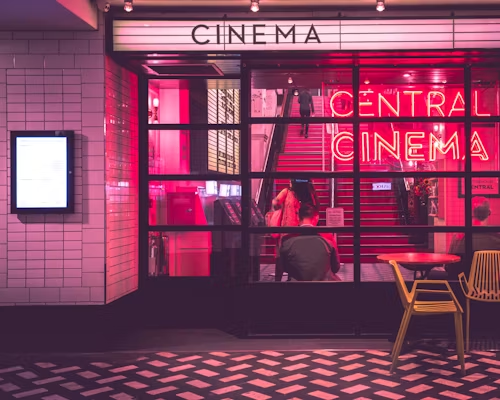
Movie theater with neon sigh reading “Cinema”
(Image courtesy of Myke Simon via Unsplash)