Witnessing the Unthinkable in Iran

There is a Persian proverb that says, “Hearing is not the same as seeing.”
These days, I can no longer trust even my eyes.

On one side, I see the vast uprising of my people in Iran — the largest since the establishment of this inhuman regime. On the other, I see the rare and fragmented videos that manage to escape the media blackout: bodies piled at the Legal Medicine Organization. If I did not hear Persian voices or see Persian writing in these videos, I would refuse to believe this is Iran. My mind instinctively rejects them.

I was born three years after the 1979 revolution. Until the Green Movement of 2009 [a non-violent protest seeking democratization that spread throughout Iran] — when I was a student in Germany — I had only vaguely heard about the mass executions of political prisoners in the 1980s. I had never read about them. There was no accessible documentation, no social media, no independent platforms. At home, politics was never discussed; my family was entirely non-political.

In 2009, as I gradually began to understand what that revolution truly was, I was shocked. When I learned that young women — virgins — were raped before execution because their executioners believed virgins would otherwise go to heaven, I was rendered speechless. Even today, my mind resists fully processing this. Rape is a major crime under Islamic law, punishable by death. And yet it was systematically committed by those who claimed moral and religious authority.

It was then that I also began to realize that a compulsory hijab was not rooted in Islam. But I had been deeply indoctrinated: I genuinely believed that if I showed my hair, I would be punished in hell. It took three years of reading, research, and painful self-deconstruction — despite extremely limited access to information — before I accepted that the hijab is not mandated by Islam. I removed it and made a promise to myself: I would never wear it outside Iran.

I later returned to Iran after my PhD, and became a professor. Inside the country, I complied with the law. Outside Iran — at conferences and research visits — I never wore the hijab. I knew I was risking the career I had struggled so hard to build. But that was my dignity.

That is why, in 2022, when Mahsa Amini was killed for a few strands of hair, I resigned from my faculty position. I could not accept that a human being could be murdered because of hair.

From 2012 to 2022, before my exile following that resignation, I lived in Iran and witnessed the country’s steady collapse: the freefall of the national currency, exponential inflation, deepening poverty, and the visible anger and exhaustion of the people. Multiple uprisings occurred during those years. One in 2018, was crushed within days.

Then came November 2019 — the first time the regime shut down the internet nationwide for five days. I remember it vividly. I was waiting for a visa to attend a conference in Europe. The embassy called me — something they never do — because they could not email me. My visa was ready, but I could not book a flight. There was no internet. During those five days, more than 1,500 people were killed. That was when we learned that we could be killed in total silence.

In January 2020, Ukraine International Airlines Flight PS752 was shot down. For three days, the regime lied, calling it an accident. Again, my mind resisted the truth. One hundred and seventy-six innocent people — including an unborn child — were killed. It was the first time in history that a state killed its own citizens in its own airspace. I remember thinking: This will not be the last crime. This regime is capable of anything.

Then came COVID-19. Once again, Iranians died in silence. The Supreme Leader — today mockingly called MoushAli by the people (moush meaning mouse, after he hid for days during the June 2025 Iran–Israel war) — banned vaccines from the US and the UK, and insisted on domestic production. To this day, we do not know how many Iranians died because of that decision.

September 2022 marked the turning point of my life. I became the first faculty member to resign publicly. Threatened by the regime, I did not return to Iran from my scientific travels, and have remained in exile ever since. Given my activities over the past three years, I know that if I return one day, I will be executed.

Because I had studied this regime’s brutality closely — both historically and through lived experience —  I knew that the next uprising would be met with unimaginable violence. I feared how many lives would be taken. It took thirty-nine months for the next uprising to ignite. And still, I am unable to comprehend the scale of the brutality.

Since January 8, all communications — phones included — have been completely severed. We experienced similar blackouts during the June 2025 war. Once again, we had no news of our loved ones. Today, reports suggest that 12,000 people have been killed in just two days: on January 8 and 9. My mind rejects this number. I cannot even cry. Those who have lost someone understand this state: when you cannot accept the loss, grief does not yet take the form of tears. I cannot accept the death of humanity itself.

Today I saw a video of blood being washed from the streets while bodies lay piled nearby. Evidence erased in real time. I still cannot believe it  —  not because this regime is incapable of such crimes, but because the perpetrators speak Persian. They are part of my people. How did they become this evil, within a civilization thousands of years old? Are they children of Iran? Are they human? How do they kill, go home, sleep, and return the next day to do it again?

Will this nightmare end? My mind feels as if it is collapsing.

For forty months in exile, my mother was the one person I spoke to about all this grief. January 7 was the last time I heard her voice. I already missed her smell, her hug, her kiss. Now I miss her voice too.

This is what it means to stand against a dictator who is still in power — whose machine gun is still firing.

How long this will last, I do not know.
No one knows.
Thoreau Plays Stardew Valley

“A Cabin, a Small Town, and Pixelated Turnips: Stardew Valley is for Transcendentalists” 

By Henry David Thoreau 

I could hardly believe the glowing device the time traveler had handed me. He claimed to be from Massachusetts – my Massachusetts – yet from a time far beyond my own. He casually spoke of an “Institute of Technology,” as if Concord’s humble schools had turned into towering structures while I was away. When the tablet lit up, its moving images startled me. It felt like I was holding a living dream, a lantern slide brought to life by some spirit unknown to Nature. The man explained that these images were made of “pixels,” tiny dots of light. I wondered if Seurat, the French master of pointillism, had secretly guided the creators of this incredible device.

The “video game,” as he called it, started with a scene as bleak as any I have encountered in literature. A dying old man, gentle and tired, comforts the main character in a memory so far away it could be a whispered prayer. His words resonated with the sad truth I once wrote: “The mass of men lead lives of quiet desperation.” But the old man on the screen did not offer despair; he offered a solution. “There will come a day,” he says, “when you feel crushed by the burden of modern life… and your bright spirit will dim before growing emptiness. When that happens, my dear, you will be ready for this gift.”

That gift was, astonishingly, the deed to the main character’s grandfather’s farm. Not wealth, not status, nor the empty comforts of society, but land. Soil. A place to escape the noise of the world and remember what it feels like to live.

And so, with just a click of a button, I was taken from the dullness of the modern office to a forgotten farm in a place they call “Stardew Valley.” To my surprise, it was the closest thing to Walden Pond that this new century seems capable of imagining.

The game began in a workplace so stifling and saturnine that I almost thought it was a mockery made in my honor. A dull office, rows of gray cubicles, lives spent tied to screens akin to the one I now held firmly in my hands – if ever there was a reason to escape society’s machine, it is this. So when the main character inherited a farm from a grandfather who clearly understood freedom, the escape feels not just plausible, but necessary. Had I known I could get a cabin and several acres just by opening a letter, I might have avoided the trouble of sawing wood at Walden.

When I arrived, the farm was a small wilderness: overgrown, messy, scattered with rocks, logs, and thorny bushes. How familiar it feels. Nature offers no refined welcome; she provides work. I cleared my own 2.5-acre bean field at Walden with sheer determination and a hoe, and so too must the player reclaim the land here in the valley. Digital or otherwise, it teaches the same lesson: a person should not waste their time elsewhere when they can earn a living through hard work.

Indeed, although presented in glowing pixels, the land follows natural rhythms. Mornings and nights return with quiet grace, accompanied by the symphony of seasons; storms pass through the sky, and each epoch brings its own character. I found myself basking in the soft pink blossoms of spring, the golden stillness of fall, the stark calm of winter. Even here, in an imagined countryside, what I once wrote at Walden holds true:  

“Live in each season as it passes; breathe the air, drink the drink, taste the fruit, and resign yourself to the influence of each.”

It is odd – and perhaps significant – that a digital valley can gently remind modern people of this truth more effectively than the world outside their windows.

You begin in this place with little: a fragile cabin, a patch of untilled soil, and a few seeds. Such simplicity is not deprivation. Rather, a single well-kempt room is worth more than a mansion filled with frivolous belongings. In Stardew Valley, you learn – perhaps for the first time – that having only what you need is a fortifying kind of wealth.

And even I, revering intentional bouts of solitude, do not aim to completely escape society. Pelican Town offers companionship in various forms: the anxious and pretentious shopkeep; the fisherman who enjoys silence; the young woman who sees beauty as purpose; the weary soul who drowns his sorrow at the saloon while pining for such purpose. Their problems are humble and real. Visiting them reminds players that community, in its raw humanity, shapes us just as much as our time alone.

What I admire most within Stardew Valley is its unwavering refusal to be rushed. The outside world is frantic, frenetic, demanding speed while offering distraction. Here, crops grow at their own pace. Animals require daily care. Friendships cannot be hurried – not even with the offering of fish and other boons. The game is not a race but blossoms as a garden would. It does not rush; it breathes.

And, perhaps, that is its quiet wonder: this small, insignificant diversion asks the very questions I once pondered while Nature kept me company. What is truly essential? What is a deliberate life that aligns with the fundamentals of reality, where my soul should find harmony with Her? 

If you seek to focus only on the essential facts of life, Stardew Valley is a worthwhile experiment. Go, I say, to plant your turnips. Let the seasons change you just as they transform the verdure in cyclical art, year to year, without fail. Let the temporal world fade away until only what matters remains.

You may find, as I once did, that simplicity – even that which is built from pixels, little lights – is a profound form of freedom.

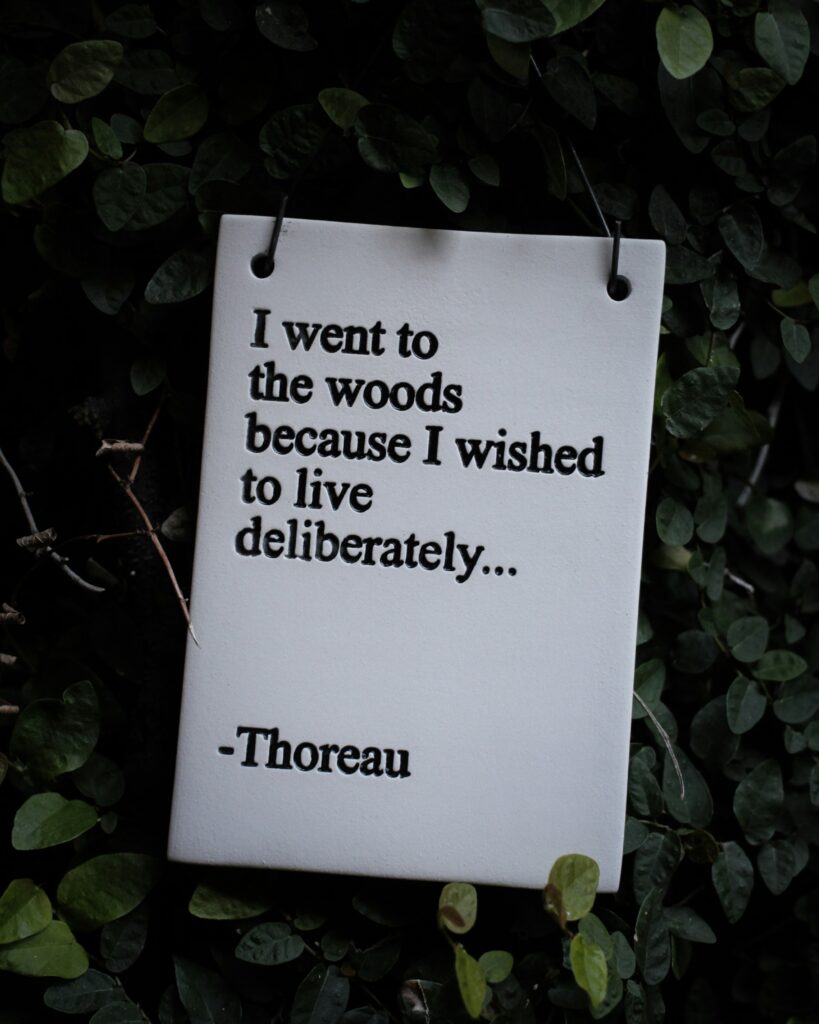
A white garden sign, among green leaves, has a famous Thoreau quote written in black text that reads, “I went to the woods because I wished to live deliberately…”
(Image courtesy of Hester Qian via Unsplash)

Flowering

Flowering
Go ahead and flower dear
Let your colors shine
So slowly the leaf unfurls
Yet, so quickly you die.

But the joy is in the rising
Inching upward in the sun
Sipping from clear waters
Till all your growth is done.

Glory in the flowering
Because soon petals fall
And no one will remember
But you grew; you were tall!

Writing, like all art, is a dance between our conscious and unconscious minds — a tapestry woven out of what we know (about ourselves, our world, and eternity) and also out of what we do not. There is divinity in art, a magic both science and rational thought can’t quite account for.

All good and beautiful books write themselves, with only partial involvement from the author. I can see the man under the marble — only, the marble is my own mind. I must free him by writing, erasing, editing, throwing out, and starting anew, till the inside is liberated and visible to the outside: to the world, but also to myself.

For the last few years, my New Year’s resolution has been the same: Finish the book. I haven’t.

This year, my resolution is different: Make progress on the book.

Keep chipping away at the marble, breaking it down and piecing it back together, as many times as it takes. Live and let the book grow up around me, through me, in me.

To explain fully, I have to take you back to 2021, when I still believed in the usefulness of what turned out to be my two greatest enemies: plot and planning.

My senior year of college, I was revising, for credit, the first draft of a novel I had written during my senior year of high school (ie, I was reading it with a sense of horror and rewriting it). The idea for the novel had actually come to me many years before, in middle school, during a graveyard clean up. Elm Ridge Cemetery in Grass Valley, California: I was struck not just by the peacefulness of the place, but also by the weight of its history — all of those lives, spanning hundreds of years, reduced to a few, often illegible, verses carved into stone.

I envied the people who lived next to the cemetery — their very backyard peppered with headstones. That is where I got my idea for my in-progress novel, Spinnerets. Spinnerets chronicles the childhood and adolescence of a little girl named Jean, who grows up right next to Elm Ridge Cemetery and spends most of her time playing with spiders.

But to return to 2021, I was trying to revise my first draft and making the exact same mistakes I had made in my first go-around at eighteen. Meticulously planning the book chapter by chapter (because isn’t that what you are supposed to do?), I brutalized my characters to stay on schedule, twisting their limbs into horrific contortions.

When I received full credit for my college course and reread my manuscript, I knew the second attempt was just as bad as the first. In an uncharacteristic moment of abandon — I am very vain and protective over everything I write and tend to save it, no matter how bad — I deleted the manuscript. I opened a new word document and wrote down the first words that came into my head. Those sentences and the scene that grew up around it became the opening vignette of Spinnerets.

I should note that I was undergoing a transformation at this time, which I owe to the little girl I was taking care of in the afternoons, one Sonali Holbrooke. (She will undoubtedly be a great novelist herself one day. Let it be known that I said it first).

We were sitting at the little table in her room, drawing pictures. I am awful at drawing. I am not lying to you when I say I cannot draw a tolerable stick figure, and I hate things I’m not good at. But on that day, I had a very simple thought that struck me as profound: Sonali and I weren’t drawing so we could produce a product others would find valuable. We were drawing for fun. The end result didn’t matter. The process did.

I thought back to the joy I experienced as a scribbling child, when I wrote for the love of writing itself, and the dread it engendered in me now. Writing hadn’t been about proving myself back then, didn’t have to be perfect. What if I could get that back, I thought. What if I could write like Sonali drew?

So I reached into my mind to recall the writing process of my childhood and found it to be aimless and spontaneous, having everything to do with daydreams and fantasy. I would picture characters, put them in a situation, and allow them to talk to one another, their conversations revealing who they were and what they meant to one another. With no plot or goal in sight, just a desire to let my imagination come to life, I let them speak for themselves.

What I started that day in 2021, I’ve held to. Spinnerets has no preconceived plot or direction. I have composed the bulk of it by sitting down at my great grandmother’s typewriter (which cannot backspace, an important part of my process) and writing whatever comes into my head.

And amazingly, vignette has built on vignette, fashioning plot where there was none, just as a plant grows up from the ground, very quietly and mysteriously. But every year, around New Years, I have held to the vestige of my former perfectionism — my need to control the narrative and produce something “worthwhile.”

“This year, I’ll finish it,” I’ve always said, over and over. I am only now realizing that, in light of my creative trajectory, such rigidity is ridiculous.

Spinnerets isn’t a structure I am building: it is a vine, growing from the soil inside of me, that I am tending. I cannot force its maturation any more than I can force the rain to fall.

In the years I have spent with my book, something beautiful has happened: we have inched upward and outward together, our existences helplessly intertwined and entangled. Did I see a water snake, swimming among the waters of the Yuba River? Yes, and Jean saw one, too — and that experience, grafted into the book, bloomed into a central motif, shaping both her life and mine.

I am writing Spinnerets as life is writing me.

So, this year, in 2026, I am vowing to let go of deadlines. My new resolution is this — I will continue on the path I set out on five years ago, but without hurrying myself, without time constraints. I will live, and I will write for the joy of it.

May my book sprout from that joy. I wait eagerly to see it flower.

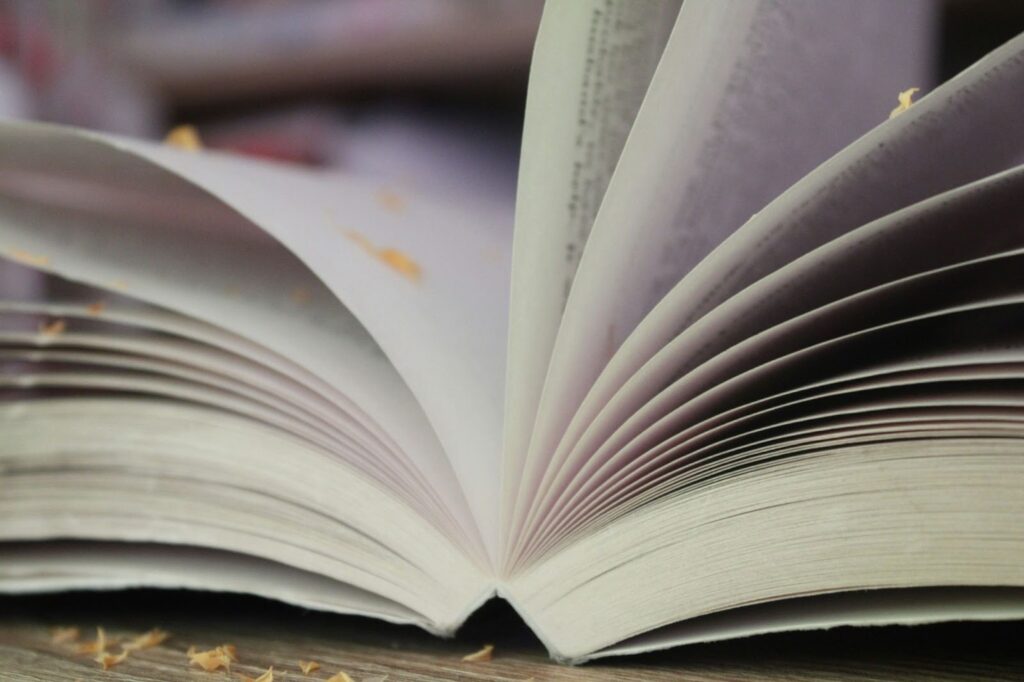
Image of an open book with yellow petals sprinkled over it.
Image courtesy of Pho Be on Unsplash

Counting the Days Until Freedom in Iran

These days, with the eyes of the world on widespread protests in Iran, my mind returns to September 2022. 

I left Iran just three weeks before the killing of Mahsa Amini, intending to spend three months abroad on a scientific visit. Now, more than three years later, I have yet to return.

My grief following Amini’s brutal murder while in state custody was so deep that I know with certainty that had I been in Iran, I would have been in the streets. Shouting for freedom. For dignity. For humanity. Things that had been systematically stripped away under a brutal regime for decades. But I was far away. And so, one week later, I resigned publicly from my academic position. It was the only way I could stand with my people.

At that time, we did not call it a revolution. We did not even call it “Woman, Life, Freedom”. This was the name given to the uprising later on, in tribute to a Kurdish slogan chanted at the funeral of Mahsa Amini, who was of Kurdish origin. The rebellion unfolded gradually. But in truth, it was a revolution for the most basic rights of women.

By “basic,” I mean the right to choose not to cover our hair.

Not even the right to dress freely, because even today, forty months later, women in Iran cannot walk in the streets wearing a T-shirt, short trousers, or a skirt. Access to school, university, work, and public services is still under hijab law. So whatever you hear about “hijab freedom” in Iran is a lie.

Iranian girls and women still risk their education and their jobs for appearing without a hijab in public. Their “lifestyle violations” are recorded in official files and used against them in evaluations. If this regime survives, these records will haunt them for life.

And it is not just a hijab.

Under the Islamic regime, women are forbidden to sing.

Every Iranian woman singer you know lives in exile, not because she committed a crime, but because she wanted to sing. Even sharing a singing video on your social media as a female singer inside Iran can lead to arrest. For forty-seven years, not a single female singing voice (Iranian or non-Iranian) has been broadcast on state television or radio. 

Do not ask me for the reason. As a scientist, I cannot explain what I cannot understand.

I share something in common with those women singers. I, too, have been living in exile since September 2022. My resignation was seen as a threat to the regime. My family was threatened. For my safety, I was forced not to return home.

In the past forty months, I have moved across four countries. Not by choice, but because of visa restrictions, sanctions, and the impossibility of finding stable work as an Iranian in exile.

And now, once again, my country is on fire. Waves of protests have erupted across dozens of cities in Iran, with citizens demanding freedom, equality, and an end to the regime’s repressive policies. The demonstrations began on December 28, 2025, in Tehran’s Grand Bazaar, sparked by the collapse of the national currency. Although many think economic woes drive these protests, they are also about women’s rights and general freedom

And since then, my heart has lived in my throat. In 2022, even from afar, I knew how to act. Today, I do not. All I can do is write; write as someone in exile while a revolution unfolds at home.

A person who wakes up, eight and a half hours away, to videos of people being beaten and shot with live ammunition.

And who goes to sleep in tears, wondering how the arrested survived the night, how the families of the murdered are enduring their loss.

My friends in Iran and in the diaspora say, “This is the end.”

I hope it is.

But even if it is not — (and may the universe never hear this) — I am proud. Proud that Iranian women rose in 2022 and fought for their rights. No future regime will ever be able to say it granted these rights to women. Iranian women already got their rights.

Equality is one of the core demands of this uprising/movement/revolution, whatever name history gives it. We still have a long way to go. The price has been unbearably high. But we learned something irreversible: In a society where women and men are not equal, there is no freedom.

We learned to fight for our rights because, from now on, if any regime, system, law, or ideology tries to take them away, we will stand and resist.

In 1979, only a few women resisted. Many rights — such as access to education, the ability to work, freedom of travel, the ability to obtain a divorce, and political participation — had been granted from above during modernization, not won through struggle. Society was not ready. So when the Islamic regime took them away, too many accepted it since they were not even aware of them.

This time it is different.

We paid the price. And because of that, we will never forget.

So keep your eyes on Iran. What you are witnessing is a revolution against one of the most brutal religious totalitarian regimes in history. You may think I am exaggerating. You are only seeing the tip of the iceberg.

Even Iranians themselves will ask how they endured this regime for so long.

Books will be written. Films will be made. But none will truly convey the suffering, just as we can never fully feel the suffering of those who lived through World War II. That is why history repeats itself.

But one thing I know with certainty: Religion will never again rule Iran. And Islam will not be the name of the country. What is now the Islamic Republic of Iran will soon just be Iran.

I count the days until I return home, along with millions of Iranians in exile.

The Persian poet, Houshang Ebtehaj, who himself died in exile, once wrote:

می‌بینم
آن شکفتنِ شادی را
پروازِ بلندِ آدمیزادی را
آن جشنِ بزرگِ روزِ آزادی را

I see
the blossoming of joy,
the high flight of humanity,
the great celebration of the day of freedom.

The Answer Is No

I was never a big New Year’s resolution kind of guy. I’m not sure if this is because I’m not very superstitious, if I’m just non-conforming, or if I’m simply able to stick to a goal. I’m not trying to toot my own horn and say I am the most disciplined person in existence, but typically if I really want to do something, I don’t resolve to, I just do it. 

When I decided to go back to college I didn’t deliberate for months on end if it would be worth it. I barely did any research into the path this decision would take me on. I made a decision, and the next day began filling out my application forms (I was lucky that it was the enrollment period). 

Not making New Year’s resolutions was working for me. Until it wasn’t. I started noticing a feeling of being taken advantage of too often, both at work and in my personal life. A few years ago was the first time I made a real effort at a New Year’s resolution. My resolution was to say no. 

Just say no

I might be more of a people-pleaser than I’d like to admit, since this resolution took some practice. I didn’t think it would be hard to use at a job I genuinely dislike. But I was surprised at the awkward feelings of guilt that came over me when I would say no. 

Things I said turned down started with covering extra receptionist shifts (I’m not a receptionist, I’m a trainer). I would end up working seven days per week with no overtime when I did this. I stopped handling inventory management, which included ordering, tracking, and stocking the supplies for no extra pay. I realized that doing these tasks would get me nowhere. I was denied raises and promotions without reasonable explanations with the expectation I would keep handling extra duties with nothing but a smile on my face (who wouldn’t love an employee to take complete advantage of?). Looking back, it seems ridiculous, since my training numbers were good enough to keep me employed on their own.

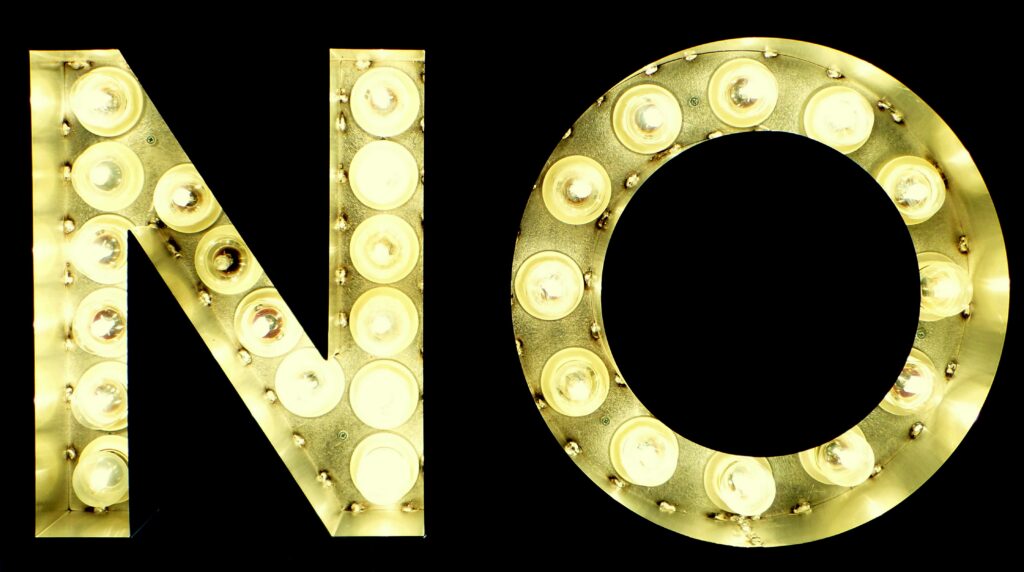
 A big sign that reads “NO,” composed of multiple lightbulbs against a black background.
(Image courtesy of Morgan Bryan via Unsplash)

With all things considered, I still felt guilty when I began this resolution. I realized how hard I found it to put myself first. Now that my answer is no, work is less stressful, and I am no longer bothered to pull extra weight that shouldn’t be my problem in the first place. I began drawing hard boundaries on what I found acceptable. It’s almost as if I started being respected. While saying no at work may have seemed difficult, saying no in my personal life would make it seem like a cakewalk.

Saying no to family can be rough. They’re family after all. But sometimes they overstep. 

Just say no to rugs

Don’t get me wrong, if my family needs help with something, I’m there. It’s when there are random jobs every time I go over there to work out, which in the past has been several times per week, that I draw the line. 

No one needs a rug moved every week, and the chair will be fine in its current spot for a couple more days. Saying no to things like this can be weird. They seem simple at first but when they become daily requests, it is more time out of my day, and when there is a commute to consider, time is everything. I prefer to know about these jobs ahead of time so I can plan, and mentally prepare accordingly. Everyone seems to have gotten used to me saying no to the smaller things. It’s nice being able to drop in for a workout and say hello without it being accompanied by a chore. 

My favorite thing

Saying no has gotten easier. It’s my favorite word. Every year I re-up the resolution by trying to set even firmer boundaries. Do I fall back into old people-pleasing habits sometimes? Of course. But I do my best to stay conscious of what I’ve set out to do. Saying no hasn’t negatively affected my life yet, and it is something I plan on continuing. 

Until there is no one left to say no to.

Dusk on Fall

Dusk on Fall
Drapes the sky in ember hush;
Wandering winds whisper secrets to the cooling earth.
Fruits, flowers, and leaves — all ready to fall with the fall,
As cider’s sweet breath and pumpkin pie dreams
Float like gold in the gathering dusk.

Shorts and skirts set to hibernate;
Fleece and wool take their place,
Welcoming the holidays — oh, what fun!
Halloween, Thanksgiving, Christmas, and New Year.
Letting go the warmth, embracing the chill,
Weaving comfort with family and friends.

Beanies cover my greying hair,
Jackets hide the little pot belly.
Only my beaming face remains —
The one the world can see now.
I love this part of the year —
No tissues to wipe my sweat,
No sunscreen, no tans,
Just me and my cozy cheer.

The sun sets early — no need for blinding curtains;
Keep them open.

Lying beneath the cozy comforter,
I gaze at the sky, the stars, and the moon.
Clouds moving slowly across the darkening horizon.

I whisper —
Welcome, winter.

Watch Your Step

“Gender works in part through these verbal exchanges where someone’s adherence with the rules or norms for people of their gender identity is called into question.” —Lee Airton, author of Gender: Your Guide. 

A game of hopscotch against the warm summer blacktop with your ballet flats at recess isn’t just fun; it’s an opportunity to join the other girls in an activity. 

Jump. Jump. From one square to the next, making sure to stay within the confines of each square.

Over time, you begin to play the game of avoiding cracks on the ground whenever you can, regardless if you’re playing hopscotch, regardless if you’re alone.

Every step is a landmine, a cautionary tale. It’s difficult to become faster in speed, without one foot stepping on a crack or tripping out of the carefully-laid squares. The rhythm of your feet tread swiftly as you hop, then step together, over and over.

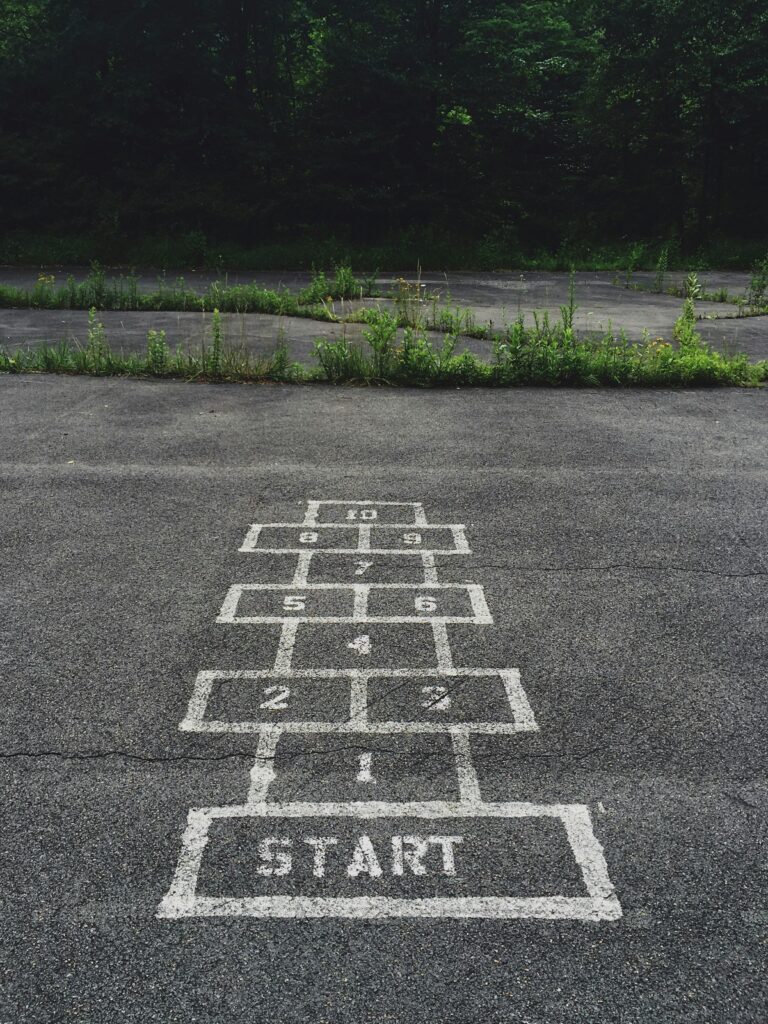
A numbered step routine through a game of hopscotch.
(Image courtesy of Jon Tyson on Unsplash.)

Your steps are deliberate, and you count the numbered blocks in your head.  …7, 8, 9, 10. It’s an expected pattern you must follow.

The fear is still there

As an adult, watching where you step remains relevant — hopscotch morphs into a deadly tightrope routine, a massive amount of expectations below that are ready to swallow you whole. In childhood, you’re carefree. Societal expectations have not yet been placed upon you, and you’re unaware of the gendered binary that might — if you’re like me — later engulf your sense of self.

For most young children, they’re slowly becoming familiar with the unspoken rules of society, and when they are, it’s often in the form of playground games. Questions are outlined in a manner that involves noticing who is included, and who is excluded. Who stands out, and who doesn’t? Do they stay in the confines of the constructed squares?

A pile of different colored buttons with gender symbols in black on them.
Image courtesy of Marek Studzinski on Unsplash.

You told yourself  — promised yourself — that you would come out by the end of this year. That the daily tightrope routine would finally end, and you could rest. But you still aren’t ready to explain the change in your appearance or why you wear a binder, share your pronouns or the name you wish to go by. In a world where diversity is considered “woke” and the message is broadcast on television as a scare tactic, you wonder when it will be the right time to come out. Figuring out when the timing is right makes the tightrope seem like it isn’t fully secured. You wish you could predict where the rope might snap, but that’s impossible.

It’s approaching the end of the year, the unspoken deadline that you set for yourself. The end of the rope is in sight. But is it safe to continue? And are you ready to step off? The tightrope sways in the wind as you make your journey from who you thought you were to who you’ve always been.

Coming out will be dangerous. Losing some people in your life will be inevitable, but it’s a risk you must take to exist as your true self. There will be many difficult conversations. This identity isn’t a choice; it’s not something you decided.  What you did decide is to embrace this part of you in private until you feel safe coming out into the open, stepping off of that tightrope. The only thing you’ve chosen is your happiness.

After you step off, if you step off, everything will be unknown, and out in the open. Your life, business, and future will become an open book, even if you don’t want it to be.

You consider your choices. Waiting longer isn’t an option. Living a double life will be difficult to uphold much longer. The world below your feet already looks like it could swallow you up at any minute. You have to do this on your own time, but you also have to do it before it consumes you.

Why do you push yourself when you know you might fall? You’ve lived in the dark of the closet before, marking the beginning of your tightrope journey. You know you can at least survive in that somber space. But for how long?

The Closet

The closet door opens and closes, like a swinging door on a windy day. You tell yourself it’s okay if a passerby notices its opening. They might comment on its interior or on you, but this is to be expected.

You choose your outfit in the safety of its dark confines, and then the closet shuts. It remains behind you, while in front of you is that tightrope you must walk daily. You practice your stride before beginning the journey, testing your balance to prevent falling. 

Testing is key in a realm where the rope could be ripped from underneath you at any time. It allows you to figure out how to save face. How to answer questions, and how to cover your truth when it seems dangerous to be honest. The cover is weak, thin like a fraying rope.

But you must protect your peace, and sometimes that means hiding the truth. Sometimes, that means turning back around on the tightrope and choosing the closet for that day.

You still don’t feel ready to come out to everyone by the end of this year, to finally cross the tightrope for good, but you’ve successfully told a few. That in itself is an accomplishment. 

Right now, that’s all that matters. You will conquer the tightrope someday. 

And that’s good enough.

I Wander, and Wish, That Love Would Last

I Wander, and Wish, That Love Would Last,
And nothing could sever you from me,
But this world hurts everyone willing
To reach out and touch it; a spindle,
Spear, or guttural glass of everclear.
I’ve drunk too much, again, and choose
To see things blur, you blur,
And I wish, and wonder, how broken
I got to be when we carved our names
In that tree on Sycamore Street;
I miss things, languish, ponder,
Pounce on every hello with strangers
Just to feel something other than the
Crystallized honey stuck fast to my
Memories; when the leaves bud,
I think of how the branches brace themselves
To lose, siphon, spread their fingers, only
To watch the nails fall off, green, gold,
Heavy as a heart.
You said you loved me as a leaf caught
In your hair,
I fished it out like a deep-sea vent,
Bubbles, burning, branding me to you,
And then you chose to leave me here–
The tree’s gone, too.

When Too Much Tidiness Brings Too Little Joy

I’ve always been a collector of chaos. Throughout my life, I tried to look decent and proper, yet I often found myself in a mess, unable to pinpoint how I got there. My apartment was a testament to all that. Stacks of books on the shelf and others scattered on the couch in the living room, not to mention clothes spilling from the wardrobe, showed how carelessly I handled my belongings. 

Got milk? Got soap?

It wasn’t hoarding, exactly. It was all just life, piling up. Cluttered home, uncluttered mind. One time, a friend visited and was shocked by how many unnecessary things I owned. All these books and clothes and shoes, even as I lacked some things he considered essential, like hand soap in the sink or milk in the fridge. I saw his point, and, as life piled ever higher, I decided enough was enough. As much as I treasured my belongings, I was becoming overwhelmed.I needed order, joy, and change. That’s when I dove into the world of Marie Kondo, the Japanese organizing consultant, author, and TV personality.

I added her bestselling book, The Life-Changing Magic of Tidying Up: The Japanese Art of Decluttering and Organizing, to my already absurdly overflowing collection. But this book struck a chord. Kondo’s philosophy deconstructed everything I thought I knew: keep only what sparks joy. Well, honestly, I’m that kind of person who gets attached to his belongings. But here, I’m reading from a tidying expert whose main advice is to get rid of the “unnecessary” stuff, the life piling up. It was really difficult to fully incorporate her ideas of tidying and rearranging my room, but if I wanted change, I had no option but to follow her instructions. After all, she convinced me that a messy room is a reflection of a messy mind, an idea that struck me with guilt. 

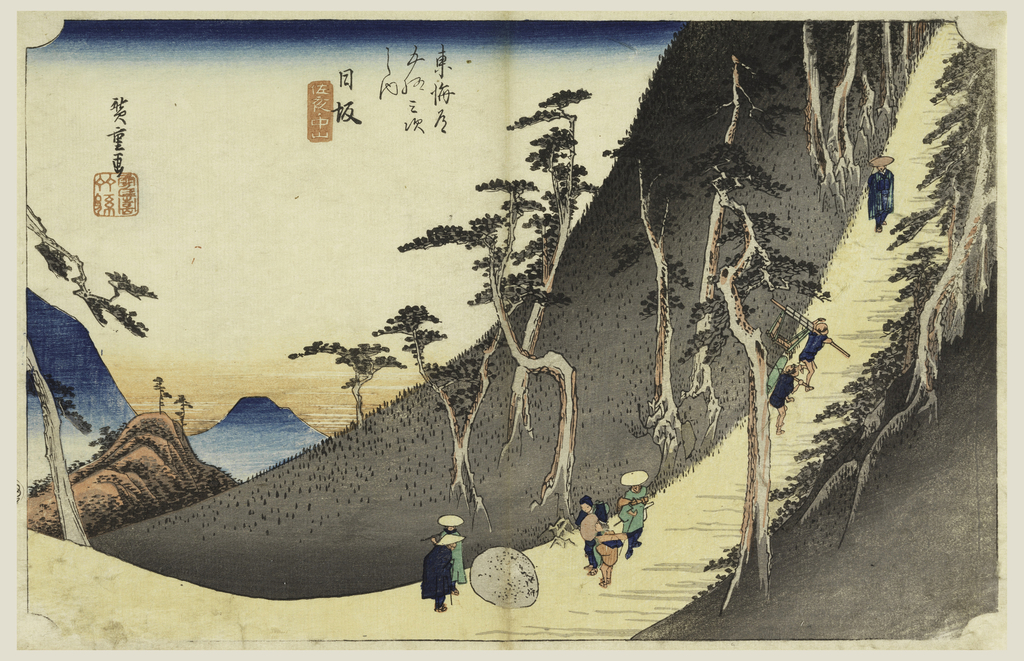
1834 Japanese woodblock print of climbing a mountain road by artist Ando Hiroshige
(Image courtesy of Cooper Hewitt Museum)

The cleaning

I envisioned my space transformed into a serene haven where every item was curated,, tastefully displayed, and dripping with meaning, like a museum exhibit. That weekend, I emptied my closets onto the living room floor. Clothes piled up like a mound of cotton. And as any good mountaineer will tell you, the most dangerous part of the climb is on the way down.

I held each piece, waiting for that elusive spark. Does my favorite designer hoodie bring me joy? What about the suit I wore on my first date with my girlfriend seven months ago? She’s now my ex-girlfriend. There is still a spot of mustard on the cuff. A faint flicker of yellow. Fear disguised as  joy. Now mostly guilt. It needs to be cleaned. Instead, it went out. Goodbye bitter suit. Hello uncluttered joy. I applied this strategy to everything in my house. If it brought me happiness, I kept it.

Afterward, I had a huge pile of clothes, books, wallpapers, and even utensils, all ready for donation.  I partly  felt like I betrayed my stuff, for instance my very lucky sports shoes that I used to win races back in high school had to go. I shed a tear actually. Surely, if they were to talk, they would have convinced me to keep them. But the process felt cathartic, like shedding old skin.  And when I finally let go? Magical. 

That feeling of blissful emptiness

I folded my remaining clothes into neat rectangles, standing them upright in drawers like little soldiers, per Kondo. Socks were paired lovingly, with no more orphans. I thanked each book I discarded, whispering Kondo’s ritual of gratitude. It felt silly at first, but soon it became calming. My space felt lighter, and the sunlight streaming through the open windows brightened the room.

For a while, it worked. The good lighting created a happy atmosphere, and I stopped worrying about cleaning utensils, as I only used the necessary ones. There is no sink full of dishes where there are no dishes. My laundry basket was immaculate. It stood empty,  complaining about a lack of dirty clothes. Living without was liberating at first. Less was more. 

I saved money. Time. Mental energy. No more deciding what to wear. Everything matches when it’s all you got. My apartment felt spacious, blissfully empty, even. I filled the quiet hours with mindfulness podcasts, ginger root tea, and self-gratifying laughter at the genius of my new adaptation. I thought happiness lay in subtraction.

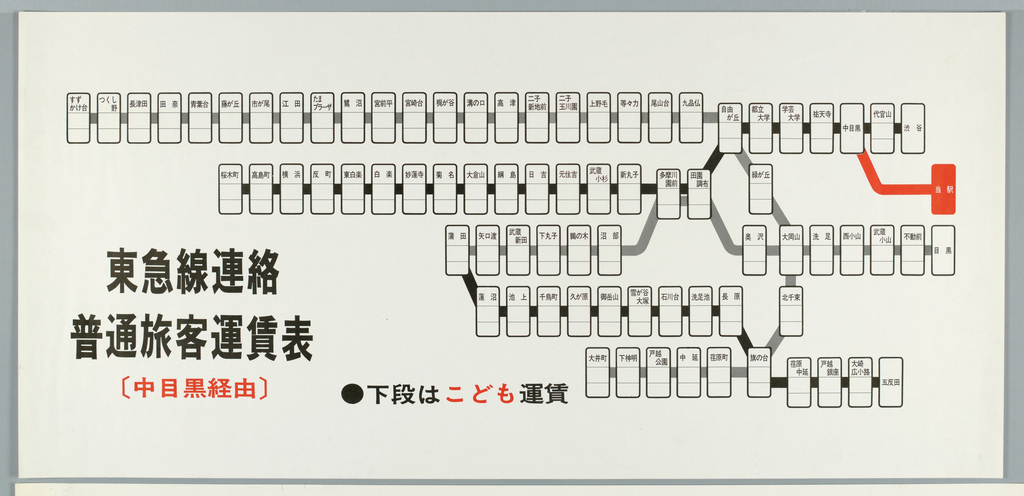
Tokyo subway diagram
(Image courtesy of Cooper Hewitt Museum)

Perhaps

But empty rooms have a way of becoming echo chambers. 

The joy sparked by my tidied items began to fade. Perhaps I had been wrong to think that getting rid of my stuff would make me happy. I realized those items had a purpose. While Kondo’s method felt right, it left my house feeling soulless. I missed the haphazardly arranged books, the overflowing laundry basket, and the sink filled with unwashed dishes. The walls seemed to stare back, blank and accusatory. Where were the photos of friends and the postcards from my travels? 

Minimalism extracts a dear price. It takes away the clutter, but you also lose your soul. Your unique identity. An empty space is a cold universe. Damn that Marie Kondo. She took away a big part of me. I began to crave color, texture, and abundance. Life!  So I decided to bring back wallpapers, velvet cushions, and different textiles.

Joy returned! But so did the feeling of being overwhelmed. Dusting became an all-day task; finding anything meant rearranging everything. The abundance that once thrilled now suffocated. I would alternate between elation and exhaustion. 

One night, though, while watching documentaries under my blanket, I finally saw the light. Marie Kondo, minimalism, maximalism — they were just concepts imposed on my life like a weight. They sparked temporary joy but missed the essence: my home should reflect me, not a trend. I needed to find my own way, blending different elements into something genuine.

Lazy Sundays and stray socks

I started small, viewing my space with fresh eyes. I kept Kondo’s joy-sparking ritual but relaxed the strictness. Some of my greatest messes brought me the most joy, I discovered. I kept clothes unfolded and wrinkled in baskets — practical for my lazy Sundays. At the same time, Kondo’s minimalism taught me to appreciate negative space, so I cleared one wall entirely, allowing it to breathe like a blank canvas. Maximalism inspired me to create curated clusters: a bookshelf filled with beloved reads, surrounded by photographs and wallpapers that evoked real memories.

Friends noticed the change when they visited. “It’s so you!” one said. My apartment felt alive and loved, not overwhelming. Contentment settled in quietly. It wasn’t the jolt of joy from tidying or the thrill of new things. It was steady, like a heartbeat. I moved through my space without tripping, searching, or second-guessing. I found happiness in imperfection: a stray sock under the couch and a stack of unread magazines promised future delights.

Looking back, those concepts were stepping stones. Marie Kondo taught me to discern between minimalism and maximalism. True contentment comes from blending the two — creating a space that evolves with me. Today, as I sip tea by the window, watching leaves swirl outside, I feel it: This is my sanctuary. Messy in parts. Minimal in others. And fully me. In that, joy abounds.

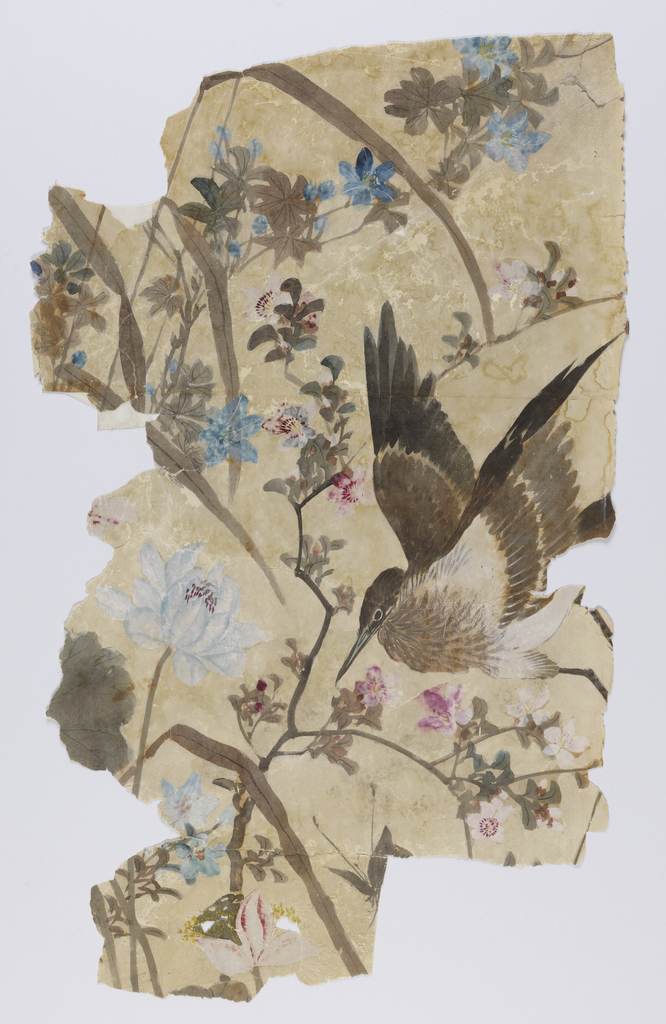
Scenic Bird and Flowers
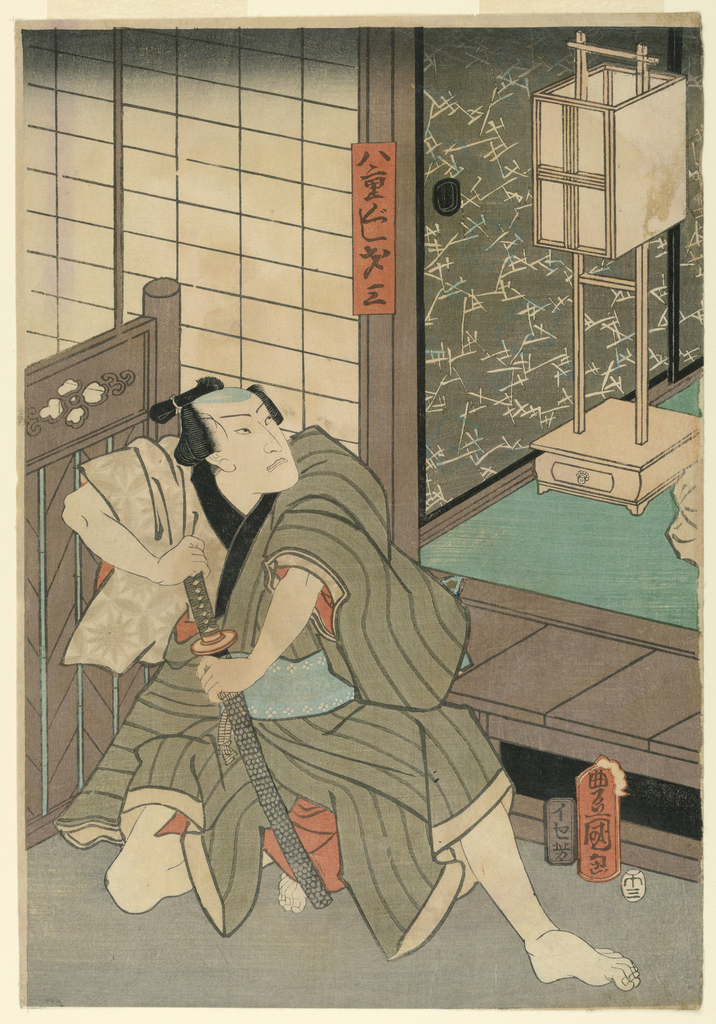
(Image courtesy of Cooper Hewitt Museum)

If This Year Went Too Fast, The Fault Is In The Planets

Every December, I am reminded once again that I come from a country where Christmas is not part of our cultural calendar. In Iran, we follow a solar calendar that begins in spring, not winter. Our New Year, Nowruz, arrives with blossoming flowers, warmer days, and the promise of renewal. It makes intuitive sense: the Earth wakes up, and so do we.

So even after all these years of living outside Iran, I still cannot quite get used to the idea of celebrating the start of a New Year in the coldest, darkest moment of winter. My body insists, “This cannot be the beginning!”

But ironically, when I lived in Iran, where I was not expected to care about Christmas, I was forced to care. Why?

Because the rest of the world shuts down.

Which means:

  • application deadlines have moved earlier 
  • research funders disappear for two weeks
  • collaborators vanish into holiday mode
  • offices send out-of-office replies

And as if that wasn’t enough, only two months later, another wave of deadlines arrived, right when Iranians were preparing for Nowruz.


So I lived in a double-deadline universe.

But then, as an astronomer, I realized something comforting:

This is all Earth’s fault.

And strangely…
Earth deserves some credit.

On Mercury: deadline panic, every 88 days

Imagine living on Mercury.
A full year is only 88 days long.

Which means:

four grant/tax cycles 

constant “end-of-year” reflections and resolutions

Honestly, Mercury sounds like a cosmic nightmare.

On Saturn: great view, terrible timing

Then there is Saturn; majestic, stunning, photogenic.
If I lived there, I would wake up every morning to an Instagram-worthy sky filled with golden rings.

But a Saturnian year is 29 Earth years. 

Which means:

waiting nearly three decades just to say, 

“Happy New Year! How have you been since… 1997?”

The rings might be beautiful,
but waiting 29 years for a holiday would test even the most patient among us.

On Earth: a perfectly imperfect compromise

And so, despite all my complaints that
the winter holidays that feel upside down,
the double sets of deadlines,
the confusion of trying to celebrate in one calendar while living in another,
I have to admit something.

Earth sits in exactly the right place

Close enough to the Sun to avoid freezing,
far enough to avoid burning,
tilted enough to give us seasons,
and spinning at just the right pace to make a year …

not too fast

not too slow

just right

So this Christmas…

Whether you feel the year has rushed past you or dragged on endlessly,
whether you celebrate Christmas or Nowruz or something entirely your own;

Just remember:

On a cosmic scale, Earth has given us the best possible calendar for both living and dreaming.

And enjoy the holidays, however and whenever they arrive for you.

And if you ever feel overwhelmed by deadlines, just be grateful you don’t live on Mercury.