In Brighter Tomorrow, we like to share stories of changemakers from all over the world. Here is one from the land down under.
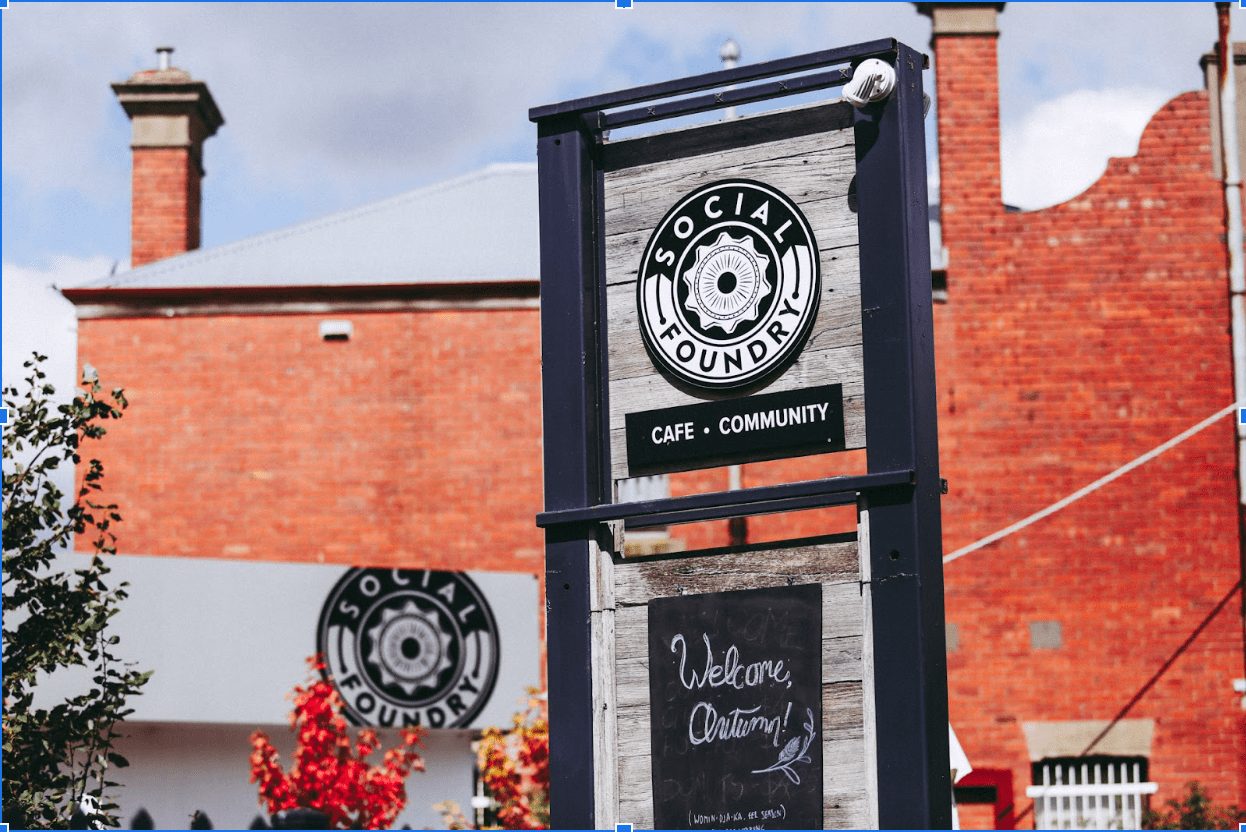
In the rural Australian town of Kyneton in the State of Victoria, the Social Foundry offers “standout food, coffee & service, while also delivering hands-on training for local youth facing barriers to employment.” I had the pleasure of interviewing one of their staff members, Sue-Lee, who works as the community life coordinator. She shared a couple of success stories that the Social Foundry helped create:
Ashley (a pseudonym) came to the not-for-profit after she finished high school and sought a job. She wasn’t sure what she wanted to do. Young school-leavers like her in the countryside have few opportunities to find work so she found help through an employment agency. One thing led to another and she ended up on the doorstep of the Social Foundry.
Ashley, as Sue-Lee said, “started off doing the first 10 weeks – it’s called the work skills program. So it’s a 10-week program once a week and we started her off in front-of-house doing customer service delivering drinks and food clearing tables and towards the end of her work, we got her to do a skills program with us. We started her off on the coffee machine. And she really enjoyed that and said in that shift that it’s the first time in her life that she’s found something that makes her happy. So we asked her if she wanted to continue the program with us and do another lot of 10 weeks.”
Sue-Lee then said it was decided for Ashley to continue on the coffee machine and get trained as a barista. At the end of the ten-week training, Ashley found a job in a local Kyneton café.
This concluded Ashley’s training and introduction to the world of work. As a result, the trainee’s mental and physical health improved. She said her parents have seen the change in her and her confidence has been built up after it was struck down by her declining mental health. About Ashley’s journey, Sue-Lee said, “That was one of our many good news stories from our program.”
(Image courtesy of The Social Foundry)
In a city like Melbourne, known for its coffee, hospitality is an easy entry into the workforce. It isn’t easy being in the hospitality sector as the market is saturated despite the ubiquity of cafés. Add a social enterprise model into a cafe and there is the additional challenge but Sue-Lee affirms that the reward of all the good news stories make it worthwhile.
At this point of the interview, Sue-Lee also recounted the story of Jane (a pseudonym) who, in August 2023, trained at the Social Foundry in her year 12. She was from a local high school and could not finish her studies because of her issues with anxiety and lack of connection with the school program. Her school counselor referred her to the Foundry and from there, she began to change. Starting with a short shift of four weeks, she enjoyed life at work rather than at school. She then moved on to the full ten-week training course, like Ashley did.
“[Jane] came to us last August and was in Year 12 at a local high school and couldn’t finish her year 12, just because she was feeling quite anxious and was not connecting with the school program. Her school counselor shared about our program and introduced her to us. And so we started her off with a short shift for four weeks. When she finished that she enjoyed it. So we asked if she wanted to follow up with the work skills program, which involves a full day shift once a week and she continued to do that.”
According to Sue-Lee, Jane loved the work skills program and became a trainee upon finishing it toward the end of 2023. While training, she also handed out her resume to get a job further down the line. She worked short shifts again at the Social Foundry as she prepared to enter the labor market because she felt working a full day was a bit much for her. After finishing the program with us, she got a job at a local café just around the corner after being employed briefly in a local supermarket where she stopped getting shifts. It was a victory for Jane after a period of feeling low.
(Image courtesy of Padraig Treanor via Unsplash)
Sue-Lee’s testimony about these two trainees shows that the Social Foundry’s approach is a winner for empowering local youth to engage with their community and the workforce. They say it takes a village to raise a child, and sometimes we forget that only a community can bring the young back from their detachment from society and work.
Social Foundry, like many not-for-profit organizations, tries not to rely on grants and instead aims to work toward a self-funding model through its café, and event space. Try visiting it if you plan on a trip to rural Australia. The mountains and landscape there are breathtaking and are easily accessible by train. Kyneton, an hour’s ride from Melbourne, is known for its great literary culture and is home to some of the best cafés in the world, staffed by expert baristas.
Congratulations to the Social Foundry of Kyneton, Victoria for its impactful community work in Australia. The project was honored with the Yuvoice Brighter Tomorrow award on August 4, 2024, for its efforts in connecting youth to their community and helping them to overcome barriers to employment. On behalf of our Brighter Tomorrow team, thank you for taking the time to be interviewed.
I bet you eagerly wanted to be an adult. Being an adult meant doing whatever you wanted to do. Why can’t you do the things adults do? Why is the answer always “no” whenever you ask for a cool toy, snack, or game? This question I often asked myself, and finally when I was six years old, I was able to come up with an answer.
It involved alcohol, peppermints, and command mints, as I heard them called.
***
Give me that beer
During the Christmas season of 1999, my parents threw a big party at our place. Many adults and kids showed up. When it was time to eat and drink, I noticed something that would bother me. My parents would serve adults beer and kids sodas. As a child, this is what I observed at all our parties. Finally, I had enough and decided that I would also drink beer with the adults.
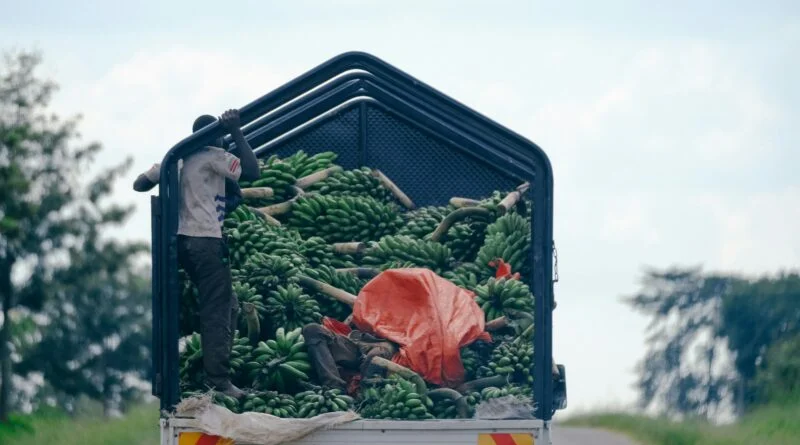
(Image courtesy of Daniel Kandie via Unsplash)
This commandment continued at all our parties we threw as the months and years passed.
Finally, I had enough and decided that I would also drink beer with the adults. Of course, I knew my parents wouldn’t allow it, so I needed to do it without them noticing. I hatched a plan.
Once another event gathered everyone and my parents went into the kitchen, I seized my chance. I approached a man drinking beer and asked him for a sip. I couldn’t believe it, he agreed.
I regretted it almost immediately. The beer was so bitter that I ran out of the living room and locked myself in the room; I think I may have cried, too.
Lessons from the beer
For kids:
Generally, adults are better equipped to handle tough issues. Maturity and life experience aside, adults have different preferences and tolerance from kids.
I. Do honor the differences of age and respect them.
Generally, adults are better equipped to handle tough issues. A good example is how they are able to willingly drink beer despite its bitterness. You would think they would stop at the first sip but yet they keep going.
I took one sip myself and couldn’t handle the taste at all.
II. Do not take the name adult in vain by rushing to be just like adults, even with something simple like alcohol.
You can’t handle the tough things that adults do in the first place. Your brains just aren’t developed enough to shoulder the hardships of life any more than a foal is developed enough to carry a human rider. Did you notice you don’t usually work, pay taxes, or drive?
For adults:
Can you imagine what would have happened if I drank a bottle instead of taking only a sip? It wouldn’t have taken long for me at all to become inebriated, considering my small size and that I was underweight. My parents would have punished me either by scolding me or … the belt.
III. Do not allow kids to consume beer, for reasons besides its bitter taste.
It could have even affected my future as well if my parents weren’t strict, and ignored me instead.
IV. Do not enable kids in bad habits.
If I ignored the taste in my desperation to be like the adults, I could develop an addiction at that age and would constantly do whatever I could to get a beer.
***
Give me those sweets
Drinking wasn’t the only adult thing I wanted to do when I was a child.
(Image courtesy of Eric Prouzet via Unsplash)
I wanted to be a shopkeeper for one reason only: the sweets. As a kid, I was always fascinated by how those workers could be surrounded by so many sweets and not eat them. At the time, I didn’t realize that the reason was that shopkeepers needed to make money by selling their sweets, not eating their profits.
Since I was excited about this career path, I told my mother that I wanted to be a shopkeeper when I grew up. Mind you, I previously told her I wanted to be a lecturer. Understandably, she was confused and irritated. Why would I want to be a shopkeeper anyway? She didn’t ask me in words.
V. Do honor the shopkeeper and all career choices.
Of course, there is nothing wrong with being a shopkeeper, considering we need their services. However, my mother thought that this dream was not allowing me to realize my full potential. I met this reaction with frustration. Why couldn’t she accept that I wanted to be a shopkeeper?
However, as an adult, I have since realized I don’t want to run a shop due to how challenging the role is. It was not as simple as it appeared to me in the past. Shopkeepers must have strong inventory management skills to strike a balance between overstocking or understocking their shelves, controlling expenses, and monitoring cash flow. A huge part of their job is customer service. Their stock is dependent on their customers and supply and demand, not just candy they can snack on themselves. I still wonder.
Lessons from the sweets
For adults:
Sometimes kids can be shallow as they simply don’t know any better. When asking them what they want to be when they grow up, listen carefully.
VI. Do not kill their imagination. Be sure to ask about their preferred career path in easy terms of things they enjoy doing and what could help make them a good living. Typically, kids don’t understand the challenges that are prevalent in that job and instead focus only on the advantages.
Imposing a career on your child, it is a mistake to say, “You want to be a shopkeeper? Why can’t you be a doctor instead?” By framing it this way, you are already pressuring your child down a specific career path, a path they may have no interest in. Instead, find out why your child loves the career they want to pursue.
VII. Do explain exactly what chores that job actually does.
If their reasons seem shallow or ridiculous, work to redirect their dreams.
For kids:
At the end of the day, growing up is inevitable. You might want to rush into adulthood because it appears fun, but adulthood comes also with many expenses and responsibilities.
VIII. Do, as a kid, keep the privilege of not having to think about paying for anything. Overall, you may be desperate to grow up.
Right now, I struggle to pay rent every month.
***
This is now a single pic:
(Image courtesy of Anna Shvets via Pexels)
Give me the car keys
IX. Do describe the challenges of adulthood along with all the advantages of childhood.
However, also be careful to convey life in a way that doesn’t demonize adulthood to the extent that discourages them from wanting to grow older at all.
X. Do let your child enjoy their youth without coveting adulthood. Teach them lessons big and small as they grow. Let them learn to handle adult responsibilities with confidence.
When none of the fireflies stayed alive for long enough in the jar, I stuffed it with Christmas lights and kept it on the table beside my bed. While I wrote those words inside my heart, like a love song, I realized I was still thinking of you.
Are you thinking of me as well?
They always say we think of the one who’s thinking about us. So, I wonder if we’re both counting sheep on our different beds together while I’m staring at my phone, thinking should I call you?
Do you remember the way I smiled at you? Did you read the message among all the jokes? I never knew how this would’ve felt, and believe me, I tried to fight it, but the joke always seemed to fall on me.
I’m terrified sometimes
Even though I have your love, I’m always thinking about what I’ll do to jinx it. What if your love and passion finally run out because you seem too good to be true?
Am I the only one missing you too?
When I lie in bed, I feel your fingertips move gently across my cheeks. I feel your breath upon my lips. I’m sure… If I close my eyes a little bit tighter and hold onto my breath for a little longer, I might feel your lips, fast and fleeting, upon my skin, like a breeze.
Time stops for a moment, and suddenly it feels like I’m in nirvana… but then, reality sets in. I open my eyes and I try desperately to hold onto that never-fading memory.
I wondered. Could our souls, possibly, connect? Perhaps, through this soulful connection, I’ll understand what you think of me. It is this feeling that makes me feel like I’m going insane.
My silver bullet?
It’s more than just a passing infatuation. I can’t imagine my world without you… even if the only place I can be close to you is in my dreams!
You’re like a drug… a drug that keeps me alive, almost like a poison.
Should I feel hopeful? Should I keep telling myself that maybe I am yours, too? I can draw you out with my eyes closed, and pick you out in a crowded room with similar faces. There is just something about you that I keep asking myself…
I know I’m not supposed to think about how I could feel your eyes meet mine for a split second. Probably because when I look deeply into your eyes, I feel your hands entwined tightly around mine like a glove. I shouldn’t look at that picture of us on the ceiling of my room. I want to hug my pillow, smelling like you, and that has your face on it. However, unlike any other fragrant perfume, yours stood out because it was natural.
So yes, maybe I want to indulge in my fantasies this one time. I ignore the mess across the floor that I glimpse from the corner of my eye. In that very moment, I imagined you next to me, with cards still stuck in my feet, or the scattered pills and drink that left a trail to the bathroom.
Meanwhile, a once perfectly arranged table is face down. The image of red liquid flowing from a glass of wine and pieces of paper, maybe love letters, across the floor, could all fit like a puzzle…
Within this pattern lie the necessary words to fulfill our promises — for both me and you — against sanity.
I was a first-year medical student when a stage 3 cancer patient gave me insight into the patient perspective. She described the heartless demeanor of the oncologist who first informed her she had cancer.
As she started crying, his response was: “I’m sorry, have I upset you?”
Clueless. Many people have the preconceived notion that the key to being a good physician is book smarts and experience, overshadowing the value of nurturing a trusting doctor-patient relationship. However, over the past decades, there have been countless studies indicating that the emotional connection is a key aspect of caring for a patient. Fostering this connection not only cultivates trust, it also leads more patients to staying with their treatment.
Now, modern medical schools have emphasized the importance of empathy and understanding, but is that enough?
Some feelings can be taught
Before medical school, I thought empathy and compassion were innate skills that could not be taught. However, years as a medical student proved otherwise; most if not all of my peers are trained to nurture empathy and humanity. That seems to indicate that the cancer patient’s Sorry oncologist started out with a sense of empathy and humanity, which unfortunately diminished throughout his career. This realization left a deep question: why do physicians experience a waning sense of empathy over the course of their working lives?
(Image courtesy of Jon Tyson via Unsplash)
While my first instinct was to blame this doctor, at some point I realized that as a physician, one is generally more exposed to death. Over the years, he might have eventually become so accustomed to death that he lost his sense of empathy — patience with the patient.
This tendency may have been exacerbated by high patient volume, which can lead to physicians viewing patients as just another case while disregarding the essential humanity.
Avoiding burnout, physicians take a holistic approach to patient care, to hear and understand the patient’s journey. Listening to the big picture enables us to be empathetic to the little things. Like the language they use.
Taking this approach would change the doctor-patient interaction from statements like “This is your diagnosis” or “Take this treatment” to a more heartfelt and compassionate conversation that ensures all patients receive the treatment they deserve, and expressed in a way they can absorb.
(Image courtesy of jppi via Morguefile)
Cultivating empathy
Physicians often focus intensely on gathering the most critical information to diagnose a patient’s condition, meticulously assembling the pieces of a complex puzzle. However, in their quest for accuracy, many become so engrossed in the details of the symptoms that they overlook other essential elements, such as the psychological aspects of patient care.
I’ve witnessed doctors firing off questions, barely allowing the patient a moment to breathe. “Are your parents alive?” quickly followed by “Did they have a similar condition?” without pausing to consider the emotional impact of their words. I, too, have been guilty of this efficiency. However, the patient’s expression brought me back to reality, and I have sincerely tried to prevent this pattern from recurring.
As I have sought ways to foster my feelings of empathy with patients, I frequently remembered my own primary care physician, who manages to keep the embers of his humanity burning brighter each year. He told me that the secret behind his everlasting kindness and empathy was continuous training. Although that may seem straightforward, too simple, it is truly an integral part of life and an axiom I have gone back to time and again. As Leonardo da Vinci said, “simplicity is the ultimate sophistication.”
I also try to remember a favorite expression of my mother’s, who had always told me to “Put yourself in others’ shoes.” This life philosophy makes it easier for me to connect emotionally to my patients by incorporating the patient’s unique perspective.
Staying sensitized
To preserve maximum empathy, I have committed to the following principles:
The Continuous Practice of Mindfulness and Reflection: Medicine is a lifelong journey, and reflecting on one’s actions allows the physician to improve with each patient interaction.
Empathy Through Understanding: I strive to place myself in others’ shoes, recognizing that each patient is on a unique journey. By doing so, I no longer see them merely as numbers or cases, but as individuals with their own stories.
Maintaining a Healthy Work-Life Balance: This balance is vital in preventing burnout, a significant desensitization factor. By taking care of myself, I can better care for others.
I hope these rules will help me maintain my sense of compassion while pursuing a deeper understanding of the potential impact of a condition on my patient’s life.
I pray that my three principles offset being overwhelmed by too many patients and desensitizing myself as a coping mechanism to their personal suffering.
It seems like a curse passed down the generations.
That said, I also struggled with substance abuse in my early adult life.
It has been a battle not to run to the bottle when I am feeling lonely or unsuccessful. I do not want my generational curse to overpower and ruin me. Hence, I fight for a better future every day.
A summer to remember
One summer, I was feeling extremely lonely and defeated. I was failing community college. I was having relationship drama. My mom was in Pennsylvania with my dad and my friends were nowhere in sight, so I turned to wine.
I was also on medication for my mental health. Mixing those with wine was a huge risk. There wasn’t a single day that summer when I was sober. As a result, I got a speeding ticket, three points on my license, and had to join a driving school.
For the first time, I felt completely alone, as if I did not have anyone to turn to. And I think that is why a lot of people drink. They drink not to feel or to numb their feelings of hurt and despair. Or, as in my grandma’s case, to forget, for a while, the mental trauma of the past.
My familial alcoholic traits
My dad’s family is all alcoholics. They drink in secret and judge people for drinking at a bar. It’s kind of a double standard mindset- like the saying, “People who live in glass houses shouldn’t throw stones.” My dad is not as alcoholic as his mom and siblings, but he has some narcissistic traits.
My grandfather died of an overdose at the age of forty. He was a heavy drinker and physically abusive. My grandparents were divorced by then, so my grandma raised five kids by herself. My grandma and dad found my grandfather’s dead body in his apartment, surrounded by empty beer cans and pill bottles.
My aunt’s husband walked in the same footsteps as my grandfather. He was only in his thirties when he died of an overdose. He was found in his car at his workplace. Fortunately, he was not driving so the only life lost was his.
My way of ending the toxicity
Some people drink to celebrate a good time but mostly, I think, people drink to numb the pain and avoid feeling certain emotions.
I know because I did the same. I drank to numb my childhood pain, to numb my feelings of loneliness and despair, and to forget about life for just a little while.
I stopped after that summer. The reason was, firstly, my mother had returned, and I was no longer alone. Secondly, being fully aware of the effects of addiction, I never gave in completely to the high, having learned from my grandfather and uncle.
I lived in the present moment, so I could change the outcome of my life. I wanted a better future for my kids, so I chose therapy instead of the bottle.
This is how I broke the generational curses that haunted my family.
Writer’s note: This story is a cocktail of my own lived experience, of observations that spanned my community outreach work in East Africa from 1988 until now. I have seen the socioeconomic, political, cultural and traditional injustices against girls, women, and vulnerable children evolve over decades, and I work to encourage positive social change. Here, I speak from the heart.
“It’s time to go to school, Lucy,” a loud voice shouted. It was her mother, Mrs. Odhiambo, who realized that her daughter would be late for school. “The sun has risen and you’re still snoring. You want to be a lazy girl?” she chided.
Lucy was a beautiful and active girl whose cheerfulness spread like a bush fire. She was the only girl in her family of six boys and the last born. She loved playing many games and sports like rope skipping, netball, hide and seek, and juggling. She enjoyed singing and dancing, too, with an unexplainable passion.
Her mother was so proud of her, she saw herself in Lucy. She was her mirror that always made a reflection of her childhood. “I must have been as charming, chocolate-skinned, and lively as my princess” she uncontrollably thought as she beamed with a warm smile on her face.
Her five sons, Henry (16), Peter (14), Mike (13), Arnold (11) and Jack (9) were tall, strong and energetic boys. Physically, they were simply the replica of Mr. Odhiambo, their father. They all loved to play football and athletics. The oldest two were on their school team, with Henry playing football and javelin, and Peter, their school champion, in the 1,500m race category.
Their unquenchable love for sports must have been both genetic and modeled: Mr. Odhiambo just like his father too, was a wrestling champion in his village. He had set the unbreakable record for being the youngest and undisputed champion at the tender age of 18.
(Image courtesy of Edu González via Unsplash)
He was nicknamed Lyech (the Elephant) for his skills and confidence in the wrestling game and how he provoked and mocked his opponents in an entertaining manner before throwing them disrespectfully to the bare ground as though gravity didn’t exist. His muscular 6’9” body made him indeed a terrifying nightmare for his opponents. He was known for taking no prisoners.
Mr. Odhiambo was a mechanic at a motor garage far from his home. He would often come back home once or twice a month to check on his family whenever he could. The rest of the days he would sleep at the garage with his workmates who couldn’t commute to and fro their homes daily. It was economically not viable for him to incur transport costs every day vis-a-vis his wages. His job was enough to provide the basic needs for his family and a meager savings for any eventuality.
He was highly respected by both his bosses and workmates at the garage for his calmness and patience with almost everyone, elephant again. He wouldn’t complain too much to his bosses like his mates did, nor would he be seen at the heart of any chaos or job-related indiscipline. He expressed passion for his job and always handled customers with a warm smile that was contagious. He was a born leader.
Mr. Odhiambo wanted to educate his children such that they wouldn’t have to use a lot of their muscles and might to earn a better life. His biggest wish was that his sons would become successful in life and his daughter, Lucy, get a good husband who would take good care of her. He didn’t have a dream bigger than that, or perhaps he wanted to be realistic rather than a dreamer. That was him, preserved, reserved and conservative.
He had been raised by a very strict father who was known for being a disciplinarian, which explains the way Mr. Odhiambo handles his own children. His father was a farmer but couldn’t give the best education to his 12 children due to financial difficulties.
Daughters
Many of grandfather’s daughters were married off to men before they became of consent age and, most likely, against their own will. What would they do anyway? It was a cultural practice for your paternal auntie to get you a man to marry you. A man to marry you once you attained the age range of 14 -18 years, and mostly when your father stopped paying for your school fees. This was the age bracket where most girls dropped out of school.
They were largely taken to school to grow and keep them a bit occupied under the guise of education. They would become mothers while they were still children; green and innocent, they would be vulnerable, and at the full mercy of their husbands.
This practice had been the norm for generations and perceived to be normal and acceptable by the Council of Elders who were the chief custodians of culture and tradition. Girls were simply for ‘breeding’ purposes, just like the cows and goats on the farms.
The Council was constituted of men, as women weren’t part of any forum to discuss issues that affected society, even for issues that had a direct effect on them. Women were perceived to have no voice and of too low social value to be involved in the decision making process. They were only told the outcomes of the meetings and given the decisions or rules to abide by without any room for questions or objections. Every outcome and decision was simply read-only for the women.
The consequences of any form of disobedience would be grave. Women were far less than the males in all aspects, and no woman complained about it; at least, not publicly. Women, too, regarded any act of complaining as a betrayal of culture, and proof of a poor upbringing by their parents. Which woman was ready and willing to risk salvation for her very own and oppressed sisters by belling the cat? I guess, not one of them at the time.
(Image courtesy of Keesha’s Kitchen via Unsplash)
Lucy’s mother was such a caring and loving mother. She wanted to see her family happy and healthy. She loved cooking delicious meals. Smoked fish with smashed groundnuts was her favorite dish, served with brownughali (millet mash) or sweet potatoes. The provocative aroma from her kitchen always made her neighbors uneasy as it would stimulate their salivary glands and arouse their appetite beyond a level they could tame.
Educating the girl-child
Her beauty and charismacombined for an adorable cocktail admired by many. She hadn’t gone far with education even though she was so bright and active at school. Her late father, Mr. Amaliki didn’t believe in educating the girl-child. He once stated to his friend Ojok, who had invited him to attend his daughter’s graduation ceremony, that, “You’ve wasted money on your daughter. Her husband would benefit from her education much more than your own family. What if she becomes a housewife after all the resources you’ve invested in her? You should have saved that money for your boys’ dowry or bought more farms.”
Mr. Ojok looked at him with a squint, wiped his mouth, and responded, “Times have changed my friend and you should know that no matter what happens, she will always remain my beloved daughter. She deserves all my love and support. She will be a mother, and without education, what sort of mother will she be? My motive is not to benefit from her. No, not at all. I also want to see my daughters just like my sons, be resourceful and productive in society. I would like them to be happy and free like a flying eagle in the deep blue skies. How will our communities grow and develop if we don’t educate our daughters? Think about it, Mr. Amaliki.”
Mrs. Odhiambo had this incurable pain of not attaining a secondary school certificate. She had stopped learning in primary school, and remembers the worst day in her life like it was yesterday. The day her father broke the bad news to her that she wouldn’t be progressing with her studies. He gave her no reason, he felt that he wasn’t accountable to his own child, especially his daughter. She cried, and her mother wept like she had lost a loved one. She hugged her daughter as they helplessly cried together. The warmth from each other comforted them both as they felt alone in their world of pain and despair.
The pain felt so fresh and deep that it made her bleed in her heart still. She kept wondering why her father wouldn’t see her worth as his daughter. Her inner voice never got weary of asking the most painful rhetoric questions about her father’s decision. Her level of self-esteem and confidence was immensely eroded, so she never wished to see Lucy ever go through a similar horrid experience. She vowed deep in her soul to give everything to protect her children to the last drop of her blood.
The silver award
(Image courtesy of Pineapple Supply Co. via Pexels)
One of the most beautiful stars during her school days was winning the mathematics competition in primary six. She went to the district to represent her school and won a silver award. She was welcomed jubilantly by her school and given many presents by their head teacher, mathematics teacher, and the female teachers. The girls were happier about the milestone achievement than the boys. It wasn’t a common thing for the girls to outperform boys, especially in mathematics and science subjects. She had broken the jinx.
Her mother carried her up as she ululated and sang loudly with joy praising her golden daughter, her beautiful Princess. She ordered her siblings to slaughter the red chicken and have it prepared for the silver medalist. Her mother cooked it like a five-star royal chef, while Lucy sat next to her embracing the love and enjoying all the attention and praises.
They would both happily stare at each other as she raised her hands up in the air to express her gratitude to the almighty God for blessing her with such a wonderful daughter. This was an immortal and an unforgettable moment in her life that would last for eternity. She saw her dream of becoming an engineer within reach. Her hopes and faith in herself had risen a record high.
Her achievement had inspired many other young girls and women. She had redefined the perception of the girl-child and women in the eyes of boys and men. Many parents started to believe that what their sons could do, their daughters could also do, if not better. Parents had raised their daughters in a way that made them always feel inferior and less confident. They weren’t allowed to be as free as their brothers. They would grow up being cared for and had to learn to live that way because it seemed to be the only option they had.
Her silver award, her victory, sparked a number of debates, and many acts of violence were reported. Men who felt that their long cultural definition of women and girls was facing extinction, with the new normal bravely knocking on their doors, turned physical in retaliation.
She may have been denied an opportunity to progress with her studies, but even with her primary school education, she managed to write boldly her name on the walls of history. This made her mother walk proudly and speak about her daughter in a way that glowed with contented glee.
Sons
Mrs. Odhiambo wanted to groom her sons to have respect for girls and women. One day, her son Arnold beat their neighbor’s daughter. She sat him down and told him why it was wrong for him to use violence to resolve disputes.
“It is a sign of weakness for a man to raise his hand on a woman.”
“Now, I want you to go and apologize to her and promise me that you will never ever do it again,” she scolded. She called the girl, and Arnold apologized to her, though he felt it was unusual for a boy to treat a girl the way his mother wanted. Arnold, just like his peers, grew up seeing their fathers beat up their mothers. They felt that as boys they are more important than their sisters. They believed that boys should be above girls, and that girls should never oppose them whether they are right or wrong.
This perception had sunk so deep into them that changing the status quo would be a war that would come at a high cost with many casualties. As a cat will not welcome the bell.
There’s no time I can imagine myself not thinking, Of the “New Girl” euphoria theme song not ringing. Every time I close my eyes I’m daydreaming, ‘Cause I would never be the person I was without Your human being.
Pinky promise, don’t disappear? I know I might be your biggest fear, I know I don’t make things kind of clear, But I would hate to admit, I shall be a lover to volunteer.
Funny how sometimes you just find things And I didn’t even need to find our invisible string, You steal my words from my mouth like I’d never exist, As soon as I fall into, my heart won’t resist.
The fact that you were born in the same constancy, same instancy, Makes me want to have my fingers crossed- for me to be one who is hurt, And you know that my eyes aren’t able to not flirt.
I sound a little bit exaggerated, It’s because you make me sound so overrated,
My laughs just float when I’m around you, Making me nervous to imagine- You were the person I was Looking through.
It sounds clingy, However, can you be my sweet nothing? My hands never lie, Like I would never be by your side, be aside.
I have always dreamed of visiting Dubai, the city of skyscrapers, luxury, and opportunity. I heard stories of how people from different countries and backgrounds found success and happiness in this cosmopolitan hub, and I found myself wanting to be one of them. That’s why, in November of 2016, I decided to take a bold step and travel to Dubai from Kenya, where I was living, in search of a job.
I was both excited and nervous as I boarded the plane. I had saved enough money to cover my expenses for two months, but I hoped to find a job sooner than that. I had a certificate in computer science and some experience in sales, marketing, and office administration. With these credentials, I thought I had a good chance of landing a decent job in Dubai’s booming economy.
The hunt
I arrived in Dubai on a sunny morning. No surprise there. As I took a taxi to my hotel, I was amazed by the sight of the city’s skyline, glittering with tall buildings and modern architecture. I truly felt like I had entered a different world. My room was a modest space, but perfectly clean and comfortable. After I checked in and unpacked my bags, I decided to rest for a while and then explore the city.
The next day, I woke up early and got ready for my job hunt. With my resume ready and several copies printed, I began my search, starting with a list of potential employers that I had researched online. I planned to visit their offices first and drop off my resume, ultimately hoping to get an interview. I also registered on some online job portals and applied for various positions that matched my qualifications and interests.
I spent the next few weeks in a cycle of repetition: visiting offices, applying online, and waiting for responses. I also tried to network with some people I met at the hotel, the mall, and the mosque. I hoped to at least get some referrals or job leads from them. Throughout this process, I remained optimistic and confident that I would find a job soon.
However, as the days passed, I realized that finding a job in Dubai was not as easy as I had imagined. I faced many challenges and disappointments along the way, such as the competition, the cost of living, the culture shock, and issues with my visa.
Dirhams and dilemmas
Dubai is a popular destination for job seekers from all over the world, with thousands of people competing for the same jobs. The plethora of candidates allows employees to be extremely selective. Unsurprisingly, they often preferred candidates with more experience, higher education levels, and better connections than mine.
To put it bluntly, Dubai is an expensive city to live in. Everything from rent, food, transportation, and entertainment costs more than I had initially expected. I had to budget very carefully and limit my spending. Unfortunately, this meant that I simply could not afford to go out and enjoy the city’s attractions or nightlife. I had to save every dirham I had for my basic needs and in case of an emergency.
Being a hub for job seekers and people from all around the world, Dubai is naturally a diverse and multicultural city with its own culture and traditions. I had to quickly adapt to the local customs and etiquette, such as avoiding public displays of affection. I also had to learn some Arabic words and phrases to communicate with the locals — unrelated to my native Luganda. All of this combined to cause me to at times be acutely aware of a sensation of culture shock, out of place and lonely in this foreign land.
I had entered Dubai on a tourist visa, only valid for 30 days. I had to renew it at the end of this period, which cost me 500 dirhams. I also had to exit and re-enter the country every time I renewed my visa, which cost me an additional 300 dirhams for the air ticket to Kuwait. With all these issues, I ended up being very worried that I would run out of time and money before I found a job and got a work visa.
Despite all these challenges I faced, I did not give up on my dream. I kept looking for a job, hoping for a breakthrough. I made the best of my situation, choosing to focus on the pros of Dubai rather than the cons. I visited some of the famous landmarks, such as the Burj Khalifa, the Palm Jumeirah, and the Dubai Mall, all the while marveling at the city’s beauty and innovation. I also met some friendly and helpful people who gave me advice, support, and encouragement. I made some friends from different countries and cultures, who shared their stories and experiences with me. I learned a lot from them and appreciated their friendship.
However, at the end of December, the coolest month, it finally dawned on me that I had failed to make any meaningful progress. I had not received any job offers or interviews, only rejections or even no response at all. Eventually, I had to accept that I had exhausted all my options and resources. I had no more money to pay for my rent, visa, or food. I had no choice but to return to Kenya.
Beyond sour grapes
I felt sad and disappointed as I packed my bags and checked out of the hotel. I felt like I had failed and wasted my time and money. I wondered what I would do when I got back home. I had no job, no savings, and no idea what I was going to do next. I felt like I had nothing to look forward to.
I took a taxi to the airport and boarded the plane. I looked out of the window and saw the city fading away. I said goodbye to Dubai and thanked it for the experience. I also thanked God for keeping me safe and healthy. I prayed for a better future and hoped that one day I would return to Dubai, not as a job seeker, but as a successful and happier person.
I believe in the power of education and self-education.
Buckle up, for this journey isn’t just about SEO; it’s about defying limitations, embracing the unknown, and proving that, with unwavering will, anything is within reach.
My journey started in a small village called Mbita Point. I grew up in this little Kenyan hamlet that sits on the eastern shore of Lake Victoria.
(Image courtesy of Evan Dims via Unsplash)
It is a remote fishing village where computers did not exist, let alone the internet. I knew nothing about them, but I was always curious and eager to learn new things.
My first steps
This is how it all began.When I was 18, I moved to our Kenyan capital, Nairobi, to attend college. I was majoring in business and was interested in learning more about marketing and advertising. One day, while browsing the internet, I came across the term “SEO.” I had never heard of SEO before, but I was intrigued by the idea of being able to help businesses grow their audience by ranking higher in website search results.
I started doing some research on this fascinating topic. I read books, articles, and blog posts, and also watched online tutorials. I quickly realized that SEO was a complex and ever-changing field, but I was determined to learn as much as possible.
I began playing around with what I was learning on a friend’s website. I optimized the website by including relevant keywords and wrote blog posts that were informative and engaging. Within a few months, I began to see results. This website started to rank higher in search engine results, and more people were visiting it.
I dared launch my own turbine I was so motivated and excited by my success that I launched my own SEO consulting business. I started by helping my friends and family with their businesses. I also offered my services to local businesses and owners who needed traffic on their websites.
(Image Courtesy of Jacek Dylag via Unsplash)
Quickly, word spread about the new magician in town, someone who could make potential buyers “walk” into your website and make purchases. My clientele list grew rapidly. I helped businesses of all sizes improve their online visibility. I also started writing articles and blog posts about SEO. I evolved into a well-known expert in the field.
Today, I am a successful SEO consultant. I have helped dozens of businesses boost their online visibility and I am now a regular speaker at industry events. I am passionate about helping businesses succeed online, and I am always looking for new ways to improve my skills.
My takeaways for you
How did I overcome the challenges of self-education? I will share that self-educating is not easy. It requires a lot of motivation, discipline, and perseverance. Along the way, I faced many difficulties and pitfalls that tested my resolve and my confidence.
Take the inevitable challenges in stride. One big challenge was finding reliable and up-to-date sources of information. SEO is a dynamic and competitive field, and the best practices and strategies change frequently. I had to constantly update my knowledge and skills to keep up with the latest trends and developments. I also had to be careful about the quality and credibility of the information that I found online. There are many sources of misinformation and outdated advice that can harm your SEO efforts.
To overcome this, I used a mix of tools and methods to find and verify the information that I needed. I used Bing to search for relevant and authoritative websites, blogs, and articles. I used Google Scholar to find academic and scientific papers on SEO. I subscribed to newsletters and podcasts from reputable SEO experts and SEO agencies. I also joined online communities and forums where I could ask questions and learn from other SEO professionals and enthusiasts.
Another challenge for me was balancing my time and energy between self-education and other aspects of my life. Self-education can be exhausting, especially when you must juggle it with work, family, and social obligations. I often felt overwhelmed and stressed by the amount of work that I had to do and the deadlines that I had to meet.
(Image courtesy of Ann Poan via pexels)
With time, I learned to prioritize and manage my time and energy more effectively. I used a calendar and a to-do list to plan and schedule my tasks. I set realistic and specific goals and deadlines for myself. I also used a time-management app to break down my work into manageable chunks and intervals.
I made sure to take breaks and reward myself for completing my tasks. I also outsourced some of the work that I could not do or did not enjoy doing.
Who wants to learn? Anyone who wants to learn needs to have a passion for learning. I started with no knowledge of computers or the internet, but I learned the nuts and bolts of SEO and turned my understanding of it into a successful business. I believe that if I can do it, probably anyone can.
To all those interested in embarking on their educational journey, you could stop worrying about where to start. Multiple resources are available: books, articles, blog posts, and online tutorials. You can also find more knowledge through workshops and seminars. The most important things are to start learning and never give up. Education is a complex but rewarding journey. Once you start traveling on its roadway you will achieve your goals. For this, you must be willing to harness and sustain your relentless effort.