

Sorry, Have I Upset You?

I was a first-year medical student when a stage 3 cancer patient gave me insight into the patient perspective. She described the heartless demeanor of the oncologist who first informed her she had cancer. 

As she started crying, his response was: “I’m sorry, have I upset you?”

Clueless. Many people have the preconceived notion that the key to being a good physician is book smarts and experience, overshadowing the value of nurturing a trusting doctor-patient relationship. However, over the past decades, there have been countless studies indicating that the emotional connection is a key aspect of caring for a patient. Fostering this connection not only cultivates trust, it also leads more patients to staying with their treatment. 

Now, modern medical schools have emphasized the importance of empathy and understanding, but is that enough?

Some feelings can be taught

Before medical school, I thought empathy and compassion were innate skills that could not be taught. However, years as a medical student proved otherwise; most if not all of my peers are trained to nurture empathy and humanity. That seems to indicate that the cancer patient’s Sorry oncologist started out with a sense of empathy and humanity, which unfortunately diminished throughout his career. This realization left a deep question: why do physicians experience a waning sense of empathy over the course of their working lives? 

(Image courtesy of Jon Tyson via Unsplash)

While my first instinct was to blame this doctor, at some point I realized that as a physician, one is generally more exposed to death. Over the years, he might have eventually become so accustomed to death that he lost his sense of empathy — patience with the patient. 

This tendency may have been exacerbated by high patient volume, which can lead to physicians viewing patients as just another case while disregarding the essential humanity.

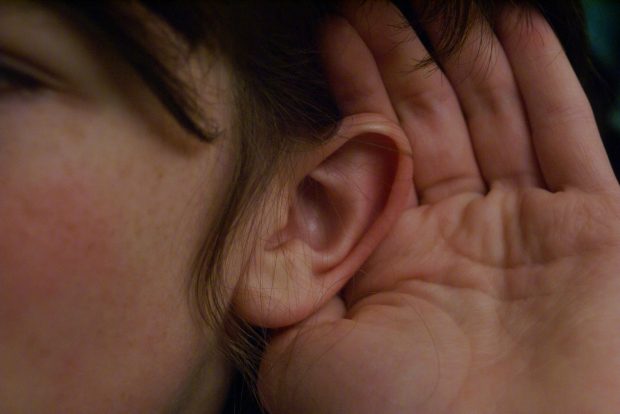
Avoiding burnout, physicians take a holistic approach to patient care, to hear and understand the patient’s journey. Listening to the big picture enables us to be empathetic to the little things. Like the language they use. 

Taking this approach would change the doctor-patient interaction from statements like “This is your diagnosis” or “Take this treatment” to a more heartfelt and compassionate conversation that ensures all patients receive the treatment they deserve, and expressed in a way they can absorb. 
(Image courtesy of jppi via Morguefile)

Cultivating empathy

Physicians often focus intensely on gathering the most critical information to diagnose a patient’s condition, meticulously assembling the pieces of a complex puzzle. However, in their quest for accuracy, many become so engrossed in the details of the symptoms that they overlook other essential elements, such as the psychological aspects of patient care. 

I’ve witnessed doctors firing off questions, barely allowing the patient a moment to breathe. “Are your parents alive?” quickly followed by “Did they have a similar condition?” without pausing to consider the emotional impact of their words. I, too, have been guilty of this efficiency. However, the patient’s expression brought me back to reality, and I have sincerely tried to prevent this pattern from recurring. 

 As I have sought ways to foster my feelings of empathy with patients, I frequently remembered my own primary care physician, who manages to keep the embers of his humanity burning brighter each year. He told me that the secret behind his everlasting kindness and empathy was continuous training. Although that may seem straightforward, too simple, it is truly an integral part of life and an axiom I have gone back to time and again. As Leonardo da Vinci said, “simplicity is the ultimate sophistication.”

I also try to remember a favorite expression of my mother’s, who had always told me to “Put yourself in others’ shoes.” This life philosophy makes it easier for me to connect emotionally to my patients by incorporating the patient’s unique perspective.

Staying sensitized

To preserve maximum empathy, I have committed to the following principles:

  1. The Continuous Practice of Mindfulness and Reflection: Medicine is a lifelong journey, and reflecting on one’s actions allows the physician to improve with each patient interaction.
  2. Empathy Through Understanding: I strive to place myself in others’ shoes, recognizing that each patient is on a unique journey. By doing so, I no longer see them merely as numbers or cases, but as individuals with their own stories.
  3. Maintaining a Healthy Work-Life Balance: This balance is vital in preventing burnout, a significant desensitization factor. By taking care of myself, I can better care for others.

I hope these rules will help me maintain my sense of compassion while pursuing a deeper understanding of the potential impact of a condition on my patient’s life. 

I pray that my three principles offset being overwhelmed by too many patients and desensitizing myself as a coping mechanism to their personal suffering.

PawsUP and Hands Out for the “Untouchables”

“When 20 people showed up at our 0.3 acre property during the 2020 COVID lockdown, I thought it was the best thing that ever happened to us,” said founder Jay Lau as he recounted the start of his organization, PawsUp.

Jay Lau brings some strays home 

Hailing from Brunei, the tropical kingdom in South East Asia known for its oil wealth and small land area, Lau decided one day to run a shelter for strays. After living and working in Australia for 16 years, he came back to his hometown for Chinese New Year. Though stuck due to travel restrictions, this did not stop Jay from choosing basic kindness by bringing stray dogs home in an old Toyota Kijang (a popular four-wheel drive vehicle here). This was the beginning of PawsUp, a last resort and sanctuary for street hounds and abandoned felines. Just as people revile the homeless, they also view strays as untouchable. 

Pioneering animal welfare in Brunei

In a society that largely turns a blind eye to the plight of strays, the journey of PawsUp is a testament to the power of kindness and perseverance.

Lau now works as Chief Financial Officer for a large technology firm in Brunei. His organization’s foray into the world of animal welfare began when he noticed strays around his neighborhood.

Unlike in much of the Western world, where people can pay the city council or sheltersto pick up strays, our country of Brunei has no such system. On top of that, we don’t have a public shelter for abandoned pets either. Cultural beliefs like not wanting to spay or neuter cats or dogs also persist, swelling  the population of strays even more. 

The fate of these strays is so often a cruel one as many become the victims of poisoning. Our society is said to hate dogs due to misunderstood beliefs around the ritual impurity of dogs. This spills over into the mistreatment of street hounds. Lau makes sure acts of cruelty to animals submitted to him go viral on Instagram to raise awareness regarding the challenge of caring for strays. 

Instead of ignoring the issue like many others in the city, Lau says we should choose basic kindness. 

Fuelled by community support as well as compassion

Starting with just a handful of furry companions in makeshift shelters at five different properties he rented, Lau soon realized the enormity of the task at hand. The challenges were plenty – from financial constraints to societal resistance. Bruneian inhabitants, like those in many other urban centers around the world, harbor a deep-seated animosity toward strays. Yet Lau and his five-person team of full timers have persevered, fueled by the belief that every living being deserves compassion.

As the shelter grew and settled into three stable rented properties, so did the need for manpower. Juggling his demanding job as a financial officer with the responsibilities of running a stray shelter was no easy feat. Lau found himself stretched thin, facing the risk of burnout. It was at this crucial juncture that he sought a lifeline from an unexpected source – Brunei’s own national university.

The University of Brunei Darussalam graciously collaborates with PawsUp by sending two interns every month to help lighten the load of  its overstretched operation. Lau hopes this partnership will go on for at least five more years. 

Members of the public do not understand how the logistics of running a shelter work, Lau says. “Not only do our staff and volunteers cook until 4pm every day to feed our shelter’s animals, we also feed strays until we can spay and neuter them,” he adds. 

“People also text us frequently, asking us to relocate animals they find on the streets. There is also a demand for cheaper spay and neutering services. The latter problem being caused by either poverty or the taboo surrounding such an act,” Jay shares. 

The goal of PawsUp is clear–to continue the partnership with UBD University is one thing, but they also need funding and time. Most of the shelter’s operations come out of Lau’s pocket. He has personally racked up more than US$11000 in veterinary bills that have still to be paid. On top of this, he sees the need for a cheap spay and neutering service for low-income pet owners. Cats and dogs are very popular after all. 

He understands that sustainability is key to the shelter’s longevity and for preventing burnout among his full-time staff. The influx of interns from our national university not only eases the workload but also fosters a community of like-minded individuals dedicated to making a difference.

In a society that often overlooks the plight of strays, Jay Lau stands out as a champion of charity. His journey from a pandemic-grounded accountant to a stray shelter owner is a testament to the transformative power of kindness and good financial responsibility. Through the PawsUp community, he is not only saving lives but also nurturing the next generation of compassionate humans.

His message to others for the new year is for everyone to at least leave street animals alone. Leave them unharmed even if they are untouchable. Now that’s choosing kindness at the very least.