Litterbugs and Thieves Go Gently Into That Good Night

A telltale trend in true crime stats dropped out of urban South Yorkshire County, England, this week, and it has rekindled my love for citizen science. Why? I’ll explain that in a moment. 

For now, just know this: the trend emerged from a massive analysis of illegal behavior in that one British district over an entire decade. It showed that certain crimes — like burglary, robbery, bicycle theft, or vehicle offences — occur more frequently in the dark.

Conducted by a team of architects at the University of Sheffield and members of the South Yorkshire police department, the study examined all 990,446 crimes committed in the county from 2010–2020, mapping where they occurred and at what time of day. As they described in the journal PLOS One last week, the researchers found a correlation between light and crime, concluding that the risk of certain crimes grew after dark. 
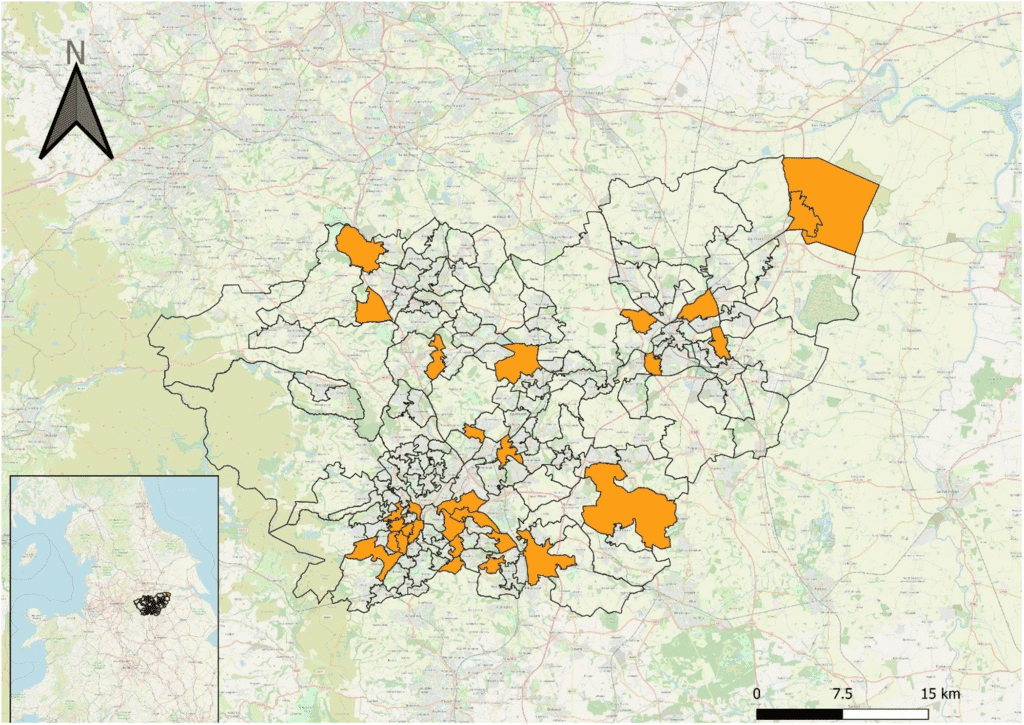
A map of the county with high-crime districts highlighted in orange.
(Image courtesy of Uttley et al. via PLOS One. CC-BY 4.0)

Crime-after-dark hotspots in South Yorkshire, England, 2010–2020.
A map of the county with high-crime districts highlighted in orange.

They also identified about two dozen specific hotspots across the county where crime rates are especially elevated in darker places — all of which suggests that urban lighting design could play a role in reducing crime. 

Taking a step back for the moment, many other studies have shown, not surprisingly, that dark places instill fear in people. Everyone is afraid of the dark to some degree, whether we admit it or not. And research shows people feel safer after dark in brightly lit places like parking lots. But the relationship between darkness and crime is less clear. 

More light, less crime?

Some studies show that if you install better street lighting, crime goes down. But confusingly, crime rates often go down in those places during the day as well. Other studies show no relationship between streetlights and crime rates at all. And some even show places with less lighting see lower crime. Criminals are afraid of the dark as well?

This new study is a breakthrough, however, because it shows a definitive connection between darkness and crime in urban areas, and it defines what specific types of crime, like bicycle theft, are more likely to take place in the dark. All that has rekindled my love for citizen science. 

Mushrooms, monarchs, and manatees

What is citizen science? It’s everything, literally. Gazing through telescopes, ripping out invasive plants, taking pictures of mushrooms, geolocating trees, counting butterflies and birds, making soil pH measurements in your backyard, and monitoring your own biometrics for drug discovery. Here are a few specific examples (from a longer searchable list):

Citizen scientists are a unique set of people. All ages. All places. All walks of life. They are the telescope hobbyists, the do-gooders, the day trippers, the crowdfunders, the ethical hackers, the quantified selfers, the street-marching activists, the land and sea photographers, the storm chasers, the nerdiest of the nerds, and the just plain curious. Many come with nothing more than a smartphone, a pair of hiking boots, and some attitude. 

Others invest small fortunes in their art — underwater camera rigs with mirrorless SLRs, floating flashes, wetsuits, fins, tanks, regulators, reef charters, and salty old boat captains thinking “We’re gonna need a bigger hobby.” 

They are the unsung heroes of astronomy, climate change, ornithology, wildlife monitoring, land management, freshwater protection, coastal preservation, and rare and neglected disease research. They track coastal landslides, mushrooms, urban coyotes, zombie asteroids, Great White sharks, freshwater pollution, saltwater manatees, invasive weeds in South Australia, feral pigs in Canada, mountain goats in Montana, boreal toads in Colorado, black swans anywhere in the world, and monarch butterflies heading home to Jalisco, Mexico. 
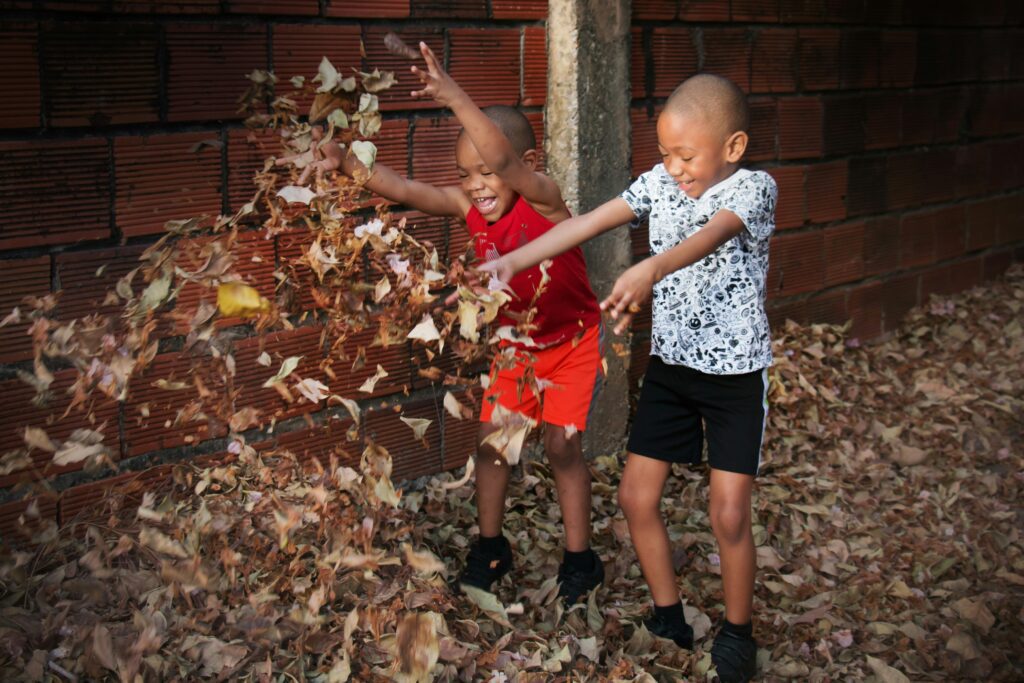
Two boys digging dry leaves near brick wall
(Image courtesy of Harrison Qi via Unsplash)

My own first foray into citizen science came more than 25 years ago when I was in graduate school.  One of my first pieces of journalism covered a local ecology project in Baltimore that enlisted classrooms in surrounding counties and trained children in these classrooms to take pH, temperature, and moisture readings in their own backyards. Years later, when my very own children were that same age, I got an idea for a citizen science investigation of my own.

I had visions of starting a massive project with my kids and their friends. We would walk along the Rock Creek, our local waterway. We would count pieces of litter dropped as people walked the paved outer path beside the parkway or the overgrown single-track dirt inner path on the banks of the creek. We would do this one day before one of the two big semi-annual volunteer cleanup days the county organizes. And we would map which parts of the park had the most trash and needed the most attention.

I had grand ambitions about what to do with this data. I thought it could steer resource allocation during volunteer clean-ups. The county could prioritize certain stretches of the park for maintenance throughout the year based on these analytics. Then when the small army of well-meaning local residents descended on the park with thick plastic bags and thin metal pickers once or twice a year, they would have a map. The organizers could use the data to stage the volunteers effectively where needed most. I imagined expanding from my little stretch of the Rock Creek to beautification efforts up and down the entire watershed. 

Of course, it didn’t work out that way. My kids were not as interested in my project as I was. Even so, I went out myself one afternoon, full of citizen-science spunk: I came, I saw, I tabulated tin cans.

But even though I had fun crawling through the brush collecting data, I dropped the ball and never contacted the county or the cleanup day organizers. One volunteer cleanup day came and went. And another. I soon forgot about the whole thing, even though what I discovered in my own data intrigued me.

Darkness scorns the witness tattle

My assumption at the start was that I would find more trash in the places that saw more foot traffic—the kids parks along the trail and the places where urban planners placed benches and trash cans for the dog walkers and tired sloggers. Those places, I reasoned, saw more people so they would see more trash. Not so!

I found far more litter in the more remote parts of the park — the rough, unmaintained lone-hiker spurs jutting off the main path into the deep woods. These places saw the least amount of traffic and the most amount of refuse. Why? My hypothesis at the time was altruism. The remarkable influence of a million small, selfless acts. I reasoned that far more litter was dropped in the highly trafficked spots, but that there were also more genuinely nice people in those places who care enough to pick up someone else’s garbage when they see it. Less so in more remote parts of the trail.

But reading about the South Yorkshire police study this week made me reconsider. There’s another mechanism as well, I think. Crime rates increase in dark places, the study teaches. And why not. Criminals love the darkness. It’s their friend. They may fear the dark, just as all humans do, but what they fear more is getting caught. So they work in the shadows. Darkness favors brazen theft and scorns the witness tattle.

So that’s my new hypothesis. Litterbugs love the dark as well — not the darkness of night but the darkness of solitude. They walk in remote sections of park with purpose, I suspect, passing into thick woods and behind dense brush where no one can see. There they drop their trash, thinking: If a wrapper falls in the woods and nobody’s there, does it make a sound? 
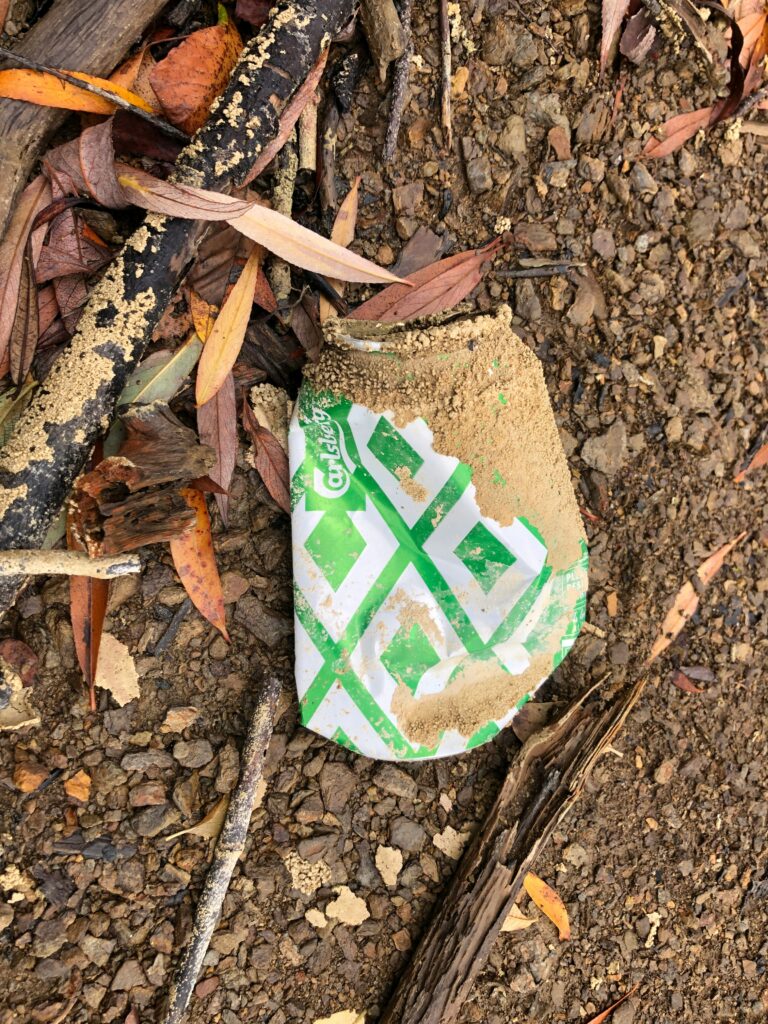
Crusty, crushed beer can lying among dirt, fallen branches, and dead leaves.
(Image courtesy of Red Dot via Unsplash)

Cadence: I Got Rhythm

Life and career in a funk? Find your rhythm or change it up

Self-improvement?

It was a dark and stormy night, but let me say something first. 

I struggle with procrastination a lot, as you see. I can stay in a rut for ages, and there are times when I just want to give up when I find my life and work pointless. Some self-improvement gurus online say we should change our routine and do more self-care. Others say we should try something new or practice Ikigai, the Japanese art of finding one’s purpose in life. I cringe at how people talk about Ikigai outside of Japan. I lived there for six years, and no local I met ever talked about it. It’s all just hype, unless you read from Ken Mogi’s book exclusively. Anything else is just Western productivity bro hack-speak that totally misses the point. Ikigai is about finding satisfaction in the little things, rather than figuring out what you are good at and what the world needs. Those Venn diagram representations you see online are nothing more than poor attempts by management writers to turn us into more productive robots.

I read about staying motivated at work from the internet, like most of us do, I’m sure. The blogs I read all say similar things: we need to find purpose at work, change our attitude toward our job, or find something more meaningful. I am all for these things, but my squabble comes from noticing that people still leave meaningful jobs anyway. Take, for instance, the people who work in social impact or for the not-for-profit sector. Their jobs do not pay very well but they are considered meaningful in the sense they do good for other people and the reward for it is intrinsic. High feel-good factor over monetary value. No one does charity to become rich themselves. Now, I think these motivation problems are important because businesses cannot run efficiently without people who want to work there. 

This insight came about during an outdoor dinner on a stormy night in a water village in my home country.

Dinner on stilts

The evening rain accompanied us steadily on the evening of January 29th, 2025 while driving towards a restaurant for dinner. My EduTech boss and I were in the car driving our CEO and COO from their hotel near the Brunei International Airport to Kota Batu, a historical area in our capital city of Bandar Seri Begawan. Kota Batu used to be the ancient capital of our country and is now home to museums and a section of the Water Village, a national tourist attraction and traditional residential area. Our colleague who recommended the restaurant to us that night wanted to share some traditional Bruneian hospitality to our seniors, by way of doing this.

When we exited the car, we boarded a wooden walkway to get to the diner, as it was in the area of the Bruneian Water Village, the site of the old capital. The Brunei River lapped against the wooden stilts beneath us, iridescent from the light of lanterns and fluorescent lamps that lit the restaurant verandah. 

That  CTO got rhythm

The smell of barbequed meat skewers, which we call satay in our local language of Malay hung around the air, whetting our appetites. We settled at our reserved table and got into a conversation about business and our plans for the company. One thing that stood out to me during the conversation was how our C-Suite (minus one) spoke about the CTO, who was absent. They credited him with the success of the business, as a master of a flow called “cadence”. 

I had always known cadence in poetry and music — the rise and fall of the arc of a melody, the measured rhythm of words. But here, on this stilt house turned restaurant, against the backdrop of a lighting-filled sky with gentle evening rain, I learned something new about cadence in business. Or life. 

Nearby, fishermen cast their nets into the river, guided by their flashlights and their fishing instincts. As they worked, my mind caught onto the idea of a kind of rhythm in business workflows. Just as village fishermen knew where to cast their nets and the time to cast them without the aid of sonar onboard a modern fishing vessel, modern business pros know how to optimize their routines when they work. Our CTO was on top of things, like knowing how to handle customer complaints or feedback, the marketing, or even just how to make a website work using his tech wizardry. All this, his peers said, came down to his cadence or workflow. They praised his time management skills, his ability to take naps when he wants, and his overall mastery of his daily schedule. 

He was like the encyclopedic entry of cadence itself. 

I caught on to this idea quickly through their introduction. This tale brought the joy of discovering a word anew, one that was in my vocabulary, unused, picked up somewhere in the course of my studies, but only usable for work through business jargon. 

I thought of Mogi’s ikigai, which emphasized that life’s purpose and happiness go hand in hand. Mogi, a neuroscientist, said “Ikigai starts from very small things, like just having a cup of coffee.”

Embracing routine

Aligning purpose with habit is also found in this philosophy of ikigai, which is like a spectrum for embracing purpose in work, play, and life in general. Productivity or management writers like to express this concept in Venn diagrams, which get it wrong, as they are more the idea of aligning purpose with passion for the sake of a productive workflow. Ikigai, for Mogi, starts with gratitude rather than the expressed purpose of improving personal efficiency or effectiveness. Which also makes it distinct from cadence. Yet, how they are similar is that Ikigai-like cadence embraces routine. 

There is a kind of rhythm or harmony in the flow of life and work, much like the way the fisherman is connected to working with nature. It gives the confidence to fish in the middle of the rain or even a light storm, because he knows his catch is always there. 

As my company bosses and colleagues stepped outside into the damp night, the rain stopped. And then, suddenly, the sky above Bandar Seri Begawan erupted in light — bursts of gold and crimson, crackling fire against the murky river. The fireworks signaled the arrival of Chinese New Year in our Malay Capital, their shimmering reflections rippling across the water. 

I stood there captivated as we posed for a group picture.  

Rhythm. Movement. Repetition. Turning Point. Result. It wasn’t just poetry or business — it was life itself. 

Rhythmic pattern in skylight view of circular stained glass Bolkiah Mosque, Bandar Seri Begawan, Brunei
(Image courtesy of Hung Li via Unsplash)

When Distance Tests Love

Sweethearts across the miles

On a very sunny and boring afternoon, I got a text from a strange number that simply said Hello. I replied out of bored curiosity, and the stranger introduced herself as Amaka. Amaka was my seatmate in primary school, who apparently has always had a crush on me since then. She told me she searched for me all through her high school years and found my contact information when we were entering university. This whole conversation was the beginning of a new world for me.

Amaka is a beautiful girl, naturally endowed with an amazing body that would make anyone’s jaws drop. Her melanin skin radiates as the sun touches it  — oh, what a beautiful sight! A brown-skin woman with all the flair of an African Queen. Her smile could heal a broken heart, make everyone’s day, and even encourage me to keep going. She has the mind and soul of our ancestors, she speaks with confidence and stands tall in stormy times. How could I resist such a person? I tell you confidentially that this woman was my soulmate.

So our love story begins…

We got to talking. She remains in our hometown where she is awaiting a letter of admission from her chosen university. I, on the other hand, was working long hours day and night in a different town a ways away, making a whole lot of money while I was still young. Just like in the fairytales, we spoke at length every time we possibly could, day or night. Falling in love with her was the easiest thing I’ve ever experienced. Within that first week, I was entirely ensnared. I started sending out presents and buying her gifts. 

She was my anchor after a very long day at work and encouraged me when I was feeling lost. We gossiped about everything. 

As with any person, I had some cold days. Days where you feel off, days where you’re really out of your zone and need a hug, days where it feels like the world is heavy on your shoulders and all you need is a kiss and a long cuddle. 

I trust you

This was an issue we worked on, and I was shocked about the response I was given. Amaka told me that I could have a side piece who would be there for the cold days. All she asked was that I always came back to her. I wasn’t comfortable with it because that’s not right, but I believe “I trust you” carries a greater commitment than “I love you.” Love cannot exist without trust, after all. Even if love doesn’t work that way, I understood she was willing to sacrifice part of herself by sharing me with other girls. In actuality, she has a part of me all to herself. 

A  meeting with fireworks

So after a few months went by, I traveled to meet the love of my life. It was one of the best memories I have ever had and I still wish that day could be repeated. I went to visit her at her apartment the next morning and she looked even more beautiful in person than in pictures or on Facetime. I walked calmly towards her smiling with my imaginary fireworks shooting in my chest with excitement. I hugged her with all the joy in my heart and, oh my goodness, she smelt like angels ought to smell -– a perfect woman. I was welcomed with a warm kiss and, honestly speaking, it blew my mind and made me blush.

Amaka invited me in to eat dinner with her, which was a perfectly prepared Jollof rice with Goat meat. Damn, she really knows how to cook! As that saying goes, “A way to a man’s heart is through his stomach,” she paved her way right in with concrete. We spent the whole day together and it was great. We had a lot of fun together and created everlasting memories. 

Of course, the fairytale had to end and I traveled back to work after two weeks. After a while, I even had to move to a more distant town than where I used to live, increasing the ever-so-long distance between my soulmate and me. Despite my toxic trait creeping in where I avoid my issues until I must resolve them, she remained my ever-steady soulmate. Every time I had an episode, she would patiently wait for me to return. I haven’t had anyone love me that deeply before. Regardless of my faults, Amaka was determined to be mine and always waited for me no matter how many times I left. 

As life moves on without labels

Fast forward two years down the line, during which we haven’t physically seen each other in person as life had other plans for us. We weren’t able to have conversations as often as usual, and the distance made everything seem to drag by slowly without each other.  We decided to be lovers without a label. Yeah, you read that right – lovers without a label. She wasn’t my girlfriend by name, but was totally in love with me and the same went for me. 

We couldn’t tie down each other’s wings as time passed on with life taking us in different directions. 

We still speak and text like lovers.  

I know she might be waiting on it like me.

“Babygirl, so you know, this isn’t the end yet.”

A girl holding the hands of an older woman from behind.
(Image courtesy of Antonio DiCaterina via Unsplash)

Family of Origin

I was a twentysomething, twentysomething. Lost and wayward, yet somehow granted the occasional tentpoles of good people to guide me along the way. I was nudged by one of those people at the time to go work for a rehabilitation center. I was raised in an alcoholic home and, like many who come from such beginnings, memory is a blur to me. A roof beam here, an adult’s face there, maybe a friend’s house. But the older I’ve gotten, the more I can see how things were.

The adults aren’t my parents, the roof beam doesn’t belong to a place I recognize, and the friend’s house isn’t really a friend’s. I was shifted around a lot. I was the youngest of my family and because of this, I was kept away from the disaster zone. Like many, I’m sure, I was left with a lot of questions.

I knew the “how” and I knew the “why,” but not the “what” exactly. What is the profile of a person? What is in the architecture of a person who loses their motherhood for the bottle? It’s a fall from grace that many don’t want to know exists. Women, I know, have described motherhood as something “sacred.” What exactly is the making of a supposed transgression?

While it originally brought some amusement to tell people that I was interning at a rehab, it would turn out to be an incredibly rich, spiritually nourishing experience. Moreover, this voluntary engagement would soon turn into employment. At the start, my placement was once a week and each day was illuminating. Shadowing the therapy team, I was sitting in on group therapy sessions, handovers, and supporting clients during their stay.

There’s a prevalent cultural misconception about what a rehab is and what exactly it does. These places don’t and can’t fix people, neither do they heal or get rid of addiction. In clinical terms, twenty-eight days is hardly a pocket of time at all. What a rehab can do and what I’ve witnessed it do, is bust denial. It can give appropriate interventions in the correct environment to assure that there are no illusions about the scale of the problem. A rehab can give a person abstinence and the tools to uphold it. It can show the way for a lasting sobriety. It is entirely up to the individual if they want to take it beyond their stay; the choice can only be made by them.

Across the months, there would be clients passing through for twenty-eight-day stays, or longer. Treated as a collective, they would be known as the “community” by the therapy team. Within a month it became clear I was in the right place. Each community passing through included at least one woman in her forties who had become alcoholic. More curiously, father, brother, lover, son… they all had a significant “Oliver” in their lives. So who were they?

They were clearly people giving their all. Perhaps too much, they were all remarkably hard on themselves. They were all either the only girl in the family, or the youngest, having a profound sense of being the runt of the litter. They were all from homes where doing one’s best was required and yet having one’s feelings acknowledged was seldom. They were all from formative environments where anxiety could be felt in the air. They were all able to speak of a mother or father, sometimes both, that they just couldn’t reach.

(Image courtesy of Bùi Hoàng Long via Pexels)

From school rebellion, to university freedom, to home life and domesticity, each was profoundly affected by their actions letting down others. Each understood their drinking habits but hadn’t realized the extent of this pervasive spiritual anesthetic. Each one of these women felt unseen or unheard as perennial perfectionists with sewer-bound self-worth. Something had to give.

Yet I look at these themes and can’t help but figure… it’s no cosmic curse. It’s not a smiting from the Almighty. To be sure: some had a genetic predisposition, a family disease, but some didn’t. The women in question were remarkably warm, provincial, and familiar figures. You can picture them loading up their shopping in a supermarket car park. Or waiting and chatting with fellow parents at the school gates. Maybe catching a coffee with friends, prams and/or little monsters in tow. Perhaps finding an oh-so-rare moment to themselves at a nearby salon. These women aren’t anomalies; they’re all around us everyday.

Transgression or falling? I’m not so sure. Addiction has an eerie ability to breed denial and minimization. From what I’ve seen, it’s a playing-out of matters we can’t control, a hard turn of misfortune, a flicker of fate away. 

Breaking the Tether: My Writer’s Journey

I’d like to tell you the story of a young boy named Wylie Sowden.

The beginning of the story

Wylie was brought into the world on a cold October morning — a scraggly-haired, wimpish boy, full of innocence, promise, and curiosity. He was an artist to his core with an imagination to move mountains. He had a good heart. Back then, he couldn’t have known how much he was about to suffer.

When Wylie is 16, his brother, Michael, drowns off the coast of Marin County. Devastated, Wylie convinces himself that he was responsible for it. He was there when it happened. He could have done something, but he was too afraid. The guilt swallows him whole. In his grief, Wylie becomes self-destructive. He sacrifices his own happiness for the sake of repentance, leading him into several perilous scenarios…

One day, Wylie wakes up to find himself stranded in an abandoned parking garage he doesn’t recognize — a mysterious voice in his head telling him to complete various tasks… Wait. No, scratch that. Way too heady.

(Image courtesy of Two Dreamers via Pexels)

One day, Wylie wakes up with the ability to blink people out of existence with his eyes. Well, how does that remotely relate to anything?

One day, Wylie wakes up tied to a chair in a basement, slowly uncovering a tight-knit conspiracy between a family of mafia brothers, a shapeshifting reporter, and a psychopathic casino owner. WHO are all these CHARACTERS?

One day, Wylie wakes up. Yep. In juvenile detention. Sure. He confronts embodied representations of the five stages of – Yeah, no, absolutely not.

One day… Wylie wakes up… and Michael returns as an amorphous, faceless ghost, attached to Wylie’s hip by a tether. Hey… A ghostly, incorporeal tether… That could work. How better to show off Wylie’s unending guilt and the bond between brothers than a literal representation of said bond? A tether.

Tethered to indecision

(Image courtesy of Reafon Gates via Pexels)

I had 10 months to write the screenplay for “Tether” in the year I completed my Master’s degree. I had about fifteen, sixteen, seventeen different narratives, squashed into a turmoil of indecision, fighting for attention. My first draft was completed two weeks before the final submission deadline. That’s… insane.

Wylie and Michael had existed from the beginning. The brotherly relationship and the themes of grief and acceptance were at its core. Still, I found myself unable to bring a single draft to completion, uncertainty eating away the months like wildfire. To this day, I’ve wondered how this happened. Did I dislike the ideas I was creating? Hardly. Did I doubt they would make a good story? Not necessarily. On reflection, my indecision was spurned by something entirely different.

From the outset of any scriptwriting degree, you will be taught about the three-act structure and all its variations. The hero’s journey, the relationships between archetypes, the importance of fatal flaws, wants and needs, genre conventions, plotting, pace, and so on. The so-called “master tools” of storytelling — the structure.

I urge you to disregard all these things. Absorb them, internalize them. Discard them.

Structure and flow fighting for attention

You may often hear the first pass of a script referred to as the “vomit draft.” A writer is encouraged to write continuously, effectively vomiting their ideas onto the page. Get their unrefined marble on the plinth before they start to carve it, so to speak. While this sounds good on paper, the execution can be daunting and there’s a reason for that:

Structure interrupts the flow.

Of course, structure is vital, especially later on in the process. It must be introduced to refine a story. But in the early stages, it’s a serious roadblock that threatens individuality, especially for creatives. Any official scriptwriting resource will teach you to write “properly,” enforcing a systematic standard for what makes a “good” story. The inciting incident must happen by page 10, and the turning point by page 30. We must know all our major characters and their motivations before disrupting the equilibrium. The protagonist must confront their flaws and choose values over desires, yadda yadda yadda. All these techniques are tried and tested. They work. They’re commercial. Surely they will aid a writer looking to craft their first smash hit?

Let go for the first draft

Here’s the uncomfortable truth: any idea that you propose for a project is highly unlikely to translate into a final product. Never get too attached to ideas. In the end, I was too attached to Wylie. He had two ghosts haunting him: Michael, tethered to his hip, pulling him around, fueling his pain, and then me… tethered to his hip, pulling him around, fueling his pain. I determined that his journey had to make sense and have merit when a plethora of narratives presented themselves as alternatives. Any one of these ideas could have provided a diving board into a different conflict, a different protagonist, a different world.

I didn’t finish a single one of them.

I couldn’t make them fit inside the structural conventions I was being fed throughout the course. I ruled them out, thinking they were too conceptual, too convoluted. I was making excuses for starting over. I thought that I was making efficient decisions for the merit of the story.

In reality, the journey of bringing a vomit draft to completion will reveal what your story is meant to be. You must allow yourself to fail so that ideas can evolve and change.

This is not exclusive to screenwriting. Novelists, playwrights, poets, comedians, actors, artists, dancers — all creatives are bound by the conventions of structure. A level of detachment is healthy and inspiring in the early stages of emerging work.

The discipline of imperfection

Any writer worth their salt should practice a discipline of imperfection. Get comfortable with terrible writing. Develop fully drawn characters that are destined for the chopping block. Build wonders and erect dreams, knowing they’ll come crashing down. A good friend of mine once said that “there’s no good writing, only rewriting” and this could not be more fundamental. Your project will always be improving but a full page is more motivating than a blank one.

Never let the idea of the best be the enemy of the better.

Finally, an ending

Wylie’s story ends on the beach where it began, confronting the site of Michael’s death. Still tethered to his brother’s ghost, Wylie strides into the waves and imagines one of his drawings descending from the sky – a life-size illustration of Voyager 1. He knows that Michael’s greatest love was space. The idea of exploring the cosmos. Now, he can give Michael a chance. The ghost boards the spacecraft, soaring up into the stars. The tether pulls tighter and tighter until finally… it snaps.

Untethered

I cried, writing those final scenes. The moment of breaking the tether was very meaningful to me. It was a form of acceptance, much like Wylie’s. I had concluded a project of massive scale while still acknowledging and accepting its imperfections, wishing goodbye to ideas abandoned along the way. Finally, I knew that Wylie had a form of happiness. 

After everything that I’d put him through, he deserved that.

He deserved an ending.

(Image courtesy of Seymasungr via Pexels)

The writer’s journey is different for everyone. Some prefer to plot every minute detail before setting pen to paper. Others prefer to dive in headfirst, improvise, and let the words unleash themselves. Inevitably, structure must be enforced in the end. But never shy away from chaos. Leave yourself room for wonder. Shut off the conscious brain, if just for a moment, for I firmly believe that everyone has a meaningful story to reveal.

You just might not be aware of it.

Burnout Isn’t Just for the Boardroom

Overwhelmed

Ever reached that point in life exhausted with whatever you are doing and wishing you could just let it be and leave? It may be yardwork, caregiving, or working in an office with job overload. But the first time I felt the weight of the word burnout wasn’t in a boardroom, but in school. Let me tell you a bit about my own burnout story.

It all started when I enrolled at a university in Kenya for my undergraduate course in biological science. Everything went well at first: getting used to the new environment, meeting new friends, and trying out new things. The first and second years passed; then, I reached my third year. At first, I did not notice what was happening inside me. I could feel a sudden increase of pressure, anger building up, the need to make money to survive on campus, and the stress of doing ‘fun’ activities like hanging out with my friends. Of course, the hangouts were not so­­­­­­­­­­­­­­­­­­­­­­­­­­­­­­­­­­­­­­ proper­.

Things at the university were very much contrary to my expectations. In my first year, I knew I was doing additional courses provided by the university because, as my seniors told me, it was laying the foundation. For instance, why were microbiologists learning about angiosperm and gymnosperm taxonomy in detail? They told me that by the third year, I would then start taking fewer units, and they’d only be related to my program. This turned out to be a lie; the number of units never decreased. Instead, many more units that I felt were unnecessary were added. In addition to these, there was the hands-on part of the program — called practicums. Most of the time these practicums were scheduled on weekends. Imagine having to attend boring lectures throughout the week, and then on the weekend when you are expecting to rest, you are required to do a practicum on a mouse’s anatomy or “the park grass experiment” to measure the biomass of grass.

When it came to class, I started feeling overwhelmed by the lectures and the assignments that were given. I could just miss classes intentionally, do assignments shallowly, and never bother to follow up on my academics. My friends were experiencing the same stress, so I felt comforted by their misery at the very least.

However, I had no option but to follow the university’s curriculum. To be sure, I was not the only one who was passing through this hectic system of learning. With resilience, I managed to clear my undergraduate stretch with first-class honors. I was also among the graduates who were able to win a scholarship grant from the university to further my studies at the university of my choice abroad. My hard work and dedication had at least and at last paid off.

A new dawn this was. I was happy that I could focus on my academics, and since it was a new environment, it would be an added advantage for me to socialize with new cultures and people. I managed to enroll in one of the best universities in Israel that offered a master’s degree in biological sciences — Tel Aviv University! Little did I know that this was the point where I would awaken all the pressure giants I had faced and thought I had shrugged off my shoulders back in Nairobi.

I started feeling weak. I lost my appetite, insomnia kicked in, and I began to procrastinate. I could postpone my research, write papers, and even attend lectures. Yet every time I tried to write a paper, I would wonder if I had done the correct thing as required. Would it be listed in the presentation panel? I felt lonely most of the time since most of my friends were not with me. At the same time, I had to look for extra money for my upkeep; the money provided by the scholarship could not cover all my needs. 

Let’s not even talk about the practicum that sent us researching  under the scorching sun of the Arava desert. 

Funnily, those who were around me at that time could not see this and instead applauded me for how I looked focused and serious. But deep down, I was going through a lot. Overwhelmed. The environment there was so much different from what I was used to in Kenya — the food, the climate, the language, and the fact that I was in one of the best universities in Israel. I was doing a work-study at the same time I had to submit my thesis for review, all while I had to attend conferences to maintain my scholarship. It was hectic, and not in a good way.

Weight a minute

Slowly, I gained weight. I was surprised when suddenly my clothes could not fit me anymore. The stress took its toll in other ways, too; I began to miss out on the activities that I enjoyed doing. Most of the time, I found myself outdated with what was trending around the world. I lost my enthusiasm for watching the news as I felt the information didn’t add any value to my life — and instead increased my burdens.

Whenever I turned on my TV or used social media, I felt disgusted. I did not know what to watch. I felt like everything was working against me. From my research, my social life, my private life, and even work-study — which was my primary source of livelihood. It hit hard when my procrastination intensified. I kept postponing everything, and most of the time, I felt trapped in the last-minute rush. 

I seemed to have a lot of problems that I needed solved immediately. The weight was beginning to exceed my limits, so I decided to share my experiences with a local friend. He had also been experiencing similar stress, but for him, he managed to cope with it and overcome it. It was at this moment that I realized what I was going through was burnout, and it was this mental, physical, and emotional exhaustion that made me feel like things were not aligning as they should. My friend recommended I start listening to and reading about matters of mental health. 

Calling out the burnout turned out to help

During this time, I came across a quote that stuck with me. According to a study from  the psychologist Demerouti (2024), ‘’While research trends offer valuable insights into burnout causes and effects, it is crucial to move beyond mere statistics and engage in open discussions about this issue.’’ I embraced Demerouti’s perspective of finding a solution to stress and burnout because it helped me in the end.

With time, I began to embrace my struggles and follow what the resources were suggesting. Through this lens, I developed a greater appreciation for my surroundings. Who knew that I would fall in love with the Israeli moshav (cooperative farming community,) and desert settlements, or that I would complete my research right in this region? Even Covid happening during my thesis presentation felt bearable. 

(Image courtesy of Anthony Cantin via Unsplash)

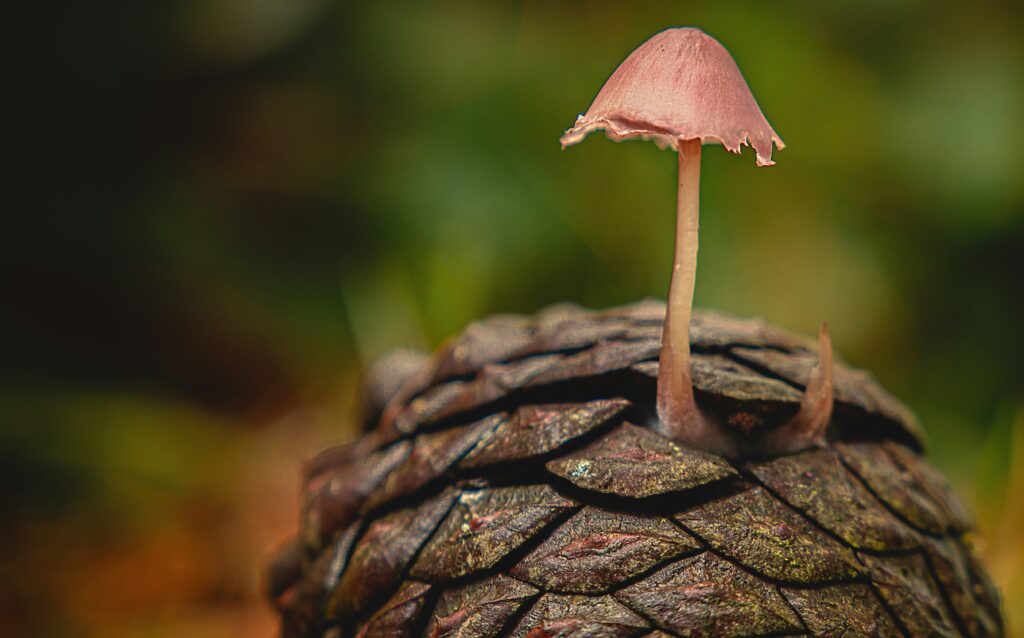
A brown mushroom growing out of a tree log.

The angiosperm and gymnosperm I despised in my undergraduate class finally made sense. I began exercising, fasting, reconnecting with nature, taking deep breaths, and walking on the beautiful Tel Aviv beaches, even the Arava. I began to appreciate myself for how far I had come and everything I had accomplished. The whole time I had been harsh on myself, and I was not even aware. I managed to complete my Master’s program and return to Kenya. 

Ever since, I decided to always appreciate myself and everything around me; I would let worrying be the least of my problems, and this new perspective was all thanks to my friend in Israel. So, thank you to that individual. 

You helped me overcome my own burnout by seeing and saying it.

The Crash

Just caught the video
The moving internet image
The safest airspace
In this country
On this planet
Within the unknown universe

Approach from the right
Patrol from the left
No audio of course
And the separate sets
Of strobing aeronautic bulbs
Glide silently into one another

I remember how this feels
When i first felt this horror
Horror undefinable
Tragedy incomprehensible
A shredding of belief
Chaos of the soul

I remember
How could you forget
What a fucking trigger
Straight to the heart
8543 days ago I felt this way
Perpetual unknowable tomorrow


What’s In A Name? 

What’s in a name? 

If you could choose your own name, who would you be?
A name is important, it’s an identity. Or is it just an identity badge?


A signpost to wear for the people you meet, a label to shout when they see you in the street.
A medal of honor or of something to come: Colonel, Professor, Intern, or Bum.
A word that announces you into a room, a nom de guerre or nom de plume.
Or perhaps a nickname for behind closed doors: an “I’ll let you use mine, if you let me use yours.


An insult, a put-down, a dredging of the past: something you can’t escape which will always outlast
Any title bestowed by Queen or by King, or a surname change from an engagement ring.
“He’s a DICK!” “She’s a BITCH!” They’re the HEAD CHEF at the Ritz?”
A show of possession, origin or control, a transient position or your life’s greatest role: …


She’s his editor; he’s my dad; I’m his husband from Islamabad.
The honorary letters in your signature block, the title you use when you visit the doctor.
A caricature or a show of respect: ‘Mr. Never Was’ / ‘Mrs. Hasn’t Happened Yet’…
Or a stage-bound creation for fortune and fame. Go on, tell me: what’s in a name? 

======================================================================

Kebab Wrist

To my friends. I’ll always be Kebab Wrist, and it’s my own fault.  

They all had nicknames. I was desperate for one. Not least because the last day of school was looming and with it our deadline to design Leavers’ Shirts, displaying our nicknames for the ages. And so on a drunken night belonging to one of those halcyon days, when a piece of kebab flopped over a polystyrene tray and came to rest its greasy warmth on the undercarriage of my left wrist, I proclaimed: FROM THIS MOMENT, I SHALL BE KEBAB WRIST!

The shirt was printed, posted, and worn…and the rest is history.

Kebab Wrist hasn’t aged well: I’m 5 years vegetarian, and this reminder of one’s carnivorous past is triggering. But it’s not the name that interests me; it’s the character behind the name. Where Jordan Frazer is mercurial, ever-searching for answers he’ll probably never find, Kebab Wrist is consistently animated and authoritative. Where Jordan Frazer will pop a tummy Gaviscon before a heady Bloody Mary, Kebab Wrist drinks now, worries later. If Jordan Frazer is fast becoming all elbow-patches, Armagnac, and wingback recliners, Kebab Wrist is a leather-clad, tequila-soaked stage-dive. And any time we get the gang back together, I transform into Kebab Wrist, like a civilian into a superhero. 

At home, I’m someone else entirely. To my wife, I’m Jordie. Occasionally Muffin. Sometimes I’m Pancake, but only when she’s prepared to be Buttercup. Pet names are a relationship’s rite of passage. And when I’m at home, I’m cute. To be honest, I think that I’m Muffin or Pancake just so she’ll let me go out and be Kebab Wrist. And I think she allows me that privilege so Kebab Wrist doesn’t infiltrate the sanctity of our marriage. That’s fair enough; I wouldn’t want that bastard in my house either. 

Nicknames allow us to live our gang fantasies: harmless tokens of eras we’ve defined; insignias of exclusive clubs that turn away newcomers to protect our human connections of friendship and love. Nicknames are great until they’re not… 

‘Jordo’ 

At work, I was Jordo. This wasn’t a name I invented. It was allocated by colleagues. 

For a while, I thought a work persona proposed a healthy separatism: as long as I knew when I was being Jordo, it would prevent him from contaminating who I really was. I decided this Jordo character would allow me to preserve my ‘true self’: the Jordan at home, with his old-vinyl collection and recipe for rice pudding. 

But Jordo started to take over. It was frightening: that with a tiny change of name came an entire personality swing. Jordo threw his weight around. He signed off emails, ”Kind Regards, Jordo.” He used hefty-but-meaningless terminology like ‘let’s circle-back‘ for an ‘executive summary’ and ‘what’s the ask? I found myself excusing rude behavior because it was Jordo and ‘that’s just what he was like’ as the character in the suit I had to play as part of my role in the Great Game of Life. It wasn’t me, not the real me. 

But it got worse. I decided I was much too important to write the full Kind Regards and so my signoff was reduced to “KRs, Jordo.” I adopted passive-aggression as standard in any communication I sent zingers like “As you know if you read my previous email…” It all came to a head one Saturday morning when my wife asked me to look over a grocery list she’d written out so I could add anything. I asked her if she’d “Leave the draft on my desk with a sticky note labeled JORDO TO REVIEW.” 

IT WAS A SATURDAY AND I WAS AT HOME. What a dick…

I’d spent so long thinking Kebab Wrist was the disruptive element to keep on the perimeter that I’d handed Jordo the door keys and all the alarm codes, unaware of the danger he posed. I allowed the streams to cross. I allowed Jordan to become a ghost. And I was busted. 

Beware the fake ID 

Imagine if you started a job and were assigned an entirely different name. That alongside your ‘Desktop Postural Assessment’ you were given a name badge that said Nigel Coltrice or Jonquille Cornflowers. You wouldn’t wear it — it’s not your name! 

But each morning, as I Double-Windsored my tie, snapped shut my cufflinks, and transformed into Jordo, that’s exactly what I did. And the sad part is that I suspect it’s what everyone was doing. It wasn’t until I decided to quit to pursue my creative passions that I could have honest conversations with some of those colleagues. Masks fell that I didn’t know were being worn. I suppose it came from insecurity, surface knowledge that everyone was everyone else’s competitor in one way or another. If not directly, then eventually.  

My own name

Now, I value the autonomy of choosing my own name. It is my most immediate expression of identity. It projects how I see myself and allows me to evaluate whether that projection pleases me. Using different names in different arenas can be healthy: compartmentalizing personality traits to emphasize or suppress depending on the task at hand. It promotes the oft-quoted but rarely practiced mantra ‘Work/Life Balance’, reserving my authentic self for my loved ones at home. It lets me cut loose and recapture the abandon of youth with my oldest friends. And I think it protects artistic integrity of my work: I use a pseudonym when I’m writing my column as “The Millennial Anxiety Uncle,” and I adopt a larger-than-life Rockstar persona when I’m onstage. 

Most importantly, my wife’s got Jordan back. 

But I’m staying hypervigilant of my mental health so  that this doesn’t devolve into a dissociative disorder. I won’t be conforming to the traits of characters invented for me by others. And where my characters are my own inventions for these purposes, I’ll be watching them carefully. 

They have a habit of turning into monsters.  

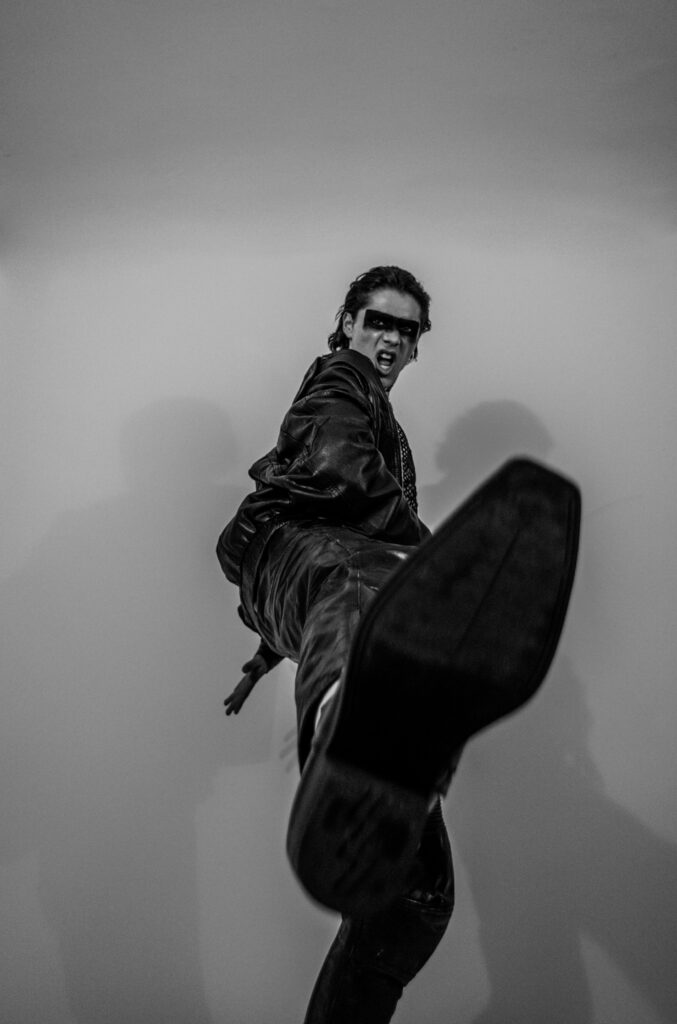
Man stamping his foot at the camera
(Image courtesy of Lauro Rodríguez via Unsplash)

We Don’t Drop F-Bombs in Kansas

Someone from NYC recently asked me what life was like in the South, declaring they could hear my “Southern drawl.” Well, Miss, I’m from a state that isn’t part of the South, nor has it ever been. Speech issues aside, I was born and raised in Kansas, the first free state in the Union.

You see, the Kansan is confident but humble, eager but patient, optimistic but grounded. And there are levels of Kansan, I must surely declare with this post. There is the native Kansan, born and raised, who likely in their youth visited the state capitol building in Topeka where they witnessed John Steuart Curry’s vision of John Brown.

This type of historically aware, compassionate Kansan witnessed the passion in Brown’s eyes, the righteous fury that he conjured, and perhaps felt the urge to make a difference in the world. Over years of education in the first free state, this type would hopefully learn to express their beliefs in more socially tolerable manners than Mr. Brown.

Another type of Kansan is the New Local. They were not born here but moved here, either by election as an adult or late in their rearing; they have lived here long enough that they are part of the community. Maybe they have been to the capitol, they may have heard of John Brown, they may have a thought or two on Kansas’s blood, and they may even know Kansas is the first free state.

Often, however, these folks moved here simply for the cheaper cost of living. A dollar goes further in Kansas than in most any other states. They often love the life they find, should they possess a life which frees them up to pursue their interests. Money helps, too.

There is one other type, of the available plethora of Kansans, which I hope to address; The Interloper. This type of Kansan may be Native or Local, or may simply be passing through. But they do not get it. Whether born and raised here or newly arrived, sometimes the propaganda of the First Free State falls upon deaf ears. The cause, any cause, is not to be addressed to this type of Kansan.

Afforded the opportunity to visit or reside in the First Free State, I’ve seen the Interlopers snicker at our ‘backward ways.’ They know better than The Native what Kansas means in the grand scheme, and they spend time preaching such nonsense to The Local. These folks are free to have their opinion, and frankly I will have a word or two with them out of courtesy, but we shall never see eye to eye.

I may be a white, cis, hetero-normative male with a savior complex, but these labels only validate my label of Kansan: I am merely a product of my environment. My Kansan beliefs align with my country’s founding vision of life, liberty, and the pursuit of happiness. I believe a human’s life must liberally pursue whatever allows for them to be happy in a manner as free from hazard to said vision as a society can allow.

But the Kansan can critically push the envelope in terms of what a society can allow. Following Mr. Brown’s campaign, we then had the prohibitionist hatchet of one Carrie Nation, followed further still by a rather progressive women’s suffrage movement, on up to the more modern subject of public education, specifically with regard to segregation in the groundbreaking Brown v. Board of Education Supreme Court decision.

Of course, this revolutionary history of Kansas is old news to us natives; the Locals will surely come to hear the tales only for the Interlopers to swing in and play devil’s advocate about what this state truly means. We are a heartland flyover state in the bible belt after all, and we have a litany of activities wherein one could argue against the effort; please see Westboro Baptists, Acid King, Timothy McVeigh, Dennis Rader, and honestly, Truman Capote’s whole act.

So why would anyone want to live in the most-southern northern state in the Union? Seems like something is always going on around here, especially on slow days. We catch an occasional college football game or basketball game, we drink at a rather alarming rate, and by God do we love freedom. 

Freedom to drive our trucks, hunt our bucks, and ideally be left the fuck alone.

But there are other types of freedom to which the Kansan in general is rather newly exposed. For many, both within and without Kansas, this freedom embodies itself in money. 

Koch Industries, for example, is a homegrown genuine political monolith, on top of manufacturing most every plastic or paper product in this country. This one Kansas corporation has all the money they need to buy political offices, or whole parties. You know, fuck you money. 

Of course, there is not a lot of money in Kansas and here people rarely say fuck you — either with their money or with their mouth. It is funny that something is ever thought to be the matter with Kansas, when in reality we Kansans set this new reality of politics into motion decades ago.

And so this article is addressed to the notion of Kansan upon which I was raised: The Free Stater. The Free Stater likely moved here for political purposes when the state was merely a territory, rather than any perceivable economic advantage. The Free Stater put their money where their mouth was, and then some. The Free Stater believed life, liberty, and the pursuit of happiness were meant for all of humanity and they mobilized to such effect.

Ideal thinking, surely, but without an ideal which we are to pursue, we are lost in the wake of time. Being lacking of purpose or dispossessed of the ability to think plainly will not get you far in my home state. Our governor, for example, is a fine example of Democratic ideals, while our Attorney General is certainly Republican

(Image courtesy of lorettaflame via Morgufile)

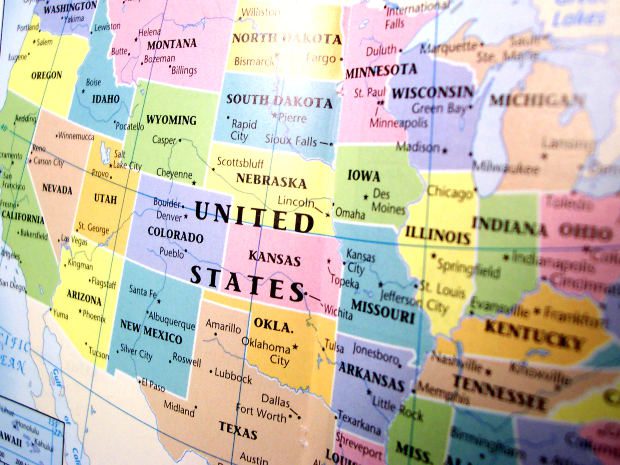
So pull out a map of North America the next time you wonder where Kansas is located. You will find the geographic center of the 48 continental states located within Kansas’s borders, a mere stone’s throw from Lebanon, a small town in Smith County, Kansas. You will find such significant historical markers of the deeds committed on Kansas soil if you travel our highways that you will wonder how there is anyone left standing here to fight. And so you will see a fight started here, and it continues here, centered in the heart of democracy.

Do People Like Me?

Do People Like Me?

I’ll admit it.
I’m an awkward person.

I have no idea what to say.
I can’t maintain eye contact.
Others probably get annoyed.

I say something.
It’s definitely wrong.
They try to comment.
I shouldn’t have said that.
They’re annoyed.

I see a familiar face.
They come over.
Probably to be nice.

I say something.
I screwed it up.
They hate me.

They don’t leave.
They say something else.
Just to be nice.