Walk With Me in The Forest of Imagination

Realism? idealism? Walk with me.

Realism is focused on the awareness of immediate possibilities and acts based on certainty and what is probable. 

Idealism is focused on hope and then considering the possibility is always there, even if unlikely. 

Idealism is a motivating force necessary to cross the hard days. Realism keeps us grounded in the hard facts, and it creates the firm conviction that, with reasonable efforts, anything can become possible. 

Finding that balance is the hard part. I hope that someone’s desire can be implemented or adjusted somewhere between the grounded reality and the perfect outcome. 

Imagine

Imagination is the circle of thoughts we love to breathe in, no matter the philosophy. This thought circle can be the comfort zone where we find peace and tranquility, healthy doses for the mind’s stability. A stable mind is necessary to live life truly, rather than going through the motions and spending hours, days, weeks, months, and years till death. I should know. 

Imagination holds a powerful place in my life, shaping how I work and plan. I often begin by germinating an obsession — a goal that may initially seem impractical, unattainable. I continually water this obsession, to thrive and drive me forward. 

Don’t call me “unrealistic,” but the idealistic approach lets me chase what seems impossible, and it defines my mindset.

This approach often leads to what I call a rebellious mindset. It strengthens my determination to stick to my goals against all odds. While not all dreams achieved through this idealism come to fruition, I still find that this process builds resilience. This resistance to external pressures fosters a personality that is difficult to sway, making me less susceptible to compromising on fundamental rights, freedom of speech, or injustice.

In Pakistan, where societal and institutional pressures often push individuals to conform to the old narratives, my idealistic mindset allows me to challenge these norms. I resist the go-with-the-flow mentality that dominates our local culture. This resistance, born of my imagination-driven idealism, makes me a person who cannot easily be managed, whether by those in power or within social circles.

Don’t elbow me

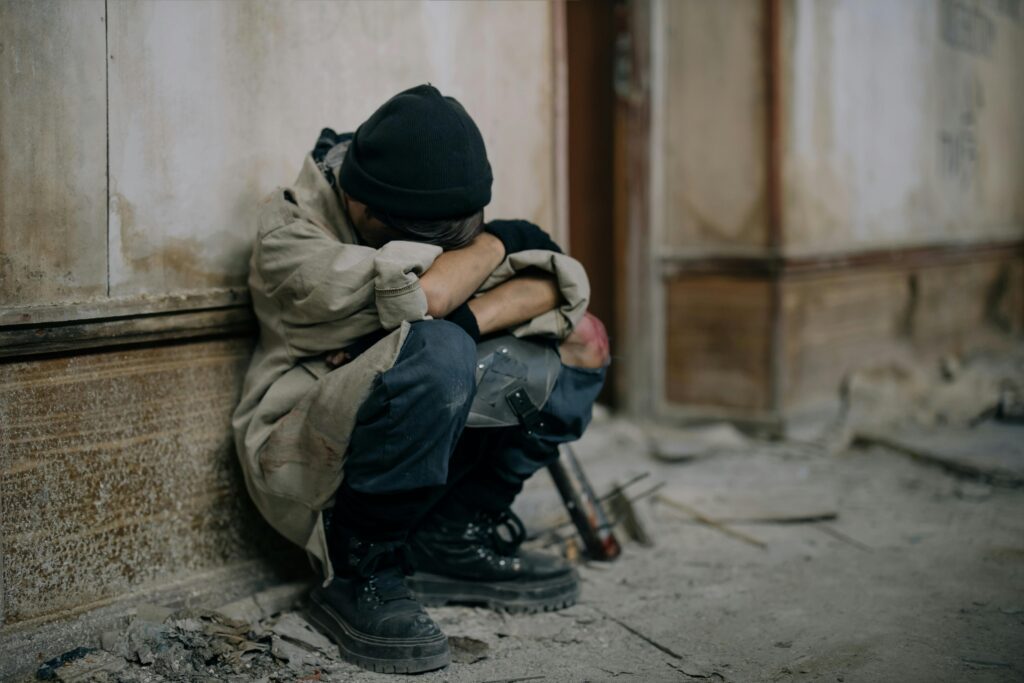
From an early age, I had a dream of joining the armed forces. Normally after 12th grade, we can apply to join. I was declared medically unfit due to the carrying angle of my elbow, the angle between the forearm and arm when the arm is extended. The excessive angle may lead to a person’s inability to carry weight, so I was declared temporarily unfit as carrying heavy bulky weights is quite normal in the armed forces. I was shattered. 

(Image courtesy of shraga kopstein via Unsplash)

I had waited for many years for the day I could apply to the armed forces. I went to the Combined Military Hospital Lahore to get advice about the treatment of this angle issue. The senior surgeon of their orthopedics department was a brigadier rank officer and only affirmed what I had already heard — I was medically unfit for service.

“It is impossible to force this elbow angle in position, as it is by birth and not changeable,” he said very clearly, “There is no option for you.” 

I was coming down the stairs, and the word “impossible” was ringing in my ears on repeat. Before coming back, the doctor just wrote TRY CHIN-UPS on my prescription slip and also told me that there is almost a zero percent chance of effective results from chin-up exercise. 

I just kept the words “impossible” and “0% chance” in my mind as I started doing chin-ups, and started to play hockey by keeping the stick near my elbow (another technique recommended by a physical instructor.) I continued to work on this routine for almost eight months without rest. I spent all day on the ground, almost entirely on running, chin-ups, and hockey. 

During this time, even my mother and father advised me to stop as “it” is a natural condition and not curable. In their words, “You must focus on any other profession.” My friends used to mock me by calling my hard work a futile effort. 

All of these opposing forces played a vital role in making me resistant to all opinions and steadfast in my wish to work at getting the carrying angle decreased to the normal range. My two main motivations were to prove all the people’s opinions wrong, and imagining the moment when I would be declared medically fit for the armed forces. 

After eight or nine months, I reapplied, and was declared medically fit … by the senior orthopedic surgeon of CMH Lahore. This senior orthopedic surgeon was sitting on the same chair where I was advised by his fellow surgeon that I had no chance of getting this carrying angle cured. I believe this imaginative and rebellious approach gives me the courage to stand firmly for what I believe is right and just, no matter the challenges.

However, a question I mainly consider is why imagination is a person’s only source of peace.

Just turn the tables

Shift your intention towards the thinking philosophy of a person. A person creates a private boundary and wants to allow only those people in whom they love. Possibilities exist that things happen according to a person’s will. Or never happen at all.

The fact is that a person only wants to live with the people or things of their choice or with those whom they love. When life is working out and everything is flowing smoothly, they don’t need to live in their imagination when their reality is already according to their wish. Likewise, if the opposite is true and nothing in their life fits the narrative they want, a person will always prefer fantasy.

Preferring imagination when reality doesn’t meet their desires also resonates deeply with my life. There have been times when my circumstances didn’t align with my narrative of how things should be. During such times, I relied on imagination not as an escape, but as a tool to redefine my path and rekindle hope.

Take this scenario: a man wants to marry a woman, but she does not want to be his wife. It is very common for Pakistani youth to feel affection for someone without reciprocation. This reality will upset the man, just as it would anyone else in the world who experiences that kind of rejection. To avoid facing it, some men will develop a fantasy world around them, where everything is according to their wishes, and imagine that woman as his wife. Mental stability is so vital that a person can spend his whole life sitting on a beach if there’s peace there. 

So, when this love-sick man feels comfortable in that specific zone where everything is according to his arrangement, he may never broaden his circle to accept reality, because reality is painful and upsets his mental stability. 

Keep turning

Now comes the other side of the story. Suppose a woman whom he wants to marry becomes his wife. Here the reality is beautiful, so the man does not need to imagine it. He can be with a woman he wanted to marry.

This example highlights that choosing a path of imagination is not always necessary. We all want to choose a way that follows mental stability, happiness, and our desired direction, traveling only with those we want to travel with. This path can be imaginative if the day does not unfold following our desires. On the other hand, it can be realistic if the year serves our demand.

People who live in fantasy think that if life does not progress according to their thoughts, they should develop a forest of ideas and continue to roam, reconciling disparate elements, and accommodating setbacks, under the varying shades of thought. 

Grief from losing loved ones or precious things is only natural; otherwise, how could you really consider it love? This might be true, but being consumed by grief can also cause severe damage to relationships around that person.

I often imagine the moment when I will leave this world, and the people I’ve helped will speak to themselves or others, saying, “This was the man who supported us when we needed it most.” That thought motivates me deeply, as I hope my legacy will live on;  not through fame, but through gratitude in the hearts of those I’ve touched.

Can imagination harm you?

Imagination is so immersive, but too much of anything makes a person unaware of their surroundings as they get lost within themselves. If they go too deep or too often into the workings of their own mind, they risk losing interest in the present, in their responsibilities, and in dear ones; a disconnect. 

A person’s happiness may rely on sadness; the sadder, the more content. The repetitive thoughts of the desired life give only temporary relief, but when this bubble of imagination pops, the pain becomes enjoyable as it closes the circle.

Imagination is deeply embedded in my life. I often imagine scenarios and ideals, not about myself per se but about the circumstances I want to create. Like joining the armed forces, when that path didn’t materialize, I redirected my imagination toward contributing to society in other meaningful ways. 

I now aspire to be a “hidden treasure” — a person who works silently to help others without seeking recognition. I have been fortunate to help people in small ways, such as paying tuition fees for needy students, assisting patients with medical expenses, or supporting families in distress. Without publicizing them, true kindness lies in remaining behind the scenes.

I would say that my idealism has sometimes led to frustration when reality doesn’t align with my vision. However, I see these moments as opportunities for growth and adaptation. Instead of being overwhelmed, I channel my energy into finding alternative ways to move closer to my goals.

Our demands from fantasizer and associated consequences

We mostly think those suffering from an imaginative trauma must return to life and be normal like others. Easy for us to say, but much more difficult to actually do practically. Our continuous demand forces them to develop a facade. 

When that person becomes fed up with acting, watch for extreme behavioral changes like powerful flashbacks, regret, and open exposure to whatever that person is covering.

Extreme realistic or extreme idealistic?

What creates a problem for most of us is that we are either highly realistic or highly idealistic.

For example, a hardworking and talented worker wants a certain job. She goes with a practical approach that the company’s standards are too high for her and decides against applying for that specific job. She is thinking only in black and white. This is a highly realistic approach if something is complex. Many others cannot meet the high standards, so she thinks she also could not. 

On the other hand, a 45-year-old artisan applies for a job with selection criteria that anticipates a 20-year-old, but the artisan is so motivated and has a firm belief that they are the best candidate, the best worker. That is a highly idealistic approach that has something less to do with the reality that everyone else experiences.

Both of these approaches are extreme yet correctable, and that correction lies in creating a balance. 

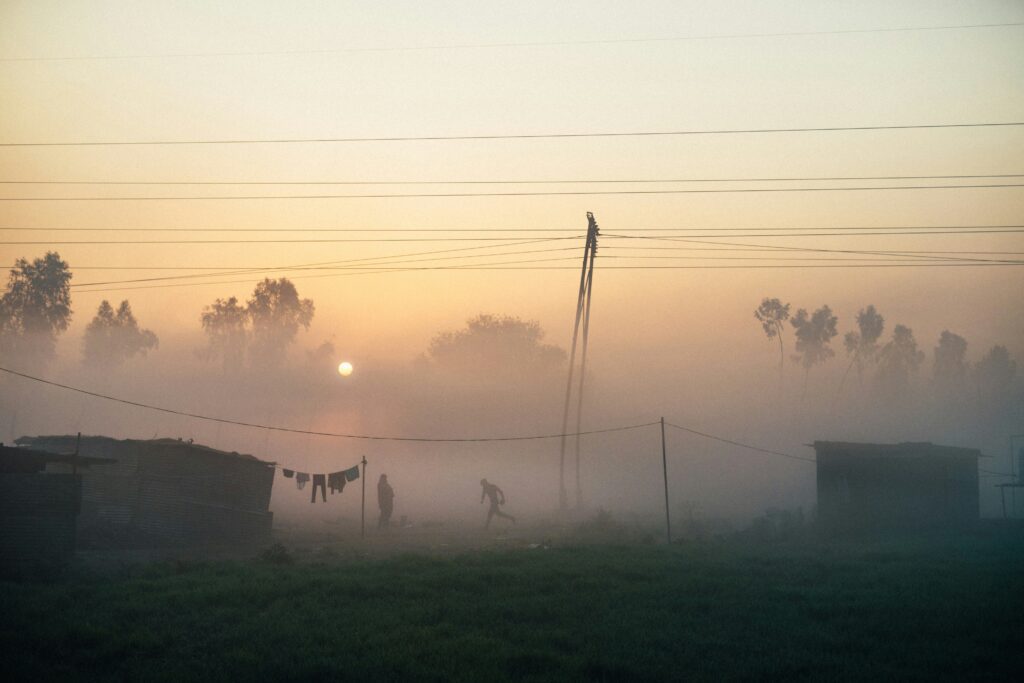
I consider myself more idealistic than realistic, and I tend to stay firmly focused on my goals despite external challenges. For example, recently in Pakistan, the weather has turned extremely cold — a rare occurrence in a country accustomed to heat. While many people find it difficult to engage in physical activities during such weather, I have maintained a daily routine of running for 10 kilometers early in the morning before sunrise, even when the sun is scarcely visible these days. Yet, I persist because I idealize the sense of accomplishment and discipline it brings me. This is how I strike a balance between realism and idealism: I acknowledge the challenges but push through by focusing on the rewards they offer.

In the balance

Idealism and realism are two poles of magnets that repel. Balance is impossible because the idealistic and realistic approaches are linked to the person’s desires. How can human beings suppose something against their will? This unacceptability of the possibilities that reality and idealism bring along leads to the challenge of creating a balance.

How can we force the balance? Who doesn’t lose the forest for the trees?

It is actually the struggle to create a balance between idealistic and realistic perspectives that makes us human; a work in progress, but not forced. 

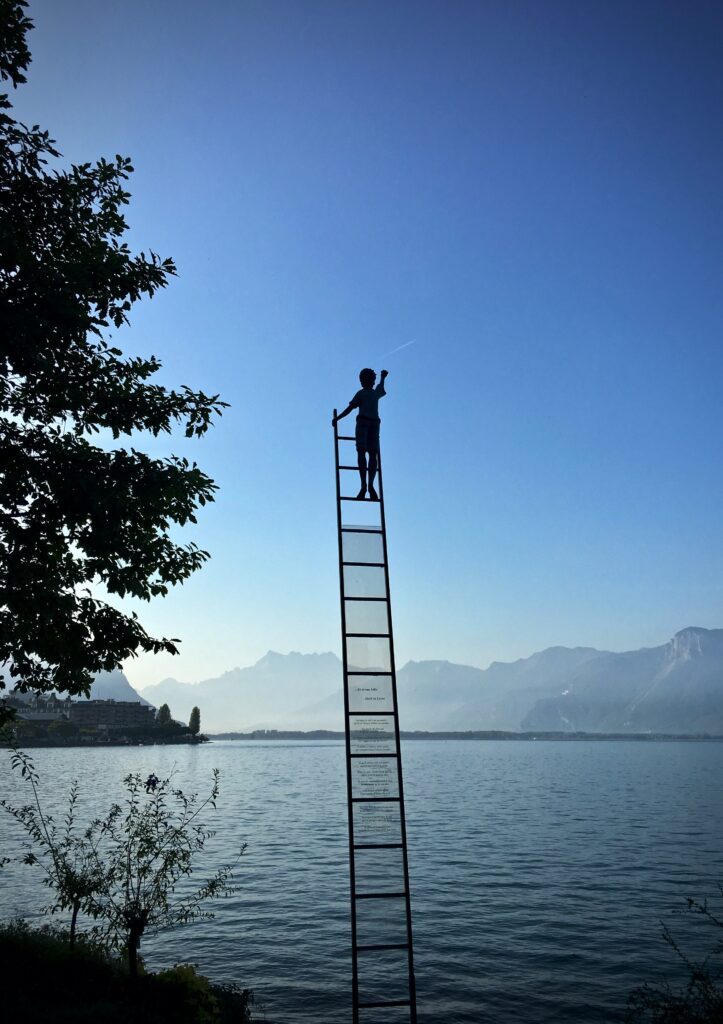
Finding that balance is the hard part. Can you imagine?
(Image courtesy of JessicaGale via Morguefile)

Own Your Degree and Your Mental Health

Depression is a fickle thing. Becoming depressed is not easily predictable. The best days can be immediately followed by the worst. Still, there are behavior management patterns that can help mitigate its effects. For example, I know that I get very insecure if I use too much energy.   

Confused about emotions

The path that I am on now is long and twisted. At the beginning of this journey, I knew almost nothing about depression, nor did I believe that what I was feeling was depression. I felt like I was exaggerating my emotions or faking it. I didn’t want to believe the changes I was undergoing. Even though my family recognized it and I had a therapist, I still didn’t completely believe I was depressed. 

It’s common for depressed people to feel like they are either tricking everyone into thinking they have depression or finding some other way of feeling like an imposter. 

My depression made me feel like I was ripped from society and I had to fight.

Fight to connect. 

Fight to connect with myself. 

Fight to connect with myself in bits. 

An effort made, even a little—

Strand by strand, I’m pulling myself back.

Support systems

I was privileged enough that my depression was not ignored by those around me, and they shared what they noticed. I was lucky enough to get a good therapist on my first try. This luck was due to the fact that my therapist was found as a result of my parents’ effort. My therapist was lovely. She helped me work through things I was hiding while I invalidated myself. 

I was very anxious in the months before university. My therapist was great at helping me through my anxieties and making plans with me to make the transition to campus easier.   

The things that worried me about school were the academic workload and the fact that I would have to be more independent than I had ever been before. University was in a  different city, away from the one I had lived in my entire childhood. I was anxious. Though a meal plan solved the problem of setting aside time to cook, I needed to budget my time and energy like never before. My first year at university was made easier thanks to the support systems I had, like my therapist and loved ones. 

My new and old friends were key to making my first year a good one. My old friends made me feel supported. My new friends made me feel welcome. Having a community was important, and being a part of one allowed me to grow during my first year. 

(Image courtesy of Mikhail Nilov via Pexels)

My two biggest roadblocks when it comes to succeeding academically are motivation and depressive episodes. Because of this, academic accommodations were another boon that helped me succeed during my first year of university. The school administrators understood that I needed some extra help. I am able to take my tests and exams in a different building than other students so I am not distracted. I also get extra time to finish my papers. Additionally, I get extensions when turning in assignments and can miss a few classes without repercussions. These accommodations take pressure off me to perform my best when I’m at my lowest. 

Boosting myself

Self-motivation is something I’ve struggled with for years. Being unmotivated is definitely a difficult mindset to have. There is no one solution for overcoming it. It’s also not something that I can just force myself through. 

There are a few things that I do to fight the absence of productivity that comes with a lack of motivation: I sit with other people as they do their work, I put on timers to count down the time I have left to work, and I have my accommodations. Often, I have to ask for help.

Learning to ask for help has been hard but at the same time, very rewarding. When I ask for help, I almost always receive it. But asking for help also requires vulnerability, something that is not easy to confront. Part of the process of trusting others is to trust them enough to let them in. Getting to be that much closer to those around me was amazing, and I wouldn’t trade it for anything. 

(Image courtesy of energepic.com via Pexels)

Sometimes it’s a matter of time before my depression gets in the way of my productivity. Sometimes nothing works and I have to wait until the depressive wave ebbs. Sometimes it feels like there is an elephant on my chest and the effort to get its weight off is not worth making. 

When these moments happen, I need to remember that it will leave if I don’t let it push me deeper into the ground.

Depressive episodes pass. 

Assignments get done. 

Time keeps ticking and everything keeps moving on. 

Every university experience is different, but I think every student needs to be patient with themselves because we are all growing. A degree may not be everything, but mental health is. Approaching difficult tasks may be scary, but there are many ways to handle the hard things in life. 

I can be depressed and in university. You can struggle and find the parts of life that are worth living for.  

(Image courtesy of Cottonbro Studio via Pexels)

Getting to Eloquent

Was it my fault?

Did I deserve the treatment?

What did I do wrong?

I remember soaking my pillow in tears that night.

“Why me?” I asked no one in particular. It only added insult to the already open wound. 

It was not a genetically inherited trait. I knew this because I had researched my family, having read a book on genetics in grade 6, and no one in my family tree had the disorder. 

Drying my tears, I reviewed what happened that day. The day before, the Religious Education teacher had asked us to memorize John 3:16. I already knew it. I never missed church and the Sabbath School. 

“Kelvin! Stand up and recite John 3:16!” Mr. Jack’s authoritative voice commanded. Confidently, I rose from my desk, which I guess was trying to win an award for being too noisy.

“For Go…o…o…d so lo…ve…d…” I began. I had not finished the final section of my recitation before everyone burst into laughter except Mr. Jack and me. 

I realized that being a new student was not going to be as much fun as I had anticipated. I guess they thought I did not know the verse because of my hesitation. So thought Mr. Jack, who stared at me with cold unblinking eyes, flexing the water pipe on his hands.

All I remember about the following few minutes that seemed to last a decade is the pain that tormented my back as Mr. Jack applied his best technique to ensure I never forgot. 

“How will you pass your High School entry exam?” he challenged as he continued to make me count the number of strokes he expertly laid on my back. 

The school had no option. Whatever it took, we had to pass, not only because of our own good but also to put the school’s name among the ‘mighty’ primary schools in Nyandarua County.

He did not understand my speech impediment. My fear of being laughed at and being misunderstood drove me to withdraw from people and triggered the next problem – making new friends in my new school. My friends at home understood me, but this was not the case at Saint Peter’s Academy. 

Getting to eloquent

It was not long before it dawned on me that if I did not face the darkness growing inside me, I was never going to be embraced for who I was.

I started reading novels aloud at the deserted soccer field rather than the mind reading I had been accustomed to. Though I took more than thrice the time I would spend normally, it was a valiant effort. I could now do a few words without a stammer. No hesitation. 

The few words became a sentence before I joined High School. Classmates would complain about my slow reading pace when I volunteered to read articles in class. I remember two students mumbling that a certain person was to fall asleep if I read a Swahili article the teacher had asked me to recite.

Though discouraged by many of my classmates in grade 9, I still began to develop eloquence as I read aloud. By grade 10, I volunteered to deliver a trip report on the assembly ground, which I did at a rather moderate pace.

Bit by bit, I improved and struggled against myself.

I was not done yet. Trip reporting became my thing for more than a dozen trips I attended thereafter. No one dared to steal that activity from me.

Less Manic, More Connected

This world is too complicated!

I have lived a life valuing the strength of the human connection in this complicated world. In my journey, I discovered the strong interconnection between language and human emotions.

The journey begins — honeymoon in France

This journey commenced when I started learning French. I never thought it would have such a dramatic impact on my life. I completed four years of learning French, and in those four years, I earned college credit that I was able to transfer to a Jesuit University in the Midwest, to major in French. In those four years, I immersed myself in grammar and literature. In my junior year, I went to study in Strasbourg, France. I studied there for around five months where I lived with a French family during the first month.  Being all by myself in a foreign land troubled me. Everything was entirely new — culture, people, and food. I ate the best food of my life with my host family while I moved  around the French city. Our weekends included enjoying lengthy meals while having endless conversations. In my first month, I went through the honeymoon phase — living overseas in a different culture so distinct from my own. 

 The first undertone

(Image Courtesy of Milada Vigerova via Unsplash)

In the first few months I studied there, I immersed myself in French. Along the way, I often stopped by a bakery or pastry shop sitting on almost every corner of the city. I had the opportunity to meet other French students from the university, and we quickly became friends. After months passed, I became more adapted to the culture and saw the world from a different viewpoint. By the summer after the classes ended, I was missing my family again and made plans to return home. Upon reaching home I shared my photos of France and all the details of the exciting experience I had enjoyed during my stay. Unfortunately, when I returned to my university with so much time passed, the friends I had made seemed uninterested in my stories from my overseas trip back home. Their lives had changed — never knew life would change so fast.  I thought everything would be the same — friends would be the same old friends.

For them, I was no longer important. I felt isolated and became depressed, and so I threw myself into my studies in the last semester. This was the first time I became depressed. I had no knowledge then of my family background with mood disorders. 

Career advancement

(Image courtesy of Armand Khoury via Unsplash)

In 1994, I began my career as an administrative assistant for the  Center of International Relations in my hometown . My hometown had many sister cities, and when I started at this company, the city was setting up a sister city relationship with a city in Senegal. The signing of the sister city treaty between the two was marked with celebrations and special events showcasing and welcoming the Senegalese local government officials. I remember the event so clearly with officials from Senegal — speaking with them in French. It was a great honor for me to communicate with important delegates in their own language, and I knew that it would take me far in terms of preparing me for my next career position. 

In 1997, two years after my previous job, I was employed by a global mobility company as a relocation consultant with varied responsibilities. While I did learn a lot in the relocation field while working here, I didn’t advance in my position. After three years of unhappiness with my job  I decided to move with the hope I might find better career opportunities there.

Since my move, I have had great success in the global mobility and language education market, working for many companies and local language schools. 

The breakdown — slide into mania

(Image courtesy of Nik via Unsplash)

Unfortunately, in 2002, I suffered a mental health crisis with mania and depression, and it hurt me greatly at work. Yet I was not willing to believe that my actions were the reason for my poor job performance.

When I got engaged in December of 2002, I only focused on planning our wedding.

I became obsessed with wedding details, spending two to three hours on the computer daily. I lost sleep and began my slide into mania and showed up late at work. I became agitated and anxious at times. I ignored it. 

Several months later, I went to the emergency room at a nearby university hospital to seek care. Eventually, I met a doctor who recognized my symptoms and asked me to make an appointment with the Mood Disorders Clinic at a local university hospital.  I was taken off all my previous medications and went into bad withdrawal. My mind was racing and I could not quiet my thoughts…

The human touch

(Photo Courtesy of Aditya Romansa via Unsplash)

My mother visited some months later, after a visit from my sister (paid for by my brother, as she herself suffered from bipolar disorder), and my brother and my husband felt it would be of help. My mother lay in the bed alongside me.  I was so agitated with her beside me that she could not sleep either. I was unable to remain still in bed, so without sleep, I had my head on my table with exhaustion. My mind was racing and I could not quiet my thoughts. In the mornings, she helped me eat breakfast and tried to get me to walk a little bit, as it was so difficult for me at that time to even walk down the street.

I cried after my mother left. My husband could not attend to me while he was at work and would arrange a schedule of activities for me. I continued to fall deep into my depression. The medications only stabilized my mood and anxiety and allowed me to sleep for a few hours at a time. 

It was only after a whole year that I started a new medication shown to treat bipolar depression better. It was like a ray of sunshine piercing a cloudy world. After several weeks, I made a major recovery and could proceed with a subsequent trip to Southeast Asia.

Stability

(Image courtesy of Dareius Bashar via Unsplash)

My fiancé and I traveled to Southeast Asia in  December 2004 to get married,  and then traveled to more places for our honeymoon. I learned from experience that when you travel or live in another country you must do as the Romans do — adapt to the different cultural manners, especially with how to dress and how to eat. I also had to dress more ‘modestly as a woman’ in that I couldn’t show my bare legs, and had to learn how to eat with my hands. I have faced more and more challenges along the way in every country I visited. 

After my trip overseas. I returned with more stability and more confidence. I was able to take a class in Teaching Writing Online in a TESOL certificate program while I pursued returning to my career as an ESL instructor. My face-to-face classes, unfortunately, ended when the COVID-19 pandemic impacted the whole world. I had to transition to online lessons. 

Only humanly possible 

Since the COVID-19 pandemic hit in 2020, isolation has disturbed me. I needed human contact. I knew that in the years ahead, it would be very problematic for me without that connection. It changed my mode of communication with my family, as at the beginning of the pandemic we chose to connect over Zoom since we were all indoors with no direct contact with each other. It did bring us closer together and we have become a very close-knit family. 

I have faced multiple challenges in my life and have overcome them. Through these challenges, I have understood the value of self-expression and human connection through emotions and language.

Scraps of Myself

Sometimes, I look behind and laugh at myself
For all the foolish acts I had put on.
At present, I wish I could go back to the past.
If only I could freeze the time and stay forever there
In the bubble that I created with my lively laughter and chatter. 

If only I didn’t have to care about the opinions of people around me.
If only I could just live for myself.
Not the shadow of who I seem to be.
If only I could find my long-lost playfulness.

And now it finally makes sense
I had lost myself ages ago.
All I have left is the remains of the illusion of me.

When the Climate Becomes Your Enemy

Amidst the sweltering lanes of a Delhi slum, where the sun feels merciless and the air itself seems scorched, life unfolds with harsh lessons. 

This is where I grew up — navigating the world with dyslexia, dyspraxia (a disorder that affects coordination and movement), and a stammer, while also serving as a lifeline for my chronically ill mother. We survived domestic violence, yes, but today we are facing an equal challenge: surviving a world that seems indifferent to its most vulnerable. 

Try and feel them

You hear about heat waves in headlines, but can you feel them? Have you felt that suffocating weight in the air, that oppressive sense of panic when you realize there is no water, no relief, and no escape? For us, enduring a Delhi heatwave in a makeshift home was like being slowly roasted alive. I remember one particular day when the temperature soared, making it unbearable to breathe. Our tiny room felt like an oven; the walls radiated heat, and the ceiling fans offered no respite. Each day was a battle against an invisible enemy, as my mother’s health crumbled and my own challenges flared up.

Finally, after my mother received care from the government hospital, I vividly remember that some of the medicine her doctor prescribed required cold storage, and at that time we had no refrigerator. I had to ask the local pharmacy for help.

In the unrelenting heat,  my dyspraxia intensified, turning even simple tasks into exhausting struggles. One prominent dimension of dyspraxia that becomes increasingly noticeable during this period is sensory overload. Typically, I struggle with processing sensory information, including touch, taste, and sound. However, the combination of intense heat and constant sensory stimulation during the summer significantly amplifies these difficulties.

As temperatures rise, I find it increasingly difficult to regulate my body temperature, which leads to feelings of restlessness, fatigue, and irritability. The discomfort of excessive sweating can also interfere with my ability to hold objects or maintain a firm grip, further intensifying the coordination challenges that are already a part of living with dyspraxia.

Image courtesy of Parker Hilton via Unsplash

Hot and bothered, you are a statistic

The time I rushed my mother to the emergency room during a particularly brutal heatwave, getting to the hospital was a nightmare. Public healthcare was our only option, and the system was stretched to its breaking point. The waiting room was packed, and as I stammered through my explanation, I felt the impatient stares of those around me. The doctors and nurses tried, but they were drowning in a sea of patients. The helplessness I felt when I stammered while trying to explain my mother’s deteriorating condition was overwhelming. In those sterile hallways, you’re not a person — you’re a number, a problem to be processed. It’s a kind of invisibility that’s hard to describe and even harder to live through.

Here’s the painful reality: if our healthcare infrastructure can’t account for the heightened vulnerabilities of disabled people, we’re not just failing, we’re actively contributing to needless suffering. Accessibility isn’t about “nice-to-haves” like ramps or braille signs — it’s about life and death. It’s about creating safe, resilient spaces where people can seek care without being pushed to the margins, or to their own limits. If healthcare can’t adapt to the reality of climate change, then the most vulnerable will continue to pay the price.

We were overheated. Statistics are cold. They can tell you about the number of people affected, but they don’t make you feel it. Stories like ours bring urgency and humanity to these issues. When you look past the numbers, you see people fighting battles that few even realize exist.

From struggle to action: the birth of Green Disability

Out of this experience, I realized that we needed to make our voices heard in the climate conversation. That’s when I decided to start Green Disability, a grassroots initiative for climate action that includes the needs of people with disabilities. Today, our community has grown to over 600 members, with our newsletter reaching over 7,000 people. We’re not just an organization, but a movement, and our message is simple: the climate crisis affects everyone, and you can’t talk about sustainability without talking about accessibility.

We’re working on documenting the lives of disabled people in climate-vulnerable areas, sharing their struggles and their resilience. We’re also simplifying complex research, turning data into stories that resonate with our community and inspire action. This isn’t just about raising awareness. It’s about creating real change.

Climate justice is empty without disability justice

We’re one of the world’s largest minorities, a major minority! Yet we’re often overlooked in climate solutions. But we won’t be ignored anymore. Disability justice and climate justice go hand in hand. 

If we’re serious about tackling the climate crisis, then people with disabilities must be part of the climate conversation.

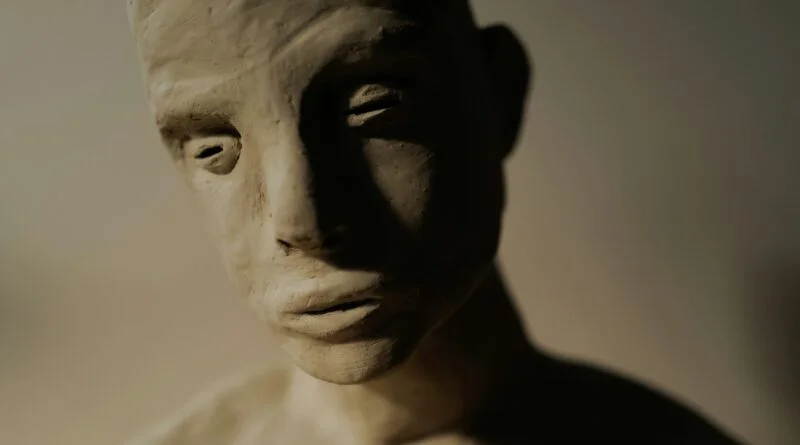
A Song to the Sculptor

Oh, stone carver, listen to me for a moment, that your skills be blessed.

Shatter my ignorance so my heart, hardened, may begin to beat. 
Remove the pain from my heart and take away my sorrow. 
Find a way to perfect my desires, so that even in pain, I can smile. 
Fill me with patience and remove the darkness surrounding me, and destroy all fear. 
Sometimes, I yearn to meet you,  but there is no one else besides you to talk to. 
Shape me so my creation makes others proud, and remove pride and arrogance from me. 
Give me humility and craft me as you wish. 
You are the creator of my life; I need no riches, just bless me with my desires. 
I am lost somewhere within myself; 
Take me out of the darkness  and give peace to my heart and soul. 

You know everything about 

my life.

اے سنگ تراش ذرا بات سن تیرے مہارتوں کی خیر ہو مجھے ایسی ضرب لگا ذرا جو میری غفلتوں کو توڑ دے سینہ سنگ دل بھی تڑپ اٹھے دل میں قید درد نکال دے میرے درد کو مجھ سے چھین کر میرے چہرے کی رونقیں بہال کر کوئی ایسا رستہ تالش کر مجھ پر چاہتوں کا کمال کر ٹھیں کہ ہم درد میں بھی مسکرا اُ صبر سے مجھے ماال مال کر میرے ِگردوپیش کی ظلمتیں پوشیدہ سب وحشتوں کو زوال کر بیٹھا لے کبھی اپنے ُروب ُرو تجھ سے ملنے کی ہو جستجو نہ ہو دوسرا کوئی سامنے فقط تجھ ہی سے ہو گفتگو مجھے ایسا تراش دے میری نسلیں سنوار دے غرور و تکبر مجھ سے دور ہو مجھے عاجزی ادھار دے تو مجھے جیسا چاہے تراش ُ تو میری زندگی کا کارساز ُ مجھے دولتوں کی چاہ نہیں تو مجھے اپنی چاہتوں سے نواز ُ موجود ہوں میں خود میں کہیں تو مجھے تاریکیوں سے نکال ُ ے د ن سکو کو ح و ر و ل د ے میر ُتو ل حا سب کا گی ند ز ی میر ہے نتا جا ہ شا عراُصیب ش:

Music Strange the Dreamer courtesy of Savfk, via Audio Library Free Music: https://www.youtube.com/channel/UCHae4C99XJORB7Iog62wqvw

Hectic and Unemployed

What do unemployed writers do?

They keep themselves occupied by working on their writing and honing their skills. I know this because my current status is “unemployed writer.”

This is because I am focusing on building a career in writing. And it was not an overnight decision. I’ve written for many years now, thanks to the skills I developed so I could live as an experienced writer. Writing was just my side hustle, but shifting to a full-time writing career needed a lot of “mindful inner engineering”, including coping with worries about no paychecks.

Naysayers ask me to rethink my decision, but I am adamant about nurturing my desire. So, armed with just a dream, I have set out to establish myself as a writer.

There are a few universal beliefs that guide me and work for me. 

Use what you can. 

Working it

For me, the essence of hard work is perseverance — hanging in there, trying different strategies and seeing which ones succeed, and traveling over rough terrain to reach my goal. Staying the course, even when faced with a series of failures, is what I define as hard work. Hard work does not mean simply putting in the hours by tweaking a few applications and applying for X number of jobs every day. I invest every minute I can to do all that there is to be done. This is the kind of hard work that I love. 

If you redefine the meaning of your own hard work, I believe that you will achieve all your goals.

 Without that meaning, you will not. 

Discipline, eight days a week

When boredom sets in, when I am low on inspiration, or when I have no desire to carry on, I think of this word. It is the key ingredient I keep in my kitty. Showing up regardless of how I feel is something I prioritize. Showing up involves working on blogs, creating pitches, and engaging with the writing community on social media platforms. I do this every single day – including weekends. 

Writing itself is simply discipline.

Dedication in a jar

I am dedicated to becoming the best writer because I love the craft. Organizing my desk, documents, and thoughts helps me. I maintain a Word document where I jot down ideas – even the smallest of thoughts, a single word. Everything goes into that document. 

After reaching my desk, I scour that document for inspiring and useful ideas and start working on blogs, articles, and fiction.

Saves time, stores ideas.

Unrelenting

I am relentless in my pursuits. I wasn’t always like this, but experience and life’s hard knocks have shaped this side of my personality. In seeking success, I also investigate and identify the areas in which I need to boost my skills, and by doing so, make plans to expand my repertoire. 

Once I have a sliver of an idea, I register for online courses and upgrade my knowledge.

You might have noticed my plate is overflowing. I, too, am aware of this. At times I become overwhelmed, wondering where this path is going. Will it take me towards my goals? 

I am riddled with insecurities, just like so many others out there. During such times, I tell myself, “It is okay to have self-doubt because it shows you are not running with your eyes closed.” 

Trusting myself goes a long way. 

Formula for success

My formula amounts to labeling whatever results from my efforts to be a success for what it is. 

That formula builds on all the principles and beliefs mentioned above and looks like the typical day I follow as an unemployed writer. It sustains me and keeps me motivated. 

(Image courtesy of Andrea Piacquadio via Pexels)

Where Are You From?

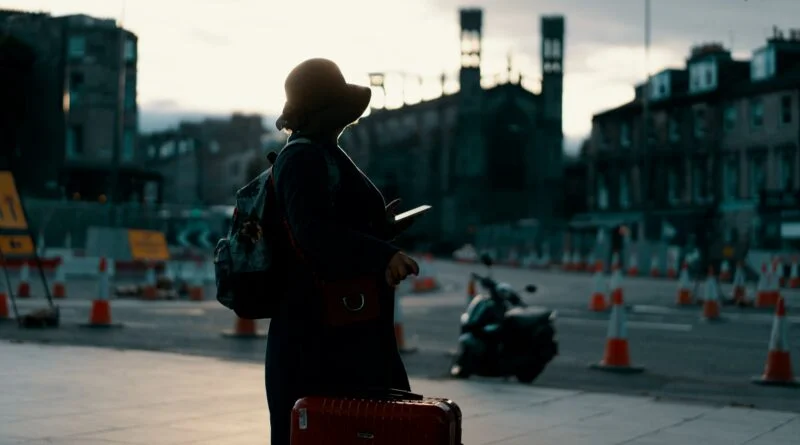
I have been traveling since I was 14, constantly feeling like an outsider. Whenever I catch myself thinking, “Here I am; I belong here,” the inevitable question arises: “Where are you from?” This recurring question has left me feeling stuck, uncertain of where I truly belong.

It’s a strange sensation — feeling torn between places, unsure of where I truly fit in. One can easily drift through life, holding onto the hope that things will eventually improve, but time passes quickly, and I often wonder where my roots have gone.

I was born in the Republic of Moldova and moved to Romania for school, spending seven years there. Afterward, I transitioned to the United Kingdom for university, where I lived for about three years. During this time, I had the opportunity to travel to the United States through a university program. I later returned to Romania before coming back to the UK.

Last year, I spent time in Russia with my parents, and for the first time in a long while, I felt at home. I wasn’t an emigrant or an immigrant — I was right where I was meant to be. I discovered so many beautiful aspects of Russian culture, such as ballet, opera, and cuisine. The language, which I’ve spoken since I was five, resonated deeply within me. I embraced the traditions and the people, and my eyes sparkled with joy as I immersed myself in this world.

Yet, doubts linger. Is this place truly for me? Do I belong here? We often wrestle with the fear of trusting our own feelings and instincts. As my grandfather was Russian, I always felt there was a special connection for me in this country. However, the question remains: “Where are you from?” I often respond jokingly, saying, “I’m a person of the world,” yet inside, I feel like a stranger no matter where I go. 

Somewhere else 

So, how can one know where they truly belong in this vast world? It’s an interesting dynamic when we go abroad for studies or work — we become strangers in a world that doesn’t quite feel like home. I’ve observed how people often believe that life is better elsewhere. They encourage others to venture abroad, to build their own lives and careers. There’s also a natural curiosity about the food, behavior, and lifestyles of different cultures, leading many to conclude that somewhere else is better than their own homeland. 

However, there is no absolute “better” or “worse”; it’s all about how you perceive yourself and whether you’re open to embracing the world around you.

If you find yourself stuck answering the question, “Where are you from?” consider replying, “I’m still figuring it out, still searching for where I belong in this world.”

(Image courtesy of Shing via Unsplash) 

Kaleidoscope Eyes

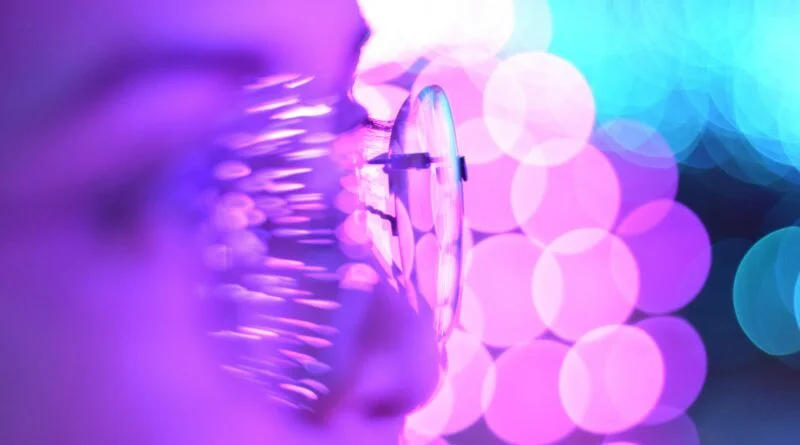
A light comes on, and a close-up pair of eyes appear in the frame. My blinking is constant, almost excessive, in the harsh white light of the room. My eyes are not large; they seem narrow (or ‘slanted’, as my brother says), making it hard for me to keep them open. My eyebrows above my dark brown irises are not remarkable and in fact are unkempt, untidy, and without a defined shape. The unruly hairs help cover the scar from a small cut that was caused by the frame of a pair of glasses long ago. They broke while preventing the fall of a restless child who was trying to reach the top of a wooden post while my back was turned.

Those eyes, looking ahead, cannot see all they should, but are amazed by the little they have observed. A hand appears in frame, clutching a red crayon, firmly intending to complete the task at hand — to color in the blurry silhouette of whatever figure is printed on the white sheet. 

At times, the red crayon rebels, resisting confinement by the thick black ink line, and the hand does not seem to care much. I believe I have successfully completed my task, but when I hand the sheet to my mum, she brings it close to her face and then looks at me, worried and wide-eyed. She asks, “Son, did you color this in?”

Astigmatism.

That was the explanation some doctor gave me a long time ago, and that’s what I have for life. Fortunately, I can still distinguish the shapes of things to avoid bumping into them, and the glasses reduce blindness, but I now feel dependent on them.

My eyelids feel heavy. A hand, my hand, intrudes into the frame to scratch my left eye, and as a result, some eyelashes fall out and the cornea wears down. Tears no longer lubricate properly, and my eyes show signs of fatigue. The dark circles under them are more than noticeable. I haven’t had a good night’s sleep in years. 

My eyes have also seen unforgettable things: a victory goal in the 96th minute, the tragic end of Walter White, my grandfather singing “La Cucaracha”, the long-awaited arrival of the newborn at home and the heartbroken cry of its mother, the departure of its father from home, the loving eyes of a woman… There are moments and images in which significance lies not in clarity, but simply in sight.

A phoropter slowly approaches the face to which the dark brown eyes belong. The optometrist is observed from a general perspective. As she changes lenses, the doctor repeatedly asks, “Do you see better with this one, or with the previous one?”

I never notice the difference from one to the other. 

Of course, before approaching that device, the doctor asked me to do the usual task: to pick up the chart and read the paragraphs full of tiny letters, or to tell her the letters I can see from a few meters away. I can’t remember the last time I successfully read letters on the wall chart.

I approach the optometrist’s desk at her request, while I wait for her to review whatever she has to analyze… I never worry about knowing exactly what it’s about, because the answer is always the same: “The prescription in your left eye has increased.” 

Which is the same as saying that my vision has gotten a bit worse. Again.

Next, she gives me instructions to prevent corneal damage, things like not rubbing my eyes or not spending many hours in front of the computer. I hear her, but I don’t listen. I know that buying the contact lenses I need is not within my budget, and that I have to wear glasses for life. The optometrist says they are mandatory, and my driving license echoes it. I see her, but I am not really looking at her.

(Image courtesy of alameen studios via Pexels)

Over time, I also started to enjoy cinema and writing. Two forms of art that require a creative — and visual — exercise to create and enjoy. Over the years, the bridge of my nose between my eyes has been ‘tattooed’ by the noticeable marks of numerous glasses. It seems unfair for those eyes to have to strain just to enjoy the shape of letters and read smoothly. 

The helplessness of a child who, due to an eye problem, strains his sight trying to read.

I find this pleasure ironic. I always panic: What if my glasses break, get lost, or stop working? How will I read and distinguish the figures on the screen? The damage to my eyes is progressive. Resignation…

But as the doctor shakes my hand to say goodbye, I can only think of the consolation: that the camera, the pencil, and the imagination allow me to capture — and reflect — that which my eyes will not let me see.